A printed Slider Lock Clothing Bags quote for skincare gets much easier once the packed item, film gauge, and print coverage are defined. The bag may hold a robe, spa wrap, headband, reusable cosmetic cloth, sample set, or accessory bundle, and the packaging has to protect soft goods while still presenting them in a clean, controlled way beside jars, tubes, and cartons.
Most quoting delays come from missing dimensions rather than from a difficult structure. A buyer often knows the look they want, but not the folded product size, slider color, film thickness, or how much of the bag should carry print. Once those points are fixed, pricing becomes more reliable and the sample stage moves faster.
Printed Slider Lock Clothing Bags are useful for skincare-adjacent apparel, spa textiles, influencer kits, retail bundles, and travel packs because they open cleanly, reclose easily, and provide a wide branded surface. The slider improves the user experience, and the film helps keep fabric away from dust, moisture, and handling marks. For a quote that reflects the real job, the best input is specific, not approximate.
The clearest quote usually comes from the clearest spec: size, quantity, artwork, and packed-item dimensions matter more than a general idea of the bag.
Printed Slider Lock Clothing Bags Quote for Skincare Brands
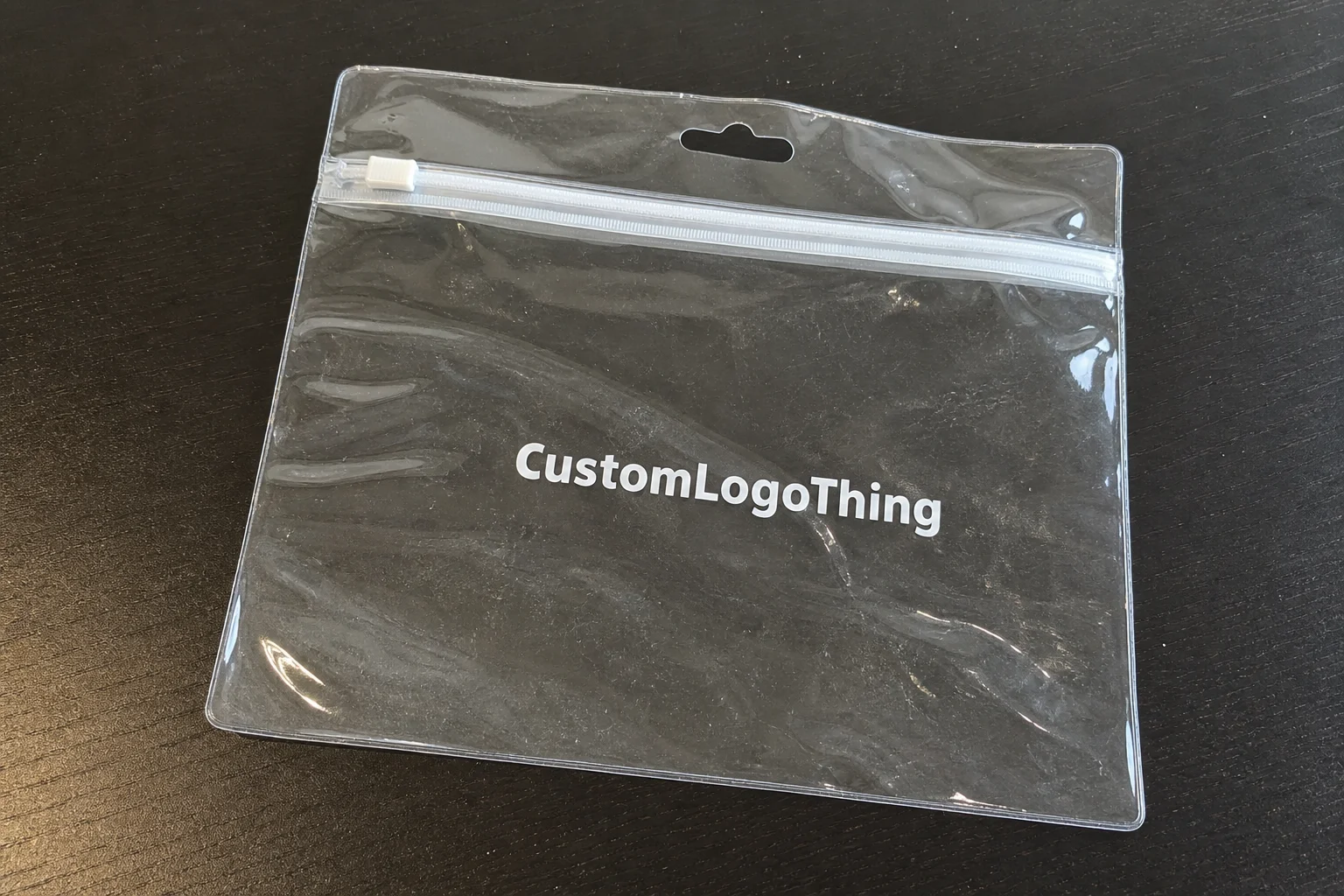
From a packaging buyer’s perspective, this format does three jobs at once. It protects the product, carries the branding, and gives the end user a closure that feels intentional rather than disposable. That matters in skincare because the packaging has to support a calm, finished presentation without making the contents look like plain bulk merchandise.
In practice, these bags work well for robes, spa wraps, face cloths, reusable cotton rounds, sleep masks, headbands, gift sets, and accessory bundles that travel with lotions or serums. The bag does not need to replace a ship-ready mailer or corrugated shipper, but it should keep the item presentable, hold the fold in place, and survive repeated opening and closing. For a branded set, that closure experience is part of the product.
Many skincare teams also value the visual discipline of this format. A printed body can follow the brand color system, while clear or frosted film keeps the packed item visible enough to feel premium and organized. That pairing works especially well for retail displays, PR kits, and e-commerce bundles where the packaging has to look as polished as the formula inside the bottle.
If the bag is holding a soft good, the main benefit is presentation control rather than brute strength. The film helps reduce dust and handling marks, and the slider lets the customer reclose the bag after inspection, retail handling, or reuse. For brands that care about the unboxing sequence, that is a practical advantage.
It also helps with inventory discipline. A consistent bag size and print layout make packs easier to stack, label, and pick. That is useful for fulfillment teams, but it matters just as much on the shelf, where uneven folds and loose closures can make an otherwise premium set feel unfinished.
Bag Structure, Film Feel, and Slider Lock Details
Material choice changes both the feel and the cost. Common options include LDPE, HDPE, co-extruded PE, and recycled-content PE when the program and supply chain allow it. LDPE tends to feel softer and more flexible, HDPE feels crisper, and co-extruded structures can balance clarity, toughness, and seal performance. Recycled-content film can work for some skincare programs, but it should be checked for appearance, odor, and consistency before anyone approves a full run.
Skincare buyers usually want a film that looks clean in hand and on camera. Glossy film can look bright and clear, but it may show scuffs more quickly. Frosted or matte-look film often feels more controlled and premium, especially for spa accessories or higher-end gift sets. The right surface depends on how the bag will be used: retail shelf, e-commerce shipper, influencer mailer, or in-store accessory pack.
The slider lock itself deserves attention. Standard white, clear, and black sliders are common, and custom color is sometimes possible when quantity and tooling support it. What matters most is smooth travel along the zipper track. If the slider is too loose, the closure feels sloppy. If it is mismatched to the profile, the bag may open too easily or resist closing during packing.
Closure integrity is not a cosmetic detail. The zipper profile and slider must match so the bag opens without snagging and closes without popping apart under normal use. A bag that looks good but fights the packing line or frustrates the customer is the wrong bag, even if the print is excellent.
Print surface decisions shape the result as well. Transparent windows, frosted film, full flood color, white ink on clear film, and tight registration all affect how the artwork reads. If the bag needs barcodes, care instructions, or handling copy, those elements have to stay readable after print shrinkage, seal formation, and slider placement are considered. Keep critical artwork away from the zipper track and seal edges.
- Clear film works well when product visibility matters.
- Frosted film softens the look and hides minor handling marks better.
- Colored film can strengthen brand presence, but it usually raises material and print complexity.
- White ink on clear film is useful when logos need contrast without full coverage.
Specifications That Make a Quote Accurate
Accurate quoting starts with the finished bag dimensions, not a rough garment size. Measure the product the way it will actually be packed. A folded robe, spa wrap, or bundle of reusable cloths can take a different shape after folding than it does on a hanger or in a retail carton. If the item springs back after packing, that can change the required width, height, and clearance near the slider.
The core quote inputs are straightforward: finished width, finished height, any bottom or side gusset, film thickness, material type, slider color, print colors, print coverage, quantity, packing method, and delivery destination. If the project has special handling needs, include those early. It is much easier to quote a bag with vent holes, a hang hole, or a suffocation warning in the original request than to revise the job later.
Film gauge matters more than many buyers expect. Lighter films can be enough for a small accessory set or soft cosmetic cloth, while thicker gauges make more sense for heavier clothing, premium reusable packaging, or bundles that include rigid pieces with sharper corners. A robe in a gift kit does not need the same structure as a thin washcloth pack, and pricing should reflect that difference. In many PE bag programs, the practical range sits somewhere around 2.0 to 4.0 mil, but the right answer depends on product weight and presentation requirements.
Artwork needs the same discipline. Vector logo files are best, Pantone references help with brand color matching, and white ink requirements on clear film should be discussed before proofing starts. Safe zones around the zipper and seal areas matter because design elements placed too close to the edge can disappear or distort during conversion. If the artwork is busy, ask for a print layout that clearly marks bleed, trim, and protected zones.
Optional features are often useful for skincare work, but each one changes the quote:
- Hang holes for retail display.
- Vent holes when trapped air or product breathability is a concern.
- Bottom gussets for bulkier folded goods.
- Wicket packing for faster loading on the line.
- Carton labels and master case configuration for warehouse handling.
- Suffocation warning copy where applicable.
For teams still shaping the package, sending photos of the packed item is often more useful than sending a logo first. It gives the converter a real view of the fold, thickness, and presentation style. If the order is moving fast, that visual reference helps prevent quoting the wrong size.
One detail that is easy to overlook is headspace. Bags that look correct on paper can feel tight once the fold, zipper track, and slider are all added in. A little extra room near the top edge can prevent stress on the closure and reduce packing friction. That margin should be built into the spec, not discovered after the first sample.
Cost, Pricing, and MOQ for Custom Slider Bags
Pricing is driven by a few fixed variables: material weight, bag size, film gauge, print method, number of colors, print coverage, slider type, order quantity, and packing requirements. A small change in one of those can move the unit price enough to matter in a buying decision. Heavy ink coverage, special finishes, or oversized dimensions usually push the cost up faster than buyers expect.
MOQ exists because setup is real work. The material has to be sourced, print files have to be prepared, plates or cylinders may be needed depending on the print method, machine time must be scheduled, sliders must be applied, and the finished bags still need inspection and packing. That starting cost is spread across the run. When the run is small, the setup burden falls on fewer pieces, so the unit price rises.
Small runs are still useful. They let a skincare team test a new gift set, check shelf presentation, or validate a seasonal bundle before committing to a larger production order. Larger runs usually bring the per-piece price down because the setup is distributed across more bags. Most buyers should ask for at least three quantity breaks so they can compare launch volume, standard reorder volume, and a larger seasonal run.
| Order profile | Typical unit price | Best use | Main cost pressure |
|---|---|---|---|
| Launch run, 3,000-5,000 pieces | $0.30-$0.58 each | Testing a new skincare set or retail bundle | Setup cost spread across fewer bags |
| Standard reorder, 10,000-20,000 pieces | $0.18-$0.34 each | Ongoing e-commerce, retail, or spa programs | Balanced material and print efficiency |
| Seasonal or promo run, 30,000+ pieces | $0.12-$0.24 each | High-volume gifting, campaigns, or peak periods | Artwork complexity and total material usage |
Those ranges are directional, not a promise. A plain clear bag with a standard slider and one-color print will price very differently from a large frosted bag with heavy coverage, custom slider color, and special packing instructions. Rush production can also move the number upward, especially if material or slider components have to be sourced on an accelerated schedule.
For buyers comparing vendors, it helps to ask for the quote in a format that separates unit price, setup, and freight. That way procurement can see where the money is going. It also makes it easier to decide whether a slight redesign, a standard slider color, or a narrower print area can bring the project back inside budget.
Lead times and pricing often move together. A job that needs a nonstandard slider, a recycled-content film, or a high-coverage print pattern is more likely to require extra approval time and a higher minimum. Buyers who need a specific launch date should surface that date early rather than after artwork has already been arranged.
Packaging teams that want a useful benchmark often keep a simple reference point from [Packaging Institute](https://www.packaging.org) for material terminology and from [ISTA](https://ista.org) for shipping-test language. Those resources do not replace supplier quotes, but they help internal teams speak the same language.
Production Steps, Proofing, and Lead Time Expectations
The quote-to-production flow is usually direct. First, the supplier confirms the specification: bag size, film type, slider style, print count, quantity, and destination. Then the artwork is placed on a dieline or print layout for review. After price approval, a proof is issued, material is prepared, the bags are converted, sliders are attached, inspection is completed, and the order is packed for shipment.
Proofing deserves real attention. A digital proof checks scale, layout, color placement, and copy, but it does not fully show how the bag will behave in hand. If the packed item is awkward, premium, or unusually bulky, a physical sample is often worth the extra step. A sample can show whether the fold fits, whether the slider clears the top edge cleanly, and whether the product presentation feels right next to the rest of the skincare line.
Lead time depends on more than the converter’s calendar. Material availability, print complexity, slider color availability, order size, proof approval speed, and shipping lane all affect turnaround. For many custom runs, a reasonable production window is often 12-15 business days after proof approval, but that can stretch if the artwork changes late or a nonstandard component has to be sourced.
Late changes are expensive in both time and confidence. If plates, cylinders, or approved production files are already in motion, a new logo placement or copy correction can force a restart. That is why it is smarter to lock the specification before product photography, fulfillment prep, or launch packing begins. The packaging affects the release plan, not just the carton on the pallet.
If a team needs to move quickly, the cleanest request includes one contact point, one set of dimensions, one artwork file set, and one target ship date. The cleaner the input, the less back-and-forth is needed. In production terms, that is where time is really saved.
There is also a practical limit to how much a supplier can compress the schedule. Material must be on hand, print must be approved, and the finished bags still need to be counted and packed correctly. Cutting corners on any of those steps tends to show up later as waste, rework, or a delayed launch.
Quality Checks for Skincare-Ready Apparel Packaging
A bag that closes is not automatically a bag that performs well. In a skincare setting, the presentation has to stay clean, the print has to stay legible, and the customer should be able to reopen and reuse the bag without tearing the film or fighting the slider. That matters for retail, fulfillment, and post-purchase perception.
Inspection should cover seal strength, zipper alignment, slider movement, print clarity, ink adhesion, dimensional tolerance, film haze, blocking, odor, and carton packing condition. If the product is meant to sit on a shelf or move through a spa retail environment, these details show up immediately in the buyer experience. A slightly crooked slider or a cloudy print can make a premium set feel cheaper than it is.
Fit testing with the actual packed item is the safest check. Folded robes, facial cloths, spa wraps, and hair accessories can spring back after packing and press against the slider area. That pressure may not show up on paper measurements, but it shows up fast on the line. A good sample run catches that before the full order is released.
For teams handling fulfillment, the bag should stack predictably, accept labels if needed, and survive pick-and-pack movement without scuffing the print or splitting a seal. If the pack is intended for reuse, the user should be able to open and close it without confusion. A little more control during specification usually saves a lot of rework downstream.
One issue that comes up in practice is odor from recycled or mixed-content film. Some buyers accept it, some do not. If the bag will sit near fragranced skincare, a noticeable film odor can compete with the product experience, so that should be checked in the sample stage rather than assumed away.
Another practical check is readability after sealing. Logos, fine type, and warning text can move slightly once the bag is converted. If the design depends on precise alignment, the proof should show exact placement relative to the zipper track and the bottom seal. That is the difference between packaging that looks specified and packaging that actually is specified.
Custom Logo Things is strongest when the job needs practical specification control rather than loose guessing. The value is in clear sizing, sensible material selection, and a quote that reflects how the bag will actually be used, not just how it looks in a sample photo.
Next Steps Before You Request Your Bag Quote
Before you send the request, get the basics into one file or message. Measure the folded product, choose the bag style, decide whether you want clear or frosted film, set a gauge range, confirm print colors, estimate quantity, and gather the logo or artwork files. If the bag will hold a skincare accessory, robe, headband, reusable round set, or mixed promotional kit, include photos of the packed item too.
It also helps to ask for two or three options rather than one. A standard slider color can reduce cost. A smaller change in bag size may eliminate wasted material. Reducing full-coverage ink can sometimes keep the look strong while bringing the quote back into range. Good sourcing is rarely about cutting features blindly; it is about removing unnecessary cost without weakening the customer experience.
Here is the simplest way to move the job forward:
- Send the folded-item dimensions or packed photos.
- State the target quantity and any reorder expectations.
- Attach artwork files and Pantone references if brand color matters.
- List required features such as hang holes, vent holes, or warning copy.
- Ask for material options, MOQ, estimated unit cost by quantity, proofing path, and lead time.
A useful quote should come back with a recommended bag size, a material suggestion, print approach, MOQ, approximate unit price by quantity, setup considerations, and the proofing path. That gives procurement enough detail to compare suppliers without guessing at the variables.
For skincare brands, the best packaging choices are usually the ones that reduce uncertainty. Clear dimensions, realistic material selection, and a closure system that behaves well in production tend to produce fewer surprises later. That is true whether the bag is going into retail, fulfillment, or a small run of branded kits.
FAQ
What details do I need for a printed slider lock clothing bag quote for skincare?
Provide finished bag size, folded product dimensions, film preference, gauge, print colors, slider color, quantity, delivery location, and any required features such as hang holes, vent holes, or suffocation warning copy. Artwork should be supplied as vector files when possible, with Pantone references if brand color matching is important.
Can slider lock clothing bags be used for skincare gift sets?
Yes, especially for soft goods or accessory-based skincare kits such as headbands, washcloths, spa wraps, reusable pads, and robe bundles. If the kit includes rigid bottles, jars, or sharp carton corners, the film gauge and bag size should be checked carefully so the slider and seals are not overstressed.
What affects the MOQ for printed slider lock bags?
MOQ is affected by bag dimensions, material, print method, number of colors, slider type, setup requirements, and whether a standard or custom component is used. Larger orders usually reduce unit cost because setup, proofing, and machine time are spread across more bags.
How long does production take after artwork approval?
Lead time depends on material availability, print complexity, order quantity, slider component availability, and freight method. Approving artwork quickly and locking specifications before production helps protect the schedule. For many runs, 12-15 business days after proof approval is a common planning window, but special components or late revisions can extend it.
Are printed slider lock clothing bags recyclable?
Many PE-based slider bags can be designed with recyclability in mind, but actual acceptance depends on local recycling programs, attachments, inks, labels, and contamination after use. Ask about material options early if recyclability claims, recycled content, or retailer packaging requirements are part of the project.


