Custom Slider Lock Clothing Bags for cosmetics brands make sense when the closure matters as much as the logo. The first touchpoint for a shopper, a fulfillment associate, or a retail buyer is often the slider, not the artwork, and that small physical detail changes how polished the package feels before anyone has even seen the product inside.
Beauty packaging has to do several things at once. It needs to protect mixed contents, keep the presentation orderly, allow quick inspection, and hold up after repeated opening and closing. A slider lock bag sits in a useful middle range between a plain poly bag and a rigid carton. It is lighter than a box, more reusable than a simple seal bag, and easier to handle than many press-to-close formats.
The format is easy to underestimate because it is familiar. But a well-specified slider bag can improve packing speed, reduce repacks, and make sample kits, influencer mailers, and retail bundles look more deliberate. The reverse is also true. A weak closure, thin film, or poor print placement can make a launch feel cheaper than the product itself.
Why custom slider lock bags matter for cosmetics brands
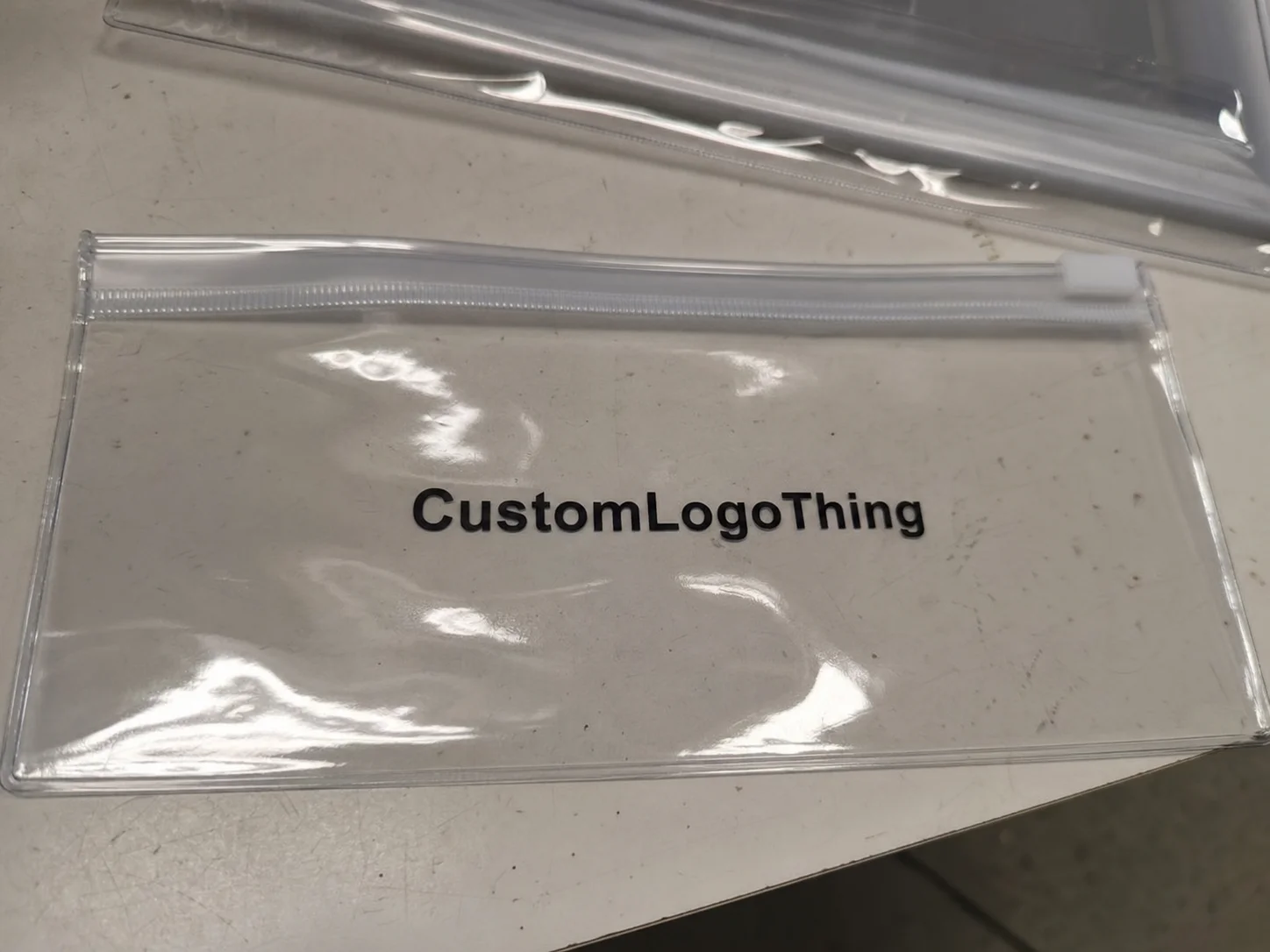
Custom Slider Lock Clothing Bags for cosmetics brands are useful because beauty kits often need visibility, resealability, and a clean presentation without the weight or cost of rigid secondary packaging. They work especially well for sample sets, skincare minis paired with accessories, travel bundles, gift-with-purchase packs, and apparel-linked promotions that include items like headbands, scrunchies, or folded fabric accessories.
Clear or lightly tinted film lets the customer inspect color, count, and layout without opening the package. That matters in fulfillment too. A packer can confirm the contents, reseal the bag, and move to the next order without replacing a tear strip or rebuilding a carton. Retail staff can check a kit quickly before it goes onto a display shelf or back-bar station.
The cost structure is another reason brands use this format. A rigid printed box often looks more premium, but it adds board cost, finishing cost, storage bulk, and sometimes insert cost. A slider bag usually sits lower on the price ladder, especially at moderate production volumes, while still leaving enough surface area for branding, barcode placement, care instructions, and compliance copy.
Practical point: once the package is meant to be opened more than once, the closure becomes part of the product experience rather than a minor mechanical detail.
That is where these bags perform well. A customer may remove one item and keep the rest in the same pouch. If the film wrinkles heavily, the seal slips open, or the slider feels rough, the package starts to look worn before the contents are even used. The effect is subtle, but for cosmetics brands it still matters.
Compared with basic zipper pouches, slider closures are easier to use with wet hands, long nails, or limited dexterity. Compared with boxes, they take less shelf and storage space. That makes them practical for spa kits, hotel amenities, e-commerce bundles, salon retail, and launch packaging that has to move through several handling points before it reaches the customer.
How the slider lock closure works in daily use
A slider lock closure uses two interlocking tracks across the opening of the bag. The slider moves along the tracks and presses them together, creating a repeatable seal. Instead of pinching along the entire width of the opening, the user simply runs the slider across one direction and then back again to open it.
That mechanical difference sounds small, but it matters in production. If a team is building 1,500 kits with multiple SKUs, an insert card, and a soft accessory, the closure needs to be fast enough for repeated handling and simple enough that staff do not have to fight it. A good slider saves time. A poor one adds friction to packing and inspection.
For cosmetics workflows, inspectability is a major advantage. Teams can assemble the kit, verify contents, reseal the bag, and ship it without making the package look damaged or tampered with. That is useful for launch bundles, influencer seeding, seasonal gift sets, and any order where one missing item can trigger a replacement shipment.
There is one point buyers should not ignore: seal performance depends on the full system, not just the slider itself. Film stiffness, track alignment, slider fit, and the weight and shape of the packed contents all affect how the bag behaves. A pouch holding two sachets and a satin headband behaves very differently from one holding three glass bottles and a dense insert card.
- Track alignment: poor alignment creates weak points near the ends of the seal.
- Film stiffness: overly soft film stretches around dense items and can distort the closure line.
- Slider fit: a loose slider can feel low grade; an overly tight one slows packing.
- Fill volume: overpacked bags push against the closure and raise the risk of the seal popping open.
Transit testing helps here. Distribution handling is rarely gentle, and packages that look perfect on a packing table can behave differently after vibration, stacking, and parcel drops. Reviewing test concepts from ISTA gives teams a more realistic frame for judging whether a bag is good enough for the actual shipping path, not just for a sample photo.
Materials, thickness, and print choices that change performance
Material choice affects clarity, hand feel, scuff resistance, and how much stress the bag can carry without distorting. Beauty brands usually start by asking for clear film because the contents are visual. That works well for shade sets, minis, accessories, and mixed kits where the customer should be able to see what is inside without opening the package.
Clarity is not always the best choice, though. Frosted film can reduce visual clutter when the kit includes small parts, folded paper, multiple tubes, or mixed shapes. Tinted film can support a brand color system. Opaque film is often better when the contents are not visually tidy or when the bag is meant more for storage and reuse than for display.
Thickness is a functional spec, not a decorative one. Thin film can reduce cost and material weight, which helps on larger runs. Heavier film improves hand feel, resists stretching, and gives better support for dense contents. Many retail-oriented flexible bags fall somewhere around 2.5 to 4 mil, but the right figure depends on size, product weight, closure design, and the supplier's converting process. Larger formats usually need more structure because the surface area under load is higher.
Scuff resistance matters more than many buyers expect. Cosmetic bags move from the converting line to the warehouse, then into cartons, then into parcel handling, then into customer storage. A glossy clear finish can look clean in a sample and still show rub marks after a short transit path. Frosted or matte-leaning finishes often hide wear better, though they reduce the sharpness of the view through the bag.
Print strategy should follow the real function of the package. Some brands only need a logo, a product name, and a QR code. Others need barcode space, care instructions, suffocation warnings, ingredient references, batch coding, or country-of-origin details. If the text has to stay readable after handling, check it at actual size before production. What looks acceptable in a PDF can turn into visual noise once printed on flexible film.
Regulated beauty copy deserves a careful review. Claims such as "dermatologist tested," "clean," or "reef safe" may need internal approval before they go to press. Flexible packaging is not exempt from claim review just because the format is simple. A reprint of 10,000 bags because the copy changed late is an avoidable expense, and it usually costs more than the artwork revision itself.
For brands comparing packaging formats, it helps to think in terms of what the bag replaces. If the slider bag carries the logo, barcode, warning copy, and product grouping, it may remove the need for a printed sleeve or an extra label. That changes the total package budget more than the unit price alone suggests.
Cost, pricing, MOQ, and unit cost drivers
The quote for custom Slider Lock Clothing Bags for cosmetics brands usually depends on six things: size, film thickness, slider hardware, print colors, finish, and packing configuration. Add custom dimensions, special film stock, or tight color matching, and the setup work rises before the first run even starts.
MOQ exists for practical reasons. Film rolls have minimums. Printing requires setup. Slider components and conversion lines run more efficiently when the order is large enough to avoid constant stops. Lower quantities are possible, but the unit cost usually climbs because the fixed setup cost is spread across fewer bags.
As a planning range, small custom runs may land around $0.28 to $0.65 per unit for standard sizes with simple branding. Higher-volume runs can move lower, sometimes into the $0.12 to $0.30 range, depending on dimensions, print coverage, freight, and the region where the bags are made. Heavier gauges, specialty finishes, or multi-color work can push pricing higher. These are working ranges, not guarantees, because supplier structure and raw material pricing vary.
| Packaging option | Typical use | Estimated unit range | Tradeoff to review |
|---|---|---|---|
| Plain poly bag | Basic protection or internal packing | $0.03-$0.12 | Lowest cost, but limited presentation and little reuse value |
| Custom printed zipper pouch | Light retail kits and sample sets | $0.10-$0.35 | Good branding, though press-to-close seals are slower for repeated access |
| Custom slider lock bag | Resealable beauty bundles, apparel promo kits, visible product packaging | $0.12-$0.65 | Better usability, but higher hardware and conversion cost |
| Printed folding carton | Retail shelf presentation and premium secondary packaging | $0.30-$2.50+ | Strong shelf presence, but more storage space and more material weight |
Unit price can mislead if it is viewed in isolation. A slider bag that costs a few cents more than a plain bag may still reduce total packaging spend if it replaces a sleeve, label, or inner carton. It can also reduce damage, improve fulfillment speed, and give the customer a package that is easier to keep using after the first opening.
Ask for quotes at two or three volume levels, such as 2,500, 5,000, and 10,000 pieces. The spread usually tells you whether setup cost or raw material is carrying most of the price. If the 10,000-piece price drops sharply, setup is a major factor. If the drop is small, the cost is more likely tied to film weight, slider hardware, or freight.
A useful quote request includes exact flat dimensions, expected fill depth, product weight, finish preference, print placement, number of print colors, packing count per carton, target volume, and destination. If a pre-production sample is required, say so early. A vague brief tends to create padded pricing because the supplier has to build in room for unknowns.
Sustainability claims need care as well. A reusable bag is not automatically a lower-impact bag. Material type, thickness, local recycling access, reuse rate, and shipping weight all influence the actual footprint. General materials guidance from the U.S. Environmental Protection Agency at epa.gov/smm is a useful reference point while teams evaluate whether a bag is really improving the package system or just changing its appearance.
Production steps and timeline from proof to shipment
Production should start with a spec sheet. That sheet needs the bag width, height, closure position, usable fill space, film type, thickness, print area, print colors, quantity, packing count per carton, and destination. If the bag must fit inside a mailer, a shelf tray, or a promotional display, include those dimensions too. Small gaps in the brief usually turn into delays later.
Artwork review follows. The supplier checks file format, bleed, color mode, line weights, barcode size, and whether text sits too close to the slider track or seal zone. Flexible packaging has tolerances, and those tolerances matter. Critical artwork should stay away from the edges where heat, pressure, and hardware movement can distort print.
Sampling can be digital, physical, or both. A digital proof confirms layout and copy. A physical sample confirms fit, feel, slider operation, and overall balance. For custom Slider Lock Clothing Bags for cosmetics brands, a physical sample is worth the extra step whenever the contents are mixed-shape, heavy, or tightly packed. A PDF cannot show how the closure behaves under real load.
Typical timelines vary by order type. An unprinted stock-size bag can move in a few business days if inventory is already available. A custom printed order often needs 12 to 20 business days after proof approval. Add more time if the project needs sampling, revision rounds, peak-season queueing, or special freight booking. New tooling, uncommon materials, or tight color matching can add another 1 to 3 weeks. Air freight shortens transit, but it can erase the savings from a lower offshore unit cost.
- Confirm packed product dimensions and target quantity.
- Send artwork, brand color references, and required copy.
- Review the digital proof for placement, spelling, barcode size, and seal clearance.
- Approve the physical sample after checking fit, slider feel, and print readability.
- Release production and confirm carton packing details.
- Inspect finished goods before freight booking or final delivery.
Most delays come from small issues that are easy to ignore at the start. A missing insert changes the fit. A late barcode update delays proofing. A logo revision after sample approval restarts the art queue. A destination change affects carton marks and freight timing. None of those problems is unusual.
To keep timelines under control, submit final artwork early and assign one person to approve proofs. If three teams are reviewing the same sample with different priorities, a week disappears quickly and no one feels responsible. Packaging schedules are especially unforgiving during retail launches and seasonal drops.
Common mistakes that turn a simple bag into a costly reprint
The most common mistake is sizing the bag around the product before the product is actually packed. A folded headband, two mini tubes, an insert card, and an applicator do not behave like a flat rectangle. Once the pieces are inside the bag, the package gains thickness, pressure points, and shift. The spec needs to reflect that real packed version.
Leave practical clearance. If the opening is too tight, packing slows and the slider works harder than it should. If the bag is too loose, the contents move around and the kit looks unfinished. For many soft bundles, adding 0.5 to 1 inch of room in width or height can improve the fit, but the right allowance depends on shape, fill depth, and the number of components inside.
Another error is forgetting the smallest piece in the kit. Inserts, hang tags, applicators, sachets, and folded apparel items can all affect fit and presentation. One overlooked component can push the bag open, bulge the closure area, or shift the logo out of the most visible panel.
Print placement mistakes are just as expensive. Logos too close to the slider can rub or distort. Fine text printed over a curved or stressed area may become hard to read. Compliance copy should sit in a stable zone with enough contrast to stay legible after handling. Black text on smoky film may look good in a mockup and weak under warehouse lighting.
Claims need their own review path. Beauty teams often move fast around seasonal kits and influencer launches, but the packaging should not go to production until marketing copy, ingredients, usage notes, and regulatory language have cleared the right approvals. A supplier can verify printability. They cannot validate your product claims.
Fulfillment is the quiet test most teams overlook. If the closure is awkward, staff slow down. If staff slow down, labor cost rises. If customers struggle to reopen the bag, they may tear it and lose the reuse value that justified the format in the first place. The bags should be tested by the people who will actually pack and open them, not only by the people who approved the artwork.
Next steps for specifying the right bag for your launch
Start with a one-page spec. Keep it plain: packed product dimensions, target use case, order volume, desired finish, branding needs, print colors, compliance text, and whether the bag has to support display, storage, shipping, or all three. Include product weight. A bag holding 90 grams behaves differently from one holding 600 grams.
Order a physical sample before you commit to production, especially for mixed cosmetic kits. Put the real contents inside. Shake it gently. Open and close it 10 to 20 times. Check whether the slider catches, whether the film stretches, whether the contents push into the seal, and whether the logo still sits where it should. That kind of test catches most avoidable mistakes before the purchase order becomes expensive.
Compare at least two versions. One can prioritize presentation: clearer film, cleaner logo placement, possibly a frosted panel for contrast. The other can prioritize logistics: slightly heavier film, more clearance, simpler print, stronger closure performance. Then compare the total launch cost, not just the unit price. Freight, labor, damage reduction, replacement packaging, and customer reuse all belong in the calculation.
If the choice is still between flexible bags, cartons, sleeves, or mailers, compare how each structure handles the real product path. A package rarely fails because one isolated spec was wrong. It fails because the bag, insert, product weight, packing method, and shipping path were treated as separate decisions. A good package system keeps those pieces aligned from the start.
Custom Slider Lock Clothing Bags for cosmetics brands work best when the package has to protect, present, and reseal cleanly in one format. They are not the right answer for every launch. But for sample bundles, apparel-linked beauty kits, influencer mailers, and visible Product Packaging That needs repeated access, they can be a practical middle ground between a plain poly bag and a full custom carton.
FAQ
What sizes work best for custom slider lock clothing bags for cosmetics brands?
Choose the size from the packed item, not the item alone. Include inserts, applicators, folded apparel pieces, sample cards, and any air space created by the product shape. A physical fit test is the fastest way to catch bulging, excess slack, or a closure that is too tight to operate smoothly.
Are slider lock bags better than standard poly bags for cosmetic kits?
Slider lock bags usually feel more premium and are easier to reopen, which helps with display, inspection, and reuse. Standard poly bags can be cheaper, often by several cents per unit, but they are less convenient when the package needs repeated access or a cleaner branded presentation.
What MOQ should I expect for a custom order?
MOQ depends on size, film choice, print complexity, and whether the order needs custom tooling or special finishing. Larger runs usually lower unit cost, so ask for pricing at two or three volume levels before deciding on the final quantity.
How long does production usually take?
Timeline depends on sampling, artwork approval, and the production queue. Simple stock or unprinted orders move faster, while printed or highly customized runs often need additional time for proofing, sampling, production, inspection, and freight.
Can the bags be branded without making the closure harder to use?
Yes. Keep artwork clear of the slider track and seal zone so the bag still opens and closes smoothly. Place branding where it improves visibility, not where it interferes with function or causes print wear during repeated handling.


