Buyer Fit Snapshot
| Best fit | Printed Tissue Inserts for Ecommerce projects where brand print, material claims, artwork control, MOQ, and repeat-order consistency need to be specified before quoting. |
|---|---|
| Quote inputs | Share finished size, material target, print colors, finish, packing count, annual reorder estimate, ship-to region, and any compliance wording. |
| Proofing check | Approve dieline scale, logo placement, barcode or warning zones, color tolerance, closure strength, and carton packing before bulk production. |
| Main risk | Vague material claims, crowded artwork, missing packing details, or unclear freight terms can make a low unit price expensive after revisions. |
Fast answer: Printed Tissue Inserts for Ecommerce: Material, Print, Proofing, and Reorder Risk should be specified like a repeatable production item. The safest quote records material, print method, finish, artwork proof, packing count, and reorder notes in one written spec.
Production checks before approval
Compare the actual filled-product size with the drawing, then confirm tolerance on folds, seals, hang holes, label areas, and retail display edges. Reserve space for logos, QR codes, warning copy, and material claims before decorative graphics fill the panel.
Quote comparison points
Review material grade, print process, finish, sampling route, tooling charges, carton quantity, and freight assumptions side by side. A quote is only useful when the supplier can repeat the same color, closure quality, and packing count on the next order.
Printed tissue inserts for ecommerce are one of those packaging details customers notice faster than brands expect. A carton can be plain corrugated, the mailer can be standard, and the shipping label can do nothing more than move the box through the network, yet the first branded surface a shopper often touches is the tissue wrap inside. That is why printed tissue inserts for ecommerce can do more than look polished; they can make the opening moment feel deliberate, orderly, and worth sharing.
From a packaging buyer’s point of view, printed tissue inserts for ecommerce are simple in concept and more nuanced in execution. They are lightweight branded sheets placed around, above, or beside products inside the carton, and they can do triple duty: protect the item, separate components, and reinforce the brand story without forcing a structural packaging redesign. The value is not limited to decoration. It is the way a sheet of tissue turns a basic packout into a more thoughtful presentation, often for a fraction of the cost of changing the box itself.
That matters because ecommerce packaging gets only a few seconds to make a case for itself. A customer opens the shipper, scans the contents, and decides almost immediately whether the order feels premium or rushed. Printed tissue inserts for ecommerce help shape that judgment. They signal care, consistency, and a level of discipline in the packout, which is exactly what brands want when the physical product experience has to carry some of the same weight as the website did at checkout.
There is also a practical side that gets overlooked. Tissue can reduce surface dust, keep individual SKUs from rubbing directly against each other, and make a multi-item order look cleaner when it is packed. In other words, printed tissue inserts for ecommerce are not just a pretty layer added at the end; they are part of the product-handling system. The rest of this piece focuses on the decisions that matter in real buying cycles: artwork, paper choice, cost, timing, and how the insert actually fits into fulfillment work.
Printed tissue inserts for ecommerce: the unboxing layer customers notice first
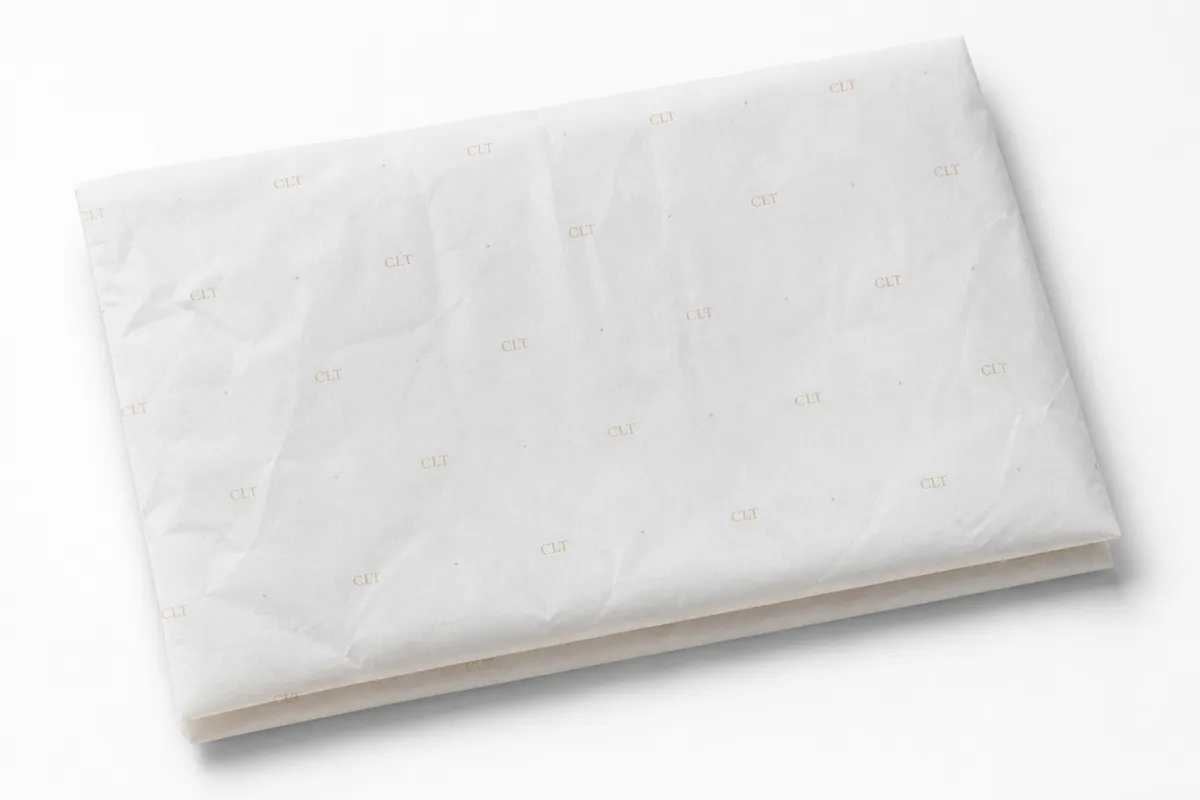
Most people think of tissue as a secondary package component. In real packout, though, it often becomes the first branded surface a customer touches, which is why printed tissue inserts for ecommerce punch above their weight. The product may still be folded underneath or wrapped inside, but the tissue is what the shopper sees first when the carton opens and what they feel first when they lift or unwrap the contents. That tactile moment carries more influence than many teams expect.
Defined plainly, printed tissue inserts for ecommerce are lightweight branded paper sheets used to wrap, cushion, line, or separate products inside an ecommerce carton. They can sit on top as a reveal layer, wrap individual items, line the inside of a box, or act as a separator between SKUs. Because the material is thin and flexible, it adapts easily to different packouts, from a single garment in a poly mailer to a mixed merchandise order in a corrugated shipper.
The branding value comes from restraint as much as from graphics. A strong tissue design does not need to shout. It needs to be recognizable, legible when folded, and visually tidy when it is crumpled, tucked, or opened by hand. That means pattern repeat, logo scale, and color placement matter more than a lot of brands realize. Printed tissue inserts for ecommerce look best when they are designed for motion, not only for a flat presentation on a screen.
There is a design psychology at work here too. A plain shipping carton can feel transactional, while a carton with printed tissue inserts for ecommerce feels prepared. The customer does not need to know the production details to read the signal. They see that the brand thought through the final six inches of the journey, and that usually translates into a stronger quality impression than a generic package would create.
Printed tissue works best when it still looks intentional after it has been folded twice, handled quickly, and opened by someone who is not trying to be careful.
Another reason printed tissue inserts for ecommerce matter is that they improve presentation without forcing heavier packaging changes. A brand does not always need a custom rigid box, special inserts, or a complete mailer redesign to look more premium. Sometimes a carefully specified tissue sheet gives enough lift to support the positioning, especially for apparel, beauty, accessories, stationery, and giftable goods. That is why so many packaging teams treat tissue as a smart middle ground: low structural complexity, meaningful visual return.
Done well, printed tissue inserts for ecommerce also make the unpacking process feel tidier for warehouse staff. Sheets stack flat, store compactly, and can be fed into a simple hand-pack flow. That matters on the floor, because a good-looking insert is not helpful if it slows down pick-and-pack work or creates a messy bench. The best designs respect the realities of packout, not just the mood board.
When a buyer asks whether tissue is “worth it,” the better question is usually whether the current packaging leaves enough room for a branded reveal. If the answer is yes, printed tissue inserts for ecommerce are often one of the least expensive ways to make the whole order feel more deliberate.
How printed tissue inserts for ecommerce work inside the packout
The physical job of printed tissue inserts for ecommerce depends on where they sit in the packing sequence. Sometimes the tissue wraps a single item completely. Sometimes it lines the box so the product lands on a branded surface. Sometimes it sits on top as a reveal sheet that the customer lifts away before reaching the product. Each use creates a slightly different experience, and each one changes how the sheet should be designed.
For example, a tissue wrap around a sweater or soft goods item will fold around corners, overlap at seams, and likely be compressed by hand during assembly. In that case, logo placement needs to survive folds and the repeat pattern should still read when only part of the sheet is visible. A top reveal sheet, by contrast, can carry a stronger central motif because the customer sees more of the face before opening it. Printed tissue inserts for ecommerce should be built around the most common handling position, not the most flattering mockup.
The interaction with the rest of the packout matters just as much. A corrugated mailer, folded insert card, void fill, label placement, and seal location all influence how the tissue is seen. If the tissue clashes with a branded sticker or gets hidden under a flap, the impression gets diluted. If it complements the carton interior and leaves clean margins, the whole package feels more coherent. That is why printed tissue inserts for ecommerce are best planned as part of the entire packout system, not as a standalone print order.
One mistake I see often is over-designing the sheet for a flat proof and under-designing it for real handling. Tissue is soft, translucent depending on basis weight, and highly responsive to folds. A tiny logo can disappear when the sheet is tucked. Dense artwork can become visually noisy when the paper overlaps itself. Printed tissue inserts for ecommerce need enough repeat rhythm to stay visible, but enough white space to breathe when the sheet is folded, torn, or partially hidden.
There is also a sequence effect. If the tissue opens first and the product appears second, the sheet can create a sense of anticipation. If the customer sees the product immediately through a partially open wrap, tissue becomes more of a framing device. Both approaches work, but they create different expectations. A premium apparel brand might prefer a fuller reveal. A subscription box might want a top sheet that keeps the contents neat and staged. Printed tissue inserts for ecommerce can support either outcome, provided the team chooses the right fold style and sheet dimensions.
In fulfillment, the insert should be practical. If a picker has to fight with oversized sheets or align graphics by eye on every order, packout speed drops and consistency suffers. A good tissue spec makes the floor easier, not harder. That often means pre-cut sheets, a repeat pattern that hides minor alignment variation, and a size that fits the carton with just enough overhang for a clean fold.
For brands that ship fragile or light surface-finish goods, it is also worth thinking about abrasion and movement. Tissue is not a substitute for engineered protective inserts, and it will not replace proper transit testing, but it can reduce direct contact between items. If your team validates packaging with protocols informed by organizations such as ISTA, you will have a better sense of where tissue helps and where a more structural component is needed.
The practical takeaway is simple: printed tissue inserts for ecommerce work best when they are designed from the inside out. Start with how the order is packed, decide what the customer should see first, and then refine artwork and paper spec around that reality.
Cost, pricing, and MOQ for printed tissue inserts for ecommerce
Price is usually the first serious question buyers ask about printed tissue inserts for ecommerce, and it should be. This is a consumable packaging item, so the numbers need to make sense in the context of margin, order volume, and brand value. The good news is that tissue is often more affordable than brands expect, especially when compared with structural packaging changes. The harder part is understanding what actually Drives the Quote.
The main price drivers are sheet size, paper grade, number of print colors, ink coverage, order quantity, and any finishing or packing requirements. A small one-color repeat on standard tissue will usually cost less than a dense, full-coverage design on a heavier sheet. A custom size also tends to cost more than a stock format because cutting and setup add time. Printed tissue inserts for ecommerce become more economical as quantity rises, because the setup cost is spread across more sheets.
In practical terms, many custom runs start around 5,000 sheets, though some suppliers can handle smaller pilot orders and others prefer 10,000 or more. At moderate volumes, a single-color logo repeat on standard tissue might land in the range of roughly $0.06-$0.12 per sheet, while more elaborate print coverage can move into the $0.14-$0.30 range or higher, depending on size and finish. Those are not universal prices, of course, but they are useful planning numbers for printed tissue inserts for ecommerce when a team needs an early budget check.
Hidden costs show up when the quote is under-specified. If the artwork needs cleanup, if the paper must match a tight brand color, if proofs require multiple rounds, or if the sheets need special packaging for inbound handling, the total can rise. Freight matters too, especially on bulky tissue orders where pallets or carton counts can influence landed cost. When buyers compare vendors, they should ask whether the estimate includes setup, proofing, trim, packaging, and delivery. That makes the quote much easier to compare apples-to-apples.
Here is the simplest way to think about value: printed tissue inserts for ecommerce cost money, but generic tissue costs brand equity. If your customer experience relies on a premium, giftable, or carefully curated feel, the incremental spend can pay for itself in stronger perceived quality, fewer complaints about bland packaging, and a more memorable opening moment. That does not mean every brand needs full-coverage print. It means the budget should be judged against the experience it creates.
| Option | Best fit | Typical spec | Indicative unit price at 5,000 sheets | Notes |
|---|---|---|---|---|
| Plain white tissue | Basic protection and low-cost packout | 17-18 gsm, stock size | $0.04-$0.08 | Functional, but not branded |
| One-color logo repeat | Entry-level branded presentation | 17-21 gsm, repeat pattern | $0.08-$0.16 | Good balance of cost and visual lift |
| Two-color or fuller coverage print | Premium unboxing and strong brand recall | 20-30 gsm, custom layout | $0.14-$0.30+ | More setup, stronger shelf-like impression |
| Custom pre-cut tissue | Fast packout and carton-specific fit | Matched dimensions, loose or folded | $0.10-$0.22 | Can reduce labor if sizing is right |
When requesting a quote for printed tissue inserts for ecommerce, provide the open sheet size, the intended folded size if applicable, the product type, the carton or mailer dimensions, the brand colors, the paper weight target, and the order quantity. If you can, include a photo of the packout or a sample of the item being wrapped. That single step often prevents guesswork and keeps pricing closer to reality.
It also helps to decide whether the tissue is a visual accent or a functional wrap. If it only needs to cover the top layer, you may not need as large a sheet or as heavy a basis weight. If it must fully wrap apparel or fragile products, the spec should shift accordingly. Printed tissue inserts for ecommerce are flexible enough to support both, but the budget changes with the job.
For sustainability-minded brands, sourcing also comes up in pricing discussions. If recycled fiber content, responsible forestry, or certified sourcing matters to your brand standards, look for suppliers who can speak clearly about chain of custody and paper origin. Organizations such as FSC are useful references when a brand wants to verify responsible sourcing claims. That does not automatically make a sheet better for every use, but it does give procurement a cleaner path when sustainability needs to be documented.
Process and turnaround timeline for printed tissue inserts for ecommerce
Printed tissue inserts for ecommerce move through a fairly standard production path, but each step can add time if the brief is not tight. The process usually starts with artwork review, then proofing, then printing, drying or curing, finishing, packing, and shipment. On straightforward jobs, the print run itself may be the easiest part. The part that slows things down most often is pre-press, especially when artwork revisions continue after the first proof is sent.
From a planning standpoint, the most useful mental model is this: tissue production is not just press time, it is approval time plus production time plus freight time. A quote that sounds fast can still miss a launch if artwork approval drifts by several days. Printed tissue inserts for ecommerce should be treated like any other packaging component with lead-time risk, not as a last-minute accessory after inventory is already locked.
Simple jobs with stock paper, one or two print colors, and clear artwork often move faster than custom formats with multiple revisions. Larger orders can also take longer, though not always because the press is slow; more often it is because drying, finishing, and packaging need to be handled in batches. If the tissue must be wrapped or palletized in a particular way for receiving, that adds another layer. Printed tissue inserts for ecommerce are very doable on tight schedules, but the team has to allow for the practical steps around the press, not just the press itself.
A realistic planning window for many standard jobs is often 12-15 business days from proof approval, though that can stretch if the paper is specialized, the run is large, or the print coverage is dense. Rush work is possible in some cases, but rush work usually narrows options and can increase cost. If your brand is planning a product launch, holiday shipment, or subscription refresh, build the tissue calendar backward from the ship date instead of starting when the product is already packed and waiting.
A clean approval process helps a lot. I like to see one owner for artwork, one for procurement, and one for fulfillment signoff. When too many people comment separately, decisions slow down and the proof loop gets messy. Printed tissue inserts for ecommerce do not need a six-person debate over a repeat pattern. They need clear brand rules, a realistic color expectation, and a proof that reflects how the sheet will actually be used.
One detail that matters more than many teams expect is how the tissue is allowed to dry or cure, especially if the design uses heavy coverage or darker inks. If sheets are packed too quickly, they can scuff or transfer. That is not always the case, but it is a real production consideration. Ask about handling after print, because the answer tells you a lot about whether the supplier is thinking like a production partner or just a printer.
Another timing factor is paper availability. Common tissue grades are usually accessible, but custom tints, specialty finishes, or unusual basis weights can create a waiting game. If the brand color has to be exact and the sheet needs to match other packaging components, allow more room in the schedule. Printed tissue inserts for ecommerce are simple enough to plan early and annoying enough to rush late.
Key factors that shape the look and performance of tissue inserts
Every tissue decision starts with paper weight, because weight shapes both feel and behavior. A lighter sheet, often in the 17-18 gsm range, feels airy and elegant, but it can be more transparent and easier to tear. A heavier sheet, around 20-30 gsm depending on the paper family, usually feels more substantial and can hide the contents better. Printed tissue inserts for ecommerce should match the product and the price point, because a delicate blouse and a ceramic accessory do not call for the same sheet.
Opacity matters almost as much as weight. If the tissue is too translucent, the product silhouette can show through in a way that undercuts the brand impression. If it is too opaque without enough fold softness, it may feel stiffer than the rest of the packout. The right balance depends on what the sheet is supposed to do: conceal, reveal, frame, or separate. In many cases, printed tissue inserts for ecommerce perform best somewhere in the middle, where the brand mark remains visible but the product is still hidden enough to create anticipation.
Ink coverage changes both appearance and handling. Full-coverage dark designs can look rich, but they also make drying and rub resistance more important. Light repeat patterns are more forgiving and often easier to keep crisp through folding. Sharp vector artwork usually holds up better than thin serif type or photographic detail. That is why printed tissue inserts for ecommerce so often rely on clean repeats and bold logos; the material rewards clarity.
Size and format are equally important. Flat sheets are common, but pre-cut sheets matched to carton dimensions can make packout easier and more consistent. Some brands prefer tissue that is just big enough to wrap once and fold over neatly. Others want a larger sheet for a more luxurious reveal. The wrong size creates waste, either because the sheet is trimmed on the fly or because the product gets lost in excess paper. Printed tissue inserts for ecommerce should be sized to the actual bench behavior, not a theoretical ideal.
Brand color choices matter too. White space is not empty space; it is what lets a repeat pattern feel premium instead of crowded. A simple logo on a calm background often reads better than a busy print where every inch competes for attention. If the tissue is only partially visible, maybe because it is tucked under a folded lid or layered with a product card, the logo needs enough contrast to survive the view angle. Printed tissue inserts for ecommerce should be designed with that partial visibility in mind.
Sustainability is another practical factor. If the tissue is made from fiber that can fit into your broader recycled or certified sourcing strategy, say so clearly and keep the claim accurate. Do not overstate recyclability if local programs vary, and do not assume all inks behave the same. For general waste and material context, the EPA offers useful background at epa.gov. A thoughtful brand will look at fiber content, print chemistry, and how much material is really required before calling a package “better” on environmental grounds.
That last point is where many teams get more disciplined over time. They start with a lovely mockup, then learn that a slightly smaller sheet, a simpler repeat, or a better paper basis weight achieves the same customer impression with less waste. That is not a compromise; it is good packaging engineering. Printed tissue inserts for ecommerce reward that kind of restraint.
Step-by-step guide to planning printed tissue inserts for ecommerce
The cleanest way to plan printed tissue inserts for ecommerce is to work from outcome to specification. Start by naming the job the tissue has to do. Is it there for a premium reveal, for product protection, for seasonal branding, for subscription continuity, or for a combination of all four? If the team cannot answer that clearly, the artwork and size will drift, and the quote will become harder to control.
After that, audit the packout flow. Watch how orders are actually assembled on the bench. Measure the carton or mailer, note the product size, and see whether the packer is wrapping one item or several. This is the point where a lot of packaging plans improve dramatically. Printed tissue inserts for ecommerce should fit the hand motion and the box geometry, not just the brand deck. If the bench is tight, choose a format that stacks cleanly and folds without fuss.
Build the artwork around repeatable elements once the flow is clear. Use vector logos, maintain safe margins, and keep critical type away from trim edges or fold lines. A repeat pattern that is too dense can feel crowded after folding, while a logo placed too close to the edge may disappear when the sheet is tucked. The safest approach is usually to design the tissue for what the customer sees most often: the folded face, not the full open sheet. Printed tissue inserts for ecommerce work best when the graphic system is simple enough to survive real handling.
Then request a proof and test it with actual products. Put the sample into the carton, fold it the way the warehouse will fold it, and open it the way the customer likely will. Check whether the logo reads, whether the pattern feels busy, and whether the tissue tears where it should or where it should not. This is also a good moment to compare the tissue against the rest of the package interior. If the colors fight the box or the insert card, the whole experience suffers. Printed tissue inserts for ecommerce should always be tested in context.
A practical planning checklist helps keep everyone aligned:
- Define the role of the tissue: wrap, liner, reveal, separator, or combination.
- Measure the carton, product, and fold dimensions with real samples in hand.
- Approve the artwork repeat, logo scale, and color expectations.
- Request a physical proof and test it in the packout flow.
- Lock the specification sheet so procurement and fulfillment order the same thing.
That last step matters more than it sounds. A tissue order can go off track if the designer, buyer, and fulfillment manager each hold a slightly different version of the spec. One person thinks the sheet is 20 by 30 inches, another thinks it is 17 by 24, and a third assumes the tissue is pre-folded. Printed tissue inserts for ecommerce should live on one approved spec page with dimensions, paper weight, print colors, quantity, and lead time all listed clearly.
If your products will travel through rougher parcel networks or need packaging validation, fold those requirements into the plan early. Transit testing guidance from ISTA and material references from ASTM can help the team decide whether tissue is enough for a given use or whether another protective component is needed. Tissue is valuable, but it is not a substitute for proper protection when the product needs more than presentation.
Once the spec is locked, the final step is calendar discipline. Build a simple buffer for proof review, production, and freight. That buffer is what keeps printed tissue inserts for ecommerce from becoming the thing that slows a launch, a seasonal drop, or a subscription refresh. The brands that get this right usually treat tissue as a planned packaging component, not a decorative afterthought.
Common mistakes, expert tips, and next steps for printed tissue inserts for ecommerce
The most common mistake is overcrowded artwork. Brands often try to fill every inch of the sheet because they want the tissue to feel premium, but the result can look busy once it is folded and handled. Printed tissue inserts for ecommerce usually look better when the design leaves room for the eye to rest. White space, repeat rhythm, and a clear logo placement often deliver more polish than a dense all-over print.
Another mistake is ordering before testing the packout. It is easy to approve a design on screen and hard to live with a tissue size that bunches up, tears at the fold, or hides the product awkwardly. Printed tissue inserts for ecommerce should be trialed with real SKUs, real cartons, and the same bench process the fulfillment team uses every day. That test often reveals whether the sheet should be trimmed, enlarged, or redesigned.
Color mismatch is another trap. Tissue is forgiving in some ways, but brand colors that look rich on a monitor can print differently on paper, especially on thin substrates with light coverage. If color accuracy matters, ask for realistic proofing and allow for paper-based variation. Printed tissue inserts for ecommerce can still feel consistent without being laboratory-perfect, but the team should know how much tolerance is acceptable before production begins.
My strongest practical advice is to keep the design simple enough to survive movement. A repeat logo, a recognizable mark, and a strong background color usually age better than a trendy layout that depends on perfect alignment. Printed tissue inserts for ecommerce live in motion, so the design should be built for motion. If the tissue is going to be folded at scale, it should still read well when only one corner is visible.
Here are a few expert habits that tend to save time and money:
- Use a repeat pattern that still reads when folded or layered.
- Choose a sheet size that matches the carton with minimal waste.
- Keep key artwork away from trim edges and fold lines.
- Confirm paper weight and opacity before approving the run.
- Order enough quantity to cover the launch window without overbuying storage space.
That last point is important because over-ordering can create its own problems. Tissue is bulky relative to its value, and inventory sits well only when the forecast is reliable. A better approach is to estimate a quantity that covers the next production cycle, plus a small safety margin, while leaving room for artwork refreshes or seasonal variants. Printed tissue inserts for ecommerce are one of the easier brand elements to update, so there is no reason to tie up too much capital in a version that may change soon.
If you are weighing a first run, start with carton dimensions, product samples, brand colors, and the number of pieces you expect to ship in the first cycle. Then request a quote, review a proof, and test the tissue in the warehouse before signing off. That sequence keeps printed tissue inserts for ecommerce grounded in actual operations instead of aesthetics alone. It also gives procurement and fulfillment one shared target, which is the fastest way to avoid expensive confusion later.
Printed tissue inserts for ecommerce are at their best when they feel effortless to the customer and ordinary to the packer. That combination takes a little planning, but not a lot of drama. Get the size right, keep the artwork disciplined, and allow enough time for proofing. Do that, and printed tissue inserts for ecommerce will add a clean, branded layer that supports the product, the box, and the customer’s first impression all at once.
How do printed tissue inserts for ecommerce differ from plain tissue paper?
Printed tissue adds a branded reveal, while plain tissue is mostly functional and visually neutral. Printed tissue inserts for ecommerce can reinforce logo placement, color consistency, and the overall unboxing story, but they also require more attention to repeat layout, ink coverage, and proofing. Both can protect products, though the printed version usually does more work for brand perception.
What affects the cost of printed tissue inserts for ecommerce?
Sheet size, paper grade, print colors, quantity, and setup complexity are the biggest pricing drivers. Higher order quantities usually reduce the unit cost because setup and press time are spread across more sheets. Freight, proofing, and special packing requests can also move the final number, so printed tissue inserts for ecommerce should always be quoted with exact specs.
How long does production usually take for printed tissue inserts for ecommerce?
Most of the timeline depends on artwork approval, proofing, and production scheduling before the press run starts. Simple jobs can move faster, while large quantities, custom sizes, or multiple color changes usually add time. The safest plan is to build lead time into the packaging calendar before a launch or seasonal shipping push, especially for printed tissue inserts for ecommerce that need to land on a fixed date.
What artwork works best for printed tissue inserts for ecommerce?
Clean repeat patterns, vector logos, and simple brand elements usually print and fold more consistently than dense designs. Artwork should respect fold lines and keep critical details away from edges where trimming or handling can affect readability. High-contrast layouts often give printed tissue inserts for ecommerce a stronger unboxing impression than overly complicated graphics.
Do printed tissue inserts for ecommerce need special equipment or packout changes?
Usually no. Most teams can add tissue with normal hand-pack or light assembly workflows. The bigger requirement is matching the sheet size and fold style to the carton, product, and available bench space. Testing with real orders is the best way to confirm that printed tissue inserts for ecommerce stay fast, consistent, and practical on the line.
Related packaging resources
Use these related guides to compare specs, costs, quality checks, and buyer decisions before making the final call.