Buyer Fit Snapshot
| Best fit | Printed Tissue Paper Wholesale Supplier for Brands projects where brand print, material claims, artwork control, MOQ, and repeat-order consistency need to be specified before quoting. |
|---|---|
| Quote inputs | Share finished size, material target, print colors, finish, packing count, annual reorder estimate, ship-to region, and any compliance wording. |
| Proofing check | Approve dieline scale, logo placement, barcode or warning zones, color tolerance, closure strength, and carton packing before bulk production. |
| Main risk | Vague material claims, crowded artwork, missing packing details, or unclear freight terms can make a low unit price expensive after revisions. |
Fast answer: Printed Tissue Paper Wholesale Supplier for Brands should be specified like a repeatable production item. The safest quote records material, print method, finish, artwork proof, packing count, and reorder notes in one written spec.
Production checks before approval
Compare the actual filled-product size with the drawing, then confirm tolerance on folds, seals, hang holes, label areas, and retail display edges. Reserve space for logos, QR codes, warning copy, and material claims before decorative graphics fill the panel.
Quote comparison points
Review material grade, print process, finish, sampling route, tooling charges, carton quantity, and freight assumptions side by side. A quote is only useful when the supplier can repeat the same color, closure quality, and packing count on the next order.
A Printed Tissue Paper wholesale supplier is one of those partners people tend to ignore until the second or third reorder gets messy. That is usually when the problems show up. The logo that looked crisp in a mockup suddenly feels dull on paper. The sheet size is a little off. The color drifts. The carton count changes. Nothing dramatic, just enough friction to make the packaging team mutter under its breath.
The good news is that tissue paper is not complicated once you know what to ask for. It is thin, branded, and deceptively sensitive to setup details. A strong printed Tissue Paper Wholesale supplier keeps those details under control so the paper looks the same on every run, not just the first one. That is the part buyers pay for, even if the purchase order makes it look like they are buying a pile of sheets.
If you are comparing vendors, this guide breaks down the parts that matter: product options, print specs, pricing drivers, production timing, and the practical questions that separate a decent printer from a dependable printed tissue paper wholesale supplier. We also explain how our Wholesale Programs are structured for volume buying, launch schedules, and brands that cannot afford packaging guesswork.
Why a printed tissue paper wholesale supplier changes unboxing
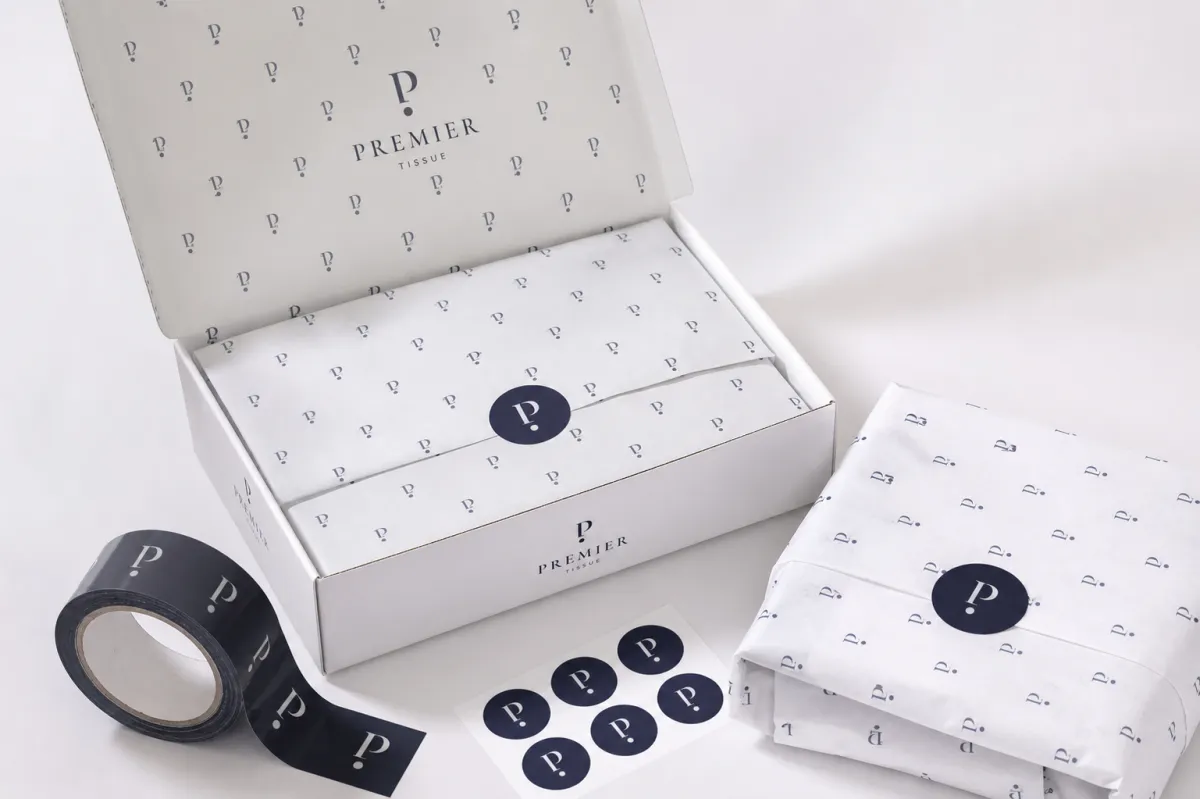
A printed Tissue Paper Wholesale supplier changes unboxing because tissue sits right at the emotional edge of the package. It is usually the first branded surface a customer touches. The product may still be hidden, but the experience has already started. Plain tissue says "someone packed this." Printed tissue says somebody thought about it.
That matters more than some brands want to admit. I have seen simple tissue elevate a modest apparel order into something that feels retail-ready, and I have also seen expensive packaging fall flat because the tissue looked like an afterthought. Same carton. Same product. Completely different impression. That is not magic. It is packaging discipline.
From a budget standpoint, tissue is one of the cleaner upgrades you can make. It is light, easy to store, and usually a tiny slice of total packaging spend. Yet it can do a lot of visual work. In the right program, tissue helps the product feel complete before the customer even sees it. A good printed tissue paper wholesale supplier understands that the goal is not noise. It is polish.
Wholesale changes the picture because the stakes are operational, not decorative. A seasonal launch might need one artwork for a short window, then a new version six weeks later. An ecommerce brand may reorder the same sheet every quarter. A subscription box may need the exact same repeat pattern across several fulfillment sites. A printed tissue paper wholesale supplier has to keep all of that stable. Pretty is nice. Repeatable is better.
"A reliable printed tissue paper wholesale supplier should make the second order feel boring. Same color. Same fold. Same outcome. Boring is good here."
Brands that buy at scale should ask practical questions first. What sheet sizes are standard? How many colors hold up well on tissue? How fine can the repeat pattern be before registration gets shaky? A printed tissue paper wholesale supplier that answers cleanly is usually safer to work with than one that sounds confident but vague. Confidence is cheap. Consistency costs money.
The business case is simple. Better tissue can improve giftability, support social sharing, and make a package feel intentional without adding much weight or freight. That does not mean the design should shout. Often the strongest tissue program is quiet: sharp print, clean folds, and a color that sits well with the rest of the packaging. A seasoned printed tissue paper wholesale supplier knows when to hold back.
Printed tissue paper wholesale supplier product options and formats
A capable printed tissue paper wholesale supplier should offer more than one tissue format. Different products need different handling, different coverage, and different sheet sizes. A luxury gift kit, an apparel shipment, and a jewelry package do not want the same thing. If a supplier tries to force one format onto every job, that is usually a bad sign. Or at least a lazy one.
Format is the first decision. Common options include custom printed tissue, branded wrap sheets, interleaving tissue, presentation sheets, and short-run seasonal designs. Some programs need standard sizes for fast packing. Others need custom dimensions so the tissue lines up with a box or mailer exactly. A printed tissue paper wholesale supplier should be able to talk through both without acting like one is somehow too basic.
Then comes the print layout. A repeat pattern is the workhorse for wholesale orders. Logos, icons, monograms, and simple brand marks usually repeat across the sheet with clean rhythm and low waste. Full-coverage artwork can look great, but it usually asks for more setup, more ink, and tighter registration control. A printed tissue paper wholesale supplier should tell you where the trade-off sits instead of pretending every design behaves the same way.
Material weight matters too. Lightweight wrap tissue around 17-22 gsm is common for apparel and ecommerce. A slightly heavier presentation tissue, often around 24-30 gsm, can feel more substantial and fold with less wrinkling. Some brands also need recycled content. Others need acid-free tissue for jewelry, paper goods, or fragile items that should not pick up discoloration over time. A good printed tissue paper wholesale supplier will explain what each option gives you and what it gives up. No hype. Just the facts.
Branding style is where the tissue starts doing strategic work. A one-color logo can feel quiet and premium. Two-color work creates more contrast. Tone-on-tone patterns stay restrained. Bold graphics are better for limited campaigns, holiday packaging, or retail displays. Which one wins depends on the product, the box color, the amount of tissue visible, and how the customer opens the package. That sounds obvious, but it gets missed constantly.
A quick way to separate the options:
- Apparel and ecommerce: lighter wrap tissue, repeat logo, standard sheet size.
- Cosmetics and gifting: midweight sheets, tighter color control, stronger presentation.
- Jewelry and premium goods: acid-free or softer-feel tissue, restrained graphics, smaller format.
- Seasonal promotions: custom artwork, limited-run quantities, more aggressive color use.
A printed tissue paper wholesale supplier is not just selling paper. The supplier is translating packaging intent into something that can be folded, packed, and reordered without constant adjustment. That part is easy to overlook until a run goes sideways and everyone suddenly cares a lot about sheet size.
Specifications that define print quality and performance
A serious printed tissue paper wholesale supplier should be able to walk you through the spec sheet without stalling. If the answer is fuzzy, the order usually gets fuzzy later too. The core details are not exotic: GSM or basis weight, sheet dimensions, print area, color count, fold style, packing method, and carton count. Those numbers drive how the tissue looks, how it handles, and how it ships.
Registration is the first technical detail that separates an average job from a clean one. Tissue is thin and absorbent. It does not forgive sloppy alignment. A shift that would barely show on thicker stock can become obvious on tissue, especially with fine lines or tight geometric repeats. That is why a printed tissue paper wholesale supplier should proof the design at actual scale, not just show you a tiny PDF and hope you do not notice.
Color control deserves the same level of attention. Pantone references help, but physical approval samples are still the safest way to lock expectations. On tissue, inks sit differently than they do on coated paper, so some hues will lean lighter, darker, or a touch softer than the screen version. A good printed tissue paper wholesale supplier says that before production, not after the pallets are already on a truck.
Performance issues show up in packing and in the hands of the customer. Tissue that tears too easily can slow pack-out staff down. Tissue that feels too dry may crack along folds. Ink rub-off can stain apparel or presentation items if the sheet is handled before it fully settles. Softness, opacity, and folding behavior all matter. If the tissue is part of a larger pack-out, ask how it behaves with the box size, the insert count, and the way the product sits inside the package. Otherwise you are kinda guessing, and guessing is not a strategy.
For compliance and sustainability, a printed tissue paper wholesale supplier should be able to discuss recycled content, chlorine-free processing, and FSC chain-of-custody where needed. The FSC standard is still a common reference point for packaging teams. If the tissue is being used inside a broader shipping system, it may also be worth reviewing the right ISTA testing approach for the full pack-out. And if the product is sensitive, ask about acid-free stock instead of assuming every tissue sheet is suitable for delicate goods.
Three specs deserve special attention because they change the final result more than buyers expect:
- Basis weight: even a small gsm change can alter opacity and fold memory.
- Print coverage: more ink increases cost and raises the risk of color shift.
- Packing method: flat-packed, interleaved, or folded sheets affect labor and freight.
A useful printed tissue paper wholesale supplier does not just quote a number and disappear. The supplier should explain why a spec fits the product, where the risk sits, and what will matter most to the customer-facing result. That is the difference between order taking and actual production guidance.
Pricing, MOQ, and what changes your quote
Pricing is where a printed tissue paper wholesale supplier either builds trust or burns it. Tissue pricing is not random, but it is easy to compare badly. Two quotes can look nearly identical and still be built on different sheet sizes, different paper weights, different color counts, or different freight assumptions. That is how the "cheap" quote gets expensive after approval. I have watched buyers learn that lesson the hard way more than once.
The main cost drivers are straightforward. Larger sheets cost more than smaller sheets. Heavier tissue costs more than lighter tissue. More print colors increase setup and production effort. Dense coverage, full-bleed art, and unusual handling all push the price up. A printed tissue paper wholesale supplier should say that plainly instead of hiding behind a vague rate card.
MOQ works the same way. Lower quantities usually carry a higher per-sheet cost because setup and proofing are spread across fewer units. Larger runs lower the unit price and help keep repeat orders consistent. If you know the tissue will be reordered, it usually makes more sense to compare the opening run against expected annual usage instead of treating the first order like a one-off experiment.
There are also costs buyers forget to ask about. Setup charges, plate fees, artwork cleanup, sample charges, freight, duties, and rush premiums can all move the total. A good printed tissue paper wholesale supplier puts those items on the quote early. Nobody likes mystery math after the proof is approved.
| Format | Typical MOQ | Typical unit price | Best fit | Main trade-off |
|---|---|---|---|---|
| Standard 1-color repeat, common sheet size | 3,000-5,000 sheets | $0.10-$0.18 per sheet | Apparel, ecommerce basics, internal brand packaging | Limited coverage and simple artwork only |
| Custom 1-2 color repeat, midweight tissue | 5,000-10,000 sheets | $0.16-$0.28 per sheet | Gift sets, cosmetics, premium mailers | Higher setup effort and tighter proof control |
| Full-coverage or multi-color art | 10,000+ sheets | $0.22-$0.40 per sheet | Retail launches, seasonal campaigns, brand events | More proofing, more ink, longer lead time |
Those figures are directional, not universal. A printed tissue paper wholesale supplier still prices according to sheet dimensions, tissue weight, print area, fold style, freight lane, and total quantity. A small artwork change can move the quote more than buyers expect, especially if the design needs a second proof or a revised color target.
If you want to control spend without making the package feel cheap, start with the variables the customer will not notice first. Standardize the sheet size. Keep the number of colors low if the design can carry the look. Consolidate SKUs where possible. Plan reorder quantities around forecasted demand instead of splitting the same artwork into too many short runs. That is the kind of discipline a good printed tissue paper wholesale supplier can support.
Process and timeline with a printed tissue paper wholesale supplier
A printed tissue paper wholesale supplier should make the process predictable. The best orders are rarely the ones with the loudest artwork. They are the ones that move cleanly from brief to proof to production because the buyer gave the supplier the right information upfront. Packaging gets messy fast when everyone is improvising.
The usual workflow is simple: inquiry, artwork review, proofing, sample approval, production, quality control, packing, and shipment. Most delays happen before the press starts. Missing vector files, unclear Pantone references, or a changed sheet size can add days to the schedule. A practical printed tissue paper wholesale supplier flags those issues immediately instead of waiting until the file breaks later.
Timeline depends on the job size, but a realistic planning range is often 2-5 business days for artwork review and proofing, 5-12 business days for production after approval, and then transit time on top of that. Freight can add a few days on domestic lanes or longer if the order crosses borders. A printed tissue paper wholesale supplier promising a large campaign shipment in an unrealistically short window is probably skipping a step. Maybe several.
Build tissue into the launch calendar early. If the wrap goes inside a box with inserts, labels, or void fill, it should arrive before pack-out starts, not after the goods are staged. That sounds basic, but it is one of the most common planning misses. A good printed tissue paper wholesale supplier can help sequence the order against the rest of the packaging stack so operations does not end up waiting on paper while the warehouse is ready to go.
- Brief the job: sheet size, tissue weight, print colors, quantity, and delivery target.
- Send files: vector artwork, Pantone references, repeat instructions, and brand rules.
- Review proof: inspect scale, placement, color tone, and fold orientation.
- Approve sample: lock the physical reference before full production.
- Run production: confirm pack counts and carton labeling before shipment.
- Plan reorders: keep the spec stable so the next run matches the first.
Rush orders are possible, but they should stay exceptions. If the deadline is fixed, ask the printed tissue paper wholesale supplier about rush sampling, partial shipments, or phased production. Those options are often smarter than forcing the whole job through a tight window and losing print control. Speed is nice. Accuracy is nicer.
For most brands, a little process discipline saves more money than last-minute heroics. Good approvals are cheap. Reprints are not.
Why choose us as your printed tissue paper wholesale supplier
Custom Logo Things treats tissue as a packaging component, not a novelty. That distinction matters. A strong printed tissue paper wholesale supplier should care about how the paper folds, how the color sits against the rest of the pack, and how the reorder will look six months later when the same design comes back through production.
Our approach stays practical. We keep the conversation centered on sheet size, print count, tissue grade, and pack-out use. That helps buyers make decisions faster and compare quotes without decoding a mess of assumptions. If the brief is still being shaped, we can help narrow the options so the final spec is realistic instead of aspirational. That is usually where the good decisions happen.
Flexibility matters too. Some teams want a low-MOQ test before scaling into a larger seasonal run. Others already know their annual consumption and want a cleaner wholesale structure from the start. Our Wholesale Programs are built to support both. The point is not to squeeze every buyer into the same order model. The point is to match the production plan to the brand's sales plan.
Transparent quoting saves time and avoids headaches. A useful quote should show where the price comes from: sheet dimensions, tissue weight, number of colors, coverage, setup, and freight assumptions. If those variables are visible, the buyer can compare options without guessing what got buried. A dependable printed tissue paper wholesale supplier understands that good pricing is legible pricing.
We also think in systems. Tissue rarely ships alone. It sits with mailers, cartons, bags, labels, inserts, and sometimes seasonal promotions. The right printed tissue paper wholesale supplier helps keep those pieces visually aligned so the package looks intentional from the outside in. That matters for ecommerce brands that want a premium feel without overbuilding the box. It also matters when several teams touch the packaging and nobody wants to own the awkward part.
"The best wholesale tissue program feels routine after the first approval. Same color. Same fold. Same result. That is the standard buyers should expect from a printed tissue paper wholesale supplier."
For buyers, the long-term value is straightforward: fewer surprises, cleaner reorders, and a packaging surface that keeps doing its job as the brand grows. That is what a serious printed tissue paper wholesale supplier should deliver.
Next steps for ordering printed tissue paper wholesale
If you are ready to quote, start with a short brief. A printed tissue paper wholesale supplier can move much faster when the basics are already set: sheet size, paper weight, print colors, estimated quantity, and target delivery date. Add the product type too. Apparel tissue and gift tissue may look similar, but they rarely share the same spec.
Gather the files before you ask for pricing. The best package for a printed tissue paper wholesale supplier usually includes vector logo artwork, Pantone references, a simple brand sheet, and any mockup that shows how the tissue will sit inside the box or mailer. If the print is a repeat pattern, include the repeat spacing and any notes on where the logo should land after folding. That saves everyone from the usual back-and-forth.
Request the quote and the sample plan together. That gives you a better view of the actual timeline. A low price with a slow proof cycle is not a good deal if the launch date is fixed. A thoughtful printed tissue paper wholesale supplier should be able to show where the order will spend time and where it can be accelerated if needed.
Approve the proof only after checking it in context. Look at print placement, fold orientation, paper tone, and any color shift against the rest of the packaging system. Then lock the spec. The fewer moving parts you change after approval, the easier the reorder will be. That is how a printed tissue paper wholesale supplier becomes a long-term production partner instead of a one-time quote source.
If there is one takeaway, it is this: decide the spec before you chase the price. Sheet size, tissue weight, color target, and reorder plan should be settled first. Do that, and your printed tissue paper wholesale supplier can give you a quote that actually means something. Skip that step, and you are basically asking for surprises.
What MOQ should I expect from a printed tissue paper wholesale supplier?
MOQ usually depends on sheet size, paper weight, number of print colors, and whether the artwork is a simple repeat or a heavier coverage design. A single-color run on a common sheet size is often easier to produce at lower quantities than a full-coverage or multi-color job. Ask for the MOQ and the price breaks together so you can compare test runs against volume ordering from the same printed tissue paper wholesale supplier.
Can a printed tissue paper wholesale supplier match Pantone colors?
Yes, but the strongest results usually come from sharing Pantone references plus a physical brand sample or approved color target. Tissue absorbs ink differently than coated stock, so some hues shift a little once they hit paper. A physical approval sample is still the safest way to lock expectations before full production with a printed tissue paper wholesale supplier.
How long does a custom printed tissue paper wholesale order take?
Typical timing includes artwork review, proof approval, production, and shipping, so the total schedule depends on how fast approvals move. Sampling is often the first bottleneck because even small revisions can add days. If the tissue is tied to a launch, build in freight time and any customs or peak-season delays so the printed tissue paper wholesale supplier has room to deliver cleanly.
Is printed tissue paper from a wholesale supplier recyclable?
Often yes, especially when the tissue is uncoated and the ink load is suitable for standard recycling streams. Recycled and FSC-sourced options are commonly available if sustainability is part of the brief. Local recycling rules still vary, so it is smart to avoid lamination or mixed-material packaging if recyclability is a priority with a printed tissue paper wholesale supplier.
What artwork files does a printed tissue paper wholesale supplier need?
Vector files such as AI, EPS, or PDF are usually best because they keep logos sharp at scale. You should also provide repeat instructions, color codes, safe areas, and any reference mockups that show how the tissue should sit inside the package. That combination reduces guesswork and helps a printed tissue paper wholesale supplier keep placement, scale, and color aligned from proof to production.