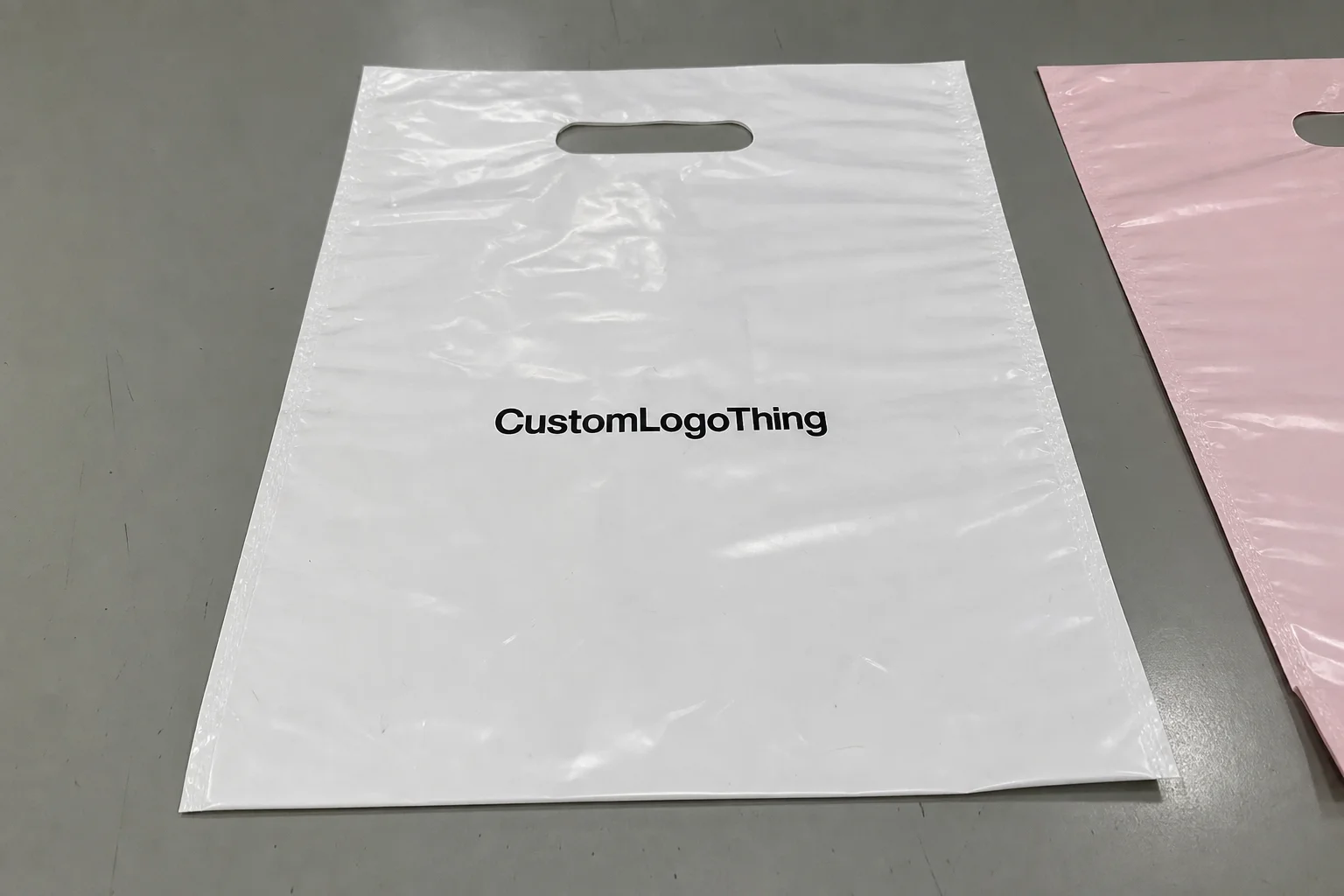
The printed trucker caps artwork checklist for Outdoor Brand Promotions is the difference between a cap that reads cleanly from a distance and one that collapses into a fuzzy, uneven mess after production. A logo can look polished on a monitor, then fall apart on mesh, foam, seams, and curved crown panels the moment it is placed on a real trucker cap. That gap between mockup and finished goods is where most problems start.
Outdoor promotions are not forgiving. Festival crews, trail teams, landscaping staff, volunteer events, and brand activations all put caps into bright sun, sweat, dust, and rough handling. If the artwork is weak, the product does not just look off; it can make the brand feel careless. A clean checklist protects readability, reduces proof cycles, and keeps the finished cap aligned with the identity it is supposed to carry.
"If the artwork depends on a perfect flat surface, it already has a problem."
Printed Trucker Caps Artwork Checklist for Outdoor Brand Promotions
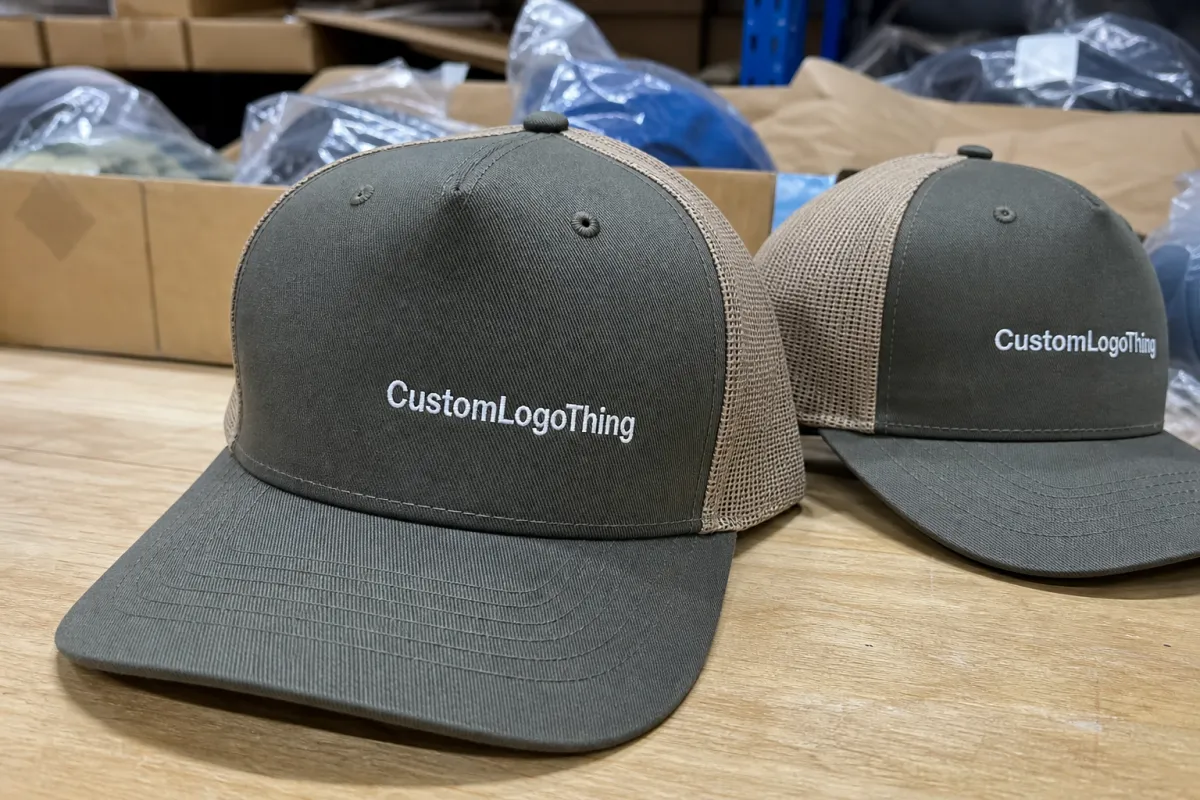
A cap is not a poster, and the checklist has to reflect that. Mesh backs, foam fronts, center seams, stitched panels, and curved crowns all change how artwork sits on the product. Buyers often approve a design that looks balanced in a flat mockup, then discover too late that the placement is tight, the logo is interrupted, or the art has been squeezed to fit a smaller print window.
Outdoor giveaways are usually judged at a glance. People do not lean in to inspect the stitching. They notice a cap while someone hands out samples, loads equipment, or walks across a field. If the design does not hold up in that quick read, the visual branding weakens and the cap starts working against the campaign instead of for it.
The most useful way to think about the checklist is in terms of use case. A landscaping crew needs strong contrast in full sun. A trail event needs artwork that can survive sweat and dust. A brand activation needs a cap that still feels intentional after the first wear, not a cheap afterthought that lowers customer perception. Those are different jobs, and the art has to support the job.
Before a quote goes out, answer four questions:
- Does the logo stay readable at a distance?
- Does the cap style give the art enough flat space?
- Does the decoration method match the detail level in the file?
- Does the proof show the real production risk, not just a polished render?
The checklist should start with cap structure, decoration method, and placement limits, not with design ideas. That order feels less glamorous, but it saves more money than any visual tweak. Once the structure is set, the artwork can be shaped around it instead of being forced into it.
Artwork Specs That Keep Logos Readable on Mesh and Foam
The checklist only works if the file itself is production-ready. For logos and type, vector artwork is still the safest choice because it scales cleanly and keeps edges crisp. AI, EPS, and vector PDF files are usually the best starting point. High-resolution raster can work when the design depends on texture or photographic detail, but artwork pulled from a website is a poor substitute for a real source file.
Small details are the first thing to disappear. Thin strokes, tiny type, and delicate outlines can look elegant on a screen and then weaken on textured foam fronts or across the slight irregularities of a mesh-backed cap. As a practical rule, anything that looks fragile at thumbnail size is probably fragile in production too. For small front hits, bold shapes and simple letterforms hold up better than intricate line work.
Color planning needs to be settled before proofing starts. If the project calls for Pantone matching, that should be stated plainly. If the supplier needs to convert the art into CMYK or a stock ink blend, that should be confirmed in writing. Caps are not the place to discover that a bright orange in the mockup has become a muted peach in production. That kind of shift can undo brand consistency fast.
Placement matters just as much as file quality. Front panels usually offer the best imprint area, but side hits and back hits shrink quickly. Seam lines, vents, and stitching can cut through artwork if the artboard is built from a generic template instead of the actual cap model. A structured five-panel trucker and a low-profile foam-front cap do not share the same safe zone, so the measurements need to match the product.
For event programs that ship in bulk, carton testing deserves a place in the conversation. The ISTA test methods are a useful reference when cartons need to survive compression, vibration, and transit damage. A crushed crown still looks bad on arrival, even if the print itself is perfect.
If the order includes paper hang tags, folded inserts, or retail labels, choose materials carefully. A simple responsible paper stock can support the packaging story without turning the project into a branding exercise that nobody asked for. The FSC certification language is a practical place to start when sustainability claims need to be straightforward and credible.
Production Steps and Turnaround for Outdoor Promo Caps
The other half of the checklist is timing. Most delays happen in the handoff between design and production, not on the press or in the sewing room. The usual path is simple enough: file intake, artwork review, proof generation, revision, approval, prepress, production, and packing. The trouble is that buyers often assume the clock starts after approval. It does not. It starts when the supplier has to interpret an incomplete file.
Clean files shorten every stage. Missing dimensions, vague placement notes, old logo versions, and unlabeled color references all add back-and-forth. One organized submission can save days. A messy one can eat a week before anyone notices the calendar moving.
Typical timelines vary by decoration method and order size, but these ranges are realistic for standard programs:
- Proofing: 1-3 business days when the artwork is complete.
- Sample or pre-production mockup: 2-7 business days, depending on decoration method and revision depth.
- Production: often 12-15 business days after approval for straightforward orders.
- Shipping: separate from production and always counted on its own line.
Rush orders can compress that schedule, but they do not erase the need for complete artwork. If the file is not ready, a rush order only makes the mistake more expensive. It can also narrow decoration options, since some methods need extra setup or curing time. Buyers planning a launch date should know that before they commit the team to a promise they cannot keep.
Shipping is part of lead time for outdoor activations. A cap order that leaves production on time but arrives after the event is still late. If the program supports field crews, festivals, or seasonal campaigns, build in a cushion for transit, receiving, and distribution. That is a planning issue, not an insurance policy.
Pricing, MOQ, and Quote Triggers for Trucker Cap Orders
Artwork choices move cost more than many buyers expect, so the checklist should include the quote triggers too. Quantity matters first. Then decoration locations. Then color count. Then cap style. After that come the smaller items that quietly add dollars: special packaging, custom labels, extra revision rounds, and rush handling.
Minimum order quantities vary by supplier and by decoration method, but many programs land somewhere around 48 to 144 pieces. Smaller runs are possible, yet the setup costs do not shrink just because the order is short. That is why the per-cap price rises quickly on small batches. It is arithmetic, not a gimmick.
| Option | Best For | Typical Price Impact | Watch-Out |
|---|---|---|---|
| One-color front print | Simple logos, giveaways, field crews | $0.45-$0.95 each at 5,000 pcs; $1.10-$1.80 each at 1,000 pcs | Needs bold art and enough front space |
| Two-color or multi-color front print | Retail-style branding, stronger visual branding | $0.70-$1.35 each at 5,000 pcs; $1.40-$2.60 each at 1,000 pcs | More setup and color matching add time |
| Front plus side hit | Campaigns that need more brand visibility | $0.95-$1.75 each at 5,000 pcs; $1.90-$3.20 each at 1,000 pcs | More placement risk near seams and curvature |
| Custom label or retail packaging | Resale, merch programs, premium presentation | Adds roughly $0.20-$0.60 each | Raises packaging complexity and lead time |
Those numbers are planning ranges, not promises. A low quote can become the most expensive option if it hides proof fees, revision charges, or a decoration method that does not suit a textured front panel. Paying a little more for the right process usually costs less than remaking a bad run and explaining the miss to marketing.
If the order is retail-facing, packaging deserves real attention. Printed tissue, a belly band, or a simple hang tag can improve the unboxing experience and make the cap feel deliberate instead of bulk-packed. That matters to customers who notice details immediately, especially when the product is meant to carry the brand beyond the event itself.
Step-by-Step Artwork Prep Before You Request a Proof
Before asking for a proof, run the checklist line by line. Gather the correct logo files, brand colors, approved fonts, and any usage rules that control how the mark can appear. If sales, marketing, and operations are each using a different version of the same logo, fix that first. Production teams spend too much time untangling files named like they were saved during a panic.
Then measure the actual cap style you are buying. A foam-front trucker cap has a different artboard than a structured five-panel style or a lower-profile crown. The print window, seam placement, and curvature all change the usable area. If the supplier does not give dimensions, ask before approving anything. Guessing is not a workflow.
For the design itself, choose one primary message. Outdoor promo caps are small real estate. A strong logo, a short brand line, or a single icon usually works better than a crowded front panel with several lines of copy and a detailed illustration. If the cap is supposed to strengthen brand recognition, clarity should win over cleverness.
A clean proof note should cover:
- Exact cap model and color.
- Artwork placement and size.
- Color target, including Pantone references if needed.
- Do-not-change instructions for text, spacing, or logo lockup.
- Final quantity, shipping destination, and deadline.
That note is plain, and that is a good sign. Plain notes reduce interpretation. A proof should confirm what the factory will make, not invite creative guesses from the production side. If the mockup looks polished but hides size or position, it is useful as a sales image, not as an approval document.
For teams comparing how different cap programs were handled, the Case Studies page can be a practical reference point for art decisions, placement choices, and production tradeoffs.
Common Artwork Mistakes That Wreck Outdoor Cap Promo Runs
The reason the checklist exists is simple: the same mistakes keep coming back. Tiny text is one of the biggest offenders. Thin lines are close behind. Once art lands on a textured cap front, those details get softened by the material and the decoration method. On a screen they look refined. On a cap they often look unfinished.
Color assumptions create another layer of trouble. A bright digital mockup does not prove that the printed result will match the design file exactly. If the logo depends on a precise color relationship, spell it out. If the artwork can tolerate a small shift, say so. Buyers need to define the tolerance before anything is mixed, printed, or transferred.
Seam-aware design is not optional. Artwork that crosses a seam, vent, or center stitch can split visually even when the proof looks tidy. The same problem shows up when the design ignores the crown shape. Caps are curved, and the art has to respect that curve. Flat artwork does not stay flat just because the mockup looks convincing.
Here are the failures that show up most often:
- Micro text that disappears at distance.
- Fine gradients that band or flatten out.
- Photo-heavy designs that lose detail in small print areas.
- Wrong cap model used in the mockup.
- Loose approval notes that leave too much room for interpretation.
The most expensive mistake is approving art without checking the exact cap style. Foam fronts, mesh backs, and structured panels behave differently in production. A checklist catches that mismatch before it becomes a reorder or a complaint. It is less about being fussy and more about keeping a small product from becoming a large problem.
Expert Approval Checks Before Release
The final stage should work like a release gate. Check spelling, logo version, placement, size, quantity, cap model, shipping address, and color callouts. These are basic items, but basic mistakes still create real costs. A single wrong number or an old file can send an otherwise good order off course.
Ask for proof at actual decoration size, not only as a polished render. The proof should show where the art sits on the cap, how large it prints, and what the decoration method does to the edges. If the supplier is printing, patching, transferring, or combining methods, the approval rules change. That needs to be clear before anyone signs off.
Good approval checks usually include:
- One approved logo file only, with the version named clearly.
- One internal owner who collects feedback and makes the final call.
- Pantone references or approved substitutions in writing.
- Placement dimensions tied to the exact cap model.
- Shipping terms that match the launch date, not a hopeful estimate.
Too many approvers slow the release. Outdoor promo schedules do not care about internal politics, and production teams cannot wait while half a department debates spacing. One person should own the final answer. That does not eliminate collaboration; it just keeps the approval from drifting into endless rounds of minor edits.
For buyers who want repeatable results, process detail matters as much as price. Clean art control, clear versioning, and reasonable proof discipline do more for the outcome than a last-minute request for a faster turnaround. By the time the final proof lands, the job should already be mostly decided.
Next Steps to Launch a Clean Cap Order Fast
The checklist becomes useful the moment it is used before the quote, not after the proof fails. Pull together the exact cap style, quantity, file format, target date, and destination before you ask for pricing. Vague requests usually produce vague answers. A little precision saves a lot of back-and-forth.
Send one reference image of what you want and one image of what you do not want. That is often faster than a long explanation that different teams interpret differently. Then ask for a proof with notes for placement, size, and color. Review it line by line instead of approving it because the mockup looks attractive in the inbox.
If the order is tied to a launch or event, request the production schedule and shipping estimate at the same time. That makes the lead time real instead of optimistic. Once the details are locked, the order usually moves more smoothly because the file, the cap, and the deadline are all speaking the same language.
For outdoor promotions, that is the real value of the Printed Trucker Caps Artwork Checklist for outdoor brand promotions: it keeps the art readable, the schedule honest, and the finished cap aligned with the brand without creating extra drama in production.
How detailed can printed trucker caps artwork be for outdoor promotions?
Keep fine lines, tiny text, and delicate gradients to a minimum because mesh and foam surfaces lose detail quickly. Design for distance first; if the logo is not readable from several feet away, it is too busy for a promo cap. Bold shapes, short copy, and simple icons usually survive production best.
Should I send vector files or raster files for trucker cap artwork?
Vector files are best for logos, type, and flat-color artwork because they scale cleanly. Use high-resolution raster only when the design genuinely depends on image detail or texture. Always label the final approved file so the factory does not pull an older version by mistake.
What affects turnaround time for printed trucker caps the most?
Incomplete artwork is the biggest delay because it forces extra proof rounds and rework. Custom colors, special placements, and sample requests can extend the schedule. Shipping time should be counted separately so the launch date is based on actual lead time.
Why does the unit price change so much on trucker cap orders?
Quantity has the biggest impact because setup costs are spread across more or fewer caps. Decoration method, color count, and extra placements all push pricing up. Rush service, custom labels, and special packaging can add more cost than buyers expect.
What should I approve before the final trucker cap production run?
Check spelling, logo version, cap model, placement, color callouts, and quantity. Review the proof at actual size, not just zoomed in on a screen. Confirm the exact final artwork and production method before signoff so there are no expensive surprises.