If you need a Printed Trucker Caps Artwork Checklist for Construction Crew Uniforms, start with a simple truth: caps are less forgiving than shirts. A cap front is a small, curved stage with mesh, seams, and structure working against you. A logo that looks polished on a desktop mockup can lose clarity as soon as it is reduced to a few inches and printed on foam or twill.
That matters even more for construction crews. People are reading caps in motion, from a truck window, across a site fence, or at the tailgate before a shift starts. The design has to identify the crew quickly, hold up in heat and dust, and still look intentional after a week of use. The best cap art does not try to impress from a foot away. It reads cleanly from ten or twenty.
If the logo needs explanation, it is already too busy for a jobsite cap. Crew branding should be readable first and decorative second.
Why trucker caps punish bad artwork
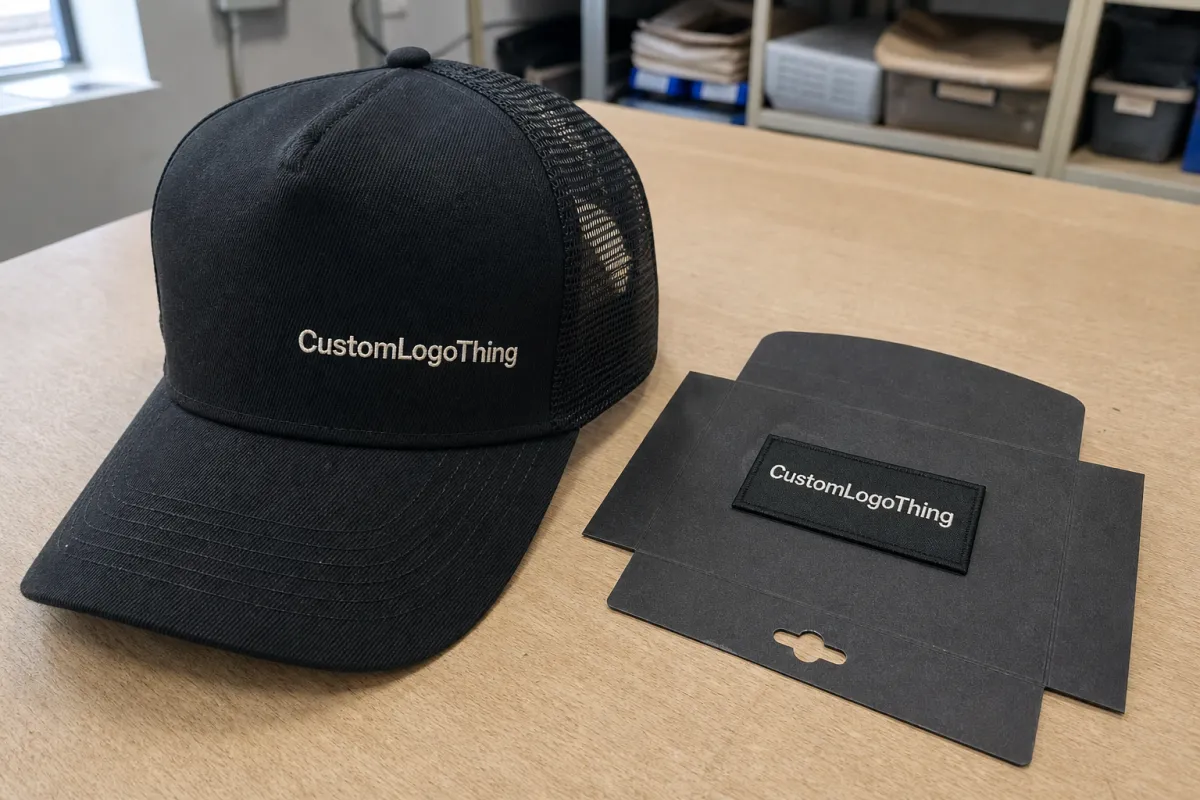
Trucker caps expose weak artwork because the usable print area is narrow and the crown is rarely flat. A standard front panel might allow a mark around 2.5 to 4 inches wide, sometimes a little more on a taller profile, but not much. That means every line, letter, and shape has to survive reduction without falling apart.
Construction uniforms add another layer of pressure. On a jobsite, nobody has time to study a logo. The design needs to survive fast glances, bright light, sweat, and dust. If the mark only works as a large screen graphic, it will usually fail once it is pushed onto a cap front.
These are the details that cause trouble first:
- Hairline strokes that disappear on textured or curved surfaces.
- Small type that looks fine in a file but turns muddy when scaled down.
- Gradients and shadows that break into patchy print on cap material.
- Dense logos with overlapping shapes, tiny counters, or too many cutouts.
- Low-contrast color pairs such as charcoal on black or navy on forest green.
For crew caps, bold almost always beats clever. Strong type, open shapes, and a clean silhouette hold up better than a logo that depends on fine detail. A cap is a work item, not a poster. The artwork should behave like one.
Artwork specs that work on mesh and foam
The safest source file is still a vector: AI, EPS, or editable PDF. Those formats scale cleanly and let the decorator size the logo for the front panel without introducing blur. If the artwork has to be raster, send a high-resolution file at final size, ideally 300 dpi or better. A screenshot, a social media export, or a low-res website logo is not production art.
Before sending the file, outline fonts, embed linked images, and remove background junk that does not belong in the print. If the logo uses a gradient, transparency, or glow effect, check whether the decoration method can reproduce it faithfully. Some can. Many should not. The file may be technically printable and still be a poor choice for a crew cap.
A few practical guardrails help prevent the usual problems:
- Minimum stroke weight: around 1 pt for simple designs, heavier for detailed marks.
- Minimum text height: about 0.18 inch on the finished cap, and larger if the typeface is light.
- Color count: 1 to 3 spot colors usually keeps the art cleaner and the quote easier to control.
- Contrast: use dark on light or light on dark; mixed-value combinations are risky on jobsite caps.
Cap construction changes placement more than many buyers expect. A structured front gives the printer a steadier surface. A low-profile crown can force the logo lower or narrower. Side placements need simpler art because the panel curve gets tighter. Mesh backs usually are not the place for fine detail unless the decoration method is specifically designed for that surface.
Material choice matters, too. Foam-front trucker caps usually accept bold printing well, while some poly-cotton fronts and structured twill caps may show different texture or ink behavior. If the order is being used for field crews, ask whether the print sits on top of the fabric, sinks into it, or needs a transfer layer. That changes both the look and the wear life.
There is also a packaging side to consider. Orders packed for multiple job sites or branch warehouses should survive more than one touchpoint. The ISTA shipping test standards are a useful reference for bulk packing that needs to hold up in transit. If packaging is part of the requirement, FSC-certified paper may be worth asking for. Neither detail is glamorous, but both can keep a uniform order from arriving bent, crushed, or short on usable caps.
Production process and turnaround: proof to delivery
A cap order moves more smoothly when the production steps are clear from the start. The usual sequence is file intake, artwork cleanup, digital proofing, approval, production, packing, and shipping. Most delays show up in the first three stages. If the file is incomplete or the logo needs rebuilding, everything downstream slows down with it.
If the art is already clean, a proof can come back fast. If the supplier has to reconstruct a logo, match colors, or fix spacing, the timeline stretches. That is one reason a usable file is more valuable than a polished mockup. A mockup looks nice in an email. A production-ready file saves days.
For construction crew orders, a realistic schedule often looks like this:
- Simple artwork, standard quantity: usually 5 to 10 business days after proof approval.
- Artwork that needs cleanup or resizing: often 10 to 15 business days, sometimes more if the mark has to be rebuilt.
- Rush production: sometimes 2 to 5 business days with a surcharge, depending on the shop and method.
- Repeat orders: usually faster because the artwork and cap specs are already approved.
Digital proofs are enough for most orders. They show placement, size, and color direction, which is usually what the buyer needs to approve. A physical sample is slower and costs more, but it earns its place on complicated jobs, large quantities, or orders that need to survive rough field use without surprises.
One thing worth separating clearly: a proof is not a production guarantee. A layout can look correct and still hide a scaling issue, an awkward placement, or a contrast problem once it is moved onto the real cap color. Review the proof against the actual cap shade, not against a blank white page where everything looks cleaner than it will in real life.
Ask for the proof on the exact cap style. A generic blank hides contrast and placement problems, and those are the problems that matter on-site.
Shipping needs the same level of attention. Even a well-run print job can be damaged by poor packing if cartons are too soft, stack poorly, or allow the caps to shift. For crew uniforms, damaged packaging is not just an aesthetic issue. It can mean bent brims, crushed crowns, and time spent sorting bad units out of a mixed shipment.
Cost, pricing, and MOQ: what changes unit cost
The price of printed trucker caps usually comes down to five variables: print method, color count, cap quality, artwork prep, and quantity. Setup is the biggest surprise for buyers new to cap orders. A small run can look cheap on paper and then climb once proofs, setup charges, and shipping are included.
MOQ matters because the press, screens, transfers, or artwork prep still take the same effort whether the order is 24 caps or 240. Small runs carry more overhead per piece. If the order is for a small field team, it is worth asking where the pricing breaks are. In many cases, moving from 24 to 48 units lowers the per-cap cost enough to make the bigger quantity the better value.
| Decoration option | Best for | Typical MOQ | Decorated unit price | Main tradeoff |
|---|---|---|---|---|
| 1-color screen print | Bold logos and simple type | 24-144 pcs | $3.25-$5.25 | Lowest cost, limited detail |
| 2-3 color print | Cleaner brand marks with a few spot colors | 24-144 pcs | $3.75-$6.00 | Better appearance, more setup and alignment risk |
| Full-color transfer | Complex logos or graphics with gradients | 24-72 pcs | $4.25-$7.25 | Flexible art handling, but can feel less breathable |
| Patch application | Durable branding and rough-site wear | 24-100 pcs | $4.50-$8.50 | Premium look, usually slower and more labor-intensive |
The cap itself changes the price as well. A basic foam-front trucker cap is often cheaper than a premium structured style with heavier stitching, better mesh, or a thicker crown. Depending on build quality, the body alone can add roughly $1.25 to $4.00 per unit before decoration. That difference matters once the order gets scaled up.
Watch the smaller extras too. Rush charges, additional proofs, freight, special packaging, and department-specific versions all add cost. If foremen, operators, and general labor each need a separate version, the setup work grows even if the logo stays the same. That is not hidden overhead. It is just the reality of running several production variants for one uniform program.
Clean art and larger quantities usually bring the per-unit number down. Last-minute edits, tiny runs, and overly complex color builds do the opposite. The math is ordinary; the surprise is how often buyers expect it to behave differently for caps than it does for every other production item.
Printed trucker caps artwork checklist for construction crew uniforms
Use this printed trucker Caps Artwork Checklist for construction crew uniforms before you send anything to production. It keeps the proof cleaner, shortens back-and-forth, and reduces the chance that a simple order turns into a revision cycle.
1. File audit
Start with the right logo version. Remove extra layers, stray points, hidden shapes, and any background pieces that do not belong. Outline the fonts and embed linked images. If the file is based on a low-resolution web graphic, replace it before submission. The decorator can only produce what is actually in the file.
2. Cap-fit check
Resize the artwork to the real print area, not just the mockup screen. Check width, height, and placement on the actual cap style. A balanced logo on paper can sit too high or too wide once it is translated to a structured front or a lower-profile crown. Readability should hold at arm’s length and from across the site.
3. Color check
Confirm that the cap color and logo color have enough contrast to work in daylight and under grime. Dark-on-dark combinations are a common mistake. High-visibility colors can still look professional if they are handled with restraint and enough contrast to stay legible.
4. Production notes
List the cap style, print position, ink colors, and whether every role uses the same version. If supervisors need different wording or a separate identifier, say so directly. Unclear instructions usually lead to extra proofs, and extra proofs usually lead to delay.
5. Proof review
Check spelling, spacing, punctuation, and any brand marks that cannot drift. Review the artwork at the finished size, then at a reduced size if the logo includes any small copy. If the design still reads clearly and nothing feels crowded, it is probably ready. If it starts looking like a miniature poster, simplify it.
The real checklist is straightforward: bold logo, specific notes, honest scale, and a proof that reflects the actual cap. That is what keeps crew cap orders moving without unnecessary surprises.
Common mistakes that slow down crew cap orders
The most common problem is the tiny file pulled from a website footer or a social profile. It is too small, too compressed, and too incomplete for production use. A low-resolution image does not become vector art just because someone asks nicely in an email. If the logo is blurry before production starts, it will not improve later.
Overly detailed logos create another round of problems. Hairline strokes, shadows, gradients, and stacked text may look polished on a monitor, but they often become clutter once the design is reduced to cap size. The smaller the art, the more punishing those details become. What survives on a jacket back does not always survive on a trucker cap front.
There is also a mismatch issue that slows orders down. A design built for embroidery may not behave well as a print file without adjustment. A full-color mockup may not translate neatly to a one- or two-color process. That is not a quality problem with the supplier. It is a planning problem on the buyer side, and it usually shows up after the quote has already been requested.
Operational mistakes are just as costly:
- No single approver, so nobody owns the final sign-off.
- Missing department notes, so one version has to cover several roles.
- Approval given before checking spelling and placement.
- Artwork changes after proof approval, which forces a reset in production.
That last one causes more delay than most buyers expect. A changed phone number, revised badge, or updated company name can push production by days because the art has to be rebuilt and reapproved. For crew uniforms, consistency usually matters more than novelty. The cap should match the rest of the workwear, not wander off on its own.
Next steps to order caps for a construction crew
Begin with a clean file packet. Include the best logo version, brand colors, cap color, print position, and any notes about the crew roles that will wear it. If field staff and supervisors need different versions, state that up front. The best quote requests are specific enough that nobody has to decode them later.
Send the same art when comparing cap styles, print methods, and quantities. That is the only fair way to compare pricing. A less expensive cap body can become more expensive once art cleanup, setup, or extra proofing is added. A more capable cap with cleaner art can end up being the better-value option.
Ask for a digital proof first. Reserve physical samples for large orders, complicated art, or crews that will wear the caps hard enough to make a mistake expensive. Save the approved version, cap style, print placement, and quantity history in one place so the reorder does not start from zero next time.
That approach keeps the job practical: prepare the file well, keep the logo readable, review the proof against the real cap, and avoid changes after approval. For construction crews, that is usually enough to get caps that look sharp, last through actual use, and do not create extra work for whoever is coordinating uniforms.
What file format is best for printed trucker caps artwork on construction crew uniforms?
Vector formats such as AI, EPS, or editable PDF are the safest starting point because they scale cleanly to cap size. If all you have is a raster file, send the highest-resolution version available and expect the supplier to check whether cleanup is needed. File quality often affects both price and turnaround, so it is worth sorting out early.
How much detail can a trucker cap logo hold before it gets messy?
Simple shapes, bold type, and strong contrast usually hold up best on a curved cap front. Fine lines, tiny text, and soft gradients are the first details to disappear or blur. If the logo needs to be read from a distance on a jobsite, it is better to simplify it before production than after the proof arrives.
What affects the price of printed trucker caps for a crew order?
Quantity, decoration method, and color count usually drive the biggest price changes. Setup work, rush timing, cap quality, and special proofing can raise the unit cost quickly. If the order includes multiple crew versions or special packaging, those details can move the number as well.
How long does a printed trucker cap order usually take?
Standard timing depends on proof approval, artwork readiness, and current production load. Clean artwork usually moves faster than files that need resizing or rebuilding. Shipping time is separate from production time, so a fast run still needs realistic transit planning.
Should I request a sample before placing a construction crew uniform order?
A sample makes sense when the artwork is complex, the quantity is large, or the caps will be worn in harsh conditions. For repeat orders with approved specs, a proof may be enough. If the cap is part of a larger uniform program, a sample can prevent costly reorders and avoid unwanted surprises in the field.