Printed Woven Labels Food Material Comparison Guide
A good woven label can outlast the garment it is sewn into. Nice problem to have, until the wrong ink, backing, fiber, or edge finish starts causing trouble inside a bakery gift box, restaurant uniform kit, farm-shop textile bundle, or edible promotional pack. This Printed Woven Labels Food material comparison guide covers that awkward middle zone: the label is not always touching food, but it sits close enough to food that “looks good” is not a complete specification.
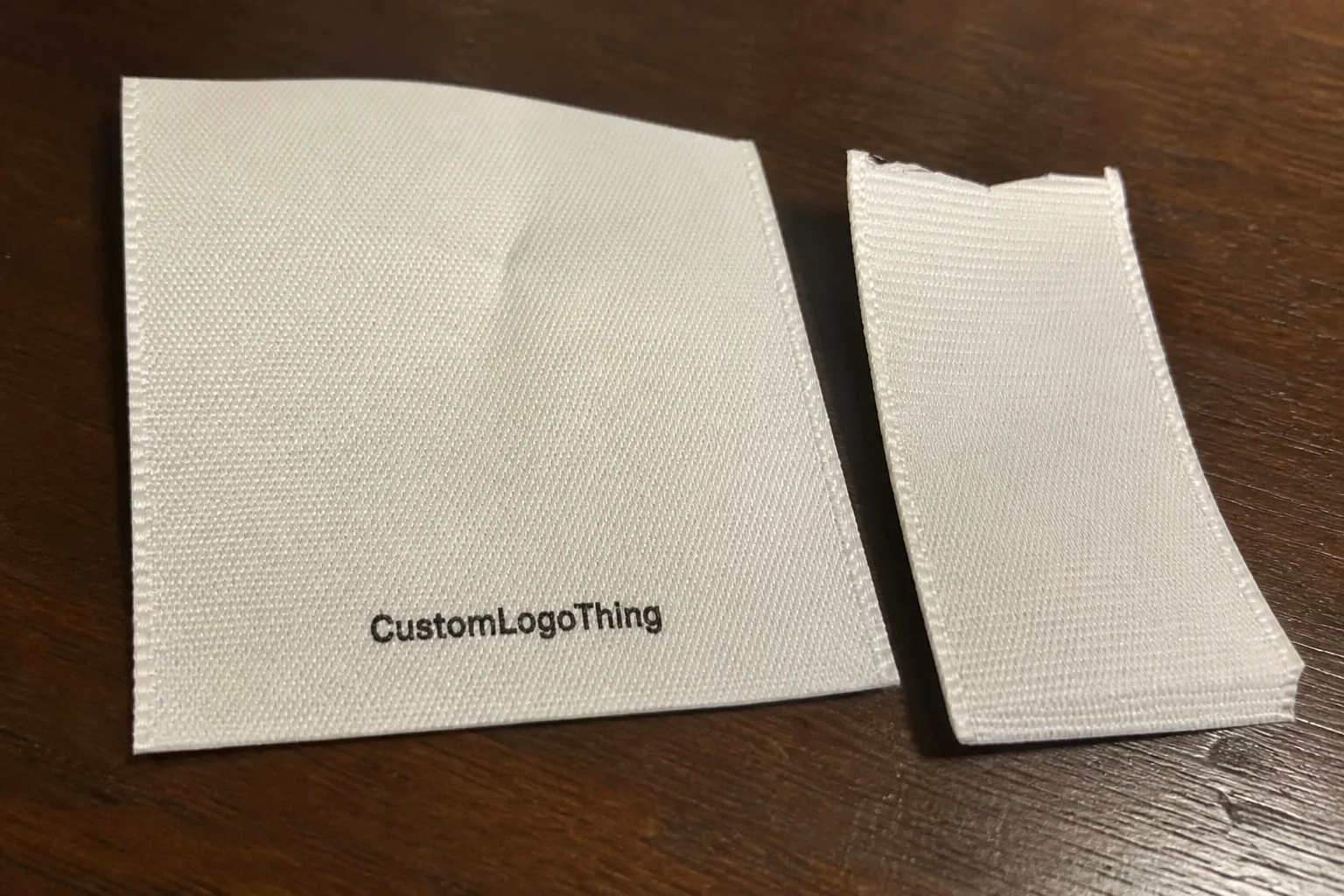
Printed Woven Labels combine a woven textile base with printed artwork. The woven base gives texture, strength, and a more premium hand feel than a flat printed tag. The printed layer handles details that weaving alone may not reproduce cleanly: tiny care symbols, QR codes, batch-style text, multilingual copy, fine icons, or logo elements with tight curves.
Buyers use them on aprons, tote bags, tea towels, wraps, chef coats, branded apparel, reusable produce bags, and gift merchandise. They work well where a standard printed tag feels too cheap and a fully woven logo cannot carry enough detail.
Food-adjacent use changes the decision. A sewn label on a chef apron is not the same risk as a label placed inside a box of unwrapped cookies. Direct food contact means the material is intended to touch food. Incidental contact means brief or accidental contact could happen during packing or use. Food-adjacent branding means the label supports a product sold near food, bundled with food, or handled in a food environment, without being designed as a food-contact surface.
That distinction drives the whole spec. Buyers need to think about migration risk, lint, loose fibers, adhesive residue, odor, wash durability, edge fray, and finishing. Most bad label decisions start the same way: somebody compares decoration samples and forgets they are buying a textile component with packaging responsibilities.
The goal is simple. Choose a label that looks right, survives handling, supports the product story, and does not create a late-stage compliance or production headache over a component measuring 25 mm by 50 mm. Tiny parts can still stop a launch. Annoying, but true.
How Printed Woven Labels Work on Food-Adjacent Apparel and Packaging
The construction sequence usually starts with yarn selection, then weaving, edge finishing, printing, optional coating or backing, cutting, folding, and attachment. Every step changes performance. A heat-cut polyester label may resist fraying well. A softer cotton label with a folded edge may feel better against skin, then behave differently after repeated washing.
There are three common formats worth separating. Woven-only labels build the design from threads, so they are durable but limited with very fine detail. Printed-only textile labels can show small copy and gradients, although the surface may feel flatter and less dimensional. Printed Woven Labels split the job: woven construction provides texture and strength, while printing adds fine artwork, care details, QR codes, or small copy where space is tight.
Food-related brands use these labels in more places than many suppliers assume. Common placements include chef aprons, butcher smocks, bakery tote bags, tea towels, picnic blankets, reusable produce bags, Subscription Box Inserts, branded gift packaging, and promotional wraps. If the kit also contains corrugated inserts, kraft paper wrap, jars, chocolate, tea, spices, or baked goods, the label can absorb odor or shed lint if the material is poorly matched.
The environment is rarely gentle. Labels may face ironing heat, commercial laundering, kitchen moisture, oils from hands, flour dust during packing, cold storage, and friction during parcel shipping. A sewn label on an apron has different stress points than an adhesive-backed textile label applied to a reusable bag header card.
Practical rule: treat the label like a small textile component with packaging duties, not just a decorative logo patch.
Better outcomes start before artwork is finalized. If a 14 mm label needs six lines of text, a QR code, and a script logo, the supplier’s loom is not the villain. The spec is. Adjust the size, contrast, fold, or print method before sampling turns into an expensive round of “why is this unreadable?”
Material Factors That Matter: Polyester, Cotton, Satin, and Blends
Polyester is the workhorse. It offers strong color retention, good abrasion resistance, predictable production behavior, and lower shrink risk than many natural fibers. For restaurant uniforms, bakery aprons, reusable totes, and merchandise that may be washed repeatedly, standard polyester woven labels often give the best balance of price, durability, and consistency.
Cotton has a different appeal. It looks softer, more natural, and more aligned with handmade, organic, farm-shop, bakery, or small-batch food branding. The tradeoff is variability. Cotton can absorb moisture, wrinkle, shrink, and show edge wear faster, depending on weave density and finishing. That does not make it wrong. It means the buyer should test it under real use conditions before approving bulk production.
Satin and damask-style woven labels sit closer to the premium end. Satin can feel smooth against skin, which matters for neck labels, aprons, chef coats, and soft goods. Damask constructions can hold refined woven detail better than basic taffeta-style labels, though printed small type still needs a sample check. On gift textiles, that polished surface can make a $12 tea towel feel closer to a $25 retail item.
Recycled yarn options are requested more often now, especially by brands already using recycled fibers, FSC certified paperboard, kraft packaging, or post-consumer waste content. Recycled polyester can support a sustainability claim if documentation exists. Watch the caveats: higher minimums, narrower color ranges, longer lead times, and more variation between production lots are all possible. Ask for tolerances before the brand team falls in love with a color from a backlit screen. Screens lie for a living.
Backing and finishing matter as much as fiber. Heat-cut edges are crisp and economical on many synthetics. Ultrasonic cutting can reduce fray. Center folds and end folds make sewing cleaner. Adhesive backing is convenient for temporary placement or some packaging uses, but it can struggle with heat, moisture, laundering, textured surfaces, and oily handling. Sew-on formats take longer to apply but usually perform better on apparel and reusable textiles.
If you are building a buying matrix, the comparison below is the kind of information worth having before artwork goes to production.
| Material or format | Durability | Softness | Wash performance | Print detail | Sustainability claim potential | Food-adjacent suitability | Typical cost behavior |
|---|---|---|---|---|---|---|---|
| Standard polyester woven base | High | Medium | Strong; low shrink risk | Good with suitable contrast | Limited unless recycled yarn is used | Strong for sewn apparel and reusable textiles | Often most economical at 1,000+ units |
| Cotton woven base | Medium | High | Needs shrink and fray testing | Moderate; texture can affect small type | Good for natural brand positioning | Good if moisture and odor are controlled | Usually higher than standard polyester |
| Satin or damask-style label | Medium to high | High | Good if properly specified | Good; sample fine text | Varies by yarn choice | Strong for premium apparel and gift textiles | Moderate to premium |
| Recycled polyester yarn | High | Medium | Generally strong | Good, but color range may vary | Strong if documented | Strong for reusable brand programs | Premium; MOQ may be higher |
| Adhesive-backed textile label | Low to medium | Depends on base | Usually weak for laundering | Good | Varies | Use carefully near wrapped food only | Backing adds cost and risk |
No single material wins every job. Polyester may beat cotton on wash stability. Cotton may beat polyester on brand feel. Satin may beat both on presentation. The correct answer depends on exposure, attachment method, performance expectations, documentation needs, and margin.
Compliance, Safety, and Performance Checks Before You Order
Clothing labels are not automatically food-contact materials. That one sentence saves headaches.
A label suitable for a chef apron may be perfectly reasonable for food-adjacent branding and still be inappropriate for direct contact with an unwrapped pastry, cheese wedge, chocolate bar, or spice sachet. Food-contact use needs specific confirmation for the full construction, not just the visible fabric.
Ask suppliers direct questions before ordering. Are the materials intended for direct food contact, incidental contact, or branding use only? Are inks, coatings, and adhesives documented? Can the supplier provide relevant declarations or test reports for your intended use? If the answer gets vague, keep the label away from exposed food.
Migration and contamination sound like lab terms, but the plain-language version is simple: unwanted transfer. That could mean dye, adhesive residue, loose fibers, odor, lint, or threads entering the food or pack environment. Tea, chocolate, coffee, spices, and baked goods are especially sensitive because aroma is part of the product. A faint chemical smell from backing adhesive can make a premium gift box feel cheap before the customer tastes anything.
For reusable textiles, wash testing is not optional if the product will be used hard. Check colorfastness, fraying, shrinkage, edge irritation, label curl, and print legibility after laundering. A practical test plan might include 5, 10, and 25 wash cycles, depending on expected use. For uniforms, inspect whether the label scratches skin, distorts after tumble drying, or becomes unreadable under kitchen lighting.
Simple in-house checks catch plenty before formal testing is needed. Rub the printed surface with a damp white cloth. Place the label inside the actual gift box for several days and smell it after storage. Scan the QR code after folding and washing. Pull gently at the cut edge. Check the reverse side for adhesive bleed or rough yarn ends. None of this replaces compliance testing, but it will expose obvious failures early.
Packaging performance standards can also help structure the review. The International Safe Transit Association publishes procedures for packaged-product distribution. A woven label is a small component, yes, but shipping vibration and compression still affect loose tags, inserts, and gift kits. If the broader pack uses corrugated cardboard, molded pulp, tissue, jars, or rigid boxes, test the full pack instead of admiring the label on a clean desk.
Create a risk profile by product type. Sewn labels on aprons or tea towels are usually lower risk. Adhesive-backed labels near wrapped food are moderate risk, depending on adhesive and placement. Anything touching exposed food is highest risk and should be treated as a specific food-contact application, not standard branding.
The buyer-friendly version of compliance is precision, not panic. Separate direct-contact claims from food-adjacent branding language, then keep the supplier’s answer with the approved spec.
Process and Timeline: From Artwork to Approved Label Sample
A typical custom label project moves through brief, material recommendation, artwork setup, digital proof, color matching, physical sampling, buyer approval, bulk production, quality control, and shipping. Skip the sample and you save time on paper. You also increase the odds of paying for a reprint.
The initial brief should be more specific than “we need a nice label.” Include product type, food exposure status, attachment method, washing expectations, label size, fold style, logo files, Pantone references, target quantity, and launch deadline. If the label will be sewn into an apron that ships with a jar of sauce in a kraft paper gift sleeve, say that. The pack environment affects the recommendation.
Digital proofs are useful for layout. Physical samples reveal reality. Texture, edge feel, readability, color behavior, fold bulk, scan performance, and backing odor can only be judged when the label is in hand. A 6 pt line of text may look crisp in a PDF and turn muddy once printed over a woven surface.
Typical timing depends on supplier capacity and complexity. Many custom label projects fall into a range of 2 to 5 business days for proofing, 5 to 10 business days for sampling, and 10 to 20 business days for bulk production after approval. Rush orders may be possible, but rush fees and air freight can turn a low unit price into a bad purchase decision very quickly.
Orders slow down for predictable reasons: unclear artwork, missing vector files, late compliance questions, hard-to-match brand colors, recycled yarn availability, custom fold requests, and last-minute packaging changes. Small components are often treated as afterthoughts until they become the critical path. Labels, stickers, closures, inserts, and hang tags are repeat offenders.
Ask for a milestone-based schedule. For seasonal bakery drops, restaurant uniform rollouts, subscription boxes, and retail gift sets, “ships soon” is not a plan. Request dates for proof delivery, sample dispatch, approval cutoff, production completion, QC, and transit.
If you are sourcing from Custom Logo Things, start with the Custom Labels & Tags category and prepare the use conditions before asking for final pricing. Better inputs produce fewer quote revisions.
Cost and Pricing Drivers Buyers Usually Miss
Unit cost is shaped by more than label size. Yarn type, weave density, print complexity, fold style, backing, edge finish, color count, sampling, testing requests, and order quantity all matter. A 30 mm by 60 mm polyester center-fold label with two print colors will not price like a recycled satin label with adhesive backing and micro text.
Minimum order quantity logic is not arbitrary. Label manufacturers must set up looms, print runs, cutting equipment, folding processes, packing, and quality checks. Very small runs carry higher per-label costs because setup labor is spread across fewer units. A 300-piece run can look expensive beside a 2,500-piece run even when the label is physically identical.
As a rough planning range, simple custom woven or Printed Woven Labels may land around $0.12 to $0.35 per unit at mid-range quantities. Specialty materials, premium folds, recycled content, tight color matching, or adhesive backing can push projects higher. Sampling may be charged separately, often from $35 to $150 depending on complexity and shipping. These are planning figures, not universal prices; actual quotes depend on specs, supplier setup, and current material costs.
Standard polyester is usually the most economical and predictable. Cotton and recycled options may cost more. Specialty finishes add cost faster than buyers expect because they introduce additional operations, inspection points, and sometimes higher waste rates. If sustainability is central to the product story, ask whether claims are documented. The Forest Stewardship Council is relevant for paper-based components, but it does not validate a textile label claim by association.
The hidden cost of unreadable labels is worse than a higher unit price. Reprints, relabeling labor, delayed shipments, rejected retail deliveries, and brand damage can dwarf a $0.04 per-unit saving. A label that makes a premium apron look like discount merchandise is not cheap. It is expensive quietly, which is the most irritating kind.
Ask for quote tiers at 500, 1,000, 2,500, and 5,000 units. The price curve often reveals the efficient buying point. Also request separate line items for sampling, bulk production, shipping, testing, and rush fees. That makes supplier comparisons cleaner than chasing the lowest headline unit price.
Common Mistakes When Comparing Label Materials
The first mistake is choosing by appearance alone. A label that photographs beautifully can still fray, irritate skin, absorb odor, curl after laundering, or shed fibers in a gift box. Retail lighting flatters many samples. Washing does not.
The second mistake is using direct food-contact language casually. If a label is only food-adjacent, describe it that way. Overstated claims create compliance risk and customer trust problems, especially for brands selling edible gifts, bakery merchandise, or premium kitchen textiles.
Tiny text is another frequent failure point. Thread texture and print registration limit readability, especially on labels under 20 mm tall. If you need ingredient-style copy, QR codes, multilingual care notes, and a logo, increase the label size or split the information across a textile label and a paper tag. Custom Logo Things buyers can also compare textile labels with broader Custom Labels & Tags options when the artwork is too detailed for one small woven piece.
Attachment mistakes cause avoidable failures. Adhesive backing may be convenient for packaging, but it is rarely the best choice for washable apparel, high-heat environments, oily hands, or repeated handling. Sew-on labels need seam planning, but they usually perform better on aprons, uniforms, tea towels, and reusable bags.
Product environment gets ignored too often. Bakery flour, kitchen humidity, oil, steam, cold storage, gift-box fragrance, and repeated washing can all alter performance. Place one sample near the packaged product for several days. Wash one. Rub one with a damp white cloth. Photograph one under retail lighting. Put one inside a shipped sample pack with corrugated cardboard, tissue, and product inserts, then inspect it after transit.
Another mistake: approving the prettiest sample without checking reorder consistency. Ask how color tolerances are handled, whether recycled yarn lots may vary, and whether the supplier keeps production records for repeat orders. A seasonal gift set looks messy when the spring label and autumn label are supposed to match but do not.
Small tests prevent big rework. That is the unglamorous truth.
Build a Label Spec Suppliers Can Quote Accurately
Before requesting a final quote, build a one-page label spec. It does not need to be fancy. It needs to be complete.
- Use case: apron, tea towel, tote bag, gift wrap, insert, uniform, reusable produce bag, or packaging accessory.
- Food-contact status: direct contact, incidental contact, or food-adjacent branding only.
- Material candidates: polyester, cotton, satin, damask-style, recycled polyester, or blend.
- Dimensions: width, height, fold allowance, and finished visible area in millimeters.
- Attachment: sew-on, center fold, end fold, heat transfer, adhesive backing, or loose tag format.
- Artwork: vector logo, Pantone references, print colors, small text, QR code size, and contrast requirements.
- Performance expectations: laundering, ironing, moisture exposure, abrasion, odor sensitivity, and shipping conditions.
- Commercial details: target quantity, quote tiers, launch deadline, sampling requirement, and delivery location.
Request two or three material samples instead of one generic recommendation. Side-by-side comparison exposes tradeoffs fast. Polyester may feel slightly firmer but read cleaner. Cotton may suit the brand better but need a wider fold. Satin may look premium, yet cost more than the product margin allows. Seeing the samples together makes those compromises visible.
Document final approval. Save photos, sample notes, color references, supplier confirmations, and the approved physical sample if possible. Reorders are much easier when the next buyer, designer, or production coordinator can see exactly what was approved the first time. This matters for seasonal flavors, restaurant uniform refreshes, and gift sets that repeat with small packaging changes.
A strong spec will not make every material problem disappear. It will, however, force the right questions early: What will the label touch? How will it be attached? Will it be washed? Could it affect odor, appearance, scanability, or compliance language? Answer those before approving artwork, pricing, or production.
FAQ
Are printed woven labels safe for food packaging?
They may be suitable for food-adjacent packaging, but direct food contact requires specific confirmation for the material, ink, adhesive, and any coating. Ask whether the label is intended for direct contact, incidental contact, or branding use only. For exposed food, request documentation before production.
What material is best for printed woven labels on bakery or restaurant apparel?
Polyester is often the most practical choice because it resists shrinking, holds color well, and performs reliably through washing. Cotton can work for a softer natural look, but it should be tested for moisture, shrinkage, and edge wear. For aprons, smocks, and uniforms, sew-on labels are usually more durable than adhesive-backed labels.
How does a printed woven labels food material comparison guide help with quoting?
It helps buyers define material, size, fold, backing, compliance needs, performance expectations, and quantity before asking for pricing. Clear specs reduce quote revisions and make supplier comparisons more accurate. They also separate real cost drivers from cosmetic preferences.
Can printed woven labels include small ingredient-style text or QR codes?
They can, but readability depends on label size, print method, artwork contrast, and surface texture. Fine text should be tested on a physical sample, not approved from a digital proof alone. QR codes need enough quiet space and contrast to scan after handling, washing, or folding.
What is the typical lead time for custom printed woven labels?
Lead time depends on artwork readiness, material availability, sampling, approval speed, order quantity, and shipping method. Many projects need proofing, sampling, bulk production, QC, and transit time. Buyers with seasonal launches should request milestone dates instead of relying on a rough ship estimate.