If you need a Printed Woven Labels Quote for tea, begin with the practical details that shape the actual run: size, fold, material, quantity, and where the label will sit on the pack. Those pieces sound basic, but they are usually what separates a quote that can be used from one that only looks useful at first glance. A supplier can work quickly when the spec is clear; they can only guess when the request is vague.
Tea packaging leaves very little room for error. A label that appears proportionate in a design file may feel oversized on a narrow pouch seam, too reflective against matte carton board, or too soft in detail once woven at a small scale. If the branding has to survive handling, storage, transit, and the occasional rough shelf display, the label specification needs to be settled before artwork is treated as final.
For tea brands, the label is rarely just decoration. It can close a branding gap on a pouch, reinforce the premium feel of a gift box, or add a consistent mark across merchandising and secondary packaging. That is why the quote stage matters so much. It is not only about price; it is about whether the format fits the package without forcing awkward compromises later.
Why tea brands ask for woven labels before they order
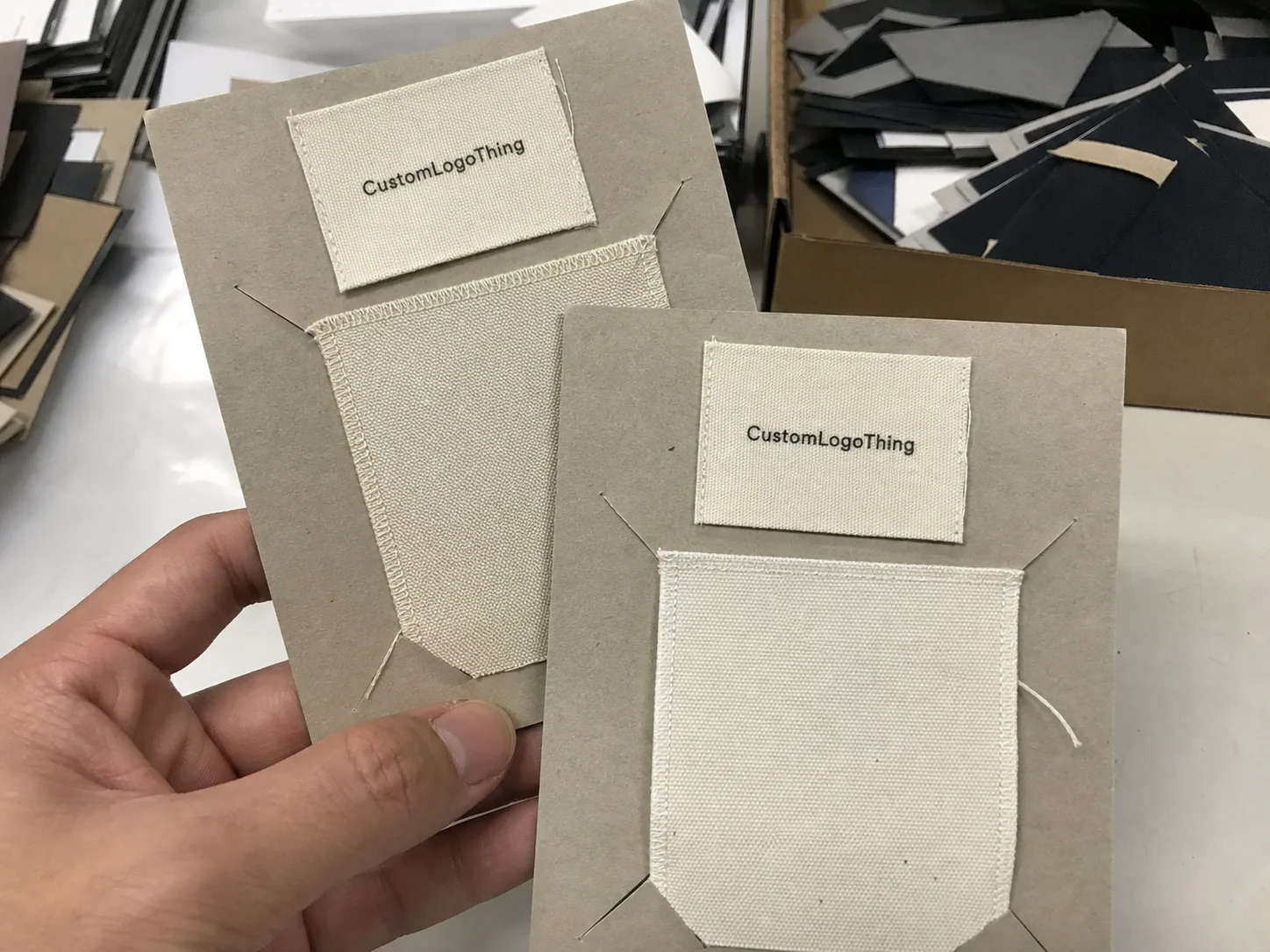
Tea brands usually ask for a quote early because the label has to work both visually and mechanically. A loose-leaf tea pouch, a paperboard carton, and a reusable cotton tote do not ask the same thing from a label. The package may be small, curved, laminated, coated, stitched, or folded, and each of those conditions changes how the label sits and how readable the logo remains.
Woven labels are useful when the brand wants a permanent textile-style cue that does not wear away the first time the pack gets handled. They are often selected for sewn-in brand tabs, side seams on pouches, neck labels on gift sets, or small branded details on reusable tea totes and merchandising items. In those applications, woven construction tends to hold up better than paper tags and many adhesive options.
Still, a woven label is not a cure-all. It works best when the brand wants a clean, durable look without adding bulk. On a compact 50 g pouch, a narrow end-fold label can add identity without crowding the front panel. On a premium gift box, a small woven tag can strengthen shelf presence without making the packaging look overdesigned. That balance matters more than many first-time buyers expect.
Requesting a Printed Woven Labels Quote for tea before artwork is finalized also helps align the label with the way the package is manufactured. Fold style, stitch method, backing, and size all affect the final result. If those choices are made late, the design often has to be trimmed back to fit a label that was never realistic for the application.
Buyer takeaway: confirm the label spec while the packaging layout is still flexible. It is much easier to adjust the artwork than to rebuild the label after the pack structure has already been approved.
Printed woven label formats that work for tea packaging
Not every woven label format suits tea packaging. The best choice depends on how visible the label needs to be, how much detail the logo contains, and how the label will be attached. The main materials buyers compare are damask, satin, and polyester woven constructions. Each has a different balance of detail, texture, and cost.
Damask is usually the safest choice when the logo includes fine text, delicate linework, or more than one small element that must stay legible. The weave is tighter and captures detail more cleanly. Satin has a smoother, more reflective finish and can feel more decorative, but tiny typography can soften if the artwork is crowded. Polyester Woven Labels are the practical middle ground: durable, consistent, and often easier to keep within budget.
For tea packaging, that detail level matters. Many brands use compact logos, botanical marks, or multilingual copy, and these designs can become muddy if the weave is too coarse. If a label must carry a small wordmark, a product line name, or a short origin statement, a denser weave is usually worth the modest cost difference.
Fold style changes how the label behaves on the pack. The most common options are:
- End fold — neat edges, useful for sewn seams and side panels.
- Center fold — good for labels that need to wrap over an edge or seam.
- Loop fold — often used for hang-style branding and reusable items.
- Straight cut — suitable when the label is fully sewn in or separately attached.
Tea pouches usually work best with an end fold or straight cut because the label has to sit flat and avoid interfering with sealing areas. Gift boxes can accommodate a cleaner decorative approach, sometimes with a small stitched tab or a compact folded label placed on the side or flap. Tins and display sleeves may allow a slightly more visible label, but the surface still needs to be checked for curl, adhesion, or seam interference. Loose tea bags and inner sachets are the most restrictive, so size and thread count have to stay modest.
Buyers often compare woven labels to printed adhesive labels and paper hang tags. Each has a place. Adhesive labels are good for short-run promotions or variable information. Paper tags work well when a seasonal message or certification needs to be highlighted. Woven labels make more sense when the brand wants a consistent, durable mark across multiple pack types and does not want the branding to fade or peel.
| Label type | Best use | Detail level | Typical feel | Best for |
|---|---|---|---|---|
| Damask woven | Premium tea pouches, small logos | High | Soft, refined | Fine text, detailed marks |
| Satin woven | Gift sets, visible brand tabs | Medium | Smooth, slightly glossy | Decorative presentation |
| Polyester woven | Everyday tea packaging and merch | Medium-high | Practical, durable | Cost control and consistency |
Specifications buyers should confirm before requesting a quote
A useful quote starts with usable information. If a buyer sends only a logo and the words “need woven labels,” the supplier has to fill in the missing pieces, and that almost always leads to revisions later. The core details are width, length, fold type, material, color count, and attachment method. Those six items shape both the price and the way the label will behave on the package.
Artwork complexity is another point that is easy to underestimate. A simple wordmark is far easier to reproduce cleanly than a tiny crest, stacked copy, or a design with thin botanical lines and multiple languages. Woven construction has limits. Very fine details can close up, especially when the label is narrow or when the weave is not dense enough for the artwork. If the logo disappears when it is reduced on screen, it is probably too detailed for the chosen size.
Attachment affects the specification just as much as the visual design. A label sewn into a pouch seam is not the same as one that is folded and stitched onto a carton sleeve. If the pack is made from coated paperboard, film laminate, kraft board, or fabric, the supplier needs to know. The surface changes how the label sits, whether it lies flat, and whether there is any risk of curling. For reusable tea totes or textile merchandise, ask about abrasion and wash resistance rather than assuming all woven labels behave the same after repeated use.
File quality matters too. A vector file is usually the safest starting point, most often AI, EPS, or PDF with fonts outlined. Pantone references help keep brand colors consistent across packaging components, especially when the tea line already uses a fixed color system for cartons, pouches, and secondary labels. If the brand has a strict color standard, ask for a digital proof before production and compare it against the current packaging. Proof-stage corrections are far cheaper than fixing a full run that misses the target.
- Width and length — determine visibility and whether the label fits the pack.
- Fold style — affects how the label sits and how it is attached.
- Material — damask, satin, or polyester woven.
- Color count — directly affects cost and visual complexity.
- Attachment method — sew-in, heat cut, adhesive, or looped.
- Proof file — vector artwork and Pantone references reduce mistakes.
One small habit causes repeated problems: sending “the same as last time” when the earlier sample came from a different supplier or a different production method. That is how label size drifts, texture changes, and brand color shifts creep in unnoticed. If the reorder needs to match an older batch, the old sample should be measured and checked rather than used as a loose reference.
Cost, pricing, MOQ, and what changes your quote
Pricing for tea woven labels usually comes down to a small set of variables: label size, weave density, number of colors, fold style, and quantity. Bigger labels use more material. A tighter weave takes more production time. More colors add complexity. Special finishing, unusual shapes, or unusual attachment methods can also move the quote upward. There is no mystery in it, even if the final spreadsheet sometimes looks more complicated than it should.
The MOQ is where buyers usually feel the cost structure most clearly. Smaller runs cost more per label because setup is divided across fewer units. That is standard production math, not a pricing trick. As a rough buying range, a simple woven label run may land around $0.04-$0.10 per unit at higher quantities, while smaller or more detailed orders can move into $0.12-$0.30 per unit or more, depending on dimensions, colors, and finishing. Shipping is separate and can change the total more than buyers expect, especially on smaller orders.
For tea startups, the best approach is usually to keep the label elegant but restrained. A 2 oz pouch does not need a wide multi-fold label with six colors and decorative extras if the branding can be communicated cleanly with fewer elements. For established tea brands, standardizing one label size across multiple SKUs is often the easiest way to reduce unit cost and keep the shelf presentation consistent from product to product.
| Quote item | What to check | Why it matters |
|---|---|---|
| Unit price | Price per label at your exact quantity | Small runs can distort comparisons |
| Setup / proof fee | Artwork prep, sampling, digital proof | Can change total cost noticeably |
| Shipping | Method, transit time, destination | The lowest unit price may not be the best total cost |
| Reorder price | Same specs on repeat orders | Useful for ongoing tea SKUs |
| Correction policy | What happens if the proof is wrong | Shows how the supplier handles mistakes |
Cost can often be reduced without damaging presentation. Simplifying the color count, trimming the width slightly, or using one label across several tea products can lower the price more effectively than forcing every decorative detail into a small label area. There is usually more value in a clean, readable mark than in squeezing too much information into 30 mm of space.
If the tea line includes packaging sustainability claims, keep those claims tied to the actual board, paper, or film system used on the pack. Recycled cartons, FSC-certified board, and similar materials are relevant to the overall packaging story, but they do not automatically change woven label pricing. For wider material and certification context, resources from FSC and the EPA recycling guidance can help frame the broader packaging decision.
Production steps and turnaround from artwork to delivery
The quote-to-order sequence should be straightforward: inquiry, artwork review, mockup, approval, production, inspection, shipping. If a supplier makes the process sound vague or overly technical without clear milestones, that is usually not a good sign. Buyers do not need jargon; they need to know what happens next and when.
Typical timing depends on order size and artwork complexity, but many woven label jobs move within a fairly predictable window. A digital proof or sample may take 2-5 business days, bulk production often takes around 10-18 business days after approval, and shipping is added on top of that. Rush jobs can be possible, though they usually carry a cost premium and leave less room for correction if the artwork is not truly ready. A clean file and complete spec shorten lead time more effectively than repeated follow-up messages.
Tea launches tied to seasonal releases, gifting periods, or trade events need extra buffer. Internal signoff is usually the slowest part of the process, especially when marketing, procurement, and brand teams all want to review the same proof. If the schedule is tight, the quote stage should happen early enough that the label does not become the bottleneck in the packaging line.
Good production management is visible in the details. A supplier should be able to state when the inquiry is received, when the spec is confirmed, when the proof is sent, when approval is recorded, when production begins, and when inspection and dispatch are completed. Those checkpoints matter more than a polished sales pitch because they show whether the order is actually being tracked.
- Inquiry received
- Spec confirmation
- Digital proof sent
- Proof approved
- Production started
- Inspection completed
- Dispatch and tracking shared
If the tea brand uses more than one SKU, ask whether the supplier can repeat the same label spec consistently across reorder cycles. A slight change in weave density, edge finish, or thread color can make a second batch sit awkwardly beside the first. That is the kind of mismatch that buyers notice during receiving and customers notice even sooner on shelf.
What to compare before choosing a label supplier
Price alone is a poor way to choose a label supplier. A quote can look attractive and still hide weak weave definition, poor edge finishing, or inconsistent color reproduction. For tea packaging, compare weave quality, edge finish, color accuracy, and run-to-run consistency. Those four checks matter more than a small difference in unit cost.
Strong suppliers are usually direct about limitations. They will tell you if the logo is too detailed for the chosen width. They will suggest a cleaner fold if the original idea creates a bulky edge. They will explain how the label attaches and whether the selected material suits a pouch, box, or textile item. That kind of guidance is valuable because tea packaging is not a generic apparel-label job with a different product name on top. The use case is different, and the spec should be treated that way.
Ask how samples, corrections, and reprints are handled. If a proof is wrong, what happens? If the first sample does not match the artwork closely enough, can the weave be adjusted, or does the label need to be rebuilt in a different format? A dependable supplier should be able to answer without hesitation. Communication speed, proof clarity, and issue resolution are often more revealing than the first quote itself.
If you are comparing label formats, our Custom Labels & Tags page is a useful place to review options before settling on one structure. If the tea pack has unusual dimensions or a multi-pack layout, send the logo file and package measurements through our Contact Us page so the quote can be based on real production conditions rather than assumptions.
“The best supplier is the one that tells you what will actually work on the pack, not the one that says yes to everything and sorts it out later.”
Next steps to get an accurate tea label quote
For an accurate Printed Woven Labels Quote for tea, send one complete request with the essentials: artwork, dimensions, fold style, quantity, and packaging type. Mention whether the label is going on a pouch, a gift box, a tin, or a reusable textile item. If there is any special concern about abrasion, wash resistance, or a limited sewing area, include that at the start rather than after the first proof.
It also helps to include a target unit cost and the timeline that matters for launch. That gives the supplier a better basis for the quote and makes it easier to offer an alternative if the first version comes in too high. If the price needs to come down, ask for a simpler weave, fewer colors, or a smaller size before accepting a format that does not suit the packaging.
A practical sequence usually looks like this:
- Gather artwork and package dimensions.
- Confirm material, fold, and attachment method.
- Request a digital proof.
- Review a lower-cost backup version if needed.
- Approve the sample or proof.
- Place the bulk order and track the production milestones.
Buyers who follow that sequence tend to get clearer pricing, fewer revisions, and a label that fits the tea pack instead of competing with it. That is the whole point of the quote stage: to make the label part of the packaging system, not an afterthought. If you need a Printed Woven Labels Quote for tea, the best results usually come from a clean spec, a realistic budget, and a label format that respects the size and structure of the pack.
FAQ
How do I request a printed woven labels quote for tea packaging?
Send the logo, size, quantity, fold style, and packaging type so the quote reflects real production specs. Include whether the label will be sewn into pouches, attached to boxes, or used on reusable tea items.
What affects the price of woven labels for tea brands?
Price depends on label size, color count, weave detail, fold style, and order quantity. Rush timing, custom finishing, and shipping location can also change the final cost.
What MOQ should I expect for tea woven labels?
MOQs vary by supplier, but smaller runs usually cost more per piece because setup is spread across fewer labels. If you are launching a new tea line, ask for the lowest practical MOQ before committing to a large run.
How long does production usually take after I approve the proof?
Production time depends on artwork complexity and order size, but a confirmed proof usually speeds things up. Ask for the supplier’s standard lead time and whether sample approval is required before bulk production starts.
Can I use woven labels on tea pouches and gift boxes?
Yes, woven labels can be sewn onto pouches, attached to sleeves, or used as brand tags on gift sets. Choose the attachment method based on the package material and how visible you want the branding to be.