Buying cheap Custom Plastic Bags with logo is not about pretending budget packaging is premium. It is about getting a bag that carries properly, prints cleanly, and lands at a cost that makes sense for the order. A simple one-color logo on the right film can look more professional than a complicated bag that arrives late, tears easily, or eats half the packaging budget.
The buyers who do this well keep the focus on three things: carry strength, print clarity, and total landed cost. Miss one, and the savings disappear. Get all three right, and low-cost branded packaging can still look disciplined and credible.
That is especially true for retail checkout bags, takeout orders, event handouts, and ecommerce inserts. The bag is often the first thing customers touch. If the print is sharp and the size fits the product, nobody cares whether the unit cost was low. They care that it works.
Why cheap custom plastic bags with logo can still look professional
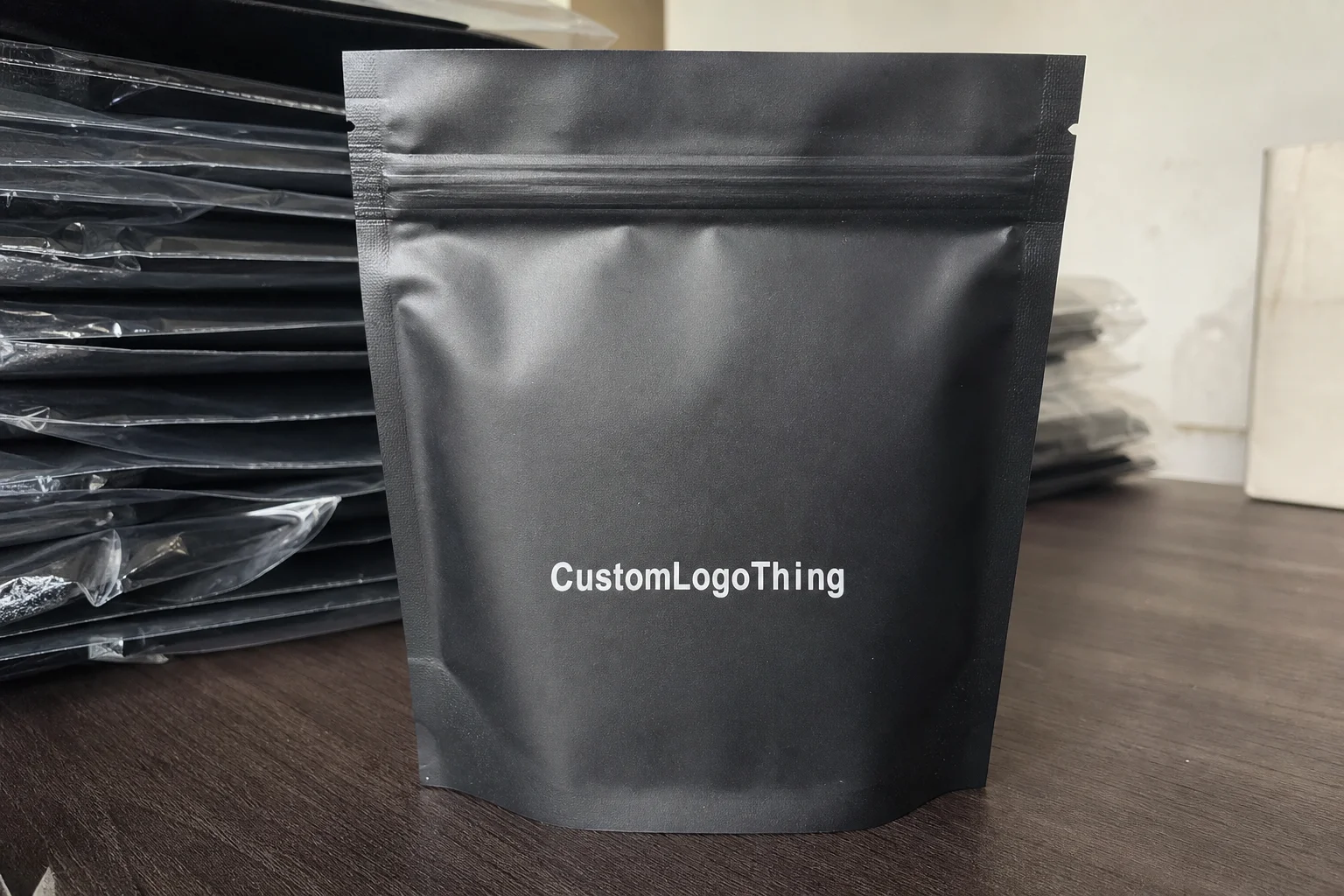
Cheap does not automatically mean flimsy. Lower pricing usually comes from standard sizing, thinner film, one- or two-color printing, and higher order volume. Those are production choices, not a verdict on quality. The bag can still perform well if the spec matches the use case.
There is a perception effect here that brands often underestimate. A bag may cost pennies, but it frames the entire purchase. Clean logo placement, decent contrast, and a size that does not balloon around the product make the order feel intentional. That matters more than decorative extras nobody asked for.
I have seen buyers overspend on artwork and underthink the basics. A bold logo printed in the right spot on a standard bag usually does more for presentation than an overdesigned concept with too many details. Strong branding does not need to shout. It needs to be readable, consistent, and able to survive handling.
“If the bag carries well and the logo prints cleanly, most customers never ask whether it was expensive. They just remember the brand.”
Budget bags make the most sense in high-volume, practical use cases:
- Retail handouts at checkout
- Takeout and delivery orders
- Promotions and event swag
- Trade show literature bags
- Warehouse or ecommerce packing
The goal is not luxury. The goal is stable economics and a visual standard that supports the business. For teams comparing Custom Packaging Products, the bag often ends up being the cheapest branding surface that still gets noticed.
Product types, print methods, and finish options
Not all cheap custom plastic Bags with Logo are built the same. Style changes the customer experience, the print result, and the price. Pick the wrong format and you can easily pay for features nobody needed.
Common bag styles and where they work best
Die-cut bags are popular for retail packaging because they look clean and compact. They suit apparel, accessories, and lightweight boxed goods. T-shirt bags are usually the lowest-cost option and work well for grocery-style handouts, convenience use, and fast checkout lines. Handle bags sit in the middle, with a more familiar retail feel and better carrying comfort for heavier items. Drawstring bags are less common for true budget orders, but they still work for promotions, sports events, and travel kits.
That choice affects brand impression more than many buyers expect. A die-cut handle with a centered logo feels retail-ready. A T-shirt bag feels functional and value-driven. Neither is wrong. The right format depends on the product, the customer journey, and how long the bag needs to stay in use.
Print methods and how they affect cost
Flexographic printing is the standard for higher-volume plastic bag orders. It is efficient, repeatable, and suited to one- or two-color logos. Each extra color adds setup work and usually pushes the price up. Full-color options exist on some structures, but they are not always the best fit for a budget order.
Simple artwork saves money and usually prints better. One bold logo. One placement. Strong contrast. That combination tends to produce cleaner results than a detailed illustration with gradients, tiny type, and thin rules. If your logo has fine lines, ask the printer about minimum stroke thickness on the selected film. Many shops will not guarantee clean reproduction below about 1.0 pt, and flexible film can make borderline details look worse than they do on screen.
Finish choices that change the look
Glossy finishes tend to read brighter and more retail-friendly. Matte or frosted effects feel quieter, sometimes more premium, but they can raise cost. Opaque film hides the contents better and gives stronger contrast. Clear film shows the product, which can work for some product packaging and fail badly for mixed or unattractive contents. That is not design philosophy. That is just reality.
Reinforced handles, stronger side seals, and cleaner edge finishing improve the bag more than an expensive ink formula does. Small structural upgrades often matter more than extra graphic flair. The bag feels better in the hand, and that shows up in the customer’s experience.
| Bag style | Best use | Typical cost profile | Brand impression |
|---|---|---|---|
| Die-cut | Retail, apparel, accessories | Moderate | Clean and polished |
| T-shirt | Groceries, takeout, high-volume handouts | Lowest | Practical and functional |
| Handle bag | Retail and event use | Moderate to higher | More customer-facing |
| Drawstring | Promotions, sports, travel kits | Higher | Utility-driven |
Specifications that affect durability, appearance, and compliance
Specifications are where cheap custom plastic Bags With Logo either stay cheap or turn into a headache. Buyers should confirm material type, thickness, dimensions, handle style, and load capacity before approving artwork. If those details are vague, price comparisons become noise.
Thickness is one of the biggest variables. Thinner film costs less, but a weak bag feels cheap in the wrong way. Thicker film improves tear resistance and reduces complaints about stretching, punctures, and handle failure. In many runs, a small change in gauge creates a noticeable difference in how the bag performs on the floor.
These are the details worth checking on every quote:
- Material: LDPE, HDPE, or another film type
- Thickness: microns or mils
- Dimensions: width, gusset, and height
- Handle style: die-cut, loop, vest, or drawstring
- Load rating: realistic carry weight for the intended use
- Print area: exact imprint dimensions and placement
Compliance matters too. Some markets restrict certain single-use plastic formats, and some buyers need recycled content or food-safe options. If the bag will be used in food service, ask for the appropriate declaration and confirm whether the material is suitable. Regulations vary by location, and a quote that ignores that part is not especially useful. The EPA’s recycling and waste resources are a practical reference point: EPA recycling and waste information.
Artwork requirements can make or break the finished bag. A vector file is best. Pantone references help when brand color matching matters. Small text should stay bold and simple because thin lines can break up on flexible film. Also check bleed, safe area, and minimum line thickness before approving production. If the logo sits too close to a seam or fold, it may look off-center even if the artwork file is technically correct.
Packaging operations details matter more than marketing teams usually expect. Bags may arrive folded, loose packed, or bundled by count. Carton quantity affects how quickly staff can restock at checkout or at packing stations. A cleaner carton pack saves time every day, and that turns into real labor savings over a long run.
One more practical point: ask how the supplier handles QC. Good basic checks include print registration, seal strength, logo placement, count accuracy, and carton labeling. If those controls are missing, the order can still arrive on time and be wrong in ways that are annoying to fix.
Cost, pricing, MOQ, and unit cost breakdown
Price on cheap custom plastic Bags with Logo is driven by a few levers: size, thickness, print colors, quantity, and shipping destination. Change one of those, and the quote can move more than expected. More colors usually mean more setup. Larger bags use more raw material. Lower volumes spread fixed costs across fewer units, which pushes the unit price up.
That is why MOQ matters. Minimum order quantity is not just a number on a quote sheet. It is the point where setup fees, plate charges, and production time start to make sense for the supplier. Order below that threshold and the bag is still possible, but the per-unit price can climb quickly.
For rough budgeting, small custom runs with simple printing often land in the higher unit-cost range because setup dominates the economics. Mid-volume orders using standard sizes and one-color print usually sit in a more manageable zone. Bulk orders with repeat specs are where the lowest unit pricing shows up. Exact pricing depends on region, material, and freight, but the pattern stays the same.
To keep spend under control, buyers usually have the best results with these tactics:
- Use standard sizes instead of custom dimensions where possible
- Limit the logo to one or two colors
- Choose a common film thickness
- Repeat the same spec for reorders
- Consolidate artwork across multiple packaging lines
A real quote should separate the bag price from the extras. Ask for artwork setup, plate or screen charges, proofing, freight, and taxes as distinct line items. That makes comparison much cleaner. A unit price of $0.12 looks great until freight pushes the landed cost to $0.19. Another supplier at $0.15 with lower shipping may be the smarter buy.
Here is a simple comparison framework:
| Order profile | Likely unit cost trend | Cost saver | Main tradeoff |
|---|---|---|---|
| Small quantity, custom size, 2-color print | Higher | Simple artwork only | Higher setup cost per bag |
| Mid-volume, standard size, 1-color print | Moderate | Standard tooling and fewer colors | Limited graphic detail |
| Large bulk order, standard film, repeat spec | Lowest | Setup spread over more units | Higher upfront spend |
That table points to the part many buyers skip: the cheapest bag is not the one with the lowest sticker price. It is the one with the best total landed cost for the job you actually need to complete.
Production steps and turnaround from artwork to delivery
The production flow is usually predictable: quote request, artwork submission, proof approval, production, quality check, packing, and shipment. The teams that move fastest keep each step tight and avoid unnecessary back-and-forth on file formats, measurements, or color corrections.
Missing vector files are one of the biggest delays. Last-minute design changes are another. A buyer may think moving a logo by a quarter inch is harmless, but it can force a revised plate or a fresh setup. Seasonal backlog is also real. When demand rises, even straightforward jobs can slip if capacity was not planned carefully.
Typical turnaround depends on the order. Stock-style bags with simple printed branding can move faster than highly customized runs. A well-prepared order may be ready in roughly 12 to 15 business days after proof approval, though that varies with factory schedule, quantity, and shipping method. Air freight shortens transit time, not production time. Those are separate clocks, and they should be treated that way.
Approval checkpoints reduce risk:
- Digital proof for artwork placement and spelling
- Material confirmation for thickness and finish
- Final sign-off before production starts
- Shipment notification once cartons are packed and booked
Planning backward from the launch date is the safest way to avoid rush fees. If the bags are for a store opening, convention, or seasonal promotion, leave time for proof revisions and freight delays. That buffer matters more than most teams want to admit. For testing and performance standards, the International Safe Transit Association is a useful reference point: ISTA packaging testing standards.
If the bag is part of a larger retail packaging program, it helps to coordinate with labels, inserts, and other Custom Packaging Products that share the same visual identity. Consistency across the pack often does more for perceived quality than upgrading one item in isolation.
What to compare before choosing a supplier
Price gets attention first. It should not get the final vote. A better supplier comparison includes print consistency, material grade, communication speed, proof accuracy, and how clearly they explain freight and setup charges. Those are the things that decide whether the order shows up as approved or turns into a correction project.
Ask for samples or prior production photos. Look closely at logo sharpness, handle strength, seal quality, and color consistency across the bag surface. A supplier that can show clean examples usually has better process control. Samples are not a guarantee, though. They are evidence, not insurance.
In-house printing and packaging can improve control because fewer handoffs usually mean fewer errors. It also makes it easier to correct issues quickly if something shifts during production. Clear documentation matters too. Spec sheets, lead times, shipping methods, and proof terms should all be visible before any payment is made.
Communication speed is not a luxury. Fast, specific answers usually mean the team understands the product and can solve problems before they spread. Slow, vague replies often show up later as bad dimensions, wrong print placement, or freight confusion. That is not dramatic. It is just how these jobs tend to fail.
“The best supplier is not the cheapest quote. It is the one that tells you exactly what you are buying, what it will cost to land, and when it will arrive.”
For buyers comparing branded packaging across formats, it helps to look at the bag alongside other Custom Packaging Products such as printed inserts or secondary retail packaging. That gives a more accurate picture of the full presentation and helps prevent mismatched materials or inconsistent branding.
Next steps to order with confidence
If you want cheap custom plastic Bags with Logo without ugly surprises, start with the basics: bag type, dimensions, thickness target, logo file, print colors, and estimated quantity. That gives a supplier enough information to quote accurately and reduces the back-and-forth that slows orders down.
Ask for a formal quote that separates MOQ, unit cost, setup fees, proofing, and shipping. Then compare the full landed price, not just the bag price. Confirm the use case too. Retail, takeaway, events, and ecommerce do not always need the same film thickness or finish. A bag that works for a giveaway may fail under a heavier carry load.
Before approving production, request a digital proof and check logo placement, spelling, color expectations, and carton pack details. If the job needs barcode placement, compliance text, or store-specific instructions, include those up front. Small omissions create expensive delays later.
Once the cost and timing match the schedule, place the order and save the approved spec for reorders. That habit makes future buying faster and usually cheaper. For many businesses, the best result is simple: a reliable supply of cheap custom plastic Bags with Logo that look clean, carry well, and support the brand without stretching the budget.
What is the MOQ for cheap custom plastic bags with logo?
MOQ depends on bag style, size, and print complexity. Standard one-color orders usually have lower minimums than full-color or specialty finishes. Ask for MOQ by exact spec so you can compare true unit cost, not just a headline price.
How do I get the lowest unit cost on custom printed plastic bags?
Use standard sizes and common film thicknesses. Limit print colors and keep artwork simple. Order in larger volumes so setup costs are spread across more bags.
Can I order cheap custom plastic bags with logo in small quantities?
Yes, but small orders usually cost more per bag because setup fees are fixed. Simplified print options may help on lower volumes. Ask for a quote with multiple quantity breaks to see where savings begin.
How long does production usually take after proof approval?
Turnaround depends on product type, artwork readiness, and production queue. Clean vector files and fast proof approval shorten the schedule. Shipping method also affects delivery, so confirm production time separately from transit time.
What artwork do I need for custom plastic bags with logo?
A vector logo file is best for sharp printing. Provide Pantone colors if brand matching matters. Send placement notes and any text requirements so the proof can be checked quickly.


