A cap sample is a decision tool, not a miniature order. That is the right lens for Private Label Caps custom sample cost. A buyer may spend $40 on a sample and avoid a $12,000 mistake caused by a crown that sits too shallow, a logo that reads too small, or a fabric shade that looks correct under office light and wrong under retail lighting.
The sample also tells you how the cap behaves inside the rest of the launch. Does it sit cleanly next to labels, tags, cartons, and retail graphics, or does it feel detached from the rest of the line? For Brands That Sell product packaging alongside apparel accessories, that question matters. A cap can be technically correct and still fail commercially if the finish, decoration, or presentation clashes with the broader assortment.
That is why the first invoice should not be judged on price alone. A low sample fee can be misleading if it excludes revision work, shipping, or artwork handling. A higher fee can be justified if it gives you a near-production reference and reduces the chance of rework later.
How private label caps custom sample cost is priced before scale
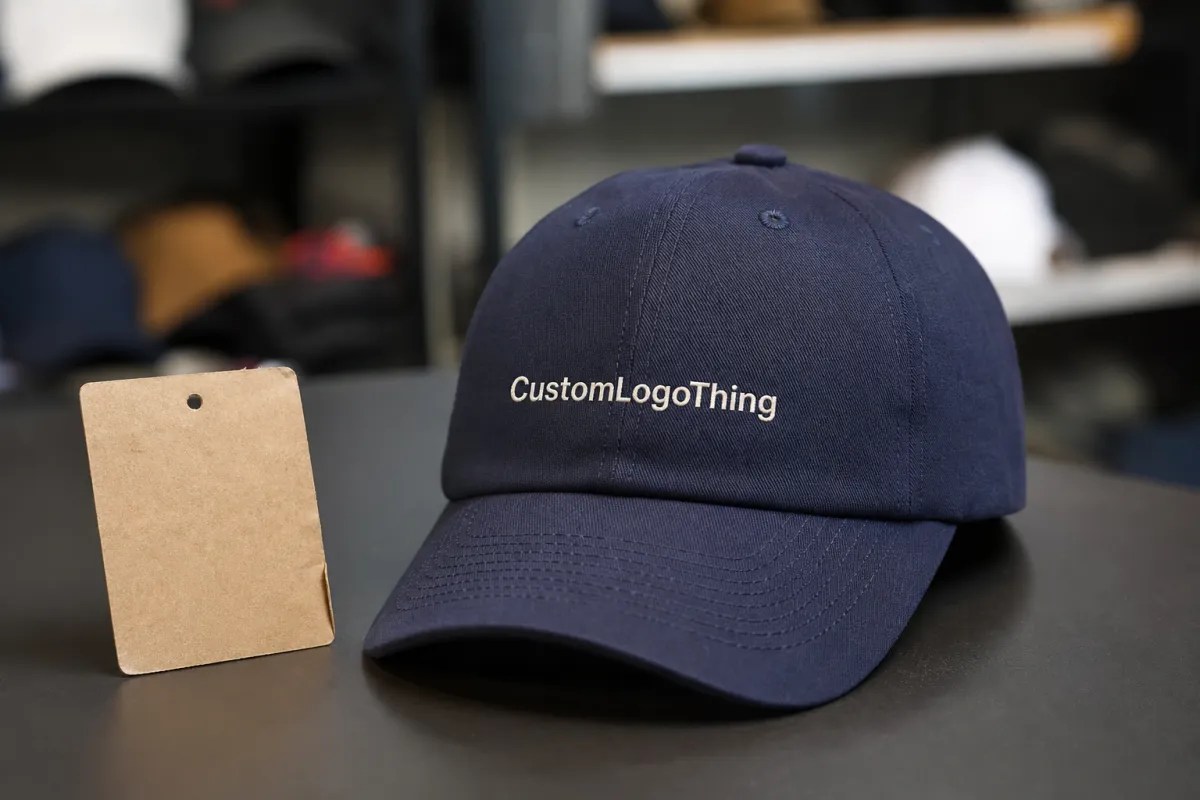
A sample is priced differently from bulk production because the factory is not spreading setup costs across a full run. Someone has to prepare fabric, cut small quantities, sew or finish one piece by hand, and often stop a normal workflow to do it. That labor does not disappear just because the order is small.
For a basic blank sample, buyers often see a fee in the $15-$35 range before freight. Add embroidery and the range commonly moves to $35-$90. Add woven patches, applique, or multiple decoration positions and the number rises again. Special trims, custom mesh, or a nonstandard closure can add another layer of cost because the sample may require separate sourcing before a production slot is even booked.
Here is the part many teams underestimate: the sample is not only about the cap. It is about proving that the decoration, the fit, the material, and the final look can all survive real production conditions. If the item will be sold in a retail environment with fixed launch dates, one bad sample decision can create a far larger loss than the sample fee itself.
A useful procurement rule: if the sample cannot match fit, color, and decoration placement in one approval cycle, the quote probably left out something important.
Some suppliers include artwork cleanup in the first fee. Others charge separately for digitizing embroidery, building a patch mold, or handling a second revision. Freight is often excluded. Rush service usually is too. That means buyers should ask exactly what is included before comparing quotes. Otherwise one supplier appears cheaper only because later costs show up in shipping, revision fees, or extra setup.
Standardizing the spec early is the fastest way to protect the budget. If the team already knows crown height, closure type, fabric family, and logo placement before sampling starts, there is less back-and-forth and fewer paid corrections. The strongest negotiations are usually not about shaving a few dollars from the sample. They are about avoiding a second sample entirely.
| Sample type | What it proves | Typical fee before freight | Typical lead time |
|---|---|---|---|
| Blank fit sample | Shape, comfort, brim structure, closure feel | $15-$35 | 5-10 business days |
| Logo sample | Embroidery, patch size, print placement, color contrast | $35-$90 | 7-12 business days |
| Color reference sample | PMS match, fabric shade, thread alignment | $45-$120 | 7-14 business days |
| Pre-production sample | Final method, final materials, near-bulk finish | $60-$150 | 10-15 business days |
A paid sample is often cheaper than correcting one bad bulk run. That is especially true when the order is tied to a launch date, a trade show, or a seasonal reset. If the cap arrives late, the damage is not limited to inventory. It can disrupt the rest of the packaging plan, including any Custom Packaging Products that were meant to ship with it.
What a cap sample should include before approval
A proper sample package should answer different approval questions, not just one. A fit sample checks shape and wearability. A logo sample checks decoration. A color reference sample checks shade. A pre-production sample shows the build that will be repeated in bulk. Teams that blur those categories often approve too early, then discover the bulk run is technically acceptable but commercially off.
The style itself changes what the sample needs to prove. A 5-panel cap usually gives a flatter front panel, which can make a logo read wider. A 6-panel cap generally gives a more familiar shape and a traditional fit. A dad cap needs softer structure and a lower crown. A snapback usually asks for firmer paneling and a more pronounced front. A trucker introduces mesh, which affects shape retention. A performance cap often uses lightweight polyester and moisture management, so color control becomes more important than it is on cotton twill.
Decoration should be reviewed in the form it will actually take in production. Embroidery, woven labels, silicone patches, leatherette patches, printed badges, interior taping, and hangtags all change the look and the perceived quality. A patch that sits too high can make the cap feel off-balance. Thread that misses the brand color by a shade can alter how the item photographs and how it reads on a shelf.
The sample should also be handled like a retail item, not just a proof. Put it on. Check the crown height. Fold the brim. Look at how the front panel holds its shape after handling. Place it beside the rest of the line, especially if the brand already sells branded cartons, tags, or other retail packaging pieces. A cap that looks strong alone may disappear next to a heavier graphic system.
For programs with paper inserts or hangtags, ask about paper grade and sourcing. If the line needs FSC-controlled material, the FSC site is a useful reference point. For goods moving through a distribution network, ISTA guidance helps buyers think beyond the sample and into carton performance, drop risk, and transit wear.
Specs that change fit, decoration, and production risk
Fabric choice changes more than hand feel. It changes cost, decoration quality, and production risk. Cotton twill gives a familiar retail feel and handles embroidery well. Polyester holds color consistency better across lots and dries faster. Mesh lowers weight and improves airflow. Nylon suits sport-oriented looks. Brushed fabric softens the surface. Stretch blends improve fit, but they can complicate repeatability if the supplier is not strict with trim sourcing.
Structural specs should be locked before sampling begins: crown height, panel count, brim shape, closure type, sweatband material, and seam structure. A 5 mm difference in crown height can be trivial in a spec sheet and obvious on a head. The same is true for closures. A metal buckle, plastic snap, self-fabric strap, or elastic back each changes the final feel and the cost profile.
Decoration specs create another set of variables. Embroidery pricing shifts with stitch count, thread colors, and density. A logo with 8,000 stitches is not the same as one with 14,000. Patch work changes with dimensions, edge finish, backing type, and whether it is stitched or heat-applied. Print work depends on the area covered, ink layers, and how much detail must survive on a curved surface. PMS matching is rarely exact on the first pass; some colors land cleanly, while others need thread or print tests before they read close enough for retail.
These are the checks that usually matter most in review:
- Fit: Confirm crown height, head opening, and closure comfort on an actual wearer.
- Color: Compare fabric, thread, and trim against a controlled brand reference, not a phone screen.
- Decoration: Measure logo size, placement, and edge quality against the approved spec sheet.
- Finish: Check stitching, interior taping, sweatband quality, and loose threads.
- Shelf presence: Review the cap beside the rest of the assortment and any branded packaging elements.
The reason that checklist matters is simple: a sample is a proxy for mass production. If the proxy is weak, the bulk order becomes a guess.
Cost, MOQ, and quote inputs that move the number
The sample cost also changes when revisions pile up. One correction is manageable. Three usually mean the process needs to be reset. The biggest cost drivers are decoration complexity, material substitutions, extra labor minutes, special packaging, and the number of rounds needed before approval. A cap with one front embroidery is easier to sample than a cap with embroidery, woven label, interior print, and custom hangtag. The work stack gets heavier quickly.
MOQ matters just as much. Lower quantities usually mean a higher unit cost because setup is spread across fewer caps. A basic decorated cap might sit around 300-500 units. A more complex build, especially one that uses multiple fabrics or a specialty patch, may move closer to 1,000 units or more. That is not a fixed rule. It depends on the production method, trim availability, and whether the factory can source small lots without breaking the economics.
To get a cleaner quote, send the following in one package:
- Cap style and target fit.
- Quantity, color count, and size mix if any.
- Vector artwork or a clean logo file.
- Decoration method and exact placement.
- Brand color targets, ideally PMS references.
- Target delivery date and ship-to location.
- Packaging requirements, barcode needs, and sample credit expectations.
That last item matters more than many buyers expect. Ask whether the sample fee is credited back against production. Some suppliers apply the fee to the final order. Others do not. Both models can be fair, but they are not interchangeable. Compare the full landed sample cost, not just the sticker price.
Hidden charges are where budgets get distorted. Sample freight can be material, especially if the project crosses borders. Rush fees may appear if the buyer wants the cap in under a week. Import handling can add cost on either side of the shipment. If the sample includes packaging elements such as inserts, printed sleeves, or other Custom Packaging Products, those items may carry separate setup charges. The cleanest quote is the one that states exactly what is included and exactly what is excluded.
Process and timeline from artwork file to approved sample
Sampling works best when the process is disciplined. First comes the brief: style, specs, target quantity, and brand requirements. Then the factory checks the artwork. Next comes proof approval, where the buyer confirms dimensions, placement, and colors. After that, the sample is built. The buyer reviews it, requests changes if needed, and finally signs off for production. The sequence sounds basic. The difference between a fast project and a stalled one usually lives in those handoffs.
Timing is usually fairly consistent. Proof review can take 1-3 business days if files are complete. Sample construction often takes 5-10 business days. Shipping adds another 3-7 business days depending on route and service level. If a revision is needed, add another production cycle or partial cycle on top. The fastest programs are the ones where the buyer has already settled brand colors, decoration method, and packaging expectations before the first build starts.
Missing vector artwork is a common delay. So is unclear color approval. So is a committee-style signoff process where no one has final authority. One decision-maker can save days. A pre-approved spec sheet can save more. If the cap will be sold beside coordinated packaging, including custom cartons or custom printed boxes, that context should be in the brief from the start. It is much easier to shape the sample correctly than to explain a mismatch after the fact.
There is also a practical point on scheduling. Once the sample is approved, the buyer should confirm the quote, verify MOQ, review the timeline, and release the deposit quickly enough to reserve capacity. If the order sits too long, material pricing and factory slots can move. Then the approved sample no longer protects the schedule. It becomes a reference point for a fresh delay.
How to keep sample cost under control without weakening approval
The cheapest sample is not always the best value. A better target is a sample process that answers the real questions the first time. That starts with fewer assumptions. If the artwork is not final, the decoration method is not final, or the color target is not final, the sample will probably need another round. Each unknown adds risk, and risk becomes money.
There are a few practical ways to keep Private Label Caps custom sample cost in check. Limit revision cycles by approving a detailed spec before sampling begins. Reduce decoration complexity if the cap is only meant to prove shape and branding placement. Avoid requesting multiple unrelated sample types in one rush order unless the launch justifies it. And ask for sample credit terms before the first build starts. A small amount of discipline can save both money and time.
Factories also price samples more predictably when the brief is specific. “Black cap with white logo” is not enough. “6-panel black cotton twill cap, mid-profile crown, curved brim, self-fabric strap with metal slide closure, front embroidery at 90 mm wide, PMS 186 red thread, no interior print” gives the production team something they can actually build without interpretation. That level of detail reduces back-and-forth and keeps the fee closer to the true scope of work.
Buyer-side QC helps here too. Verify the sample under daylight and indoor lighting. Compare it against a real reference rather than memory. Check the interior finish, not just the front panel. A cap that looks strong in a hero photo can still fail if the sweatband is rough, the stitching wanders, or the closure feels flimsy. Those are the details that tend to show up later in returns, reviews, and markdowns.
Next steps after sample approval: lock specs and place the order
Once the sample checks out, move immediately into order confirmation. Send the approved sample photos, final quantity, shipping destination, barcode or carton requirements, and any retail-ready details. Then confirm the final spec sheet in writing so fabric, decoration, and placement match the approved sample. That is the point where vague language becomes expensive.
The decision chain should stay short: verify the quote, confirm MOQ, check the timeline, release the deposit, and reserve production time. If there is a packaging requirement, attach it now. If the line needs branded tags, confirm them now. If the order needs a landing carton or retail-ready presentation, fold that into the same approval pack rather than treating it as a later add-on.
Sample cost is only useful if it improves the next decision. Treat it as a filter. Once the sample passes, lock the spec and move while the approved details are still fresh. That is how unit cost stays stable, revision risk stays low, and launch dates stop slipping.
What affects private label cap sample cost the most?
Decoration complexity usually has the biggest effect because embroidery, patches, and print setup add labor and tooling. Material choice and closure type also move the price, especially when the sample uses nonstandard trims or performance fabric. Shipping, rush timing, and revision rounds can raise the final bill more than buyers expect.
Can the sample fee be applied to a bulk cap order?
Some programs credit the sample fee back when the production order is placed, but that policy is not universal. Ask for the credit terms in writing before you approve the sample so there is no confusion later. If a supplier does not credit samples, compare the fee against the value of avoiding a bad bulk run.
What MOQ should I expect after a custom cap sample is approved?
MOQ depends on the cap style, decoration method, and fabric availability rather than a single fixed rule. More complex builds usually need a higher MOQ because setup costs must be spread across more units. A quote should show whether the MOQ changes for colorway mixes, logo placement changes, or packaging upgrades.
How long does a private label cap sample usually take?
Artwork review and proofing can take a few days if files are complete and colors are already defined. Sample production commonly takes one to two weeks, then transit adds more time depending on the route. Revisions extend the timeline, so the fastest path is to approve specs before the first sample is built.
What should I send to get an accurate private label cap quote?
Send the cap style, target quantity, logo file, decoration placement, color targets, and delivery location. Include whether you need a sample credit, rush turnaround, or special packaging so the quote reflects the real job. If possible, attach a reference cap or spec sheet so the factory can match fit and finish faster.

