A Private Label Caps logo print quote should do more than attach a price to a hat. It should show what cap body is being priced, which decoration method is assumed, how much of the number comes from setup, and which details can move the total. The blank cap is rarely the main cost. Decoration prep, color matching, and packaging usually decide whether the quote feels lean or inflated.
That is why two quotes for what looks like the same cap can land in different universes. A simple front logo on a flat panel is one job. Add a side hit, a curved surface, a second decoration method, or tighter brand-color matching, and the work changes shape fast. The supplier is not just pricing a product. It is pricing a production path.
Fast pricing starts with fewer unknowns. Clear specs reduce the back-and-forth that turns a straightforward order into a long email thread full of half-answers and late corrections.
A low quote that changes twice is not a low quote. It is a delayed revision.
Private label caps logo print quote: what drives the number
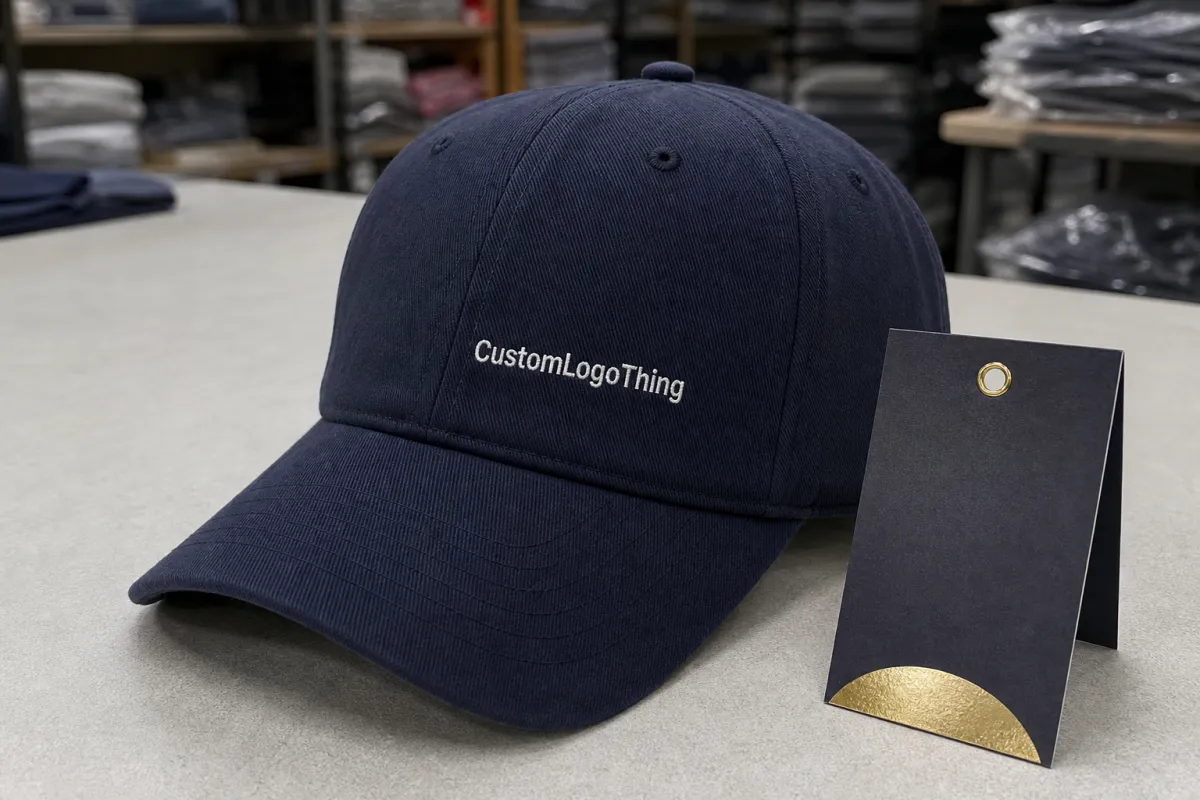
The first driver is the cap body. A soft dad hat, structured snapback, trucker, rope cap, five-panel, and performance cap all behave differently under decoration. A flat cotton twill front panel is easier to print or embroider than a strongly curved crown. Structured fronts often need more stabilizer, more setup, or tighter placement control. That adds time, and time is money in cap production.
The second driver is the print area. A small left-front logo is cheap compared with a larger center-front graphic or multiple placements. Bigger art means more setup, more registration risk, and more time checking alignment. If the artwork crosses seams or reaches onto a panel edge, the quote rises again because the decoration has to follow the hat, not the mockup.
The third driver is the method. Spot-color printing is usually simpler than full-color digital work. Digital print handles more gradients and color variation, while transfer print can offer sharper detail on small runs or complex placements. Embroidery still has its own economics: stitch count, thread changes, and digitizing can push a quote higher even when the cap itself is basic. Puff embroidery adds another layer of material and quality control, but not every logo survives that treatment well.
What should be included in the number? Ideally: artwork cleanup, one proof, decoration setup, and the stated packout. If the quote excludes these items, they tend to reappear later as extras. That is how a tidy number becomes an invoice with surprise lines that nobody planned for.
Compare like for like. Same cap body. Same decoration method. Same artwork size. Same quantity. Same delivery region. A quote that ignores those variables is not really a quote; it is a loose estimate wrapped around a guess.
Choose the right cap body, panel build, and print method
Private Label Buyers usually end up with a small set of cap styles because those styles cover most brand needs. Dad hats read relaxed and wearable. Snapbacks support a more structured retail look. Truckers give airflow and a familiar casual profile. Rope caps carry a vintage cue that some brands want and others should avoid. Five-panel caps are useful when the logo needs a flatter, cleaner front. Performance caps make sense when sweat management and lighter weight matter more than a heavy cotton feel.
Panel build matters as much as style. A five-panel front gives a broader print field than a classic six-panel crown, which is why graphic logos often land better there. A curved front can distort small type, especially if the mark sits high or near a seam. On structured hats, the buckram or front backing can help the shape, but it also makes the surface less forgiving. A clean mockup can hide those realities. The actual cap cannot.
The decoration method should follow the art, not the other way around. Screen print works best for bold shapes and limited colors. Digital print is useful when the logo has more tonal variation or the run is too small to justify heavy setup. Transfer print can give crisp edges and flexible placement. Embroidery offers texture and durability, while puff embroidery creates depth for a more premium look. For performance fabrics, heat and adhesive tolerance matter; some materials accept decoration better than others.
Here is a practical comparison buyers can use before asking for a Private Label Caps logo print quote:
| Method | Best for | Typical added cost per cap | Watch-outs |
|---|---|---|---|
| Screen print | Simple logos, bold shapes | $0.30-$0.90 | Works best on flatter panels and fewer colors |
| Digital print | Small runs, color-heavy art | $0.45-$1.10 | Artwork quality matters; fabric texture can affect sharpness |
| Transfer print | Detailed marks, flexible placement | $0.50-$1.20 | Needs clean artwork and careful heat control |
| Embroidery | Durable retail looks | $0.60-$1.50 | Stitch count and small text can raise cost quickly |
| Puff embroidery | Premium texture, bold branding | $0.90-$2.20 | Thin lines and tiny copy can fail or look crowded |
The cheapest decoration is not always the best buy. A clean one-color logo on the right cap body often beats a complicated mark that needs multiple passes, special handling, and extra inspection. Simpler art is easier to repeat, and repeatability is where private label programs save money over time.
Specs to lock before you ask for pricing
If you want a useful Private Label Caps logo print quote, lock the spec before the supplier starts pricing. Start with cap style, fabric, closure type, crown height, brim shape, base color, logo size, and logo placement. Those inputs remove most of the pricing wobble. Without them, every answer contains assumptions, and assumptions are where quotes drift.
Artwork format matters more than many buyers expect. A vector file in AI, EPS, or PDF keeps setup cleaner and protects line quality. A low-resolution JPG or PNG can work for an early estimate, but it often creates redraw work before production starts. Tiny text, thin strokes, and delicate outlines are the usual trouble spots. A logo that looks fine on a laptop screen can fall apart once embroidery digitizing or print cleanup begins.
Color control deserves its own line in the brief. Ask whether the supplier is pricing from CMYK, spot colors, or a Pantone match. Those are not interchangeable. A single solid brand color is much easier to control than a logo with shading, gradients, or multiple color shifts. Fabric also changes the result. Cotton twill, polyester, nylon, and mesh do not accept color in the same way, so a good quote should acknowledge the material rather than treating all caps as equal.
Then there are the extras. Inside labels, woven tags, sweatband branding, hangtags, barcode stickers, and individual polybags all affect the total. These details are small on paper and obvious in production. A 500-piece run with hand-applied extras can take much longer than the same run with plain packing. That extra labor is easy to ignore until it is sitting in the invoice.
Packout matters too. If the caps are folded, compressed, or boxed for export, ask how the supplier is controlling shape and carton load. Poor packout can flatten a crown, leave a brim crease, or shift decoration placement enough to create disputes on receipt. The quote should reflect that risk if the final shipment has to survive a long transit or multiple handling points.
Reorder stability is the last spec that gets overlooked. A private label line works best when the same cap body, same logo file, and same decoration method stay in place from run to run. If the second order quietly changes crown profile or panel build, the logo may still print, but the product will no longer match the first shipment exactly. Buyers notice that. Customers do too.
Pricing, MOQ, and unit-cost breakpoints
Unit cost does not fall in a straight line. It drops in steps. That is the part first-time buyers often miss. Setup, proofing, and packing labor have to be paid somehow, and on a small order they sit heavily on each cap. Once the order gets larger, those fixed costs spread out and the per-unit number starts to look healthier.
For a decorated private label cap, the breakpoints usually look something like this:
- 100-300 pieces: highest unit cost, used for testing, launch drops, and small regional programs.
- 500-1,000 pieces: a more balanced zone where price and flexibility start to make sense.
- 2,000+ pieces: better unit economics if the spec stays fixed and the artwork does not keep changing.
For larger runs, a straightforward decorated cap often lands in the roughly $2.50-$6.50 per unit range before freight, depending on body type, decoration, and packaging. Smaller orders can sit much higher once setup and delivery are folded in. Premium materials, detailed embroidery, or retail-ready packaging can push the number beyond that quickly. That is not a red flag. It is how production math works.
Ask for the cost structure, not just the final line. Blank cap price, decoration charge, sample fee if one is required, packaging, freight, and any color-matching or artwork prep should each be visible. A lump sum may look convenient, but it hides the levers that matter if the order changes later.
The cheapest quote is rarely the safest choice when deadlines are fixed. Rush work, tight color matching, and last-minute packing changes cost money because they compress the schedule and leave less room for error. If the launch date is immovable, pay for speed. If the launch date has slack, use it to improve the margin. That tradeoff is not glamorous, but it is usually where the real savings live.
Always compare total landed cost, not just unit price. Freight, duties, domestic delivery, and repacking can erase a small pricing advantage very quickly. A quote that is thirty cents cheaper at origin may be more expensive after shipping, handling, and correction fees. The unit number alone does not tell the full story.
Production steps, lead time, and approval gates
A clean order flow should move in a predictable sequence: inquiry, spec review, artwork check, proof, sample if needed, production, inspection, packing, shipment. Each stage has a failure point, and the quote should reflect the work required to get through it. If the proof is wrong, production stops. If the sample is late, the launch slips. If the packing standard is vague, the carton count becomes a problem later.
There is a real difference between a digital proof and a physical sample. A proof confirms placement, size, text, and color intent. A physical sample shows how the decoration actually sits on the cap body, how the thread tension behaves, whether a print needs more opacity, and how the crown looks after finishing. For a simple internal program, a proof may be enough. For a retail release or a color-sensitive brand, the sample is the safer checkpoint.
Lead time depends on the art file, material availability, decoration method, and packing requirements. A simple run can finish in 10-15 business days after approval. If the order needs special fabrics, custom color matching, or a pre-production sample, 15-25 business days is a more realistic expectation. Rush schedules are possible, but they usually cost more and leave less room for correction.
Three approval gates matter most:
- Spec confirmation: cap style, color, logo size, and placement are signed off before pricing is locked.
- Artwork signoff: the final vector file, color references, and layout are approved.
- Sample or pre-production approval: the buyer confirms the real decoration before the full run starts.
Those gates prevent the common failure where the proof looked fine but the finished cap does not. A proof cannot show stitch pull, print texture, crown tension, or how a flat design behaves once it wraps around a three-dimensional panel. It is a useful tool, not a substitute for production reality.
Speed also has a limit. A supplier can answer a quote quickly and still need proper time for curing, trimming, inspection, and carton verification. Fast communication is not the same as fast shipment. If the release date matters, build a buffer into the plan rather than assuming the first estimate will also be the final ship date.
What to send next for a clean quote and first PO
A useful Private Label Caps logo print quote usually starts with five things: cap style, quantity, logo file, decoration method preference, and delivery destination. Add your target ship date if there is one. If you need retail packaging, inside labels, or hangtags, say so in the first message. Leaving those details out does not make the quote cleaner; it just postpones the missing costs.
The best brief also answers a few practical questions before anyone asks them. What color standard should be used? Which placement is final? Are mixed sizes or mixed colors allowed? Does the logo need to be printed, embroidered, or tested both ways? One short spec sheet can remove more friction than a long email chain.
Before you approve a run, check four things:
- Brand colors match the right reference, not a screen screenshot.
- Logo size and placement are confirmed on the correct cap body.
- Packaging rules are clear, including folding and insert needs.
- Reorder expectations are documented so the next run matches the first.
If sewn identifiers or retail tags are part of the program, treat them as part of the same cap brief instead of a separate afterthought. Branding on caps works best when the decoration, labeling, and packout all follow the same standard. A product that looks coordinated in the carton usually came from a coordinated quote.
For most buyers, the strongest outcome is not the cheapest number on paper. It is the quote that reflects the actual cap body, the actual decoration method, the actual packout, and the actual timeline. That kind of estimate is easier to trust because there are fewer hidden assumptions waiting to surface later.
What do I need to request a private label caps logo print quote?
Send the cap style, quantity, logo file, print or embroidery placement, and ship-to location. Add target colors, packaging needs, and deadline if those matter. If the artwork is still being finalized, say so early because setup time and pricing can change.
Which logo print method is usually cheapest on private label caps?
Simple single-placement printing is often cheaper than multi-step decoration or complex embroidery. The lowest-cost option still depends on the cap body, logo shape, and color count. Curved panels, small text, and multiple placements usually move the quote up.
How does MOQ affect private label caps pricing?
Lower MOQs usually carry a higher unit price because setup costs are spread across fewer caps. Higher quantities can lower the per-unit number, but only if the spec stays stable. Mixed colors, mixed logo placements, or frequent revisions reduce the savings.
How long does logo printing take on private label caps?
Lead time depends on artwork approval, material availability, sample needs, and decoration method. Straightforward runs can finish in about 10-15 business days after approval. More complex orders, especially with custom colors or physical samples, often need 15-25 business days.
Can you match brand colors on printed caps?
Yes, but the result depends on the print method, the fabric, and whether the supplier is working from Pantone references or another color standard. Color matching is most reliable when the art is clean and the sample is approved before the full run starts.


