Private Label Caps Sample Approval Checklist for Buyers
Private Label Caps Sample Approval Checklist: What It Actually Protects
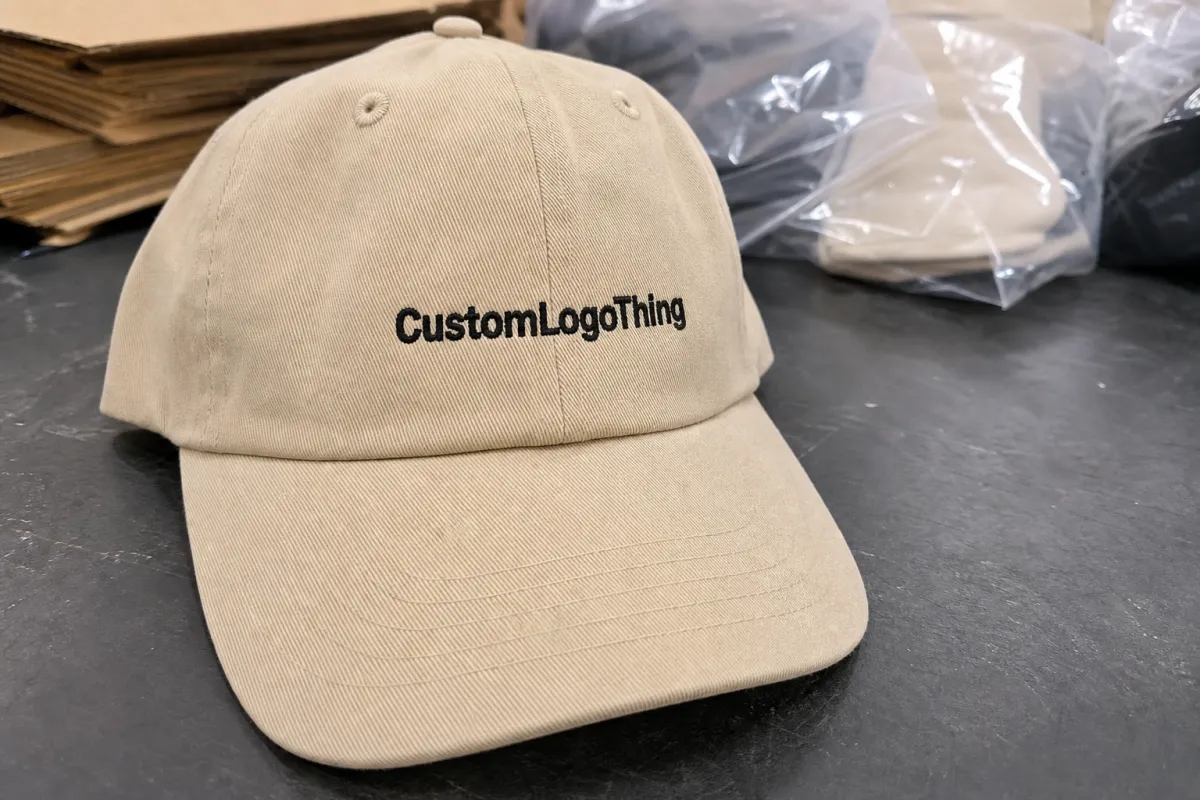
One small logo placement error on a cap sample can become 5,000 crooked, off-brand hats. Cute on a mood board. Expensive in cartons. A private label caps Sample Approval Checklist is not paperwork for people who enjoy slowing things down; it is risk control before fabric, thread, trims, labels, packaging, and production time are locked in.
The sample is the physical contract between the approved spec sheet and bulk production. It should confirm fit, fabric, construction, decoration, private label trims, packaging, and shipping marks. If the sample feels cheap in your hand, bulk production will not suddenly become premium because everyone “understood the vision.” That phrase has paid for plenty of rework.
Buyers also need to know which sample they are approving. A blank cap sample checks style, shape, fit, fabric, and closure before logo work starts. A strike-off checks one decoration component, such as embroidery, woven patch detail, print color, or rubber patch molding. A pre-production sample should show the full approved cap with decoration, trims, labels, and packaging. A size set matters for fitted caps, children’s caps, and beanies with graded sizing. A production sample is pulled from or near the bulk run and used for incoming QC comparison.
Sample approval does not guarantee perfection. Anyone selling that idea is either new or optimistic in a way that makes my left eye twitch. It does reduce preventable problems: wrong thread color, shallow crown depth, weak snaps, loose embroidery, labels sewn in the wrong spot, barcode stickers placed over retail copy, or caps crushed because the carton count was too aggressive.
Buyer rule: approve what you can measure, photograph, and compare later. “Looks fine” is not a production standard.
How Cap Sampling Works Before Bulk Production
Most cap sampling follows a familiar path: buyer brief, tech pack or reference sample, material sourcing, logo artwork review, first sample build, buyer comments, revision sample if needed, and pre-production approval. The supplier is trying to confirm cap shape, panel pattern, crown height, brim curve, closure type, sweatband quality, stitching density, and decoration method before the order moves into bulk.
Different styles need different checks. A dad hat needs attention on unstructured crown shape, brim softness, and adjustable strap range. A snapback needs front-panel stiffness, crown structure, snap quality, and brim flatness. A trucker cap adds mesh hand-feel, back-panel tension, and foam or twill front-panel behavior. A 5-panel cap needs clean front logo placement because there is nowhere for bad alignment to hide. Performance caps need fabric stretch, moisture handling, and sweatband comfort. Beanies need stretch recovery and label placement. Bucket hats need brim droop, seam symmetry, and circumference accuracy.
Private label work adds more approval points than generic branded merchandise. The buyer owns the retail presentation, not just the logo. Woven labels, hang tags, barcode stickers, inner taping, care labels, country-of-origin labels, and packaging all need approval. If custom trims are part of the program, coordinate early with Custom Labels & Tags so artwork, size, fold type, color, and sewing position are not treated as last-minute details.
Digital mockups help with layout. They do not prove fabric hand-feel, embroidery tension, crown structure, brim stiffness, or closure strength. Approve samples with written comments and photos, not chat messages like “looks good.” Vague approvals are where expensive arguments go to breed.
| Sample Type | What It Confirms | Typical Use | Common Risk If Skipped |
|---|---|---|---|
| Blank cap sample | Fit, crown shape, fabric, closure | Early style approval | Bulk cap feels cheaper than expected |
| Strike-off | Embroidery, patch, print, thread color | Decoration approval | Logo looks muddy, crooked, or off-color |
| Pre-production sample | Full cap, trims, labels, packaging | Final approval before bulk | Retail details fail after production starts |
| Production sample | Bulk-run accuracy | QC comparison | No physical standard for disputes |
Keep one approved sample sealed and labeled as the production standard. Include the date, sample version, supplier name, approved specs, and approver. Boring? Yes. Useful when cartons arrive wrong? Extremely.
Sample Approval Process and Timeline for Private Label Caps
A typical first cap sample takes about 7 to 15 business days after artwork, specs, and materials are confirmed. Revisions often add another 5 to 10 business days, depending on the issue. Custom fabric, dyed-to-match colors, special closures, 3D puff embroidery, patches, metal buckles, private woven labels, and retail packaging all add setup time.
The practical phases are simple, even if the calendar gets annoying: artwork cleanup, material confirmation, pattern setup, decoration sampling, cap assembly, internal QC, sample shipping, buyer review, and written approval. International sample shipping can add several days. Plan for it. DHL is good, but it is not a teleportation service.
Ask for photos or video before the sample ships if the launch calendar is tight. Front, back, side, inside, closure, label, and packaging shots can catch obvious errors early. If the logo is 12 mm too high in the factory photo, you do not need to spend three days waiting for the sample to land before saying no.
Use revisions carefully. A corrected sample is worth the time when fit is wrong, logo size is off, embroidery is poor, color is inaccurate, construction is weak, labels are incorrect, or packaging does not meet retail requirements. Tiny non-critical fixes, such as moving a carton mark or trimming loose thread, may be handled with written confirmation and factory photos if the supplier has been reliable and the risk is genuinely low.
Do not let different departments approve different versions of reality. The buyer, designer, merchandiser, compliance person, and operations person should review the same physical sample or the same documented photo set. One person approving fit while another later rejects label placement is how a 10-day sample cycle turns into a 35-day headache.
The checklist should sit next to the cap during review, not in a folder nobody opens. Check each line, add pass/fail notes, attach photos, and state whether the sample is rejected, approved with corrections, or approved for bulk production.
Fit, Construction, and Material Checks Buyers Should Not Skip
Fit comes first because a cap that wears badly will not be rescued by a beautiful logo. Check crown depth, circumference, brim length, brim curve, panel shape, adjustability range, and whether the cap sits correctly on different head sizes. For adjustable caps, test the smallest and largest usable settings, not just the middle hole because it looks tidy in a photo.
Construction checks should include seam alignment, panel symmetry, stitch count, loose threads, sweatband attachment, eyelet placement, top button security, brim stiffness, and closure durability. Pull gently on the back strap. Flex the brim. Rub the fabric. Open and close the buckle, snap, hook-and-loop, or cord adjuster several times. If something feels weak during sampling, bulk handling will not make it stronger.
Material choice changes the inspection list. Cotton twill is common for casual caps, often in midweight ranges around 180-260 gsm depending on style. Polyester mesh matters on truckers because stiff, scratchy mesh makes the cap feel cheap fast. Nylon or polyester performance caps need smooth hand-feel, sweatband comfort, and clean edge finishing. Corduroy needs wale consistency. Wool blends need structure and lint control. Acrylic beanies need stretch recovery after several pulls.
Structured and unstructured crowns need separate approval. Structured caps usually use buckram or fused backing in the front panels, and that stiffness affects how embroidery or patch applications sit. Too soft, and the logo can ripple. Too stiff, and the cap may feel boxy. Unstructured caps should collapse naturally without looking wrinkled, twisted, or sad on a table.
Document fit feedback in measurable terms. “Increase crown depth by 0.5 cm” beats “make it more premium” every single time. “Reduce brim curve by 10-15%” is useful. “Feels weird” is not useless, but it needs a follow-up measurement or marked photo. Factories cannot quote, cut, sew, or revise vibes.
If the cap is meant for retail or e-commerce, review durability against the likely sales channel. Caps shipped one per mailer need different crush resistance than caps displayed on a shelf. For package transit guidance, standards from ISTA are useful because distribution damage is not just a carton problem; it becomes a customer review problem.
Logo, Label, and Packaging Details That Need Approval
Decoration is where many cap samples fail. Logo size, placement, thread color, patch edge, heat transfer adhesion, and embroidery tension all affect perceived quality. A clean vector file can still become muddy embroidery if the lines are too thin, the text is too small, or the stitch density is wrong for the fabric.
Embroidery and Patch Checks
For embroidery, check stitch density, thread sheen, small text legibility, 3D puff height, backing visibility, thread breaks, and whether the logo distorts the front panel. Small text under about 5 mm high often gets risky in thread, especially on textured fabric. 3D puff looks sharp on bold shapes, but it can turn thin letters into little foam sausages. Lovely.
For patches, check woven patch detail, rubber patch molding, leather patch debossing, merrowed edge quality, placement angle, and stitch security. A woven patch can hold more detail than direct embroidery, but tiny type still has limits. Leather patches need deboss depth and edge finish approval. Rubber patches need clean molding and consistent color. Heat transfers need adhesion and edge lifting checks after light flexing.
Approve decoration in the actual location on the cap whenever possible. A perfect patch on a flat table may look different once it is stitched across a curved crown. Front placement should be measured from fixed points, such as the bottom edge of the front panel seam or the center front seam, rather than judged by eye alone.
Private Label and Retail Packaging Checks
Label approvals should cover inner woven label, size label, care label, brand label, country-of-origin label, barcode sticker, hang tag, and any retailer-specific compliance label. If you need matching trims, pair the cap approval process with Custom Labels & Tags early, especially for folded woven labels, hang tag strings, and barcode sticker sizing.
Packaging checks should include polybag size, suffocation warning, recycled bag claims, carton count, carton markings, master carton strength, and whether caps are crushed in transit-style packing. If the packaging claims recycled content or environmental benefit, do not wing it. The EPA recycling guidance is a sensible reference point for avoiding lazy claims that cause problems later.
Approve Pantone references, thread cards, label artwork, and packaging copy before final approval. A misspelled care label is not charming. It is just avoidable. Your sample checklist should include photo sign-off for front, back, left side, right side, inside crown, sweatband, closure, labels, hang tag, polybag, and carton marks.
Cost, MOQ, and Pricing Questions During Sample Approval
Sample approval is also the moment to confirm what the quoted unit cost actually includes. Do not assume the quote covers cap style, fabric, decoration, private labels, hang tags, individual polybags, cartons, freight terms, and testing. Ask, then get the answer in writing.
Common cost drivers include low MOQ, custom dyed fabric, complex embroidery, 3D puff, custom patches, metal trims, private woven labels, hang tags, individual polybags, rush sampling, and multiple revisions. A basic decorated cap sample may be relatively inexpensive, while a fully private label sample with custom trims and retail packaging costs more because the supplier is setting up more than a logo.
As a practical range, basic decorated cap samples can land around $25-$75 per style in many common programs, excluding international shipping. More involved private label samples with custom patches, woven labels, trims, and packaging can run $80-$200+. Bulk unit pricing for simple cotton twill caps might sit around $3.50-$7.50 per unit at moderate quantities, while lower MOQ or complex retail-ready builds can push higher. These ranges depend heavily on order quantity, material, decoration, packaging, and freight terms.
MOQ tradeoffs are real. Lower MOQ often means higher unit cost, fewer customization options, and less buying power on special materials. Higher MOQ can improve pricing, but it raises inventory risk. Ordering 2,000 caps at $4.85 may look better than 500 caps at $7.20 until you realize your slowest color is now living rent-free in storage.
Ask whether sample fees are refundable or credited to bulk production, and under what order quantity. Confirm revision fees in advance. Changes caused by factory error should be handled differently from buyer-requested design changes, but not every supplier writes that clearly unless you ask.
- Confirm the final unit cost after the approved sample, not before the sample changes.
- Check what is included: labels, hang tags, polybags, cartons, testing, and freight terms.
- Ask about sample credits tied to MOQ or bulk order value.
- Separate factory errors from buyer revisions so revision fees are fair.
Paying for a proper sample can prevent a much larger bulk mistake. Cheap sample skipping is how buyers buy regret wholesale.
Common Sample Approval Mistakes That Delay Cap Orders
Approving from photos only is risky when fit, fabric hand-feel, brim stiffness, and closure strength matter. Photos help. They do not tell you how a cap wears. For retail private label caps, a physical pre-production sample is usually the safer choice before bulk production.
Vague feedback causes delays. “Make it nicer” forces guessing. “Logo feels off” is only useful if you add a measurement, Pantone code, revised artwork, or marked-up photo. Say “move front embroidery down 8 mm,” “change thread to Pantone 186 C match,” or “increase patch width from 55 mm to 62 mm.” Specific beats dramatic.
Another common mistake is approving logo artwork but not checking production decoration. Vector art may look perfect on screen and still fail in thread. Thin strokes, gradients, tiny letters, and tight spacing often need adjustment for embroidery or woven patches. Ask for a strike-off if the logo is detailed, layered, or critical to brand recognition.
Do not ignore legal and retail labeling. Country-of-origin, fiber content, care instructions, barcode placement, and retailer compliance labels can delay receiving, trigger chargebacks, or create rework. For paper-based tags or packaging, FSC claims should be verified through proper sourcing and documentation; the FSC site is a good starting reference for chain-of-custody expectations.
Changing specs after approval resets risk. Switching fabric, logo size, closure type, or packaging after the pre-production sample often changes cost and timeline. If the change affects fit, structure, decoration, compliance, or retail presentation, request a revised sample or at least a factory-confirmed photo set with written specs.
Not keeping an approved physical sample is another classic. Without it, quality disputes become memory contests. Nobody wins those except the person with documentation. Your private label caps sample approval checklist should identify the exact approved sample version and where it is stored.
Final Checks Before You Approve the Cap Sample
Before approval, review the cap against the spec sheet, compare it to the mockup or reference sample, inspect all decoration, test the fit, verify labels, and check packaging. Use a pass/fail format. It keeps emotions out of the process, which is handy because caps can become weirdly emotional after the third revision.
- Measure crown depth, circumference, brim length, and closure range.
- Check fabric type, color, weight, hand-feel, and structure against the spec.
- Inspect embroidery, patches, transfers, thread color, and placement.
- Verify inner labels, care labels, hang tags, barcode stickers, and country-of-origin details.
- Review polybag size, suffocation warning, carton count, carton marks, and packing method.
- Photograph front, back, sides, inside, closure, labels, packaging, and carton marks.
Create a one-page approval record with date, sample version, approved photos, required changes, final specs, approver name, and approval status. Use direct language: “Approved for bulk production based on Sample V2 with the following confirmed specs.” Casual chat approval is fine for choosing lunch. It is not fine for production.
Request a corrected sample when changes affect fit, structure, logo execution, label compliance, or packaging. For tiny non-critical changes, written confirmation plus factory photos may be enough. The right answer depends on supplier history, order value, and how painful the error would be if repeated across the full run.
Keep the approved sample in a labeled bag or box and use it for incoming QC comparison when bulk caps arrive. Send the manufacturer the final checklist with pass/fail notes so there is no mystery about what matters most. Sample approval is the buyer’s final guardrail before money, materials, and production time are committed.
FAQ
What should be included in a private label cap sample approval checklist?
Include cap style, crown shape, brim curve, fit, fabric, stitching, closure, logo decoration, inner labels, hang tags, packaging, carton marks, approved measurements, and photo references. Add pass/fail notes and exact requested corrections so the factory is not guessing from vague feedback.
How long does private label caps sample approval usually take?
Plan about 7 to 15 business days for the first sample after confirmed artwork and specs, plus shipping time. Revisions usually add 5 to 10 business days, especially when custom fabric, embroidery changes, patches, or private labels are involved.
Should I approve a private label cap sample from photos only?
Photos are acceptable for minor visual checks, but they are risky for fit, fabric feel, crown structure, brim stiffness, and closure quality. For retail private label caps, a physical pre-production sample is usually safer before bulk production.
What cap sample issues justify asking for a revised sample?
Ask for a revised sample if the fit is wrong, logo placement is off, embroidery is messy, colors do not match, labels are incorrect, or packaging fails retail requirements. Small fixes like trimming a thread or adjusting a carton mark may be handled with written confirmation and factory photos.
Does sample approval lock in the final pricing for private label caps?
Not always. Pricing can change if the approved sample uses different fabric, decoration, trims, packaging, or MOQ than the original quote. Before approval, confirm the final unit cost, sample fee credit, revision fees, packaging cost, freight terms, and bulk production lead time.