Cuffed Knit Beanies sample approval checklist reviews matter because beanies reveal their weaknesses only after they are stretched, worn, folded, and handled. A sample can look clean on a table and still fail in the real world if the cuff sits awkwardly, the yarn feels scratchy, or the decoration shifts once the knit opens up.
That is why a strong cuffed knit beanies Sample Approval Checklist is more than a color check. It is the last practical checkpoint before bulk knitting, decoration, packing, and shipping begin, and it is usually the cheapest place to correct a mistake.
What a Cuffed Knit Beanies Sample Approval Checklist Catches Early
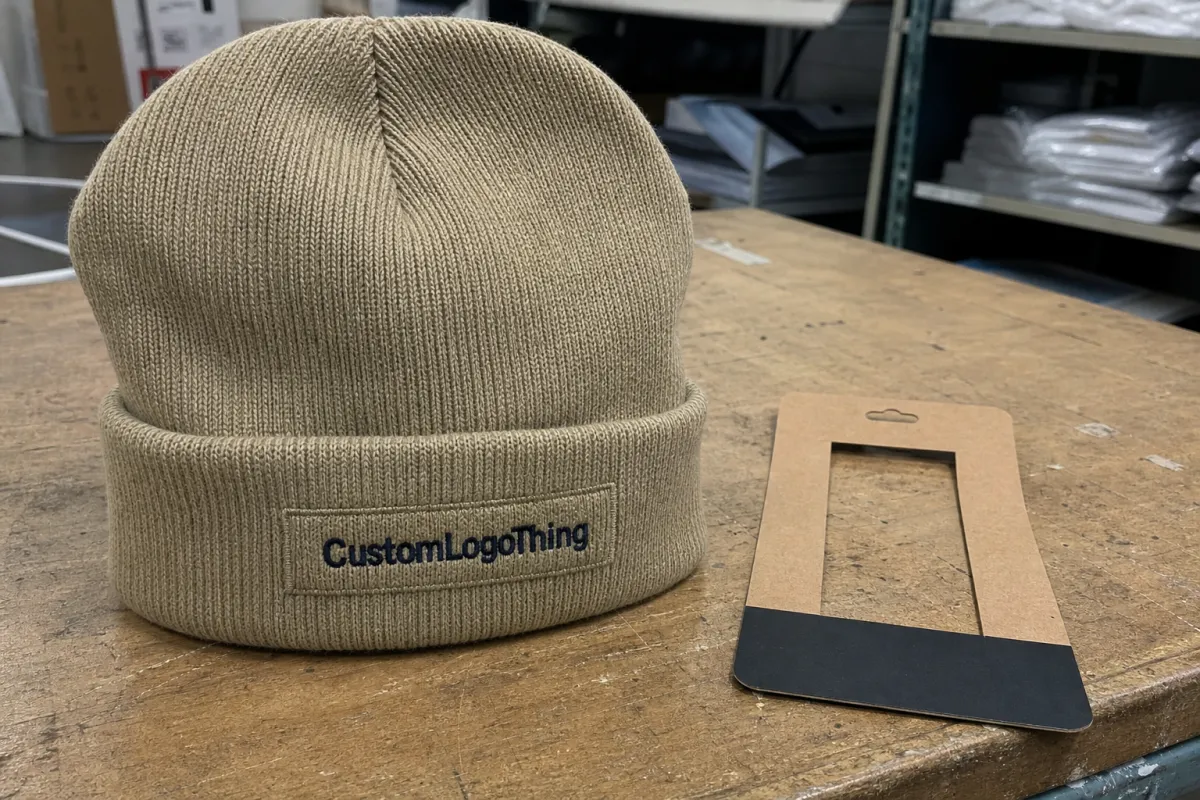
The first sample usually exposes the decisions that matter most: yarn feel, stitch density, cuff depth, logo placement, seam behavior, and how the beanie sits on different heads. Flat artwork does not show any of that. Once the piece is worn, the ribbing relaxes, the cuff rises or folds differently, and the decoration can look tighter or looser than it did on screen.
That is why sample approval belongs before bulk production, not after the order is already in motion. A 5 mm placement shift may sound minor in an email thread, but on a cuffed beanie it can change the entire balance of the front panel. A loose cuff, a twisted seam, or a slightly off-center patch can affect every unit in the run if nobody stops it early.
There is also a real difference between the kinds of samples buyers receive. A mockup only shows intent. A pre-production sample shows how the yarn, knit, trim, and decoration work together. A production sample shows how the approved spec is being repeated in the actual run. For most buyers, the pre-production sample is the safest approval point because it gives the clearest view of the finished product.
| Sample type | What it shows | Common cost range | Best use |
|---|---|---|---|
| Digital mockup | Artwork, placement, and color intent | Often included | Early design review |
| Pre-production sample | Actual yarn, knit, cuff, and decoration behavior | $35-$120, depending on setup | Final buyer review before bulk |
| Production sample | Shows how the approved spec is being run | Sometimes included, sometimes charged | Reference for repeat orders |
Approve the sample you can stretch, wear, and inspect from every angle, not the file you can enlarge on a monitor.
Shipping and carton handling matter as well. If a beanie is being packed for retail, gifting, or outdoor distribution, the packaging needs to hold up in transit. For buyers who need reference points on transport testing, the ISTA site is useful. If cartons or inserts are part of a sustainability claim, the FSC standard is worth checking.
How the Sample Approval Process Works Before Bulk Production
The process usually starts with a spec sheet, artwork proof, and basic construction notes. The factory then builds the sample around those instructions: beanie style, rib pattern, yarn composition, cuff height, color reference, decoration method, and packaging details. A good cuffed knit beanies Sample Approval Checklist sits beside that paperwork so the buyer and supplier are judging the same version.
What comes back should include the physical sample, sometimes a measurement sheet, and usually a reference number or order note tied to the file. Without that traceability, it becomes easy for different people to comment on different versions of the same style. That kind of mismatch creates avoidable delays.
The buyer’s job is to compare the sample against the purchase order, quote, tech pack, artwork proof, and brand standards. A beanie meant for resale needs a cleaner finish and tighter consistency than one made for a one-time event. A lower-cost giveaway piece may accept a simpler decoration method, while a retail beanie usually needs better edge finishing and more disciplined placement.
Approval language should be specific. The clean options are: approved as shown, approved with written changes, revise and resubmit, or rejected because the sample misses a core spec. Comments like “make it nicer” do not help anyone. A better note sounds like: increase cuff height from 2.75 inches to 3.25 inches, or move the patch 10 mm toward center front.
Exact feedback speeds up the next step. If the yarn hand feel is right but the logo sits too close to the seam, say that. If the color is acceptable but the cuff recovery is weak, say that too. Measured notes are easier to execute than opinions, and they usually produce a cleaner bulk run.
Sample approval terms that keep everyone aligned
Terms vary by supplier, so it helps to define them early. A sales sample is often made to show the concept. A pre-production sample reflects the actual spec before bulk starts. A production sample shows the result of the run after the line is set. Using the right term prevents confusion later, especially if several people are signing off on the same order.
Fit, Cuff Height, Yarn, and Knit Details to Inspect First
Fit comes first because cuffed knit beanies are flexible, but they are not interchangeable. Try the sample on more than one head size if possible. Check whether the crown sits properly, whether the cuff lands where the buyer expected, and whether the opening feels too tight or too loose. A solid cuffed knit beanies sample approval checklist always includes a real wear test, not just a tabletop review.
Key measurements are simple but useful: relaxed height, stretched height, cuff height, opening width, and finished weight if consistency matters for retail or wholesale. A few millimeters can change the appearance enough to bother a customer. If one side of the cuff dips or the crown leans to one side, the issue should be flagged before bulk knitting begins.
Yarn choice deserves close attention. Acrylic is common because it is affordable, easy to source, and predictable across color runs. Cotton blends usually feel softer and breathe better, though they may not hold warmth as well in cold weather. Wool blends add warmth and a more traditional hand feel, while recycled yarns are useful when the order needs a documented sustainability claim. The material should match the intended use, not just the target cost.
Knit structure changes the final look more than many buyers expect. A tighter rib usually feels cleaner and supports embroidery better. A looser knit can feel more relaxed but may distort a logo or patch. The cuff should sit evenly, recover after it has been stretched, and avoid rolling unless that is part of the design. If it stays warped after a few minutes of handling, bulk production is likely to repeat that behavior.
Texture matters too. Check for scratchiness, odor, loose fibers, snag points, and how the beanie feels after it has been folded and worn briefly. A sample does not need to feel luxurious to be approved, but it should feel finished. If it still feels like a test piece, the buyer should ask for another round.
Quick knit and fit checklist
- Measure relaxed height, stretched height, cuff height, and opening width.
- Check how the cuff recovers after stretching and releasing.
- Feel for scratchiness, odor, loose yarn ends, or snag points.
- Try the beanie on multiple head sizes if the order has broad distribution.
- Confirm the overall weight feels right for the intended market.
Logo Decoration Checks: Embroidery, Patches, Woven Labels, and Tags
Decoration is usually where the first problems become visible, because knit fabric behaves differently under the needle, patch, or label than it does in artwork. This part of the cuffed knit beanies sample approval checklist deserves slower inspection and better lighting.
For embroidery, check stitch density, thread color, registration, puckering, backing feel, and whether small text still reads clearly on a ribbed surface. The knit can open slightly under tension, which means artwork that looked acceptable in a flat file may look crowded or fuzzy on the actual beanie. If the logo is already tight at sample stage, bulk production will not improve it.
Patches need a separate review. Leatherette, rubber, woven, embroidered, and printed patches each behave differently. Look at the edge finish, corner lift, attachment method, color match, and stiffness. A patch that looks clean on a table may feel too rigid on a soft knit body, especially if the beanie is meant to be worn often.
Woven labels and sewn tags are easy to underestimate. Check orientation, seam placement, brand hierarchy, care content if required, and comfort against the forehead or ear area. A label in the wrong spot can turn into an irritation point, which matters more than most artwork discussions.
Measure logo placement from fixed reference points such as the cuff edge, center front seam, or fold line. Do not approve by eye alone if a measurement is possible. Then inspect the decorated sample under natural light, indoor light, and camera flash. Thread sheen, color contrast, and patch reflectivity can shift enough to change the look.
A decoration is not really approved if it looks right only from one angle. A clean sample should hold up from the front, the side, and while being worn.
Decoration review notes worth writing down
- Logo width and height.
- Distance from cuff edge and center seam.
- Thread colors or patch colors used.
- Any puckering, curl, or stiffness at the decoration point.
- Whether the artwork still reads when the beanie is stretched.
Cost, Pricing, MOQ, and Unit Cost Factors Tied to Approval
Sample approval affects pricing because the final unit cost depends on yarn type, knit density, decoration complexity, order quantity, finishing labor, packaging, and freight method. A stock-color acrylic beanie with standard embroidery sits in a different cost lane from a custom-dyed wool blend with a woven label, patch, and individual retail bag.
MOQ becomes easier to understand once the setup steps are visible. Stock yarn and standard embroidery usually support lower minimums. Once custom dyeing, private labeling, specialty packaging, or custom patch tooling enters the order, the minimum often rises because of extra setup time and material planning. That is not a sales tactic; it reflects the labor and inventory needed to make the run work.
Revisions can change the quote in ways that are not obvious at first glance. More embroidery stitches add machine time. Heavier yarn changes material usage. A woven label adds sewing time. Moving from stock color to custom-dyed yarn can affect both price and lead time. The cuffed knit beanies sample approval checklist should always be reviewed beside the quote so the approved spec matches the cost you expected.
Typical sample charges are common in this category. Buyers may see artwork digitizing fees, patch mold costs, woven label setup, sample knitting charges, or rush handling fees. For simple programs, sample costs may land around $35-$75. Once tooling or custom materials are included, $80-$180 is not unusual. Those figures vary by supplier and spec, so they should be treated as planning ranges rather than fixed rules.
| Feature change | Likely cost impact | Approval risk |
|---|---|---|
| Increase embroidery stitch count | Moderate unit price increase | Longer sew time and more machine time |
| Add woven label or care tag | Small to moderate increase | Extra setup and sewing step |
| Move to custom-dyed yarn | Moderate to significant increase | Color matching and dye minimums |
| Add custom patch tooling | Higher setup cost | Mold or plate approval needed |
| Upgrade individual packaging | Small per-unit increase | Carton count and pack-out changes |
That is why careful approval protects budget. If the sample includes a detail that was not in the quote, ask for the price impact before signing off. Cost, construction, and timing should be locked together, not separated into different conversations.
Timeline, Lead Time, and Turnaround After Sample Sign-Off
Lead time works as a sequence, not a single date. Artwork confirmation, sampling, revision, bulk knitting, decoration, quality control, packing, and shipping each take time, and any one of them can slow the rest. A practical cuffed knit beanies sample approval checklist includes schedule control as well as product review.
The usual flow is straightforward. Specs are confirmed, a sample is produced, the buyer reviews it, changes are handled if needed, the production slot is reserved, bulk knitting begins, decoration is applied, quality checks are completed, and the order is packed. In most programs, production does not truly start until the final sample, artwork, quantity, payment terms, and shipping details are all settled in writing.
Turnaround stretches for ordinary reasons more often than for dramatic ones. Custom-dyed yarn takes longer than stock yarn. Complex embroidery takes longer than a simple mark. Patch tooling adds another step. A second sample round can move the schedule by a week or more. Holiday demand, freight congestion, and late packaging changes can extend it further.
For seasonal retail, school programs, or employee gifting, the internal deadline should be earlier than the real need date. That extra buffer protects the order if the sample needs revision or the shipment is delayed. A missing deadline at the end of the chain is usually the result of a rushed approval at the start.
Clear written sign-off helps the production team move without hesitation. Measured notes, marked photos, and one final recap reduce back-and-forth. If the team has to interpret conflicting comments, the schedule lengthens and the risk climbs.
Common Sample Approval Mistakes That Cause Bulk Order Problems
One of the most expensive mistakes is approving from photos alone when a physical sample is available. A screen cannot show hand feel, stretch recovery, cuff comfort, or decoration stiffness. A cuffed knit beanies sample approval checklist should prevent guesswork, not make it feel official.
Another common miss is checking logo color while ignoring logo placement. A good embroidery file can still look wrong if it sits too high, too low, or off-center. That problem shows up immediately once the beanie is worn, which is why placement should always be measured rather than eyeballed.
Buyers also forget to stretch the beanie, fold it, wear it briefly, and see whether the cuff springs back. That small test reveals a lot about recovery. If the cuff stays distorted or the crown collapses after a few minutes of handling, the bulk run will likely repeat the same issue.
Documentation gaps create more confusion than most people expect. Verbal approvals, scattered email replies, missing measurement notes, or approving one version while referring to another all make it hard to know what was actually accepted. The factory may build exactly what it thinks was approved, while the buyer still feels surprised when the cartons arrive.
Lighting can change the result too. Dark navy, charcoal, black, forest green, and brown yarns or threads can look different under office light, sunlight, and flash photography. If only one sample is reviewed under one light source, a contrast issue may slip through.
Last-minute changes after approval are expensive. Altering thread color, patch size, cuff height, or packaging after bulk production starts can trigger delays, added cost, or uneven goods. If the sample is not right, fix it before the line runs. That is the cleanest rule in the process.
Actionable Next Steps Before You Approve the Beanie Sample
Lay the sample beside the quote, artwork proof, purchase order, and brand standards before making a decision. Review each item in the same order every time. That habit keeps the process steady, especially when several people are offering input on the same style.
Photograph the sample from the front, back, side, inside, cuff down, and cuff flipped. Mark requested changes directly on the images so nobody has to guess what was meant. A short annotated photo set is often more useful than a long email thread.
Measure and record total height, cuff height, opening width, logo width, logo height, and logo distance from the cuff edge. Use relaxed measurements unless a stretched number is specifically needed. If the numbers are not written down, they are easy to misremember later.
Write one approval note that lists approved items, required corrections, cost questions, and the target in-hands date. Keep the comments in one place rather than splitting them across several messages. One file, one note, one decision usually keeps the order moving best.
Hold the approved physical sample as the production reference. That matters even more when multiple people are involved in receiving, merchandising, or final inspection. The approved piece becomes the baseline everyone can compare against later.
Used well, a cuffed knit beanies sample approval checklist gives the buyer a repeatable way to approve fit, decoration, cost, and timing before production advances. The strongest orders usually start with careful sample review, measured notes, and a clean sign-off that leaves little room for interpretation.
Frequently Asked Questions
What should be included in a cuffed knit beanie sample approval checklist?
Include fit, relaxed and stretched measurements, cuff height, yarn feel, knit density, logo placement, decoration quality, color match, label comfort, packaging, and any cost or timeline changes tied to revisions. Add photos and measured notes so the approved sample can serve as the production reference.
How many sample rounds are normal before approving custom cuffed beanies?
Many straightforward orders can be approved after one physical sample if the specs, artwork, and colors are clear from the start. A second round is common when custom yarn color, complex embroidery, patch materials, or private labeling need correction before bulk production.
Can I approve cuffed knit beanies from a photo instead of a physical sample?
Photos help with placement and color discussion, but they cannot confirm hand feel, stretch recovery, warmth, cuff comfort, or decoration stiffness. For retail, employee gifting, or high-visibility brand use, a physical sample is the safer approval method.
What sample details affect the final unit cost of cuffed knit beanies?
Yarn composition, knit weight, order quantity, embroidery stitch count, patch type, label setup, custom dyeing, individual packaging, and freight method can all affect unit cost. Any change after sampling should be confirmed against the quote before approval.
When does production lead time start after beanie sample approval?
Lead time usually starts after final sample approval, artwork confirmation, payment or deposit requirements, quantity confirmation, and shipping details are complete. If the buyer approves with open questions or pending changes, production may pause until those details are resolved in writing.