Woven Label Beanies Artwork Proof Checklist for Wine Shops
A soft cuff beanie can look perfect in a digital mockup and still miss once thread, knit, fold, and sewing tension enter the picture. A woven label beanies Artwork Proof Checklist for wine shops gives the buyer one last practical checkpoint before yarn color, label size, loom interpretation, placement, and stitch method become finished merchandise on a retail shelf, in a wine club gift bag, or on staff during a cold tasting weekend.
Wine shops tend to care about small brand details, and they should. A shop mark may include a fine serif wordmark, a corkscrew, a bottle silhouette, a crest, a tasting room name, or a tiny tagline that looks graceful on a paper bag but gets crowded on a 2-inch woven patch. The proof is the right place to question those details calmly, before 250 beanies arrive with a label that reads like a blur from three feet away.
The goal is not to strip character out of the design. The goal is to protect it. Woven labels have a warm, dimensional quality that works beautifully with wine retail branding, but they reward clean shapes, strong contrast, and honest sizing more than ornate artwork squeezed into a space too small to hold it.
What a Woven Label Beanies Artwork Proof Checklist for Wine Shops Really Catches
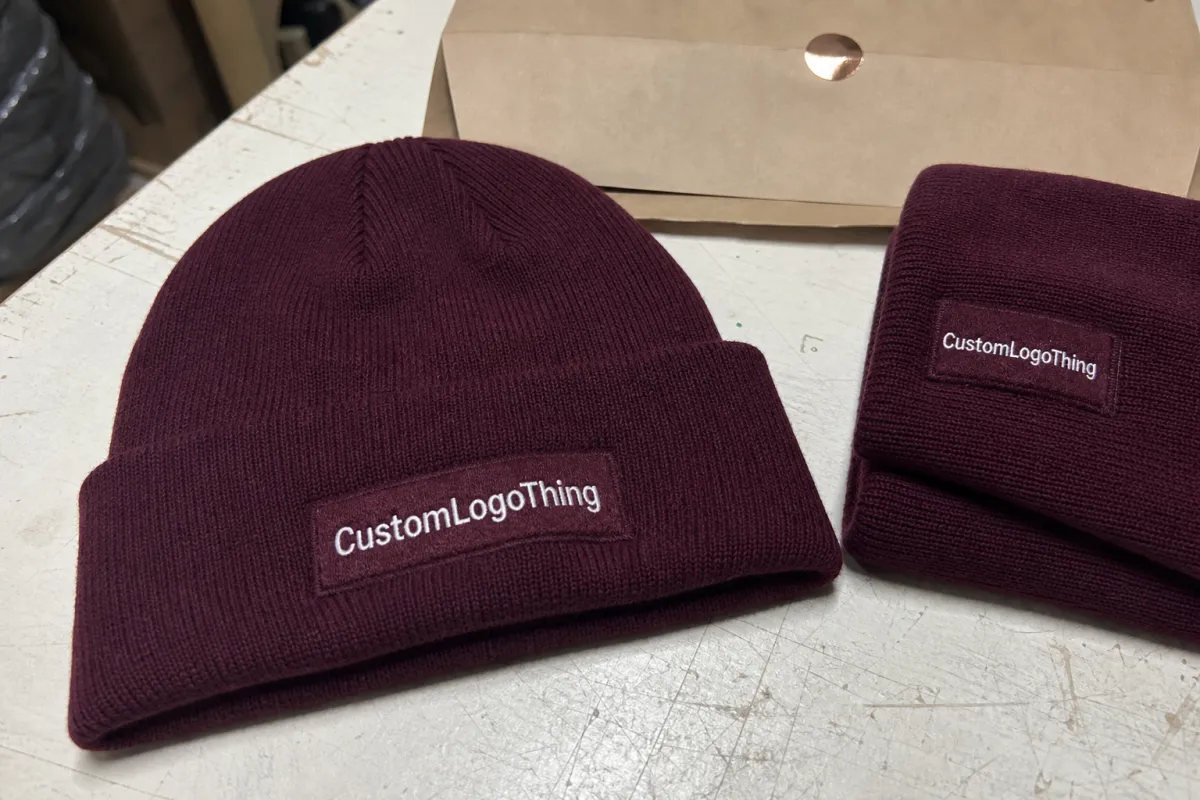
A good proof checklist catches the items a polished mockup can hide: beanie color, cuff style, label dimensions, woven artwork, thread colors, backing or fold type, label position, stitch method, quantity, size notes if applicable, and any packaging or hang tag instructions tied to the order.
Approving the concept is not the same as approving production-ready details. The concept says, “Yes, this feels like our brand.” The production proof says, “Yes, this 1.75-inch label can be woven consistently, sewn straight onto a ribbed cuff, and read clearly under tasting room lighting.” Those are different decisions, and both matter.
Wine shop artwork often carries more detail than soft goods can comfortably hold. Vineyard-style crests, appellation references, estate marks, decorative borders, and fine-line illustrations may be handsome on bottle labels or printed gift boxes, but woven construction has physical limits. Threads need room. Tiny negative spaces can close. Thin strokes can disappear or look broken.
Practical rule: if a customer has to squint to read the label on screen at actual size, the woven version probably needs simplification before production.
From a retail buyer’s point of view, proofing is a safeguard rather than a delay. A careful review can prevent rework, missed seasonal launches, and branded merchandise that feels slightly off next to your bags, aprons, shelf talkers, bottle tags, and gift packaging. The same discipline applies across Custom Labels & Tags, apparel trims, hang tags, and small-format retail packaging, where one weak detail can make an otherwise thoughtful program feel unfinished.
How Woven Labels Work on Beanies Before You Approve the Art
Woven labels are made by interlacing colored threads, not by printing ink onto fabric. That gives the label a durable, textured finish with a more retail-quality feel than many basic printed patches, but it also means the design has to be translated into thread. A half-point line in a PDF may not survive. A four-color crest may need fewer color breaks. A script letter with a hairline tail may need to be thickened.
Common beanie label formats include flat woven labels sewn on all sides, end-fold labels with the raw ends tucked underneath, center-fold labels that wrap over an edge, loop labels, and patch-style woven labels sewn onto the cuff or body. For many wine shops, a flat or end-fold patch on the front cuff is the safest choice because it gives the brand mark a clear rectangular field and keeps the label visible when the beanie is worn naturally.
Thread count, label size, and artwork complexity work together. A 2.5-inch-wide label can hold more information than a 1-inch label, but even a larger patch can become crowded if it tries to carry a full wine label, regulatory-style copy, ornamental borders, and an icon. A simplified alternate logo often looks more premium than a crowded full mark because the viewer can recognize it quickly.
Beanie construction also affects the result. Rib knit stretches differently than fisherman rib. Waffle knit creates a more textured sewing surface. Acrylic yarn, wool blends, recycled polyester blends, and cotton-rich knits all respond differently under stitching pressure. If the label is too stiff or too wide for the cuff, the knit can pucker or pull at the corners, especially after the beanie is stretched over the head.
Digital color needs a reality check as well. A proof color is a visual guide, while final thread color depends on available yarn references and how the thread reflects light. Cream thread on burgundy can look warm and traditional, but if that cream shifts too close to tan under low lighting, readability drops. If recycled content, disposal language, or broader sustainability claims appear on hang tags, keep general guidance from sources such as the U.S. Environmental Protection Agency in mind and avoid claims the materials cannot support.
The strongest proof usually shows the woven label artwork by itself and the same label positioned on the beanie. One view checks construction. The other checks scale, shelf appeal, and whether the piece feels like something a customer would buy, not merely accept as a giveaway.
Logo, Thread Color, and Readability Checks for Wine Shop Branding
Start with the details that are most painful to fix later: correct logo version, shop name spelling, punctuation, accent marks, trademark symbols if used, and whether the intended mark is the retail shop name, tasting room name, private-label wine brand, or event logo. A proof checklist should slow the review down enough to catch these items before approval.
Serif lettering, script fonts, and vintage-style marks can be excellent for wine branding. They simply need enough stroke thickness to weave cleanly. As a rough working standard, very fine strokes below about 0.4 mm can become unreliable in small woven labels, depending on loom setup, thread type, and contrast. That is not a universal rule, but it is a useful warning sign.
Review the artwork at actual size. Not 300 percent. Not pinched open on a phone. Print the proof if possible, or view it on screen with a ruler nearby. A logo that looks crisp when enlarged may become a dense block once reduced to 1.5 or 2 inches wide.
Contrast deserves a hard look. Gold on tan, charcoal on black, or cream on pale sage may match the mood of a wine shop brand, but the finished label still has to read near a front window, under pendant lights, or outside at a winter market. Thread has texture, and that texture can soften contrast more than flat ink on coated paper.
- Best for small labels: 1 to 3 thread colors, strong contrast, clean letterforms, open spacing, and simple icons.
- Riskier for small labels: full crests, tiny taglines, thin borders, grape clusters, and detailed bottle illustrations.
- Often worth testing: a simplified wordmark, initials, bottle icon, corkscrew mark, or short shop-name lockup.
Brand consistency still matters. Compare the proof against wine bags, gift boxes, bottle labels, aprons, shelf talkers, website graphics, and any Custom Labels & Tags already in use. The beanie does not need to match every item perfectly, but it should feel as if it belongs to the same retail program.
Pay attention to the border and stitch area, too. A thin woven border can frame the mark nicely, but if the sewing thread runs too close to the artwork, the label may look cramped. Leave breathing room around the logo, especially on smaller patches where one eighth of an inch can make a visible difference.
Process and Timeline From Artwork Proof to Finished Beanies
The usual process runs in a clear order: artwork submission, file review, label conversion or digitizing, proof preparation, buyer review, revisions if needed, final approval, label weaving, beanie sourcing or production, label sewing, quality control, packing, and shipment. Each step has a job. Skipping one rarely saves as much time as people hope.
Timelines depend on artwork complexity, approval speed, beanie stock, label type, packaging extras, and freight. A straightforward order with in-stock beanies and a clean two-color label may move faster than a custom-color beanie with a multi-color patch, hang tag, individual bag, and gift-ready packing requirement. As a practical range, many decorated beanie orders need about 12 to 20 business days after final proof approval, though rush work, custom materials, and peak-season capacity can shift that number.
Proof approval is the handoff point. Before approval, changes are normal. After approval, changes can affect cost, schedule, material waste, or all three. Use the checklist before anyone replies with “approved,” especially if the beanies are tied to a date that cannot move.
Seasonal timing deserves respect. Holiday gift sets, wine club pickup weekends, harvest events, staff uniform rollouts, and local winter markets often sit on fixed calendars. If the beanies are part of a bundle with bottles, tissue, neckers, stickers, or a printed insert, one late component can hold the whole merchandising plan.
Revision rounds are not equal. Correcting one misspelled word is small. Redrawing a crest, changing a label from 1.5 inches to 2.5 inches, switching beanie colors, or rebuilding the thread palette is a larger production change. Those requests may require a new proof, a new quote, or a timeline adjustment.
Assign one internal decision-maker. Gather feedback from the owner, merchandising lead, tasting room manager, or marketing contact before replying, then send one consolidated response. Scattered comments across several email threads are a common source of slowdowns because the production team has to interpret which instruction is final.
Cost, Pricing, and MOQ Details to Confirm on the Proof
The proof is not always a pricing document, but it should match the quote. If the quote says a 2-inch, two-color woven label on an acrylic cuff beanie, and the proof now shows a 2.75-inch, four-color patch with a folded hang tag, pause and ask for pricing confirmation before approving.
Cost drivers include beanie material, knit style, label size, number of thread colors, label fold type, sewing labor, order quantity, packaging, freight, and rush handling. MOQ matters because woven labels and decorated beanies become more economical as setup, loom preparation, and sewing workflow are spread across more units.
| Option | Typical Use | Cost Impact | Proof Check |
|---|---|---|---|
| Two-color flat woven label | Staff beanies, simple resale merchandise | Often efficient for 100 to 500 pieces | Confirm contrast, label size, and stitch border |
| Multi-color woven patch | Premium club gifts or holiday bundles | Higher due to thread changes and label complexity | Check small text, color breaks, and edge finish |
| Woven label plus hang tag | Retail display or gift-ready presentation | Adds tag printing, stringing, and packing labor | Confirm tag copy, barcode needs, and attachment method |
| Premium wool-blend beanie | Higher-priced resale or VIP gifting | Higher blank cost and possible longer sourcing time | Confirm fiber blend, care notes, and color availability |
Small design changes can move the unit price. A simple two-color woven label might fit the original quote, while a larger patch with metallic-look thread, a border, and Custom Retail Packaging may not. Depending on quantity and material choices, decorated beanies can vary widely, but buyers often see meaningful price breaks as orders move from 50 pieces to 100, 250, or 500 pieces.
Confirm what the quoted price includes: artwork proofing, label production, sewing, beanie blanks, quality control, packing, and shipping. Freight, individual bags, folded hang tags, barcode labels, and rush handling may be separate line charges. This is one of the easiest parts of an order to overlook because the buyer is focused on the logo while the production details change around it.
Use case should guide the decision. Staff apparel can prioritize comfort, durability, and wash performance. Loyalty gifts need a clean brand impression. Wine club perks may justify better materials. Resale merchandise has to support a margin after landed cost. A beanie that lands at $8.50 and retails for $24 belongs in a different decision category than a $5.25 staff uniform piece.
Ask about overage, shortage, and reorder expectations before approval. For many custom runs, a small production variance can happen, and reorders may carry a new setup, MOQ, or thread-matching review. If the same beanie design will return every winter, keep the approved proof, thread references, label size, and placement notes organized.
Step-by-Step Proof Review Before You Sign Off
Use a calm, methodical review. A woven label beanies Artwork Proof Checklist for Wine shops works best when the proof is printed or viewed at actual size, compared against the original logo file, and checked against the purchase order. Ten focused minutes here can save several weeks of frustration later.
- Verify the beanie details. Confirm style, color, cuff height, yarn or fabric blend, size designation, and whether the label will be sewn on the front cuff, side cuff, back, or another approved position.
- Check the label specifications. Review width, height, fold style, background color, thread colors, border, edge finish, and whether the label sits flat or wraps over an edge.
- Inspect the artwork. Look closely at spelling, logo orientation, line thickness, small text, icon clarity, negative space, and whether vineyard, bottle, or crest details were simplified correctly.
- Confirm placement measurements. Check distance from the cuff edge, centering, and whether the label remains visible when the beanie is worn naturally rather than laid flat.
- Compare proof to quote and order notes. Confirm quantity, sizes if applicable, packaging, shipping address, requested delivery window, approval contact, and any retail tag instructions.
- Reply clearly. Send one approval or one consolidated revision list, using exact language such as “increase label width to 2 inches” rather than “make it stand out more.”
If product testing or transit durability is part of a larger retail packaging program, standards from groups such as the International Safe Transit Association can be useful for thinking about packed goods, carton handling, and shipment risk. Beanies are soft goods, but gift bundles with bottles, tags, and inserts still need sensible packing decisions.
Keep the approved proof on file. The next reorder will be much easier if the exact label dimensions, thread references, beanie style, stitch placement, and packing notes are already documented.
Common Proofing Mistakes That Make Beanies Look Off
The most common mistake is approving artwork because the logo looks familiar. Familiar is not enough. The buyer has to check actual woven label size, thread contrast, and whether small text or decorative borders still hold up when translated into thread.
Color assumptions cause trouble, too. Buyers sometimes expect exact bottle label colors on fabric, but woven thread has texture, sheen, and shadow. A close physical match is usually the realistic target. A perfect screen match is not.
Placement errors are another quiet problem. A label can look centered on a flat mockup but sit too low, too high, or slightly angled once sewn onto a ribbed cuff that stretches around the head. Ask for placement notes in inches or centimeters, not just “front center.”
Do not put the full wine label on a small beanie label. Regulatory copy, vintage dates, appellation lines, tasting notes, and tiny decorative seals belong on bottles or printed packaging. On a beanie, they usually become clutter. A simplified shop mark almost always reads better.
File quality matters. Vector files such as AI, EPS, or production-quality PDF give the artwork team clean shapes and accurate edges. A high-resolution PNG can help as a reference. Screenshots, flattened web images, and outdated logo files are poor starting points for woven conversion.
Too many approvers can also damage the process. Ownership, marketing, retail, and tasting room staff may all care about the result, but conflicting feedback slows production and can create odd compromises. One person should collect input and send final instructions.
Rushing is the last big one. Skipping proof review to save a day can cost far more time if finished merchandise arrives with a typo, weak contrast, or a label size that feels out of proportion. The checklist exists to prevent that kind of avoidable loss.
Next Steps for Sending Clean Artwork and Approving With Confidence
Before sending artwork, gather the final logo, preferred colors, desired beanie color, label size range, placement preference, target quantity, budget range, delivery need, and retail packaging requirements. If hang tags, stickers, belly bands, or branded tissue are part of the presentation, mention those early so the beanie can be planned as part of the full customer experience.
Send vector artwork when available: AI, EPS, or clean PDF files are usually best. Include a PNG or JPG reference so the production team can compare the converted woven label against the intended look. If your shop already has approved Custom Labels & Tags, those files can help keep typography, color, and spacing consistent across the brand.
Identify which design elements are fixed and which are flexible. The shop name spelling, main logo, and trademark use may be non-negotiable. A tiny tagline, thin border, grape detail, or decorative flourish may be adjustable if simplification improves the woven result. That distinction helps the artwork team protect what matters most.
Write useful notes. Say whether the beanies are for staff, resale, wine club gifts, local delivery drivers, holiday bundles, or event giveaways. Use case affects material choice, label size, packaging, and reorder planning. A beanie meant to retail at $28 should be reviewed differently from one used as a free add-on with a seasonal six-pack.
Ask questions before approval if anything feels vague: thread colors, label fold, placement, timeline, MOQ, packaging, or what happens if a production sample differs from the digital proof. Not every order needs a physical pre-production sample, but higher-value retail runs may justify the extra time and cost.
Before signing off, confirm every visible detail, every production spec, and every timing assumption in one clean pass. Approve only when the proof answers three questions clearly: will customers recognize the brand, will the beanie feel retail-worthy, and can the manufacturer produce it consistently at the quoted quantity?
FAQ
What should wine shops check first on a woven label beanie proof?
Start with the logo version, spelling, label size, beanie color, thread contrast, and placement on the cuff. View the label at actual size so small serif type, crests, bottle icons, and taglines can be judged realistically. Also compare the proof against the quote to confirm quantity, label style, packaging, and delivery expectations match the order.
Can a detailed wine shop logo be woven clearly on a beanie label?
Yes, but the artwork may need simplification if it includes tiny text, thin lines, detailed grape clusters, ornate crests, or small vintage-style marks. A larger label, fewer thread colors, stronger contrast, and a simplified secondary logo often produce a cleaner woven result. The proof should show both the converted label art and the label on the beanie.
How does the proof affect woven label beanie pricing?
Pricing can change if the proof introduces a larger label, more thread colors, a different fold style, special sewing, premium beanie material, or added packaging. Buyers should confirm that the proof matches the quoted specifications before giving final approval. If anything changes during proof review, ask whether it affects unit cost, MOQ, or production timing.
How long does approval usually add to the beanie production timeline?
A clean approval can keep the order moving quickly, while multiple revision rounds can add several business days before weaving and sewing begin. The biggest delays usually come from unclear artwork files, conflicting feedback, color changes, or uncertainty about label placement. Wine shops ordering for holiday bundles, club pickups, or tasting room events should approve proofs early enough to protect the delivery window.
What files are best for a woven label beanies artwork proof?
Vector files such as AI, EPS, or production-quality PDF are usually best because they give the artwork team clean shapes and accurate edges. A high-resolution PNG or JPG can help as a visual reference, but screenshots and low-resolution website images are not ideal for production. Include brand color references, logo usage notes, and required placement instructions with the files.