A garment bag can be a small purchase with an outsized effect on perceived value. A private label Frosted Garment Bags supplier can turn a jacket, dress, or suit into something that feels curated the moment it leaves the warehouse, even if the packaging cost is only a few dimes per unit.
That is why frosted garment bags show up in retail back rooms, showroom racks, and direct-to-consumer shipments. They are simple translucent poly covers, usually made from PE film with a matte or frosted finish, but the right spec does three jobs at once: it protects against dust, keeps the garment presentable, and gives the brand a cleaner surface for logo placement than an unbranded stock bag. The real decision is not whether they work. It is whether a private label frosted garment bags supplier fits the scale, timeline, and presentation standard of the line you are building.
Why frosted garment bags punch above their weight
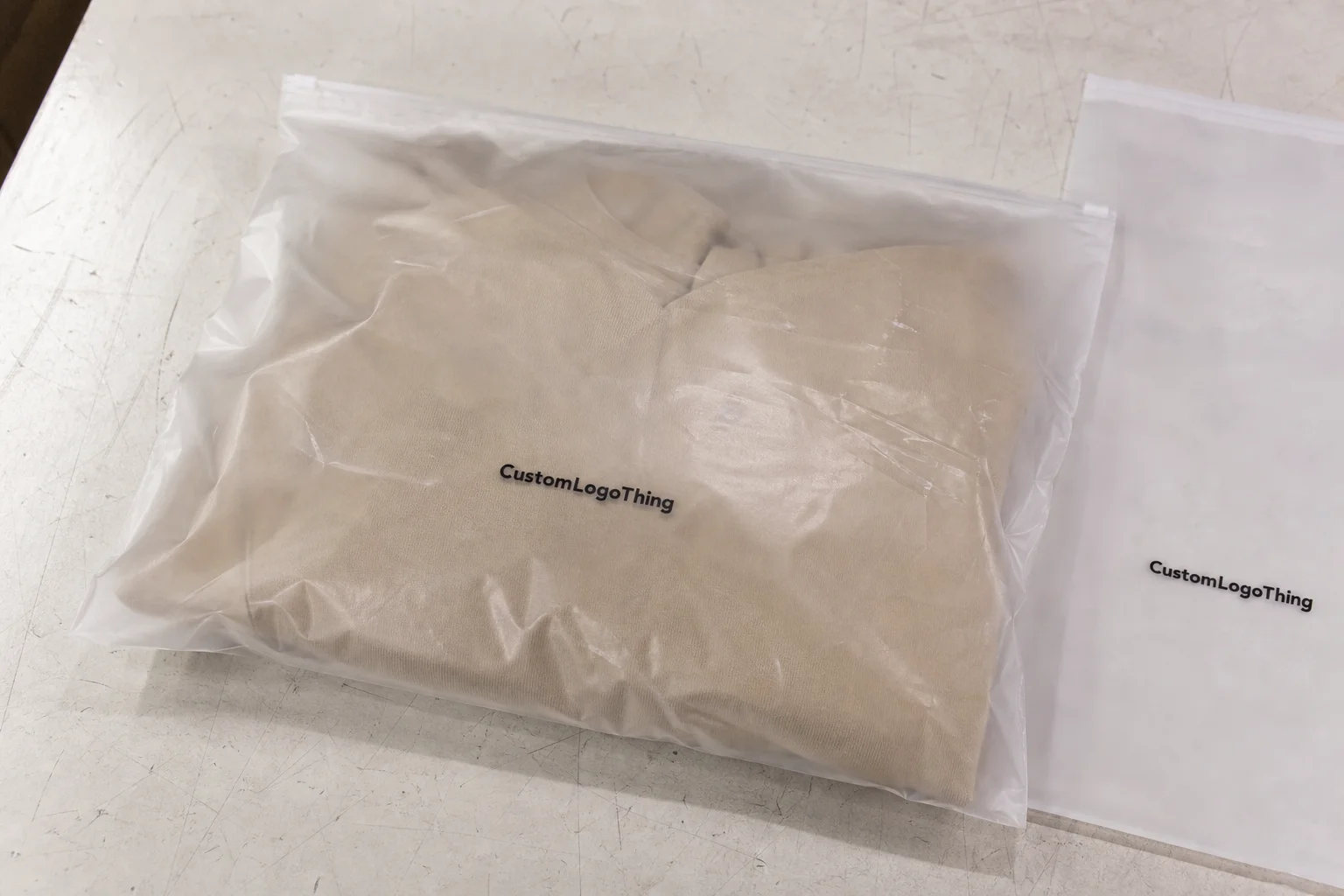
The surprising part is how often a low-cost cover changes the way a product is judged. On a showroom rack, a frosted garment bag makes a shirt program look more deliberate. In a fulfillment lane, it reduces the odds of lint, scuffs, and dust collecting on the fabric before the customer ever opens the carton. That is a small operational change with a direct effect on presentation.
Compared with clear poly, frosted film softens the visual field. The garment is still visible, but not exposed in a way that makes the package feel cheap or overly industrial. Compared with opaque PE, it gives staff enough visibility to identify the item without opening the bag. Compared with fabric covers, it usually costs far less, stores flat, and runs better through high-volume packing. For apparel teams that need something practical and tidy, frosted poly keeps winning.
- Dust protection for storage, transfer, and back-of-house handling.
- Wrinkle reduction during hanging and short-term transit.
- Better visibility than solid opaque covers.
- Cleaner branding than unbranded stock packaging.
That said, frosted garment bags are not the right answer for every line. A winter coat in cold storage has different needs than a lightweight blouse moving through e-commerce fulfillment. The rest of the sourcing decision comes down to fit, print method, film thickness, and how much customization the supplier can actually support.
How a private label frosted garment bags supplier works
The workflow usually starts with a brief, not a mockup. A serious private label frosted garment bags supplier wants to know the garment type, target finish, approximate size, and branding method before pricing the job. If the bag is for retail display, the supplier may recommend a softer, more translucent finish. If it is for shipping protection, they may push for thicker film, stronger seals, or a closure that survives repeated handling.
Private label usually means the supplier uses an existing structure and applies your brand. White-label is narrower: the supplier offers a standard, unlabeled product and may only support simple labeling or a basic logo mark. Fully custom means the structure itself can change, which opens the door to custom dimensions, zipper style, gussets, or print coverage across more of the bag. That level of freedom is useful, but it also adds tooling, sampling, and schedule risk.
A buyer should expect the supplier to ask for four things early: artwork files, target quantity, garment dimensions, and destination country. If those are vague, the quote will usually be vague too.
If the bag only looks premium from ten feet away, it is not doing its job. It has to fit the garment, hold up in transit, and survive handling without making the line look careless.
For branding, the most common options are one-color or two-color logo printing, slight size adjustments, hanger holes, zipper or flap closures, bottom gussets, and different film gauges. A good supplier will tell you where a request is easy, where it costs more, and where the material itself becomes the limit. That honesty matters more than a polished quote.
Practical buyers also ask about quality control before the order is placed. The useful checks are not abstract. They are things like print adhesion, seal strength, dimensional tolerance, and whether the hanger hole is centered within a narrow band so the garment hangs straight. If the supplier cannot explain how they verify those points, the chance of rework goes up.
For the spec sheet, ask for film gauge tolerance, cut-size tolerance, and the ink system used for the logo. If the supplier can provide test references such as ASTM D882 for tensile properties, that is a sign the material discussion is grounded in measurable standards rather than adjectives. If the program includes paper inserts or mixed-material outer packaging, FSC-certified paper components may also matter for broader procurement policies. Packaging is rarely judged on film alone.
Material, finish, and sizing decisions that affect fit
Material choices do more than change price. They affect hand feel, opacity, crease resistance, and how the bag behaves on the line. In garment packaging, the common starting point is PE film in the 50 to 80 micron range, or roughly 2 to 3 mil, though premium programs may go thicker if the bag is expected to travel farther or be reused. A thinner film can still work well for light apparel, but it will look less substantial and may tear if corners or zippers catch during packing.
Finish and visibility
Frosted matte film usually reads as more refined than glossy clear poly. It diffuses the garment inside just enough to reduce the plastic-sleeve look. Semi-translucent finishes sit between a clear bag and a fully opaque cover, and many brands prefer that middle ground because it preserves visibility for picking while still improving shelf presence. If the bag is meant to live on a retail rack, that softer look tends to win.
One practical test is simple: place a dark garment and a pale garment inside the same sample bag. If the logo disappears or the content becomes too washed out, the film may be too opaque for showroom use. If the garment shows every crease and hanger detail in a distracting way, the film may be too clear for premium presentation.
Sizing rules that save rework
Size errors happen because buyers think in garment categories while suppliers think in flat dimensions. A shirt bag that looks fine on paper can become tight once the shirt is folded over a hanger. A coat bag that is long enough may still be too narrow at the shoulder. The difference is not minor. It changes how the garment drapes and whether the bag actually protects the fabric.
- Shirts and blouses: often around 24 x 40 inches to 24 x 42 inches.
- Dresses: often around 24 x 54 inches to 24 x 60 inches.
- Outerwear: often around 26 x 60 inches to 28 x 60 inches.
- Suits or multi-piece sets: often around 28 x 64 inches to 30 x 72 inches.
Those are starting points, not rules. Shoulder width, hanger style, and whether the garment is hung or folded all affect the final fit. If the bag has a gusset, the extra depth can help with bulkier apparel, but it also changes material usage and price. If the closure is a zipper, verify that the pull and track are easy to operate with gloved hands or in a fast packing workflow.
If a program uses mixed assortments, ask for more than one size instead of forcing a single bag to cover everything. One universal size sounds efficient, but it usually creates slack around smaller garments and pressure at the seams on larger ones. That is how a low-cost packaging choice becomes visible damage.
For buyers who care about end-of-life claims, the honest answer matters here too. PE film can be recyclable in some collection streams, but local acceptance varies and matte additives can complicate the story. A bag should not be marketed as recyclable just because the base resin is PE. The actual disposal path is what counts.
Production steps and lead time from proof to shipment
The cleanest jobs move through the same sequence every time: brief, quotation, artwork proof, sample approval, production, quality check, packing, and freight booking. Each handoff is a place where schedule can slip, so the most reliable buyers treat the first brief like a specification sheet, not a casual request.
- Brief and quote: The supplier confirms size, film thickness, closure style, print method, and quantity.
- Artwork proof: Logo placement, ink coverage, and color expectations are checked against the bag layout.
- Sample approval: A physical sample verifies fit, finish, and handling before mass production.
- Production: Film is extruded or sourced, printed, cut, sealed, and inspected.
- Packing and freight: Bags are counted, boxed, palletized, and booked for shipping.
Delays usually come from avoidable issues: incomplete artwork, missing dimensions, or a buyer changing the closure after sample approval. The fastest suppliers can still lose a week if the logo file arrives in the wrong format. Vector art is better than a screenshot. Exact measurements are better than "around medium." Those details save more time than any promise of speed.
For shipping-sensitive programs, ask whether the sample or finished pack has been checked against an ISTA test profile. The ISTA standards are widely used for transit simulation, and they are useful when garment bags are going into e-commerce channels that include drop, vibration, or compression. The point is not to over-engineer a sleeve. The point is to make sure the packaging survives the real route the product will take.
Typical timing looks like this: 5 to 10 business days for sampling if the structure is standard, 12 to 20 business days for production after proof approval, and then transit on top of that. Air freight can trim delivery to about 5 to 10 days in many lanes, while sea freight often adds several weeks. If the order is seasonal, build in a cushion. Garment packaging rarely gets forgiven for arriving late.
Before mass production starts, ask for a pre-production sample or at least a signed proof with noted tolerances. That step catches problems that a digital mockup will never show, such as unexpected glare on frosted film, weak zipper pull tabs, or a logo that sits too close to the edge seal. Those are small misses individually, but they add up fast.
Cost, pricing, and MOQ levers buyers should compare
Unit price is only one line in the quote. A private label frosted garment bags supplier can look cheap on paper and still end up expensive once freight, duties, samples, and rush fees are added. The cleanest way to compare suppliers is to look at total landed cost, then ask what changes if volume doubles, print coverage changes, or the bag size moves up one step.
The biggest cost drivers are usually film thickness, print coverage, bag dimensions, closure hardware, packaging format, and order volume. A thicker bag costs more material and often more freight by weight. Full-surface printing costs more than a small logo because it slows production and may require tighter registration control. Zippers, gussets, and reinforced hangers also add real cost, not just perceived value.
| Option | Typical MOQ | Indicative Unit Price | Lead Time | Best Fit |
|---|---|---|---|---|
| Stock dimension with private label print | 500 to 1,000 units | $0.35 to $0.75 | Fastest | Launches, testing, smaller assortments |
| Semi-custom size or closure tweak | 1,000 to 3,000 units | $0.28 to $0.60 | Moderate | Brands with repeat SKUs and tighter fit needs |
| Fully custom structure and print coverage | 3,000 to 10,000 units | $0.18 to $0.42 | Longest | Programs with stable volume and stronger brand control |
Those ranges move depending on region, print complexity, and freight mode. A smaller MOQ can still cost more per unit because setup costs are spread across fewer bags. That is normal, not a red flag. What matters is whether the supplier explains the math clearly.
One more procurement detail: compare quotes only after confirming what is included. Is the sample free? Is tooling included? Are cartons included? Are export documents included? Does the quote assume ex-works pricing, FOB, or delivery to your warehouse? The answer changes the real cost quickly.
Buyers also miss how packaging format affects pricing. Bags packed flat in bulk are cheaper to ship than individually folded pieces with inserts, but bulk packing can increase handling time on your end. If the destination warehouse is already stretched, a slightly higher factory price may still be cheaper than absorbing extra labor during intake.
For brands that manage broader packaging programs, the EPA's recycling guidance can help frame internal discussions about disposal and material communication. See the EPA recycling basics if your packaging review crosses into end-of-life claims. It is not a substitute for supplier specs, but it is useful context.
Common sourcing mistakes that inflate damage and returns
The biggest mistake is choosing a bag size that looks close enough. In reality, a two-inch miss can change everything. The garment may bunch at the hem, the hanger may distort the shoulder, or the zipper may sit under tension and fail after a few uses. What looked acceptable in a spreadsheet becomes an obvious defect on the rack.
Another common error is weak print specification. Blurry logos, low-contrast artwork, and inconsistent color are usually not mystery problems. They come from poor artwork files, weak registration control, or a print method that was never appropriate for the film. If the logo needs to survive handling, the supplier should explain the ink system, cure method, and abrasion expectations before production starts.
E-commerce adds another layer. A bag that looks fine in storage may not hold up in humid warehouses, repeated scans, or long-distance transit. If the packaging only protects the garment inside a controlled store environment, it may not protect it through fulfillment. That is where buyers should ask for sample handling tests and pay attention to seal strength, tear behavior, and edge finish.
- Do not approve a proof before verifying actual dimensions.
- Do not assume a clear bag will behave like frosted film.
- Do not skip a sample just to save a week.
- Do not ignore freight and duty costs when comparing suppliers.
Skipping samples is the fastest way to create rework. A physical sample shows where the hanger hole sits, how the closure behaves, and whether the film feels cheaper or stiffer than expected. That single approval step can prevent the much bigger cost of returns, relabeling, or a missed launch window.
There is also a quieter mistake: not checking how the bag folds, stacks, and opens in the actual packing flow. A design can pass visual approval and still slow operators down if the zipper catches, the hole tears during hanging, or the bag clings to the garment in humid conditions. A supplier who understands line speed will mention those issues before they become a problem.
Next steps for requesting samples and a sharper quote
If you want a quote that is actually useful, send a buyer brief that includes garment type, size range, preferred finish, logo files, target quantity, destination, and desired timeline. If the assortment includes shirts, dresses, and outerwear, say so. A single one-size request rarely leads to a useful recommendation because the packaging needs are different.
Request two or three sample variants if possible. Compare fit, opacity, hand feel, and branding quality side by side. A supplier can tell you a bag is premium. A sample tells you whether the shoulder width is right, whether the logo reads cleanly, and whether the film still feels appropriate after handling. That is the difference between a purchasing decision and a guess.
Ask for quotes at multiple volumes too. A transparent private label frosted garment bags supplier should be able to show the step where unit cost drops and the point where it starts flattening out. That information is useful for planning because it tells you whether it is smarter to buy for one season, two seasons, or a full annual cycle.
Ask for the quote in a form that separates product cost from freight and packaging extras. A line that says "all in" without breakdowns is harder to challenge, harder to compare, and easier to misread. A clean quote should make the tradeoffs visible: thicker film versus lower price, lower MOQ versus higher setup charge, faster production versus less customization.
One practical rule: if the supplier cannot explain size tolerance, print method, and lead time without circling back to generalities, keep looking. Buyers do not need the lowest headline price. They need a program that arrives on time, fits the garment, and stays inside margin. A good private label frosted garment bags supplier makes that easier by being specific about film, finish, MOQ, and transit from the start.
How do I evaluate a private label frosted garment bags supplier before ordering?
Ask for sample bags, spec sheets, and print proofs so you can verify finish, fit, and branding quality before production. Check whether the supplier explains material gauge, closure style, size tolerance, and test methods clearly rather than giving vague estimates. Compare lead times, MOQ, and freight terms side by side so the quote reflects real landed cost.
What MOQ should I expect for custom frosted garment bags?
MOQ varies by print method, bag size, and supplier setup, but custom jobs usually cost less per unit as volume rises. Smaller runs may be available, but they often carry a higher unit price because setup work is spread across fewer bags. Ask whether the MOQ changes if you use stock dimensions with custom branding instead of fully custom sizing.
How long does production usually take for branded frosted garment bags?
A simple private label order can move faster if artwork is ready and the supplier is using an existing bag structure. Sample approval, print proofing, and freight booking are the most common schedule bottlenecks. Build in extra time if you need a new size, special closure, or a seasonal delivery window.
What drives the unit cost of frosted garment bags the most?
Material thickness, print coverage, bag dimensions, and closure hardware usually have the biggest impact on price. Order volume matters because setup costs are spread across more units on larger runs. Freight, duties, and packaging configuration can raise landed cost even when the factory price looks low.
Can frosted garment bags work for retail, e-commerce, and storage?
Yes, they are commonly used for showroom presentation, short-term storage, and shipping protection for apparel. The right spec depends on how the garment will be handled, stacked, hung, or mailed. For e-commerce, prioritize tear resistance and fit; for retail, prioritize appearance and brand consistency.


