A paper bag is not a throwaway detail for a clothing brand. It leaves the store with the customer, sits in plain sight, and often gets reused more than the garment inside the tissue. That means it has to do three jobs at once: carry the purchase, protect the product, and make the brand look intentional. If it fails at any one of those, the checkout experience feels thinner than it should.
That is why the search for a private label Custom clothing store paper bags supplier should be treated like a packaging decision, not a box-checking exercise. The right supplier turns a rough concept into a bag that fits the product, survives handling, and stays within budget. The wrong one leaves you with color shifts, weak handles, delayed freight, and a pile of bags that look almost right.
A good apparel bag looks simple because the spec was handled well. Simple is usually the result of a lot of decisions that happened early.
What a private label custom clothing store paper bags supplier does
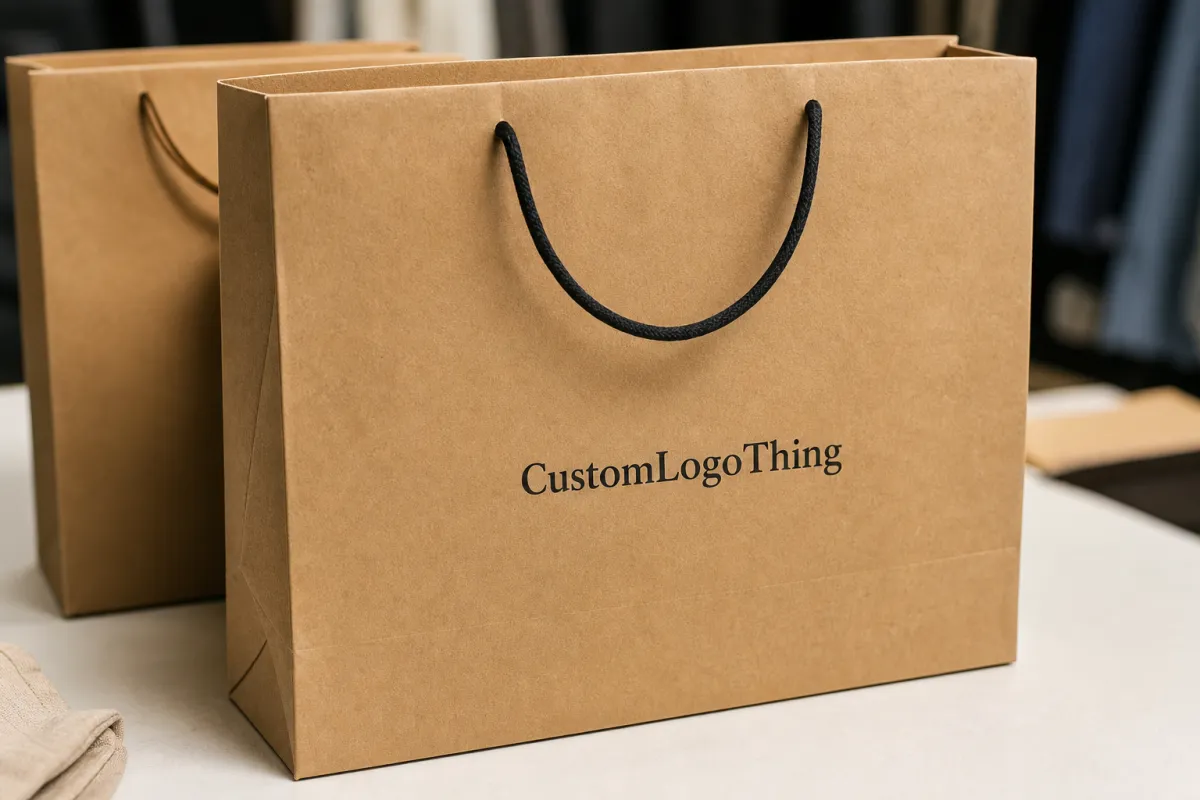
At a basic level, the supplier manufactures branded paper bags for retail use. In practice, the job includes paper sourcing, die cutting, printing, folding, gluing, handle attachment, packing, and shipment coordination. Many suppliers also help translate rough artwork into something production-ready, which matters more than people expect. A logo file is not the same thing as a bag spec.
For clothing stores, the bag has to match what gets sold. A folded T-shirt does not need the same structure as a denim jacket, a shoe box, or a gift purchase. That is where retail packaging gets specific. Size affects presentation and product protection. Paper weight affects stiffness and carry strength. Handle style changes both the feel in hand and the load the bag can support. Finish affects whether the bag reads as premium, natural, or purely functional.
Most buyers end up balancing six variables: dimensions, stock, handle, print method, finish, and quantity. There is no magic shortcut here. If one of those changes, the price and timeline usually move with it. A supplier that treats all paper bags as interchangeable is usually the wrong fit for a clothing brand, because apparel packaging has to sit between utility and image without drifting into either extreme.
For a boutique, the ask may be small: kraft paper, one-color logo, twisted handles, and a modest run size. For a premium label, the spec may include coated stock, foil stamping, laminated surface treatment, reinforced tops, and rope handles that feel closer to gift packaging. Same category, very different result. The supplier’s real job is to build the version that matches the store, not just the cheapest version that can be made.
One practical detail that gets missed often: the bag also has to store well before use. Flat-packed cartons, humidity-resistant paper selection, and clean fold memory matter if the bags will sit in back stock for months. A good-looking bag that arrives warped or scuffed is not good packaging. It is just expensive paper.
How the process and timeline usually work
The process is usually more structured than a buyer expects. It starts with a brief, moves to pricing, then proofing or sampling, and only after approval does production begin. Delays usually happen during the back-and-forth before the press starts, not during the actual conversion work.
A clean brief should include bag dimensions, paper type, paper weight, print colors, handle style, finish, target quantity, and the product weight the bag must carry. If the supplier has to guess at any of those, the quote becomes less reliable and the proof stage becomes slower. That kind of drift is common and expensive.
After the brief, the supplier should confirm whether the bag is being made from kraft, coated paper, art paper, or a board-based structure. Then comes artwork review. This is where registration, bleed, logo placement, and color matching get checked before anything runs. If there is foil, lamination, embossing, or spot varnish, those details need to be locked early because they add setup and curing time.
A realistic production window for many custom runs is 12 to 18 business days after proof approval. Simple kraft bags may move faster. Premium bags with multiple finishes may take longer. International freight adds its own uncertainty, especially when the shipment has to clear customs and still hit a store opening date. If you need an external reference for shipping abuse testing and packaging validation, the ISTA resource at ISTA is useful.
For seasonal launches, holidays, and store openings, planning early matters more than shaving a small amount off the unit price. If the bags arrive late, the entire checkout moment feels unfinished. Clothing may be on the rack. Staff may be ready. The bag, though, is what leaves with the customer. That part is hard to ignore once it is wrong.
Pricing, MOQ, and unit cost drivers
Paper bag pricing looks straightforward until the quote is broken down. Then the moving parts show up: paper weight, bag size, print method, handle construction, finishing, packing, sampling, freight, and setup. A small change in any of those can swing the unit cost more than buyers expect.
MOQ, or Minimum Order Quantity, is a major driver. Smaller runs carry a bigger share of setup and labor per bag, so the per-unit cost rises. Larger runs spread those fixed costs across more pieces, which lowers the price per unit. That sounds obvious. It still catches people off guard because the cheapest-looking option on paper is often not the cheapest landed cost.
Ask for the full landed number, not just the factory quote. Sampling, tooling, cartons, freight, import duty, taxes, and rush charges can distort the math. A low base price is not useful if the shipment needs expedited freight or if a packaging reprint is required because the first proof was approved too quickly.
| Bag style | Typical MOQ | Approx. unit cost | Usual lead time | Best fit |
|---|---|---|---|---|
| Kraft bag, twisted paper handles, one-color print | 500-1,000 | $0.25-$0.55 | 7-15 business days | Basic apparel carryout, pop-up shops, trial runs |
| Coated paper bag, rope handles, full-color print | 1,000-3,000 | $0.45-$0.95 | 12-18 business days | Mid-tier retail packaging with a cleaner presentation |
| Laminated premium bag, reinforced handles, foil or spot finish | 2,000-5,000 | $0.85-$1.80 | 15-25 business days | High-end fashion, gifting, stronger brand presentation |
MOQ should match reality, not ambition. If the store changes artwork often, or if storage is tight, a smaller run is usually safer. If the bag is a core part of the identity and the design stays stable, a larger order can make sense. The mistake is ordering for a fantasy volume and then paying to store or discard leftovers.
The cheapest bag is rarely the smartest bag. Thin stock that tears on a heavier garment, handles that pull loose, or a wide gusset that wastes paper all create hidden cost. Those costs show up as returns, complaints, repacking, or ugly substitutions at the register. The first quote does not capture any of that.
If the clothing line includes denim, outerwear, or boxed items, a stronger stock and reinforced handle usually make more sense than chasing the lowest unit price. That is not overbuilding. That is matching the bag to the product.
Material and finishing choices that protect apparel
Material sets the tone before the customer even opens the bag. Kraft paper feels natural and practical. Coated paper gives a smoother print surface and a cleaner retail look. Art paper and board-style constructions feel more rigid and gift-like, but they cost more and need better spec control to avoid looking overdone.
Paper weight is just as important as paper type. Many apparel bags fall somewhere between 120gsm and 200gsm, though heavier builds are common for premium programs or larger garments. Too light, and the bag bows, wrinkles, or splits at the fold. Too heavy, and you may spend money and shipping weight on strength you do not actually need.
Handle choice changes the customer experience fast. Twisted paper handles are economical and common. Rope handles feel more premium and usually support weight better. Ribbon handles look polished, but they are better suited to gifting than to everyday clothing carryout. Die-cut handles can be tidy and modern, but only if the bag construction supports the stress point. For heavier apparel, reinforced handle patches and strong top folds are worth asking about.
Finishing should earn its place. Matte lamination softens the look and hides some handling marks. Gloss makes colors pop harder. Soft-touch can feel expensive, though it can also show wear differently depending on use. Foil, embossing, and spot UV can help a brand stand out, but they add setup time and cost. If the finish does not improve how the bag performs or presents the product, it is often just decoration with a bigger invoice.
There is also the sustainability piece, and it should stay practical. Recycled content, responsible fiber sourcing, and recyclability matter, but the bag still has to survive actual use. A thinner recycled stock that fails under a denim purchase is not a win. If the supplier claims FSC-certified sourcing, the FSC site at FSC is a solid place to understand the standard behind the claim.
Good rule: lighter apparel and a relaxed brand usually point toward kraft. Premium apparel, gifts, or seasonal launches usually justify coated or laminated stock. The right answer depends on what the customer carries out the door and how the brand should feel in the hand.
Step-by-step sourcing checklist for buyers
A clean sourcing process saves time and money. It also keeps the bag from drifting as more people comment on it. The best briefs are plain, specific, and hard to misread.
- Write the bag spec first. Include width, gusset, height, paper type, paper weight, handle style, print colors, finish, carton pack, and the approximate weight the bag must carry.
- Ask for samples or close references. A digital proof shows layout. It does not show stiffness, handle feel, fold quality, or how the paper reacts when folded and opened.
- Compare quotes on the same build. Make sure setup fees, sample policy, freight terms, and minimums are included. Otherwise two quotes can look similar while describing different products.
- Review artwork with production in mind. Bleed, color targets, logo placement, and registration matter. A design that looks fine on screen can fail badly if the file is rushed or too detailed for the stock.
- Test the actual product. Put in the real folded shirt, hoodie, jacket, or box. That catches weak gussets, awkward proportions, and handle issues faster than a spreadsheet does.
- Ask about quality checks. Good suppliers should verify print registration, glue lines, handle strength, carton packing, and outer-case condition before shipment.
One practical check that gets skipped too often is the carry test. Lift the bag with the actual garment weight and walk a short distance. It sounds basic because it is basic. It also reveals whether the handle cuts into the hand, whether the top fold flexes too much, and whether the bag looks upright when carried.
If the program also includes tissue, hang tags, stickers, or inserts, review those together instead of separately. Coordinated branded packaging usually results in fewer revisions and a cleaner final presentation. The point is not to pile on products. The point is to keep the customer experience consistent.
The cleanest spec sheet usually costs the least to execute. It gives the supplier fewer excuses and the buyer fewer surprises.
Common mistakes that raise costs or delay delivery
Guessing the bag size is the first mistake. A bag that is too narrow crushes apparel and looks careless. A bag that is too large wastes paper and reads awkwardly for small purchases. Both problems are easy to avoid and annoying to fix.
Overdesign is another trap. More colors, more finishes, more special effects — all of that can be valid, but only if it supports the brand. Too often the design gets complicated because the options exist, not because they improve the result. A good paper bag does not need to prove how many things can be added to it.
Carry distance is easy to underestimate. A customer leaving a mall, a street-facing boutique, or a transit-heavy area is not carrying the bag in the same way. Handle strength, fold reinforcement, and paper stiffness should reflect that. A bag that feels fine for a short walk may fail in a real retail environment where the customer is holding it longer than expected.
Approval delays also cost money. If the artwork changes three times after proofing starts, the schedule moves. If the launch date stays fixed, the freight cost often rises because there is less room to ship economically. That is where a simple delay becomes an expensive one.
Another issue is mixing up paper bags with rigid boxes or custom mailers. Those are different products with different strengths. A paper bag needs open-top access, efficient flat storage, and enough carry strength to survive repeated handling. Treating it like a box usually leads to overbuilt specs and unnecessary cost.
Best practice: lock the dimensions, paper weight, and handle type before refining the artwork. The order matters. If the structure keeps changing, the rest of the work gets sloppy fast.
Expert tips and next steps for reorders
The best reorder system is quiet. Keep one master spec for the core bag. Change it only when the brand actually changes. That protects color consistency, makes pricing easier to compare, and keeps the supplier from rebuilding the same file five different ways.
Set the reorder point before stock gets tight. If the last carton is already open, the buyer has no room to absorb proofing time, rework, or freight delays. A healthier rhythm is to reorder while there is still enough inventory to cover a normal lead time plus a small buffer. That avoids panic buys and rushed shipping.
Retain a reference sample from each approved run if possible. Paper, glue behavior, and print conditions can vary a little from batch to batch. A physical sample makes it easier to check whether the next order matches the approved one. That matters more than most teams admit, especially when the bag uses a very specific brand color or finish.
Track the issues that actually show up in use: handle pull strength, scuffing, paper curl, color shift, and box pack damage. Those are the things that matter after the order lands. A bag that looks fine in a photo but arrives with crushed corners or inconsistent glue lines is not a success.
A private label packaging program works best when the bag is treated as part of a repeatable system rather than a one-off purchase. The specs stay stable. The supplier learns the standards. Reorders become faster because the decisions are already made.
FAQ
How do I compare suppliers fairly?
Compare them on the same dimensions, paper weight, handle style, print method, finish, carton pack, and quantity. Ask for separate lines for setup, sampling, freight, and any rush fees so you can compare landed cost instead of only factory price.
What MOQ should I expect?
Many custom bag programs start in the hundreds or low thousands. Simple kraft bags often allow lower minimums, while laminated or specialty-finish bags usually need larger runs to stay cost-effective. The right MOQ is the one that fits your sales volume and storage space.
How long does production usually take?
Simple printed bags can move faster than laminated or multi-finish bags. A practical timeline includes proofing, production, inspection, packing, and freight, so it is safer to plan earlier than the store opening or campaign date.
Which materials work best for apparel?
Kraft paper works well for lighter garments and brands that want a natural look. Heavier stock and reinforced handles are better for denim, outerwear, and boxed items. Coated or laminated stock suits premium presentation, as long as the bag still carries comfortably.
What should I confirm before the first order?
Confirm exact dimensions, print area, paper weight, handle strength, finish, carton pack, and reorder process. Also ask how the supplier checks color consistency, glue quality, and registration. Those details determine whether the second order matches the first.
Do I need a sample before production?
Yes, if the order has any premium finish, nonstandard size, or heavier load requirement. A sample catches problems that are hard to see on screen, especially handle placement, stiffness, and how the bag behaves when folded and opened.
What causes the most quality problems?
Weak glue lines, poor handle attachment, bad registration, and stock that is too light for the load are the usual suspects. Small defects look minor at first, then turn into customer-facing failures once the bags are in daily use.

