If you are comparing frosted garment Bags Low MOQ Custom order options, the real decision is usually not whether the bag looks acceptable. It is whether the bag protects the garment, presents the brand cleanly, and fits a smaller run without creating dead stock. Packaging often gets judged in seconds, yet it sits close enough to the product that buyers remember it long after they forget a spec sheet.
Plain poly can do the job, but it often looks unfinished. It shows wrinkles, catches harsh reflections, and can make an otherwise well-packed item feel a little too utilitarian. A frosted finish changes that first impression in a practical way: it softens glare, hides minor packing irregularities, and gives the package a calmer, more deliberate appearance that works for retail display, storage, and shipping.
For brands testing a new line, opening a pop-up, or refreshing packaging without committing to a large MOQ, a well-specified frosted bag can be a sensible middle ground. The order size stays realistic, the presentation still feels intentional, and the buyer is not forced into a warehouse full of extras.
Why frosted garment bags work when plain poly looks unfinished
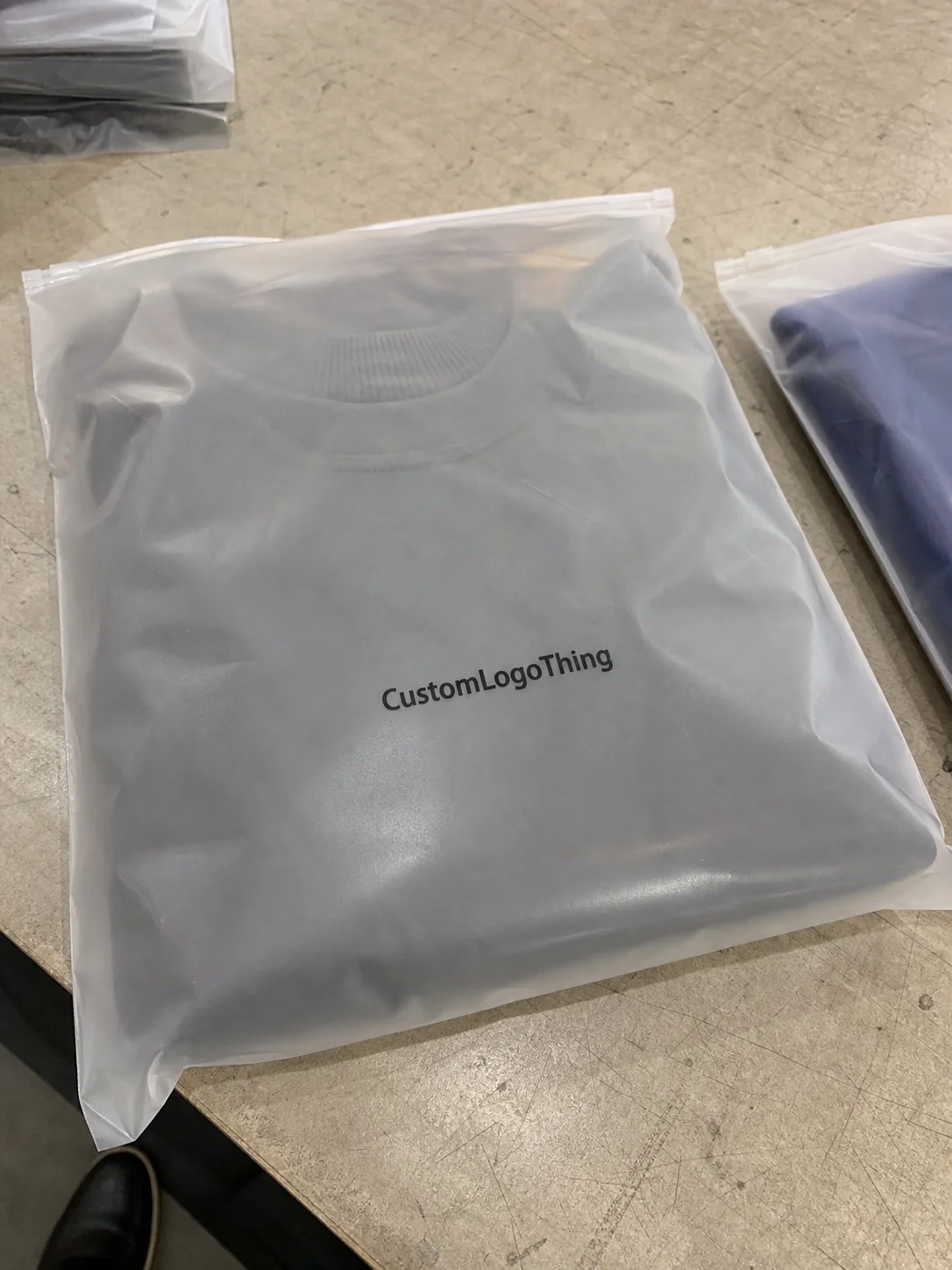
When a garment arrives folded neatly but the outer bag is scuffed, cloudy, or overly glossy, customers notice almost immediately. That is especially true for shirts, dresses, suits, and uniforms, where the product may be excellent but the package suggests something less considered. Frosted film helps because it diffuses light instead of reflecting it sharply, so the bag reads as cleaner and more premium at a glance.
That softer surface also makes apparel look more controlled on a shelf, in a receiving area, or inside a fulfillment carton. Logos are easier to read, hang tags are less visually crowded, and the package feels more organized. Under bright store lighting, a thin clear bag can pick up glare and make the contents look messy; frosted film reduces that distraction without hiding the product entirely.
There is a functional side too. A garment bag is not only a display layer. It helps reduce abrasion, keeps pieces separated, and can limit the kind of surface rubbing that causes scuffs during packing or transport. For direct-to-consumer shipping, that matters because cartons may move through several touches before they reach the customer. Industry transport testing standards such as those published by the ISTA are useful references when evaluating how a package behaves under handling and transit stress.
For buyers who need Frosted Garment Bags low moq custom order flexibility, the appeal is straightforward. You do not need to overbuy to get a cleaner finish. That makes sense for seasonal collections, emerging labels, sample programs, and teams that want to test a new presentation before rolling it out across more SKUs.
“A good garment bag should step back and let the product speak, while still making the product look more intentional.”
Product details that matter before you place a custom order
Before any frosted Garment Bags Low moq custom order moves forward, the construction details deserve more attention than the artwork itself. Bag style, closure, and film choice all affect real-world performance, and those decisions also shape the unit cost.
Common construction options include side seams, bottom seal styles, hanger openings, flap closures, zipper styles, and adhesive closures. A simple top-open bag may be enough for folded shirts or easy retail handling. A dress cover or suit bag may need a more protective structure, a stronger hanger cutout, and a wider body that can handle shoulders and sleeves without crushing the garment.
Film type matters just as much. Frosted LDPE is widely used because it offers flexibility and a balanced soft sheen. PP-style films can feel crisper depending on gauge and extrusion method. In practical production terms, film thickness often falls in the 40–80 micron range, although the right gauge depends on garment weight, handling conditions, and whether the bag will be folded into a carton or hung in store.
Customization usually includes one-color or multi-color logo printing, size-specific dimensions, and optional features like perforations, vents, or reinforced hang openings. Buyers often underestimate how much print placement affects the final appearance. A centered logo works well for many brands, but a lower placement may be better if the bag is folded into a shipping carton and the top third is likely to be hidden.
If you are packaging shirts, dresses, coats, suits, or uniforms, the fit should be based on hanger width, garment length, and bulk at the shoulders or sleeves. For folded apparel, exact dimensions still matter because excess slack can make the bag look sloppy. Sample review is worth the time because it lets you check the frost level, seal strength, texture, and logo visibility before the order goes into production.
- Shirts and folded tops: usually work well in slimmer, lighter-gauge bags.
- Dresses: may need extra length and more room at the hem.
- Coats and suits: often require a wider format or gusset.
- Uniform programs: benefit from repeatable sizing and simple print placement.
There is also a practical storage question. If the bags will be packed flat in cartons, the fold memory matters more than many buyers expect. A film that springs back too aggressively can slow down packing. One that is too limp can wrinkle and look cheaper than the product deserves. That is why sample approval should include a packing test, not only a visual check on a desk.
Specifications buyers should confirm before approving artwork
Artwork approval should not happen until the basic specification sheet is locked. That sheet should include width, length, gusset depth if used, film thickness, closure style, hanger opening, and print coverage. These details determine whether the bag works on the packing line and whether the quote is accurate enough to compare against other packaging options.
One detail buyers often miss is that a frosted finish is not identical across all materials. The satin-like appearance on one sample may look slightly more matte on another, depending on extrusion, resin mix, and surface treatment. If your brand wants a soft, higher-end finish, ask for a sample that reflects that exact surface target before approving production.
The use case should be defined clearly. Is the bag for retail display, warehouse storage, or direct-to-consumer shipping? Those three uses can call for different priorities. Retail packaging may care most about appearance and print quality. Warehouse storage may need better stackability and a more durable seal. Shipping may require stronger seams and a closure that stays shut through handling and carton movement.
Heavier garments deserve special attention. Outerwear, structured uniforms, and multi-piece sets place more stress on the film and seams than a light blouse does. If the load is significant, a thicker film, a gusset, or a stronger closure method may be the better choice. On the packing side, also confirm compatibility with tissue, folding boards, hangers, and carton dimensions so the final pack-out does not slow the line.
For sustainability-minded buyers, it can also help to ask about material and certification options where relevant. If a program calls for paper content or certified sourcing elsewhere in the packaging mix, reference standards from FSC for paper-based components, and consider how the garment bag fits the broader packaging strategy. Many brands are now balancing plastic usage, durability, and presentation in very practical ways.
| Option | Typical use | Relative unit cost | Best fit |
|---|---|---|---|
| Standard frosted bag, one-color print | Retail or folded apparel | Lower | Launches, sample programs, core SKUs |
| Thicker frosted bag with gusset | Coats, suits, bulkier items | Moderate | Heavier garments, structured fits |
| Custom shape with vents or zipper | Specialty presentation or storage | Higher | Premium programs, long-term retail use |
Cost, pricing, and MOQ factors that change your quote
Pricing for frosted garment bags low moq custom order projects is driven by a few straightforward variables. Size matters first because more film means more material cost. Thickness matters next because heavier gauges require more resin and can slow production slightly. Then come print colors, closure type, tooling, and quantity. Each one pushes the quote up or down in a measurable way.
Low MOQ orders usually carry a higher unit cost than larger production runs, and that is normal. The factory still has to set up the print, run material, check the artwork, and package the cartons, even if the order is small. For a simple custom run, buyers might see pricing around $0.18–$0.32 per unit at a few thousand pieces. More complex sizes, thicker film, or stronger closures can move above that range. Exact numbers depend on the spec, not a generic catalog estimate.
Artwork complexity also changes the quote. One-color logos are usually the cleanest path for small-batch custom work, while multi-color printing, edge-to-edge coverage, or tight registration can increase setup time and scrap risk. If the logo includes fine lines or small type, ask for a proof that shows actual print scale. That helps protect both appearance and reading clarity on the finished bag.
Special features add cost as well. A gusset, zipper, reinforced hanger hole, or custom flap closure may require additional production steps and inspection. Those features can absolutely be worth it for the right garment, but they should be chosen because they improve the pack-out or customer experience, not because they sound impressive on paper.
If you want a more accurate landed cost, ask for a quote with exact dimensions, film gauge, closure type, print coverage, and the expected quantity by SKU. That gives you a usable comparison across options instead of a broad estimate. For buyers with broader packaging needs, our Custom Packaging Products page and Wholesale Programs can help compare related formats across a wider product family.
Another practical point: minimums are often tied to setup efficiency, not just raw material use. A factory may be willing to run a lower quantity if the artwork is simple and the bag dimensions match existing tooling. If the order requires a new die, unusual closure, or special print registration, the MOQ can rise quickly. That is why two seemingly similar quotes can land in very different places.
Process and timeline: from artwork approval to packed cartons
The buying process should be simple and predictable. First, Request a Quote. Then confirm size, material, closure, and print layout. After that comes artwork proofing, and if the program needs it, a sample or prototype. Once the proof is approved, production begins and the finished cartons move through inspection, packing, and shipment.
Lead time depends on a few practical factors: quantity, print complexity, material availability, and whether the job uses stock film or a custom setup. A straightforward low-volume custom run can often move faster than a larger production schedule, but it still depends on queue position and quality checks. For many buyers, a typical window is around 12–18 business days from final proof approval, although that can shift with seasonality, complexity, or material sourcing.
Proof review deserves real attention. Check logo placement, font size, Pantone targets if applicable, bag dimensions, and any notes tied to the closure or hanger cutout. A small misread in the proof can create a frustrating issue once the bags reach receiving or fulfillment. If your operation depends on carton counts and warehouse windows, ask how cartons will be packed and labeled so the team can process them without delay.
Shipping details matter too. Some buyers need cartons ready for cross-docking, while others need them palletized for warehouse receiving. Others want the order delivered to a fulfillment center and entered into inventory with minimal handling. The more clearly that is stated up front, the fewer surprises later.
If you are comparing custom printed boxes with garment bags as part of a broader package branding plan, remember that each format serves a different function. Boxes create a stronger unboxing structure, while garment bags are often better for apparel visibility, dust control, and easy hanging or folding. Good packaging design uses the right format for the product, not the fanciest one available.
How low-volume custom packaging can avoid waste
Small-batch programs make sense for brands testing a new colorway, opening a pop-up, or launching a seasonal collection with uncertain demand. They also make sense for companies that want to refresh branded packaging without sitting on a large inventory of bags that may never get used. In those situations, a lower MOQ is not a compromise; it is a practical buying decision.
Support should be concrete. That means confirming the spec clearly, reviewing artwork honestly, discussing MOQ without pushing more quantity than the business needs, and checking samples before the first run starts. It also means being realistic about what can be done well at lower volume. Straightforward sizing, limited print colors, and standard closures usually create the best balance of appearance and cost.
One useful strategy is standardizing dimensions across several garments while changing only the print or label treatment. That improves efficiency, keeps inventory cleaner, and reduces the chance that each SKU needs its own unique packaging line. For apparel brands managing multiple styles, this can simplify product packaging without making the presentation feel repetitive.
Quality control should focus on the basics: seal consistency, film clarity, print legibility, and carton packing accuracy. A bag does not need to be complicated to do its job well. It needs to arrive with the right dimensions, the right finish, and the right print placement so it works in the real conditions of retail handling or fulfillment.
There is also a supply chain reality that buyers learn quickly: low MOQs are easier to manage when the specification is disciplined. If each season changes size, closure, artwork coverage, and bag type at the same time, the order becomes harder to price, proof, and repeat. A stable core spec with one or two controlled variables usually produces better results and fewer surprises.
From a buyer’s point of view, that is the value of a frosted garment bag program built around usage instead of marketing language. You get a cleaner presentation, a practical protective layer, and an order size that supports growth without creating waste.
Next steps to order the right frosted garment bag
If you are ready to move forward with frosted garment bags low moq custom order planning, start with three details: garment type, bag size, and estimated quantity. Those three inputs narrow the options quickly and help the quote reflect the real production setup instead of a rough placeholder number.
Next, gather logo artwork in a usable format and note any special requirements such as hanger hole style, closure preference, gusset depth, or print placement. If you already know the bag will be used for retail display, shipping, or long-term storage, say so clearly. That context helps match the material and closure to the use case.
If frost level, fit, or logo visibility matters a lot, ask for a sample or prototype. That extra step is often worth it because it verifies the actual feel and look before production starts. It also catches the kind of small issues that can create bigger problems later, especially in a launch window where timing is tight.
Then compare quote options by unit cost, lead time, and included features. The cheapest line item is not always the best value if it leaves out a detail your packing team needs. Confirm everything in writing, because small packaging details have a large effect on production accuracy and final fit.
For quick reference, our FAQ covers common buyer questions. The main goal is simple: match the bag to the garment, the run size, and the actual handling conditions. That is usually the smartest path for brands that want frosted garment bags low moq custom order flexibility without giving up a clean retail look.
FAQ
What is the minimum order for frosted garment bags low MOQ custom order?
MOQ varies by size, print method, and bag structure, but low MOQ programs are typically designed for smaller launches or trial runs. The exact minimum is best confirmed with the final dimensions and artwork, since custom features can change the production threshold.
Can I order frosted garment bags with my logo on a small quantity?
Yes, logo printing is commonly available on smaller custom runs when the specs are kept straightforward. One-color printing, standard sizing, and fewer custom features usually make small-batch orders easier to produce efficiently.
What size frosted garment bag should I choose for dresses or coats?
Choose the bag based on hanger width, garment length, and whether the item needs extra room for sleeves, hems, or bulk. Coats and structured garments often need wider dimensions or a gusset, while dresses may fit well in a slimmer format depending on length.
How does frosted film compare with clear garment bags?
Frosted film gives a softer, more premium appearance and helps reduce glare, which can make branded packaging look more refined. Clear film shows the garment more directly, but it can also reveal folds, dust, and packing irregularities more easily.
What information should I send to get an accurate quote fast?
Send garment type, finished bag dimensions, closure style, print requirements, and estimated quantity. If you have it, include artwork files and any sample references so the quote can reflect the true production setup.


