A private label Frosted Garment Bags supplier can change how a shirt, blazer, or coat is perceived before a shopper ever touches it. Frosted poly cuts glare, softens wrinkles and hanger marks, and gives apparel a cleaner read without forcing a move to rigid packaging or costly structural work.
Packaging is part of the product experience, not an accessory to it. A bag that looks deliberate can raise perceived value, reduce complaints about handling, and make a rack or shipment feel more controlled. In practical terms, the right frosted bag is storage, protection, and brand signal in one low-cost component.
Why Frosted Garment Bags Change the Shelf Signal
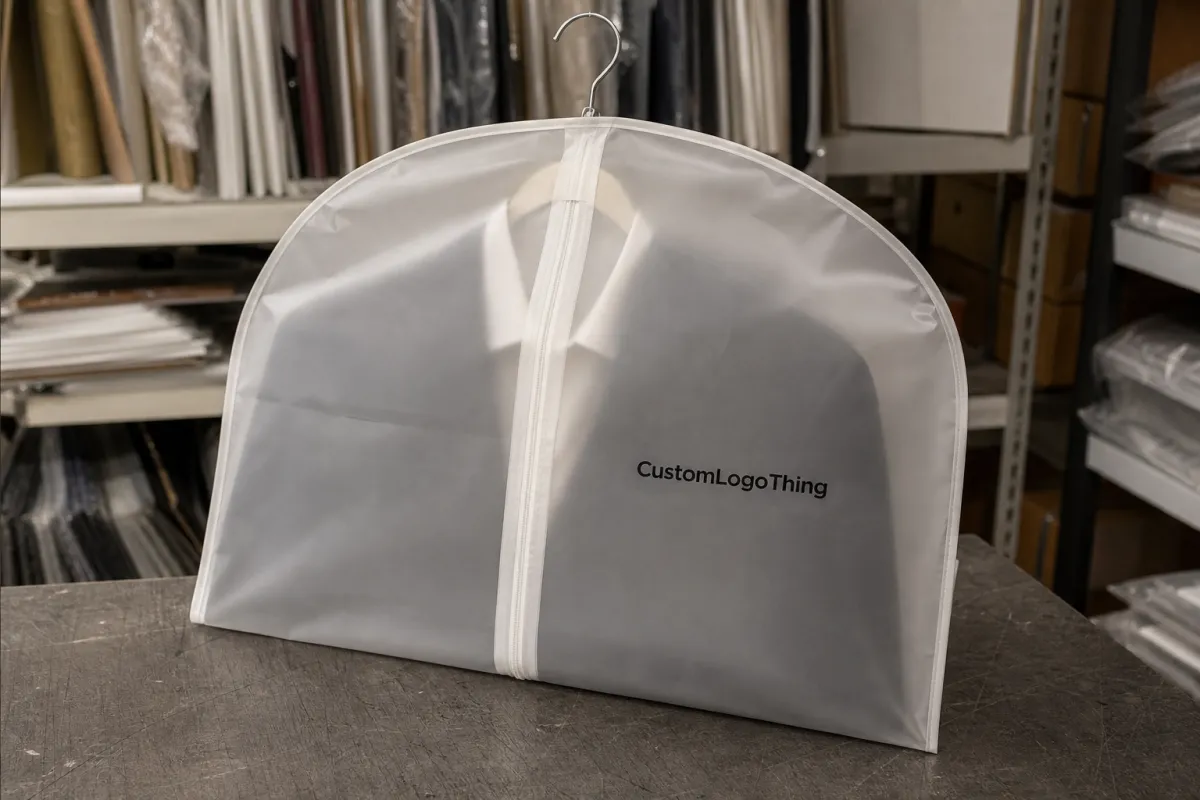
Clear poly shows too much. Under bright retail lighting, wrinkles, fold lines, dust, and odd hanger angles become visible fast, and the garment starts to look like inventory rather than merchandise. A frosted finish changes that equation. It still allows the silhouette to show, but it stops the packaging from broadcasting every small imperfection.
That is why frosted garment packaging works for branded apparel, ecommerce fulfillment, trade show kits, and seasonal programs that need a modest lift in presentation. A matte surface can make a basic tee, robe, or lightweight jacket feel like part of a curated assortment instead of something pulled from a shipping carton.
Consistency is another reason buyers keep returning to frosted film. The finish, opacity, and print placement can stay aligned across a line, which matters when a floor set depends on visual order. Tiny differences are visible when they repeat across a rack.
“If the bag looks careless, the product starts behind the curve. If the bag looks deliberate, the product gets a fair first read.”
Some buyers also ask about recycling. That question only has a useful answer if the resin, film thickness, contamination level, and local recycling rules are all checked. The EPA has practical guidance on plastic film recycling at epa.gov. That is a better place to start than assuming a plastic bag is recyclable because it is thin or clear.
How Private-Label Frosted Bags Are Made and Printed
Most Frosted Garment Bags use LDPE or LLDPE film. The resin is extruded, cooled, and then given a frosted or matte appearance through an additive, layered structure, or surface treatment. After that, the web is cut, sealed, and converted into the final bag shape for the target garment size.
Buyers can specify logo printing, custom dimensions, branded inserts, zipper or flap closures, vent holes, bottom gussets, and hanger openings. If the bag will be reused, a stronger seal and heavier gauge film usually make more sense than a thin sleeve built for one trip from warehouse to store.
Printing is where the first tradeoffs appear. A one-color logo is easier to keep sharp on frosted film and tends to hold down cost. Multi-color branding needs tighter registration, more setup, and a cleaner proofing process. Flexographic printing is common for volume orders, while more detailed decoration may require a different print path. The key is simple: the logo has to stay readable on matte film without fuzzing or weak contrast.
Stock bags and custom runs solve different problems. Stock sizes are useful for quick replenishment and testing a format. Custom private-label runs give more control over fit, feel, and presentation, but they also ask for more review up front. That tradeoff is normal, and for retail-facing programs it is often worth the added time.
If the garment bag has to match the rest of the package system, buyers often pair it with Custom Labels & Tags so the visual language stays consistent across the line.
Specs That Decide Fit, Feel, and Reusability
Size comes first. A garment bag should match the longest apparel category in the line, not the smallest. A bag that is too short crushes sleeves and shoulders; a bag that is too long wastes film and can let the item shift inside. Common reference sizes include 24 x 36 inches for tops and shorter jackets, 24 x 42 for blazers, and 24 x 54 for longer coats or suits.
Film thickness matters just as much. Gauge affects tear resistance, drape, hand feel, and whether the bag survives repeated use. For many apparel programs, 1.5 to 2 mil works for basic retail packing, while 2 to 3 mil is more suitable for reusable storage or heavier garments. Thicker is not automatically better. Too thin usually fails later, after the sample already looked fine.
Closure style changes the user experience more than many buyers expect. Zippers feel more premium and are easier to reopen. Adhesive flaps are quick and often lower cost. A press-to-close or resealable strip can work for warehouse-to-store transfers. Add a hanger opening if the product stays on hangers; add a bottom gusset if the garment needs more room in the body.
Finish matters too. Frosted texture reduces glare well, but it can also mute logo contrast if the ink is too light. Under store lighting, the same bag can read differently than it does on a sample table. That is why physical proofing matters. A screen image will not show how the bag handles reflections, fingerprints, or the shape of the garment inside.
For buyers managing several SKUs, it helps to keep a short spec matrix.
- Material: LDPE or LLDPE with frosted finish
- Gauge: 1.5-3 mil depending on reuse and garment weight
- Closure: zipper, flap, or resealable strip
- Branding: one-color logo, multi-color logo, or no print
- Extras: hanger hole, venting, gusset, inserts, hang tab
Cost, MOQ, and Quote Drivers to Compare First
Price is shaped by several variables at once. Bag size, film thickness, closure type, print color count, and packing format all move the unit cost. A simple frosted sleeve will usually cost less than a custom-sized zipper bag with a two-color logo and insert card.
As a planning range, many private-label garment bag programs land around $0.18-$0.42 per unit at 5,000 pieces, depending on gauge, print coverage, and closure style. Very simple stock items can sit below that. Heavier or more decorated runs can move above it. Freight, duties, cartons, and handling are separate, and they often matter more than first-time buyers expect.
MOQ is the other lever. Lower minimums usually mean higher per-unit pricing because setup cost is spread across fewer bags. Larger runs pull the unit price down, but they also increase inventory exposure if the line changes or the season moves quickly. The right number depends on sell-through, storage space, and how often the apparel mix changes.
Ask every supplier for the same comparison set. If the brief is consistent, the quotes become useful instead of decorative.
| Option | Typical MOQ | Unit Price Range | Lead Time | Best Fit |
|---|---|---|---|---|
| Stock frosted bag, no print | 500-1,000 | $0.08-$0.16 | 3-7 business days | Urgent replenishment, testing a format |
| Stock size with single-color logo | 1,000-3,000 | $0.14-$0.26 | 7-15 business days | Quick brand upgrade with lower setup |
| Custom size, custom print, branded details | 3,000-10,000 | $0.18-$0.42 | 12-20 business days | Retail-ready private label programs |
A clean quote should separate sample cost, production cost, tooling or plate charges, freight, and any special packing requirement. If those lines are merged, the buyer is comparing half-truths.
For broader packaging standards and transport planning, the Packaging Industry Association's resources at packaging.org help frame print, sustainability, and format decisions in context. For transit testing, ISTA methods at ista.org are useful when cartons need to survive rough handling, pallet compression, or long routes.
Process and Timeline: Sample, Approval, and Shipment
The workflow is straightforward, but every step deserves attention. Start with a brief. Confirm dimensions, gauge, closure, printing, packing method, and delivery destination. Then ask for an artwork proof, a physical sample, or both. Once the sample is approved, production starts, cartons are counted, palletized, and booked for freight.
Sampling often takes 5-10 business days, though it can stretch if artwork needs correction or the supplier must source a special closure. Production commonly takes 12-20 business days after proof approval. Freight is a separate clock. Air can move in a week or less; ocean freight can take three to five weeks depending on routing and port conditions.
Most delays come from a short list: last-minute size changes, slow proof signoff, print corrections, and resin availability. None of those are mysterious. They are operational friction, and they should be planned for rather than discovered in the final week before launch.
Working backward from the launch date is usually the safest approach. If apparel hits stores on a fixed date, the packaging should be approved well before that. Inventory tied to promotions is even less forgiving.
How to Vet a Supplier Without Guesswork
Ask for technical proof first, not a polished sales page. Request material specifications, dimensional tolerances, print method, and any certifications the supplier claims to hold. If the bag needs to meet a retail standard, the supplier should be able to explain how it is checked and where the tolerance sits.
Physical samples matter because frosted film behaves differently in hand than on screen. A digital render cannot show logo contrast under fluorescent lights, nor can it reveal whether the seal feels weak at the corner. Ask for a real sample and a production-like proof, then compare them side by side with the garment inside the bag.
Communication is a sourcing metric, not a courtesy. Fast replies help, but clarity helps more. If a supplier explains tradeoffs, flags a setup issue early, and answers directly about freight, carton count, and packing format, that usually predicts a better order experience. If answers stay vague, the project probably will too.
Packaging readiness matters as much as print quality. A bag that looks good in a photo still has to ship. Check carton counts, palletizing method, label placement, and export experience. If the order is crossing borders, ask whether the cartons are tested or handled under recognized procedures. That is where groups like ISTA stop being decorative.
A strong supplier does not just say yes. They explain what changes the cost, what changes the timeline, and what changes the bag itself.
If sustainability claims are part of the pitch, ask for the resin type, recycled-content claim, and any chain-of-custody paperwork. For FSC-linked inserts or paper components, the certificate trail should be easy to verify at fsc.org. If the supplier cannot show documentation, treat the claim as a sales line, not a fact.
Common Buying Mistakes That Create Waste
The first mistake is guessing size from one sample garment. A folded sweater, a blazer with broad shoulders, and a long coat do not need the same bag. Sleeve length, shoulder width, and folded thickness all change the usable interior space. A bag that fits one style can fail on the rest of the line.
The second mistake is chasing the lowest unit price without checking landed cost. Thin film can tear. Weak seals can split. A cheap quote that leads to extra freight, rework, or replacements is not cheap. It is just delayed pain.
The third mistake is approving artwork too quickly. Logo placement, bleed margins, and contrast need to be checked on an actual proof, not only in a mockup file. Frosted film changes how color sits on the surface. What looks bold on a screen may feel subdued in hand.
The fourth mistake is over-ordering before sell-through is proven. Apparel packaging changes with seasons, color stories, and trim updates. A big MOQ can turn into dead stock if the presentation changes mid-cycle. That risk is real, especially for retailers with fast resets or limited backroom space.
There is a quieter mistake too: forgetting the internal packaging system. A garment bag may work better if it coordinates with hang tags, labels, and the rest of the display language. Buyers who think in systems, not single items, usually get a cleaner result.
Next Steps: Build a Clean Brief and Shortlist
Start with a one-page RFQ. Keep it plain. List size, thickness, closure type, print colors, packing method, target quantity, and delivery deadline. Add whether the order needs stock sizing or a custom size. If you want a fair comparison, make each supplier quote the same job.
Then ask for three numbers: sample cost, production unit cost, and landed cost. Those do not tell the same story, and buyers get into trouble when they confuse them. Sample cost tells you the qualification burden. Unit cost tells you the factory efficiency. Landed cost tells you what the bags really cost to put into use.
One physical sample and one production-like proof are worth more than a polished deck. Compare them under real lighting with the garment inside. Check the logo, the closure, the seal, and the way the frosted finish behaves near a bright window or under store lights.
For buyers comparing a supplier against stock alternatives, the best results usually come from a brief that is specific enough to price, but not so broad that every quote becomes a different product. Clean inputs make better numbers. Better numbers make better packaging decisions.
What should I ask a private label frosted garment bags supplier before ordering?
Ask for exact film thickness, closure type, print method, and bag dimensions in writing. Confirm whether the quote includes tooling, cartons, and freight or only factory price. Request a physical sample so you can check clarity, feel, and logo contrast before approving volume.
How do I compare pricing from a private label frosted garment bags supplier?
Compare the same spec sheet across every quote so size and thickness do not distort the result. Separate unit cost from landed cost, since freight, duties, and packing can change the real total. Check MOQ tiers and ask what price changes if you increase or reduce quantity.
What MOQ is typical for frosted garment bags with a logo?
MOQ varies by size, print complexity, and whether the supplier is using stock or custom tooling. Smaller runs usually cost more per bag, while larger runs lower unit cost but increase inventory exposure. Ask for multiple MOQ tiers so you can compare starter quantities against full production pricing.
How long does sampling and production usually take?
Sampling often takes less time than a full run, but artwork approval and proof changes can extend it. Production lead time depends on capacity, resin supply, and how quickly the buyer signs off on the proof. Add transit time separately so the packaging arrives before the apparel launch, not after it.
Are frosted garment bags reusable and recyclable?
Many are reusable if the film is thick enough and the closure is durable. Recyclability depends on the resin type and local recycling rules, so do not assume every bag qualifies. If sustainability matters, ask the supplier for material details and any recycled-content options.


