Private Label Header Bags Print Method Comparison for Buyers
Private label packaging gets expensive in a very ordinary way: a quote looks lean, the order lands, and the line item that seemed small turns into freight, setup, revision, and obsolete stock. Header bags are one of the clearest examples. The print method changes not just the unit price, but the proofing path, the minimum order, the amount of color control you can expect, and how painful a design update becomes later.
That is why the private label buyer OPP Header Bags print method comparison matters. It is not a theory exercise. It is a buying decision about what can be launched quickly, what can be repeated cheaply, and what should never be locked into a large run before the art is truly stable.
The wrong choice usually fails in a familiar pattern. A buyer picks the lowest unit price, then discovers that the supplier needs a large setup charge, a long lead time, or an order size that is far too big for a first release. By the time the packaging arrives, the product plan has already shifted. Reordering becomes awkward, and the packaging that was supposed to protect margin starts eating it.
A few cents saved on paper do not matter if the run needs a second proof, a plate correction, and a warehouse corner full of outdated bags.
That is the practical lens here: compare cost, appearance, lead time, and reorder flexibility together. If one of those breaks, the rest of the number usually lies.
The margin trap: why cheap header bag printing can cost more
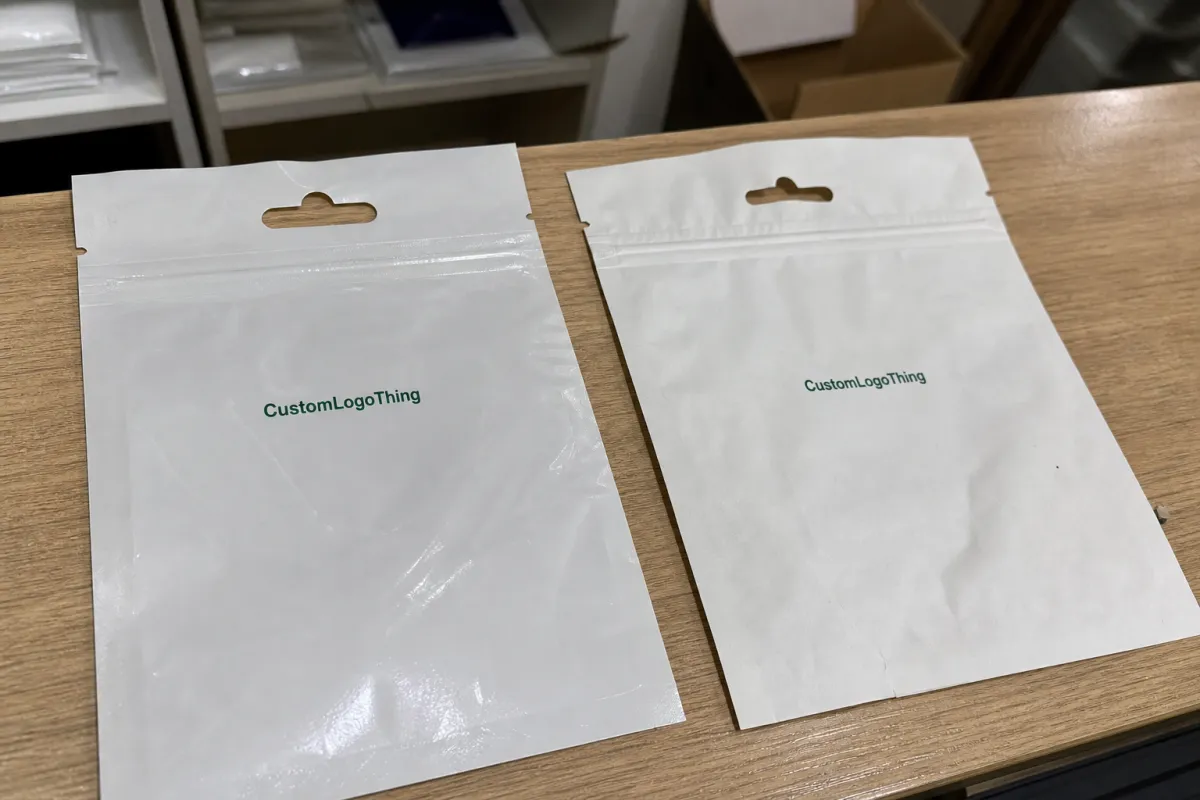
The cheapest print quote can be the most expensive choice over the life of the SKU. That is especially true for private label, where the packaging often changes faster than a national brand line. A launch may need only 2,000 or 3,000 bags, but the quote may be built around a process that behaves well only at double that volume. The first invoice looks manageable. The real cost appears after the second round of revisions.
There are three common traps. First, setup fees hide the true unit economics. Second, artwork changes force another round of correction, which is painful on methods that use plates or cylinders. Third, a buyer orders too many bags because the MOQ looked attractive, then the product line changes and the leftovers become dead inventory. None of those outcomes are rare.
There is also a brand issue that is harder to quantify but impossible to ignore. Weak type, muddy color, or a logo printed on clear film without a proper white underprint makes a product look underpriced even if the item inside is good. Packaging does not need to be fancy to work. It does need to be legible, aligned, and consistent from carton to carton.
Retail buyers usually learn this the hard way. A small visual flaw that seems harmless on screen becomes obvious under store lighting. Thin lines disappear. Warm reds shift toward brown. Gloss film reflects so much light that a logo seems less crisp than the file suggested. The packaging may still be functional, but it no longer supports the shelf price.
If a quote cuts 4 cents from the unit cost and adds a plate charge, a longer schedule, and a risky reorder path, that is not a saving. It is a deferred loss.
Private label header bag print method comparison
The comparison usually narrows to three methods: digital printing, flexographic printing, and gravure. Offset printing is useful for cartons, inserts, and tags, but not for the film bag itself. Film needs inks, adhesion, and handling that behave differently from paper.
The real question is not which method sounds best in isolation. It is which one fits the run size, the art complexity, the material, and the expected life of the design. A seasonal private label launch and a stable replenishment item should not be bought the same way.
Digital printing
Digital is the strongest option for short runs, quick artwork changes, and buyers who want to avoid plate costs. It works well when the first order is small or when the design is still under review. That said, digital on clear film still depends on the substrate and the use of white ink underneath. Without that layer, colors can look lighter and type can lose edge contrast.
Digital also makes sense for buyers who expect frequent refreshes. A small logo tweak, barcode change, or seasonal color shift is easier to absorb. The tradeoff is that unit cost usually stays higher than flexo or gravure once the order size grows.
Flexographic printing
Flexo is the middle ground and, for many private label programs, the most sensible one. It is built for repeatable runs with stable artwork. Spot colors tend to hold well, and ink laydown on film can be strong when the press is set up properly. The setup cost is real, but it is spread across enough units to make the numbers work at moderate scale.
For buyers, flexo often becomes the practical sweet spot: lower cost than digital once the order grows, yet far less locking-in than gravure. It is the method most likely to survive a product line that reorders several times a year without forcing a complete rethink of the artwork.
Gravure
Gravure is the volume method. The cylinder cost is high enough that it only makes sense when the design will live for a while and the run count is large. In exchange, the process is strong on repeatability and rich ink coverage. Long production cycles are where gravure earns its keep.
The catch is obvious. If the artwork changes after the first season, the cylinder cost can turn into a very expensive lesson. Gravure is not a good match for uncertain launches or for brands that still like to adjust copy, layout, or color positioning from order to order.
| Method | Typical MOQ | Setup cost | Typical unit cost | Best use case |
|---|---|---|---|---|
| Digital printing | 500-3,000 pcs | $0-$150 | $0.18-$0.42 | Short runs, fast launches, frequent artwork changes |
| Flexographic printing | 3,000-20,000 pcs | $150-$900 per color | $0.08-$0.24 | Balanced cost, stable artwork, ongoing replenishment |
| Gravure | 25,000-50,000+ pcs | $800-$2,500 per cylinder | $0.05-$0.15 | High-volume programs with long artwork life |
Those ranges move with bag size, film width, print coverage, and freight assumptions. A small one-color bag is not in the same price class as a full-bleed retail pack with white underprint and a premium finish. Buyers sometimes compare unit costs without comparing what actually sits inside those numbers. That leads to false savings.
There is another difference that matters in a procurement review: how each method handles proofing. Digital proofs are usually easier to move toward a final sample quickly. Flexo often requires more disciplined color setup, but the press result can be very dependable once it is locked. Gravure takes the most discipline up front because the cylinder cost discourages casual changes. If the design is still in motion, that pressure is useful only when the team is truly ready.
On clear film, all three methods need attention to opacity. A logo that looks dark on a monitor may look weak on transparent packaging unless the printer uses a white layer beneath it. That white layer is not cosmetic fluff. It is what keeps the brand mark from disappearing into the background.
One final practical note: if the header bag is part of a broader retail presentation, the print method should fit the rest of the pack. A bag that needs a matching card, insert, or barcode label may be better kept visually simple so the other components can carry some of the information load. In those cases, the bag and the label should be planned together rather than treated as separate jobs.
Header bag styles, materials, and closures that change performance
Printing does not fix a weak structure. Material choice comes first, because the film determines how the bag seals, how it hangs, how it looks under store light, and how much abuse it can take in shipping. A good print method on the wrong film is still the wrong package.
LDPE is soft and forgiving. It is common where sealability matters and the bag needs a lighter feel. CPP has a crisper hand and more clarity, which can help presentation. BOPP gives a stiffer, brighter surface that often reads better in retail. Laminated structures cost more, but they can improve stiffness, print appearance, and barrier performance when the product needs extra protection.
Film gauge needs to match the job. Many header bag programs sit somewhere in the 40-80 micron range, but the right number depends on product weight, puncture risk, and whether the bag needs to feel premium or simply survive packing. Too thin and the pack flexes badly. Too thick and the unit cost rises for no useful gain.
Header style matters almost as much. A punched hang-hole works well for peg displays, but hole shape and placement affect both display and stress distribution. If the seal sits too close to the load area, the bag can tilt or distort. Put it too low, and the front panel may wrinkle during transit. It is a small layout decision with real consequences.
Closures change the user experience. Adhesive strips are useful for clean retail closure. Resealable tops make sense for products that are opened more than once. Perforations are better when the consumer needs easy access without tearing the whole pack apart. None of those details are decorative. They affect how the package behaves after it leaves the warehouse.
For cosmetics, snack items, small hardware, and accessory kits, the ideal structure is rarely identical. Cosmetics often need a clearer, cleaner-looking film. Snacks may need more consistent barrier and better sealing control. Hardware usually tolerates a simpler structure, but puncture resistance and seal strength become more important than aesthetics. The product should drive the structure, not the other way around.
Heat sealing is another detail buyers overlook until packing starts slowing down. A film that seals only in a narrow temperature window can create rejects on a fast line. If the seal is too weak, shipping damage rises. If it is too aggressive, the bag can distort. Good suppliers test that window before production, not after complaints arrive.
If the header bag is paired with a paper insert or a display card, the print coordination should be planned together. Matching the bag to the label or insert is not just a design issue; it affects pallet packing, retail presentation, and the number of component revisions needed during launch. That is one reason buyers often benefit from treating the bag and the printed accessory as a single package system.
Specs to lock before you request pricing
Loose specs create loose pricing. The supplier will have to guess at material, print area, sealing method, and pack-out, and every guess adds risk. A tight request does not just improve accuracy. It tells the supplier whether the order belongs in digital, flexo, or gravure from the start.
Lock these details before you ask for a quote:
- Dimensions - width, height, and header size in millimeters or inches.
- Film gauge - for example 40-80 microns, depending on stiffness and product weight.
- Print coverage - full coverage, partial coverage, or a small logo panel.
- Color count - CMYK, spot color, or both.
- Transparency - clear, frosted, tinted, or opaque.
- Window requirements - clear window or no window.
- Artwork format - vector file, outlined fonts, linked images, and dieline.
- Retail details - barcode placement, label location, and hang-hole position.
- Packing requirements - carton count, export packing, palletization, and shipping method.
Artwork details matter just as much as physical specs. Ask for bleed, safe area, and minimum text size. If the design uses spot color, name the Pantone reference. If it is built in CMYK, say so. If the artwork sits on clear film and needs white underprint to keep the brand colors stable, say that early. A proof that looks fine on a backlit screen can still print poorly if the file was built without those instructions.
Compliance should stay practical, not theatrical. Shipping cartons may need to survive transit testing aligned with ISTA methods. If paper header cards or inserts are involved, FSC chain-of-custody may matter. For film properties, buyers often ask for ASTM-related checks such as tensile strength or dart impact. The goal is not paperwork for its own sake. The goal is to know whether the package will survive the route from press to shelf.
Accuracy also depends on tolerances. Ask the supplier what variation is acceptable on size, registration, and color. A bag that is technically within tolerance can still be poor retail packaging if the logo drifts too much or the seal line varies from carton to carton. Tight tolerances are expensive, but they are cheaper than a full rework.
Pricing and MOQ: how unit cost moves with each choice
This is where the buyer decision becomes real. Method matters, but the economics decide whether the order is viable.
Pricing usually comes from five buckets: setup, tooling, color count, film choice, and finish. A one-color logo on standard film is one thing. A full-bleed design with white underprint, gloss finish, and a custom hang-hole position is another. The quote that looks simple is often only simple because some of those costs are sitting elsewhere.
Digital printing usually wins on flexibility. It has the lightest setup burden, so MOQ can stay low and artwork revisions are easier to absorb. Flexo introduces plate cost, but the unit price improves once the run gets large enough. Gravure asks for the largest upfront commitment, yet the per-unit cost can become the lowest on big repeat orders.
Typical landed ranges for a straightforward header bag program might look like this: digital at roughly $0.18-$0.42 per unit for short runs, flexo around $0.08-$0.24 at mid-volume, and gravure near $0.05-$0.15 when the order is large enough to justify the tooling. Those are not fixed numbers. They move with size, coverage, freight, and the market price of film.
The hidden charges matter more than many buyers expect. Sample fees, freight, rush charges, color corrections, and proof revisions can shift the landed cost more than the press method itself. It is common to see a buyer focus on a 2-cent difference per bag and overlook a few hundred dollars in correction or extra shipping. That is a small arithmetic mistake with a large operational cost.
The cleanest buying rule is simple: if the artwork may change, keep the tooling light. If the design is locked and the reorder plan is clear, push harder on unit cost. That is the difference between smart packaging economics and a decision that only looks smart on the first PO.
For repeat private label programs, reprint cadence matters as much as MOQ. A lower unit price can be irrelevant if the supplier needs weeks of lead time every time the design changes. In contrast, a slightly higher unit price can be acceptable if it allows a faster reorder and fewer stale cartons sitting in storage. The cheapest bag is not always the cheapest program.
Process and turnaround: from artwork to packed cartons
Good quoting matters, but execution is what customers actually receive. Turnaround time can decide whether a launch makes its window or slides into a later season, and packaging delays are rarely the kind that fix themselves quietly.
The workflow should be predictable:
- Inquiry - you send size, material, artwork, and quantity.
- Spec review - the supplier checks film, print method, and feasibility.
- Quote - you get unit cost, tooling, and shipping assumptions.
- Artwork check - the supplier reviews bleed, resolution, and color setup.
- Proof approval - you sign off on layout and color direction.
- Production - printing, sealing, cutting, and packaging.
- Inspection - QC checks against the approved sample or proof.
- Shipping - cartons are packed, labeled, and dispatched.
Most delays happen in the same places. The dieline is missing. The file is editable but not print-ready. Feedback on the proof arrives late. A color change is requested after the sample has already been made. Buyers often assume production starts when the purchase order is issued. It does not. It starts when the artwork is usable.
Digital jobs usually move fastest, often in the 7-12 business day range after proof approval if the spec is straightforward and the shop is already set up for short runs. Flexo often needs 12-18 business days. Gravure can take longer, especially when cylinders are new or the artwork review is complex. Freight and export packing sit on top of that schedule, not inside it.
Quality control should be visible, not implied. A practical inspection routine checks print registration, color consistency, seal strength, bag dimensions, ink rub resistance, carton count, and barcode readability if the pack includes a retail code. A supplier that only inspects the first and last bag is not really controlling the run. That is just counting.
The best timeline updates are plain. They name the hold points. They show what is waiting on the buyer and what is waiting on the plant. That kind of communication is not exciting, but it is the difference between an orderly launch and a warehouse team trying to explain why the boxes are still somewhere else.
What a strong private label supplier should show you
Supplier selection is risk control. A polished quote is not enough. The better question is whether the supplier can explain the tradeoffs clearly and back the explanation with samples, specs, and a real QC process.
Ask for these proof points:
- Comparable samples - similar film, size, and print coverage to your project.
- Material data - gauge, film type, and performance details that are readable and specific.
- Print consistency - color tolerance, repeatability, and whether white underprint is used.
- QC method - in-process checks, final inspection, and carton verification.
- Lead time logic - clear steps from proof approval to shipment.
It helps if one team is actually responsible for quoting, artwork review, production, and inspection. Fewer handoffs usually mean fewer mistakes. If every correction has to bounce through three departments, the project can stall even when the solution is obvious.
Transparency also matters. A supplier should say when a clear bag needs white flood, when a fine line will not hold as a spot color, or when the chosen film is too soft for the seal geometry. That is not negative sales. That is the kind of answer that saves time and money.
Good suppliers are also specific about testing. They can talk about seal strength, ink adhesion, and the practical side of shipping integrity without inflating the language. If paper components are part of the pack, a reference to FSC or a relevant chain-of-custody process is useful. If the team can also reference packaging design guidance in a grounded way, that usually says more than a page of marketing copy ever will.
A supplier earns trust by flagging the weak point before the buyer does.
One small test reveals a lot: ask how they handle a design revision after proof approval. The answer tells you whether the shop is organized for real production or only for quotes. Header bag programs rarely fail because the press could not print them. They fail because nobody planned the change path.
What to send for an accurate next-step quote
If you want a serious quote, send serious information. That cuts the number of assumptions and reduces the odds of rework later.
- Dimensions - width, height, header size, and any hang-hole detail.
- Material preference - LDPE, CPP, BOPP, laminated, clear, opaque, or tinted.
- Artwork files - editable vector files, outlined fonts, and linked images.
- Target quantity - both the first order and the expected reorder volume.
- Print preference - digital, flexographic printing, or gravure if already decided.
- Product details - product weight, retail display needs, and any closure requirement.
- Packing needs - flat-packed, cartoned, palletized, or export-ready.
- Reference sample - an existing bag or color target if accuracy matters.
If the bag needs to sit next to a Custom Labels & Tags component, say so. If brand colors must match an existing line, say that too. If the retailer has a specific shelf presentation or barcode placement rule, include it. The supplier can only price what it understands.
When the quote comes back, compare the landed cost rather than the unit number alone. Ask about setup, sample charges, freight, and what happens if the art changes after approval. Then choose the method that fits the expected life of the design. That is the comparison that keeps the launch clean and the replenishment bill honest.
FAQ
Which print method is best for a small private label header bag run?
Digital printing is usually the safest choice for low quantities because setup is lighter and artwork changes are cheaper to absorb. Flexo can still work if you expect repeat orders and the MOQ fits your plan.
How does MOQ change in a private label header bag print method comparison?
MOQ is usually lowest for digital, then higher for flexo, and highest for gravure because tooling and setup costs need volume to make sense. If the supplier is pushing a large MOQ for a simple launch, ask how that number was calculated.
What artwork files should I send for header bag printing?
Send editable vector files when possible, plus outlined fonts, linked images, and any Pantone or CMYK references. Include a dieline if you have one, and ask the supplier for a template if you do not.
Can I get accurate color on clear plastic header bags?
Yes, but color shifts are common on clear film unless the printer uses a white underprint or the substrate has enough opacity. A printed proof or sample is the best way to see the real result.
How fast can a private label header bag order ship after proof approval?
Digital jobs usually move fastest, while flexo and gravure need more production time because of tooling and press setup. Shipping time still depends on order size, QC, carton spec, and whether the bags need export packing.


