A private label Retail Merch Caps supplier affects more than the logo placement. Small choices in crown height, brim curve, stitch density, and closure type change how a cap looks, fits, and holds up at retail. Those details decide whether a style feels like a real SKU or a generic giveaway.
For buyers, the useful question is not whether a supplier can make a cap. It is whether that supplier can turn a brief into a repeatable product with the right specs, cost, MOQ, lead time, decoration, inspection, and packaging. That is where most programs succeed or fail.
What a private label retail merch caps supplier really handles
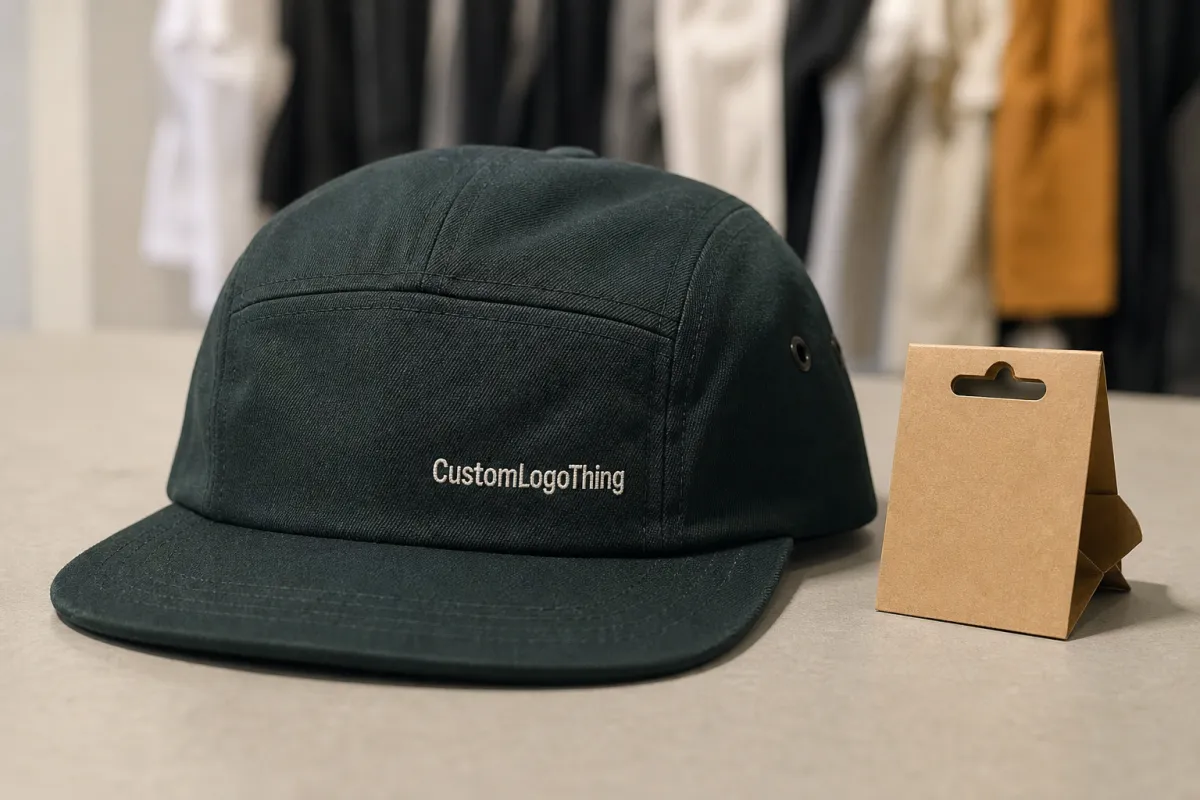
A strong supplier manages sourcing, pattern development, decoration, labeling, packing, and carton setup under your brand requirements. If those pieces are vague, the order usually drifts between sample and bulk, even when the first prototype looks fine.
Caps are more sensitive than they appear. Panel count, crown profile, brim structure, closure type, sweatband material, and stitch density all affect fit and shelf presentation. A low-profile 6-panel cotton twill cap and a mesh-back style may carry the same artwork, but they are not the same retail product.
"A cap can look right in a PDF and still fail at retail if the brim sits oddly or the crown collapses under its own softness."
The practical value of a retail-focused supplier is early problem spotting. It should flag weak artwork, unstable placements, or trim choices that will be hard to execute in bulk. A good partner helps refine the build before the factory commits to the wrong setup.
At minimum, the supplier should control these areas:
- Construction: panel count, crown structure, brim shape, and closure style.
- Decoration: embroidery, woven patches, printed marks, labels, or mixed methods.
- Retail finishing: hang tags, barcode stickers, size stickers, tissue, polybags, and carton marks.
- Quality: approved sample, golden sample, bulk inspection, and pack verification.
That is the difference between a factory that makes caps and a supplier that can support a branded retail program.
How cap sourcing moves from brief to shelf
The process should start with a commercial brief, not a vague sketch. Buyers need to define the target customer, expected retail price, channel, season, and the role the cap plays in the assortment. A margin-building add-on, a hero accessory, and a supporting merch item all need different builds.
That brief should become a clean spec pack. The best version is plain and exact: measurements, materials, logo application, label positions, color references, and packaging requirements. If the line uses Custom Labels & Tags, those details should be approved before sample revisions get out of hand.
Sampling usually moves through concept sample, revision sample, pre-production sample, and final sign-off. Compressing that sequence works for a reorder of an existing style, but for a new retail cap line it usually adds risk instead of speed. The pre-production sample is the real checkpoint because it reflects the approved fabric, trims, decoration method, and finishing plan.
After approval, bulk production starts: cutting, stitching, decoration, finishing, and packing. A retail-cap supplier should also check how the product presents in the carton and on the fixture. A cap that looks good in hand can still miss the mark if the brim warps in transit or the packaging looks improvised.
That shelf test matters because retailers buy the display moment as much as the product itself. Label placement, carton packing, and how the crown rebounds after shipping all affect that moment.
Private label caps pricing, MOQ, and quote drivers
Cap pricing is easy to misread because the headline number rarely shows the full picture. Fabric grade, closure, decoration complexity, labeling, packaging, and destination freight all affect the final cost. Two quotes can look close and still describe very different products.
MOQ works the same way. A simple structured blank may carry a lower minimum than a cap with custom panels, specialty closures, or layered branding. As a planning range, simpler retail caps often begin around 300-500 pieces per colorway. More customized builds commonly sit at 500-1,000 pieces or higher because setup cost and risk have to be spread across the run.
For unit economics, a basic custom cap in a 5,000-piece run may land around $2.40-$3.10 ex-factory. Retail versions with patches, woven labels, special thread work, or elevated packaging often move into the $3.50-$5.80 range. Small runs usually cost more per unit. Once freight, duty, and cartons are added, landed cost becomes the number that matters.
| Cap option | Typical MOQ | Typical unit cost | Best fit |
|---|---|---|---|
| 6-panel cotton twill, direct embroidery | 300-500 pcs | $2.40-$3.60 | Core retail basics with clean branding |
| 5-panel trucker, woven patch | 500-1,000 pcs | $2.80-$4.80 | Lifestyle drops and merch programs |
| Brushed cotton dad cap, subtle label work | 300-800 pcs | $2.70-$4.20 | Premium casual retail and everyday wear |
| Performance cap with custom packing | 500-1,000 pcs | $3.20-$5.50 | Teamwear, activewear, and sport-led retail |
The main quote traps are assumptions. Thread count, backing, color matching, carton configuration, and label placement can all move pricing. If you compare only the top-line number, the comparison is incomplete. Normalize every offer to the same spec and compare landed cost, not just ex-factory cost.
If a supplier cannot explain why one build costs more than another, that is a warning sign. The right partner should show where the cost sits and where it can be reduced without hurting fit or presentation.
Production timeline and lead time: what slows orders down
Sampling and bulk production do not move on the same clock. A concept sample may take 7-12 business days. Bulk production often takes 20-30 business days after approval, depending on materials, decoration, and factory load. Freight is separate again, so the calendar matters more than the quote.
The delays are usually ordinary, which makes them dangerous. Missing logo files slow artwork cleanup. Late color approvals delay material locking. Trim substitutions send the order back into revision mode. Peak season congestion compresses machine time, and a backordered component can hold up the entire run.
Seasonality adds pressure. Holiday programs, sports calendars, and spring merchandising windows all stretch lead times. If the order includes retail ticketing or special carton packing, that time should be built in too. Those steps are small until they become the reason the goods miss the shelf date.
Shipping deserves its own planning. Customs, port congestion, and receiving delays can slow a launch even after the factory finishes on time. For distribution-heavy programs, carton testing and transit planning are worth the effort. Standards from the International Safe Transit Association are a useful reference because they push buyers to think beyond the factory floor and into the real route the product will travel.
Work backward from the shelf date, not forward from the quote date. That keeps the schedule grounded in reality.
Specs that matter most when you evaluate cap suppliers
Fit comes first. Crown profile, panel structure, brim shape, closure style, and sizing range should match the intended customer and retail channel. A shallow crown can feel sharper for fashion-led merchandising, while a deeper crown may suit sport or utility better.
Material choice changes both handfeel and economics. Cotton twill, brushed canvas, polyester blends, and mesh all carry different weight, durability, and price points. If the brand wants a premium casual look, a brushed finish often helps. If breathability matters more, mesh or performance fabric makes more sense.
Decoration is where polish is won or lost. Stitch count, patch edge finish, placement tolerance, and thread matching all shape how the logo reads. Ask for close-up stitch photos, not only flat lays, because flat lays hide too much.
Compliance is not optional. Retail labels, fiber content, country-of-origin marking, carton configuration, and barcode placement should all be resolved early. For paper inserts or hang tags, FSC-certified stock can be a smart choice, and the certification is easy to verify through FSC.
Experienced buyers also treat spec sheets as risk control. A detailed sheet prevents ambiguity before production starts. A weak one hides it. That matters especially when the order includes Custom Labels & Tags that have to match the cap, the carton, and the wider merchandising line.
Step-by-step guide to placing a retail cap order
The cleanest process is simple and sequential. Define the need, write the spec, sample, approve, then produce. Skipping a step usually costs more than the step itself.
- Define the target: set the retail price, margin, channel, and launch purpose before asking for pricing.
- Build the spec sheet: include cap style, panel count, closure, fabric, decoration, labels, and packaging.
- Request comparable quotes: send the same assumptions to every supplier so pricing can be compared fairly.
- Review samples: check fit, finish, color, and logo placement on an actual head, not just in photos.
- Approve the pre-production sample: document every change and make that version the golden reference.
- Confirm logistics: lock packing, shipping method, delivery deadline, and re-order trigger before issuing the PO.
That sequence may look basic, but it prevents the most common failure mode in cap sourcing: asking the factory to solve missing decisions after the quote has already been accepted. A good supplier can guide, but it should not have to guess.
For multi-SKU programs, a pilot makes sense. One silhouette, one colorway, one decoration method. That creates a clean read on sell-through and keeps the first order from carrying too many unknowns. If the product performs, the second run is faster because the fit, packing, and decoration decisions are already proven.
Common mistakes buyers make with private label cap programs
The first mistake is quote shopping before the spec is locked. A direct embroidery cap and a patch cap are not the same product, even if the artwork is identical. A cotton twill build and a polyester blend build are not the same product either. If the inputs differ, the price comparison is fiction.
The second mistake is trusting one clean-looking sample too much. A prototype can hide variation that appears in bulk. Fit can drift. Stitch tension can shift. Color can move a shade darker or lighter. That is why the golden sample and measured spec sheet matter so much.
Third, branding rules need to be precise. Missing label language, vague logo placement, or loosely defined packaging can stall an order while the buyer and supplier circle the same issue from different angles. This happens often when the cap is part of a larger merchandising program and the labels need to coordinate with apparel.
Fourth, visual appeal is not the same as sell-through. A cap may photograph well and still feel awkward after a few hours of wear. If the sweatband scratches, the crown collapses, or the brim shape sits wrong, returns and weak repeat demand become real risks.
Finally, timing can erase a good product. Late goods can become dead inventory simply because the season moved on. In headwear, the calendar is part of the margin.
Expert tips and next steps for choosing the right partner
Shortlist suppliers that show real retail experience, not just broad sourcing claims. Compare them on quality control, communication speed, landed cost, and sampling discipline. A polished presentation is easy to produce; consistent production behavior is harder to fake.
Ask for examples that resemble your program, not only the nicest studio images in the archive. Production photos, inspection notes, and comparable projects reveal how a supplier handles variation and problems. That matters more than a glossy deck because it shows how they behave once the order becomes real.
If the cap line is strategic, start with a pilot and treat it like one. One silhouette, one colorway, one decoration method. That gives the team a clean baseline and limits the damage if the market response is weaker than expected.
The final decision should not drag. Compare quotes, review samples, and choose a preferred vendor before the calendar tightens. For a buyer working with a private label Retail Merch Caps supplier, the goal is not the lowest quote. It is the best balance of fit, finish, price, and on-time delivery.
FAQs
What MOQ should I expect from a retail cap supplier?
MOQ depends on the cap body, decoration method, and how much customization you want. Standard builds can start around 300-500 pieces, while more complex retail programs often sit closer to 500-1,000 pieces. Ask whether the minimum applies per colorway, per design, or per size breakdown before you commit.
How do I compare embroidery, patch, and woven label options for caps?
Embroidery usually gives the strongest durable branding and works well for bold logos. Patches can create a more elevated retail feel. Woven labels and smaller woven accents are better when the brand wants something cleaner and more subtle. The right choice depends on price point, shelf presentation, and how the customer will wear the cap.
How long does a private label cap order usually take?
Plan separately for sampling, bulk production, and freight. Clean artwork and fast approvals shorten the schedule. Revisions, backorders, and peak-season congestion stretch it. For most buyers, building buffer time before the launch date is the safest move.
What should be on my spec sheet before I request quotes?
Include the cap style, panel count, closure, fabric, decoration method, color references, target quantity, label details, packaging instructions, and delivery location. If you want meaningful pricing comparisons, attach artwork files too.
How do I reduce fit and color problems before bulk production?
Approve a physical sample on multiple head shapes if possible, not just in photos. Use Pantone or another clear color standard so the factory is not guessing. Keep a signed golden sample and documented measurements as the reference for the full run.


