For a clothing brand, the label is not a tiny afterthought. It is often the last visible signal of quality before a customer decides whether the garment feels finished, and that is why a private label Woven Labels Bulk Order deserves the same planning attention as fabric, fit, and trim selection. If the shirt fits well but the label looks flimsy, curls after one wash, or reads like an afterthought, the product can lose credibility right at the hanger or the checkout counter.
Custom Logo Things works with brands that want better control over that last impression, especially when they are buying at scale and need consistent trim quality across multiple production runs. A well-planned private label woven Labels Bulk Order helps keep branding, size identification, and compliance details aligned while also controlling unit cost, which matters a lot once the orders start repeating.
Why woven labels matter when your garments leave the sewing line
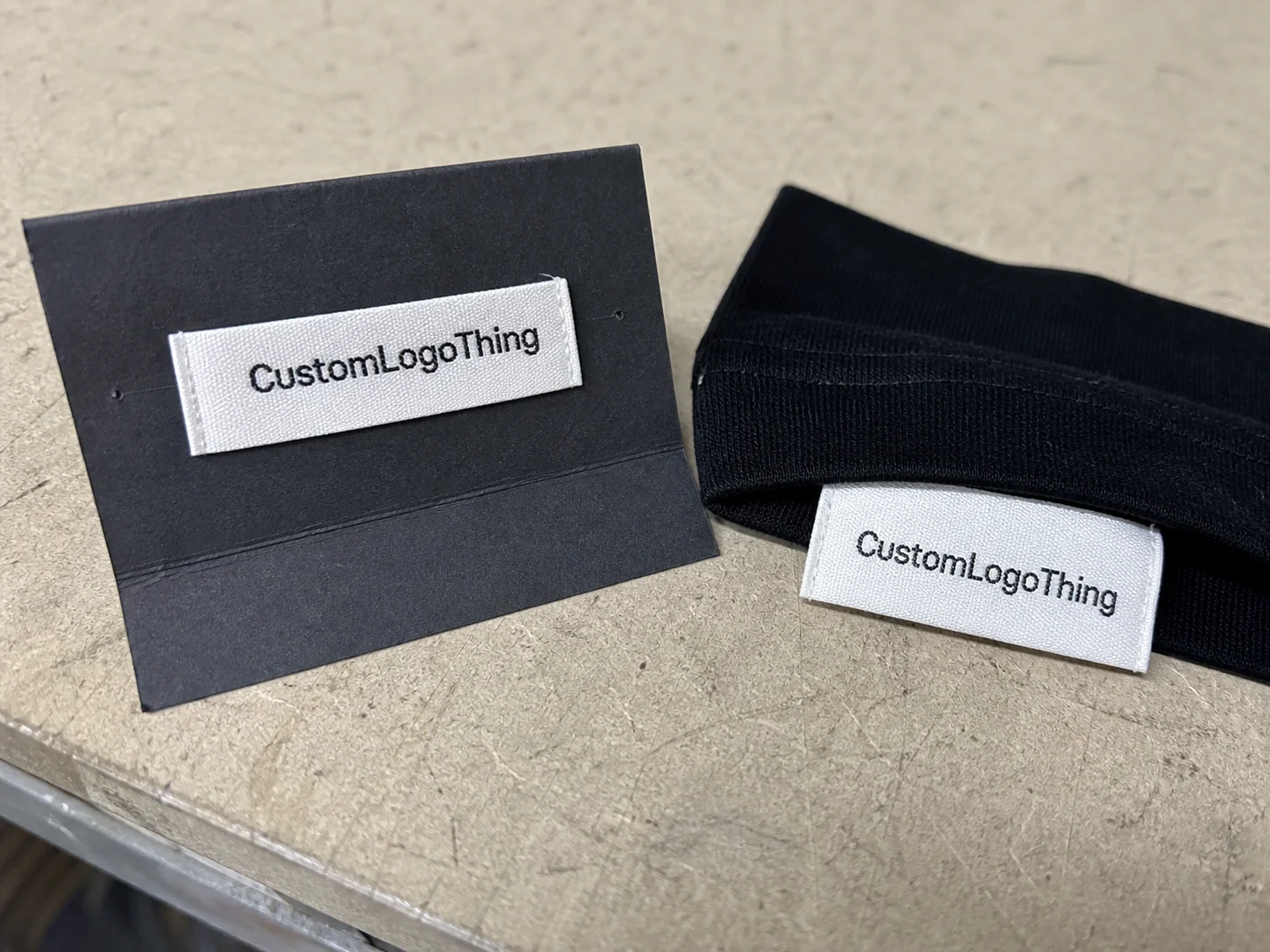
A garment can have excellent fabric, clean stitching, and a smart pattern, yet still feel unfinished if the label is weak, hard to read, or poorly made. That is a real packaging and presentation issue, not just a sewing detail. From a buyer’s point of view, a woven label helps the garment communicate brand name, size, fiber content, and care expectations in one compact component, and that little square or folded strip often carries more perceived value than people expect.
Woven labels also support recognition over time. On retail goods and direct-to-consumer apparel, customers may see the brand in product photos, on the neck label, at the side seam, and later during washing or storage. If the label frays, fades, or turns scratchy after repeated cycles, the brand feels less dependable. If the weave stays crisp and the edges hold, the garment feels like it was built with attention.
Buying in bulk matters because it keeps the trim consistent. Color matching becomes easier, stock planning is steadier, and the brand avoids small last-minute label runs that drift in shade or construction. With a private label Woven Labels Bulk order, the aim is not just lower unit cost; it is predictable quality across a run of hoodies, tees, dresses, or outerwear, which is where repeatability starts paying for itself.
“The label is small, but the buyer notices it fast. If it looks off, the whole garment feels off.”
For brands building a steady program, it also helps to align labels with the rest of the trim package. If you are already coordinating hang tags, packaging inserts, or care content, our Custom Labels & Tags category is a practical starting point, and our Wholesale Programs page is useful when you are planning recurring volume.
Private label woven label constructions, folds, and materials
Not every woven label is built the same way. The construction choice affects detail, hand feel, durability, and even how the brand name reads at a glance. For a Private Label Woven Labels Bulk order, the best results usually come from matching the weave type and fold style to the garment category instead of choosing a generic format for everything.
Common woven constructions
Damask is one of the most common choices for apparel brands because it offers strong detail and a balanced feel. It works well when the logo has fine lines, small lettering, or a mix of text and icon shapes. Satin gives a smoother, glossier surface and is often chosen for softer fashion pieces where the label should feel a bit more premium against the skin. Taffeta is usually more economical and can suit simple logos or internal identification labels, though it does not carry tiny detail as cleanly as damask. High-density woven styles sit toward the top end for detail retention, especially when the design needs sharper line work and tighter definition.
The thread count matters because it controls how much detail can be woven into the label. Higher density generally means cleaner edges on letters and graphics, but it can also push up cost and require more careful proofing. Tiny text can look sharp on screen and still lose clarity if the weave is too coarse, so the real test is how the design holds up in woven form, not how it looks in a PDF.
Fold styles and where they fit
- End fold works well for side seams, hems, or areas where the label is stitched at both ends.
- Center fold is common for neck labels because it creates a clean hanging point and readable front-and-back placement.
- Manhattan fold gives a tidy folded appearance and is often used when the label needs to tuck neatly into a garment seam.
- Loop fold suits some outerwear, accessories, or hang-style branding placements where the label needs more structure.
Material choice is usually straightforward, but the details matter. Polyester yarn is the standard workhorse because it holds color well, stands up to wash cycles, and keeps edges stable. Some specialty blends are used when softness, sheen, or a particular tactile finish matters more, but those choices should be reviewed carefully against the garment’s use case. A children’s tee, a fashion blouse, and a heavy fleece hoodie do not need the same label texture.
If your brand wants the brand mark at the neck and care information elsewhere, that split is common and sensible. Neck branding often uses a softer, cleaner woven label, while a separate care label can carry washing symbols, fiber content, and country of origin details without crowding the logo treatment.
Artwork, sizing, and production specs that affect the final label
Before a supplier can quote accurately, the buyer needs to lock down the core specs. For a private label woven labels bulk order, the most important items are usually finished size, fold style, background color, thread colors, and where the label will sit on the garment. If those are vague, pricing can drift and proofs tend to bounce back and forth, which slows everything down.
Artwork quality is another major factor. Fine lines, small scripts, and thin borders can be woven, but not always with the same clarity as print. A logo with bold shapes and clean spacing usually translates better than a highly detailed crest with tiny serif text. That does not mean a detailed logo is impossible; it means the design may need simplification or a slightly larger label size to preserve legibility.
Here is a practical way to think about label sizing. A narrow side-seam label can be compact, while a neck label may need enough room for the brand mark on one side and size or care detail on the reverse. If the label is too small, the artwork feels cramped. If it is too large, it can distort the garment drape or feel excessive for the application.
Edge treatment and margin spacing matter more than many first-time buyers expect. The woven image should not run too close to the cut edge, because the label needs a bit of breathing room so it does not look crowded or unravel at the edges during handling and sewing. That margin also helps the final label look cleaner once it is stitched into the garment.
Compliance content must be handled carefully. If the label is carrying fiber content, care symbols, or country of origin where required, that text needs to be legible in woven form. Many brands use separate labels for branding and compliance because it keeps both pieces clearer and gives production teams more flexibility during sewing. For broader packaging and labeling standards, industry references like The Packaging Institute and material guidance from FSC can be useful when brands are managing multiple packaging components together.
For quick spec review, this table is often how I would frame the buying decision:
| Option | Best Use | Typical Strength | Tradeoff |
|---|---|---|---|
| Damask | Detailed branding, premium apparel | Good detail, balanced feel | Slightly higher cost than basic woven styles |
| Satin | Soft fashion garments, neck branding | Smooth surface, elegant sheen | May show wear more quickly if abused |
| Taffeta | Simple labels, internal ID, value lines | Cost-efficient | Less crisp for fine text |
| High-density woven | Small logos, tight detail, premium runs | Sharp definition | Higher unit cost and stricter proofing |
Cost, pricing, MOQ, and how bulk quantities change unit economics
Label pricing is driven by more than piece count. For a private label woven labels bulk order, the main cost drivers are size, number of thread colors, weave complexity, fold style, and total quantity. A simple one-color label at 10,000 pieces may be dramatically more efficient per unit than a small multi-color logo at 1,000 pieces, even though both are “woven labels.”
The reason is setup. Loom preparation, design translation, and production calibration all carry fixed effort. Once that work is spread across a larger run, the per-label cost usually drops. That is why bulk buying makes sense for repeat apparel programs: the setup is paid once, and the volume does the heavy lifting.
As a practical range, simple woven labels can land around $0.04-$0.10 per unit in higher quantities, while more detailed labels with multiple colors, specialty folds, or tighter detail may sit closer to $0.12-$0.30 per unit depending on size and order volume. Smaller custom runs often cost more because the fixed production work is divided across fewer pieces. Those are working ranges, not a promise, because the final number always depends on the spec sheet.
Minimum order quantity is another place where buyers should stay realistic. Lower MOQ options exist, but the price per piece is usually higher, and the inventory risk is smaller only if the style is still unproven. A new brand may want a modest first run to test garment placement and customer response. A mature line with repeat styles can usually buy larger quantities more efficiently and reduce reordering friction.
There are also add-ons that can change the quote. Sample approval, rush timing, specialty packing, SKU sorting, and labels pre-bagged by style can add labor or handling. None of that is unusual, but it should be visible on the quote. Good pricing is not just low pricing; it is pricing that tells you where the money is going.
For buyers who want a disciplined apparel sourcing process, the U.S. Environmental Protection Agency’s general waste and material management resources at EPA.gov can also be useful when brands are balancing packaging decisions and material handling across multiple parts of the supply chain.
Production steps and lead time from proof to shipment
Most label orders follow a predictable path. The first step is artwork review, where the supplier checks size, thread count, fold style, and whether the text can actually be woven cleanly. Then comes digital proofing, followed by sample or strike-off approval if needed. After approval, loom setup begins, the labels are woven, then cut or folded, and finally inspected before packing.
That sequence sounds simple, but delay usually comes from one of three places: unclear artwork, incomplete color instructions, or repeated proof revisions. If a buyer sends a logo with low-resolution edges, inconsistent Pantone references, or a vague “make it look premium” note, the process slows down quickly. Clear spec sheets save more time than almost anything else.
Standard bulk orders often take about 12-15 business days after proof approval, though more complex constructions or large color changes can push that longer. Rush orders may be possible when capacity allows, but they typically cost more and leave less room for error checking. If the order is tied to a garment launch, it is smarter to build in a little extra time than to assume the tightest schedule will hold perfectly.
Shipping and packing deserve attention too. Labels may be shipped loose, on rolls, folded by type, or pre-packed by SKU depending on how the sewing team wants to use them. Carton labeling should be clear, especially if multiple label styles are going to different production lines. One mislabeled carton can cause unnecessary line confusion, and that is exactly the kind of avoidable problem that slows down a trim-heavy apparel program.
For brands that want more operational support, it helps to ask whether the supplier can handle repeat orders against archived specs. That matters when you are reordering the same label six months later and need the color, size, and fold to match the first run as closely as possible.
What makes a supplier reliable for private label apparel programs
A reliable supplier does more than print a quote. They help catch technical issues before production begins, which is where a lot of waste gets avoided. If the proof clearly shows that a font is too small, a border is too thin, or a size label will crowd the brand name, that correction should happen before the loom is set up.
Consistency matters just as much on repeat orders. Brands with private label programs need shade control, dimension control, and repeatable construction so the second run does not drift away from the first one. That is especially true when woven labels are part of a broader trim package that includes hang tags, wash labels, and polybag inserts. A dependable supplier keeps all of that moving in a way that is easy to forecast.
Communication is another test. Apparel teams often work with tight production calendars, and clear updates matter when trims, garments, and packing components are all being scheduled together. A supplier that gives realistic lead times, clean spec sheets, and transparent pricing is usually easier to work with than one that promises everything and explains nothing.
If you want a useful internal support page while planning your next order, our FAQ covers common questions about label ordering and production timing in a straightforward format.
For brands that ship goods through multiple retail channels, it is also smart to ask about handling standards and quality checks. While labels themselves are small, they still need to be packed, counted, and inspected in ways that protect the order from avoidable errors. Industry groups such as ISTA are useful references if you are thinking about shipment integrity and pack-out discipline more broadly.
Next steps to place a confident label order
Before requesting a quote, gather the essentials: logo artwork, finished dimensions, fold preference, thread color references, and a realistic quantity estimate. If you already know how the label will be sewn into the garment, include that too, because placement affects both size and fold choice. That small amount of preparation makes the quoting process faster and the pricing more dependable.
Next, compare the sample against your actual garment, not just against the artwork file. A woven label can look fine on a screen and still feel too stiff, too wide, or too busy once it is stitched into a tee, fleece, or woven shirt. I always recommend checking hand feel, edge finish, and wash durability against the product line before approving the full bulk run.
One more practical point: do not overcomplicate the first order unless the product really needs it. If a clean two-color damask label will do the job, that often beats a more expensive version with extra detail that customers will never notice. A disciplined private label woven labels bulk order is usually the one that matches the garment, the brand, and the sewing process without creating unnecessary cost or confusion.
When the specs are ready, request pricing with confidence, compare the proof carefully, and approve only after the construction makes sense for the garment. That is the best path to a private label woven labels bulk order that comes in on time, fits the trim budget, and supports the brand the way it should.
FAQ
What is the typical MOQ for private label woven labels bulk order?
MOQ usually depends on weave complexity, label size, and thread color count. Simpler labels can support lower minimums, while intricate multi-color logos generally need higher quantities to keep unit cost reasonable. Larger runs also help spread setup time across more pieces, which improves price efficiency.
How do I choose between damask and satin woven labels?
Damask is often chosen for fine detail and a balanced, durable finish, while satin offers a smoother and more lustrous surface. The right choice depends on logo detail, garment feel, and whether you want a softer neck label or a label with a bit more structure.
Can woven labels include care or fiber content details?
Yes, woven labels can include care and fiber content information, but the text has to be reviewed carefully so it stays readable in woven form. Many brands keep branding labels separate from compliance labels so each piece remains clear and easy to sew.
What affects woven label pricing the most?
The biggest cost drivers are quantity, size, number of thread colors, weave detail, and fold style. Special handling, rush timing, and custom packaging can also affect the final unit cost, especially if the order needs to be sorted by style or packed a certain way.
How long does a bulk woven label order usually take?
Lead time depends on proof approval speed, production complexity, and current factory schedule. Straightforward bulk orders often move faster when artwork is final and all specs are confirmed before quoting, which is one reason clean prep makes such a difference.


