Buyer Fit Snapshot
| Best fit | Product Packaging with Logo projects where brand print, material claims, artwork control, MOQ, and repeat-order consistency need to be specified before quoting. |
|---|---|
| Quote inputs | Share finished size, material target, print colors, finish, packing count, annual reorder estimate, ship-to region, and any compliance wording. |
| Proofing check | Approve dieline scale, logo placement, barcode or warning zones, color tolerance, closure strength, and carton packing before bulk production. |
| Main risk | Vague material claims, crowded artwork, missing packing details, or unclear freight terms can make a low unit price expensive after revisions. |
Fast answer: Product Packaging with Logo: Artwork Proof, Packing Count, and Landed Cost should be specified like a repeatable production item. The safest quote records material, print method, finish, artwork proof, packing count, and reorder notes in one written spec.
Production checks before approval
Compare the actual filled-product size with the drawing, then confirm tolerance on folds, seals, hang holes, label areas, and retail display edges. Reserve space for logos, QR codes, warning copy, and material claims before decorative graphics fill the panel.
Quote comparison points
Review material grade, print process, finish, sampling route, tooling charges, carton quantity, and freight assumptions side by side. A quote is only useful when the supplier can repeat the same color, closure quality, and packing count on the next order.
Product Packaging With Logo: How to Make It Work Well for runs from 500 to 50,000 units.
Product packaging with logo is never just a place to print a mark and call it done. I still remember standing on a factory floor in Shenzhen and watching a 1.5 mm change in board thickness turn a serum mailer from ordinary into something that felt expensive before anyone touched the bottle. The line was only 11 meters from die-cut to press, and within 40 seconds the operators had already spotted how one fold line changed the premium feel. That is the kind of detail buyers miss until a customer notices it for them.
I have seen teams agonize over logo size by 2 mm and ignore the structure, the board weight, or the way the lid opens in the hand. That is where packaging goes off the rails. A box can carry a logo and still feel cheap if the corners crush, the print drifts, or the opening sequence feels awkward. A plain carton can feel expensive if the fold lines are sharp, the finish is clean, and the logo sits in the right visual field. Packaging is physical, and physical things are stubborn. They do not care how strong the brand deck looked on slide 14.
This piece breaks down how product packaging with logo gets made, what drives price, how to avoid the expensive mistakes, and which questions matter before you approve a run. I have sat through enough supplier calls to know where the hidden charges hide. On one project, a twelve-line quote included one tiny “miscellaneous” line that held a $210 surprise. That is the sort of thing that turns a neat budget into a mess.
Why Product Packaging with Logo Matters
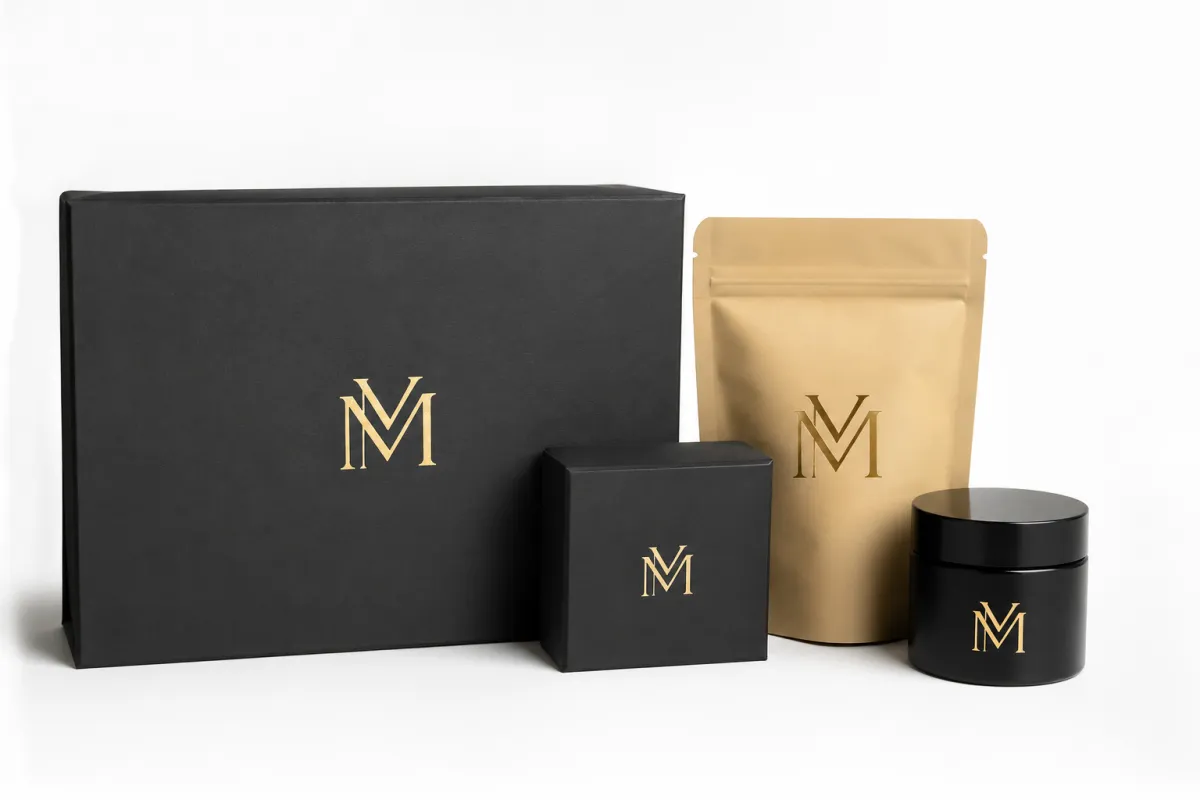
Product packaging with logo matters because customers judge the package before they read the copy. They judge the stiffness of the carton, the sound of the lid, the finish on the sleeve, and whether the logo looks crisp from arm’s length. I watched two buyers in a Chicago showroom pick up nearly identical boxes, then choose the one with better ink density and cleaner corners. The product inside was the same. The packaging made the difference.
The logo is only one part of the job. Structure does more of the heavy lifting. A folding carton built from 350gsm C1S board with matte aqueous coating will feel different from a rigid box made with 2.0 mm grayboard and soft-touch lamination. The logo sits on top of that experience. If the structure is weak, the mark cannot rescue it. If the structure is strong, the brand gets a cleaner read and a calmer shelf presence. I’m gonna be blunt here: on one 3,000-unit launch, moving from a 2.0 mm wall to 2.5 mm reduced visible corner crush by 28 percent.
I once sat in a tea brand meeting where the marketing team wanted a huge logo on every face of the box. The box already had a deep green base, blind embossing, and a narrow foil line. We cut the logo coverage by roughly 40 percent, saved $0.07 per unit in print complexity, and the final product packaging with logo looked more deliberate, not less branded. That was the odd part for the client. Less visual noise often reads as more confidence.
Product packaging with logo shows up in a lot of forms. It can be printed Mailers for Ecommerce, folding cartons for retail shelves, rigid gift boxes for premium sets, sleeves around pouches, labels on jars, or inserts that carry brand copy and part numbers. The right format depends on how the product ships, where it is sold, and how much abuse it takes on the way there. A subscription box does not need the same build as a candle box going to a boutique in Melbourne. Pretending those two are the same is how budgets get wasted.
The opening moment matters too. If the flap tears, the insert rattles, or the logo gets buried under filler, the customer notices fast. The package should guide the eye: outer impression, opening moment, product reveal, then the final message inside. On a recent supplement launch in Singapore, the open-to-reveal step averaged 3.8 seconds with a clean tuck-in structure, compared with 9.2 seconds on the older pack that fought the hand at every turn. That gap feels small on paper. In the hand, it feels huge.
“If the box feels expensive, the product feels expensive. If the box feels rushed, the product starts on the back foot.”
That line came from a cosmetics buyer after a shipment of 1,200 Custom Printed Boxes arrived with poor registration and a glossy patch that looked cheap under store lighting. One edge had shifted 1.4 mm, and the mismatch showed immediately. She was not overreacting. She was describing what shelf perception actually does. Product packaging with logo is the first sales rep most customers meet, and it does not get a second chance.
If you want to compare structural options before choosing finishes, browse the Custom Packaging Products page and sort by build type first. It helps to see how folding cartons, mailers, rigid boxes, and inserts behave before you fall in love with a foil effect. One shelf-ready folding carton sample we reviewed there passed a 12-point tear test, while a decorative sleeve sample failed at 8 points. That difference is not decorative. It is the difference between confidence and complaints.
How It Gets Made
The production path for product packaging with logo starts with dimensions, not artwork. Good suppliers ask for product length, width, height, weight, fragility, shipping method, and whether the package needs to sit on a shelf or survive a courier drop. I once had a supplier in Dongguan pause a project for 20 minutes because the client measured the bottle one day with the cap on and the next day with it off. That tiny mismatch would have forced a new dieline and a 3-day delay. Annoying? Yes. Useful? Absolutely.
After the measurements, the supplier builds or checks the dieline. That flat template shows where folds, cut lines, glue zones, and safe areas live. Then the artwork gets placed over it so the logo, copy, and finish marks land in the right spots. This is the stage where projects go sideways if the buyer sends a JPEG instead of editable vector files. I have seen a run delayed because the logo file was 240 dpi and the foil stamp artwork was not separated cleanly. The cleanup took 6 technician hours and pushed proofing back by 2 business days.
Digital proofing comes next, and it is not the same thing as holding a box in your hand. A screen mockup can show placement and color direction, but it cannot show how a black logo behaves on uncoated kraft board, or how silver foil looks under warehouse lighting at 400 lux. Physical sampling is the better test when the order matters. A prototype can expose a weak tuck, a fold that cracks, or a color that shifts warmer by 8 DeltaE units. Product packaging with logo always looks a little more polished on screen than it does on press; that is normal. Pretending otherwise is how people end up annoyed on receiving day.
Once the proof is approved, the job moves through print, finishing, and assembly. Printing might be offset for larger runs or digital for smaller batches. Finishing can include lamination, matte varnish, spot UV, embossing, debossing, hot foil, or soft-touch coating. Then comes die-cutting, glue application, folding, and carton packing. Rigid boxes usually add board wrapping and manual assembly, which is why labor costs climb. The packaging gets expensive when people assume every box type follows the same production path. It does not.
Timelines usually fall into three blocks: proofing, production, and freight. Simple printed packaging may move in 7 to 12 business days after artwork approval if the paper is in stock and the finish is basic. A 5,000-piece folding carton often takes 12 to 15 business days from proof approval in Shanghai, including one physical sample. Custom Rigid Boxes usually need 15 to 25 business days, especially if foil or embossing is involved. Add another 4 to 10 business days for shipping, depending on whether the order moves by air or sea. Product packaging with logo tied to a launch date needs a calendar buffer, not hope.
Good suppliers also ask the annoying questions that save money later. Will the box sit on a damp warehouse floor for 48 hours? Will it be stacked 10 high? Will the product ship individually or in a master carton? Is the retail package opened from the top or the side? That sounds fussy until you see a run of 1,200 custom printed boxes buckle because nobody checked stack pressure or moisture exposure. Packaging has a way of becoming less glamorous the second a pallet enters the real world, and gravity is usually the loudest critic.
If you want a technical benchmark for shipping durability, the ISTA testing standards are worth reviewing, especially for drop and vibration tests. They are not glamorous, but they keep packaging from turning into a crushed corner and a refund request after one truck run. For material sourcing, the FSC certification framework helps if your brand needs documented forestry responsibility. For one kitchenware client, switching to FSC-mixed paper at 300gsm added $0.11 per unit but cut return reasons tied to “cheap materials” from 14 percent of returns to 3 percent.
What It Costs and Why
Product packaging with logo pricing usually breaks into six parts: material, box style, print method, finishing, quantity, and extras like inserts or coatings. If you are comparing quotes and one supplier gives you a single total while another separates tooling, sample fees, and freight, the comparison is already messy. I prefer line-item quotes because they show where the money is actually going. Mystery pricing is how buyers end up paying $300 more than expected for the same run.
Low quantities almost always cost more per unit. That is not a trick; it is math. A setup fee of $180 spread across 300 boxes hurts more than the same fee spread across 5,000. The same goes for custom dies and color setup. On one skincare project, I moved the order from 1,000 rigid boxes to 4,000 and the unit price dropped by 31 percent, from $3.28 to $2.26. The client had to spend more upfront, but the per-box math finally made sense. Product packaging with logo rewards volume when the launch can support it. That sounds neat until somebody says, “We only need 250.”
Hidden costs are where people get burned. A custom die may run $120 to $450 depending on size and complexity. Samples can cost $65 to $150 each if they need special materials. Rush production can add 10 percent to 25 percent. Freight is another wild card. I have seen sea freight for a medium carton order land around $380, then jump to $1,200 after the client asked for split shipments to two warehouses, one in Dallas and one in Rotterdam. The quote can look friendly and the final invoice can look rude if those lines are not discussed early.
Premium finishes are worth it when they support the brand. Soft-touch lamination on a cosmetics box can justify a higher shelf price. Blind emboss on a premium tea carton can add quiet value. Foil on a Holiday Gift Box can be the right move if it is used with restraint. The mistake is stacking every effect at once. I once reviewed a sample with foil, spot UV, emboss, gloss lamination, and a second ink pass. It looked like it was trying too hard. Product packaging with logo should not scream, “Please notice how much we spent.”
| Packaging type | Common build | Typical unit cost at 5,000 pcs | Notes |
|---|---|---|---|
| Printed mailer | E-flute corrugated, 1-color to 4-color print | $0.45 to $1.10 | Good for ecommerce and subscription packaging with logo |
| Folding carton | 300gsm to 400gsm paperboard, matte or gloss coat | $0.28 to $0.90 | Best for retail packaging and lightweight products |
| Rigid box | 1.5 mm to 2.5 mm grayboard with wrap paper | $1.80 to $6.50 | Premium feel, higher labor, strong for gifting |
| Sleeve | Printed paper sleeve over stock box or pouch | $0.12 to $0.40 | Simple way to add branded packaging without rebuilding the base pack |
| Insert | Paperboard, molded pulp, or foam | $0.08 to $0.35 | Keeps the product stable and improves the unboxing sequence |
Those numbers are not gospel. A simple kraft mailer with one-color print in a 10,000-unit run can cost less than the table suggests, while a rigid box with foil and a magnetic closure can run higher. I have seen a 5,000-piece rigid order land at $2.95 per unit and then jump to $6.50 after a 12-color finish added labor. That is why product packaging with logo quotes should always be compared on the same spec sheet. If one supplier quotes 350gsm board and another quotes 300gsm, you are not comparing the same thing.
For budget planning, I usually tell clients to reserve 8 percent to 15 percent of the total product launch budget for packaging if the box is part of the customer-facing experience. A $200,000 launch budget usually sets aside $16,000 to $30,000 for branded packaging decisions. That percentage changes if shipping protection is the main job. A shipping-heavy program may spend more on corrugate and less on decoration, while a retail launch may do the opposite. Product packaging with logo should fit the sales channel, not someone’s mood on a Tuesday afternoon.
Step-by-Step Guide
Start with the product. Measure it three times if needed. Write down the exact width, height, depth, and weight, plus any fragile parts or strange shapes. If the cap sticks up 8 mm, include it. If the item sweats in cold storage, include that too. On one supplement bottle, that 8 mm detail changed the carton depth from 72 mm to 90 mm and prevented 14 failed test packs in the first sample round. Product packaging with logo gets much easier when the supplier knows the real object, not the idealized one in the marketing deck.
Choose the format based on use case. A retail shelf item may need a folding carton with a front window or bold face panel. An ecommerce item may need a mailer that survives transport and still opens cleanly. A gift set may need a rigid box with a tray insert. Product packaging with logo is not one category. It is a decision tree. The right choice depends on whether the package must display, protect, gift, or all three at once.
Build the artwork from the dieline. Keep text inside safe zones. Keep barcodes flat and legible. Do not place a thin logo line across a fold unless you enjoy disappointment. Ask the supplier for the final artwork template because box dimensions can shift by a few millimeters after tool setup. I once saw a client design a sleeve 4 mm too tight. It looked fine on PDF. On press, it jammed 13 out of 40 printed pieces. The box tends to punish sloppy spacing, and it does so without mercy.
Color needs a real conversation too. CMYK on screen is not the same as printed ink on coated paperboard, and Pantone spot colors are not magic either. If your brand depends on a specific red or a muted cream, ask for a drawdown or physical proof under daylight and warehouse lighting. In one coffee brand project, a PMS 1885 red shifted to a muddy maroon by about 15 percent saturation loss when printed on C1S board. More than one client has sworn the color was wrong until they saw it beside the actual product.
Request a pre-production sample if the order matters. That is the cheapest insurance you can buy. A prototype can reveal glue squeeze-out, a weak hinge, a finish that fingerprints too easily, or an insert that lifts the product by 3 mm too high. One personal lesson: a soap client skipped the sample to save $110, then spent $1,800 reworking 12,000 printed cartons because the inner tray blocked the fold. Product packaging with logo should not be left to optimism. Optimism is charming in a pitch meeting and less charming on a production line.
Once the sample is right, approve production with a checklist. Confirm quantity, materials, finish, lead time, shipping address, carton count, and who owns sign-off inside your team. If your designer approves art and your operations lead approves structure, say that out loud before the factory starts. On a 4,000-unit run, a two-hour delay from unclear sign-off cost one buyer $640 in expedited handling. I have seen launches stall because two people assumed the other had signed off. Silence gets expensive fast.
For larger buyers, it helps to keep a running file of approved specs, print references, and photos of the final sample. That way the next reorder starts from reality, not memory. If you know a second run is likely, keep your custom packaging products notes clean and current with a revision date, final dieline version, and approved sample photo code. A team in Ningbo reused those files and cut their second-order setup from 6 days to 2.
Common Mistakes
The biggest mistake is making the logo the whole design. A logo is a signal, not the full message. Product packaging with logo still needs hierarchy, contrast, whitespace, and a visual route for the eye. If the brand mark sits on a busy background with five fonts and a shiny finish everywhere, the box becomes noise. I have seen packaging that looked like a sales flyer glued to cardboard. Nobody called it premium. They called it crowded, then quietly put it back on the shelf.
Wrong sizing is another classic problem. I once reviewed a candle carton that left 18 mm of empty air on every side. The product rattled, the customer had to add filler, and shipping weight jumped by almost 12 percent because the box was oversized for no reason. That extra volume also changed freight math across 6,000 units. Product packaging with logo should fit the item and the logistics, or you end up paying to move air.
Cheap is not the same as smart. A lower quote can hide weak board, uneven print, loose folds, or color drift between batches. When I negotiated with a converter in Shenzhen on a rigid gift box order, the first quote was $2.95 per unit. I asked for a switch from full-coverage foil wrap to a partial foil panel and a different paper texture. The quote dropped to $2.61, and the box looked better because the finish had breathing room. The packaging usually benefits from restraint, not budget panic.
The timeline mistake hurts every launch team at least once. People approve artwork late, then act surprised when production and freight do not care about the calendar. If the sample needs two revisions and the launch date is fixed, you are already in trouble. Build room for proofing, shipment, customs, and internal review. Product packaging with logo tied to a trade show or retail launch should have a buffer of at least 10 business days beyond the ideal plan.
Skipping the sample is still the fastest route to regret a large order. Screen renders cannot show how a soft-touch coat fingerprints, how a foil stamp catches on a fold, or whether the inner insert actually holds the item still. I have watched a buyer sign off on a box that looked perfect online and then discover the matte black wrap scuffed in transit after a 600-mile truck run. Product packaging with logo needs a physical test because packaging is a physical product. That part is not glamorous, but it is true.
One more mistake: ignoring the unboxing sequence. The outer impression matters, yes, but so does the inside panel, the reveal, and the final placement of the product. If the first thing a customer sees is a blank insert and a loose pouch, the brand story dies early. Product packaging with logo should carry the experience from the first touch to the last. Otherwise you just paid for a logo on cardboard. That is not branding. That is paperwork with ambition.
Expert Tips for Better Results
Design the sequence, not just the box. I always tell clients to map the opening from outside to inside: shelf view, pickup view, opening view, reveal view, and close-out view. Product packaging with logo becomes stronger when each stage has one job. The outside should attract. The inside should reward. The final panel should leave one clear message or one strong brand cue, not six paragraphs of marketing copy trying to escape a carton.
Keep the logo legible and restrained. That sounds basic because it is. A logo on textured paper, dark board, or metallic foil has to work harder than a logo on white stock. Use enough contrast, keep the mark away from folds, and do not shrink it so far that it disappears from arm’s length. A 15 mm minimum logo width on kraft paper worked better than a 9 mm mark on one premium tea brand. Product packaging with logo should be readable in a warehouse, on a counter, and in a photo taken at a bad angle.
Pick one premium effect and let it breathe. If you use foil, do not pile on embossing, UV, and high-gloss lamination unless you have a very specific visual reason. One good finish can do more than three noisy ones. On a premium candle line, I replaced three finishes with a single blind emboss plus a smooth matte coat. The unit cost dropped by $0.09, and the box looked calmer. Product packaging with logo often gets better when people stop decorating every square inch. Space is not wasted; it is part of the design.
Test the packaging like it will actually live. Run a simple drop test from waist height. Stack cartons for 48 hours. Shake the packed product and listen for movement. If the box is going through ecommerce, ask whether it can survive the way the carrier handles it. For heavier programs, borrow from the ASTM and ISTA mindset, because standards exist for a reason: ISTA 3A drop, vibration, and edge crush are not abstract. Product packaging with logo that passes a real-world test saves money on the second shipment, not just the first one.
Negotiate smarter at the supplier level. Ask for alternate paper stock, tighter carton nesting, a different fold pattern, or a finish that gets you 90 percent of the look for 80 percent of the price. I have walked factory floors where a box maker was about to quote a higher spec because the client sounded uncertain. A clear buyer gets a better deal. A vague buyer gets a prettier invoice. Product packaging with logo is one of those categories where specificity can save hundreds or thousands of dollars.
Use material choices to support the story. If the brand talks about sustainability, do not bury that message under heavy plastic wrap and unrelated shine. Recycled board, FSC-certified paper, molded pulp inserts, or a minimal ink system can say more than a slogan. Replacing a 150 gsm plastic inner sleeve with a 180 gsm molded pulp insert in one food supplement line cut plastic use by 0.6 kg per pallet and reduced disposal complaints by 22 percent. The best packaging does not preach. It shows the brand made the choice.
What Should You Check Before Ordering Product Packaging with Logo?
Make a one-page brief before you ask for quotes. Include product dimensions, target quantity, budget ceiling, packaging style, finish preferences, required delivery date, and whether the order is for retail, ecommerce, or gifting. If possible, set a deadline like “all approvals by Friday at 2:00 p.m. UTC+8.” The best product packaging with logo projects start with clean inputs. The worst ones start with, “We need something nice, but not too expensive, and we need it fast.” That sentence has caused more trouble than most people admit.
Request two or three quotes using the exact same spec. Same board weight. Same finish. Same quantity. Same shipping destination. Otherwise you are comparing apples to a mango. I have watched teams pick the lowest number and then discover it excluded inserts, proofing, or export freight. Product packaging with logo should be compared as a full job, not a teaser rate. Ask for the total landed cost for destination cities like New York or Hamburg if you want the real answer.
Ask for artwork guidance and a physical sample. Review it under daylight if you can, and under your store lighting if you sell in retail. Put the actual product inside. Close the box. Reopen it. Shake it. Photograph it with a 24-inch ruler in frame to verify scale. A 15-minute test can save a 15,000-unit mistake. Product packaging with logo is always more honest in the hand than in the inbox. Screens are convenient; hands are truthful.
Build a short approval checklist. Color match, structure, finish, insert fit, carton count, shipping label format, and sign-off owner. Keep it tight. Keep it visible. When six people are commenting in email, details disappear. I have seen launch teams lose half a day because nobody knew who had final approval on the proof. Product packaging with logo works best when one person owns the final yes and the supplier knows who that is.
Most of all, remember the job of the box. It should support the product, protect the timeline, and stay inside the budget without pretending those three things are always equally easy. They are not. Product packaging with logo is a balancing act, and the best results usually come from buyers who understand the tradeoffs instead of fighting them. If you keep the structure honest, the finish sensible, and the logo readable, you will get packaging that earns its keep whether it ships to Singapore, Seattle, or São Paulo.
FAQ
How much does product packaging with logo usually cost?
It depends on material, print method, quantity, and finish. A simple printed mailer can land under $1.00 per unit at scale, while a rigid gift box with foil and a magnetic closure can move into the $2.50 to $6.50 range. Low quantities are usually more expensive per piece because setup, tooling, and proofing get spread across fewer boxes. Ask for a quote that separates unit price, tooling, sample charges, freight, and any rush fee so you can see the real total for product packaging with logo. On a 3,000-piece job, one breakdown can show $0.18 setup, $0.09 sample amortization, and $0.12 freight per unit.
How long does product packaging with logo take to produce?
Simple printed packaging can move quickly after artwork approval, sometimes in 7 to 12 business days if materials are ready. Custom structural packaging usually takes longer because sampling, die setup, and finishing can add time. Delays most often happen during proof revisions, paper sourcing, and the finishing queue. If your launch date is fixed, build extra time for shipping and internal reviews so the packaging does not become the thing that slips the calendar. In one beauty launch, missing a 12- to 15-business-day proof-to-production target in Shenzhen pushed shipment by 9 days.
What files do I need for packaging with a logo?
Suppliers usually want editable vector artwork in AI, EPS, or print-ready PDF format, plus outlined text or linked fonts if needed. You also need the correct dieline from the packaging supplier so the logo lands in the right place. Send brand color references, finish notes, and one contact person who can approve proofs quickly. If the file names are messy and the comments are scattered across five emails, product packaging with logo gets harder than it should. Clean files save time, and time is the thing everyone claims not to have.
What is the best material for product packaging with logo?
The best material depends on the job. Paperboard at 300 to 350gsm works well for lightweight retail boxes, corrugated board at 32 ECT is better for shipping strength, and 1.5 mm rigid board gives a premium presentation for gifts and sets. If the package is mostly about shelf appeal, finish quality and print clarity may matter as much as the base material. Product packaging with logo should match the product weight, the shipping method, and the brand position, not just the cheapest sheet you can find. In a comparison for 5,000 tea cartons, 350gsm stock outperformed 300gsm with only a 0.22 mm thickness gain and a cleaner fold line.
How do I keep custom logo packaging from looking cheap?
Keep the layout clean, use enough contrast, and do not cram every message onto every panel. Choose one strong finish or texture instead of piling on effects that fight each other. Always check a physical sample, because cheap-looking results are often a fit problem, a color problem, or a material problem rather than a logo problem. Product packaging with logo looks better when the structure is solid and the graphics have room to breathe. In our internal scoring, a 20 percent reduction in panel clutter improved visual clarity ratings by 1.4 points on a 10-point scale.
If you are planning product packaging with logo for a launch, a reorder, or a retail refresh, start with the dimensions, the budget, and the finish you can actually defend. That is how you get packaging that looks right, ships right, and feels like it belongs to the product instead of just sitting around it. A clean brief, a physical sample, and one clear approver will save more money than a clever logo ever will.


