The first question most buyers ask is simple: what drives promotional Beanies with Logo patch cost, and how much value does the patch actually add? The short answer is that the patch changes perception faster than it changes the budget. A plain knit hat can feel disposable. The same hat with a well-sized patch often looks closer to retail, and that shift affects how often people wear it after the event is over.
That matters because winter giveaways are judged on two things at once: how they look in the box and how they perform in the wild. A beanie that stays in rotation for three months does more for a brand than one that gets stuffed in a desk drawer. The decoration choice, the knit quality, and the final fit all influence that outcome. Buyers who only compare headline unit price usually miss the part that actually drives value.
Why Logo-Patch Beanies Outsell Plain Winter Giveaways
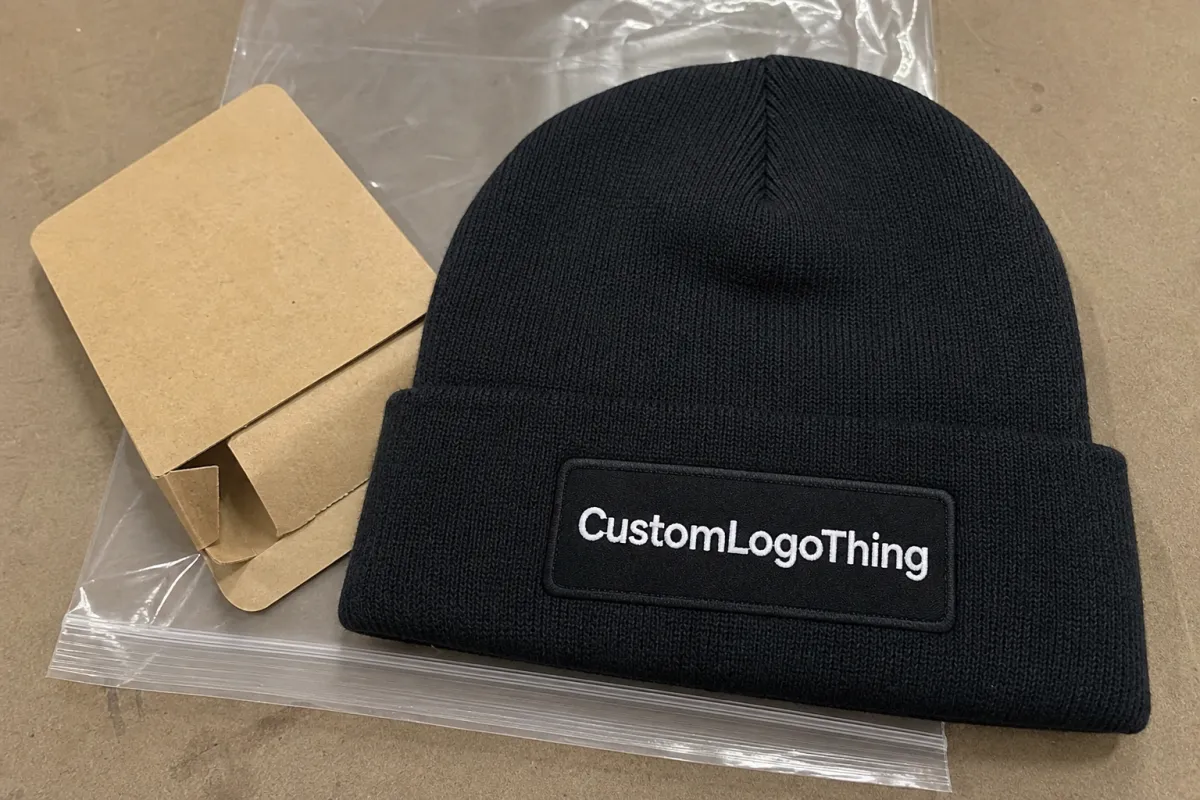
A small patch changes the tone of the whole item. On a plain acrylic beanie, the branding can feel like an afterthought. Add a woven, faux leather, or silicone patch, and the piece starts to read like an intentional accessory. That is one reason logo-patch beanies tend to outperform undecorated winter giveaways in employee programs, trade show kits, and client mailers.
The appeal is partly visual and partly practical. A patch sits on top of the knit instead of depending on ink or thread to hold sharp edges on a stretchy fabric. That makes it easier to keep logos legible after repeated wear. It also gives buyers a cleaner surface for small marks, simple wordmarks, and logos that would otherwise be too detailed for direct embroidery.
There is another reason these items sell through better than plain hats: people are more likely to wear something that looks finished. A beanie with a centered patch has the same basic function as a blank one, but it feels deliberate. That perceived lift often justifies the small increase in cost, especially when the item is meant to travel beyond the office or event floor.
"A beanie only feels premium when the patch is centered, readable, and still looks sharp after repeated wear."
That is the real buying test. If the goal is brand visibility, the patch needs to survive the season, not just the proof. Buyers who plan for reuse rather than one-day visibility usually end up happier with the result, even if the unit cost rises slightly.
Beanie Bodies, Knits, and Fit Choices That Affect Value
Beanie body style affects both price and presentation. A cuffed beanie gives the cleanest front panel and the easiest patch placement. It is also the least risky option for bulk orders because the cuff adds structure and gives the decoration a flatter landing zone. A slouch beanie feels more relaxed, but the extra drape can make the logo sit lower or look less precise in photos. A fisherman beanie has a shorter, more fashion-led profile, though it offers less space for branding and does not suit every audience.
Material choice matters just as much. Acrylic is still the common baseline for bulk winter merch because it is affordable, flexible, and available in a wide color range. Recycled acrylic blends are increasingly used when the brief needs a more responsible materials story without moving into a premium budget. Wool blends can offer a better hand feel and stronger thermal reputation, but they raise cost and can require more careful sourcing and testing.
Knit density is one of those details buyers only notice after they have seen a few bad samples. A tighter knit gives the front panel a cleaner look and helps the patch sit flat. A loose or overly stretchy knit can cause the decoration to tilt, buckle, or ripple after application. That may not sound dramatic, but it becomes obvious on a pile of 500 units.
Fit is another practical issue. Most promotional beanies are sold as one-size-fits-most, but that does not mean they feel identical. Head size, hair volume, and whether the wearer layers the hat over a hood all change how the item sits. For mixed groups, a cuffed style with moderate stretch is usually the safest choice. It is more forgiving, more familiar, and easier to standardize across a bulk order.
Color choice should be handled with the same discipline. Black, navy, charcoal, and forest green remain popular because they keep the patch legible and wearable. Brighter colors can work for event teams or campaigns that want visual punch, but they narrow the range of outfits the item can be paired with. That tends to reduce post-event wear.
- Cuffed: Best for logo placement, fit flexibility, and a retail-like finish.
- Slouch: Casual look, softer brand impression, and less structural support for the patch.
- Fisherman: Shorter profile, compact branding, and a more fashion-forward feel.
Logo Patch Materials, Sizes, and Placement Options
Patch choice changes both appearance and cost. Woven patches are usually the strongest option for fine detail, small text, and clean line work. They do not have the texture of embroidery, but they hold sharper edges and are often easier to read on a small surface. Faux leather patches create a more premium, retail-style look, especially on neutral hats, though they are not ideal for tiny lettering. Silicone patches feel modern and durable, which is why they show up often in outdoor and utility-oriented programs. Embroidered patches bring texture and depth, and they work well when the logo is bold and simple.
Size is not a cosmetic detail. A patch that is too small can make a logo feel timid, while one that is too large can overpower the knit and push the hat toward novelty territory. For simple icons, 1.5 inches may be enough. Wordmarks usually need closer to 2 to 2.5 inches, sometimes more, if the supplier is trying to preserve readable letter spacing. Bigger patches use more material and often increase handling time, which shows up in the quote.
Shape matters too. Round and shield shapes tend to look clean and familiar. Custom die-cuts can be effective, but they may introduce tooling charges or more labor if the supplier needs a special mold, border, or edge finish. For a lower-cost program, the simplest shape that supports the logo is usually the most efficient answer.
Placement should follow the structure of the hat. Center-front remains the safest option because it is the most visible and the easiest to inspect for alignment. Cuff placement works well on folded beanies because it keeps the patch above the brow line and gives the decoration a stable base. Side placement can feel more fashion-driven, but it also reduces visibility in photos and can make the logo look like an accent rather than the main brand mark.
Artwork prep matters more than many buyers expect. Send a vector file, brand colors, and any minimum text-size concerns before asking for a quote. If a logo contains thin strokes, small type, or tight internal spacing, ask the supplier to flag legibility problems before production. Fine text under roughly 5.5 to 6 pt at final size often becomes risky on woven or embroidered patch formats. Pantone references help too, especially when brand color accuracy is non-negotiable.
- Woven: Best for detail and clean line work.
- Faux leather: Strong retail look, good for simple marks.
- Silicone: Durable and modern, often used for outdoor branding.
- Embroidered: Textured and bold, ideal for simpler logos.
Patch finish also affects photography. If the beanies are being used for event staff, social content, or product seeding, the proof should show the patch on the actual knit color, not just on a white artboard. That small request avoids the common mismatch between a clean digital mockup and a less convincing bulk run.
Promotional Beanies With Logo Patch Cost and MOQ Breakdown
If you are comparing promotional beanies with logo patch cost, start with the variables that move the number most: body material, patch type, logo complexity, quantity, and whether the order uses stock items or fully custom production. The beanie body may look like the main line item, but decoration and setup often decide whether the quote lands in budget or drifts into premium territory.
For smaller orders, setup fees matter more than buyers expect. A standard woven patch may carry a modest setup charge. Custom-mold silicone, embossed faux leather, or unusually shaped patches can introduce tooling fees on top of that. Sampling may be billed separately, and freight can change the landed cost more than the unit price does. A quote that looks attractive on the front page can lose its advantage once those pieces are added.
| Order Type | Typical MOQ | Common Specs | Typical Unit Cost | Notes |
|---|---|---|---|---|
| Small event run | 50-100 pcs | Acrylic cuffed beanie, woven patch | $4.25-$7.50 | Higher setup share; sample and freight can move the total fast |
| Mid-volume promo order | 250-500 pcs | Recycled blend or acrylic, faux leather or woven patch | $3.10-$5.40 | Better bulk pricing and lower cost per piece than small runs |
| Corporate replenishment | 1,000+ pcs | Custom color body, embroidered or silicone patch | $2.75-$4.20 | Lower unit cost, but approval timing and stock availability still matter |
These are comparison ranges, not guarantees. A wool blend, a larger patch, heavier knit density, or multi-step decoration will push pricing up. A stock beanie with a standard woven patch may come in lower if the vendor already has the body inventory on hand and the artwork is clean. That is why buyers should read the full quote instead of chasing the lowest number in the first column.
The easiest way to compare vendors is to make them quote the same spec set: identical body style, identical patch size, identical decoration method, identical packaging, and identical ship-to location. If one supplier includes art setup in the piece price and another shows it separately, the comparison is not clean. The same problem shows up when one quote uses a larger patch or a higher-grade knit without saying so.
A useful rule for small quantities: the lower the MOQ, the more each one-time charge hurts. At 100 pieces, a $75 setup fee adds $0.75 per unit before freight. At 1,000 pieces, the impact is almost invisible. That is why promotional winter orders often look expensive at first and become reasonable once the quantity is scaled.
Production Steps, Proofing, and Timeline Expectations
A standard order usually moves through a predictable sequence: artwork review, digital proof, sample or pre-production approval, production, packing, and shipment. Each step is easy to understand. The timeline becomes less predictable when the logo needs redrawing, the patch material needs matching, or the body color is not readily in stock. Most delays start there.
Art revisions are common when the file is low resolution or the logo contains too much detail for the patch format. Color matching can slow down custom runs, especially for faux leather and silicone, which often need more back-and-forth than a basic knit body. Stock shortages matter too. Neutral colors move quickly during seasonal spikes, and a last-minute change in quantity can force a new production schedule.
For standard bulk orders, a realistic lead time is often 12 to 15 business days after proof approval if the beanies and patch materials are already available. Custom body colors or specialty patch materials can stretch that into the 3 to 5 week range. Rush production exists, but it usually compresses the schedule by reducing flexibility elsewhere. If the delivery date is fixed, rush can help. If the date is soft, the premium often is not worth paying.
Before production starts, the supplier should confirm the final count, patch placement, artwork version, carton instructions, and ship-to details in writing. That may sound basic, but it is where avoidable errors are caught. A supplier that cannot state those details clearly is transferring risk to the buyer. For larger runs, pre-production samples or photo approvals are worth the time because they reveal issues that mockups can hide.
Quality control should stay concrete. Check patch alignment, stitch consistency, logo color accuracy, knit tension, and carton labeling. If the order includes multiple sizes of carton packs or mixed color lots, ask how they will be separated and labeled. That level of detail matters more than polished sales language. It is also where reliable suppliers tend to separate themselves from average ones.
For buyers who want a reference point on transit testing and carton handling, ISTA offers useful packaging test logic. If sustainability claims are part of the brief, FSC certification can be relevant for packaging materials. Those references do not replace a proper quote, but they help buyers ask better questions.
How to Match Style, Climate, and Audience Without Overbuying
The best order is not always the warmest or the most expensive. It is the one that fits the people who will actually wear it. Employee uniforms usually need neutral colors, a stable cuffed shape, and a logo that reads clearly from a short distance. Event swag can carry a little more visual energy, especially if the goal is fast recognition in photos. Premium client gifts benefit from softer materials and a more restrained patch treatment.
Climate should shape the knit choice. Colder regions often justify denser acrylic or wool-blend beanies with a thicker hand feel. Milder climates usually work better with lighter knits or fisherman styles, because buyers want something that gets worn outside the coldest weeks. Overspecifying warmth raises unit cost without guaranteeing more use.
Color strategy is a branding decision, but it is also a wearability decision. Dark neutrals are still the safest choice because they keep the patch legible and fit easily into everyday wardrobes. Bright brand colors can be effective for campaigns that need attention, yet they can reduce repeat wear after the campaign window closes. The more wearable the color, the more value the item tends to deliver.
Mixed programs can be smarter than a single oversized order. A company might choose one neutral color for staff and a smaller batch of brighter colors for Trade Show Giveaways. That keeps the inventory flexible without inflating the order unnecessarily. The same logic applies to patch size. One well-proportioned patch usually works better than a larger mark that looks forced on the knit.
Overbuying is not just about quantity. It is also about ordering the wrong mix of warmth, style, and visibility. A lower-priced beanie that gets worn ten times is better than a premium beanie that never leaves the box. That sounds simple, but it is the point most seasonal merch programs miss.
What a Reliable Supplier Should Show Before Approval
A reliable supplier should make the quote easy to audit. Clear mockups, patch close-ups, material notes, and a written timeline are the basics. If those are missing, the buyer is taking on avoidable risk. Good vendors do not rely on vague promises; they show the details that affect the final run.
Communication matters more than polished language. When the project includes multiple moving parts - beanie body, patch type, color matching, delivery deadline, and carton instructions - fast and specific replies are the real signal. A strong supplier flags problems early, such as a logo stroke that is too thin or a patch material that will not hold small serif text cleanly.
Quality control should be visible in the proof stage, not just at the end. Ask for confirmation on patch alignment, stitch tension, yarn color, and carton labeling. If the order is large or the brand mark is sensitive, a pre-production sample is worth requesting. Not every run needs one, but every run needs a clear approval trail.
For buyers comparing promotional beanies with logo patch cost across several vendors, the best suppliers are usually the ones who make the quote easy to compare line by line. They list exactly what is included and do not hide a second decoration fee or an unexplained surcharge in the fine print. That transparency is more useful than a glossy brochure.
"Show me the patch, the fabric, the schedule, and the freight line. If those four things are clear, the order is usually manageable."
How to Request an Apples-to-Apples Quote and Order Next
To get a clean quote, send the supplier five things: quantity, target delivery date, logo file, preferred patch style, and budget range. If you already know the beanie body style, include that too. The more specific the brief, the less room there is for assumptions that distort price or timeline.
Ask each vendor to quote the same spec set. That means the same beanie style, same patch size, same decoration method, same packaging, and same destination. Otherwise, promotional beanies with logo patch cost comparisons become misleading because one quote may quietly include a larger patch or a higher-grade knit.
A practical checklist before approval:
- Review the proof at actual size, not only zoomed in.
- Confirm the MOQ and any over/under tolerance.
- Approve the sample if one is part of the process.
- Lock in ship-to details, carton count, and delivery window.
- Check the landed cost, including freight, setup, and any rush charges.
That last step matters most. Buyers often focus on headline pricing and forget freight, sampling, or handling fees. Yet those lines can decide whether the order stays inside budget. If the vendor cannot explain the difference between base price and landed price, keep asking until the answer is clear.
For teams that order branded winter merchandise regularly, a repeat spec sheet is worth keeping on file. It speeds up future quotes and cuts down on revision rounds. Once the preferred knit, patch type, and placement are locked, the next order becomes a procurement task instead of a design debate.
In practice, the best promotional beanies with logo patch cost decisions come from balancing material, decoration, MOQ, timing, and freight. That is how buyers avoid inflated quotes, compare vendors fairly, and place orders that look good on arrival and still make sense after the boxes are opened.
FAQ
What affects promotional beanies with logo patch cost the most?
Material choice, patch type, and order quantity usually have the biggest effect on unit price. Setup, sampling, and freight can matter just as much as the base beanie if the order is small, so the landed total is the number to watch.
Do logo patch beanies have a minimum order quantity?
Yes. Most suppliers set an MOQ because patch setup and production labor need to be spread across the run. MOQ can vary by patch style, beanie body, and whether the item is stocked or fully custom.
Which patch type is the best value for custom beanies?
Woven and faux leather patches often balance price, visibility, and durability well for bulk orders. The best value depends on whether the priority is premium appearance, low cost, or fine logo detail.
How long does it take to make promotional beanies with logo patches?
Timeline depends on proof approval, stock availability, and decoration complexity. A standard order is faster when artwork is final and the patch style does not require extensive revisions.
What artwork do I need for a beanie logo patch quote?
A vector logo file is best, along with brand colors and any size or placement preferences. Clear artwork speeds proofing and reduces the chance of extra revision rounds before production starts.


