When a Garment Bag Looks Cheap, Freight Usually Explains Why
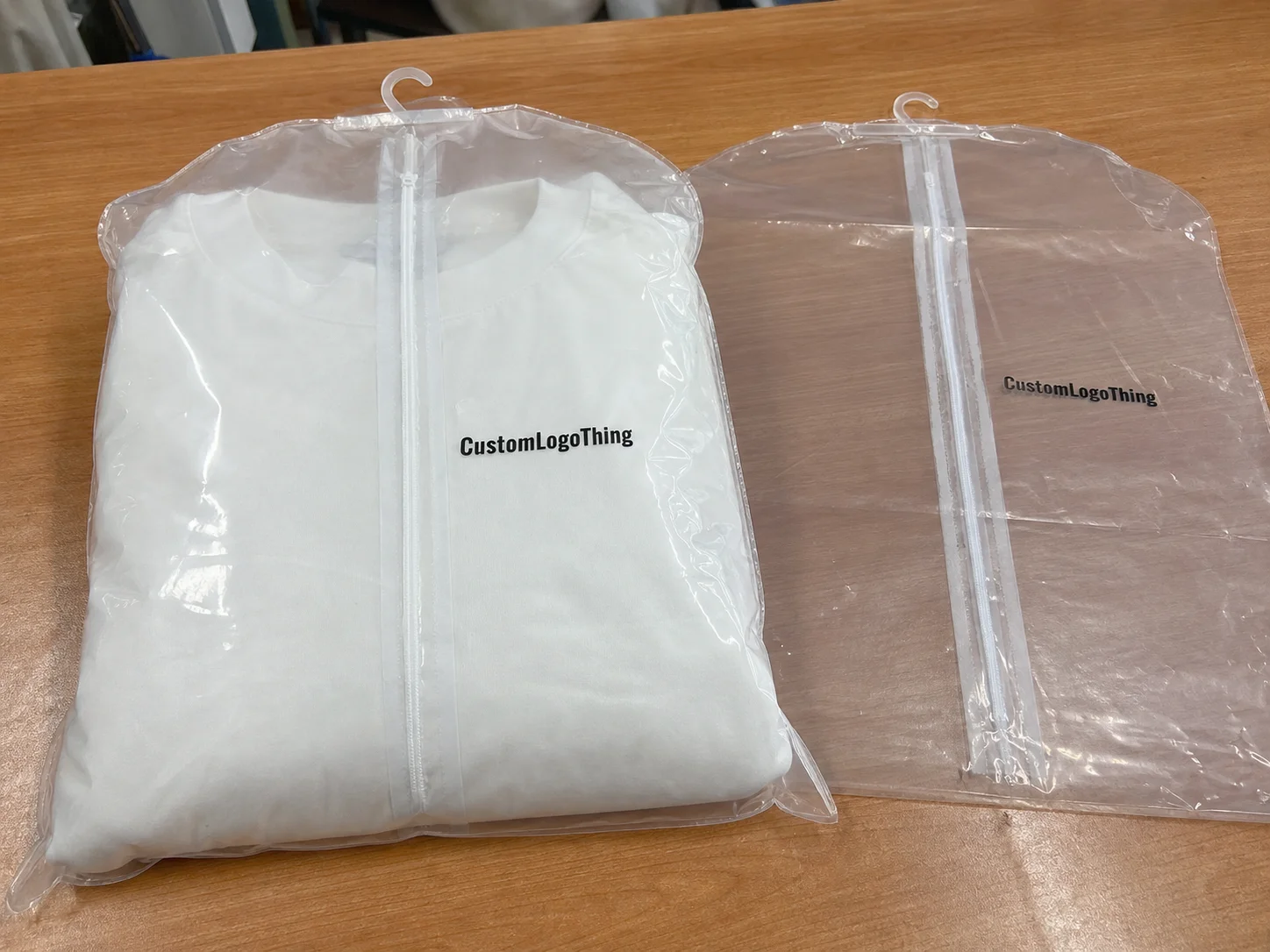
Two PVC Zipper Garment Bags can sit side by side on a sample table and look almost identical. One may still land at a much higher delivered price once film gauge, zipper grade, carton cube, packing count, duty, and freight method are included. That is the problem this PVC Zipper Garment Bags Unit landed cost guide is meant to solve: comparing custom garment bag quotes before a purchase order turns into an expensive surprise.
Apparel brands, uniform suppliers, bridal shops, dry cleaners, costume departments, and promotional distributors usually do not need a poetic sales pitch about protective packaging. They need a clean cost per piece that reflects the bag arriving at the warehouse door. A usable quote connects finished size, PVC thickness, zipper construction, print method, export carton size, freight terms, duty assumptions, and the final delivery point.
The mistake is predictable. A buyer sees the lowest factory unit price and assumes that quote wins. Then the cartons are larger than expected, the pack count is weak, or the bag is overbuilt for the garment. Large garment bags often cube out before they weigh out, which means carriers charge by dimensional volume instead of actual weight. Paying to ship air is still paying.
Practical buying rule: compare the delivered bag, not just the quoted bag. A smart spec protects the garment, presents the logo cleanly, and avoids paying for excess width, excess plastic, or trim nobody notices.
The goal is not to make the cheapest possible bag. Cheap can get ugly fast: split seams, stuck zippers, cloudy film, smeared logos, crushed cartons. The better target is a bag strong enough for the garment and the handling path, without cost added for features that do nothing for the end user.
Product Details That Drive Performance in PVC Zipper Garment Bags
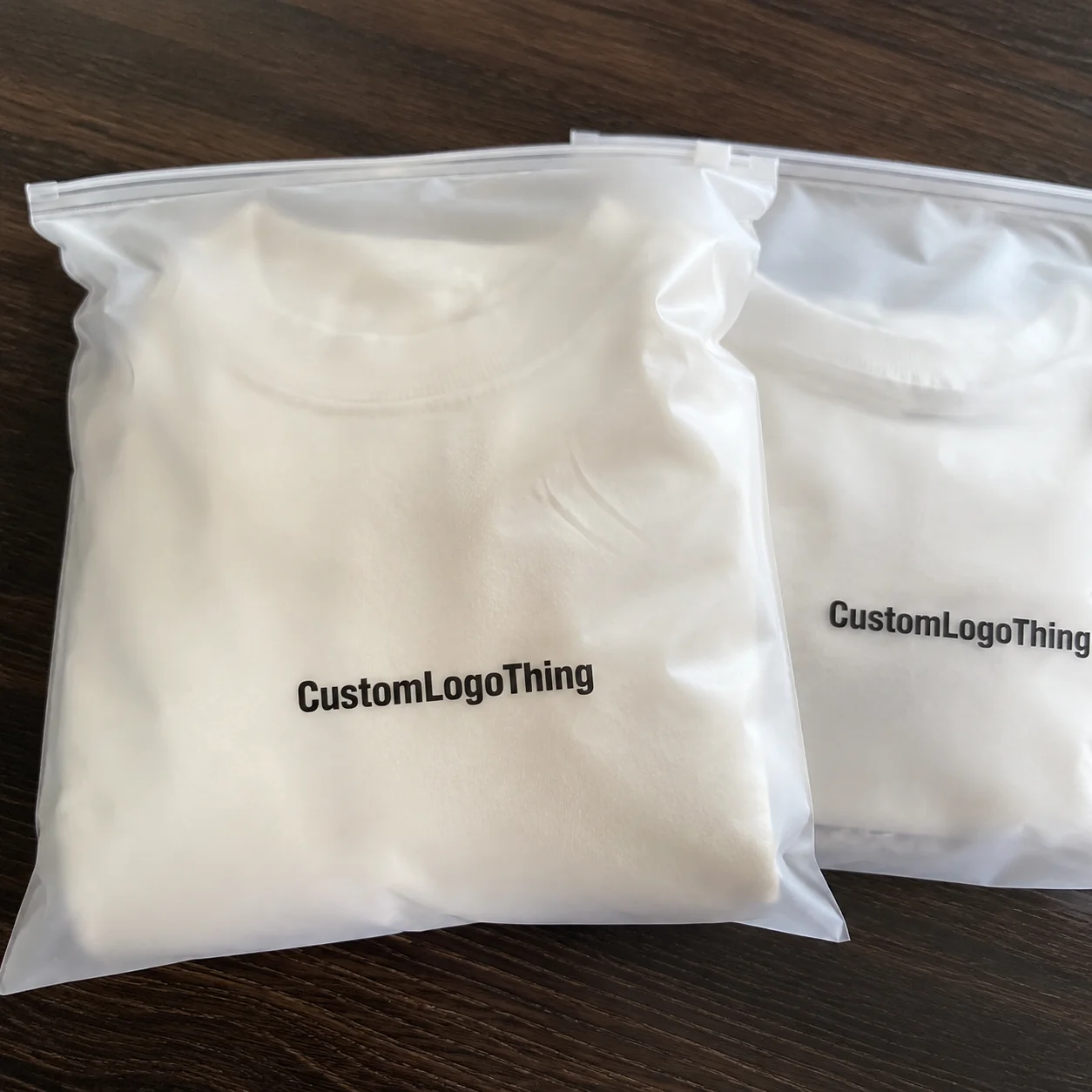
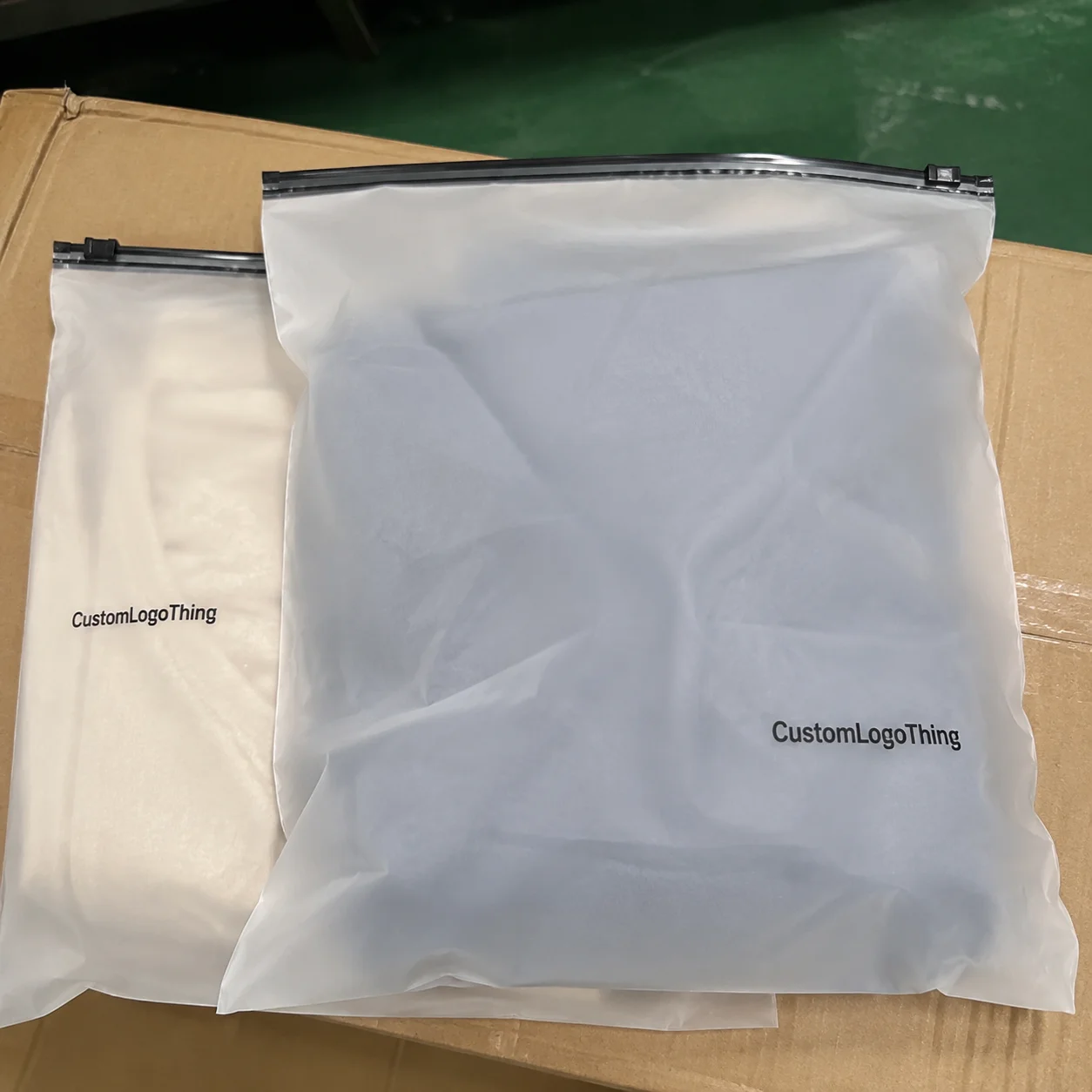
PVC garment bags are flexible protective covers used for suits, dresses, uniforms, robes, costumes, gowns, sample garments, and retail apparel presentation. Most are clear or lightly tinted so the garment can be identified without opening the bag. Frosted PVC, colored binding, and custom trim are common when the bag is part of a branded program.
The basic construction is simple: PVC film body, zipper track, zipper puller, hanger opening, side or center zipper placement, and seams that are stitched, heat sealed, or combined depending on the design. Add-ons may include a bottom gusset for bulky garments, reinforced edges for repeated handling, die-cut or sewn handles, document pockets, business card windows, woven labels, or printed carton labels for warehouse control.
PVC gives good clarity, water resistance, and structure for the price. It is not magic material. Lighter films reduce material cost and packing bulk, but they can wrinkle faster, cling to garments, or puncture more easily. Heavier films feel more premium and hold shape better, but they increase material weight, folded volume, and freight cube.
A short jacket bag for retail pickup does not need the same build as a full-length bridal gown bag that will be opened, closed, moved, hung, and rehung in a showroom. That sounds obvious. It is also one of the easiest places to overspend.
- Flat garment bags: used for shirts, jackets, uniforms, and light retail presentation where low cube matters.
- Gusseted garment bags: better for bulky coats, gowns, costumes, or multi-piece sets that need depth.
- Full-length zipper bags: useful for dresses, gowns, robes, and sample garments where easy access matters.
- Short jacket bags: compact and freight-efficient for blazers, uniforms, and dry-cleaner style programs.
Zipper quality deserves more attention than it usually gets. A weak puller, uneven zipper track, or poorly aligned stop can turn a low-price bag into a complaint machine. Ask about zipper width, puller style, end-stop reinforcement, and whether the zipper runs smoothly after several open-close cycles. Test it with one hand, while the bag is hanging, because that is how people often use it.
For branding, the common choices are one-color silk screen logos, multi-color print, frosted logo panels, colored binding, insert cards, woven labels, and master carton labels. A small logo may look clean on clear PVC. A large solid print can look heavy, scuff during packing, or expose curing problems. More ink is not automatically better. Shocking, I know.
Before locking material, confirm PVC grade, odor expectations, destination market requirements, and whether recycled-content or alternative materials are needed. If the bags will be used in retail, healthcare uniforms, children’s apparel, or regulated distribution channels, do not treat compliance as a last-minute email. For general packaging education, the Packaging Machinery Manufacturers Institute has industry resources at packaging.org, and transport testing practices can be reviewed through ISTA.
Specification Checklist Before You Request a Quote
Accurate specifications separate a usable quote from a loose estimate. If three suppliers quote three different gauges, three carton packs, and two zipper styles, the spreadsheet may look tidy while comparing completely different products. Start with one spec and send the same version to every quoting source.
Confirm finished width and finished length first. Then define gusset depth, hanger slit location, zipper length, zipper direction, handle placement, pocket size, edge reinforcement, and whether the bag folds once, folds twice, or ships flat. For full-length bags, common lengths often sit around 40 to 72 inches depending on garment type. Widths often fall around 20 to 28 inches. Gown bags, costume bags, and robe bags may need extra length or depth.
Film thickness should match the garment and handling path. Thin PVC can reduce unit cost and carton cube, but it may wrinkle, cling, or tear more easily under repeated use. Mid-weight PVC is often practical for suits, dresses, and uniforms. Heavier PVC gives a firmer hand feel for gowns, showroom samples, and premium presentation, though overbuilding the gauge can raise both material and shipping cost without improving the buyer’s experience.
Ask for the thickness in a measurable way. Suppliers may use microns, millimeters, mil, or vague labels like “standard” and “heavy.” Vague labels are where quote comparison goes to die. If you have an existing bag that works, send a reference sample or ask the supplier to match a target gauge range.
Print details affect pricing, proofing, and reject risk. Send vector artwork, Pantone targets, print colors, print size, print position, opacity expectations, and whether the logo prints on clear, frosted, or colored PVC. A small one-color logo may need basic setup charges. A large multi-color print can add screens, curing time, ink coverage cost, and more inspection steps.
- Finished bag size, including width, length, and gusset depth.
- PVC thickness target or reference sample thickness.
- Zipper style, length, puller type, and opening direction.
- Logo file, print colors, print size, and print location.
- Pack count, inner packs, labels, barcodes, and carton markings.
- Delivery ZIP code, required in-hand date, and preferred Incoterms.
Packing requirements matter more than many buyers expect. Individual polybagging, tissue inserts, inner bundles of 10, mixed SKUs, barcode labels, retailer routing labels, and carton strength all affect labor and landed cost. Share the destination port or warehouse ZIP code early. Freight estimates without a delivery point are only half a number.
Also state how the bags will be used. A bag handed to a retail customer once can be lighter than a uniform bag moving through repeated issue and return cycles. A bridal shop may care about clarity, zipper feel, and full-length presentation. A warehouse program may care more about carton labels, pack count accuracy, and fast identification by SKU. Same product category. Different priorities.
PVC Zipper Garment Bags Unit Landed Cost Guide for Quote Comparison
The ex-factory unit price is only one layer of the decision. A real unit landed cost includes production, packing, export handling, freight, duties, customs brokerage, tariff exposure if applicable, and local delivery. If one supplier quotes FOB and another quotes delivered duty unpaid, the lower line item may not be the lower delivered cost.
The biggest cost drivers are PVC gauge, finished size, zipper length and grade, gusset depth, print coverage, number of print colors, order quantity, carton density, and freight mode. MOQ changes quickly by spec. Standard clear PVC with a simple one-color logo may be easier to run at lower quantities. Custom tinted PVC, special zipper colors, heavy-gauge film, or multi-SKU assortments usually need higher production runs to control waste and setup time.
Large garment bags are freight-sensitive. A carton of folded bags may not be heavy, but it can take plenty of space. Air freight and express services often bill by dimensional weight. Ocean freight cares heavily about cubic meters. If the carton pack is loose, the buyer pays to move empty space. Ask for carton dimensions, gross weight, net weight, and pack count before calling a quote “cheap.”
| Quote Factor | Typical Cost Effect | Buyer Check |
|---|---|---|
| PVC gauge | Heavier film raises material cost and carton cube | Match gauge to garment weight and reuse level |
| Bag size and gusset | Larger bags use more film and ship less densely | Avoid extra width or depth that adds no value |
| Zipper grade | Better pullers and tracks cost more but reduce failures | Test smooth travel and end-stop strength |
| Print coverage | More colors and larger logos add setup and ink cost | Use vector art and confirm opacity expectations |
| Packing density | Loose cartons increase freight per unit | Request carton size, weight, and pack count |
| Freight mode | Air is faster but often much higher per piece | Compare air, ocean, and split-shipment options |
For planning, request three quantity tiers: a trial order, a normal reorder volume, and a higher-volume break where bulk pricing improves. The factory price per bag may drop as order quantity rises, but the landed number may not fall at the same rate if cartons remain inefficient or the shipment still moves by air. Sensible quantity breaks reveal more than one flat quote.
Do not ignore Incoterms. EXW, FOB, CIF, DDP, and delivered warehouse pricing shift responsibility and risk. A buyer comparing FOB against DDP is not comparing equal numbers. For internal approval, spell out what is included: export fees, ocean or air freight, insurance if used, duties, tariffs, brokerage, port charges, local trucking, and any residential or liftgate delivery charges if those oddities apply.
Useful cost removal usually comes from boring details. Reduce excess gauge. Tighten the finished size. Move from 30 pieces per carton to 50 if the bag can tolerate the fold. Simplify print coverage. Use a standard zipper color instead of forcing a custom trim. Protect performance first, then cut waste from the spec. That is where quoting time actually pays off.
Production Process and Lead Time From Artwork to Delivery
A clean production path runs through specification review, artwork check, digital proof, material confirmation, pre-production sample if required, bulk production, inspection, carton packing, export paperwork, freight, customs clearance, and final delivery. None of that is exotic. Missing information still adds days.
Lead time depends on sample approval speed, material availability, print complexity, order volume, and freight method. A simple repeat order with approved artwork can move faster than a new custom-size bag with colored trim and a physical pre-production sample. Air freight shortens transit but raises landed cost. Ocean freight improves freight economics on larger orders but needs a longer calendar and cleaner approvals.
Artwork preparation should happen early. Send vector files, Pantone references, print size, and placement instructions. Confirm whether the logo faces front, back, or both sides when the garment hangs. A logo that looks centered on a flat proof may sit too low visually once the bag is filled and hanging, so judge placement in use, not only on a dieline.
Sampling depends on risk. A photo proof may be enough for a repeat order using the same size, gauge, zipper, and print. A physical pre-production sample is better for new dimensions, special trims, heavy print coverage, or retail programs where presentation matters. Keep one approved production sample for comparison. Reorder drift is real, and “same as last time” is not a specification.
Factory steps are straightforward: PVC film is cut to size, zipper tape is attached, seams are heat sealed or stitched, trims and pockets are applied, logos are printed, ink is cured or dried, bags are folded, and cartons are packed. Buyers can control timeline risk by approving artwork quickly, locking dimensions before sampling, avoiding late SKU changes, and deciding freight mode before cartons are built.
Build the delivery calendar backward from the required in-hand date. Allow buffer for customs clearance, local trucking, warehouse receiving, and retailer compliance checks if carton labels or routing documents are required. A lower unit price does not help if the bags miss a launch, showroom opening, bridal season, or uniform issue date.
Quality Checks That Prevent Reorders From Going Sideways
Garment bags look simple on paper. In production, small misses become visible fast: zippers snag, seams split, logos smear, bags arrive with heavy odor, or carton labels do not match the purchase order. Quality control is not paperwork theater. It protects the landed investment.
Inspection should cover finished dimensions, PVC thickness, clarity, tint, seam strength, zipper smoothness, hanger slit placement, print registration, print adhesion, pack count, and carton labeling. Soft plastic can stretch, relax, and fold differently after packing, so agree on practical tolerances before bulk production begins. Depending on bag size and material, a tolerance of a few millimeters may be realistic. Rigid-plastic precision is not.
Zipper testing should be hands-on. Open and close the zipper several cycles. Check the puller attachment. Look at the end stops. Watch the alignment where the zipper meets the top and bottom seams. A zipper that binds on the first cycle will not improve after a retail associate or uniform manager handles 200 bags in one afternoon.
Print quality needs the same discipline. Ink opacity on clear PVC can change the look of a logo. Large solid marks may need adjusted artwork to prevent heavy ink buildup, slow curing, or scuffing during packing. If the logo must match a brand color closely, provide Pantone targets and remember that clear or tinted PVC can influence perceived color.
- Dimensional check: measure width, length, gusset, zipper length, and hanger slit position.
- Material check: confirm gauge, clarity, odor level, tint, and surface condition.
- Function check: test zipper travel, puller strength, seams, handles, and pockets.
- Print check: review color, placement, adhesion, opacity, and scuff resistance.
- Carton check: verify pack count, carton strength, SKU labels, and freight dimensions.
Carton checks connect directly to landed cost. If quoted carton dimensions were 24 x 18 x 16 inches and production ships in a larger carton, freight math changes. If the carton board is too light, bags can arrive crushed or creased. If SKU labels are wrong, a warehouse can lose hours sorting product that should have been identified at packing.
Odor also deserves a quick check with PVC. Some smell is possible, especially with freshly packed material, but strong odor can create customer complaints or receiving issues. Ask how bags are aired, packed, and sealed. If the end market is sensitive, set expectations before production instead of arguing after cartons arrive.
Quality control costs less than replacement. Reworking or remaking a garment bag order often means new production, urgent freight, lost selling time, and uncomfortable conversations with buyers. Better to specify clearly, inspect sensibly, and keep the approved sample tied to every reorder.
Build a Quote-Ready Buying Brief
A quote-ready brief does not need to be fancy. It needs to be complete. Confirm garment type, finished bag size, PVC thickness target, zipper style, print colors, artwork file, order quantity, delivery address, and required in-hand date. If the bag must match a current program, send reference photos or an existing sample so zipper type, trim, seam style, and packing format can be identified accurately.
Choose two or three quantity tiers before asking for pricing. A buyer might compare 1,000 pieces, 2,500 pieces, and 5,000 pieces, or a trial run, normal reorder, and annual volume release. The right tiers depend on the program, but multiple breaks show how setup charges, packing labor, material waste, and freight behave as volume changes.
Decide what matters most before reviewing the quote. Some programs need the lowest landed cost. Others need premium showroom presentation, faster turnaround, retail compliance, or repeat-order consistency across multiple locations. Those priorities affect material choice, print method, carton labeling, and freight planning.
A useful quote should include recommended spec, print approach, MOQ, unit price, landed cost assumptions, sample path, production timeline, and freight options. A single factory price without carton data is not enough for a purchasing decision. It is a starting point with several blanks.
Use the cost logic here as a checklist before approving production. The best buying decision is the one where the bag protects the garment, presents the logo properly, and arrives at a unit landed cost the team understood before the order started. Not glamorous. Very effective.
FAQ
How do I calculate landed cost for PVC zipper garment bags?
Start with the factory unit price, then add setup charges, packing, export handling, freight, duties, customs brokerage, tariffs if applicable, and final delivery to your warehouse. Ask suppliers for carton dimensions and carton weight because garment bags often price by dimensional weight or container cube, not only actual weight. Compare every quote using the same Incoterms and delivery location so the unit landed cost is measured consistently.
What MOQ should I expect for custom PVC garment bags with zippers?
MOQ depends on bag size, PVC thickness, zipper type, print method, and whether the material or trim color is standard or custom. Simple one-color logo bags in standard clear PVC are usually easier to quote at lower quantities than custom tinted material, heavy-gauge PVC, or multi-SKU assortments. Request two or three quantity breaks instead of only one quantity so you can see where pricing actually improves.
Which PVC thickness is best for zipper garment bags?
Lightweight PVC works for short-term apparel protection and retail presentation, while heavier PVC is better for gowns, suits, showroom samples, uniforms, or repeated handling. The right gauge should be chosen around garment weight, expected reuse, fold style, and freight sensitivity. Overbuilding the thickness can raise both material cost and shipping cost without improving the customer experience.
How long does production take for custom printed PVC zipper garment bags?
Timing depends on artwork approval, sampling requirements, material availability, print complexity, order volume, and freight method. A clear spec sheet and approved vector artwork help prevent delays before production starts. Build extra time into the schedule for sample review, customs clearance, local trucking, and warehouse receiving if the bags are needed for a fixed launch date.
What should I send to get an accurate PVC zipper garment bag quote?
Send finished width and length, gusset depth if needed, PVC thickness target, zipper style, print colors, logo file, quantity, packing requirements, delivery address, and required in-hand date. Include a photo or physical reference sample if you need to match an existing bag. State whether you want ex-factory pricing, delivered pricing, or an estimated unit landed cost so the quote matches your purchasing process.