A retailer has garments ready to ship, staff waiting, and a stack of garment bags that arrived late, smell too strong, and do not fit the hangers. Then the zipper splits during packing. Not glamorous. Very expensive. A PVC Zipper Garment bags unit bulk reorder plan keeps this basic packaging item from becoming a fulfillment problem.
Garment bags look simple until they slow the line, wrinkle premium apparel, hide the logo, or force an emergency reorder at rush pricing. Buyers remember those moments because they burn time and margin. PVC Zipper Garment Bags protect clothing, create a cleaner retail handoff, and give customers a reusable storage piece instead of another flimsy cover headed straight for the trash.
PVC Zipper Garment Bags Unit Bulk Reorder Plan Basics
A practical reorder plan starts with one boring but powerful idea: make the next order match the last approved order unless there is a real reason to change it. Same size. Same gauge. Same zipper direction. Same logo placement. Same carton count. Fewer surprises. Packaging purchasing should not feel like gambling with a delivery calendar.
These bags fit fashion brands, dry cleaners, uniform suppliers, bridal shops, wardrobe departments, promotional apparel sellers, and ecommerce apparel teams shipping hanging garments. They are especially useful for suits, coats, dresses, gowns, uniforms, costumes, samples, and high-touch retail pieces where presentation matters after the garment leaves the rack.
PVC is usually chosen because buyers want clear garment visibility, water resistance, structure, and a cleaner retail look than thin poly covers. Thin poly has its place. It is cheap, light, and fine for basic dust protection. Clear PVC Zipper Garment Bags feel more permanent, hang better, and can support custom logo printing without looking like an afterthought.
Buyer rule: if the bag protects the garment, supports the brand, and can be reordered without re-arguing every detail, it is packaging infrastructure. If every order changes because nobody documented the spec, it is just chaos with a zipper.
For buyers building a branded program, Custom Logo Things can connect this item with broader Wholesale Programs so garment bags, retail bags, labels, and other packaging pieces are not purchased in disconnected panic batches.
Product Details That Affect Daily Use
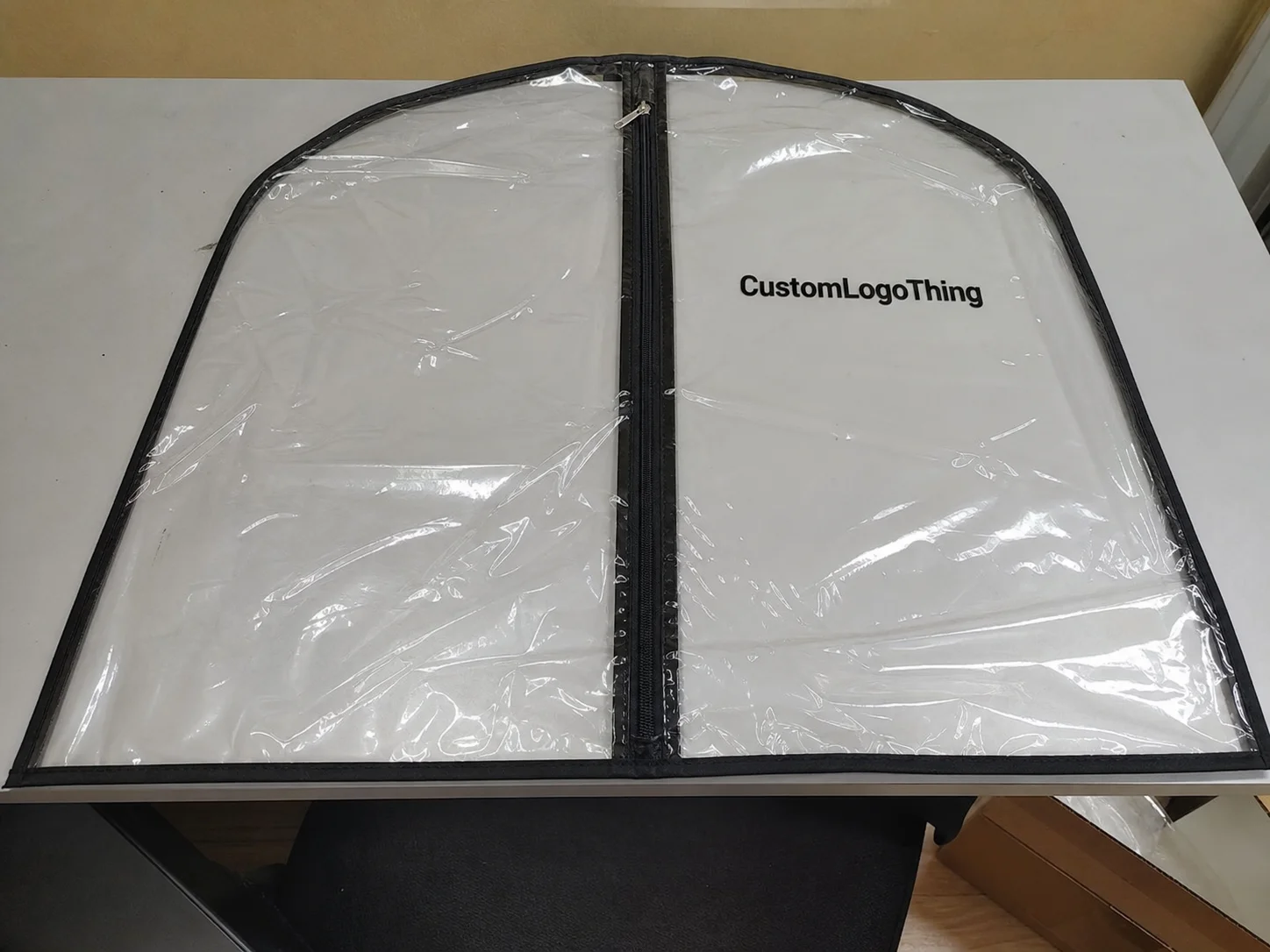
The anatomy is simple, but the details matter. A custom PVC zipper garment bag usually includes a PVC body, zipper closure, hanger opening, reinforced seams, optional handles, optional gusset, and a defined logo print area. Each feature affects packing speed, garment fit, customer use, and cost.
Zipper choice is one of the first decisions. A standard nylon zipper works for most retail apparel and warehouse handling. A heavier zipper makes sense for frequent reuse, rental programs, wardrobe departments, or customer-facing bags that may be opened dozens of times. Puller upgrades cost more, but they are worth considering if shoppers or store staff will handle the bag often.
Closure direction should match how staff load the garment. Full-length zippers are common for gowns, coats, formalwear, and long dresses because staff can open the bag wide instead of wrestling fabric through a narrow gap. Shorter zippers can work for shirts, jackets, and uniforms where speed matters and the garment shape is predictable.
PVC clarity changes the feel. Crystal clear PVC is strong for retail display because the garment remains visible. Frosted PVC gives a softer premium look and hides minor scuffs better. Tinted PVC can support brand color blocking or privacy, though it may reduce garment visibility. That tradeoff is fine if shoppers do not need to inspect every detail through the bag.
- Light PVC: around 0.10 to 0.15 mm for basic protective covers and lower-cost programs.
- Reusable retail PVC: around 0.18 to 0.25 mm for better structure, rack presence, and repeated handling.
- Premium storage builds: heavier gauges for wardrobe storage, bridal gowns, rental garments, or high-value pieces.
Buyers forget the small stuff. Hanger hole size. Venting. Folded pack size. Carton weight. Barcode label space. Whether the bag hangs straight on a rack. Whether it looks wrinkled after unpacking. If staff fight the zipper or the bag collapses around the garment, the cheapest option just became expensive. Funny how that works.
Branding options include one-color logo print, multi-color screen print, hot stamp effects, woven label attachment, and simple printed care or reuse instructions. For many brands, a clean one-color logo at chest level does more than a giant print that covers the merchandise. The garment is still the product. Try not to bury it.
Specifications to Lock Before Bulk Production
Before quoting a bulk order, lock the core fields: width, length, gusset depth, PVC thickness, zipper length, hanger opening, seam style, print size, print color, carton quantity, and packing method. If one of those fields is missing, the quote is partly a guess. Guesses are adorable until the invoice arrives.
Common garment bag sizes usually sit in these ranges: 24 x 40 inches for shirts and jackets, 24 x 54 inches for coats and dresses, and 24 x 60 inches or longer for gowns and formalwear. Some buyers need a 26-inch width for bulky suits or wider shoulders. Others can use a 22-inch width for slim uniforms or kidswear. The correct answer depends on the garment, hanger, and how much breathing room the fabric needs.
Gussets deserve more attention than they get. Flat bags cost less, store compactly, and work for slim garments. A 3 to 6 inch gusset fits bulkier coats, layered uniforms, bridalwear, and structured pieces better. The extra material and labor increase cost, but a gusset can reduce fabric compression and make the loaded bag look intentional instead of stuffed.
Print placement should be decided with the garment hanging on a rack. Chest-level logo placement gives strong retail visibility. Lower corner print creates a cleaner luxury look. Large front print can work for promotional programs, but it may hide the garment. That is a bad idea if shoppers need to evaluate color, fabric, or embroidery through the bag.
Artwork should be supplied as vector art whenever possible, usually AI, EPS, or PDF with outlined fonts. Pantone references help with closer color matching, though PVC printing can still vary slightly by ink, material surface, and curing. If you use multiple bag sizes, provide separate print files or scaled proofs when proportions change. Stretching one logo file across three sizes without review is how brands end up with a mark floating in a weird place.
| Specification | Typical Range | Buying Tradeoff |
|---|---|---|
| Bag size | 24 x 40, 24 x 54, 24 x 60 inches or longer | Larger bags protect longer garments but increase material cost and carton size. |
| PVC thickness | 0.10 to 0.25 mm for most retail uses | Lighter gauges cost less; heavier gauges hang better and support reuse. |
| Gusset | Flat, 3 inch, 4 inch, 6 inch | Flat packs tighter; gussets reduce compression for bulky garments. |
| Logo print | One-color to multi-color screen print | One-color is efficient; multi-color improves branding but adds setup and proofing work. |
| Carton quantity | Often 50 to 200 pieces per carton | Higher carton counts reduce handling but can create heavy boxes and wrinkling risk. |
Compliance belongs on the spec sheet too. Depending on channel and location, buyers may need PVC material declarations, warning labels, odor control expectations, or packaging statements. For broader packaging safety and performance context, the International Safe Transit Association is a useful reference for distribution testing principles, especially if garment bags ship in master cartons through parcel networks.
Create a master spec sheet. Put the measurements, material, zipper, print instructions, carton count, artwork file name, and approved sample notes in one place. Memory is not a purchasing system.
Pricing, MOQ, and Unit Cost Tradeoffs
PVC zipper garment bag pricing depends on size, material thickness, zipper quality, gusset depth, print colors, order quantity, packing method, inspection level, and delivery terms. A small flat shirt bag with one-color print is not in the same cost universe as a long gusseted bridal gown bag with heavy PVC and upgraded zipper pulls.
Custom printed PVC zipper garment bags usually make sense in bulk because setup, material cutting, printing plates, and production handling do not care that a buyer “just wants a tiny test run.” That line is popular. It rarely makes the math better. Many custom programs compare 1,000, 3,000, 5,000, and 10,000 units to see where the unit cost starts to behave.
Exact pricing depends on current material cost, supplier setup, freight, and order complexity, but the buying logic is consistent. Larger and thicker bags use more PVC. Gussets add cutting and sewing or sealing time. Multi-color printing adds setup and registration work. Folded packing may save space but can increase creasing. Flat packing may look cleaner but needs more carton volume.
As a rough buying expectation, simple custom PVC garment bags at higher quantities may land in a lower per-unit range than heavy, gusseted, multi-color printed bags. Freight can also change the final landed cost more than buyers expect because these products are bulky even when they are light. Always compare landed unit cost, not just factory unit price. That means product, setup, packing, freight, duties if applicable, and any inspection cost.
| Order Scenario | Typical Use | Cost Behavior | Best Buyer Move |
|---|---|---|---|
| 1,000 units | Small launch, trial program, single store group | Higher unit cost because setup spreads across fewer bags | Use for testing fit and specs, not long-term savings. |
| 3,000 units | Growing retail or ecommerce program | Better unit cost with manageable storage | Good middle ground if usage data is still developing. |
| 5,000 units | Repeat brand packaging program | Often a stronger cost break | Match this tier to monthly usage and safety stock. |
| 10,000 units | Multi-location or high-volume fulfillment | Lower unit cost, higher cash and storage commitment | Buy only if forecast and warehouse space support it. |
Print cost tradeoffs are easy to understand. One-color logos are the cleanest budget choice and usually look sharper on clear PVC. Two-color designs can improve shelf impact. Full coverage designs need stricter proofing because any misalignment or opacity issue becomes obvious. If the print hides too much of the garment, the design is working against the product.
The quiet advantage of a PVC Zipper Garment Bags Unit bulk reorder plan is reorder economics. Once specs and artwork are approved, repeat orders are usually faster to quote and easier to produce because the supplier is not rebuilding the job from scratch. Ask for the quote to include bag specs, print specs, MOQ, setup charges, sample cost, production lead time, carton dimensions, freight estimate, and reorder reference number.
Process, Timeline, and Reorder Timing
The normal order flow is straightforward: confirm specifications, review artwork, quote the job, approve the digital proof, produce a pre-production sample if needed, manufacture the bulk order, inspect, pack, and ship. Nothing in that chain is difficult. Delays happen because details arrive late or change after approval.
Quoting can take 1 to 3 business days when specs are complete. Proofing can add another few days, especially if the logo needs cleanup or print placement changes. Sampling adds time because the supplier has to cut, print, assemble, and ship a physical piece. Bulk production depends on quantity, PVC availability, zipper type, print complexity, and packing requirements.
The biggest timeline killer is incomplete information: vague sizes, missing artwork, no thickness target, unclear zipper direction, and last-minute logo changes. Shocking, I know. If purchasing sends a supplier “standard garment bag with logo,” the supplier has to ask six follow-up questions before anything useful happens.
A practical reorder trigger is 30 to 45 days of supply, counted from current inventory. Go earlier if shipping by ocean freight, seasonal demand is coming, multiple store locations pull from the same stock, or the garment bag is tied to a launch date. Rush orders may be possible for repeat jobs, but material availability, print queues, and freight capacity still set limits.
Calculate reorder units with a simple formula: average weekly usage multiplied by lead time weeks, plus safety stock for sales spikes, damages, or new retail programs. If a warehouse uses 400 bags per week and the lead time is 6 weeks, the base need is 2,400 bags. Add a safety stock buffer, often 20% to 30% for apparel programs with seasonal swings, and the reorder target may land closer to 3,000 units.
Use carton counts as the reorder unit, not loose pieces. Suppliers pack by cartons, warehouses count cartons faster, and purchasing can spot shortages more easily. If each carton holds 100 bags and the approved reorder is 3,000 units, that means 30 cartons. Clear. Countable. Less room for someone to “estimate” from a half-open box in the corner.
Keep the approved sample, master spec sheet, past invoice, carton label photo, and supplier item code together. A PVC Zipper Garment Bags Unit bulk reorder plan moves faster when the reorder file already proves what was approved. Nobody needs to re-approve every detail like it is the first day of packaging school.
Quality Checks Before Approval
Test the sample with the actual garments. Do not just admire it on a conference table under flattering lights. A bag can look fine empty and still fail the moment a structured coat, beaded gown, or heavy uniform goes inside.
Hands-on checks should include garment fit, zipper smoothness, hanger hole alignment, seam strength, PVC clarity, print adhesion, logo position, and whether the loaded bag hangs straight. Open and close the zipper at least 20 to 30 times if the bag is meant for customer reuse, rentals, wardrobe departments, or bridal storage. A zipper that catches on sample day will not become charming during bulk packing.
Check PVC feel and odor. Clear PVC can have a material smell, especially after being packed tightly in cartons, but it should not be overwhelming or unacceptable after normal airing. If retail presentation is sensitive, ask about odor expectations before production and confirm whether airing time is needed after delivery.
Print durability matters too. Rub the logo lightly with a clean cloth and check whether ink transfers, cracks, or smears under normal handling. Screen printing on PVC can perform well, but ink choice, curing, and material surface all matter. If the logo flakes during a basic rub test, do not approve bulk production. That is not being picky. That is doing your job.
Confirm packing format before the order ships. Flat packed bags may present better and wrinkle less. Folded bags save space but may need time to relax before use. Bundled packing can speed receiving, while dividers can reduce scuffing for premium programs. Carton weight should be realistic for warehouse handling, ideally in a range staff can lift repeatedly without hating everyone involved.
Custom soft plastic packaging can have small measurement variances, so define critical dimensions before production. If the hanger opening must fit a specific hanger head, state the minimum opening size. If the bag must cover a 60-inch gown without exposing the hem, define the required usable length. Sign off only after the sample matches the real use case. Changing dimensions after bulk production is not a tweak. It is a very expensive lesson.
Next Steps for a Clean Bulk Reorder
Before contacting a supplier, prepare the basics: garment type, target bag size, quantity range, PVC thickness preference, zipper style, logo file, print color, delivery location, and required in-hand date. If you do not know the exact thickness yet, describe the use case: single-use protection, reusable retail handoff, bridal storage, rental garment rotation, or warehouse-only handling.
Start with two or three size options if your product line covers multiple garment categories. Forcing suits, coats, and gowns into one compromise bag usually creates a bag that is too long for jackets and too tight for formalwear. That is not standardization. That is one-size-fits-nobody purchasing.
Ask for a quote matrix by size and quantity tier. Compare MOQ, unit cost, setup fees, sampling cost, lead time, carton count, and freight estimate. If you are already buying other branded packaging, connect the request to your broader custom packaging plan and review common production questions through the Custom Logo Things FAQ.
Internal approvals should be simple but clear. Merchandising approves appearance. Warehouse approves packing and handling. Purchasing approves cost. Operations approves reorder trigger quantities. Skip one of those voices and you usually pay for it later, either in slower packing, poor presentation, or inventory that nobody wants to use.
- Current monthly usage: track by store, warehouse, or program.
- Safety stock target: usually 20% to 30% for seasonal apparel, higher for launch periods.
- Approved supplier item code: tie every reorder to the same production file.
- Carton count per reorder: buy and count in cartons, not random loose pieces.
- Average lead time: include proofing, production, inspection, and freight.
- Next review date: review usage before seasonal spikes or new store rollouts.
Custom Logo Things helps translate rough specs into production-ready details, quote multiple quantity breaks, flag cost drivers, and keep repeat jobs tied to a stable reorder file. That is the difference between “we need garment bags again” and a purchase order that can move without twenty emails.
A planned reorder system is not paperwork for fun. It is how buyers keep branded garment packaging available, consistent, and priced like a planned purchase instead of a panic buy.
FAQ
What is the best MOQ for custom PVC zipper garment bags in bulk?
The best MOQ depends on size, thickness, zipper style, and print method, but bulk custom orders usually become more cost-efficient once setup costs are spread across several thousand units. Ask for quantity breaks such as 1,000, 3,000, 5,000, and 10,000 units so you can see where the unit cost actually improves. Do not buy the highest quantity just because the unit price drops; storage space, cash flow, and forecast accuracy matter too.
How do I build a PVC zipper garment bag reorder plan for retail stores?
Track average weekly usage by store or warehouse, multiply it by expected lead time, then add safety stock for seasonal spikes and damaged packaging. Set a reorder trigger when inventory reaches roughly 30 to 45 days of supply, or earlier if the order ships by ocean freight. Keep approved specs, artwork, carton counts, and supplier item references in one file so repeat orders do not restart from zero.
What specifications affect PVC zipper garment bag unit cost the most?
The biggest cost drivers are bag size, PVC thickness, gusset depth, zipper quality, print colors, and order quantity. A one-color logo on a standard-size bag is usually more economical than oversized artwork, heavy PVC, and multiple custom details. If you need multiple sizes, quote each size separately because material usage changes fast with length and gusset depth.
Can I reorder the same custom PVC garment bags without new samples?
Yes, repeat orders can often move without a new physical sample if the approved specifications, artwork, and production file have not changed. Request a digital proof or reorder confirmation showing size, material, zipper, print, quantity, and delivery address before production. If you change thickness, zipper type, size, or logo placement, treat it as a revised order and consider sampling again.
How long does production take for bulk PVC zipper garment bags?
Timeline depends on order quantity, material availability, print complexity, sampling needs, and freight method. Complete specifications and approved artwork shorten the process; vague requests and late logo changes slow everything down. For planned reorders, start before stock gets tight so you are not paying rush charges to solve a preventable inventory problem.