Buyer Fit Snapshot
| Best fit | Recyclable Mailing Bags for Ecommerce projects where brand print, material claims, artwork control, MOQ, and repeat-order consistency need to be specified before quoting. |
|---|---|
| Quote inputs | Share finished size, material target, print colors, finish, packing count, annual reorder estimate, ship-to region, and any compliance wording. |
| Proofing check | Approve dieline scale, logo placement, barcode or warning zones, color tolerance, closure strength, and carton packing before bulk production. |
| Main risk | Vague material claims, crowded artwork, missing packing details, or unclear freight terms can make a low unit price expensive after revisions. |
Fast answer: Recyclable Mailing Bags for Ecommerce: Film, Print, MOQ, and Carton Packing should be specified like a repeatable production item. The safest quote records material, print method, finish, artwork proof, packing count, and reorder notes in one written spec.
Production checks before approval
Compare the actual filled-product size with the drawing, then confirm tolerance on folds, seals, hang holes, label areas, and retail display edges. Reserve space for logos, QR codes, warning copy, and material claims before decorative graphics fill the panel.
Quote comparison points
Review material grade, print process, finish, sampling route, tooling charges, carton quantity, and freight assumptions side by side. A quote is only useful when the supplier can repeat the same color, closure quality, and packing count on the next order.
Recyclable mailing Bags for Ecommerce sound straightforward until you look closely at the film structure, the seal chemistry, the print method, and the way a parcel actually moves through collection, sorting, and recovery. A mailer can look neat and responsible on a spec sheet, then fall short of recycling requirements if it blends incompatible layers or uses decoration that does not belong in the film stream. For brands comparing recyclable Mailing Bags for Ecommerce, the useful question is not whether the bag photographs well, but whether it protects the product, keeps fulfillment efficient, and fits the end-of-life path that exists in the market where it will be used.
That practical lens is the one worth keeping. Recyclable mailing bags for ecommerce are usually built as mono-material polyethylene film mailers, with the body, seal, and print choices kept compatible with plastic film recovery streams. They reduce ship weight, shrink parcel bulk, and suit apparel, accessories, textiles, and other soft goods that do not need a rigid carton. In the sections that follow, I will walk through structure, performance, pricing, production timing, and the mistakes that tend to catch buyers the first time they order recyclable mailing bags for ecommerce.
What recyclable mailing bags for ecommerce actually are
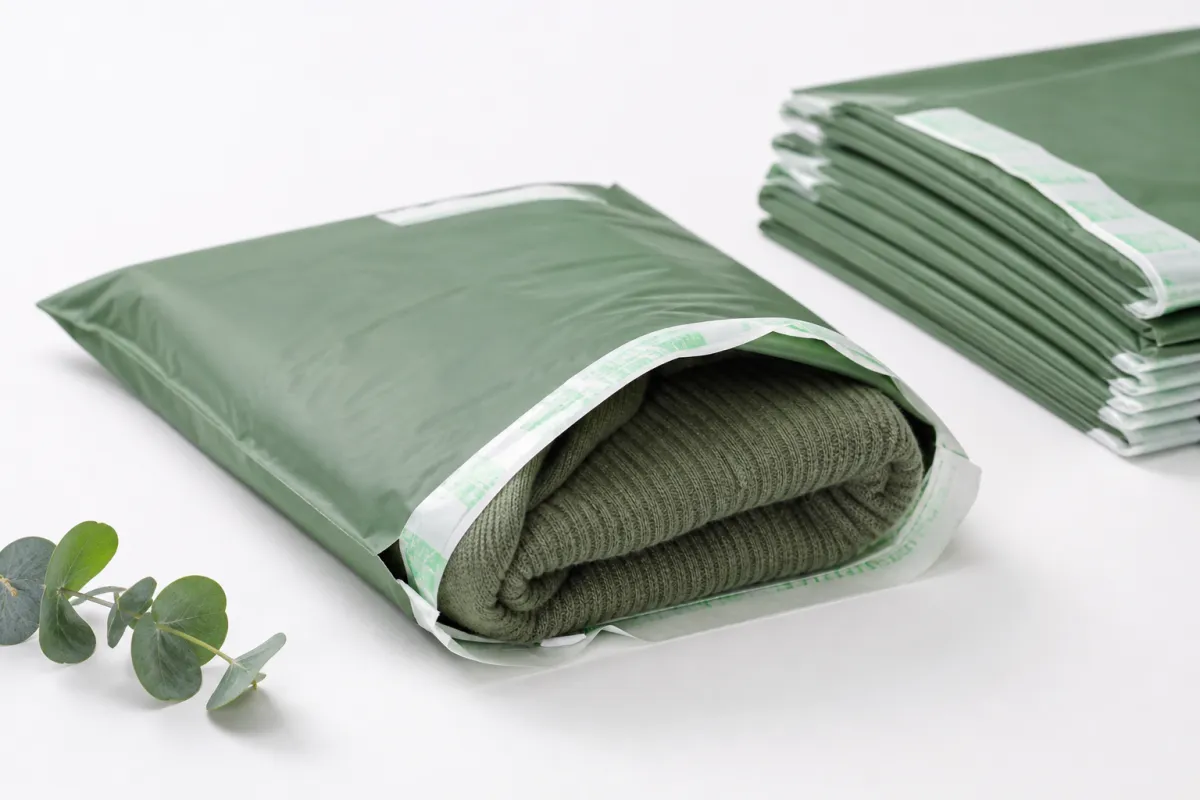
A mailer can carry the word “recyclable” and still be a poor fit for real recovery if the build is wrong. The strongest recyclable mailing bags for ecommerce are made as a single-material or mono-material poly bag, usually polyethylene-based, so the body and seal behave like one family of plastic in the recovery stream. That matters because mixed-material structures, metallized layers, and decorative laminations can push a bag out of the film recycling path even when the outside looks plain and simple.
For packaging buyers, the reason ecommerce brands use recyclable mailing bags for ecommerce is practical rather than decorative. They are light, they ship flat, they trim dimensional weight, and they move quickly on the fulfillment line. A packer can load a garment, peel a liner, close the seal, and finish the order without wrestling with folds, inserts, or void fill. For soft goods such as T-shirts, pajamas, scarves, swimwear, and small textile accessories, that simplicity is a real advantage.
There is also an important difference between recyclable and recycled content. A bag may be recyclable because its material stream is compatible with plastic film recovery, yet still contain little or no post-consumer resin. Another bag may include PCR and still need proper disposal instructions because the recycling path depends on the local collection system. The two claims are connected, but they are not interchangeable, and buyers should treat them as separate specifications when ordering recyclable mailing bags for ecommerce.
For disposal guidance, the basic rules from the EPA recycling guidance make a useful starting point, especially the reminders about clean, dry material and local acceptance rules. That is why brand messaging matters as much as material choice. If the package is technically recyclable but the customer does not know where to put it, the claim loses value quickly. Good packaging design and clear instructions need to move together.
"If the mailer protects the product but confuses the customer, the package still misses the mark."
One detail buyers often miss is that the phrase recyclable mailing bags for ecommerce should describe a structure that can realistically enter a recovery stream, not a vague sustainability story. Color, ink load, and surface finish all influence that outcome. A clean white or kraft-look mailer may feel more responsible at a glance, but what matters is whether the film is compatible, the ink system is suitable, and the disposal instruction fits the destination market. That is the real foundation of recyclable mailing bags for ecommerce.
How recyclable mailing bags for ecommerce work in real shipping lanes
The strongest recyclable mailing bags for ecommerce usually start with a mono-PE construction. The outer film, inner film, and seal layer are selected so they behave as one plastic family, which helps downstream sorting and processing. In plain terms, that means fewer compatibility issues and less risk that the bag gets treated like a mixed laminate. Most buyers do not need a polymer lecture; they need a structure that stays simple enough to fit the film recycling path.
Recyclable is not the same thing as recycled. A mailer can be fully recyclable and still use virgin resin for consistency, or it can include PCR for a lower fossil-based resin share. Both can be valid, depending on performance and supply needs. The key is to understand what is driving the spec. If the bag needs higher clarity, stronger seal integrity, or steadier print results, the material choices may shift a bit. The best recyclable mailing bags for ecommerce are the ones that balance those choices without drifting into unnecessary complexity.
Additives matter more than many first-time buyers expect. Slip agents, antiblock agents, tie layers, heavy inks, and certain adhesive systems can all influence recyclability and processing behavior. Small amounts are not automatically a problem, but they should be chosen intentionally. When a supplier says a mailer is recyclable, ask what the body film is made of, what the closure strip uses, whether the print is surface-applied or built into the film, and whether any special coating is involved. Those details make a real difference in recyclable mailing bags for ecommerce.
What helps a mailer stay recyclable
Simple material structure is the first advantage, though it is not the only one. Clear print zones, controlled ink coverage, and closure components that do not introduce a second incompatible substrate all help. The film should be tough enough to survive conveyor handling, but not so heavy that it becomes wasteful. For many apparel brands, a 2.5 to 3.0 mil mono-PE mailer is a common starting point, though the right gauge depends on weight, sharp edges, and the amount of abuse expected in transit. Those choices are exactly what separate average packaging from recyclable mailing bags for ecommerce that perform well in the field.
What can interfere with recycling
Multi-layer lamination, foil effects, heavy metallic decoration, and non-film closures can create problems. So can vague claims that do not match the actual build. If the package is marketed as recyclable mailing bags for ecommerce but the closure strip, tear strip, or decorative window introduces a second material stream, the claim may not hold up in every market. That is why testing and documentation belong in the packaging process rather than in a legal footnote.
For transit performance, many teams use ISTA-style thinking, even if they are not running every formal protocol. Drop, compression, vibration, and rough-handling checks show where a mailer is too thin or where the seal is too weak. The ISTA testing framework is a useful reference because it keeps the discussion grounded in real shipping abuse rather than in visual samples alone. A bag has to survive actual order flow, not just product photography, and that is especially true for recyclable mailing bags for ecommerce.
Disposal behavior matters too. A recyclable package that no one knows how to sort is only half a solution. Clear on-pack messaging, a short insert, or a simple note on the product page can improve the odds that the bag reaches the right recovery stream. That is why the best recyclable mailing bags for ecommerce work as part of a system, not as a standalone material decision.
Key factors to evaluate before you choose a mailer
The starting point is the product itself. Light apparel, knitwear, socks, and accessories behave very differently from boxes, cosmetics kits, or anything with rigid corners. A mailer that works beautifully for a soft hoodie can fail quickly if it is forced around an abrasive or inflexible item. That is why recyclable mailing bags for ecommerce should be selected by product type, not by a generic “mailer is a mailer” mindset.
Thickness, seal strength, puncture resistance, and opacity need to be reviewed together. Buyers sometimes push thickness higher than necessary because they want the package to feel safer, but excess gauge adds material cost and shipping weight without always adding useful protection. A 2.5 mil bag may be enough for a folded garment in a clean fulfillment environment, while a 3.0 or 3.5 mil version may make sense for heavier packouts or rougher carrier networks. The right spec for recyclable mailing bags for ecommerce is usually the one that survives handling with the least extra material.
Branding is another decision point. A simple one-color logo, a restrained print area, and clear disposal instructions keep the package easy to understand and generally easier to manufacture. Heavy ink coverage, full-bleed decoration, or complex specialty finishes can increase cost and complicate the recycle story. That does not mean custom printing is a bad idea; it means the print plan should support the package format rather than fight it. Good recyclable mailing bags for ecommerce still need to look professional, but they do not need to be overdesigned.
Fulfillment speed matters too. A bag that opens cleanly, loads quickly, seals consistently, and sits neatly in a carton or tote helps the line move with less friction. In many operations, the time saved during packout is worth as much as the bag price itself. A package that is annoying to handle creates hidden costs in labor and mistakes, and those problems rarely appear on the first quote. For that reason, experienced buyers of recyclable mailing bags for ecommerce usually ask for samples, then run them through their own packing station before approving a full order.
| Option | Typical build | Best fit | Indicative price at 5,000 pcs |
|---|---|---|---|
| Light mono-PE mailer | 2.5 mil, unprinted, adhesive strip | Light apparel and soft goods | $0.10-$0.16 per unit |
| Printed mono-PE mailer | 3.0 mil, one-color logo, adhesive strip | Branded clothing and accessories | $0.14-$0.24 per unit |
| Heavier-duty mailer | 3.5 mil, stronger seal, custom print | Bulkier garments, lower damage tolerance | $0.18-$0.30 per unit |
| Custom size with expanded branding | Tailored dimensions, larger print area, optional PCR content | Premium unboxing and tighter packout control | $0.20-$0.34 per unit |
Those numbers are only directional, because final pricing depends on dimensions, artwork coverage, resin market conditions, print method, and freight. Still, they help frame a real conversation. If a supplier quotes far below that range, ask what changed. If the price is much higher, ask whether the spec is overbuilt for the product. That sort of comparison is especially useful when you are sorting through Custom Poly Mailers and trying to balance appearance, protection, and cost.
Claim language deserves careful review as well. Recyclable, recycled content, made with PCR, and responsibly sourced are not the same statement. If a customer service rep, a website product page, and a printed mailer all use different wording, buyers can get confused fast. Consistency helps. For recyclable mailing bags for ecommerce, the wording should match the actual structure and the actual disposal route, not just the marketing angle.
Finally, ask how the mailer will feel in the hand. A light but crisp film can signal efficiency. A floppy film may feel cheap. A film that is too stiff may seem premium but can crease awkwardly or stress at the corners. The goal is a package that looks intentional and performs like it belongs in your order flow. That is the standard I would use for any brand evaluating recyclable mailing bags for ecommerce.
Process and timeline: from spec to production
Good ordering starts with a clean spec sheet. If the dimensions, film gauge, closure style, print coverage, and quantity are vague, the quote will be vague too. For recyclable mailing bags for ecommerce, I like to see the usable internal size, the folded garment dimensions, and a note on whether the product includes a box, tissue, insert, or anything with an edge that might stress the film. The more the supplier understands the packout, the more useful the first sample will be.
The next step is sampling and proofing. Even a simple logo placement can shift once the bag is made on a real production line, and color on film never behaves exactly like color on a computer screen. A proof should show the print area, the closure position, and the overall finished size. For a first-time run of recyclable mailing bags for ecommerce, a sample is not just a courtesy; it is the easiest way to catch sizing mistakes before they turn into wasted pallets.
Typical timeline drivers are easy to list, but they matter a lot in practice: artwork approval, print setup, film availability, bag conversion, seal inspection, and freight booking. If the artwork is final and the size is standard, a straightforward order can move faster. If the design needs multiple rounds of revision, the clock stretches. Most delays happen because someone changes the spec after sampling starts or sends artwork files that need cleanup. That is one reason the best recyclable mailing bags for ecommerce orders begin with sharp documentation.
A simple production flow
- Material sourcing and resin confirmation.
- Film extrusion or film procurement, depending on the supplier setup.
- Printing, if the bag carries a logo or disposal message.
- Bag forming, sealing, and closure application.
- Inspection for seal quality, dimensions, and print placement.
- Packing, carton labeling, and shipment scheduling.
That sequence sounds ordinary, but each stage can introduce variation. If the resin batch is inconsistent, the film gauge can drift. If the print plates are not set cleanly, the logo can shift or ghost. If the seal temperature is too aggressive, the adhesive strip can wrinkle. These are the small factory details that decide whether recyclable mailing bags for ecommerce arrive as expected or turn into a quality-control headache.
If you are planning a launch, build in buffer time. A reorder with no artwork changes may move in a fairly predictable window, but first runs often need extra time for proof review and packaging approval. Seasonal shipping peaks can add more pressure. For teams comparing Custom Poly Mailers, the smartest move is usually to lock the spec early, approve samples quickly, and avoid late changes once the order is in motion. That approach keeps recyclable mailing bags for ecommerce on schedule and reduces surprises at the dock.
One practical tip: ask for a shipping carton count and pallet configuration before production starts. It sounds mundane, but it can save hours in receiving and warehouse planning. When a packaging buyer sees the full picture, from unit count to pallet height, the rollout becomes much easier to manage. That is especially true for recyclable mailing bags for ecommerce, where the packaging itself is light but the fulfillment process still needs to run cleanly.
Cost, pricing, MOQ, and quote factors for recyclable mailing bags for ecommerce
Pricing is where many buyers discover that the cheapest bag is not always the lowest total cost. A thinner mailer may look attractive on paper, but if it tears, needs repacking, or causes damage claims, the real expense rises quickly. With recyclable mailing bags for ecommerce, unit cost is influenced by size, film gauge, print coverage, order volume, and whether the job needs recycled content or special finishing. You want the bag that solves the shipping problem, not the bag that merely looks cheap in a quote sheet.
MOQ works the same way. Smaller runs usually cost more per unit because setup, film usage, and machine time are spread across fewer bags. A 3,000-piece order may be perfectly reasonable for a pilot launch, but it usually will not price like a 20,000-piece reorder. If you need custom recyclable mailing bags for ecommerce in several sizes, it can be worth grouping artwork or color changes where possible, because that can reduce setup complexity and improve overall economics.
Ask for a line-item quote whenever possible. A clear quote should separate bag price, printing, packaging, and freight. If recycled content is included, that should be identified too. The same is true if the bag includes a tear notch, a dual seal, a return strip, or a larger custom print panel. When all of those items are bundled into a single number, comparison becomes guesswork. The better route is a clean spec and a clear breakdown for recyclable mailing bags for ecommerce.
There is also a downstream cost conversation that often gets ignored. A slightly stronger bag can reduce leaks, returns, and customer complaints. A slightly larger bag may make packout easier but waste film and raise postage. A tighter size can improve shipping efficiency but may slow the packing line if it is too snug. Good buyers think in total landed cost and operational cost, not just bag price. That perspective is especially useful when comparing recyclable mailing bags for ecommerce across suppliers.
| Quote factor | Why it changes price | Buyer question to ask |
|---|---|---|
| Bag size | Larger film use and more material waste | Does the product need this much internal space? |
| Film gauge | Heavier resin increases raw material cost | What is the lightest gauge that still passes handling tests? |
| Print coverage | More ink, more setup, more inspection time | Can the branding be simplified without losing impact? |
| Order volume | Setup is spread over more units | Can the first run support a larger forecast? |
| Freight | Shipping weight, distance, and timing vary | Is the quote delivered, FOB, or something else? |
For rough planning, many printed mono-PE mailers sit somewhere around $0.14 to $0.30 per unit at medium volumes, while simpler unprinted bags can come in lower. That range shifts with size, print complexity, and market conditions, so it should be treated as a planning guide rather than a promise. Even so, it helps anchor the discussion when you are budgeting recyclable mailing bags for ecommerce for a launch or a seasonal reorder.
If branding matters, do not assume a more expensive package is automatically a better one. A clean one-color logo on a well-sized mailer often looks sharper than a crowded design on an oversized bag. If the goal is to make the product feel considered and professional, the smartest package is usually the one that uses only the features it truly needs. That is a useful discipline for Custom Poly Mailers and for any brand investing in recyclable mailing bags for ecommerce.
Common mistakes when ordering recyclable mailers
The first mistake is trusting the word “recyclable” without checking the structure. A bag that looks sustainable can still contain mixed layers or a closure system that complicates recovery. Before you place a large order of recyclable mailing bags for ecommerce, ask for a material description, a print description, and disposal guidance that matches the intended destination market. That extra step prevents a lot of wasted time later.
The second mistake is overspecifying thickness. Some buyers think heavier automatically means better, but extra gauge only helps if the product actually needs it. If the bag is carrying a soft, light garment, a thick film may just add cost and material use without improving performance in any meaningful way. The better move is to test the lightest practical option first, then step up only if the product or handling profile requires it. That approach keeps recyclable mailing bags for ecommerce efficient and easier to justify internally.
The third mistake is forgetting fit. A bag that is too large wastes film, folds awkwardly, and looks sloppy. A bag that is too small stresses the seal and can create tears at corners or along closure lines. The best way to avoid both problems is to pack a real sample product, not a guess. That physical test often reveals more than a quote sheet ever will. For recyclable mailing bags for ecommerce, fit is not a minor detail; it is the package.
- Do not rely on a sustainability claim alone; verify the actual material structure.
- Do not choose more film than the product needs just to feel safer.
- Do not skip real packing tests with your own team and your own product.
- Do not assume customers know how to dispose of the bag without guidance.
Another common issue is vague language. “Eco-friendly,” “earth-conscious,” and “responsibly made” may sound nice, but they do not tell a fulfillment manager what the bag is made from or how it should be discarded. For recyclable mailing bags for ecommerce, the claim has to be backed by clear documentation and clear customer instructions. If the wording feels fuzzy, it usually is.
The last mistake I see often is underestimating how real-world handling affects the package. A sample in a quiet office does not experience the same stress as a carton moving through a warehouse, a delivery hub, and a final-mile route. That is why testing matters. Bags should be loaded, sealed, stacked, and shipped the way they will be used in actual operations. If the spec survives that test, recyclable mailing bags for ecommerce become a practical asset rather than a marketing experiment.
Expert tips and next steps for rollout
If you are narrowing the field, start with two or three sizes and one representative product line rather than rolling out across the entire catalog at once. That lets you compare packing speed, damage rates, and customer response without spreading the learning too thin. For recyclable mailing bags for ecommerce, a focused pilot is often more useful than a broad launch because it shows exactly how the package behaves under real conditions.
Ask for samples that match the exact film, print, and seal style you intend to buy. A rough mock-up can help with layout, but it should not be mistaken for the finished package. If the closure strip, ink coverage, or gauge changes, the mailer can feel different in hand and perform differently in transit. That is why sample discipline matters so much with recyclable mailing bags for ecommerce.
Build a short disposal note into the package experience. A simple line on the mailer, a statement on the packing slip, or a note on the product page can help customers handle the bag correctly after opening. Keep the language plain. Tell them whether the bag should go into plastic film collection, whether it needs to be clean and dry, and where local rules may differ. Clear instructions turn recyclable mailing bags for ecommerce into a more credible customer message.
Then track the metrics that actually matter:
- Packing speed per unit.
- Seal failures and tears.
- Return rates tied to shipping damage.
- Customer feedback about opening and disposal.
- Warehouse complaints about handling or static.
If those numbers look good, you are on solid ground. If not, adjust the gauge, dimensions, or closure before scaling. There is no prize for forcing the wrong spec into a larger purchase. The strongest packaging programs are the ones that improve the package in small, measured steps. That is how Custom Poly Mailers become a controlled part of the supply chain instead of a guess, and that is how recyclable mailing bags for ecommerce earn their place in the order flow.
The simplest decision rule is this: if the bag protects the product, fits the packout, and supports a clear recycling message, it is ready for a wider rollout. If one of those pieces is missing, keep refining the spec. Lock the dimensions, test the packout with your own product, and make the disposal language match the local film collection route. That is the practical discipline that makes recyclable mailing bags for ecommerce worth adopting for the long run.
Are recyclable mailing bags for ecommerce curbside recyclable?
Not always. Curbside acceptance depends on local recycling rules, and many programs only accept clean, dry plastic film through store drop-off or designated collection points. A mono-PE bag may be a better candidate than a mixed-material mailer, but the final answer still depends on the market. For recyclable mailing bags for ecommerce, the disposal guidance should match the actual destination region instead of assuming one rule fits everywhere.
What thickness should I choose for recyclable mailing bags for ecommerce?
Choose the lightest gauge that still protects the product through packing, transit, and final delivery handling. For soft apparel, that may be around 2.5 to 3.0 mil, while heavier or sharper-edged products may need more protection. The right answer depends on the item, the seal style, and how rough the shipping lane tends to be. The best recyclable mailing bags for ecommerce are the ones that pass a real packing test without overbuilding the film.
How long does production usually take for recyclable mailing bags?
Timing depends on whether artwork is final, whether the bag is custom printed, and how quickly samples are approved. A straightforward reorder can move faster than a first custom run because the setup is already defined. Freight timing and seasonal demand also matter. If you are planning a launch, give yourself buffer time so the production schedule for recyclable mailing bags for ecommerce is not squeezed by last-minute approvals.
What should I ask for in a quote for recyclable mailing bags for ecommerce?
Ask for dimensions, film thickness, print method, MOQ, unit price, and shipping cost so the quote can be compared fairly. You should also ask about recycled content, material structure, sample cost, and whether any setup or plate charges apply. If two suppliers are quoting recyclable mailing bags for ecommerce, they should be quoting the exact same spec, or the price comparison will not mean much.
Can recyclable mailing bags for ecommerce be printed with a logo?
Yes, most can be printed, but the ink system and coverage should support the recycling story rather than work against it. Simple artwork usually keeps cost and production complexity lower than full-coverage graphics, and it often looks cleaner on the finished bag. If branding matters, ask for a proof that shows the logo size, color expectations, and disposal guidance together. Done well, recyclable mailing bags for ecommerce can carry a logo, protect the order, and still make practical sense for the end user.

