Buyer Fit Snapshot
| Best fit | Recycled Cardboard Inserts With Logo projects where brand print, material claims, artwork control, MOQ, and repeat-order consistency need to be specified before quoting. |
|---|---|
| Quote inputs | Share finished size, material target, print colors, finish, packing count, annual reorder estimate, ship-to region, and any compliance wording. |
| Proofing check | Approve dieline scale, logo placement, barcode or warning zones, color tolerance, closure strength, and carton packing before bulk production. |
| Main risk | Vague material claims, crowded artwork, missing packing details, or unclear freight terms can make a low unit price expensive after revisions. |
Fast answer: Recycled Cardboard Inserts With Logo: What Matters Most should be specified like a repeatable production item. The safest quote records material, print method, finish, artwork proof, packing count, and reorder notes in one written spec.
Production checks before approval
Compare the actual filled-product size with the drawing, then confirm tolerance on folds, seals, hang holes, label areas, and retail display edges. Reserve space for logos, QR codes, warning copy, and material claims before decorative graphics fill the panel.
Quote comparison points
Review material grade, print process, finish, sampling route, tooling charges, carton quantity, and freight assumptions side by side. A quote is only useful when the supplier can repeat the same color, closure quality, and packing count on the next order.
Recycled Cardboard Inserts with Logo: What Matters Most
The fastest way to make a solid product feel cheap is to drop it into a box with an interior that looks like an afterthought. recycled Cardboard Inserts With Logo fix that in a very practical way: they stop movement, clean up the presentation, and turn the opening moment into part of the product experience instead of a scramble of loose parts, filler, and bruised edges.
That sounds simple because, mechanically, it is. The hard part is getting the details right. recycled cardboard inserts with logo can hold a glass jar steady, separate a skincare set, keep accessories from tangling, or make a subscription box feel intentional rather than improvised. The board grade, fit, print method, and assembly style matter a lot more than whatever looks polished in a mockup.
What follows is the practical version: how these inserts are built, what drives cost, where brands usually trip up, and what to ask before you sign off on a run. No packaging theater. Just the pieces that affect performance.
What Recycled Cardboard Inserts With Logo Solve Immediately
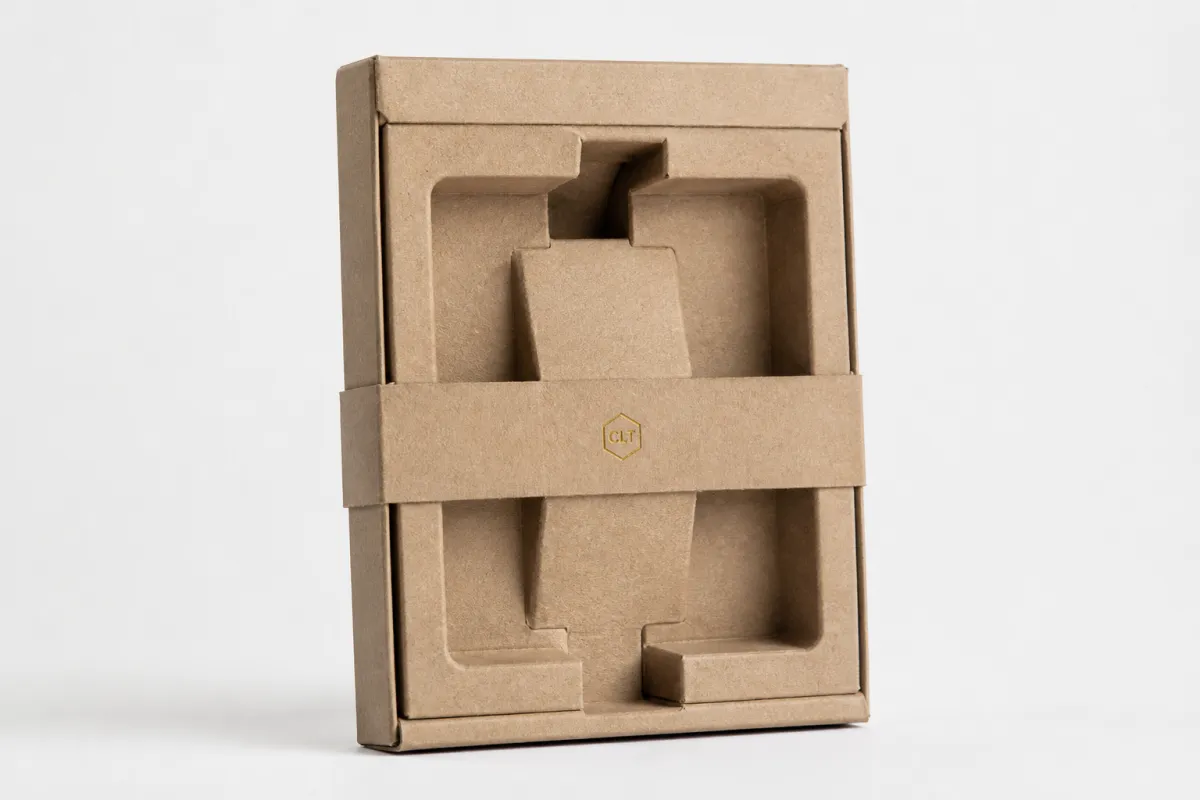
A package can arrive intact and still feel wrong the second the lid lifts. The items rattle. The spacing feels random. The interior reads like it was filled in later, which is usually exactly what happened. That is where recycled cardboard inserts with logo earn their keep. They make the inside of the box behave like part of the product, not a separate problem hidden under the lid.
At the most basic level, these are custom-cut paperboard pieces made from recycled or recycled-content material that hold a product in place while carrying branding at the same time. They can be flat, folded, slotted, layered, or compartmented. They can live inside a mailer, a retail carton, or a rigid setup box. Decoration matters, sure, but control is the real job.
Control matters because shipping is rough on packaging. Cartons get tipped, stacked, dropped, compressed, and scraped. A loose item in a box can pick up scuffs long before it actually breaks. A bottle cap can rub against a wall. A candle tin can dent. A cable kit can land in a tangle. recycled cardboard inserts with logo reduce that movement, which usually means fewer returns, less repacking, and fewer customer complaints. And yes, that gets expensive if you ignore it long enough.
They also do real work at retail. A display box with a clean insert looks organized on shelf and easier to shop. A gift set with a branded interior feels more deliberate. A subscription box feels finished instead of thrown together. Those are small signals, but customers pick up on them faster than brands often expect.
Here is where they fit especially well:
- Cosmetics and skincare sets where bottles, jars, droppers, and tools need separation.
- Electronics accessories where cables, adapters, and small parts should stay aligned.
- Candles and glass items where side-to-side movement is the enemy.
- Gift sets and PR kits where presentation has to carry real weight.
- Subscription boxes that need a repeatable, tidy packing structure.
The useful thing about recycled cardboard inserts with logo is that they solve two jobs at once. They protect the product and they improve the unboxing. That is a big reason brands switch to them even when a cheaper void-fill option exists. Loose kraft paper can fill space, but it cannot stop a premium kit from looking like it was packed in a hurry.
There is a labor benefit too. If the insert is shaped correctly, packing tends to move faster because the product lands where it should on the first try. That matters on a line where every extra second gets multiplied across thousands of units. Packaging teams feel that difference right away.
A good insert should stop movement first. The logo is the bonus, not the excuse.
How Recycled Cardboard Inserts With Logo Are Designed and Cut
recycled cardboard inserts with logo are not built by guessing and hoping for the best. The design starts with the product dimensions, then the box dimensions, then the packing method. If those three things do not line up, the insert fails in the most annoying way possible: it looks fine on screen and behaves badly in production.
The structure usually starts with board selection. For lighter items, a thinner recycled paperboard can be enough. For heavier products, the insert may need more caliper or a doubled structure. Common choices often land in the 18-24 pt range for lighter goods and 24-32 pt for heavier or more fragile items, though the real answer depends on product weight, drop risk, and how much compression the insert needs to absorb. There is no single magic thickness that covers every use case.
After that comes the dieline, which is the cut-and-fold map. Slots, tabs, bridges, windows, folds, and locking points all have to be built around the product shape, not the other way around. If the insert is fighting the product, pack-out slows down and damage risk goes up. A good dieline should feel obvious once you hold the part. If it feels like a puzzle, somebody made it too clever.
Board and Geometry
Geometry does the heavy lifting. Friction fit, compartment separation, and fold-lock shapes are what stop movement. A single-compartment insert is enough for some items. Others need a layered tray so the top edge does not scrape the carton lid. Multi-product kits may need a divider grid or a stepped layout so each item has its own pocket. recycled cardboard inserts with logo work best when the structure is simple enough to pack quickly but tight enough that the contents do not rattle.
I have seen more than one project get sunk by a beautiful insert that looked tidy in a render and turned awkward once a real bottle, cap, or charger head was placed inside it. Real products have tiny inconsistencies. Labels add thickness. Closures are never as perfectly uniform as the CAD file pretends. That is why sample testing matters so much.
Brand Layer
The branding layer can be loud or restrained. Some brands print the logo in one color on natural kraft board. Others use a clean white recycled board with a darker mark so the logo reads fast. A few choose no heavy decoration at all and rely on texture, tone, and structure. That is not a dodge. Sometimes the smartest branding move is keeping the interior calm.
Artwork prep matters more than many buyers expect. Files need the right bleed, clean safe zones, and enough contrast for the logo to survive on recycled stock. Fine lines can break up. Pale type can disappear. Large solid areas can show texture differently from sheet to sheet. If the supplier is using recycled content with visible fiber, that is part of the look, not a defect. Approving that effect early saves a lot of back-and-forth later.
One more detail: assembly. A gorgeous insert that takes forever to fold is not a win. The best recycled cardboard inserts with logo save time on the pack line because the product drops into place without forcing, flipping, or rework. That is where structure beats pretty rendering every time.
If the outer carton is changing at the same time, it helps to spec the whole system together. A matched insert and carton pair is easier to protect and easier to pack than two separate projects stitched together at the last minute. If you are updating the shipper too, a box system like Custom Shipping Boxes gives you more control over the outside dimensions, and that changes insert fit as much as artwork does.
Key Factors That Change Fit, Strength, and Shelf Feel
Most buyers start by asking about print. That is usually the wrong first question. Weight and fragility come first, because a 90-gram cosmetic jar and a 500-gram glass candle are not playing the same game. recycled cardboard inserts with logo need to match the product load first, then the brand story.
Tolerance is the next thing that matters. Even 2-3 mm of slack can make a light item rattle. Too much tightness is also a problem, because it slows assembly and can damage coatings, labels, or fragile closures during insertion. The sweet spot is snug enough to control movement but not so tight that the packer has to wrestle the product into place. That is especially true for items with rounded corners, pumps, caps, or cables that do not like being compressed.
Board grade and caliper drive most of the strength. Thicker is not always better. If the structure is weak, extra thickness just gives you a heavier weak insert. A thin insert in a heavy shipper can collapse under stacking pressure. For fragile retail items, buyers usually test a few samples at different board levels rather than assuming one common spec will cover everything.
Finish changes the shelf feel more than many brands admit. Natural kraft communicates a softer, more recycled look. White recycled board usually feels cleaner and gives print more contrast. Full-coverage ink can make the insert feel more designed, but it may also fight the recycled texture. Minimal print can read premium if the rest of the pack is disciplined. Overprinted interiors tend to feel busy, which is the opposite of what a tidy insert should do.
Sustainability claims need to stay honest, not theatrical. Recycled content is useful. Recyclability depends on how the insert is built and what finishes are on it. Foil, heavy lamination, plastic windows, and some adhesive-heavy constructions can complicate the story. The EPA has clear general recycling guidance at epa.gov/recycle, and it is a good reminder that local recycling systems still vary. A brand should never imply a disposal outcome it cannot defend.
There is also a standards angle. Packaging engineers still use transit-testing references like ISTA protocols to check whether a pack can survive the trip instead of just the design review. If an insert is supposed to protect a fragile item, real testing beats optimism every time. A sample that looks perfect on a desk can still fail under vibration, edge drop, or compression.
In practice, the best recycled cardboard inserts with logo balance four variables at once: board strength, product fit, visual finish, and recycling story. Miss one, and the whole thing feels off.
| Insert Type | Best For | Typical Unit Cost at 5,000 pcs | Notes |
|---|---|---|---|
| Simple single-compartment recycled insert | Small cosmetics, accessories, light retail items | $0.10-$0.22 | Fast to pack, low complexity, good for one logo color |
| Printed multi-slot insert | Gift sets, skincare bundles, mixed product kits | $0.18-$0.38 | More cutting, more setup, stronger presentation value |
| Heavy-duty layered insert | Glass jars, candles, heavier electronics accessories | $0.28-$0.65 | Usually needs tighter tolerance and more sample testing |
Recycled Cardboard Inserts With Logo: Cost, Pricing, and MOQ
Pricing on recycled cardboard inserts with logo is not mysterious, but it is easy to misunderstand if you only look at the unit number. The real cost driver is the mix of material grade, cut complexity, print coverage, finishing, labor, and order quantity. A simple insert with one logo might be very reasonable. A multi-compartment layout with tight tolerances and heavy print coverage will not be priced like a flat pad. That would be absurd.
At lower quantities, setup work matters more. Dieline creation, sample prep, and press setup are spread across fewer pieces, so the unit price climbs quickly. At higher quantities, the setup cost gets diluted and the per-piece number usually comes down. That is why a quote for 1,000 units can look annoyingly high while 10,000 units suddenly looks sensible.
For most custom programs, a practical MOQ often sits somewhere between 1,000 and 3,000 units, though some simple structures can start lower and some highly customized parts will need more volume to make sense. If you are ordering for multiple SKUs, ask whether the insert can be modular. One base structure that fits two or three product sizes is often cheaper than building a separate insert for every item.
Here is the comparison buyers usually need before they decide whether to move forward.
| Option | Setup Effort | Typical MOQ | Price Signal | Best Use Case |
|---|---|---|---|---|
| Plain recycled board insert, no print | Low | 500-1,000 | Lowest | Basic protection, early-stage launches, internal kits |
| Recycled insert with one-color logo | Medium | 1,000-3,000 | Moderate | Most retail and e-commerce brands |
| Printed custom insert with multiple cutouts | High | 3,000-5,000+ | Higher | Gift sets, premium boxes, mixed product assortments |
Do not get fooled by a quote that looks low at first glance. Check whether the supplier included tooling, proofs, revisions, packaging, and freight. Some vendors bury those costs in the back half of the project. Others quote a nice-looking number and then add charges for every tiny change. That is how budgets drift.
A better way to compare recycled cardboard inserts with logo is to ask for tiered pricing at 1,000, 3,000, 5,000, and 10,000 units. Then ask for a prototype or sample fee separately. That gives you the real breakpoints. You can usually see where a better board grade stops being expensive and starts being the obvious choice.
There is a tradeoff worth saying plainly: a stronger insert often saves money in the background. Fewer damaged units. Fewer returns. Less repacking labor. Fewer awkward emails from customers who received a box that looked beaten up. If a slightly better insert adds a few cents and cuts damage in half, that is not extra cost. That is housekeeping with a receipt.
If your carton size is changing too, make sure the outer pack is not forcing a compromise on the inside. A tighter outer structure like Custom Shipping Boxes can protect the insert design by giving it the exact headroom it needs. That kind of coordination usually saves more than it costs.
Production Process and Timeline: From Dieline to Delivery
The production path for recycled cardboard inserts with logo is usually straightforward, but only if the buyer gives clean inputs early. The typical flow goes like this: product measurements, structural concept, dieline approval, sample or prototype, artwork check, production, quality review, then shipping. Skip a step and the timeline usually punishes you for it.
- Measure the product, including closures, labels, and any odd protrusions.
- Confirm the box size or shipper size around it.
- Approve the insert layout and compartment count.
- Review the logo placement and print method.
- Check a sample or prototype before production.
- Run the full order after proof approval.
The biggest timeline variable is revision. If the product dimensions are vague, the insert will get revised. If the logo file is not clean, artwork will get revised. If the sustainability story changes halfway through, the spec will get revised. Each revision eats time. It sounds obvious, but buyers do it constantly, then act surprised when the schedule slips.
For simple inserts, a realistic window is often around 7-12 business days after final proof approval, not counting freight. More complex multi-compartment builds can take 12-20 business days or longer, especially if the factory needs to run a physical sample first. If the project includes specialty print, tighter tolerances, or a brand-new carton size, add buffer. Shipping time is its own variable and depends on lane, season, and carrier capacity.
The fastest projects are the ones where these decisions are locked before the work starts:
- Exact product dimensions and weight.
- Number of products per box.
- One-sided or two-sided printing.
- Logo placement and color count.
- Whether the insert must survive e-commerce transit or retail shelf use.
One practical note: if you are running several SKUs and the outer carton is changing too, keep the carton and insert under one planning umbrella. A modular shipper like Custom Shipping Boxes can prevent last-minute size drift, which is one of the quiet reasons packaging projects slip.
In a good program, recycled cardboard inserts with logo are not the last thing considered. They are part of the structure plan from the start. That is how you avoid the classic moment where the box is approved and the insert turns out to be too tight, too loose, or too expensive to assemble at scale.
Common Mistakes That Make Sustainable Inserts Fail
The biggest mistake is designing for the box instead of the product. People stare at the exterior and forget that the insert has one job: keep the product where it belongs. recycled cardboard inserts with logo should stabilize the contents first. If they do not do that, the presentation does not matter because the product is already getting chewed up in transit.
Second mistake: overdesign. Too many tabs, too many layers, too much ink, too much cleverness. A simple insert with a clean logo often looks better than a heavily styled one that is annoying to pack. Brands love to turn packaging into a school project. Packaging operators do not love that at all. Simple usually ages better.
Third mistake: greenwashing. If the material is mostly recycled but the structure uses heavy lamination, plastic windows, or glue-heavy add-ons that complicate recycling, do not pretend it is some perfect environmental masterpiece. Customers are less gullible than they used to be. So are procurement teams. Honest claims travel farther than fancy claims.
Another issue is assembly speed. A gorgeous insert that slows the line is a problem, not a win. If packers have to twist, force, or inspect each piece for five extra seconds, that cost piles up fast. At 5,000 units, a few seconds per unit becomes a real labor bill. That is the kind of math that sneaks up on people.
Testing is the most overlooked step. A pack should survive realistic handling, not just look clean in a mockup. A drop test, a vibration check, and a line trial catch weak geometry before a bad run goes live. Packaging teams often borrow from ISTA thinking here because the question is not "Does it look good?" The question is "Does it still protect the product after a carton ride and a rough delivery day?"
If the insert only works on the designer's desk, it does not work.
That is why the best recycled cardboard inserts with logo are built with boring discipline. Correct dimensions. Simple folds. Clear logo placement. Real testing. Nothing flashy. Everything useful.
Expert Tips and Next Steps for Your First Order
If this is your first run of recycled cardboard inserts with logo, start with a clean checklist. The fewer unknowns you leave open, the fewer surprises you pay for later. You need the final product dimensions, the product weight, the quantity, the logo files, the box size, the expected shipping method, and the number of products per insert. That is the minimum viable brief.
My practical advice: ask for a prototype before full production, especially if the product has fragile finishes, unusual corners, or multiple SKUs. A sample is cheaper than a bad run. That is true almost every time. The sample shows whether the insert needs a deeper pocket, a looser cut, a stronger board, or a different lock position.
Then simplify before you decorate. A smart structural solution with a clear logo usually beats an overstyled insert that tries too hard. Recycled board already gives you a visible sustainability story. You do not need to cram three other messages into the same surface unless you enjoy visual clutter and confused buyers.
Use the order review to confirm these points:
- Board source and recycled content claim.
- Whether inks and coatings still support the disposal story.
- How the insert will be packed and assembled on the line.
- Whether one insert can cover more than one SKU.
- How the insert will be tested before launch.
If the outer box still needs work, sort that before final sign-off. A coordinated outer carton, such as Custom Shipping Boxes, gives the insert the right footprint and keeps the whole pack from drifting out of spec. Packaging is one system. Treating it like three separate projects is how costs start to wander.
The strongest projects use recycled cardboard inserts with logo for what they do best: protect the product, tidy the opening experience, and keep the brand visible without adding plastic-heavy filler. If you get the fit right, the logo right, and the structure right, the insert stops being a detail and becomes part of the product value. The takeaway is pretty simple: measure the product carefully, sample the fit before you commit, and choose the least complicated structure that still holds the contents securely. That is usually where the best packaging starts.
Are recycled cardboard inserts with logo strong enough for shipping fragile products?
Yes, if the board grade and geometry match the product weight and the transit risk. Fragile items usually need tighter fit tolerance, better corner support, and real drop testing before launch. recycled cardboard inserts with logo can absolutely handle fragile goods, but only when the structure is built for the item instead of copied from a lighter SKU.
What board thickness works best for recycled cardboard inserts with logo?
There is no single thickness that works for everything. Lighter products often do fine with thinner recycled paperboard, while heavier glass items need more structure and sometimes layered reinforcement. The right answer depends on product weight, shipping distance, and how much compression the insert must handle. That is why samples matter.
How much do recycled cardboard inserts with logo usually cost per unit?
Unit cost depends on quantity, cut complexity, print coverage, and material grade, so small runs cost more per piece. A simple insert can land near the low end of the range, while a multi-compartment version with custom print costs more. Ask for tiered quotes at several volumes so you can see where the price drops meaningfully and where better structure becomes the smarter buy.
How long does production take for recycled cardboard inserts with logo?
Timeline usually depends on dieline approval, sampling, artwork readiness, and factory capacity. Simple inserts often move faster, while custom multi-compartment designs need more proofing and setup time. If you already have product dimensions and clean artwork, the schedule usually behaves better. If not, the calendar gets longer. Packaging has a way of punishing vagueness.
Can recycled cardboard inserts with logo be customized for multiple product sizes?
Yes, but each size change may need its own dieline or at least a structural revision. If you have several SKUs, ask for a modular layout so one insert system can cover more than one product family. That reduces complexity and keeps the pack line moving. In practice, recycled cardboard inserts with logo work best when the structure is flexible enough to cover the real assortment instead of forcing every product into a unique tray.


