Buyer Fit Snapshot
| Best fit | Recycled Pallet Boxes Manufacturer projects where brand print, material claims, artwork control, MOQ, and repeat-order consistency need to be specified before quoting. |
|---|---|
| Quote inputs | Share finished size, material target, print colors, finish, packing count, annual reorder estimate, ship-to region, and any compliance wording. |
| Proofing check | Approve dieline scale, logo placement, barcode or warning zones, color tolerance, closure strength, and carton packing before bulk production. |
| Main risk | Vague material claims, crowded artwork, missing packing details, or unclear freight terms can make a low unit price expensive after revisions. |
Fast answer: Recycled Pallet Boxes Manufacturer: Cost, Process, FAQs should be specified like a repeatable production item. The safest quote records material, print method, finish, artwork proof, packing count, and reorder notes in one written spec.
Production checks before approval
Compare the actual filled-product size with the drawing, then confirm tolerance on folds, seals, hang holes, label areas, and retail display edges. Reserve space for logos, QR codes, warning copy, and material claims before decorative graphics fill the panel.
Quote comparison points
Review material grade, print process, finish, sampling route, tooling charges, carton quantity, and freight assumptions side by side. A quote is only useful when the supplier can repeat the same color, closure quality, and packing count on the next order.
Buyers often hear recycled pallet boxes manufacturer and picture a lighter-duty container made mostly for saving money. That idea misses a lot of the real work these boxes do. A well-built recycled pallet box can carry serious weight, hold its shape under stack pressure, and survive the rough parts of warehouse handling when the board grade, flute profile, and pallet footprint are chosen for the job instead of copied from an old spec that only looked close enough.
From a packaging buyer's point of view, the question is never just whether recycled content sounds responsible on paper. The real test is whether the box stays intact through stacking, forklift movement, humidity swings, and the dull repetition that comes with distribution. Corners split. Bottom panels crush. Top flaps bow outward. A capable recycled pallet boxes manufacturer solves those problems with structure, not with slogans.
These boxes sit in a practical middle ground between bulk packaging and material efficiency. They are used for loose parts, bagged ingredients, agricultural goods, industrial components, recyclables, and wholesale transfers where protection matters more than shelf appeal. Pick the wrong build and the damage shows up fast. Pick the right one and the box fades into the workflow, doing its job without drawing attention. That quiet performance is usually the mark of good packaging, even if nobody brags about it at the dock.
For brands and distributors, recycled material is only one piece of the picture. Recovered corrugated fiber, reclaimed paperboard, and recycled liners can reduce virgin fiber demand, but the box still has to handle the load. A capable Custom Packaging Products partner will ask about compression, pallet pattern, storage time, and route conditions before recommending a build. That difference separates a generic carton from a bulk shipper designed around the actual shipment.
If you are comparing options now, it helps to think in layers: the fiber source, the board construction, the pallet footprint, and the handling environment. A reliable recycled pallet boxes manufacturer should be able to explain all four in plain language, because route data and load data usually lead to better decisions than sales language ever will. For background on fiber recovery and responsible sourcing, the EPA and FSC both publish useful references: EPA recycling resources and FSC certification information.
What a recycled pallet boxes manufacturer actually makes
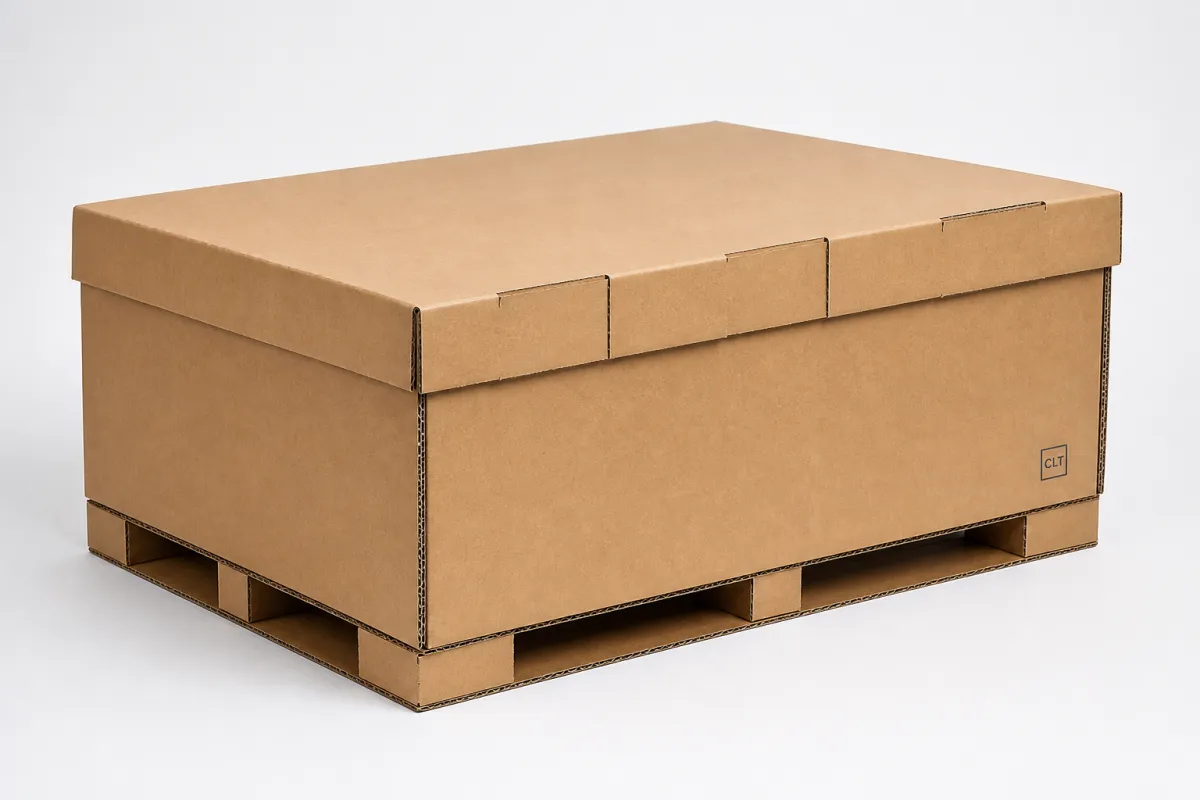
A recycled pallet boxes manufacturer typically produces heavy-duty bulk containers designed to ride on a pallet without buckling, tearing, or slipping out of square. The idea sounds simple enough, though the actual build can vary a lot. Some pallet boxes are open-top bulk shippers for bagged goods. Others are full-overlap containers with reinforced corners, scored panels, and lids that help keep stacked product stable in the warehouse and during transit.
Many buyers are surprised that recycled content does not automatically mean weaker performance. In corrugated packaging, recycled liners and recovered fiber can still deliver excellent structural behavior when the board is engineered correctly. Fiber quality, flute profile, and wall construction all matter. A well-specified box from a recycled pallet boxes manufacturer can outperform a poorly designed virgin-fiber box that only looks heavier on paper. That part catches people off guard sometimes, and honestly, it should.
These boxes usually show up where volume matters more than display. Agriculture is a common fit, especially for produce, seed, and processing ingredients. Industrial parts, hardware, recyclables, and bulk e-commerce shipments also fit the format well. In warehouse transfers, pallet boxes reduce loose-product movement and make the unit load easier to stack, stretch-wrap, and move by pallet jack or forklift.
On the materials side, the recycled angle often means recovered corrugated fiber, recycled paperboard liners, and reclaimed content in the medium or linerboard. The exact blend depends on the load and the moisture exposure. A capable recycled pallet boxes manufacturer will not treat all recycled fiber as interchangeable. Fiber length, refining, moisture, and board density all affect compression strength and print performance.
The best way to think about the box is as part of the transport system. The pallet, wrap pattern, stacking method, and storage duration matter just as much as the carton itself. A recycled pallet box is a structural element in a larger load unit, not just a container with a logo on the side. That is why experienced buyers ask for compression data, not only recycled content percentages. I have seen plenty of projects go sideways because someone focused on the board alone and forgot the pallet setup underneath it.
A recycled pallet box should be judged by the route it survives, not by recycled content alone.
Process and timeline: how a recycled pallet boxes manufacturer works
The production sequence usually begins with recovered fiber sourcing, then pulping, cleaning, and sheet formation. From there, the mill side produces the liner and medium used in the board. Depending on the design, the plant may corrugate the board, build multiwall material, or prepare heavy sheet stock for converting. A recycled pallet boxes manufacturer that manages both design and converting can usually move faster because fewer handoffs slow the work down. Fewer handoffs also mean fewer opportunities for a small spec detail to get lost in the shuffle.
Once the material is ready, the engineering work starts. That is where dimensions, wall counts, hand holes, venting, reinforced corners, glued joints, and lid styles are sorted out. A standard footprint may be straightforward, but Custom Pallet Boxes often need a few rounds of adjustment before the first production run feels right. The dimensions have to work on the pallet, and they also have to work for the people loading and unloading the box. If the box is awkward in real hands, the spec is not finished yet.
Quality control matters at every stage. Caliper, moisture, print registration, glue integrity, and compression performance all influence the final result. A serious recycled pallet boxes manufacturer will test the structure against the expected load and stacking pressure, and may also check the fit against the actual pallet size used downstream. A few millimeters off in the wrong place can create overhang, wrapping issues, or unstable stacks.
Timing is one of the easiest parts of the process to underestimate. Samples usually move faster than full production, yet custom tooling, print setup, and material planning can stretch the schedule. If the order needs a new die, special coatings, or structural tests, the calendar can expand quickly. In most projects, the realistic timeline includes sample review, approval, production, and freight planning working together rather than one clean manufacturing window.
The biggest risks to lead time usually come from seasonal demand, large minimum order quantities, and recycled fiber supply variability. Some recycled grades are easy to source, while others tighten when mills are busy or freight gets congested. A practical recycled pallet boxes manufacturer will tell you if your preferred spec may need a substitution or a small structural adjustment. That kind of honesty saves a lot of trouble later.
If you are mapping the project, a simple timeline often looks like this:
- Spec review and quote: 1 to 3 business days
- Prototype or sample prep: 5 to 10 business days
- Sample review and revision: 2 to 7 business days
- Production run: often 10 to 20 business days, depending on volume
- Freight and delivery: varies by lane, pallet count, and destination
Key factors that affect strength, performance, and sustainability
Strength begins with the board. Single-wall construction can be enough for lighter bulk loads, while many pallet applications move into double-wall or reinforced builds because stack pressure rises quickly and the route is not always gentle. A recycled pallet boxes manufacturer should explain why a board choice fits your load instead of simply calling it “stronger.” Stronger by itself is not a specification; it is just a direction.
Flute profile matters as well. The flute is not filler; it affects cushioning, stiffness, and compression behavior. E-flute, B-flute, C-flute, and double-wall combinations all behave differently under stack load. Buyers sometimes focus on thickness alone, yet the better question is how the flute supports edge crush and how the board behaves when humidity rises. Route conditions start to matter very quickly there, and a box that feels fine in the warehouse can act very differently two days into transit.
Performance testing is where the conversation gets concrete. Edge crush, burst resistance, and box compression are the common benchmarks, and each one tells you something different. Edge crush helps predict vertical stacking behavior. Burst resistance points to puncture and tear resistance. Compression testing shows how the completed box behaves in a stacked warehouse. A careful recycled pallet boxes manufacturer will discuss those numbers against your product weight and stacking height, not as isolated lab figures that sound impressive but mean little on the floor.
Environmental exposure is the other major variable. Recycled fiber can work beautifully in many applications, but humidity, condensation, cold-chain transfers, and long storage periods can weaken the board if the structure is not designed for that environment. In wet or damp routes, some buyers need moisture-resistant treatment, stronger liners, or design changes that keep panels from softening and corners from collapsing.
The pallet itself deserves more attention than it often gets. A box that fits a 48 x 40 pallet well may behave badly on a different footprint, especially if there is overhang or a wrap pattern that does not restrain the top edge. Fork handling, slip sheets, and stretch-wrap methods can all change the load path. That is why a recycled pallet boxes manufacturer should ask about pallet specs early, not after the design is already locked.
On the sustainability side, the tradeoff is simple in principle and easy to oversimplify in practice. Higher recycled content can reduce virgin fiber demand, which is a real benefit. The better sustainable choice is the one that protects product, avoids damage, and uses the right amount of material. Too much packaging wastes fiber. Too little packaging wastes product. Good design keeps both in check, and that's where the real environmental value lives.
For buyers who work from standards, it helps to keep ISTA testing guidance in mind when evaluating distribution risk, and ASTM methods often sit behind the structural discussion even when a supplier does not name them first. A good recycled pallet boxes manufacturer should be comfortable discussing testing language in plain English. If they can only speak in buzzwords, keep asking questions.
Recycled pallet boxes manufacturer pricing: cost, MOQ, and quote factors
Pricing comes from a handful of structural and commercial choices. Board grade is one of the biggest. Wall construction, box size, print coverage, coatings, inserts, and any special tooling all move the number. A recycled pallet boxes manufacturer may quote a plain blank box very differently from a branded unit with internal dividers and a moisture-resistant surface treatment, because the setup burden and labor are not the same.
Minimum order quantity has a real effect on unit cost. Smaller runs usually carry a higher per-box price because setup, scheduling, and converting costs are spread across fewer pieces. As order volumes grow, the cost per unit often comes down more predictably, though freight can still swing the landed total. That is why a quote that looks low at the plant can look very different once palletization, warehouse handling, and shipping are added. A buyer who only glances at the unit price is gonna miss the part that matters most.
Freight deserves its own attention. Pallet boxes are bulky, so cube matters. The carton may be inexpensive at the plant, but shipping volume, pallet count, and storage space can change the landed cost quickly. Buyers comparing offers should ask whether pricing includes delivery, whether pallets are returnable, and how the goods are packed for transit. A good recycled pallet boxes manufacturer will separate unit cost from freight when possible because that makes comparison easier.
Here is a practical way to compare common construction choices:
| Construction | Typical Use | Relative Cost | Strength Profile | Notes |
|---|---|---|---|---|
| Single-wall recycled corrugated | Lighter bulk loads, short routes | Lower | Moderate | Good for cost control when stack pressure is limited |
| Double-wall recycled corrugated | Heavier loads, longer transit, stronger stacking | Medium | High | Often the best balance of cost and performance |
| Reinforced custom build | Export, humidity, awkward product geometry | Higher | Very high | May include coatings, inserts, or special corner support |
When you request a quote, give the manufacturer enough detail to price the real job. Dimensions, target load weight, pallet size, storage conditions, order quantity, and whether samples are needed all help. If the product is loose, bagged, boxed, or divided, say so. The more the quote matches the load, the fewer surprises appear later. A recycled pallet boxes manufacturer can only be accurate if the spec is accurate, and that starts with the buyer being clear enough to be useful.
One common mistake is comparing quotes line by line without comparing the specs underneath them. Two prices can sit close together while one includes stronger board, tighter tolerances, and lower scrap risk. That is not a small difference. It changes how much damage you carry, how many replacements you need, and whether the box behaves reliably in the field.
For buyers working with packaging teams, it often helps to think beyond the sticker price and include the full packaging system. If your organization also needs labels, branded outer packs, or coordinated pack-outs, a visit to About Custom Logo Things can help frame how the box fits into the broader packaging plan.
Step-by-step guide to specifying the right recycled pallet boxes
The fastest route to a good result is building the spec before asking for pricing. Start with the product profile: dimensions, unit weight, pack count, stacking pattern, and whether the load is loose, bagged, boxed, or supported by dividers. A recycled pallet boxes manufacturer can work from a simple sketch, but the more exact the data, the better the recommendation.
Next, map the journey from start to finish. Warehouse conditions, transit mode, storage time, humidity exposure, and how often the box will move by forklift or pallet jack all matter. The box may never see rough handling, or it may be shifted half a dozen times before reaching the customer. Those are very different design scenarios, and the spec should reflect that difference.
Then choose the architecture. Open-top bulk shippers are efficient for fast loading. Full-overlap designs give better edge protection. Telescoping styles can help with height adjustment. Reinforced corners, integrated lids, and venting panels may all make sense depending on the product. A thoughtful recycled pallet boxes manufacturer will talk through the tradeoffs in speed, protection, and cost instead of pushing one style for every use case.
Sampling is worth the time. A prototype lets you verify fit on the pallet, ease of loading, wrapping behavior, and collapse performance under real conditions. I like to see the box loaded the same way it will be used in production, because a design can look excellent on paper and still fail in practical details such as hand-hole placement or flap interference. A good sample tells the truth pretty quickly.
Before production begins, lock the spec sheet. Confirm dimensions, board grade, print copy, quantity, packing method, and acceptable tolerances. If branding needs a color target, say so. If there is a moisture barrier requirement, define it clearly. A recycled pallet boxes manufacturer can only hold the line on quality if everyone is quoting the same build.
A simple checklist keeps the project tight:
- Confirm internal and external dimensions.
- State product weight and stacking height.
- Choose the pallet footprint and wrap method.
- Identify moisture, cold-chain, or export exposure.
- Request a sample or prototype.
- Approve the final spec in writing.
Common mistakes buyers make with recycled pallet boxes
The first mistake is assuming recycled content means lower quality. That is not how structural packaging works. A properly designed recycled box can be very strong, and a poorly designed virgin-fiber box can disappoint. What matters is how the board is built, how the load is distributed, and whether the route conditions were considered by the recycled pallet boxes manufacturer.
The second mistake is ignoring moisture and storage conditions. Recycled fiber can lose compression strength when exposed to humidity, condensation, or long storage times if the structure is not designed for it. That is where panel warping, soft corners, and sagging tops appear. If the product may sit in a warm warehouse or travel through refrigerated zones, say so early. Otherwise, the box may pass a clean desk review and fail once it gets into the actual air the product lives in.
The third mistake is underestimating the load path. The same box can perform very differently depending on whether the weight is centered, shifted, or stacked in a way that creates side pressure. If the product sloshes, settles, or compresses unevenly, the carton should be designed for that movement. A solid recycled pallet boxes manufacturer will ask about internal stability, not only the outer size.
The fourth mistake is skipping pallet compatibility checks. Overhang leads to damage, wasted space, and unstable stacks. If the pallet size and the carton footprint do not work together, stretch wrap has to carry too much of the burden. That is rarely ideal. The best packaging designs are the ones that work cleanly with the pallet you already use.
The fifth mistake is skipping the prototype stage. It is tempting to save a little money and go straight to production, though that often creates much larger hidden costs later: damaged goods, rework, replacement orders, and frustrated downstream teams. A sample run is cheap compared with a failed shipping cycle. Most buyers learn that lesson only once.
There is also a softer mistake that shows up often: quoting the project before the team agrees on what success looks like. A recycled pallet boxes manufacturer cannot optimize for price, strength, print quality, and shipping cube all at the same time unless the priorities are clear. Pick the top two or three goals and say them plainly. That kind of clarity makes the whole project easier to steer.
Expert tips and next steps for a recycled pallet boxes manufacturer project
Build a spec packet before asking for quotes. Include dimensions, product weight, pallet type, route conditions, order volume, and the target timeline. That one document saves a lot of back-and-forth and helps the recycled pallet boxes manufacturer price the job accurately the first time.
Ask for both performance and price clarity. If a supplier gives you a number but not the board grade, the compression target, or the setup assumptions behind it, you are not really comparing options yet. A written quote with a few thoughtful notes is more useful than a fast quote that leaves out half the picture. The best packaging decisions are rarely the shortest ones.
Plan around the production rhythm, not just the manufacturing slot. Approval cycles, sample review, and print sign-off can matter as much as the date on the press schedule. If multiple internal teams need to approve the box, build that time into the project. A recycled pallet boxes manufacturer can move quickly only when the buyer side is ready to move with them.
Use a side-by-side comparison sheet when reviewing suppliers. Compare board grade, recycled content, MOQ, Lead Time, freight terms, and whether the supplier offers structural guidance. That keeps the conversation grounded in measurable differences instead of broad claims. For brands that want broader packaging support, it can also help to connect the box project with the rest of the packaging line through Custom Packaging Products.
If you want the cleanest possible rollout, schedule sampling first, then confirm the final specification, then set the launch window. That sequence protects quality and keeps the project from drifting. A strong recycled pallet boxes manufacturer relationship is built on accurate specs, realistic testing, and honest expectations about what the box needs to survive.
My practical advice stays simple: protect the product, match the route, and avoid overbuying material just to feel safe. The best result is usually the one that survives the supply chain with the least waste. Start with the pallet size, the product weight, and the actual handling path, then let the structure follow from there. That is how a recycled pallet boxes manufacturer delivers a bulk shipper that looks straightforward on the outside and does a lot of structural work underneath.
How do I know if a recycled pallet boxes manufacturer can handle heavy loads?
Ask for compression data, edge crush results, or another structural test tied to the exact box size you need. Then share the actual product weight, stacking height, and storage time so the recycled pallet boxes manufacturer can recommend the right board construction. A prototype tested under your real warehouse and transit conditions is still the clearest proof, and it beats guessing every time.
What should I send to a recycled pallet boxes manufacturer for an accurate quote?
Provide the internal and external dimensions, target pallet size, unit weight, and the quantity you plan to order. Include any special needs such as print, moisture resistance, inserts, hand holes, or export requirements. Tell the supplier your desired lead time and whether you need samples first, because those details change both pricing and scheduling for a recycled pallet boxes manufacturer.
What is the usual lead time for recycled pallet boxes manufacturer orders?
Simple stock-style builds are usually faster than fully custom boxes with new tooling or print setups. Sample approval, material availability, and order volume can all extend the timeline, especially during busy shipping periods. The safest approach is to get a written schedule from the recycled pallet boxes manufacturer that includes sampling, approval, manufacturing, and delivery milestones.
Are recycled pallet boxes suitable for humid or export shipping conditions?
Yes, but the design has to match the environment, especially if the shipment will see humidity, condensation, or long storage. A supplier may recommend stronger board, coatings, or structural changes to protect compression strength and shape retention. For export or wet handling, test the completed box with the exact pallet, wrap, and loading method you plan to use.
What is the difference between recycled pallet boxes and standard corrugated boxes?
Recycled pallet boxes are built for bulk loads, pallet handling, and heavier stacking pressures than ordinary shipping cartons. They often use thicker board, larger dimensions, and reinforcements that help protect products during warehouse movement and transport. Standard corrugated boxes are better for smaller parcels, while pallet boxes are designed for higher-volume industrial or wholesale shipping. For most buyers, a recycled pallet boxes manufacturer is the right partner when the load lives on a pallet instead of a parcel route.

