Buyer Fit Snapshot
| Best fit | Recycled Paper Edge Protectors Bulk projects where brand print, material claims, artwork control, MOQ, and repeat-order consistency need to be specified before quoting. |
|---|---|
| Quote inputs | Share finished size, material target, print colors, finish, packing count, annual reorder estimate, ship-to region, and any compliance wording. |
| Proofing check | Approve dieline scale, logo placement, barcode or warning zones, color tolerance, closure strength, and carton packing before bulk production. |
| Main risk | Vague material claims, crowded artwork, missing packing details, or unclear freight terms can make a low unit price expensive after revisions. |
Fast answer: Recycled Paper Edge Protectors Bulk: Pricing & Specs should be specified like a repeatable production item. The safest quote records material, print method, finish, artwork proof, packing count, and reorder notes in one written spec.
Production checks before approval
Compare the actual filled-product size with the drawing, then confirm tolerance on folds, seals, hang holes, label areas, and retail display edges. Reserve space for logos, QR codes, warning copy, and material claims before decorative graphics fill the panel.
Quote comparison points
Review material grade, print process, finish, sampling route, tooling charges, carton quantity, and freight assumptions side by side. A quote is only useful when the supplier can repeat the same color, closure quality, and packing count on the next order.
Recycled Paper Edge Protectors Bulk: Pricing & Specs
recycled paper edge protectors bulk is usually purchased for one reason above the rest: the cost of a crushed corner can outrun the cost of the board that prevented it. A pallet can leave the warehouse looking tidy, then arrive with a split carton seam, a bowed stack, or strap-cut edges that trigger a claim. That turns edge protection from a nice-to-have into a practical control point.
Packaging teams usually face a blunt choice. Is the material inexpensive, or does it actually remove a repeat failure mode at scale? On repeat lanes, with the same carton footprint and the same strap pattern, a properly specified corner board can protect far more value than its price suggests. The purchase cost is visible. The avoided labor, chargebacks, returns, and rework usually are not.
A pallet corner that fails at the wrong moment can erase the savings from an entire run of lower-cost packaging. The right board does more than sit there; it keeps the load square, spreads pressure, and stops small damage from becoming a shipment problem.
Why recycled paper edge protectors bulk can cut damage costs
The logic is simple enough to survive a plant-floor audit: pressure needs somewhere to go. Straps bite. Stretch wrap cuts. Carton edges crush. Without a rigid buffer at the corner, those forces collect at the weakest point and the stack starts to drift. The pallet may still look acceptable on a dock, yet it is already less stable in transit.
Edge protectors change the failure pattern. A strap that would otherwise dig into a carton seam spreads across a broader contact area. A wrapped pallet that leans slightly at one touchpoint stays closer to square when the corners hold their shape. That matters on mixed freight, on long dwell times, and on lanes with multiple handoffs. One modest improvement in load integrity often prevents a chain of costs that is much larger than the board itself.
Bulk purchasing brings a second benefit that gets overlooked. It lowers unit cost, yes, but it also standardizes the packing method. Once every shift uses the same board size, the same placement rule, and the same strap plan, the warehouse stops improvising. That consistency matters because packaging errors usually come from exceptions, not from the normal routine.
From a buyer's point of view, the comparison is not cheap board versus no board. It is a few cents of control versus the cost of a return loop. On repeat shipments, especially cartons with sharp product edges or heavy top loads, a more rigid recycled paper angle board often makes better financial sense than a lower-grade alternative that saves pennies and loses shape under pressure.
- Strap pressure gets spread across the board leg instead of pinching one carton edge.
- Stretch wrap stays off the carton corner and is less likely to cut into the case board.
- Stack stability improves because the pallet corners stay square during forklift handling.
- Damage claims fall when load deformation is controlled before transit starts.
In many operations, the right edge protector is the difference between acceptable on paper and acceptable in the network. That is why buyers usually treat recycled paper edge protectors bulk as a reliability tool, not merely a materials line item.
Product details: what you get in recycled paper edge protectors bulk
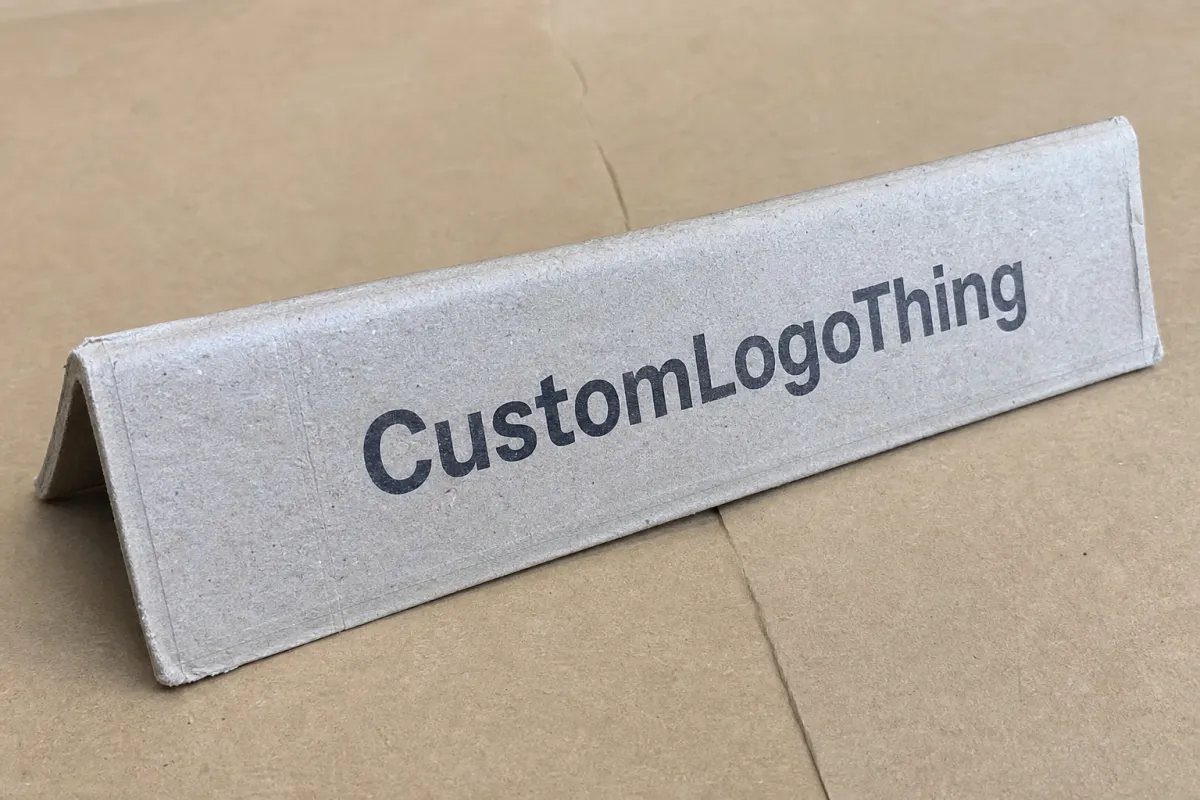
Recycled paper edge protectors bulk usually means angle boards, corner boards, and edge guards made from layered recycled paperboard. Their job is straightforward: reinforce vulnerable edges on cartons, trays, and palletized loads. Some ship in long strips for continuous protection. Others arrive pre-cut to standard lengths. A few are built with custom profiles for a specific carton size, pallet pattern, or strap lane.
The core function is stiffness where the package needs it most. That can mean pallet reinforcement on the vertical edges of a load, carton corner protection for product that ships in nested boxes, or strap protection for unitized freight traveling under compression. The material choice matters because recycled paperboard gives structure without introducing plastic components that complicate recovery or disposal.
Common use cases include:
- Pallet reinforcement for unitized shipments that need the load to stay square.
- Carton corner protection for boxes that would otherwise crush under stack pressure.
- Load stabilization during stretch wrapping, warehousing, and truck movement.
- Strap protection where banding or strapping would otherwise damage the carton edge.
Customization is often the point where recycled paper edge protectors bulk becomes genuinely useful. Buyers can specify leg length, board thickness, board grade, inner angle, print, moisture-resistant treatment, and die-cut features. A narrow profile may suit lighter cartons. A thicker board with longer legs is better for tall, heavy pallets or loads with uneven top pressure. A stronger board is not automatically the right board. Oversize it, and the cost rises while the packing line slows down.
Workflow compatibility matters just as much. These boards can be used in hand packing, semi-automated stations, stretch wrap setups, and strapping systems. That means a buyer does not need to redesign the entire packing line to make the product useful. The fit still has to be sensible, though, because board geometry should match the way the load is actually built.
If you are validating a new lane, it helps to tie the product to a transit test plan. A supplier should be able to discuss how the board performs under realistic conditions, not just how it looks in a sample photo. For reference on transit validation and test methods, the standards library at ISTA is a useful benchmark. A board that survives a sample bench but fails in a real distribution cycle is not a bargain.
There is one practical caveat buyers should keep in view: recycled content does not automatically mean the board is suitable for every recovery stream or every humid environment. A coated or moisture-treated version can improve performance, but it may change disposal or recycling expectations. The right construction is the one that fits the load, the lane, and the end-of-life plan together.
Specifications that affect protection, fit, and handling
Specification detail is where many bulk purchases succeed or fail. A corner board can look nearly identical from one supplier to the next and still behave very differently once it is strapped, wrapped, stacked, and moved. The most important variables are leg length, caliper or thickness, board density, angle consistency, and cut tolerance. Small changes in those numbers alter stiffness and change how the board sits against the load.
Typical leg lengths can run from about 25 mm to 100 mm, or roughly 1 to 4 inches, depending on the load profile. Thickness often ranges from around 2 mm to 10 mm for paper-based edge boards, with lighter cartons needing less and heavy unitized loads needing more. No formula covers every lane. The right spec depends on how hard the straps pull, how high the stack is, and whether the top cartons can compress without failing.
Angle consistency matters more than many buyers expect. If the board opens too wide, contact with the carton corner weakens. If the angle is too tight, the fit becomes awkward and the board can spring out under tension. Cut tolerance matters too because a board that varies by even a small but repeated amount can create line stoppages on a high-volume packout. A packaging operation does not need perfection. It needs repeatability.
Load type changes the recommendation. Lightweight cartons with soft product might only need modest edge reinforcement. Sharp-edged products, metal components, glass, or dense industrial items often need a stronger profile to prevent crush, puncture, or strap cut-through. Heavy pallet loads also need enough edge stiffness to preserve the top-to-bottom column of the stack. If the board is under-specified, the load shifts. If it is over-specified, you pay for structure you do not need and make packing harder than necessary.
Storage conditions belong in the spec conversation as well. Humidity swings, chilled freight, and long warehouse dwell times can change how paperboard behaves. A board that performs well in a dry dock may soften if it is stored in a damp area or sits near temperature changes. If shipments spend time in cold storage or humid staging, ask about moisture resistance and the expected storage window before performance begins to drop.
A practical spec sheet should include all of the following:
- Carton dimensions and the exact pallet footprint.
- Average and maximum ship weight for the lane.
- Stack height and whether the load is single- or double-stacked.
- Strap tension and how many straps are applied per pallet.
- Stretch wrap pattern and whether machine wrap or hand wrap is used.
- Storage conditions before shipment and after receipt.
Buyers who gather those details upfront usually get a faster, more accurate recommendation. The quote becomes specific. The sample becomes meaningful. The final board is more likely to fit the actual packing process instead of a theoretical version of it.
If you need a material recovery reference for internal sustainability language, the EPA's recycled-content guidance is a useful starting point. Recycled content alone does not prove suitability, though. Performance still has to be checked against the load, the lane, and the handling process.
Pricing & MOQ for recycled paper edge protectors bulk
Pricing usually turns on five variables: board thickness, custom sizing, print, moisture treatment, and order volume. Freight distance matters too, especially because bulky edge protection ships with a lot of air relative to its weight. A small change in dimension can alter pallet density, which can move delivered cost more than some buyers expect.
Minimum order quantity depends on whether you are buying stock sizes or a custom profile. Stock runs may be available at pallet quantities or even lower, while custom shapes often start at a few thousand pieces and climb from there. The larger the board, the less efficient the pallet utilization, which can push MOQ up as the manufacturer looks for economical production and shipping handling.
Here is a practical comparison of common buying options. The ranges below are planning numbers, not a quote, and they assume a mid-volume order around 5,000 to 10,000 units unless otherwise stated.
| Option | Best for | Typical MOQ | Indicative unit price | Lead time | Main tradeoff |
|---|---|---|---|---|---|
| Stock recycled paper edge boards | Standard pallet patterns and repeat lanes | 1 pallet to 3,000 units | $0.18-$0.42 | About 5-12 business days | Fastest and simplest, but less tailored |
| Custom size angle boards | Cartons with fixed dimensions or special strap positions | 3,000-10,000 units | $0.28-$0.68 | About 10-20 business days | Better fit, slightly longer setup and scheduling |
| Heavy-duty recycled paper edge protectors bulk | Dense loads, tall stacks, sharp corners | 5,000+ units | $0.45-$0.95 | About 12-24 business days | Higher material cost, but stronger compression resistance |
| Moisture-resistant or coated boards | Chilled storage, humid facilities, longer dwell times | 5,000+ units | $0.52-$1.05 | About 15-25 business days | Extra protection, but not always needed for dry freight |
Those numbers may look wider than expected. That is normal. Material grade, board thickness, print coverage, tooling, and freight can move the price materially. A supplier quoting a board for a light retail carton and a supplier quoting a board for a heavy industrial tote are not selling the same thing, even if both products are called corner boards.
Hidden costs matter just as much as sticker price. A damaged carton may cost only a few dollars to remake, but the full cost often includes labor, expedited freight, customer service time, and, in some cases, a chargeback. On high-volume shipping programs, even a small reduction in claims can more than offset a modest bump in unit price. That is the financial logic behind bulk purchasing.
To get the sharpest quote, include the following in your request:
- Exact dimensions for the edge board or corner board.
- Annual volume and a realistic monthly draw.
- Delivery frequency if you want blanket releases or scheduled replenishment.
- Board grade or any required compression target.
- Any special handling such as print, moisture resistance, or line-fed packaging requirements.
A precise quote is usually faster than a vague one. It also avoids unpleasant surprises once production starts. If your buying team wants structured volume pricing or an ongoing supply agreement, our Wholesale Programs page is the right place to start. Bulk packaging gets easier when the supply plan is built in, not bolted on later.
Process, timeline, and lead time from quote to delivery
A clean buying process saves more time than most teams realize. The fastest orders usually follow the same sequence: send specs, review the recommended construction, approve a sample, confirm pricing, then move into production scheduling. Each step lowers risk. Skip one, and the day you save up front can turn into a week later.
Stock and custom orders behave differently. Stock sizes move faster because the dimensions and cutting patterns already exist. Custom runs take longer because they may require tooling changes, paperboard setup, or a unique finishing specification. Print adds another layer. A simple unprinted board is easier to schedule than one that needs branding or lane identification on every piece.
Lead time is shaped by more than production time. Order size matters. So does plant capacity, seasonal demand, and freight method. A truckload shipment can be easier to plan than a split pallet order, but it is not always the right move if your warehouse cannot receive that much product at once. Good lead time planning starts with the receiving side, not just the production side.
For most buyers, a realistic timeline looks like this:
- 1-3 business days for spec review and initial recommendation.
- 3-7 business days for sample preparation, depending on complexity.
- 5-12 business days for stock production and outbound freight.
- 10-25 business days for custom production, print, or treated boards.
Those windows can compress or stretch depending on the plant and shipping distance. What matters is setting the expectation early. If the launch date is tied to a customer promotion, a production window, or a seasonal peak, the edge protector schedule should be locked before the first inbound cartons arrive. Otherwise the packaging team ends up rushing the wrong part of the job.
Quality control checkpoints are worth asking about. Before shipment, a supplier should check dimensions, angle consistency, board build, and pack-out quantity. Some buyers also ask for compression or transit validation notes, especially on higher-value loads. A board that ships with the wrong leg length can force operators to improvise on the line, which reduces the very consistency the purchase was meant to create.
If you already have a routine order cycle, building that into a replenishment plan is smarter than waiting to reorder after inventory gets thin. That is also where a wholesale buying structure can help: the product becomes a scheduled input instead of an emergency purchase. If your team wants to align purchasing with recurring demand, the bulk order process is a more efficient path than one-off quotes every time stock runs low.
Why choose us for recycled paper edge protectors bulk
Choosing a supplier for recycled paper edge protectors bulk should not come down to marketing language. It should come down to repeatability, fit, and supply discipline. If a customer ships every week, the real risk is inconsistency: a board that varies by dimension, a delayed shipment that interrupts packing, or a profile that looks right on paper but does not sit correctly on the load.
Consistency starts with manufacturing control. That means stable dimensions, predictable board build, and a product that arrives ready for the same packing method every time. When a warehouse trains staff on one standard and the supplier quietly changes the board profile, the packing line slows down and damage risk rises. Buyers notice that immediately, even if the spec sheet still looks acceptable.
Sustainability matters too, but it should be framed with evidence rather than slogans. Recycled paper construction reduces dependence on plastic corner pieces and supports easier fiber recovery streams in many operations. For buyers who need formal sourcing language, FSC-aligned paper sourcing can be part of the procurement discussion, while recycled content supports broader material reduction goals. Precision matters here. Sustainability claims only help when they are backed by the actual construction and sourcing path.
Commercially, buyers tend to value three things most:
- Fast quoting so the team can compare options before the next production run.
- Practical design guidance so the board fits the real carton pattern, not a theoretical one.
- Supply alignment so reorder timing matches the customer's shipping rhythm.
A useful comparison sits beside other protective formats. Plastic corner pieces can work in specific reuse loops, but they are not always the best answer for fiber-based packaging programs that need cleaner recovery. Foam inserts can add cushioning, but they are often the wrong fit for load stabilization and can complicate waste handling. Recycled paper edge protectors bulk frequently wins on the mix of cost, recyclability, and handling simplicity.
For teams that want a clean procurement path, the best supplier is the one that can translate load data into a usable spec and then deliver that spec repeatedly. Packaging stops being a commodity purchase and starts becoming an operational decision. A disciplined wholesale structure fits that reality, because once the board is qualified, reordering should be routine rather than a project.
Next steps: sample, quote, and rollout plan
The smartest rollout starts small and becomes standard only after the data supports it. Before you request a quote, gather the basics: carton dimensions, pallet height, strap method, monthly usage, and delivery locations. Add any information about humidity, cold storage, or long dwell times. Those details change the board recommendation more than most buyers expect.
Then ask for a sample kit or a pilot run on one lane. A one-lane test is often enough to show whether the board sits correctly, whether the straps bite cleanly, and whether the stack stays square through receiving and delivery. If the pallet survives in the real process, not just in a test photo, you have something worth scaling.
A useful rollout plan usually includes three teams:
- Purchasing, to confirm the spec, the MOQ, and the replenishment trigger.
- Warehouse operations, to verify the board fits the line and does not slow packout.
- Shipping or quality, to track damage rates, claims, and customer feedback after launch.
The value of this approach is that it keeps a packaging change from turning into a surprise. Once the sample is approved and the spec is locked, the reorder path can be scheduled, which helps on recurring programs with stable carton footprints. If you want to move faster on recurring volume, ask for a quote structure that supports repeat releases rather than a one-time shipment only.
That is the practical case for recycled paper Edge Protectors Bulk: a lower-risk lane, a cleaner packing standard, and a replenishment plan that keeps protection consistent from one shipment to the next.
Actionable takeaway: if you are sourcing recycled paper edge protectors bulk, start with one live shipping lane, document carton size, strap tension, stack height, and humidity exposure, then approve the board only after it holds shape under the actual packing method you use every day. That process gives you a spec you can trust, not just a price you can file away.
FAQ
What is the minimum order for recycled paper edge protectors bulk?
MOQ usually depends on board size, whether the item is stock or custom, and how it is packed for shipping. Stock sizes may be available at pallet quantities, while custom profiles often start around 3,000 to 10,000 units. Bulk pricing tends to improve once orders move from sample size to production quantity, and repeat schedules can improve terms further.
Are recycled paper edge protectors bulk strong enough for heavy pallets?
Yes, if the leg length, thickness, and board grade match the load and strap tension. Heavy pallets usually need a stronger profile and a proper fit at the corner. For dense or sharp-edged loads, test the board on a real pallet pattern before approving full production so the spec rests on actual performance, not assumption.
Can recycled paper edge protectors bulk be made to custom sizes?
Custom sizing is common for carton corners, pallet tops, and long edge protection on repeat shipping lanes. The key is to provide exact dimensions, tolerance limits, and workflow details so the board fits without slowing the line. A few millimeters can matter if the board has to work with automated or semi-automated packing steps.
How long is the lead time for recycled paper edge protectors bulk?
Lead time depends on stock availability, custom specs, production capacity, and freight method. Standard items usually move faster than custom builds, while printed or moisture-resistant boards generally need more scheduling time. A sample approval step helps avoid later delays because it confirms the right construction before the production slot is booked.
Do recycled paper edge protectors bulk work with stretch wrap and strapping?
Yes, they are commonly used with both because they distribute pressure and help keep the load square. The important detail is matching the board profile to the strap tension and wrap pattern so the protection does not create a new handling problem. If the fit is right, the board improves the package without adding complexity.
For procurement teams comparing recycled paper edge protectors bulk across multiple lanes, the best result usually comes from one qualified spec, one tested pallet pattern, and one replenishment plan that keeps shipping and purchasing in sync.