Buyer Fit Snapshot
| Best fit | Recycled Poly Mailers with Logo projects where brand print, material claims, artwork control, MOQ, and repeat-order consistency need to be specified before quoting. |
|---|---|
| Quote inputs | Share finished size, material target, print colors, finish, packing count, annual reorder estimate, ship-to region, and any compliance wording. |
| Proofing check | Approve dieline scale, logo placement, barcode or warning zones, color tolerance, closure strength, and carton packing before bulk production. |
| Main risk | Vague material claims, crowded artwork, missing packing details, or unclear freight terms can make a low unit price expensive after revisions. |
Fast answer: Recycled Poly Mailers with Logo: Film, Print, MOQ, and Carton Packing should be specified like a repeatable production item. The safest quote records material, print method, finish, artwork proof, packing count, and reorder notes in one written spec.
Production checks before approval
Compare the actual filled-product size with the drawing, then confirm tolerance on folds, seals, hang holes, label areas, and retail display edges. Reserve space for logos, QR codes, warning copy, and material claims before decorative graphics fill the panel.
Quote comparison points
Review material grade, print process, finish, sampling route, tooling charges, carton quantity, and freight assumptions side by side. A quote is only useful when the supplier can repeat the same color, closure quality, and packing count on the next order.
Recycled Poly Mailers With Logo: Practical Branding Guide
Recycled poly mailers with logo do more than move a parcel from point A to point B. They replace the anonymous shipping bag with a visible brand signal, and for many e-commerce teams that is the first physical impression a customer gets when the order lands at the door. The outer layer shapes how polished, organized, and intentional the whole purchase feels. That is why recycled poly mailers with logo deserve the same scrutiny as a hang tag, a product insert, or a retail bag.
Not every recycled mailer behaves the same way, and not every logo prints with the same clarity on film. The gap between recycled content, post-consumer content, and final film appearance matters once production starts, especially if seal strength, opacity, and warehouse handling are part of the brief. A package can look perfect in a mockup and still disappoint on the line. The real goal is not simply to print a logo. It is to choose a shipping format that supports the brand, the budget, and the fulfillment flow without inviting surprises.
For teams buying packaging at scale, that distinction matters more than the design mood board suggests. A startup shipping 500 units a month can tolerate more experimentation than a fulfillment center packing 500 units a day. One order can absorb a slightly slower seal or a minor color shift. The other cannot.
What Recycled Poly Mailers with Logo Really Do for Brands
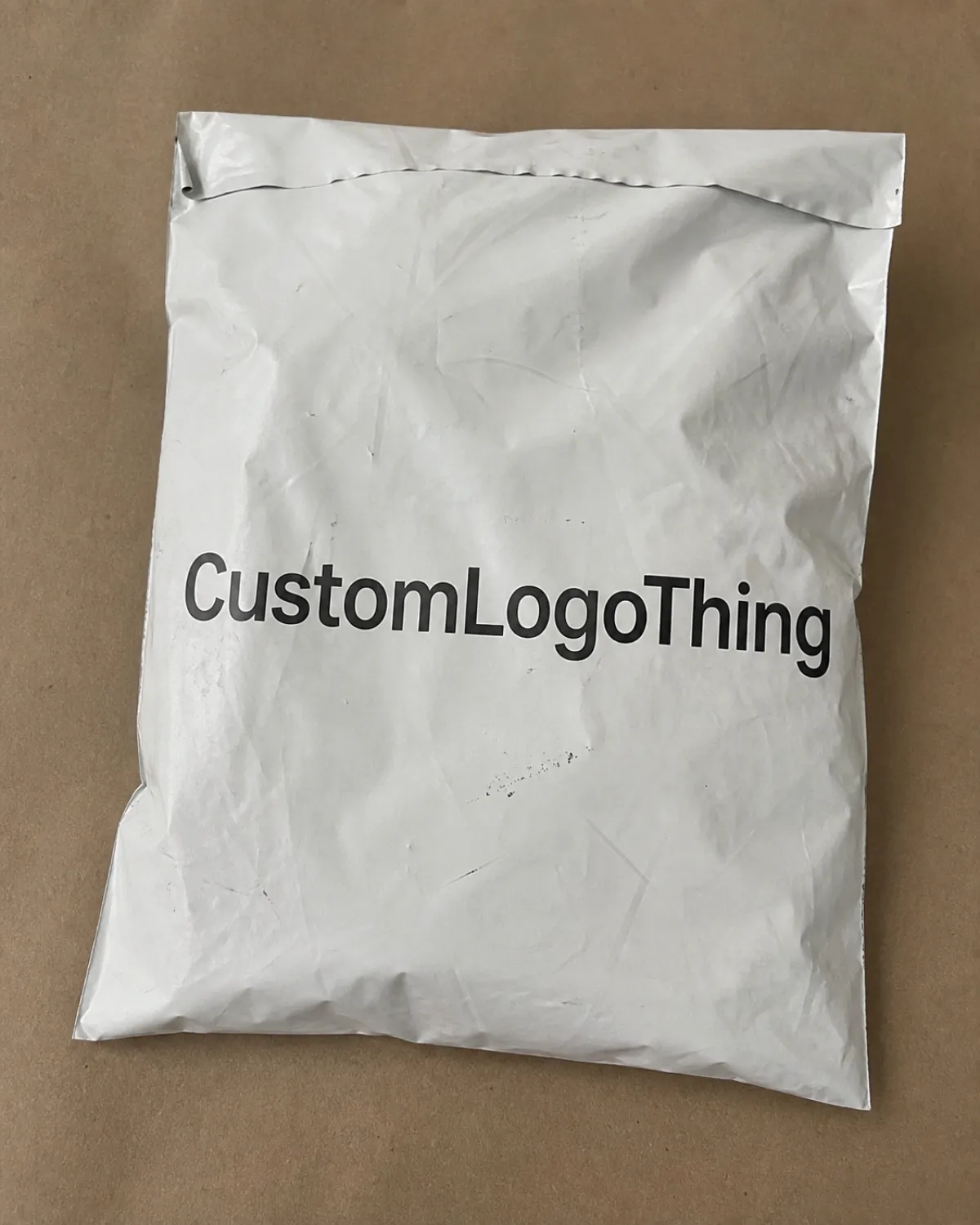
A customer may never remember the corrugated carton that protected the order, but they will notice the mailer that lands at the door, especially when it carries a clean, confident logo. That is the practical value of recycled poly Mailers With Logo: they turn a plain shipping supply into a visible brand touchpoint before the product is even unwrapped. Subscription boxes, direct-to-consumer apparel, beauty, accessories, and lightweight hard goods all benefit from that first visual cue. The package starts speaking before anyone opens it.
The outside of the package often tells the story more clearly than the insert inside it. It is seen by the recipient, by family members, by front-desk staff in an office setting, and by everyone who handles the parcel in transit. A mailer with a readable logo, disciplined white space, and a color choice that fits the identity can make the order feel deliberate. A scuffed, dull, or overcrowded mailer can do the opposite, even if the product inside is excellent.
There is a second signal built into the material choice itself. Buyers are asking sharper questions about what is being used, and brands want to show progress without printing claims they cannot defend. Recycled content can help tell that story, but only if the wording, the material spec, and the disposal guidance are precise. Vague green language tends to age badly. Honest language lasts.
"The best mailer is not the one that looks fancy on a screen. It is the one that still looks clean after print, survives the trip, and reflects the brand well enough that nobody has to explain it."
One detail that surprises many packaging buyers is how much storytelling the outer layer does compared with the product insert. The insert might be read once; the mailer may be handled four or five times before it is opened. That makes the mailer a high-visibility asset. A logo that is centered well, scaled correctly, and printed with consistency can quietly carry more brand memory than a longer paragraph tucked inside the box.
There is also a workflow benefit that does not always make it into branding conversations. A clear logo on the mailer helps warehouse staff spot the correct pack style at a glance, which sounds minor until a facility handles multiple programs. In busy operations, that visual shortcut can reduce picking mistakes and speed up receiving checks.
If you are still building out your packaging mix, the broader assortment of Custom Packaging Products can help you compare mailers, inserts, labels, and other branded formats side by side. For teams focused on shipping formats, Custom Poly Mailers is a useful place to compare structures and branding options.
How Recycled Poly Mailers with Logo Are Made
Recycled poly mailers usually begin with recycled polyethylene resin that is blended into film and then converted into a mailer structure. The exact blend and the amount of recycled content can affect the finished feel in ways buyers notice immediately. Some films feel softer and slightly more matte; others feel firmer or a little less uniform than virgin polyethylene. None of that automatically means poor quality. It means the resin mix and production conditions are part of the final result.
Film gauge matters too. A common range for mailers is roughly 2.0 to 3.5 mil depending on size, product weight, and puncture resistance needs. A lightweight apparel order may be fine in a thinner spec, while denser items, folded cartons, or goods with corners often need a heavier film. Gauge affects shipping durability, and it affects print behavior as well. A thicker film can hold shape differently on press than a lighter one, which changes how crisp the artwork looks once it is made real.
Printing is usually handled with production methods suited to film, such as flexographic printing, where the artwork has to be planned around the material. Thin strokes, tiny reverse text, and delicate gradients do not always translate well. Strong logo shapes, simple typography, and clear color contrast tend to reproduce more cleanly. If a design relies on a subtle tone-on-tone look, ask for a proof or sample on the exact recycled film you plan to use. Recycled film can carry a slightly different visual character than virgin material, and that difference matters when the brand mark is doing the heavy lifting.
Closure systems matter as much as the print. A pressure-sensitive adhesive strip should seal quickly and hold through normal handling, while still letting packing teams work at a sensible pace. Tear strips can improve the opening experience, but they need to be designed with the seal so the mailer opens as intended rather than splitting in the wrong place. Bottom and side seals deserve the same attention. Clean seals support both appearance and transit performance.
It helps to separate recycled-content mailers from fully recyclable mailers. Those terms are often spoken as if they mean the same thing, but they do not. Recycled content describes what went into the film. Recyclable describes how the finished package can be handled at end of life, and that depends on the full structure, local programs, and collection rules. A packaging claim should be checked carefully before the artwork is finalized.
For teams that want a benchmark for transit testing and package performance, the ISTA package testing standards are a useful reference point. They are not the only standard that matters, yet they push buyers to think about drop behavior, vibration, and handling in a more disciplined way than simple visual inspection alone. If a mailer is going to ride in a mixed carrier network, that kind of testing is closer to reality than a desk-side approval ever will be.
Cost, Pricing, and MOQ Basics for Recycled Poly Mailers
Price for recycled poly mailers with logo usually comes down to a few core variables: size, film thickness, recycled content level, print colors, artwork complexity, and order quantity. The larger the mailer and the heavier the gauge, the more material cost sits inside each piece. Add more print colors, especially if the design needs tight registration, and the price rises again. Custom sizing can increase the cost too because the production setup is less standardized.
MOQ, or minimum order quantity, plays a major role in unit pricing. A run of 5,000 pieces usually carries a higher per-unit cost than 20,000 pieces because setup, plates, and production preparation are spread across fewer units. That does not make a smaller order wrong. It just means the buyer should understand what is being paid for and why. For a new program, a smaller run can be a smart way to test print quality, fulfillment fit, and customer response before scaling up.
There is a simple math lesson hiding in packaging quotes. If a setup fee is fixed, a 2,000-unit order absorbs it very differently than a 10,000-unit order. The same press work can look expensive on a spreadsheet and ordinary in a high-volume program. That is why unit price alone can mislead. The real question is whether the packaging cost matches the volume, the risk, and the value the mailer adds to the shipment.
In many quoting situations, a basic recycled poly mailer with one-color logo print sits in a lower cost band, while larger sizes, heavier film, or two- to three-color art push the number upward. As a rough planning frame, buyers often see meaningful differences once they change one of the following:
- Mailer size, especially if the footprint changes substantially
- Film thickness, such as moving from a lighter spec to a heavier puncture-resistant one
- Print count, since more colors usually mean more setup and more press attention
- Total quantity, because scale usually improves the unit cost
- Special requests, such as custom dimensions, extra-strong adhesive, or tear-strip additions
A serious quote should spell out more than a price per thousand. It should show the dimensions, film spec, recycled content target if one is being claimed, print method, number of colors, proof charges if any, and shipping terms. If plates, screens, or artwork setup charges are separate, they should be visible too. Buyers often compare quotes that look similar on paper but are built on different assumptions, which leads to confusion later.
One more cost issue often gets missed: storage. Mailers are lightweight, but they still occupy racking space, and oversized cartons can consume more room than expected. A compact spec that fits your actual product line can reduce not only unit cost but also warehouse clutter. That matters when the packaging is being stocked alongside inserts, labels, and seasonal kits.
| Option | Typical Use | Approximate Cost Impact | Notes |
|---|---|---|---|
| Standard size, one-color print | Apparel, soft goods, lightweight accessories | Lower | Usually the easiest path for predictable pricing and clean branding |
| Larger size, one-color print | Bulkier folded goods or mixed SKU orders | Moderate | More material cost, but still relatively straightforward to produce |
| Standard size, two- to three-color print | Brand-forward programs with more detailed logos | Moderate to higher | Extra colors can increase setup and print attention |
| Custom size, heavier gauge, multi-color print | High-volume or specialized fulfillment programs | Higher | Best when the packaging must fit a specific product line and presentation standard |
The lowest quote is not always the best value. A mailer that tears in transit, seals inconsistently, or prints poorly will cost more later in replacements, customer service, and brand damage. A better way to judge value is to think in total landed usefulness: does the mailer protect the product, pack efficiently, and represent the brand well enough to justify the spend?
Process and Timeline: From Artwork Approval to Delivery
The usual process starts with size and material confirmation. Once those are set, the buyer submits artwork, the supplier prepares a proof, and the art is reviewed for placement, line weight, color expectations, and any changes needed for the film surface. After the proof is approved, production is scheduled, materials are sourced, and the mailers move into manufacturing and finishing. Packing, freight, and receiving come next.
Where does time actually go? More often than not, it is spent at the front end. Artwork cleanup can take longer than expected if the logo file is low resolution or built in a format that does not translate cleanly to press. Proofing can take a day or several days depending on how many revisions the team requests. Material sourcing and production scheduling can add time if the chosen size, film, or print configuration is not already in line.
Typical turnaround depends on the supplier, order size, and complexity, but many buyers plan around a window of roughly 12 to 20 business days after proof approval for standard custom mailer jobs, plus shipping time. More custom programs, custom sizes, or heavier production demand can extend that window. Lead time should be treated as a planning tool rather than a decoration on a quote.
The best timeline conversations are not only about the press schedule. They also include the warehouse receiving date, the date your team needs to start packing, and whether there is enough buffer to absorb a revision. A mailer can be “on time” from a production standpoint and still miss the launch if it arrives after inventory is already staged for fulfillment.
Here is a practical way to think about the schedule:
- Lock the product size and packaging need first.
- Submit vector artwork with clear color expectations.
- Review the proof on the exact film or a close production match.
- Approve only after confirming logo placement, seal area, and label space.
- Add shipping time and warehouse receiving time to the production timeline.
If your team works against a fixed launch date, finalize the art earlier than you think you need to. That simple move gives you room to fix contrast, adjust logo scale, or revise a claim without creating a rush order. For recurring programs, a well-documented spec sheet is worth keeping on file because it shortens the next reorder dramatically.
For background on responsible sourcing language and recycled materials guidance, the EPA recycling guidance is a helpful reference point. It will not replace supplier documentation, but it does help teams avoid sloppy sustainability claims. If the package copy says “recycled,” the documentation should show what that means in practice.
How to Choose the Right Specs for Your Shipment
Choosing the right mailer starts with the product, not the artwork. Measure the packed item, not just the bare product, and allow for the fold, any tissue or insert, and the way the item naturally settles inside the bag. A good fit is snug without being forced. Too much extra space makes the package look oversized and can waste material. Too little space creates stress on the seal and increases the chance of split seams or awkward packing.
Film thickness should match the handling conditions. Apparel in poly bags is one thing. A boxy accessory with sharp corners is another. If you are shipping items that can press through the film, a heavier gauge makes sense even if it adds a little cost. Buyers often underestimate corner pressure in transit, especially in mixed-package networks where parcels are stacked, dropped, and resorted multiple times.
Logo scale and print placement deserve careful thought. A logo that is too small disappears once the package is handled in real life. A logo that is too large can crowd the shipping label area or look overdesigned. The strongest designs usually leave generous margin around the mark, keep the print area clean, and preserve room for barcode labels, postage labels, or fulfillment stickers. That practical whitespace matters more than many teams expect.
Seal style and opening features affect warehouse speed as much as customer experience. A strong adhesive strip reduces packing friction, while a tear strip can improve the unboxing moment if it is positioned correctly. If your team ships high volume, even a few seconds saved per order can add up fast. A five-second improvement across 10,000 orders is nearly 14 hours of labor. If your customer base cares about convenience, an easy-open design can reduce frustration and make the package feel more polished.
A useful rule of thumb is to choose branding and logistics together. The prettiest mailer on the screen is not the best mailer if it slows the line or fails in transit. The toughest mailer on paper is not enough if the logo prints muddy and the package feels generic. The sweet spot is the one that supports product protection, packing speed, and brand recognition at the same time.
For teams comparing material options, a quick internal checklist can help:
- Does the size fit the packed product with a little working room?
- Will the film resist puncture and stress during normal shipping?
- Does the logo remain readable at arm's length?
- Is there room for labels without covering the brand mark?
- Does the adhesive create a clean seal with your packing process?
If you are balancing a few different SKUs, a shared mailer size may be enough for two or three of them. That compromise is often better than chasing a perfect fit for every single product. The tradeoff is usually a little extra material for a large portion of the line, versus the overhead of managing too many packaging variants. For many brands, fewer SKUs wins.
Common Mistakes When Ordering Recycled Poly Mailers with Logo
One of the most common mistakes is approving artwork without checking how it prints on film. Fine lines, tiny text, soft gradients, and subtle colors can look acceptable on a monitor and weak on a mailer. Film is not paper. Ink behavior changes, and the recycled surface can carry a slightly different visual texture. If brand readability matters, keep the design bold enough to survive real-world print conditions.
Another frequent mistake is buying on price alone. A lower quote can look attractive until the mailers arrive with weak seals, poor puncture resistance, or a finish that makes the logo look off. The cost of a failed package is rarely just the cost of one replacement. It can include repacking labor, customer service time, refunds, and a damaged first impression that is difficult to recover.
Volume planning gets overlooked too. Teams sometimes under-order because they want to keep cash tied up low, then discover the reorder is slower or more expensive because the original batch was too small to support better pricing. In other cases, they run out right before a seasonal spike and lose control of the packaging standard. A safer approach is to estimate use conservatively, then add a buffer if the mailers are part of a recurring shipment program.
Recycled content messaging creates another common gap. A mailer may contain recycled material and still not be accepted in curbside recycling, depending on the structure and the local program. That distinction matters because customers will read what is printed on the package as a disposal cue. If the claim is not precise, you can confuse buyers or create an avoidable trust problem. The wording should match the exact material and the actual end-of-life path as closely as possible.
Skipping the proof is a costly shortcut. Even a strong design can need adjustment once it is laid over the final material. Logo size may need to increase by a few percent for better readability. A dark line might need more weight. A print area might need to shift to avoid the seal. A sample or proof is not just a formality; it is the point where the design becomes a real production object.
There is also a hidden mistake in assuming every supplier defines “recycled” the same way. One vendor may mean post-industrial content only. Another may mix post-consumer and post-industrial resin. Those differences affect both appearance and claims language. If the packaging must support a sustainability statement, ask for the exact composition in writing.
Here is the short version of what to avoid:
- Do not assume recycled content and recyclability mean the same thing.
- Do not approve a fine-detail logo without seeing it on film.
- Do not compare quotes unless size, gauge, and print specs match.
- Do not ignore label space, seal area, and warehouse packing flow.
- Do not skip a real sample if the mailer will carry a brand promise.
Expert Tips and Next Steps for a Smooth Launch
Start with one or two core sizes instead of trying to cover every SKU at once. Most brands do not need a dozen mailer sizes on day one. A smaller lineup is easier to manage, easier to stock, and easier to keep consistent. Once the main shipping pattern is stable, you can add other sizes only if the volume justifies them.
Ask for a sample or proof on the exact material you intend to use, not just a generic mockup. That request may sound small, but it is one of the fastest ways to reduce risk. You want to see the way recycled film takes ink, how the logo sits on the surface, and how the adhesive performs after sealing. A digital proof alone cannot answer those questions.
Artwork should be prepared in a clean vector format whenever possible. Keep spacing generous, avoid tiny reversed text, and build the logo with the assumption that real production is less forgiving than a screen preview. If the package is going to be handled by customers, warehouse staff, and carriers, clarity beats complexity almost every time.
A short shipping test is one of the smartest things you can do. Pack a few real orders, inspect the seal, and see how the mailer holds up once it is in actual transit. Watch for corner wear, label adhesion issues, and any sign that the bag is too loose or too tight. A test like that tells you more than a long design meeting ever will.
If you are planning an order of recycled poly mailers with logo, the cleanest next move is straightforward:
- Shortlist the sizes you actually use.
- Gather order counts by shipment type or SKU.
- Confirm the print colors and logo files.
- Request a quote with matched specs.
- Review proof, timeline, and shipping terms together.
- Place the order once the sample and schedule both look right.
For buyers who want the packaging to carry both brand value and practical performance, recycled poly mailers with logo remain one of the easiest places to make a visible improvement without rebuilding the entire packaging system. The right spec can protect the product, present the brand cleanly, and support a more responsible materials story. When those three things line up, the package does real work for the business.
That is the real decision point: not whether the mailer is merely printed, but whether recycled poly mailers with logo fit your shipment, your customer expectations, and your cost structure well enough to earn a place in the program for the long term. If the answer is yes, the next step is not more debate. It is locking the exact size, material, and proof standard before the order goes live.
Are recycled poly mailers with logo actually strong enough for shipping?
Yes, when the film gauge and seal quality match the product weight and handling conditions. The best check is a real packing test with a few shipments, not just a visual approval. Heavier or sharper items may need a thicker spec or a different mailer style. For brands shipping apparel, soft goods, or lightweight accessories, the right recycled mailer is often more than adequate.
What affects the price of recycled poly mailers with logo most?
Size, material thickness, print colors, and order quantity usually have the biggest effect on unit cost. Artwork complexity can also matter if the design needs extra setup or print attention. Shipping and proofing should be included when comparing quotes. If one quote leaves out setup or freight, it can look cheaper than it really is.
Can I order recycled poly mailers with logo in a small run?
Often yes, but smaller runs usually carry a higher unit cost because setup is spread over fewer pieces. If you are testing a new brand look, a smaller quantity can be a smart first step. Ask whether the supplier offers options that fit your expected reorder pattern. Some buyers use a test run to confirm print quality before committing to a larger production order.
How long do recycled poly mailers with logo usually take to produce?
The timeline depends on proof approval, material availability, and production scheduling. Simple jobs move faster; custom sizes or more complex artwork can extend the turnaround. Build in shipping time so the order arrives before you need to pack live orders. A realistic buffer is better than discovering that the mailers arrived after the launch inventory was already staged.
Are recycled poly mailers with logo recyclable after use?
That depends on the exact material blend and local recycling rules. Recycled content does not always mean curbside recyclable, so the disposal message should be checked carefully. If sustainability claims matter on-pack, confirm the wording before printing. The safest language is specific, documented, and aligned with the actual package structure.
What should a buyer ask for before approving a final order?
Ask for the exact dimensions, film gauge, recycled content description, print method, and a proof on matching material. Then confirm seal type, label space, shipping terms, and the expected production window. Those details reveal whether the mailer is truly fit for the shipment or just visually appealing on screen.


