Buyer Fit Snapshot
| Best fit | Recycled Rigid Gift Boxes with Logo projects where brand print, material claims, artwork control, MOQ, and repeat-order consistency need to be specified before quoting. |
|---|---|
| Quote inputs | Share finished size, material target, print colors, finish, packing count, annual reorder estimate, ship-to region, and any compliance wording. |
| Proofing check | Approve dieline scale, logo placement, barcode or warning zones, color tolerance, closure strength, and carton packing before bulk production. |
| Main risk | Vague material claims, crowded artwork, missing packing details, or unclear freight terms can make a low unit price expensive after revisions. |
Fast answer: Recycled Rigid Gift Boxes with Logo: Board, Finish, Dieline, and Unit Cost should be specified like a repeatable production item. The safest quote records material, print method, finish, artwork proof, packing count, and reorder notes in one written spec.
Production checks before approval
Compare the actual filled-product size with the drawing, then confirm tolerance on folds, seals, hang holes, label areas, and retail display edges. Reserve space for logos, QR codes, warning copy, and material claims before decorative graphics fill the panel.
Quote comparison points
Review material grade, print process, finish, sampling route, tooling charges, carton quantity, and freight assumptions side by side. A quote is only useful when the supplier can repeat the same color, closure quality, and packing count on the next order.
recycled rigid gift Boxes with Logo can look like a neat line item on a procurement sheet, but the real story sits in the construction details people usually skip: board density, wrap paper, adhesive choice, closure hardware, and the way those decisions shape both the unboxing and the box's afterlife. A package can contain recycled fiber and still be awkward to recover if the finish, insert, or closure pushes it into mixed-material territory that local recycling programs reject. That is especially true in custom printed packaging, where a glossy effect or layered insert can change the end-of-life picture more than the brand sheet suggests. The thing gets kinda slippery fast if nobody checks the component list.
That is why buyers should treat recycled rigid gift boxes with logo as a packaging system rather than a decorative shell. The strongest versions balance structure, brand impact, and end-of-life handling without turning the build into a science project. For brands chasing premium presentation, shipping strength, and a cleaner fiber story, the small details carry more weight than the copy on the front panel. They also carry more weight than a rendering, which is often where packaging decisions go to become too optimistic. I have seen more than one box look perfect on screen and then arrive with a lid that sat a millimeter off center. A millimeter is nothing in a mockup. It is everything in a warehouse.
What Do Recycled Rigid Gift Boxes with Logo Really Mean?
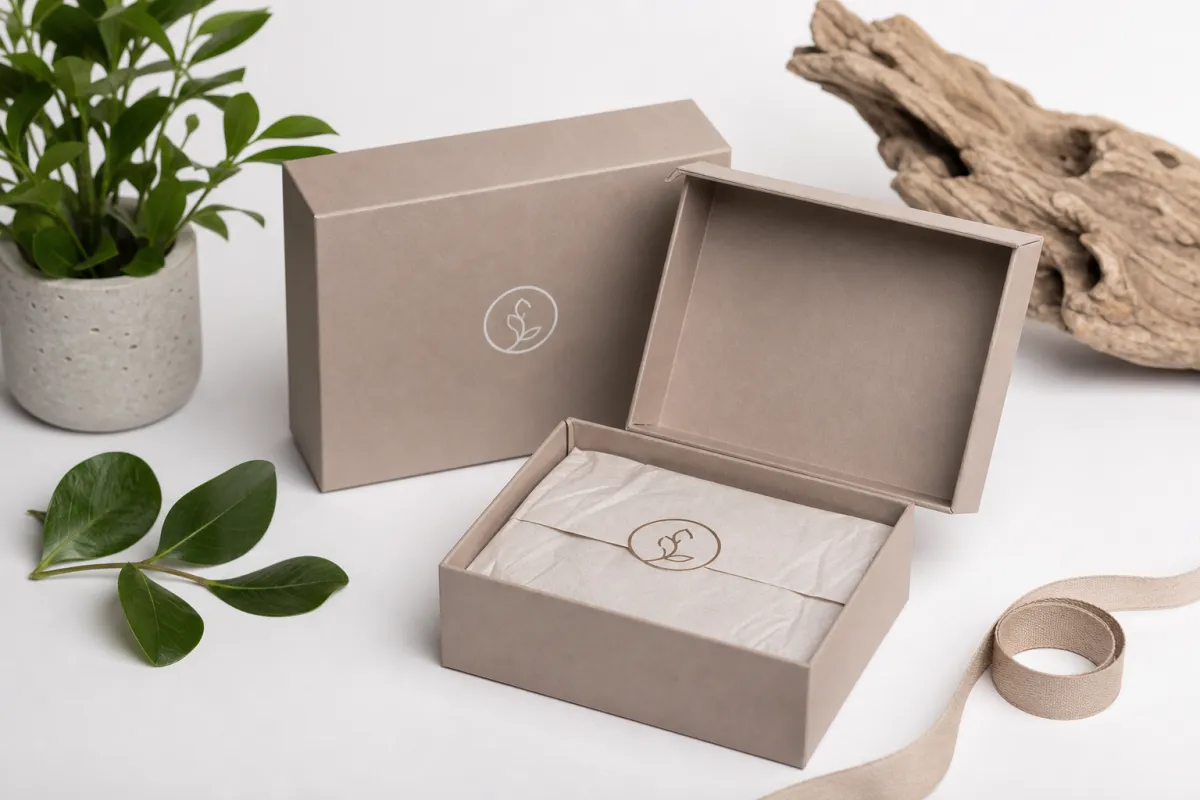
A rigid gift box is not a folding carton in a fancier outfit. A folding carton ships flat and is designed to collapse along scored folds; a rigid box uses thick chipboard or paperboard that stays formed. That difference matters for gifting, subscription kits, premium retail, and corporate presentation, because wall strength, lid fit, and perceived value all rise with a rigid build. In practice, recycled rigid gift boxes with logo give a brand a heavier, more deliberate feel before the product is even touched.
“Recycled” can mean several things in packaging. Sometimes the inner board contains post-consumer fiber. Sometimes the outer wrap is made from recycled-content paper. Sometimes both are specified, though the supplier sources each component separately. That is why buyers should ask for the recycled content of the board, the wrap, and the insert instead of assuming the whole structure matches one neat label. With recycled rigid gift boxes with logo, the claim is only as credible as the weakest part.
There is also a practical twist that surprises a lot of first-time buyers: a box can be mostly fiber-based and still be difficult to recover if the wrap is laminated, the insert is foam, or the closure hides a magnet inside a plastic pocket. Those features may look clean on the shelf, yet they change how the finished package is handled after use. That is why recycled rigid gift boxes with logo should be designed with disposal in mind from the beginning, not as an afterthought added at the proof stage. The same logic applies to sustainable gift packaging more broadly: the closer the design stays to paper-based components, the easier it is to defend the sustainability claim.
The most sensible way to think about the box is through three goals that have to work together:
- Protection for the product inside, especially if it is glass, ceramic, cosmetic, or a gift-ready apparel item.
- Presentation that makes the logo feel deliberate, premium, and aligned with the brand story.
- Recovery that keeps the structure as fiber-heavy as possible so the box has a realistic route through recycling systems.
From a packaging buyer's point of view, that balance is where value lives. A heavily decorated box that crushes in transit is expensive in the wrong direction. A plain box that recycles well but feels flimsy can save money and lose the sale. recycled rigid gift boxes with logo sit right in the middle of those tradeoffs, which is exactly why they deserve a careful spec, not a guess. The same is true for any premium packaging format, but rigid setups make the tradeoff more visible because the structure itself is part of the brand message.
"A sustainable box that arrives crushed is not sustainable at all. The material story only matters if the package still protects the product and tells the brand story in the hand."
For fiber sourcing, third-party documentation matters. A supplier that can point to FSC chain-of-custody paperwork gives you more confidence than a generic sustainability statement. If you want to compare sourced fiber standards, the FSC organization explains certification clearly at fsc.org. That kind of documentation becomes especially useful when recycled rigid gift boxes with logo need to support a retail spec sheet or procurement review. It is also helpful when a brand wants to compare paperboard packaging options across suppliers without relying on vague sustainability language.
How Recycled Rigid Gift Boxes with Logo Are Built
The basic structure is simple even when the finishing options are not. Most recycled rigid gift boxes with logo begin with a thick chipboard shell, often in the 1000gsm to 1800gsm range depending on size and the feel the brand wants. That shell is wrapped in an outer paper sheet, then paired with an interior tray, insert, or lid lining that keeps the product centered and gives the package a finished look. The logo may be printed directly on the wrap, stamped in foil, embossed, debossed, or left as a blind treatment for a quieter result.
The wrap paper matters more than many buyers expect. A lightly coated paper may hold sharper print, while an uncoated or matte recycled wrap usually feels more natural and gives the box a calmer, more artisanal character. If the brand wants a premium presentation without much plastic content, many recycled rigid gift boxes with logo work well with one-color printing, debossing, or a restrained foil hit on the lid. Heavy gloss films and thick soft-touch laminations can look polished, but they also complicate recovery and soften the fiber feel that sustainability-focused brands often want. The same is true of highly coated Custom Printed Boxes, which may be visually strong but less convincing when the sustainability brief is part of the story.
Adhesives and closures deserve real attention. Water-based glue is common, but the type of adhesive and the amount applied can affect structure and recyclability. Magnetic closures are popular because they feel luxurious, yet they introduce a mixed-material component that complicates end-of-life handling. Ribbon pulls, plastic windows, EVA foam inserts, and multi-layer foam pads all make the box harder to classify as a simple fiber package. If the goal is cleaner recovery, the safest recycled rigid gift boxes with logo use paper-based inserts, minimal coatings, and closures that avoid hidden plastic parts wherever possible.
Printing and decoration choices change not only the appearance but also the production sequence. Offset printing allows detailed artwork and color control, foil stamping creates strong contrast, embossing adds a tactile raised effect, and debossing gives a pressed-in mark that can feel elegant without adding extra layers. For some brands, the strongest result is the simplest one: a natural recycled wrap, a single ink color, and a crisp logo. That combination often makes recycled rigid gift boxes with logo feel more premium than a crowded surface loaded with effects. It also keeps the packaging closer to a fiber-first construction, which matters if the box has to support a clean recycling story.
From a use-case perspective, the construction should match the product:
- Apparel benefits from clean, spacious boxes with tissue or paper inserts and a firm lid fit.
- Cosmetics often need a tighter insert and better print quality because the box sits near shelf edges and gets photographed constantly.
- Candles need crush resistance plus enough internal friction to stop rattling during transit.
- Corporate gifts usually call for high perceived value, which makes the lid reveal and logo placement especially important.
That is the real job of recycled rigid gift boxes with logo: carry the product, communicate the brand, and hold up under handling without drifting into unnecessary complexity. A clean structure is usually easier to source, easier to explain, and easier to defend in front of operations teams. It also makes the box easier to align with a custom printed packaging program, because the build stays readable from procurement through to pack-out.
What Affects the Cost of Recycled Rigid Gift Boxes with Logo
Pricing for recycled rigid gift boxes with logo is driven by a handful of variables, and most of them are measurable. Board thickness, box size, recycled-content target, print coverage, insert complexity, and finishing method all influence unit cost. A small magnet-closure box with foil stamping and a custom insert will almost always cost more than a simple two-piece setup with one-color print on an uncoated wrap. That sounds obvious, yet it helps buyers keep the conversation rooted in structure instead of chasing a vague “premium” number.
The logo treatment is one of the biggest cost levers. A one-color logo print on a standard wrap is usually the most economical choice. Embossing and debossing require tooling, but they can still be efficient on medium or larger runs. Foil stamping, especially if it covers a large area or uses multiple colors, adds setup time and production complexity. When a buyer wants recycled rigid gift boxes with logo to look elevated without blowing up the budget, the safest path is often to simplify the surface rather than stack on more layers.
Quantity matters just as much as finish. Many of the costs involved in recycled rigid gift boxes with logo are fixed or front-loaded: prepress, sample creation, die cutting, tooling, and line setup. That means a 1,000-piece order often carries a much higher per-unit cost than a 5,000-piece run, even if the material spec stays the same. If you are comparing quotes, do not look only at unit price. Look at the landed cost, including freight, samples, and any special handling that could affect the order.
To make the tradeoffs easier to compare, here is a practical budgeting view:
| Build Type | Typical Spec | Estimated Unit Cost at 1,000 | Estimated Unit Cost at 5,000 | Best Fit |
|---|---|---|---|---|
| Simple recycled presentation box | Uncoated wrap, one-color print, paperboard insert | $1.20-$2.10 | $0.72-$1.25 | Apparel, mailers, low-decor gifting |
| Mid-tier premium box | Printed wrap, deboss or emboss, paper divider | $1.85-$3.40 | $1.05-$1.85 | Cosmetics, candles, brand kits |
| High-touch presentation box | Foil, specialty wrap, custom insert, magnetic closure | $2.75-$5.50 | $1.60-$3.10 | Executive gifts, launches, luxury retail |
Those figures are budgetary ranges, not promises. Region, board availability, artwork coverage, and lead time can move them up or down. Even so, the pattern is useful. A cleaner recyclable build may reduce some decorative options, but it often simplifies sourcing, lowers the risk of production delays, and makes recycled rigid gift boxes with logo easier to explain to procurement and sustainability teams. It also gives the buyer a stronger basis for comparing Rigid Box Packaging quotes across vendors.
If your team also wants to evaluate broader packaging options, it helps to look at the structure family first and the finish family second. A good place to start is the Custom Packaging Products page, where different box styles can be compared before you lock in a spec. That way, recycled rigid gift boxes with logo are chosen for the job they actually need to do, not just for how they look in a rendering. It is a small process step that often prevents the largest regret later.
One more cost point gets missed often: the cheapest quote is not always the smartest business decision. If a box arrives warped, scratches easily, or forces extra hand assembly at pack-out, the true cost rises fast. In other words, the right recycled rigid gift boxes with logo may cost a little more upfront, but save money through fewer rejects, faster packing, and fewer customer complaints. That tradeoff is especially visible in premium packaging programs, where presentation issues can trigger returns or rework.
Production Process and Timeline for Recycled Rigid Gift Boxes with Logo
The production path usually starts with a brief, but the brief has to be specific. A good supplier needs the product dimensions, target box style, logo files, recycled-content goal, surface finish preference, and whether the package will ship individually or sit on a shelf. Once that is clear, the dieline or structural drawing can be reviewed, the artwork can be placed correctly, and the sample stage can begin. For recycled rigid gift boxes with logo, that early clarity often saves a week or more later in the job.
A typical sequence looks like this:
- Specification - confirm product size, board thickness, wrap choice, insert type, and decoration method.
- Dieline review - check proportions, logo placement, bleed, and fold lines before proofing.
- Sample or prototype - approve fit, lid tension, finish feel, and print reference.
- Production - cut, wrap, print, assemble, and inspect the cartons.
- Quality check - verify size tolerance, glue consistency, color, and closure alignment.
- Packing and shipping - carton count, palletization, freight booking, and delivery timing.
Where do delays usually happen? Artwork revisions are the most common issue, especially if the logo was created for digital use and has to be converted for print or foil. Sample changes also slow things down when the buyer changes the insert depth, lid fit, or finish after seeing the first prototype. If the material callout is too loose, the supplier may have to swap in a different recycled wrap or board grade, which can trigger another round of approvals. With recycled rigid gift boxes with logo, a small change to one component often pulls the rest of the build with it.
Lead times vary, but a realistic planning framework helps. Simple jobs may move from proof approval to production in roughly 12-18 business days, while more complex builds with specialty finishes or custom inserts can stretch into the 3-5 week range before freight. Sea freight adds its own timeline, and that can matter more than the box production itself. If a launch date is fixed, it is smarter to plan backward from the delivery date rather than assume the packaging will be ready when the product is.
For shipping validation, ask whether the pack-out has been tested or at least stress-checked against common distribution risks. The International Safe Transit Association publishes useful standards and testing guidance at ista.org. That matters if the box will move through e-commerce, retail replenishment, or warehouse handling. recycled rigid gift boxes with logo should not only look good on arrival; they should stay square, close properly, and protect the product after normal transit abuse. A few minutes of testing can reveal whether the structure belongs in a premium launch or back in the sketch phase.
Early coordination makes a measurable difference. If the structure is reused across multiple products, if the artwork is final before sampling, and if the recycled-material target is written down instead of implied, the path from concept to finished goods is much shorter. That is one reason recycled rigid gift boxes with logo are easier to launch well when the packaging team is involved before the last-minute scramble begins.
How to Choose Recycled Rigid Gift Boxes for Your Product
The best way to choose recycled rigid gift boxes with logo is to work in order: measure the product, define the presentation goal, choose the box style, and then match the recycled materials to the actual use case. That sounds simple, yet it prevents a lot of expensive backtracking. A box for a lightweight clothing set does not need the same internal support as a bottle set. A gift box for a trade-show kit does not need the same closure spec as a luxury retail piece that sits on a shelf for months.
Start with the fit. The inside dimension should leave enough room for the product and any inserts, but not so much that the item shifts during transit. If the product is delicate, ask for a prototype with the actual item inside, not just a paper mockup. Real samples reveal whether the lid friction is too loose, whether the insert grips too tightly, and whether the logo still reads clearly under showroom lighting. Those are the small details that separate good recycled rigid gift boxes with logo from merely acceptable ones.
Then decide what the box is supposed to do for the brand. If the goal is retail display, the logo has to be visible from a few feet away and the finish should look clean under bright store lighting. If the goal is gifting, the reveal matters more, so the lid lift, tissue presentation, and inside print can carry more weight. If the goal is shipping protection, the structure and insert matter most. recycled rigid gift boxes with logo can serve all three, but rarely with the exact same design language. This is where custom printed packaging programs often split into different versions for retail and direct-to-consumer use.
There is a useful decision shortcut that many buyers appreciate:
- Choose a minimalist build if the brand story is driven by natural texture, visible fiber, and simpler recycling behavior.
- Choose a premium build if the box is part of the product experience and will be photographed, handed over, or displayed prominently.
- Choose a protective build if the item is fragile, high-value, or likely to move through courier systems before it is opened.
Always ask suppliers for the component breakdown before approving artwork. What is the board weight? What is the outer wrap made from? Is the insert paperboard, molded fiber, EVA, or foam? Are the adhesives water-based? Is the logo printed, stamped, embossed, or laminated? These questions do not just help with sustainability claims; they also help you compare offers on equal terms. For recycled rigid gift boxes with logo, the spec sheet should be written as clearly as the logo file.
If your team uses sustainability language in sales materials, make sure the box can support the statement. A recycled-content claim on the board is not the same as a fully recyclable finished package, and a box made mostly from fiber is not automatically good for every local recycling stream. Ask for documentation, not just a verbal promise. That habit saves time later and helps recycled rigid gift boxes with logo stay credible with both customers and auditors. It also reduces the chance that the packaging story gets ahead of the material reality.
One practical step is to compare a few structure options side by side before you commit. A two-piece lid-and-base box, a book-style magnetic box, and a drawer-style box all create different experiences, and each one changes cost, assembly, and recycling behavior. If the brand only needs one strong identity moment, the simplest structure is often the strongest choice. If the unboxing is part of the campaign, the structure can carry more of the visual story. The right recycled rigid gift boxes with logo are the ones that match the business goal, not the mood board.
Common Mistakes When Ordering Recycled Rigid Gift Boxes
The most common mistake is assuming that a recycled-looking box is automatically easy to recycle. That is not always true. A rigid box with plastic lamination, foam inserts, magnets, metallic films, and glued-in ribbons may still be heavily fiber-based, but it no longer behaves like a simple paper package in the waste stream. Buyers who order recycled rigid gift boxes with logo should ask which components are paper-based, which are mixed-material, and which are likely to be separated by the consumer. That question is more useful than a generic green claim.
Another frequent problem is poor sizing. Boxes that are too loose let the product bounce around, which creates scuffs and a cheap feel. Boxes that are too tight make assembly difficult and can damage corners, lids, or closures during packing. The insert matters just as much as the outer shell. A well-sized insert can make recycled rigid gift boxes with logo feel more secure, while a badly sized insert can make even a good box look careless.
Branding overreach is a real issue too. Some teams add foil, soft-touch coating, spot UV, embossed panels, and a high-contrast print palette all at once, then wonder why the box no longer feels aligned with the sustainability story. A cleaner visual language usually works better for recycled packaging. Simple type, a strong logo placement, and a good paper texture can communicate more confidence than a box that tries to announce every possible finish. In many cases, the most tasteful recycled rigid gift boxes with logo are the least crowded.
Rushing the production schedule creates avoidable mistakes. Artwork sent late, samples approved without the product inside, or a freight booking made before the spec is frozen can all cause delays that cost more than the packaging itself. If a launch date is fixed, give the box enough runway for proofing, sampling, and one round of corrections. recycled rigid gift boxes with logo are a packaging choice, but they are also a project management exercise. The brands that treat them like both usually get the best result.
"The fastest way to create packaging trouble is to treat sampling like a formality. If the sample does not match the product, the final run usually does not either."
Finally, do not ignore testing. A box that looks good on a desk may behave differently in transit. If the pack-out is going into direct-to-consumer shipping, ask for drop or distribution testing aligned with the product's risk level. ASTM-style drop methods and ISTA-style transit checks are not overkill when the item is fragile or the brand promise depends on a clean first opening. Good recycled rigid gift boxes with logo should pass both the eye test and the handling test. They should also survive enough opening cycles to feel intentional rather than temporary.
Expert Tips and Next Steps for Recycled Rigid Gift Boxes with Logo
My strongest advice is plain: keep the build as clean as you can while still meeting the branding goal. Every extra layer, coating, or hidden component adds complexity. If the package can deliver the right feel with a recycled wrap, solid board, and one good logo treatment, that is usually the better long-term choice. For brands serious about recycled rigid gift boxes with logo, restraint often produces a more confident result than decoration for its own sake.
Ask for a written material breakdown before you approve anything. That breakdown should list the board, the outer wrap, the insert material, the adhesive type, the closure hardware, and the decoration method. If the box is going to support sustainability language, request recycled-content documentation and clarify whether the percentage applies to the board, the wrap, or the finished box. Those details matter because recycled rigid gift boxes with logo are only as trustworthy as the specification behind them.
Get a sample in hand before full production. Screen images and flat mockups can hide a lot: the way the lid feels when it closes, whether the logo reads sharply at arm's length, whether the texture feels dry or coated, and whether the structure holds square after opening and closing a few times. If possible, test the sample with your actual product, not an approximation. That is the best way to judge whether recycled rigid gift boxes with logo are doing their job in real life rather than just on a rendering.
A good supplier checklist should include the following:
- Board spec with thickness and recycled-content target.
- Wrap spec with print method, texture, and coating notes.
- Insert spec with material and fit requirements.
- Closure spec that confirms whether magnets, ribbons, or paper-only solutions are being used.
- Shipping spec that confirms pack count, carton size, and freight method.
If you need a broader view of box formats, finishes, and packaging styles, the Custom Packaging Products page is a useful place to compare options before you commit to artwork. That step makes it easier to choose recycled rigid gift boxes with logo that fit the product, the budget, and the customer experience without forcing unnecessary compromises later. It also helps packaging teams compare rigid box packaging options with a clearer sense of what is actually driving cost and presentation.
And if you want the structure to support a real sustainability claim, make the claim precise. Say what is recycled, what is fiber-based, and what is still mixed material. Buyers respect honesty, and so do customers who care about packaging waste. The best recycled rigid gift boxes with logo do not pretend to be perfect; they are simply well specified, well made, and suited to the job. That combination is more persuasive than any polished slogan.
Frequently Asked Questions
Are recycled rigid gift boxes with logo actually recyclable?
Often yes, if the box is built mostly from paperboard and paper wraps with minimal coatings or mixed materials. The catch is that magnets, plastic windows, foam inserts, and heavy lamination can reduce recyclability, so ask for a component-by-component breakdown. Local recycling rules vary, which means the same box may be handled differently from one market to another. For many buyers, the safest approach is to keep recycled rigid gift boxes with logo as fiber-heavy as possible and avoid unnecessary mixed-material features.
What recycled content should I ask for in recycled rigid gift boxes with logo?
Ask for the recycled-content percentage of the board and the outer wrap separately, because those components are often sourced differently. Request documentation rather than a verbal claim if the box needs to support a sustainability statement, retailer requirement, or procurement review. Balance recycled content with performance, since board that is too soft or too thin can weaken the premium feel and shipping strength of recycled rigid gift boxes with logo.
How is the logo usually printed on recycled rigid gift boxes?
Common methods include offset printing, embossing, debossing, and foil stamping, depending on the look and budget. Uncoated or lightly coated paper wraps often support a cleaner, more natural feel that fits sustainable branding better than glossy film wraps. If recyclability matters most, choose the simplest decoration that still makes the brand clear. That is usually the most effective route for recycled rigid gift boxes with logo.
What affects the minimum order for recycled rigid gift boxes with logo?
Minimums usually depend on print setup, board sourcing, and finishing complexity rather than the word "recycled" alone. Highly customized shapes, specialty inserts, or multiple decoration passes tend to raise the minimum order quantity. If you are ordering a smaller run, simplify the structure and artwork so setup stays efficient. That is often the best way to get recycled rigid gift boxes with logo without overpaying for tooling and prep.
How long do recycled rigid gift boxes with logo take to produce?
Timeline depends on artwork approval, sampling, material availability, the production queue, and freight method. Simple builds can move quickly once specs are approved, while complex finishes or custom inserts add more lead time. The safest approach is to plan early, approve samples fast, and lock the structure before the launch date gets close. That is usually the cleanest path for recycled rigid gift boxes with logo when timing matters as much as presentation.
Final Takeaway
If you are ordering recycled rigid gift boxes with logo, approve the box only after you have three things in writing: a component breakdown, a sample packed with the real product, and a recycling-aware spec that avoids unnecessary mixed materials. That three-part check catches most of the expensive mistakes I see in packaging reviews - the kind that hide in magnets, lamination, or a lid that looks fine until the first shipment. If any one of those pieces is missing, pause the order and fix the structure before you move ahead. That is the shortest path to a box that looks premium, travels well, and still tells the truth.


