A takeout order can be perfect at the counter and disappointing at the customer’s door. Restaurant paper Bags Unit Cost is not only the price of paper and ink; it is the cost of getting hot, heavy, sometimes greasy food from counter to customer with the least damage and the clearest brand impression.
The Bag That Protects the Order After the Sale
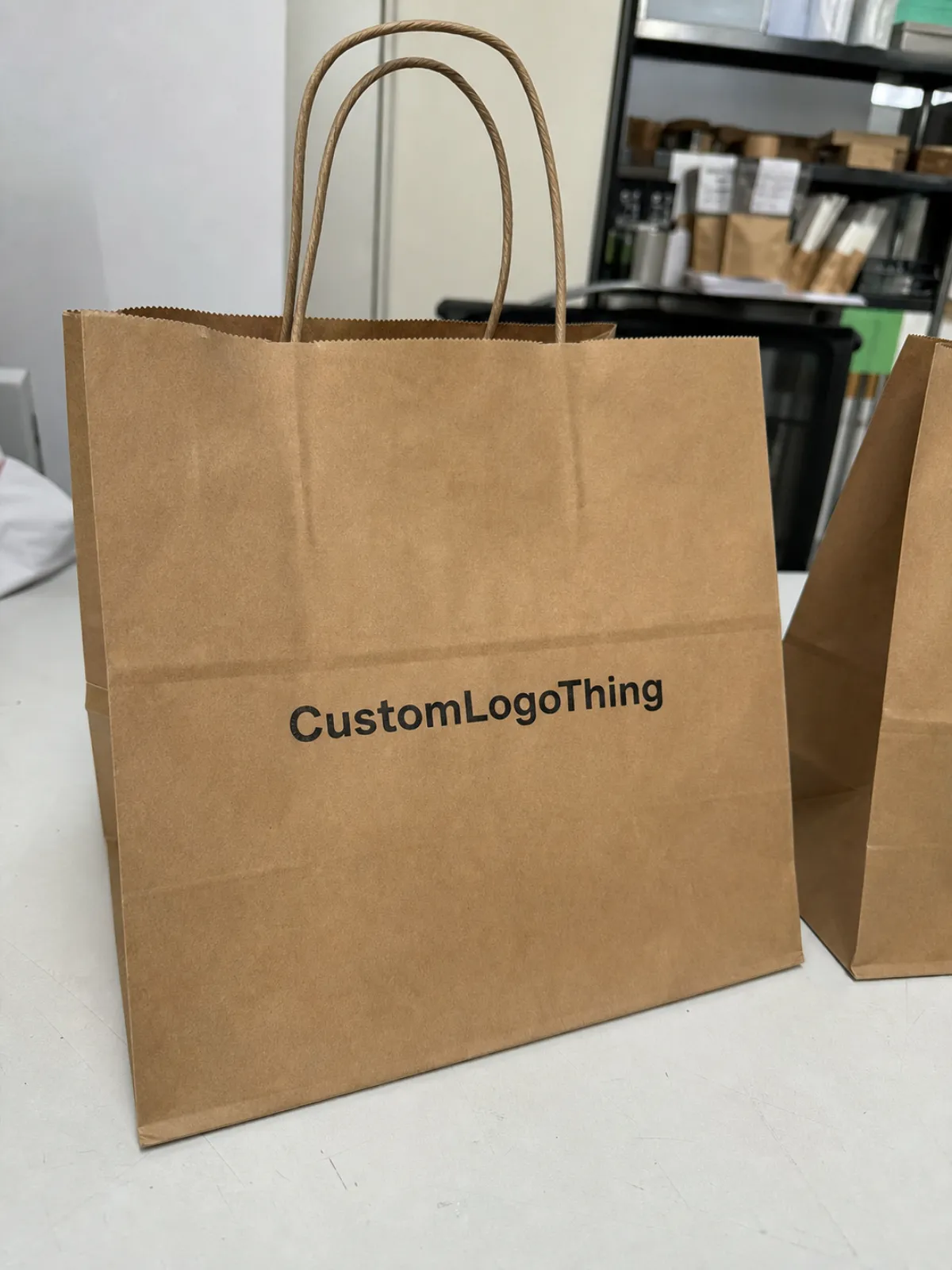
A restaurant may control ingredient cost to the ounce, train labor down to the minute, and pay a delivery app a painful commission, then lose the experience in the final 20 minutes because the bag sags, tears, stains, or hides the brand. A carryout bag is part of the order, not a loose supply item sitting near the register.
From a packaging buyer’s point of view, the cheapest printed bag can become expensive quickly. If staff double-bag every third order, if handles fail during curbside pickup, or if a sauce container rubs through the bottom fold, the quoted cost per piece no longer tells the truth. The better question is: how much does the bag cost per completed order that arrives looking right?
The performance details matter more than the label on the carton. Load rating, paper weight, handle style, bag footprint, print coverage, carton packing, and shipping efficiency all affect the final number. A 120 gsm kraft bag with twisted handles may be enough for two clamshells and a small side, while a catering packout may need heavier paper, a wider gusset, or reinforced handles to carry weight without stressing the seams.
Restaurants, cafes, bakeries, meal prep brands, ghost kitchens, caterers, and franchise operators usually face the same pattern once order volume grows. Emergency purchases from local stock can cover a weekend, but they rarely create a repeatable bag program. A repeatable program means the same size, same paper, same logo position, same carton count, and a reorder path purchasing can use before shelves are empty.
A slightly stronger bag is not always a luxury. If it reduces double-bagging, protects a $45 order, and keeps the logo visible at handoff, the higher quoted unit price may still lower the true cost of the packaging program.
The practical work starts with matching the bag to the food, not forcing food into whatever bag is cheapest that week.
Paper Bag Styles That Fit Restaurant Orders
Different restaurant orders need different geometry. Flat merchandise bags work for bakery sleeves, retail counter goods, cookies, small pastries, and light grab-and-go items. They are economical, pack tightly, and print cleanly, but they are not designed for stacked clamshells, bowls, or family meals.
SOS grocery-style paper bags have a square base and open top, which makes them practical for takeout boxes, deli containers, prepared foods, and orders that need to sit flat. A bag around 10 inches wide by 6 inches gusset by 12 inches high often fits common clamshells better than a narrow boutique shopping bag. The broader base helps containers stay level, which reduces lid pressure and sauce migration during delivery.
Twisted-handle kraft bags are common in restaurant carryout because they balance branding, carrying comfort, and moderate load strength. Flat paper handles can pack more efficiently in cartons and reduce storage bulk. Die-cut handles have a clean look, but they are better suited to lighter loads because the cutout concentrates stress directly into the paper panel.
Paper selection changes appearance, print result, and strength. Natural kraft gives an earthy foodservice look and usually hides light scuffing better than white stock. White kraft gives brighter logo colors and sharper contrast. Recycled-content kraft can support sustainability messaging, provided the claim matches the actual material. Grease-resistant or coated papers may be appropriate for certain food profiles, although most restaurant carryout bags hold primary containers rather than direct food.
Branding does not need to be complicated to work. A one-color logo on kraft can control restaurant paper Bags Unit Cost and still look intentional. Two-color artwork may add presence for bakeries, cafes, and premium casual concepts. Full-coverage printing can make the bag feel like part of the brand experience, but heavy ink coverage affects drying, rub resistance, production time, and price.
Food contact requirements depend on use. A wrapped loaf or pastry touching the inside of the bag is a different specification than a sealed bowl inside a paper carrier. Buyers should clarify whether food touches the paper directly, because material recommendations, coating choices, and compliance expectations may change.
Specifications That Change Strength, Print, and Fit
A good quote starts with a tight specification. The core details are bag width, gusset, height, paper weight, handle type, print method, ink count, artwork placement, packing count per carton, and expected packed weight per order. Miss one of those details and the quote may still look neat, but it can be wrong for the job.
Paper weight is one of the most misunderstood decisions. Heavier paper usually increases stiffness and tear resistance, but the best choice depends on dimensions, moisture exposure, handle load, and how staff pack during a rush. A tall bag made from moderate paper may buckle if heavy bowls are stacked high. A shorter, wider bag using the same paper may perform better because the load sits lower and spreads across the base.
Gusset sizing deserves close attention. If the base is too narrow, containers tilt, lids flex, and sauces find the weakest corner. If the bag is oversized, the restaurant pays for extra paper, extra carton volume, and often higher freight. Overly large bags also look careless at handoff, especially for bakery, sushi, meal prep, and premium casual brands where presentation carries weight.
Print method matters as well. Flexographic printing is common for efficient repeat logo runs because it works well on paper webs and supports practical bulk pricing once setup is complete. More detailed print approaches may be used when tight registration, heavier coverage, special finishes, or exact brand presentation is required. Those choices can affect setup charges, plate costs, minimum order quantity, and production schedule.
There is also a difference between printing before bag conversion and decorating finished bags. Printing before conversion usually gives cleaner placement, better production efficiency, and more consistent repeat orders. Decorating finished bags may suit certain short runs or stock-bag projects, but the artwork area and finish options can be limited. Early artwork planning keeps pricing under control because production does not have to work around avoidable constraints.
Before requesting pricing, measure real items rather than guessing from a menu board. Pull the largest takeout box, the most common combo order, the catering tray, and the heaviest delivery order. Weigh a packed order with containers, napkins, utensils, sauce cups, labels, and receipt attached. Then decide whether staff need room to fold, staple, label, or tamper-seal the top.
- Width: front panel measurement, usually matched to the container’s longest side.
- Gusset: side depth that creates the base and controls how flat boxes sit.
- Height: vertical room for stacked containers plus folding or sealing space.
- Paper weight: selected around load, size, moisture risk, and handling style.
- Print coverage: logo-only, panel print, or heavier coverage with greater ink use.
Restaurant Paper Bags Unit Cost, MOQ, and Quote Levers
Restaurant Paper Bags Unit cost usually moves with order quantity, bag size, paper grade, handle construction, print coverage, number of ink colors, finishing needs, carton packing, and shipping destination. A small kraft bag with one-color print and no handle sits in a very different price lane than a large white kraft twisted-handle bag with two-sided, two-color artwork.
MOQ is plain production math. Custom-printed paper bags require setup, plates or tooling depending on the process, material allocation, press time, conversion scheduling, carton packing, and quality checks. Very small runs carry a higher unit cost because those fixed steps are spread across fewer bags.
Unit cost and landed cost are not the same. A bag quoted at a low printed price may become less attractive if cartons are bulky, shipping is inefficient, or the size forces a restaurant to stock three redundant formats. Landed cost includes the bag, freight, handling, and any fees tied to getting inventory to the location or distribution point.
| Quote Lever | Typical Cost Effect | Practical Buyer Check |
|---|---|---|
| Order quantity | Higher quantities often reduce cost per piece by spreading setup across more bags. | Ask for three quantity breaks, such as 5,000, 10,000, and 25,000 pieces. |
| Ink colors | One-color print is usually more economical than two or more colors. | Confirm whether the logo still reads clearly in one color. |
| Bag size | Oversized bags increase paper use, carton volume, and freight exposure. | Measure the largest regular order before adding extra dimensions. |
| Paper grade | Heavier or specialty paper can improve strength but raises material cost. | Test with hot, heavy, and moist orders before reducing paper weight. |
| Handle style | Twisted, flat, reinforced, and die-cut handles carry different production costs. | Match the handle to the actual packed load, not only the look. |
For rough planning, simple custom paper carryout bags may price around $0.18 to $0.35 per unit at moderate quantities, while larger printed handle bags can move into the $0.40 to $0.90 range depending on paper, size, print, and freight. Those numbers are not a formal quote. They are useful guardrails because the cost changes quickly once dimensions, print coverage, or shipping lane changes.
There are sensible ways to reduce price without weakening the bag. Standardize one bag size across several menu categories. Use kraft instead of white if brand guidelines allow. Reduce ink colors. Increase run quantity if storage space and cash flow support it. Avoid a 12-inch gusset if the actual container needs 8 inches. Share annual usage when possible, because planned repeat orders are easier to schedule than sporadic rush buying.
The goal is not to push the cheapest bag. The goal is to identify the lowest reliable cost for the way the restaurant actually packs, stages, hands off, and delivers food.
Process and Timeline From Artwork to Delivery
A normal custom bag project follows a practical sequence: confirm specifications, review artwork, prepare a dieline or print layout, approve a digital proof, produce samples or a pre-production reference when needed, schedule printing and conversion, complete quality checks, pack cartons, and arrange shipment. Each step protects the buyer from a different type of mistake.
Timeline depends on artwork readiness, print complexity, material availability, order volume, sampling needs, and whether the buyer uses a standard bag size or a custom dimension. Many repeatable custom bag projects run several business weeks from proof approval to delivery, while sampling or specialty materials can extend that. If freight is moving across a long distance or into multiple store locations, shipping time deserves its own line in the plan.
The slowdowns are predictable. Missing vector artwork is a common one. A low-resolution logo pulled from a website may look acceptable on a screen but fail on a printing plate. Unclear color references create another delay; if the brand has PMS colors, send them early. Last-minute changes to handles, paper stock, or bag size can force a revised quote and fresh proof.
Planning matters for launches, seasonal menus, grand openings, and franchise rollouts. Start early enough to approve samples, test real packed orders, and leave room for freight variability. A delivery bag for a new noodle bowl, barbecue tray, or bakery gift set should be tested with heat, condensation, and actual staff handling, not only measured with an empty carton on a desk.
Rush orders may be possible, but they usually mean fewer options. A rush can limit paper choices, print methods, sampling time, and shipping methods. If a buyer asks for rush production, they should confirm whether proofing, print quality review, or freight mode changes the risk profile.
- Send vector artwork, preferably AI, EPS, or print-ready PDF.
- Provide PMS or brand color references if exact color matters.
- Confirm order quantity, delivery address, and target in-hand date.
- Share packed order weight and food container dimensions.
- List sustainability, recycled content, or compliance preferences.
Custom Logo Things treats these confirmation points as part of the job, not paperwork for paperwork’s sake. Clear approvals before production are far better than vague promises after a deposit is paid.
Quality Checks That Prevent Takeout Failures
Restaurant paper bags usually fail in predictable places: handle attachment, side seams, bottom folds, wet or greasy contact zones, and sharp container corners rubbing against paper during transport. A strong-looking empty bag can still struggle once heat, moisture, and shifting weight are added.
Practical quality checks should include dimension review, print position review, color consistency review, handle pull evaluation, carton count verification, and visual inspection for scuffs, wrinkles, weak seams, or poorly formed bottoms. For multi-location restaurants, consistent carton counts also help store teams manage inventory without guessing whether a case holds 200 bags or 500 bags.
Testing with real menu items is the best reality check. Put the hot entree, side, sauce cups, utensils, napkins, and receipt in the bag. Carry it the way a guest or driver would carry it. Set it on a car seat. Let condensation build for a few minutes. That simple test reveals more than a showroom sample because foodservice packaging lives under heat, weight, time, and motion.
Print durability deserves the same practical thinking. Heavy ink coverage can look excellent, but it must be balanced against drying, rub resistance, and the natural texture of kraft or recycled paper. A large flood print on uncoated kraft behaves differently than a compact one-color logo. If brand appearance is critical, review proofs and samples under normal store lighting, not only under bright office lights.
Sustainability claims should be accurate. Kraft paper, recycled content, water-based inks, and recyclable structures may be available, but claims need to match the actual construction and local recycling realities. For broader packaging sustainability context, the U.S. Environmental Protection Agency publishes useful material on sustainable materials management, and FSC provides chain-of-custody information for responsibly sourced fiber.
Quality ties directly back to purchasing. A properly specified bag reduces hidden waste because staff do not need to double-bag, reject damaged cartons, or apologize at handoff. That is where restaurant Paper Bags Unit Cost becomes more than a number in a spreadsheet; it becomes a measure of how well the packaging supports real operations.
How Custom Logo Things Builds a Reliable Bag Program
Custom Logo Things helps restaurants turn a loose request such as “we need branded takeout bags” into a working specification that production, purchasing, and store staff can rely on. The process starts with the food, the containers, the packed weight, and the brand requirements, then moves into paper, handles, print, MOQ, and delivery planning.
That order matters. If a buyer starts only with a target price, the quote may miss the operational need. If the buyer starts with a real order profile, the bag can be sized around the way food is actually packed. A cafe may need a small flat-handle bag for pastry boxes and retail coffee. A fast casual restaurant may need a wide-gusset SOS-style bag for bowls. A caterer may need a reinforced option for heavier trays.
The sales approach should be factual. Some upgrades are worth considering, especially heavier paper for larger bags, better handle construction for delivery orders, or cleaner print planning for a premium logo. Other upgrades may not be necessary. Full-coverage print, specialty paper, or an extra-large dimension can add cost without improving the customer experience if the bag’s job is simple counter handoff.
Custom branding capabilities can include logo printing, kraft or white paper choices, common restaurant bag formats, multiple handle options, and repeatable packaging programs for reorders. The strongest programs are built around usable specifications, not one-time decoration. That is how pricing stays predictable over time.
Communication during production also matters. Proof approval, specification confirmation, timeline updates, and shipping coordination reduce surprises once the order is moving. Growing brands and franchise groups benefit even more because consistent packaging across locations protects recognition while reducing the risk of each store buying mismatched generic bags.
A good supplier is not just a printer. For foodservice, the supplier needs to understand how paper behaves under weight, humidity, grease exposure, and hurried handling at the counter.
Next Steps to Request a Clean Paper Bag Quote
Start with the containers that must fit. Measure width by depth by height on the largest regular takeout box, the most common combo order, and any catering or delivery-specific packout. Then weigh a typical packed order, including sauce cups, utensils, napkins, labels, and receipt. Those small items can change the way a bag carries.
Decide whether one bag size can cover most orders. One well-chosen size can simplify purchasing and storage, but it should not be so large that every single order swims in extra paper. For many restaurants, one primary carryout size plus one catering or large-order size is cleaner than five slightly different bags that confuse staff.
Send the quote details in one clear package: bag dimensions if known, paper preference, kraft or white color, handle style, print colors, logo file, quantity target, delivery address, desired in-hand date, and whether food touches the bag directly or remains inside separate packaging. Mention hot foods, chilled foods, greasy containers, catering trays, or delivery orders, because those details affect material recommendations.
Ask for quantity breaks rather than only one MOQ number. A quote at 5,000 pieces may be workable for cash flow, while 10,000 or 25,000 pieces may show better unit economics if storage space allows. Bulk pricing is most useful when the buyer can compare the savings against carton storage, reorder timing, and actual monthly usage.
For heavy meals, premium branding, new menu formats, or multi-location deployment, request a sample or prototype before full production. A simple packed-order test can confirm whether the bag footprint is right, whether the handle feels comfortable, and whether the logo sits where customers will see it.
Evaluate the quote by landed cost, carton quantity, expected durability, print quality, and reorder path rather than only the lowest unit price. When the specifications are clear and the supplier understands the actual foodservice use, restaurant paper bags unit cost becomes a decision tool rather than a guessing game.
FAQ
What affects custom restaurant paper bag unit pricing the most?
The biggest factors are bag size, paper weight, handle type, print colors, print coverage, order quantity, and shipping distance. A larger gusset or heavier paper can improve performance but adds material cost, while higher quantities usually spread setup costs across more bags. For a fair comparison, review landed cost and bag performance together, not only the printed unit price.
What is a typical MOQ for printed restaurant takeout bags?
MOQ depends on the bag style, print method, paper stock, and whether the size is standard or custom. Custom-printed runs usually need enough volume to justify setup, material allocation, and production scheduling. If storage is limited, ask for quantity breaks so you can see the cost difference between the minimum run and a more economical reorder quantity.
How can I lower restaurant carryout bag cost without weakening the bag?
Standardize one or two bag sizes around your most common containers instead of buying too many specialized sizes. Use fewer ink colors, keep artwork placement efficient, and avoid oversized bags that waste paper and increase freight volume. Do not reduce paper weight blindly; test packed orders first so lower cost does not create double-bagging or failure at pickup.
How long does custom restaurant paper bag production take?
Lead time depends on artwork approval, sampling needs, material availability, print complexity, order size, and shipping method. The fastest projects usually have confirmed dimensions, vector artwork, approved colors, and a realistic delivery date before quoting begins. For launches or multi-location rollouts, build in time to test samples with real menu items before full production.
What information do I need for a restaurant paper bag quote?
Send bag dimensions if known, or provide the size of your food containers and average packed order weight. Include desired quantity, kraft or white paper preference, handle style, print colors, logo file, delivery address, and target in-hand date. Mention whether the bag will carry hot foods, chilled foods, greasy containers, catering trays, or delivery orders, because those details affect material recommendations.

