Branded packaging looks simple on a screen. In a kitchen, it is less forgiving. The restaurant Printed Poly Mailers material sample guide matters because a mailer is judged in motion: filled fast, sealed under pressure, stacked beside hot items, then handed off to a customer or courier who will judge it in seconds. Two options can share the same dimensions and still behave very differently once the film stretches, the closure catches, and the printed surface starts rubbing against other packs.
Restaurant buyers feel those differences quickly. Steam softens some films, condensation changes grip, grease exposes weak print adhesion, and rushed packing reveals whether a seal is truly dependable or merely looks tidy. A sample is not a freebie. It is a small, controlled way to avoid a large, expensive mistake.
The best use of sampling is practical, not decorative. Compare the structure, check the closure, verify the print, and test the bag with the real contents your team ships every day. A 3,000-unit order that misses the mark costs far more than a few sample rounds, especially if the problem is discoverable in hand before production starts.
Why Samples Matter Before You Brand a Mailer
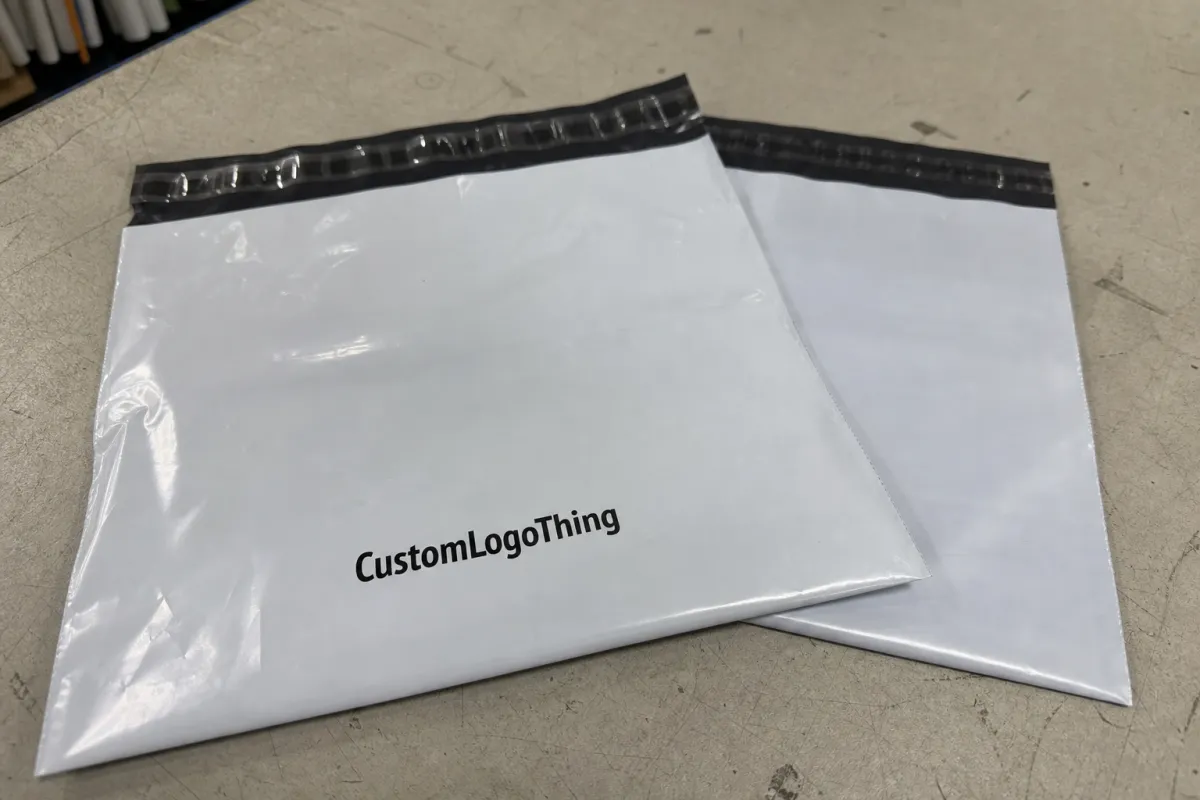
Online images can hide the details that matter most. A crisp rendering may suggest a glossy, premium bag, then the actual sample arrives with softer edges, a different sheen, or a seal that feels weaker than expected. Small differences in film structure and print method change the experience more than most buyers expect.
Restaurants need to be stricter than retail brands because the environment is harsher. A T-shirt in a mailer is a light-duty use case. A bundle of napkins, a sauce cup, a hot entrée box, and a receipt packet inside a delivery stack is not. Puncture resistance, grease resistance, and seam strength become operational requirements, not marketing details.
A sample kit lets you compare constructions side by side before the order is locked. It also brings the packing team into the decision. That matters. The person approving artwork may care about branding; the person sealing 400 orders during dinner service cares about speed, grip, and whether the bag opens and closes cleanly without wrestling.
For many restaurants, the sample stage also clarifies where a poly mailer belongs in the broader packaging system. A restaurant shipping merch, pantry items, or subscription boxes may use multiple formats, from Custom Packaging Products to corrugated cartons or wraps. The sample helps separate the bags that protect an item from the bags that simply dress it up.
How Sample Kits Translate to the Final Mailer
The point of a sample is not just to confirm that the logo fits. It should tell you how the film feels, how the closure aligns, how the ink sits on the surface, and whether the bag survives the sort of handling your staff gives it on a busy shift. That practical reading is the center of a strong sample review.
Three sample types come up often. A blank stock sample shows the base material, size, and closure. A printed proof shows artwork placement, color direction, and likely ink behavior. A production-like sample gets closer to the real build and is the best indicator of how the mailer will look in service. Each one answers a different question, and buyers get into trouble when they treat them as interchangeable.
Test samples with real contents. Fill them with menu boxes, cutlery packs, folded napkins, sauce containers, or inserts. Close the bag, shake it gently, place it on a counter, and pick it up from the top edge. Then repeat the process when your hands are warm, wet, or gloved, because that is closer to service reality than a clean desktop test.
A sample still has limits. It cannot perfectly predict every press variation in a long production run, and it will not replace final artwork approval or a written spec sheet. What it can do is expose the core risks early: a film that feels too thin, a seal that opens too easily, graphics that dull the brand, or a finish that becomes slippery once condensation enters the picture.
It also helps to ask what changed between sample and production. Film thickness, seal width, adhesive, print method, and finish all affect the final result. If a sample is 3 mil and the quote is based on 2.5 mil, that is not a cosmetic difference. It changes tear resistance, hand feel, and cost in ways that show up quickly in the kitchen.
The most useful samples are the ones that reflect the actual use case, not just the brand story. A bag that looks elegant in a studio photo may still be a poor fit if it fogs up, scuffs too easily, or takes too long to seal during rush periods.
Material, Film, and Finish Factors That Change Performance
Film selection starts with the base resin. LDPE remains common because it is flexible, familiar, and relatively cost-effective. Coextruded films add performance by combining layers for better toughness, sealability, and print surface quality. Recycled-content films can reduce virgin resin use, but the feel and print result depend on the blend and the manufacturing process. Not every recycled film behaves the same way.
Thickness matters, but not in isolation. A 2.5 mil structure with a well-designed layer stack can outperform a heavier bag that was built poorly. On the other hand, sharp-edged contents, dense takeout bundles, and rough delivery handling may justify a 3 to 4 mil film even if the unit price rises. Food-service packaging rarely rewards the cheapest spec on paper.
Finish changes perception immediately. Gloss makes print colors appear brighter under pickup lighting and in delivery photos. Matte softens the look and can read as more restrained, though it may reveal handling marks differently. Opaque white gives strong contrast for logos. Semi-clear and frosted films can feel modern, but they also expose the contents, which may or may not fit the brand or service model.
For restaurant use, I pay attention to four checks: seal integrity, puncture resistance, slip resistance, and moisture response. A film that is easy to slide into place can become too slick when condensation forms. A seal that looks neat can fail under repeated pressure from stacked boxes. A pretty surface is useful only if it survives the work.
Printing method also matters. Flexographic printing is often efficient at scale and works well for simpler artwork. Rotogravure supports finer detail and dense coverage, but setup costs can be higher. Digital printing can make short runs and proofing easier, though color matching and unit economics need a careful look. The right method depends on volume, artwork complexity, and how much variation the brand can accept.
There is a sustainability angle, but it deserves honest handling. Poly mailers are not automatically biodegradable, and loose language around environmental claims causes confusion fast. If sustainability matters, compare recycled content, source reduction, and the full packaging system rather than relying on a single buzzword. In some programs, paper-based outer packaging with FSC certified components makes sense. In others, poly still wins on moisture resistance and shipping weight.
Transit testing adds another layer. If the package moves beyond local handoff, it should be considered under vibration, compression, and drop conditions. Guidance from ISTA testing is useful here. That kind of testing does not replace a physical sample, but it does reveal whether the bag is likely to survive stacked cartons, courier handling, and longer routes.
Cost, Pricing, and MOQ Signals in Sample Requests
Sample cost and production cost do not track each other cleanly. A cheap sample can hide a weak production setup, and a slightly higher sample fee may be worthwhile if it reflects the real structure more accurately. The right question is not “Which sample is cheapest?” It is “Which sample gives the clearest read on the final order?”
Several variables drive pricing: size, film thickness, print coverage, number of colors, and special finishes. Larger mailers consume more material. Heavy ink coverage increases setup complexity. Specialty coatings, metallic effects, and unusual adhesives push cost upward quickly. For most restaurant brands, a clean layout with a strong logo delivers more value than a packed design that tries to do too much.
Minimum order quantities change the math in a real way. A 2,000-piece run may carry a noticeably higher unit price than a 5,000- or 10,000-piece order, even if the construction is identical. That does not automatically mean buying more is smarter. Inventory turnover, menu seasonality, and artwork stability all matter. A smaller concept that changes packaging every quarter should not overcommit just to chase a lower per-unit number.
Some pricing checks save more money than negotiating the base rate. Ask about setup fees, plates or tooling, shipping, rush charges, and revision costs after artwork changes. Also ask whether sample charges are credited back when the job moves into production. Some suppliers do that. Others do not. That answer can change the real comparison between two quotes.
For easy reference, here is how sample types usually behave in practice:
| Sample Type | What It Shows | Typical Cost Signal | Best Use |
|---|---|---|---|
| Blank stock sample | Film feel, size, closure, thickness | Low cost or complimentary | Early material screening |
| Printed proof | Artwork placement, color direction, print sharpness | Moderate fee may apply | Brand approval and layout review |
| Production-like test sample | Likely real-world behavior and presentation | Higher than a basic proof | Final validation before a larger order |
If you are comparing Custom Poly Mailers across suppliers, ask for a quote that clearly separates sample cost, production pricing, and freight. A 3 mil printed bag, a lighter recycled-content option, and a paper-based alternative can look similar in a spreadsheet until landed cost and performance are placed side by side.
Sampling Process, Lead Time, and Turnaround
The sampling process usually starts with a short brief: dimensions, artwork files, intended use, and closure style. The supplier checks whether the design is printable, then returns a proof plan or sample path. After approval, the sample is produced and shipped. Straightforward in theory, but small omissions can slow the entire round.
Lead time depends on the type of sample. Stock samples may move out quickly. Custom printed proofs take longer because they require artwork review, printing setup, and packing. If the sample is a revised test after a design change, queue time can matter as much as actual production time.
The most common delays are caused by incomplete information. Send exact dimensions, preferred file formats, color expectations, and the packing context. Is the mailer holding chilled bowls, dry retail items, or delivery inserts? That distinction matters. A bag for cold salads should not be evaluated the same way as a mailer for non-food merchandise.
Useful checkpoints keep the process from drifting:
- Confirm size, closure, and material before artwork begins.
- Review proof lines and print placement before sample production.
- Check the sample with real contents, not just an empty bag.
- Let the packing team handle it before final approval.
- Lock the written spec so production matches the approved sample.
That last step is where many orders wobble. A sample looks right, then the production run arrives with a slightly different gauge or finish because the order was approved by memory instead of by spec. The cleanest process keeps the sample, proof, and final purchase order tied together.
Common Mistakes When Comparing Restaurant Mailer Samples
The first mistake is judging samples by color alone. A bag can look polished under daylight on a desk and still read flat in a dim pickup area. Lighting changes the surface, and the surrounding packaging changes the impression. A bright logo beside a kraft container feels different from the same logo on a translucent film.
The second mistake is skipping stress tests. Fill the bag. Overfill it slightly. Check whether the closure still holds evenly. Pull the seam gently. Open and reseal it if the design allows. A sample that wrinkles sharply, loses alignment, or tears after a little handling is telling you something useful.
The third mistake is comparing unlike samples as though they were equivalent. A blank stock sample tells you about the material, not the print behavior. A color proof may show the artwork well but say little about grip or seal strength. A production-like test is closer to reality, but only if you know what changed from the earlier versions.
The fourth mistake is ignoring the service environment. A mailer that performs well for dry retail shipping can fail once steam, oily containers, or condensation enter the picture. That is especially true in restaurant operations, where lunch rush, catering runs, and late-night delivery orders place different stress on the package.
“The sample that matters is the one packed the way your team actually packs.” That is blunt, but it prevents a lot of bad orders.
A fifth mistake is assuming that a recycled or lower-impact material will automatically perform better. It may be the right choice, but only if the structure fits the use case. A lighter recycled film can work well for dry goods and fall short around moisture-heavy meals. The sample tells you where the tradeoff lands before the brand pays for it.
There is also a quieter issue: relying on memory instead of notes. After two or three sample rounds, details blur. Write down the feel of the film, the strength of the closure, the print clarity, and the estimated landed cost. If a team member spots a flaw in the packing line, that observation should be part of the final decision, not a forgotten comment in an email thread.
Expert Tips and Next Steps for a Confident Order
A simple scorecard makes the decision cleaner. Rate each sample on five items: feel, print clarity, seal strength, presentation, and landed cost. Give each one a score from 1 to 5, then add a short note. That record is useful when the team starts drifting toward vague language like “nicer” or “more premium.”
After that, narrow the field to two finalists. Keeping six options alive too long burns time and blurs judgment. If one detail still feels off, ask for a corrected proof or a revised sample. Maybe the seal is too stiff. Maybe the logo needs to sit higher. Small adjustments are far better than restarting the whole process.
Test the sample in the real workflow. Use the actual packing station, the actual contents, and the same handoff process. If staff pack with gloves, test with gloves. If the mailer sits near a hot pass, leave it there for a while and see whether the film changes feel. Packaging is part of the operation, not an object sitting outside it.
The strongest buyers treat packaging like equipment. The bag has to protect the order, support the brand, and keep up with kitchen speed. A sample kit is the fastest way to see whether those three things are in balance.
Before the order is placed, get operations, marketing, and budget ownership in the same conversation. Then compare the approved sample against the spec sheet one more time. That is how the restaurant Printed Poly Mailers Material Sample guide turns into a useful checkpoint instead of a paper exercise.
FAQ
What should a restaurant printed poly mailers material sample include?
It should include the closest possible film, the intended size, and the exact closure style you plan to buy. Ask for print matching so you can judge logo sharpness, color tone, and how the artwork sits on the surface. If possible, request one sample that reflects the final production gauge and one that shows the bag with typical contents inside.
How do I compare restaurant printed poly mailer samples fairly?
Use the same contents in every bag, then check seal strength, ease of packing, and how the mailer behaves under the same handling conditions. Score each sample on print quality, material feel, and resistance to wrinkles, stretching, or tearing. Do not compare a blank stock sample against a custom-printed proof as if they prove the same thing.
What pricing details matter most when ordering custom restaurant poly mailers?
Focus on unit price, setup charges, shipping, and any reproof or revision fees that can change the total cost. Check how MOQ affects pricing, because a slightly larger order can sometimes lower the per-bag cost enough to offset the extra volume. Ask whether sample charges are credited back if the order moves into production.
How long does the restaurant printed poly mailers sampling process usually take?
Stock samples can move quickly, while custom printed samples need artwork review, proofing, and production time first. Lead time depends on the supplier's queue, the number of revisions, and whether the sample is a simple proof or a more production-like test run. The quickest way to avoid delay is to send complete specs and final artwork at the start.
Which material is best for restaurant poly mailers with damp or greasy items?
Look for a film that balances puncture resistance, seal consistency, and a surface that resists smearing or moisture damage. Coextruded or higher-performance LDPE structures often handle food-service conditions better than generic lightweight stock. Always test with real restaurant contents, because steam, condensation, and oily packaging can change performance quickly.


