A Bakery Printed Poly mailers material sample guide is most useful before a full run, because a mailer that looks sharp on a screen can still misbehave once flour dust, a trace of grease, or refrigeration condensation reaches the film. A sample reveals the things a mockup cannot: whether the bag feels too limp, whether the seal closes cleanly after handling, and whether print detail survives folding, stacking, and packing. That is the real value here. Not a pretty proof. A sample that tells the truth about production and transit.
For bakery teams, the stakes are practical rather than abstract. Packaging is touched by gloved hands, conveyor tables, cartons, and sometimes chilled air. If the sample passes only the design review and fails the packing line, the artwork was never the issue.
Why a Sample Mailer Can Beat a Perfect Mockup
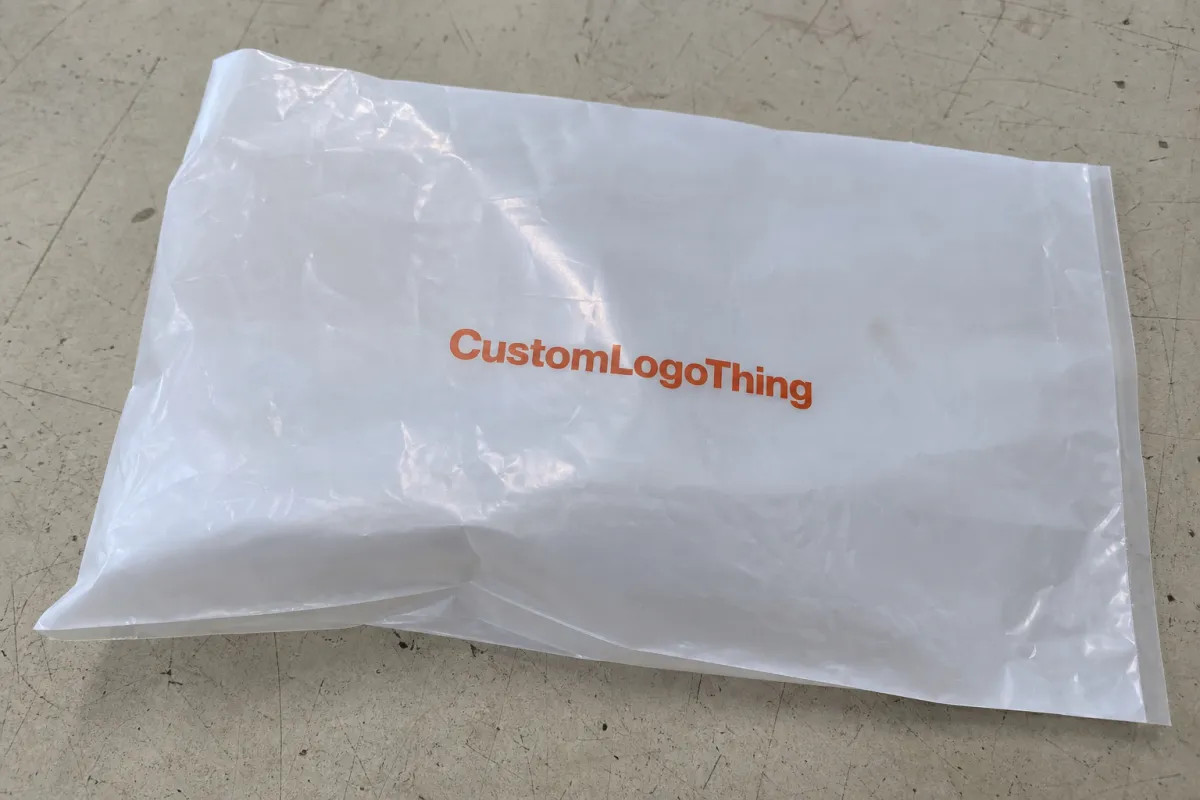
A digital mockup is useful for layout, logo placement, and color direction, but it says almost nothing about material behavior. Poly film has memory, slip, stretch, and seal response. Those traits show up in hand, not on a monitor. A bag that looks premium on screen may feel too thin for a boxed pastry set or too slick for fast packing. That is why experienced buyers treat the sample as a working tool, not a bonus item.
Approving artwork before checking the material is one of the easiest ways to create trouble later. A sample exposes weak points early: opacity that is too low, a seal area that wrinkles after folding, print that softens when the film flexes, or tear resistance that drops off at the corners. Even a bag that passes a quick visual inspection may fail when it is stuffed, stacked, or taped inside another carton.
If the bakery ships inside corrugated cases, the mailer still has to survive the handoff between stations. If the pack includes inserts or secondary packaging in kraft paper, the film must tolerate contact and pressure without scuffing the print. If the product rides cold-chain lanes, the question changes again: does the mailer stay flexible after storage in a cooler, or does it become stiffer and harder to seal?
The most useful sample reviews are blunt. They compare the bag against the real product, not a substitute, and they ask whether the material suits the actual packing speed and storage conditions. A sample that is too idealized can hide the exact problem you need to solve.
- Use the sample to find weak points before production starts.
- Compare the bag against the real bakery item, not a stand-in.
- Check whether the film suits packing speed and storage conditions.
- Assume the first sample is a draft until it survives handling.
A good sample is not the prettiest bag. It is the one that tells the truth before a full order is on the floor.
What the bakery printed poly mailers material sample guide should confirm
The sample should confirm more than artwork placement. It should show the actual behavior of the film, seal, ink, and closure style under ordinary handling. A bakery Printed Poly Mailers Material sample guide is really a buyer's checklist for production risk. If the sample is only a color reference, it is not enough. If it is only a structure reference, it is also not enough. You need both.
Start with film gauge. For light bakery items, a 1.5 mil or 2.0 mil poly mailer may be enough. Heavier kits, products with sharper corners, or orders that are packed and repacked often usually need more body. Thickness affects more than puncture resistance. It changes how the bag folds, how the mouth opens, and how forgiving the seal area feels during packing. A lighter film can save money, but if it collapses too easily, the labor cost may rise because the packer has to fight the material.
Then look at seal integrity, especially along the bottom seam and side welds. If the seal opens too easily after repeated flexing, the bag may pass a visual check and still fail in use. Print registration matters too. Text or logos that drift even a few millimeters can make the package look rushed, and tiny type loses clarity first. Ink adhesion deserves a separate check. Rub the print with a clean cloth, bend the corner, flatten the bag, and see whether the image still holds. That simple test catches more issues than a polite approval email ever will.
Review the sample under normal warehouse light, not only under a bright design-room lamp. Color, contrast, and gloss can look different once the bag sits beside cartons, labels, and shelving. If the design includes fine type or a detailed mark, ask whether the sample used the intended print method and whether the result is close to the final production line setup.
Size matters just as much as film. A mailer that fits a cookie box may be too tight for an assorted bakery set wrapped in tissue or inner sleeves. If the product is boxed, bagged, or nested inside another wrap, the mailer should be tested with the full stack, not a stripped-down version. For buyers comparing options, it helps to review Custom Poly Mailers alongside other Custom Packaging Products in the line so the sample is judged in the context of the full packaging system.
Material claims need the same scrutiny as print claims. Many teams now ask about recycled materials or post-consumer waste content, which can make sense, but the sample still has to pass the basic performance checks. A sustainability claim does not rescue a flimsy bag. And if a supplier offers FSC certified inserts or companion paper components, confirm exactly what the certification covers. It may apply to the paper element and not the film component. That distinction matters.
For buyers comparing sustainability language, the Packaging School and Institute of Packaging Professionals both publish useful background on packaging structure and material choices. If the mailer will touch a primary food package, ask for the right compliance documents before approval. External shipping packaging is not the same as direct food contact, and the documentation should match the use case.
Useful sample notes often include details that get ignored in quick purchasing conversations: seal width, tear notch placement, finish type, color tolerance, and whether the adhesive strip still closes well after one open-close cycle. Small things. They are the things that determine whether the pack line moves smoothly or stalls.
Production Steps, Lead Time, and Approval Timing
The normal sequence starts with artwork review, then material selection, then sample build, proof confirmation, and finally production scheduling. Each stage can add time if the order needs a special film blend, more than one print color, or a custom closure detail. A stock-material sample may move fast, while a fully representative pre-production sample usually takes longer because it is closer to the final build.
Approval timing matters more than many buyers expect. A sample that sits in an inbox for a week can push production into a different shipping window, especially if the bakery launch is tied to a seasonal promotion or retail reset. If the artwork needs a correction, or if the buyer wants a slightly thicker film, that revision should be captured immediately so the next round does not rely on memory. The cleanest projects are the ones where the spec, proof, and sample notes all point to the same version.
Timelines also depend on how much of the order is truly custom. A simple one-color bag on stock film can be relatively quick. A custom color, multi-pass print, or specialty finish takes more coordination and more drying or curing time. If the supplier is quoting unusually fast turnaround, it is worth asking whether the sample is production-representative or only a visual placeholder.
| Sample type | What it shows | Typical timing | Common cost range |
|---|---|---|---|
| Stock-material sample | Basic size, print intent, and general hand feel | Often a few business days | $0 to $25 |
| Pre-production sample | Closer match to final print, seal, and material choice | About 1 to 2 weeks | $25 to $75 |
| Production-representative sample | Most accurate view of the full order | Usually tied to the actual run schedule | Varies by setup and freight |
If the product will ship inside corrugated cases, ask whether the sample was checked for transport stress that resembles ISTA procedures, especially if the box will see stacking, vibration, or drop risk. That is not overkill. It is a sensible way to keep a bakery order from looking fine in the warehouse and failing once it hits distribution.
One more practical issue: sample timing should include the people who actually use the pack. A buyer may approve a sample that looks correct, while the production team discovers that the adhesive strip is hard to peel with gloves on or the opening is too narrow for efficient loading. Those are not design defects. They are operational defects. They still cost money.
Cost Drivers, MOQ, and Unit Pricing
Unit price changes for a few predictable reasons. Film thickness is one of the biggest. Size is another. Print coverage matters too, because a bag with a small one-color mark is far easier to produce than a full-bleed design with multiple ink passes. Closure style can add cost as well, especially if the buyer wants a stronger adhesive strip or a specialty tear-open feature. Stock material is usually cheaper than custom material, but that does not always mean it is the better buy.
MOQ changes the math. Smaller orders usually carry more setup pressure, so the per-unit price can jump quickly on runs below 5,000 pieces. On the other hand, larger runs often bring the price down into a more comfortable band, especially if the artwork is stable and the supplier can optimize film usage. For many bakery buyers, a realistic range for custom Printed Poly Mailers is roughly $0.18 to $0.34 per unit at 5,000 pieces, depending on size, print coverage, and film weight. Add custom finishes or heavier gauge film, and the number can move higher.
Sample cost should be treated separately from production unless the supplier clearly credits it back. Some suppliers waive the sample fee, some apply it to the final order, and others charge it as a standalone proofing step. That is normal. What matters is clarity. Buyers should also look at landed cost, not only piece price. Freight, packing, outer cartons, repeat proofs, and any special handling can change the actual budget more than a small unit-price difference.
Comparing poly mailers with paper-based options helps keep the quote honest. Kraft paper mailers can fit brands that want a more paper-forward look, while biodegradable packaging claims need careful review because disposal conditions matter and not every labeled film behaves the same way in the real world. If the bakery is trying to balance shelf appearance with a cleaner materials story, the sample review should cover both performance and claim support before purchase approval.
A practical cost comparison often looks like this:
- Lower setup cost: stock material, simpler print, fewer colors.
- Better brand finish: custom film color, stronger print coverage, more proofing.
- Higher shipping risk protection: thicker gauge, stronger seal, tighter tolerances.
Price is rarely just price. If a cheaper mailer slows packing or fails in transit, the apparent savings disappear fast. That is especially true for bakery orders with narrow seasonal windows, where a single lost week can matter more than a few cents per unit.
For broader material guidance, the FSC site is a good reference point for certified paper and board systems, especially if your packaging mix includes printed sleeves, cartons, or paper-based inserts alongside poly mailers.
Step-by-Step Sample Review Checklist
Start on the outside. Check whether the logo is centered, the color is consistent, and the copy is readable at arm's length. Then flatten and reopen the bag a few times to see whether the print still looks sharp after the film has been handled. If the sample is for a bakery line with retail exposure, this is the moment to catch weak typography or a faded brand mark.
Move to the material itself. Bend the corners, pinch the seam, and look for whitening, stress marks, or weak spots. Fill the bag with the actual product or a realistic stand-in that matches weight and shape. A sample that feels fine when empty can behave very differently once it carries a box of cookies, a tray of pastries, or a mixed assortment with sharper edges. Test the closure under normal packing pressure, not only with a careful hand in a quiet office.
Then test the conditions that matter to the bakery. If the product is cold-packed, expose the sample to cool storage and look for condensation behavior. If the order rides through a rough conveyor or a crowded packing table, check whether the film scuffs or the seal shifts after repeated contact. If the bag will sit inside a corrugated shipper, confirm that the outer box still closes properly and the mailer does not create unnecessary bulk.
Keep your review tied to the written spec sheet. Size, gauge, finish, print colors, closure type, and packing method should line up exactly with what was approved. If anything is different, write it down immediately with photos. Memory gets fuzzy fast. A clear note today prevents arguments during the next sample round.
Good sample reviews are not glamorous. They are systematic. The best ones use the same conditions every time so the team can compare one sample against the next without guesswork.
- Inspect print clarity and color under normal light.
- Check seam strength and fold recovery after handling.
- Run a fill test with the actual bakery product.
- Confirm the sample matches the approved spec sheet.
- Record any changes before asking for revision or sign-off.
"If the sample cannot survive a realistic fill test, it is not ready for approval, no matter how good the logo looks."
Common Mistakes That Skew Sample Approval
The most common mistake is approving the wrong film gauge because the print looked right. That feels harmless at first, but film thickness changes how the bag folds, seals, and resists puncture. Another frequent error is judging color from a phone screen. Screen light and warehouse light are not the same thing, and a tone that reads clean on a monitor may look dull or overly dark in production.
Buyers also skip the fill test more often than they should. That hides problems with stretch, bottom-load behavior, and closure alignment. In bakery work, those details matter because the pack often contains soft goods, residue, or mixed components that move around more than a simple rigid product. If the sample is only reviewed by design or purchasing, the pack line may discover the weakness later, which is the wrong time.
Another trap is accepting a sample that was made for a different size or a different closure style. The artwork may still look acceptable, but the bag shape and load behavior can be off enough to cause trouble. It is also wise to include the people who will actually pack, ship, and receive the order. Their hands tell you things a spreadsheet never will.
A sample review should answer three plain questions:
- Does it fit the product correctly?
- Does it hold up during packing and shipping?
- Does it reflect the final order, not just a sales demo?
There is a smaller mistake that still causes headaches: forgetting how storage affects film. Poly can behave differently after time in a hot room, a humid stock area, or a cold dock. A sample pulled straight from a clean office drawer may look perfect and still not represent the material after it has sat in a real facility.
Next Steps: Lock Specs, Ask for Proofs, and Place the Order
Once the sample passes review, turn it into a final spec sheet. Lock the size, gauge, print colors, finish, closure, packing method, and carton count. If any shade or artwork detail changed during review, request one last proof or pre-production confirmation before you approve the full run. That small step can prevent a lot of back-and-forth later.
It also helps to align the order with the bakery calendar. If a seasonal launch, menu refresh, or retail promotion is coming, the bags should arrive before packing begins, not after. Ask the supplier to confirm MOQ, lead time, and storage expectations now, because those details affect the next purchase just as much as the current one. If the team expects repeat orders, make sure the approved sample and final spec are stored together so the next run starts with the same reference point.
Quality control should not stop at sign-off. Ask how the supplier controls print consistency, seal width, and incoming film lot variation. Even a well-made bag can drift if the raw material changes from one run to the next. That is especially relevant for branded bakery packaging, where slight changes in gloss or opacity are visible immediately.
For brands balancing print quality, durability, and budget, the Bakery Printed Poly Mailers material sample guide is most useful as a lock-in tool. It helps buyers compare the material against the real product, confirm the price structure, and avoid surprises in production. That is the difference between approving a picture of a bag and approving a bag that will actually work.
What should I look for in a bakery printed poly mailers material sample?
Check film feel, thickness, seal quality, print clarity, and whether the bag resists tearing when flexed or filled. Test it with the actual bakery product size, then review the sample under normal lighting so you see the real color and finish. If the mailer will carry a boxed item, test it in that exact configuration.
How do I compare poly mailer film weights for bakery packaging samples?
Use the same fill amount for each sample, then compare how the film handles bending, puncture risk, and load support. Match the gauge to the product weight, the packing method, and the shipping distance rather than choosing the lightest option by default. A slightly heavier film can be cheaper in practice if it reduces damage or packing delays.
How long does the sample and production process usually take?
Stock-material samples can move quickly, while custom printed samples need artwork review, setup, and approval time. Revisions add time, so leave room for one more proof if the color, size, or closure needs adjustment. For a full order, the schedule often depends on print complexity and whether the film is already in stock.
What affects bakery printed poly mailers pricing the most?
Material choice, bag size, print coverage, and number of colors are the biggest cost drivers. Small orders usually cost more per unit because setup is spread across fewer bags, and freight or repeat sampling should be included in the total quote. Adhesive upgrades, specialty finishes, and heavier gauges also move the number up.
How do I know a sample is close enough to the final order?
The sample should match the approved spec sheet for size, material, and print details. Ask whether the piece is a true production-representative sample or a preliminary mockup, and only move forward if it passes fill, seal, and handling tests. If the supplier cannot explain the differences clearly, the sample is not ready for sign-off.


