Buyer Fit Snapshot
| Best fit | Retail Carton Boxes with Logo projects where brand print, material claims, artwork control, MOQ, and repeat-order consistency need to be specified before quoting. |
|---|---|
| Quote inputs | Share finished size, material target, print colors, finish, packing count, annual reorder estimate, ship-to region, and any compliance wording. |
| Proofing check | Approve dieline scale, logo placement, barcode or warning zones, color tolerance, closure strength, and carton packing before bulk production. |
| Main risk | Vague material claims, crowded artwork, missing packing details, or unclear freight terms can make a low unit price expensive after revisions. |
Fast answer: Retail Carton Boxes with Logo: Board, Finish, Dieline, and Unit Cost should be specified like a repeatable production item. The safest quote records material, print method, finish, artwork proof, packing count, and reorder notes in one written spec.
Production checks before approval
Compare the actual filled-product size with the drawing, then confirm tolerance on folds, seals, hang holes, label areas, and retail display edges. Reserve space for logos, QR codes, warning copy, and material claims before decorative graphics fill the panel.
Quote comparison points
Review material grade, print process, finish, sampling route, tooling charges, carton quantity, and freight assumptions side by side. A quote is only useful when the supplier can repeat the same color, closure quality, and packing count on the next order.
Retail carton Boxes With Logo can change how a product gets judged in seconds. That is not a fancy theory. It is what happens when a shopper compares two similar items on a shelf, or scrolls past them online, or picks one up because the packaging looks finished while the other one looks like it gave up halfway through production. One carton feels generic. The other feels intentional. Retail carton boxes with logo often become the reason one item gets chosen first.
From a packaging buyer’s point of view, the carton has to do several jobs at once. It needs to protect the product, carry the brand, fit the line, survive distribution, and still look decent after a few handling passes. That is why retail carton boxes with logo deserve more planning than a logo dropped onto a blank template five minutes before proof approval. Board grade, print method, fold style, coating, and even the way the flap closes all shape how the package performs before anyone reads the product description.
A good retail carton does not just hold the product. It gives the product a reason to be noticed, trusted, and remembered.
Why Retail Carton Boxes With Logo Matter on the Shelf
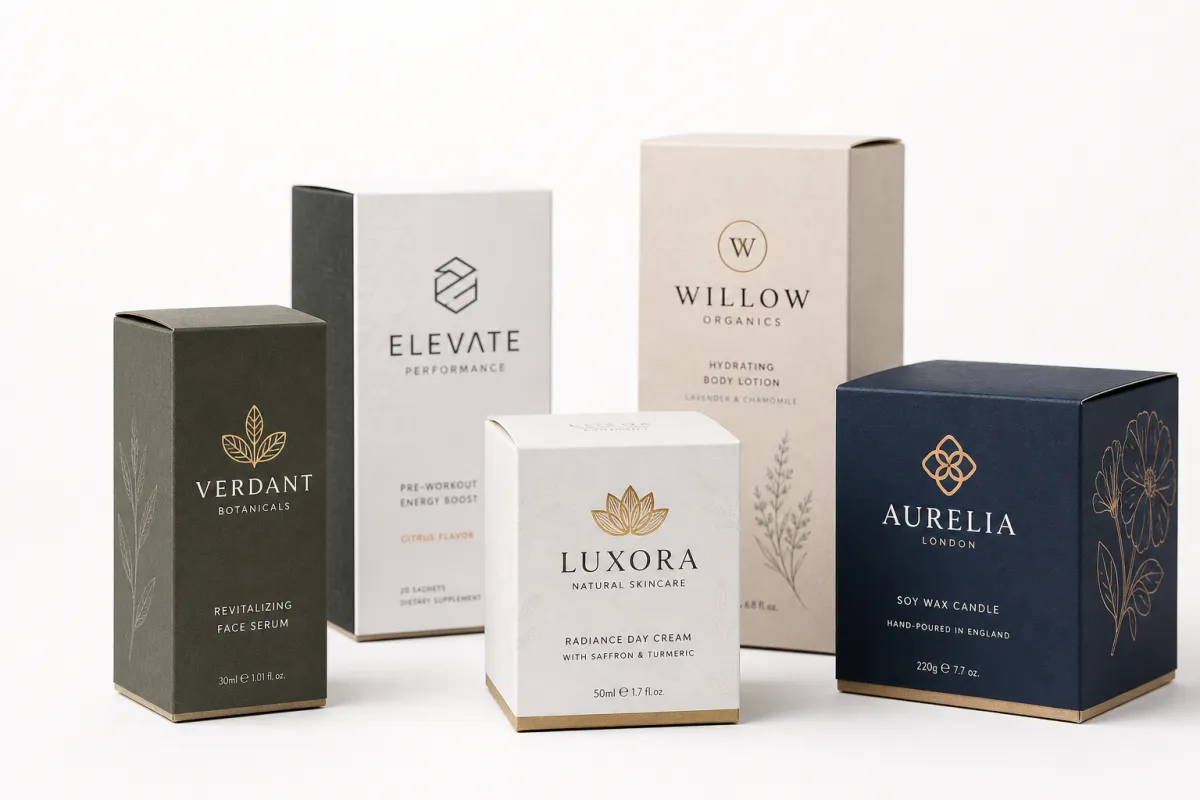
Picture a shopper standing in front of a crowded aisle. Two items are close in price, close in size, and close in function, but one sits inside retail carton boxes with logo and the other does not. The branded carton usually feels more credible in that first glance because the pack is doing visual work before the customer has time to think too hard about it.
That is the quiet strength of retail carton boxes with logo. They create a first impression, and they also signal structure, consistency, and care. A carton with clean print, accurate folds, and a clear brand mark tells the buyer that somebody paid attention to the details. In packaging, those details become shorthand for quality fast.
I think a lot of people underestimate how much a carton acts like a silent salesperson. It cannot answer questions, but it can reduce hesitation. A shopper can tell within seconds whether a package feels giftable, premium, practical, or disposable. Retail carton boxes with logo help set that tone long before product claims or ingredient lists get read.
There is also a shelf-management angle that gets overlooked. Retail carton boxes with logo can improve facings, help a product stand upright, and make a SKU easier to spot from a distance. On an e-commerce page, the same carton becomes the thumbnail image that has to hold attention in a row of tiny squares. That is a big job for a paperboard box, but it is also why the right carton earns its keep.
For many brands, the carton is the difference between “just another item” and “a real product.” That effect matters in cosmetics, supplements, food, electronics accessories, and small consumer goods, where the outer box often does as much selling as the item inside. When retail carton boxes with logo are built well, the package feels deliberate rather than improvised.
From a merchandising standpoint, the carton also helps the retailer. Clear branding, legible product naming, and tidy panel layout make shelf sets easier to organize. In practice, retail carton boxes with logo can support faster stocking, clearer assortment recognition, and a cleaner look across a planogram. That is one reason buyers keep coming back to printed cartons instead of plain paperboard.
And yes, the plain box can be fine if the brand story is minimal and the channel is forgiving. But most products are not living in that dream world. They are competing. Hard.
What Retail Carton Boxes With Logo Are and How They Work
At the simplest level, retail carton boxes with logo are Printed Folding Cartons or lightweight paperboard boxes that are cut, scored, folded, glued, and filled to create a finished retail package. They arrive flat, which makes them efficient to ship and store, then they convert into a formed box during packing. That structure is a big part of the value, because the carton has to be efficient in transit and attractive in the customer’s hand.
The logo is only one piece of the system. Retail carton boxes with logo work best when the logo sits inside a broader design hierarchy that includes color, type, product messaging, and any required legal copy. A strong mark on a weak layout can still look off-balance, while a smaller logo used with disciplined spacing and contrast can look much more polished.
It helps to separate a retail carton from a shipping carton. A shipping carton is mainly about transit strength, stacking, and damage resistance. A retail carton is about presentation, recognition, and brand clarity, though it still has to survive normal handling. Retail carton boxes with logo usually use paperboard or carton stock chosen for print quality first, then tuned for product weight and package rigidity.
The user journey is straightforward, but the details matter. The carton gets delivered flat, a packer forms it, the product is inserted, and the box is sealed or tucked closed. From there, retail carton boxes with logo protect the product in the warehouse, help it stay presentable on retail shelves, and later support the unboxing moment if the product is sold through direct-to-consumer channels. That sequence matters because the same carton has to work in several environments.
Typical use cases include small bottles, blister cards, jars, pouches, tubes, gadgets, cosmetic kits, and accessories. In those categories, print quality and structure both matter. Retail carton boxes with logo need enough stiffness to feel credible, enough surface quality to reproduce fine type, and enough design control to keep the brand readable after handling. A carton that looks good on a screen but scuffs badly in real use is usually a short-lived win.
Materials vary, but common choices include 16 pt to 24 pt paperboard, SBS, C1S, CCNB, and folded carton grades that balance stiffness with convertibility. The smoother the board, the better fine details and small text usually print. The more recycled fiber in the blend, the more the surface and brightness can vary, which is not always bad, but it should be a deliberate choice rather than an accident.
For brands that care about sourcing, paper certification can matter as much as the visual finish. If the brief calls for responsible fiber, ask for FSC-certified board and make sure the supplier can document the chain of custody. For products that travel through rougher distribution, carton performance testing can be just as important. Standards and methods from groups like ISTA help buyers think about vibration, drop, and compression in a more disciplined way.
One more thing: a carton spec sheet can look tidy and still miss the real-world headaches. Ink density, crease memory, glue flap behavior, and the way the carton opens on the line all affect the final result. I have seen “simple” cartons turn into a mess because the tolerances were treated like a suggestion. They are not.
Key Factors That Shape Retail Carton Boxes With Logo
Size comes first, because retail carton boxes with logo only perform well when the fit is honest. If the carton is too tight, packing slows down and the product may scuff or crush at the corners. If it is too loose, the box feels cheap and the item may rattle in transit. A proper dieline should allow for the product, any insert, and a little room for practical tolerances, not just the nominal dimensions on the spec sheet.
Board choice is the next major decision. A lighter board lowers cost and can work well for soft goods, sachets, or low-compression items, while a heavier board improves rigidity and gives retail carton boxes with logo a more substantial hand feel. For small consumer goods, I often see brands do well with a board in the 18 pt to 24 pt range, but the right answer always depends on the product weight, the closure style, and how many times the box will be handled before sale.
Print method changes both the look and the economics. CMYK process printing is common because it handles full-color graphics efficiently, while spot colors help preserve brand consistency for a logo that must stay exact across multiple SKUs. Retail carton boxes with logo can also use coatings, lamination, or varnishes to improve rub resistance and control sheen. Matte gives a quieter, softer look; gloss looks brighter and usually pops harder under store lighting; soft-touch feels premium but can show wear differently depending on the handling environment.
Then there are structural choices. A straight tuck end is familiar and efficient. A reverse tuck end can help with assembly flow. Auto-lock bottoms add strength for heavier products. Window patches let the product show through, which can help sell visibility for items where shape or color matters. Hang tabs support peg display. Inserts, whether paperboard or molded, keep components centered and reduce movement. Those details might sound small, but they shape how retail carton boxes with logo behave in the real world.
Compliance and copy layout are not glamorous, yet they are often the pieces that prevent rework. Retail carton boxes with logo may need barcodes, nutrition panels, ingredient statements, caution language, recycling marks, or importer information. Some retailers also impose their own pack rules around panel size, barcode quiet zones, and carton orientation. If those requirements are not mapped early, a design can look beautiful and still fail approval. That is the kind of surprise nobody wants.
Here is a practical way to think about the build:
- Product fit: match the carton to the item, not the other way around.
- Board strength: choose enough rigidity for handling, stacking, and display.
- Surface finish: pick coatings that fit the brand and the shipping route.
- Panel planning: reserve room for logo, claims, barcode, and legal text.
- Assembly speed: make sure the structure is easy for the packing line.
For brands that want to compare formats before committing, it can help to review a broader packaging range like our Custom Packaging Products and then narrow the conversation to the carton structure that fits the item best. A good packaging supplier should be able to talk through tradeoffs instead of pushing one structure for every product.
My rule of thumb: if three people on the team can explain the carton in different ways, the brief is probably too fuzzy. Tighten it up before anyone starts printing money by the boxload.
Retail Carton Boxes With Logo: Cost, Pricing, and What Drives It
Pricing for retail carton boxes with logo is rarely driven by one thing. Size matters, board grade matters, print coverage matters, and so does the finishing stack. A simple carton with a one-color logo can cost much less than a carton that uses full-coverage graphics, foil, soft-touch coating, and a custom insert, even if the outward shape looks nearly identical.
Setup charges also matter more on small runs. Die cutting, plate making, proofing, and prepress work get spread across fewer boxes when a customer orders a limited quantity. That means retail carton boxes with logo can look expensive on a low-volume project even when the unit structure is perfectly reasonable. On larger programs, those fixed costs soften and the per-box price usually drops.
Special features add value, but not every upgrade earns its keep. Embossing can add tactility. Foil can help a logo stand out. Spot UV can create contrast. A window can improve product visibility. Still, the smartest choice is not always the flashiest one. Retail carton boxes with logo should support the product story, not fight it for attention.
Artwork readiness affects cost too. Clean vector files, confirmed dimensions, and a properly built dieline reduce revision time and lower the risk of prepress delays. If the logo is still being adjusted while sampling starts, the schedule can slip and the project can pick up avoidable charges. In practice, a well-prepared file package saves more money than many people expect.
| Carton Type | Typical Features | Approx. Unit Price at 5,000 Units | Best Fit |
|---|---|---|---|
| Simple straight tuck carton | 4-color print, standard aqueous coating, basic board | $0.18-$0.32 | Lightweight products, launch budgets, high-volume SKUs |
| Window retail carton | Die-cut window, patch, full-color graphics, gloss or matte finish | $0.28-$0.48 | Products that benefit from visibility, giftable items |
| Premium retail carton | Heavier board, foil, emboss, soft-touch, custom insert | $0.45-$0.90+ | Beauty, specialty food, electronics accessories, premium kits |
Those numbers are illustrative, not a quote, because freight, board markets, finishing choices, and order quantity can move the final result quite a bit. Still, they give buyers a useful frame. Retail carton boxes with logo should be judged on total program value, not only on the quoted unit price. Freight, warehouse space, scrap rate, and line speed all affect the real cost per sellable package.
Another practical question is source control. If your board must meet a sustainability brief, ask about certified fiber and paper traceability. The Forest Stewardship Council is one of the names buyers see often, but the point is broader than a logo on the spec sheet. The real question is whether the carton matches the brand promise, the compliance needs, and the budget without forcing compromises later.
For many programs, a clean, well-planned carton beats a heavily embellished one. Retail carton boxes with logo do not need every possible upgrade to feel finished. They need the right mix of surface quality, structure, and brand clarity. That is how a buyer avoids paying for cosmetics that do not improve shelf performance.
How the Process and Timeline Usually Work
The process usually starts with the product brief. That means exact dimensions, product weight, filling method, closure preference, and any compliance language that must appear on the box. Once those details are known, a packaging partner can recommend a structure and build a dieline that fits the item and the pack line. Retail carton boxes with logo are much easier to get right when the first measurements are accurate.
After that comes artwork development. The logo has to be placed with a clear hierarchy, not just dropped onto a panel. A strong carton design keeps the branding visible from the customer-facing angle while preserving room for regulatory text and barcode placement. Good retail carton boxes with logo often look simple because the layout has been edited with discipline, not because the project lacked effort.
Sampling is where many expensive mistakes get caught. A sample can show whether the carton folds cleanly, whether the tuck flaps behave as expected, whether the board creases sharply, and whether the product moves too much inside the package. That is why first articles matter so much for retail carton boxes with logo. A physical sample can reveal issues that no screen mockup will catch.
A realistic timeline for a standard project is often 12 to 15 business days after proof approval, but first-time runs usually need more time because of structural checks, sample review, and artwork changes. If the carton uses special finishes, additional inserts, or multiple approval rounds, the schedule can stretch. I would rather see a buyer plan for extra margin than rush a box into print before the details are settled.
Here is a rough planning sequence that tends to work well:
- Confirm measurements, product weight, and filling method.
- Choose the structure and board grade.
- Build the artwork and confirm the legal text.
- Review proofs and request a physical sample if needed.
- Approve the final version and schedule production.
- Check freight timing so the cartons arrive before filling begins.
In the best-case scenario, the process moves smoothly because the buyer has already settled the brand direction and the operational details. In the worst case, retail carton boxes with logo become a bottleneck because the box is being finalized after the product is already scheduled for launch. That is why the packaging calendar should sit inside the product launch calendar, not beside it as an afterthought.
And if the schedule looks suspiciously easy, it usually means somebody skipped a step. That kind of optimism is cute right up until the cartons are late.
Common Mistakes to Avoid Before You Print
The first mistake is designing for appearance before checking the fit. A beautiful carton that is a few millimeters too tight can slow packing and damage the product edge. A carton that is too loose can feel cheap and may need extra inserts or filler, which adds cost and complexity. Retail carton boxes with logo have to fit the physical product before they can do any brand work at all.
Another common miss is choosing a finish that looks premium on paper but scratches or scuffs too easily in transit. Soft-touch coatings, matte films, and some specialty varnishes can look excellent, but they are not always the best choice for high-touch retail environments. If the carton will be handled a lot, test the finish against real movement, stacking, and shelf contact before locking it in.
Compliance errors are expensive. A missing barcode quiet zone, a misplaced warning statement, or cramped ingredient text can force a redesign after proofing. Retail carton boxes with logo need enough clear panel space to handle the legal and retail requirements without clutter. If the customer has to squint to find the product name, the box is probably carrying too much visual noise.
Overdesign is another trap. It is easy to think that more color, more copy, and more effects must equal more value. Often the opposite is true. When a carton has too many competing claims, the logo gets weaker, the hierarchy gets muddy, and the shelf read gets slower. Retail carton boxes with logo usually perform better when the package has one clear message and a disciplined layout.
Screen previews can also mislead. Paperboard has texture. Coatings change contrast. Press conditions affect ink density. What looks bright on a monitor may print darker on board, especially if the brand colors are delicate or the logo uses thin strokes. That is why physical proofs matter, especially for retail carton boxes with logo that need a consistent look across repeat orders.
For products that travel a long way or face rough distribution, testing should not be an afterthought. It is smart to think about drop, vibration, and compression in a way that resembles ISTA and ASTM style distribution checks rather than assuming the box will behave perfectly on the first pass. A carton can be beautiful and still fail if it cannot survive the route to shelf.
Here is a short checklist that catches a lot of problems early:
- Confirm the final product dimensions, not the rough estimate.
- Leave space for barcode placement and legal text.
- Ask how the chosen coating handles rub and scuff.
- Review a sample under real light, not just on screen.
- Check whether the carton opens and closes cleanly during packing.
Honestly, the most expensive errors usually come from assumptions. Retail carton boxes with logo do not forgive vague specs, and the more premium the finish, the more precise the setup needs to be. Slow the process down at the spec stage, and the printing stage usually becomes much easier.
One honest disclaimer: not every package needs the fanciest board or the most dramatic finish. Sometimes the smartest move is a simpler box that behaves better in production and ages better on shelf. Boring can be very profitable.
Expert Tips and Next Steps for a Better Box Program
Start with the job the carton has to do. Does it need to protect a fragile item, support hanging display, create a giftable feel, or simply give the SKU a stronger retail identity? Once that is clear, retail carton boxes with logo become easier to specify because the visual choices are tied to a real function instead of a vague idea of “looking nicer.”
Test a sample before you scale. A prototype tells you whether the fold is clean, whether the product fits with the insert, whether the carton stacks well in storage, and whether the pack line can handle the assembly speed. Those checks are especially useful for retail carton boxes with logo because branding can hide structural weakness until the box is actually in use.
Standardize wherever possible. If several SKUs share the same footprint, the same board grade, or the same closure style, the program becomes easier to reorder and easier to control. That kind of modular planning is one of the simplest ways to keep retail carton boxes with logo consistent without overcomplicating the warehouse or the artwork file library.
Compare total value, not just visual appeal. A carton with a special finish may look impressive, but if it slows packing, raises scrap, or complicates replenishment, the real cost may be higher than it first appears. Retail carton boxes with logo work best when the package serves brand, operations, and retail display at the same time.
If you are building a new line or refreshing an old one, gather the following before you request a quote:
- Exact product dimensions and weight
- Expected order quantity and reorder frequency
- Logo files, brand colors, and artwork notes
- Required copy, compliance text, and barcode data
- Retail display needs, inserts, or window preferences
- Any sustainability goals such as FSC-certified board
That kind of preparation makes the conversation faster and usually improves the result. It also helps a supplier recommend the right board, the right print method, and the right closure without guessing. If you want to compare structures first, our Custom Packaging Products page is a good place to start before narrowing down the exact carton build.
The best programs usually feel simple after the fact, but they are simple because someone did the hard work early. Retail carton boxes with logo reward that kind of planning. When the fit is right, the print is controlled, and the finish suits the product, the box stops being a container and starts doing real brand work.
That is the takeaway: start with the product, not the decoration. If the structure fits, the copy is clean, and the finish survives the route to shelf, the logo gets to do its job instead of fighting the package.
What are retail carton boxes with logo used for?
They present and protect the product while giving the brand a clear shelf identity. Retail carton boxes with logo are common for cosmetics, supplements, food items, small electronics accessories, and other consumer goods that need a printed outer package. They also help a product look ready for retail instead of half-finished.
How do I choose the right material for retail carton boxes with logo?
Match the board strength to the product weight, handling, and display needs. A smoother board usually prints fine detail better, while a heavier board can improve rigidity and give retail carton boxes with logo a more premium hand feel. If the box will travel far or be stacked hard, test the board before locking the spec.
Are retail carton boxes with logo expensive to make?
Cost depends on size, board grade, print coverage, finishing, and order quantity. Small runs usually cost more per unit because setup and tooling are spread across fewer boxes, so simple structures and standard finishes are often the easiest way to manage budget. Add-ons like foil or embossing raise the price fast.
How long does it take to produce retail carton boxes with logo?
Timelines vary by artwork readiness, proof approvals, material availability, and print complexity. First-time projects usually take longer because of sampling and structural checks, and planning ahead helps avoid rush charges and launch delays. A clean file package usually saves days.
Can retail carton boxes with logo be made for small product runs?
Yes, smaller runs are possible for launches, limited editions, and seasonal products. The per-box price is usually higher, so the design should be efficient and purposeful, and a sample run can help confirm fit and print quality before scaling up. If you want retail carton boxes with logo to do real selling work, keep the structure honest, the copy readable, and the finish matched to how the box will actually move.


