Retail custom promotional Hats Unit Cost is easy to misunderstand because the blank cap is only one part of the bill. By the time decoration, freight, packaging, and retail presentation are added, the cheapest-looking quote can become the most expensive program on the receiving dock. Buyers who only compare the hat price usually find out later that they paid more for a weaker shelf result.
That matters because hats behave differently from ordinary promotional items. A cap that looks structured, wears well, and photographs cleanly can sell through faster than a cheaper one that collapses on the peg or curls at the bill. In retail, the item is not finished when production ends. It is finished when it looks worth buying twice.
Think of hat pricing the way experienced packaging teams think about cartons and inserts: the unit cost only matters in context. A slightly higher cap cost can be the better buy if it reduces markdowns, returns, and reorders that go sideways. The right question is not, “What is the cheapest hat?” The right question is, “What lands well, sells cleanly, and can be repeated without surprise?”
The Cheapest Hat Is Not Always the Cheapest Order
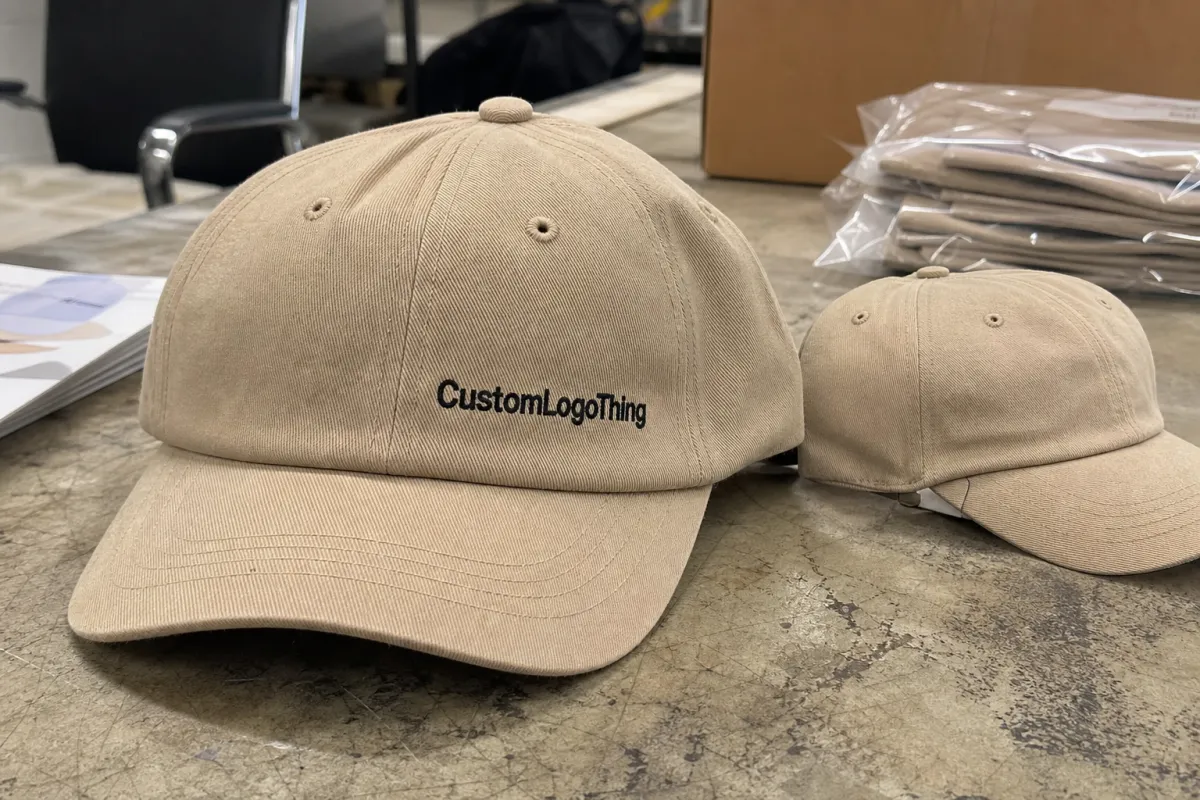
The lowest number almost always starts with the blank. A basic foam trucker can come in well under a dollar in high volume, while a structured cotton twill snapback or brushed twill five-panel can sit several dollars higher before decoration. That difference looks painful on a quote sheet. It looks less painful once the cap is hanging in a store and the better shape is doing the selling.
Buyers often optimize for the line item they can see and ignore the line item they cannot: sell-through. A $2.25 blank that looks thin, wrinkles easily, or feels disposable may save a few cents on paper but cost more in slower movement and weaker retail perception. A $3.10 blank with stronger crown structure, tighter stitching, and better panel alignment can be the smarter purchase because it carries the brand better. That is a trade many merchandising teams only learn after one disappointing run.
For retail, it helps to think in landed bands instead of catalog numbers. A decorated cap can reasonably fall somewhere around $4.50 to $9.00 or more each depending on body style, decoration method, packaging, and freight. Add a retail hang tag, a polybag, or carton labeling, and the spread widens again. A program meant for a seasonal display may justify an extra 40 cents to $1.20 per piece if the presentation is stronger and the hat survives handling better.
If the cap does not look good on a hook, it rarely gets a second chance on a shelf.
The clearest way to evaluate the price is to compare total program cost. That means blank hat price, decoration, setup, packaging, shipping, and the cost of reordering if the style becomes a regular SKU. A one-cent savings on the blank is meaningless if the decoration is messy or the fit turns out inconsistent across the run.
Choose the Cap Style That Matches Your Customer and Shelf
Cap style has a bigger impact on price and perception than most people expect. Structured snapbacks usually hold the front panel best and give logos the cleanest stage. Dad hats create a softer, more casual look and often appeal to a broader retail audience. Five-panels are useful when the artwork needs a flatter front and a more current shape. Trucker hats are still the value play when the budget is tight and the target customer is comfortable with a lighter, sportier feel. Performance caps matter when moisture management or outdoor wear is part of the actual use case rather than a marketing line.
Closure choice changes both fit and perceived value. Snapbacks are easy to size across a broad audience. Hook-and-loop closures are common in lower-cost programs, but they rarely feel as premium. Fabric straps with metal buckles can move the cap upmarket and make sense when the retail ticket supports it. Bill shape matters too. Flat bills push the style toward streetwear, while a curved bill broadens appeal and reduces the risk of a narrow trend window.
The body fabric matters as well. Cotton twill is a common baseline because it prints and stitches predictably. Brushed twill feels softer and can look more finished. Polyester and performance blends handle heat and moisture better, but they do not always read as premium in a lifestyle setting. If the goal is retail, not a one-day giveaway, the hand feel and crown structure should be judged as part of the product, not treated like technical trivia.
Choose the cap for the customer who will actually wear it, then check how it will sit in the store. Retail shelves reward shape retention. Event tables reward quick logo recognition from a few feet away. Corporate giveaways can survive a simpler blank. Retail programs usually cannot. A style that looks trendy in a mockup may still age badly in actual inventory.
There is a practical middle ground. A clean five-panel or a well-built dad hat can stay profitable without reading as bargain-bin. If the logo is strong and simple, you do not need every premium feature turned on. If the artwork is small, detailed, or tied to a higher shelf price, better fabric and tighter sewing are worth the extra spend. The logic is the same one buyers use for packaging: the container should match the value of what it carries.
For brands coordinating hats with other retail pieces, consistency matters. Labels, inserts, and box finishes should feel like they belong to the same program. A cap with a premium patch can look oddly cheap if it ships beside plain packaging. Buyers who manage the whole presentation often align hats with other Custom Packaging Products so the display reads as one system rather than a pile of unrelated items.
Decoration Specs That Change the Final Finish
Decoration is where retail custom promotional Hats Unit Cost starts to spread out fast. Flat embroidery remains the workhorse for simple logos because it is durable, familiar, and usually economical when the artwork is straightforward. It is a strong choice for classic retail caps, especially if the logo uses two to four thread colors and sits comfortably on the front panel. It also holds up well through handling, which is not a small thing once the product is moving through stores or distribution.
Woven patches and leather or faux leather patches move the look toward a more premium shelf presence. They add texture and often make the cap feel more considered. That said, they also add steps. A patch has to be produced, approved, and attached correctly. If the border is sloppy or the patch sits off-center, the whole cap looks careless. Printed patches can handle more detail and color, but they only look good if the artwork is sharp and the material is right for the finish.
3D puff embroidery is effective for bold logos on structured caps, especially snapbacks and streetwear-style retail programs. It raises the front and can make a simple mark feel more valuable. It is not the right answer for fine text or logos with tight interior detail. Direct print has its place on softer, flatter surfaces, but it is rarely the strongest default for retail headwear unless the artwork or material makes embroidery impractical.
Production complexity is where small design decisions become real money. A 5,000-stitch logo is cheaper to run than a dense 15,000-stitch design with tiny islands of fill. A compact 2.25-inch patch is easier to handle than a large panel piece that crosses seams. Tiny text, gradients, and delicate linework often need to be simplified before production. If the logo cannot be read from normal display distance, the problem is usually design, not machinery.
Here is a quick comparison of common decoration paths:
| Decoration | Typical Visual Result | Common Cost Impact | Best Use |
|---|---|---|---|
| Flat embroidery | Clean, durable, traditional | Lower to moderate | Simple logos, classic retail caps |
| 3D puff embroidery | Bold, raised front panel | Moderate | Snapbacks, streetwear-style merch |
| Woven patch | Sharp detail, polished surface | Moderate to higher | Small type, clean brand marks |
| Leather or faux leather patch | Premium, textured, lifestyle look | Moderate to higher | Retail programs with a higher shelf price |
| Printed patch | Best for complex art and color | Moderate | Detailed logos, limited-color constraints |
Small inside details influence perceived value more than many buyers expect. Branded seam taping, a woven side label, or a clean care label can make a hat feel closer to a real retail product and farther from a giveaway. None of that should be used as decoration for decoration's sake. The point is consistency. If the outside is polished and the inside looks unfinished, the whole piece feels less expensive than it should.
Testing also matters. For orders that will move through distribution, carton strength and handling tolerance deserve attention. Shipping tests such as the ISTA shipping test methods can help catch issues before the order arrives crushed or bent. If the pack-out uses paper inserts or certified materials, the FSC chain-of-custody framework may also be relevant. Those details are not flashy, but they are the difference between a product that arrives ready and one that arrives needing rescue.
What Drives Retail Custom Promotional Hats Unit Cost
Retail custom promotional hats unit cost is a stack of decisions, not a single number. Start with the blank hat price. Add decoration. Add setup or digitizing if embroidery is involved. Add packaging, freight, and any retail extras such as hang tags, polybags, or barcodes. Then account for special handling if the order needs kitting, size sorting, or a higher level of inspection. A quote that looks clean at first often grows teeth once those items are included.
Quantity is the biggest lever after style. A 100-piece order carries a lot more overhead per unit than a 500-piece or 1,000-piece run because setup and machine time are spread over fewer hats. At 250, 500, and 1,000 units, the price usually drops in visible steps. The pattern is not perfectly linear. It depends on whether the body is in stock, how complicated the artwork is, and whether the supplier has to source a less common color or closure.
Minimum order quantity matters more than buyers like to admit. Low MOQ is useful for testing a retail concept or launching a small seasonal program, but it rarely delivers the best economics. A supplier can quote 72 units if the style supports it, yet that does not erase the setup burden. Small runs buy flexibility. Larger runs buy better unit cost. Those are different goals, and mixing them up leads to bad expectations.
The easiest way to compare vendor quotes is to force line-item visibility:
- Ask for the blank hat price by style and color.
- Ask for decoration cost by method, including setup or digitizing.
- Ask how the order ships: bulk packed, polybagged, or retail ready.
- Ask for freight to your ZIP code, not a rough shipping estimate.
- Ask for price breaks at 100, 250, 500, and 1,000 pieces.
That list sounds basic because it is. A line-item quote tells you where the money is going. One supplier may be stronger on the blank price and weaker on freight. Another may have a more expensive cap but lower decoration cost because the production line suits the artwork better. Without itemization, buyers are comparing mystery boxes and hoping for the best.
| Order Tier | Typical Unit Cost Pattern | What Usually Happens | Best For |
|---|---|---|---|
| 50-100 units | Highest per-unit cost | Setup and labor dominate | Testing demand, small staff drops |
| 250-500 units | Mid-range unit cost | Better spread of setup and freight | Retail launches, event merch |
| 1,000+ units | Lowest practical unit cost | Production efficiencies start to matter | Repeat retail programs, multiple locations |
These same rules show up in other retail packaging decisions too. The cheapest component is not always the cheapest finished program. A cap that ships in a strong carton, holds its shape, and arrives shelf-ready can beat a slightly cheaper hat that needs sorting, steaming, or repacking. That is the practical side of landed cost, and it is usually where the margin lives or dies.
Production Steps and Turnaround From Proof to Delivery
The production path is straightforward, but every skipped step tends to show up later as a delay. It starts with inquiry and quote, then artwork review, proofing, approval, production, quality check, and shipping. If the blank is available and the artwork is clean, embroidered programs can move quickly. Patch-heavy programs and retail-ready pack-outs take longer because there are more points where something can drift.
For planning purposes, simple embroidery often runs about 10-15 business days after proof approval when materials are in stock. Woven patch or leather patch programs often sit closer to 15-20 business days. Add time if the order includes custom labels, retail bagging, stitched closures, or special carton requirements. Rush jobs are possible, but they narrow choices and usually add cost. Faster is useful; fewer mistakes are better.
The most common delay points are predictable. Missing vector files slow the artwork stage. Color questions slow proof approval. Late changes to placement or stitch count push production back. Freight can also cause surprises if the buyer assumed a flat rate and the shipment was priced by weight and destination. Sharing the delivery ZIP code early helps prevent that problem. It is not glamorous, but it is the difference between an accurate landed price and a budget that collapses after approval.
Quality control should be part of the quote conversation, not an afterthought. A proper review looks at panel alignment, crown shape, stitch tension, patch adhesion, closure placement, and carton condition. If the hats are going into retail, a few sample photos before the full shipment can catch issues while there is still time to fix them. A crooked logo or a crushed crown on the last day before launch is not a small problem. It is a store problem, a margin problem, and a credibility problem all at once.
Packaging discipline matters here too. Hats do not need to be overbuilt, but they do need to survive handling. An insert, a better carton, or a smarter stack pattern can prevent crushed fronts and bent bills. If the goods are traveling through distribution rather than straight to one store, the abuse they see along the way should be part of the design brief. Otherwise the final appearance depends on luck, and luck is not a production plan.
A clean schedule with clean artwork beats a rush order more often than buyers want to admit.
Why Repeat Buyers Stick With the Same Hat Program
Repeat buyers care less about novelty and more about consistency. Same fit. Same panel height. Same thread shade. Same patch size. Same carton count. That steadiness makes reorders easier to approve and easier to fulfill. Nobody wants to explain why the second production run looks slightly smaller or why the logo moved a few millimeters and now reads wrong on the shelf.
Consistency also protects margin. One-off surprises create complaints, returns, and discounts. A cap program that holds its specs across runs reduces all three. If a style sells at retail once, the next order should feel like the same item, not a distant cousin. That is one of the quiet ways retail custom promotional hats unit cost stays under control over time: the work gets repeatable.
Supplier selection matters more than the first quote suggests. Fast communication helps. Accurate proofs help. So does the ability to repeat a spec across multiple runs without improvising around material availability. A slightly higher quote can be easier to defend if it lowers the risk of rework, misshapen inventory, or a mismatch with the original retail display.
Retail programs are especially sensitive to this because many start as a one-time promo and then turn into an ongoing SKU. Once that happens, the buyer needs the cap to come back looking like itself. If the follow-up run drifts, the entire display can look inconsistent. That inconsistency has a cost that does not show up on the first quote sheet.
The surrounding packaging should be equally steady. A clean hang tag, neat bagging, and clear labeling support the cap at point of sale. If the broader assortment includes other branded goods, keeping the visual language aligned across Custom Packaging Products and the hat line helps the whole program feel intentional rather than assembled at the last minute.
What to Send Next for an Accurate Quote
Accurate pricing starts with specific inputs. Send quantity by style and color, decoration method, artwork file, target ship date, and destination ZIP code. If you want more than one option, say so up front. That lets a supplier compare a lower-cost version and a premium version without reworking the entire estimate. Vague requests usually produce vague quotes.
Ask for both per-unit pricing and landed cost. Those are not interchangeable. A quote can look attractive until freight, setup, and packaging are added. A good estimate should also show whether the order is bulk packed or retail ready, and whether any sample or digitizing fees apply. If the first number is too high, request alternate blanks or a different decoration path before abandoning the quote entirely. That usually gets you to a better answer faster.
- Send clean vector artwork if you have it.
- State whether the hats are for retail, event merch, or giveaway use.
- Specify any needed packaging, labels, or hang tags.
- Share the target delivery window early.
- Ask where the next price break sits and what MOQ gives the best value.
A good buying decision is usually the one that balances appearance, reliability, and landed cost. The cheapest cap can still be expensive if it looks disposable. The nicest cap can still be a poor buy if freight and setup swallow the margin. The useful middle is a hat that looks right on the shelf, holds up in transit, and can be reordered without a fresh round of problems.
What affects retail promotional hat unit cost the most?
Decoration method usually moves the price fastest, especially when the design requires patches, multiple thread colors, or more setup time. Quantity matters just as much because small runs spread labor and proofing across fewer units. Freight and packaging can also change the landed price more than buyers expect, particularly when the order must arrive retail-ready rather than bulk packed.
What MOQ should I expect for custom retail caps?
MOQ varies by style and decoration, but embroidered runs are often available at lower quantities than patch-heavy programs. A low MOQ is useful for testing a concept or keeping inventory risk down, but it rarely produces the best unit economics. Ask for price breaks at several tiers so you can compare flexibility against landed cost instead of guessing.
Is embroidery cheaper than patches for custom hats?
Embroidery is often cheaper for simple logos because it avoids patch production and a separate application step. Patches can cost more, but they may be worth it if the design needs sharper detail or a more premium retail finish. The lower-cost answer depends on artwork complexity, size, and quantity, not just the decoration label.
How fast can retail custom promotional hats be produced?
Turnaround depends on the decoration method, proof approval speed, and whether the blank is already in stock. Simple embroidered orders often move faster than programs with custom patches, special labels, or retail pack-outs. Rush timing is possible, but it usually narrows style choices and raises cost, so the deadline should be shared early.
How do I lower hat cost without making the product look cheap?
Start with a simpler cap style, fewer thread colors, and a decoration method that fits the artwork. Ask for alternate blanks and price breaks so you can compare value instead of blindly choosing the lowest quote. Keep the design clean and the packaging efficient; that usually protects the look better than trimming quality in the wrong place.
Retail custom promotional hats unit cost only makes sense when the full program is visible. Once the blank, decoration, freight, packaging, and reorder risk are all on the table, the better choice usually becomes obvious. That is the number that matters: not the lowest quote, but the one that still makes the hat worth wearing, worth displaying, and worth buying again.

