Apparel embroidered beanies Factory Quote for Bulk Orders only becomes useful when the factory has enough information to price the knit body, the decoration method, the stitch count, and the delivery window. Leave out any one of those pieces and the number on the page may look sharp while hiding the real cost of making the order.
That is why “price me some beanies” is too vague to help anyone. A production team cannot guess whether the hat is a cuffed acrylic style, a heavier wool blend, or a recycled yarn program with stricter color control. Those choices affect the hand feel, the machine time, the reject rate, and the final per-piece cost.
Buyers who handle uniforms, retail merch, winter promotions, or corporate gifting usually want two things at once: a clean logo and a quote that will survive internal review. That means separating blank beanie cost, digitizing, embroidery or patch application, sampling, packaging, and freight assumptions. If those items are bundled together, it is hard to compare suppliers without comparing apples to oranges.
On knit headwear, the fabric itself matters more than many first-time buyers expect. Yarn behavior, gauge, stretch recovery, and cuff construction can shift the result even when the logo stays the same size. A reliable quote reflects those constraints instead of pretending every beanie reacts the same way to thread.
Apparel Embroidered Beanies Factory Quote: What Drives It
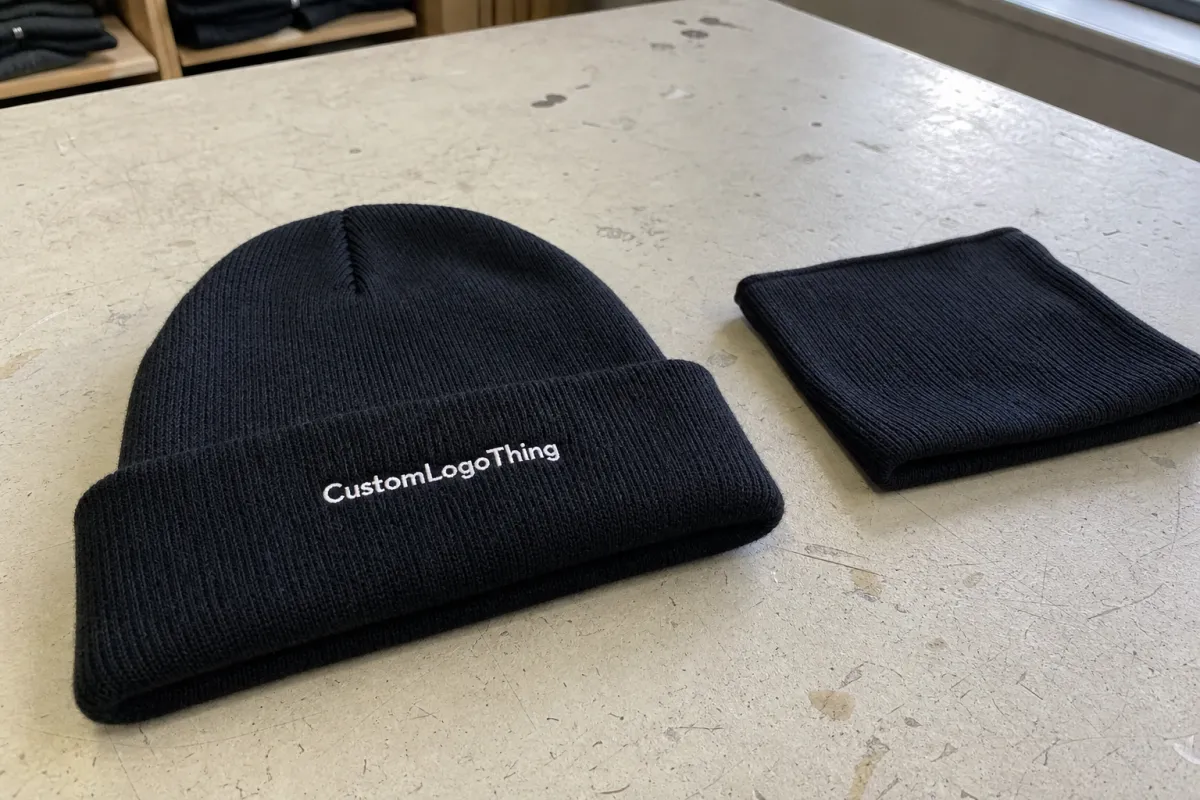
The base cost begins with the body of the beanie. A simple acrylic cuffed cap can land around $0.85-$1.80 per piece at higher volumes, while a wool blend, recycled yarn, or heavier rib knit can move closer to $1.60-$3.40 or more, depending on construction and quantity. That spread is normal. The material, the knitting time, and the finishing steps do not behave like a commodity T-shirt blank where one factory’s quote can be only a few cents apart from another’s.
Once embroidery enters the order, the quote becomes a mix of material and machine work. There is the blank body, digitizing if the art is not already programmed, the embroidery itself, sampling, and packing. A quote that hides one of those pieces is not really cheaper; it is just incomplete.
Knitting gauge is a bigger lever than many buyers realize. A tighter gauge often gives the logo a cleaner seat on the surface, while a looser knit may feel softer but can let stitching sink unevenly or shift after wear. Yarn twist matters too. If the yarn opens up during production, small letters can lose crispness. That is why a factory wants the style spec before quoting, not just a logo file.
A good apparel embroidered Beanies Factory Quote should show where the money goes. Blank beanie, digitizing, embroidery or patch work, sample charge, packaging assumptions, freight basis. If those parts are not visible, the buyer loses the ability to tell whether the low quote is efficient or simply missing scope.
A low number that omits sampling or freight often looks better only until the order is ready to leave the floor. The missing cost shows up later, usually when the schedule is already tight.
For a first pass, the factory still needs a logo file, approximate quantity, color split, and target delivery date. Without that, the best anyone can provide is a placeholder.
Pick the Right Beanie Body Before You Price the Decoration
Cuffed, uncuffed, slouch, and rib-knit beanies behave differently under embroidery, and the difference is not cosmetic. A cuffed beanie gives you a flatter decoration zone where the logo can sit cleanly on the fold. That is why it remains the default for team apparel and company giveaways. An uncuffed style can feel lighter and more modern, but there is less stable surface for a clean mark. Slouch styles look relaxed and retail-friendly, yet the drape can make exact placement harder when the artwork includes small text or thin outlines.
Material choice changes both price and wear. Acrylic is still the workhorse because it is affordable, color-flexible, and consistent in mass production. Recycled acrylic keeps the same basic behavior while improving the materials story. Wool blends feel warmer and usually look more premium, but they cost more and require tighter handling in knitting and finishing. Mixed yarns can improve softness or stretch recovery, although the factory needs to test how the yarn behaves before promising a clean embroidery result.
Crown shape and cuff depth are easy to overlook and hard to fix later. If the beanie stretches too much, the logo can distort once the hat is worn. If the cuff is too shallow, the decoration can sit too close to the edge and lose balance. Retail buyers often care about shelf appeal and color consistency. Uniform programs care more about repeatability and comfort. The right body is the one that matches the use case, not the one that simply looks least expensive on paper.
A practical way to think about the options:
- Team apparel usually works best with a cuffed acrylic body and centered logo placement.
- Retail merch can justify softer yarns, a finer rib, or a patch treatment that adds texture.
- Winter promotions usually favor lower-cost bodies with stable color matching and straightforward decoration.
- Uniform programs need repeatable fit, durable stitching, and a tidy reorder path.
Embroidery Specs That Control Look, Durability, and Approval
Logo placement is one of the first decisions that changes both appearance and price. Cuff placement is usually the cleanest because the surface is flatter and easier to register. Crown embroidery can work well for simple marks, but a stretchy knit needs tighter control over size and stitch path. Side-panel placement can look sharp, though it is less forgiving if the design must be readable from a distance.
Stitch count drives more of the final result than many buyers expect. A compact logo with solid fills may need moderate stitching, while fine lettering, gradients, or detailed emblems can demand more stitches and more machine time. Thread color count matters too. Two colors are simpler than six, especially if the buyer wants tight color matching. The more changes in the program, the slower the run and the more room for variation.
Direct embroidery gives a softer, integrated finish and usually works best for simple text, icons, or bold shapes. A woven patch or embroidered patch makes more sense when the artwork is too detailed to hold in stitches alone or when small type needs extra protection. Patches add a layer and change the feel of the beanie, so the buyer should decide whether that texture fits the brand before ordering.
Useful spec checks include:
- Finished size so the logo fits the cuff without overwhelming it or disappearing on the knit.
- Thread match against Pantone or a brand reference, confirmed in writing when possible.
- Backing type so the embroidery sits properly and does not warp the knit surface.
- Raised or flat effect depending on whether the brand wants dimension or a cleaner retail look.
There is also a shipping side to quality. Orders that move through distribution centers or arrive in retail cartons should be packed with enough crush resistance to survive transit. If packaging standards matter, ask whether the carton plan aligns with industry testing practices such as ISTA shipping test practices. That is less about marketing and more about avoiding damaged cartons that make a good product look careless.
Pricing, MOQ, and Unit Cost Factors That Change the Quote
The quote should be broken into parts that a buyer can actually audit. The main buckets are blank beanie, digitizing, embroidery or patch work, sampling, packaging, and freight. A single all-in line makes comparison easier for the supplier, not for the buyer. Procurement teams usually end up paying for that simplicity later when the order changes or the shipment lands with extra charges attached.
MOQ changes the math fast. At low quantities, setup and programming get spread across fewer pieces, so the unit cost rises. A 100-piece order can look very different from a 2,000-piece run even if the logo is identical. If the order includes multiple body colors, multiple logos, or private-label packaging, the effective minimum can climb again because each variation behaves like its own production run.
The biggest cost drivers are usually stitch complexity, thread count, logo size, and turnaround pressure. Rush orders add expense because they interrupt the normal knitting and embroidery schedule. Special labels, individual polybags, hangtags, or retail inserts add labor in a way that is easy to underestimate. If those items matter, they should be in the quote from the start.
| Quote Item | Typical Impact | What Changes the Number | Buyer Check |
|---|---|---|---|
| Blank beanie body | $0.85-$3.40+ | Yarn blend, knit gauge, cuff style, order size | Confirm fiber content and construction |
| Digitizing | $20-$60 one-time | Artwork complexity, stitch path, revision count | Ask whether revisions are included |
| Embroidery or patch application | $0.35-$1.80 per piece | Stitch count, size, thread colors, patch type | Match logo size to the intended placement |
| Sampling | $25-$80 | Stitch-out method, courier needs, revision needs | Confirm whether sample cost is credited on bulk order |
| Freight and packing | Varies by lane | Carton count, destination, carton spec, urgency | Separate product cost from shipping assumptions |
If the order needs recycled cartons, retail-ready mailers, or branded paper inserts, ask whether the paperboard can be supplied with FSC-certified material. That is a useful procurement question, not a decorative one, and it lets buyers align the shipment with internal packaging standards without changing the product itself.
Embroidery Process and Timeline from Artwork to Shipment
The production flow usually starts with art review and digitizing. Vector files are preferred because they keep edges clean and help the factory estimate stitch count with less guesswork. Once the file is ready, the design is programmed, a stitch-out or preview sample is made, and that sample is reviewed before bulk production begins. On knit goods, skipping that step is asking for trouble.
Lead time depends on quantity and how quickly approvals move. A smaller run can sometimes finish in 12-15 business days after sample approval. Larger or more complex orders can need 18-30 business days or longer. Delays usually come from late art changes, slow color confirmation, or approval cycles that keep drifting because the buyer never locked the spec. Freight time is separate and should stay separate.
Some tasks can happen at the same time. While the sample is under review, the buyer can confirm carton marks, retail packing, labeling, and destination details. That saves time later. It also reduces the odds that a finished order is waiting in the warehouse because nobody agreed on the box copy or pallet count. The fastest orders are rarely the ones with the most pressure; they are the ones with the fewest unanswered questions.
A well-built Apparel Embroidered Beanies factory quote should state the production clock in plain language: what starts after approval, what depends on raw materials, and what counts as the final ship date. That is the difference between a useful quote and a guessed date wrapped around a price.
Sampling, Pre-Production Approval, and Common Failure Points
A stitch-out or photo approval is the safest way to confirm scale, color, and placement before the order moves into full production. On knit goods, a design can look perfect on screen and still sit too high on the cuff, read too small from a distance, or fill in too densely once stitched. One approval cycle can prevent a very expensive mistake.
The failures are usually plain, not exotic. Artwork arrives in the wrong format. The logo is too large for the knit area. The buyer assumes a short turnaround without checking the actual queue. A substitution gets approved casually and the finished piece no longer matches the brand standard. None of that is rare, which is why the pre-production review needs to be specific rather than polite.
A practical checklist should cover:
- Artwork format with vector files where possible.
- Logo dimensions for both width and height, not just one measurement.
- Thread colors with brand references or Pantone guidance.
- Care labeling and carton marks for the final destination.
- Packaging details such as polybag, hangtag, or master carton preferences.
Sampling costs less than rework, and rework on embroidered knitwear is rarely elegant. Once stitches are in place, corrections can mean stripping thread, changing placement, or sending product back through the line. That takes time, and time is usually the first thing a rushed order runs out of.
What a Reliable Beanie Factory Delivers Beyond the Quote
Price matters, but repeatability matters more for most bulk buyers. A factory that can hold knitting consistency, control embroidery tension, and preserve the same color and fit across reorders is usually more valuable than the lowest headline price. The first shipment is only one part of the job. The second order tells you whether the process actually works.
Quality control should include thread tension checks, trim removal, size consistency, and carton-level inspection before goods leave the floor. That sounds basic because it is basic. It is also where many problems are prevented. A loose thread on one beanie is a minor issue. A pallet full of poorly aligned cuffs or stray trim becomes a customer complaint the moment cartons are opened.
Good factories also communicate fabric lot changes and color tolerances before the shipment goes out. If a sample and production run differ slightly, the buyer should know why. Sometimes the variation comes from yarn behavior. Sometimes it comes from process drift. A dependable supplier explains the difference instead of hoping the buyer will not notice.
For recurring programs, the most valuable part of the quote is not the first price. It is the ability to reorder the same product without re-litigating every detail. That steadiness saves more than a small discount ever will.
Next Steps to Request an Accurate Quote and Place the Order
The cleanest quote request includes the logo file, beanie style, material preference, quantity, decoration size, thread color notes, packaging needs, and target delivery date. If any of those are missing, the first number should be treated as provisional. Multiple colorways should be listed separately so the pricing reflects the real production split rather than a blended average that looks neat but hides the actual work.
Ask for a written quote that shows the sample cost, unit cost, MOQ, freight assumptions, and approval milestones. If the order needs private-label tags, retail polybags, or carton markings, include that before production starts. Those details are easy to account for at the beginning and annoying to retrofit after the line is already scheduled.
A useful quote is specific enough to answer three questions: what is being made, what is included, and what can still change the price. If those answers are clear, the buyer can approve the order with fewer surprises and fewer follow-up rounds. If they are not, the quote is only a draft with a price attached.
In practice, the best apparel Embroidered Beanies Factory Quote comes from complete specs, readable artwork, and a buyer who can confirm decisions quickly. That combination does not just speed up pricing. It gives the factory enough structure to produce something consistent, which is the point of the order in the first place.
FAQ
What details do I need for an embroidered beanie factory quote?
Share the beanie style, material preference, decoration method, logo size, quantity, and delivery destination. Vector artwork helps the factory estimate digitizing and stitch count more accurately. If you need multiple colorways or packaging options, list them separately so the quote reflects each variation instead of averaging them together.
How does MOQ affect apparel embroidered beanies pricing?
Lower quantities usually raise unit cost because setup, digitizing, and labor are spread across fewer pieces. Higher MOQ can reduce the per-piece price, especially when the same logo and colorway repeat through the order. Ask whether different colors or packaging formats count toward the same minimum or require separate runs.
Can a factory match my brand colors on embroidered beanies?
Most factories can get close, but thread color should be confirmed in writing against a brand reference or Pantone guide. Knit texture and stitch direction can make the same thread look slightly different on a beanie than on paper. A stitch-out sample is the most practical way to verify color before bulk production.
How long does embroidered beanie production usually take?
Timing depends on artwork readiness, sample approval speed, quantity, and the factory schedule. Small runs may finish in 12-15 business days after approval, while larger or more complex orders often need 18-30 business days or longer. Freight time should always be counted separately from production time.
Is direct embroidery better than a patch for beanies?
Direct embroidery suits clean logos, simple text, and a soft finish without added layers. A woven or embroidered patch works better for small details or complex artwork that would lose clarity in stitches alone. The right choice depends on logo complexity, brand look, and how much texture the finished beanie should have.


