Retail Heavyweight Winter Hats Print Options Buyers Should Compare
Compare retail Heavyweight Winter Hats print options, pricing, and durability so you can choose the right decoration method for store-ready beanies.
What Retail Heavyweight Winter Hats Print Options Really Mean
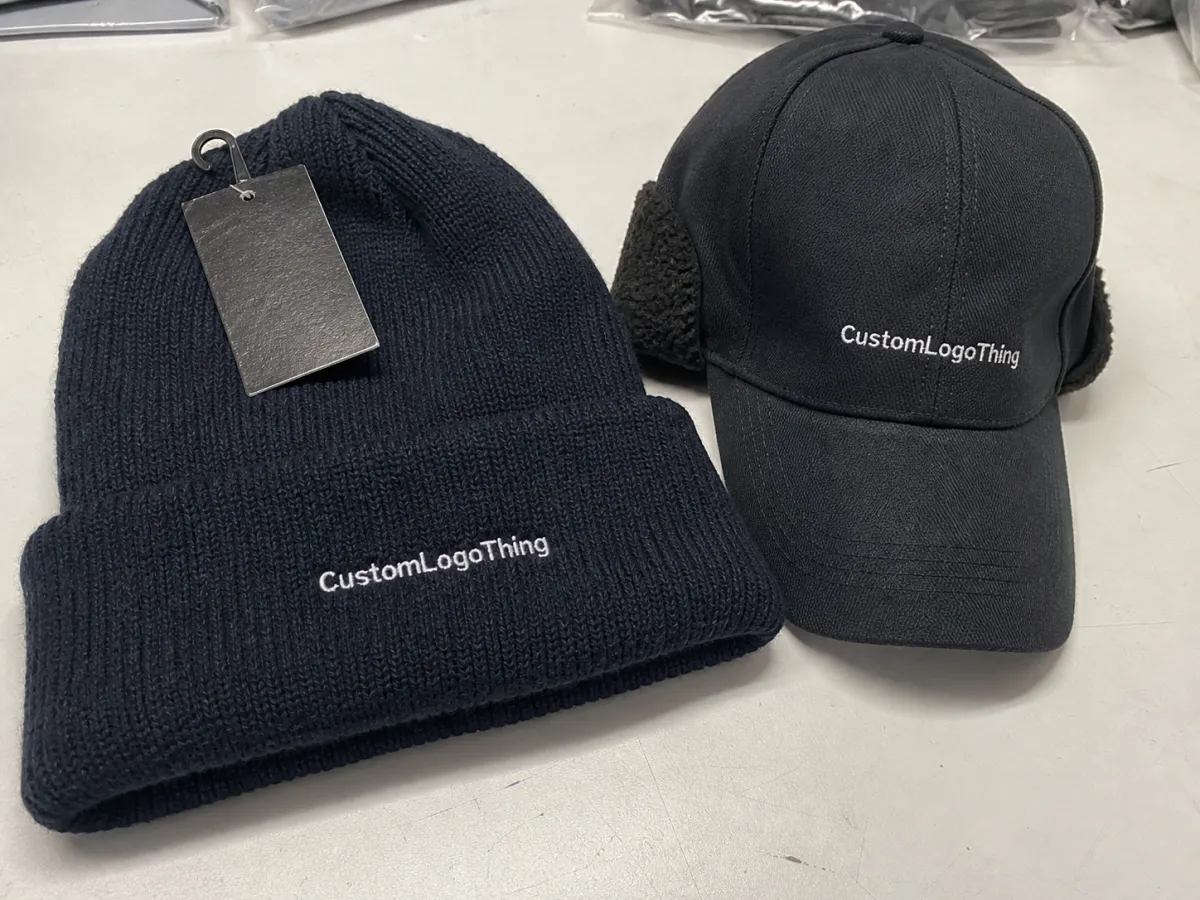
Retail buyers usually start with the mockup. That is understandable; the mockup is clean, fast, and persuasive. The problem is that Heavyweight Winter Hats rarely behave like flat apparel. Thick yarn, ribbed construction, cuff height, and stretch all work against fine detail. A logo that looks expensive on screen can turn fuzzy, cramped, or oddly bulky once it is sitting on a folded beanie in a store fixture.
That is why retail Heavyweight Winter Hats print options should be treated as decoration systems, not just image placement. On thick knits, the real choices usually include embroidery, woven patches, silicone or TPU labels, appliques, and heat-applied graphics. Direct ink printing exists in the conversation, but it is far less forgiving on a textured hat body than it is on flatter substrates. The knit can swallow detail, lift edges, or create a finish that looks uneven under retail lighting.
For a buyer, the key question is not, “Which method looks best in isolation?” It is, “Which method survives the hat’s shape, the shelf, the customer’s hands, and the price tier?” A premium beanie can tolerate a more tactile decoration. A mass-market program needs a cleaner cost structure and a decoration that can be repeated without drama. Those two goals often pull in different directions.
The body spec matters as much as the decoration. A 100 percent acrylic 2x2 rib hat behaves differently from a recycled acrylic blend, and both behave differently from a wool blend with more loft. Gauge, yarn thickness, cuff depth, and seam placement all affect readability. If the hat is unusually soft or highly elastic, even a strong logo can shift slightly after packing or wear. That does not make the program unworkable. It just means the decoration choice has to be more disciplined.
Packaging is part of the same decision tree. Store-ready hats often need hang tags, insert cards, belly bands, or polybag labels, and those pieces may use offset printing at higher quantities, digital printing on shorter runs, or flexographic printing for simple film and label work. In other words, the decoration on the hat and the print on the package should be planned together. Otherwise, the retail presentation can feel disconnected even when the beanie itself is good.
How Decoration Methods Behave on Thick Knit Hats
Thick knit changes everything. Small type closes up. Thin outlines wander. Sharp corners lose definition. The methods that perform best are the ones that can sit on top of texture without trying to fight it. Embroidery still earns its place because it has depth, holds up to abrasion, and reads as a deliberate finish. It also carries a premium signal that most buyers understand immediately.
Woven patches are often the quiet winner when the design has more detail than embroidery can cleanly hold. They preserve fine lines better, and they can look more retail-friendly on a cuff because the edge is crisp and the surface is flatter. Silicone and TPU labels do something different: they add tactility and a modern feel without adding the same thread bulk as heavy embroidery. That can help when the hat needs to stay soft and foldable.
Appliques and heat-applied graphics sit in the middle. They are useful when the artwork needs a cleaner silhouette than embroidery can provide, but the program cannot carry the tooling cost of a more engineered label. On a heavyweight knit, though, the substrate still matters. If the hat surface is too irregular, the edges may not lay as neatly as the render suggests. That is one of the more common surprises in production.
Direct print on the hat body deserves caution. On a dense rib, it can look muted or fragile unless the artwork is bold and the print process is suited to textured material. Very fine gradients and micro type are weak candidates. So are logos that depend on razor-sharp edges. Buyers often use the word “print” loosely, but the production reality is different. On heavyweight knit, the safest decorations are usually built-up, attached, or transferred rather than printed directly onto yarn.
| Method | What it does well | Main risk on heavy knits | Best retail use |
|---|---|---|---|
| Embroidery | Durability, premium look, strong brand recognition | Can feel bulky if the stitch count is too high | Core retail beanies, heritage branding, simple logos |
| Woven patch | Fine detail, flatter hand feel, crisp edge | Can look too small if the placement area is limited | Fashion, outdoor, and lifestyle programs |
| Silicone / TPU label | Tactile branding, modern finish, clean contrast | Tooling cost can be high for short runs | Higher-margin retail and premium capsule lines |
| Applique / transfer | Low profile, controlled shapes, moderate cost | Heat, pressure, and knit texture can affect edge hold | Value-plus programs and simplified logos |
| Direct print | Fast proofing, low setup for simple artwork | Can sink into texture or lose edge clarity | Limited applications on flatter, stabilized zones |
Buyer rule of thumb: if the logo is not recognizable from a few feet away on a folded hat, simplify the artwork before production starts.
Placement is often the difference between a hat that feels considered and one that feels forced. The front cuff has the best retail visibility because it faces outward on a wall, hook, or table stack. Side placements can work, but they usually read smaller and depend more on the way the beanie is merchandised. Crown placements are the most vulnerable to distortion because they have to travel over stretch and seam lines. A decoration that lands half a centimeter off can look cheap even if the method itself is strong.
There is also a hand-feel issue that buyers sometimes underestimate. A thick embroidered badge can make the front of a hat sit differently on the head. A silicone label can add weight and a slight stiffness. A woven patch may sit flatter, but if the base fabric is soft, the patch can still buckle at the edge after packing. None of these are deal-breakers. They are just physical realities that show up only when the hat exists as a real object, not a render.
Cost, Pricing, MOQ, and Unit Price Tradeoffs
Price differences usually come from five places: setup, decoration area, color count, packaging, and whether the decoration happens in-house or through a subcontractor. That is why the cheapest quote on paper is not always the cheapest quote in reality. If a supplier charges extra for digitizing, placement cleanup, revised artwork, or a sample run, the final number can move quickly.
MOQ changes the calculation even faster. A 300-piece program tends to carry a high unit cost because the setup is spread across fewer hats. A 3,000- or 5,000-piece program can lower the per-unit cost, but it also raises the risk of overbuying if the style underperforms. The best way to compare offers is to keep quantity, packaging, and delivery assumptions identical. Otherwise, the quotes are not competing on the same terms.
For planning purposes, these ranges are useful starting points, not fixed rules. Region, labor rates, yarn cost, and decoration complexity all move the numbers.
| Method | Typical setup | Indicative unit cost at 1,000 pcs | Retail fit |
|---|---|---|---|
| Digital print / transfer | $25-$80 | $0.60-$1.40 | Short runs, bold graphics, faster proofing |
| Embroidery | $35-$90 digitizing | $0.85-$2.25 | Durable, premium feel, simple logos |
| Woven patch | $50-$120 | $0.70-$1.80 | Fine detail, retail-friendly finish |
| Silicone / TPU patch | $120-$400 tooling | $1.10-$2.80 | Higher-end look, tactile branding |
| Applique / heat-applied graphic | $40-$100 | $0.75-$2.00 | Clean shape work, lower bulk |
Packaging can shift the total as much as the hat decoration. A printed insert card on a larger run may justify offset printing. A short seasonal run is often better served by digital printing. Polybags and simple warning labels may go through flexographic printing if the film and volume fit that process. For paper-based pieces, FSC-certified stocks are worth asking about. For display-ready shipments, shipment testing guidance from FSC and carton-performance standards from ISTA can help reduce avoidable damage claims.
Unit price should be measured against shelf price, not against another supplier’s headline number. An extra $0.35 on a premium beanie may be acceptable if the decoration reads cleanly and supports the brand tier. The same spend can be hard to justify on a value program where the retail markup is thin and freight can wipe out margin. That is the uncomfortable math behind most hat sourcing decisions.
Production Steps and Turnaround: From Proof to Carton
A clean production process usually has seven stages: file review, placement mockup, proof or sample, approval, production, inspection, and shipment. None of those steps is glamorous. All of them matter. On heavyweight knit, the margin for error is smaller because the surface itself creates friction. A placement that looks fine on the screen can drift once the decoration is applied to a folded cuff or stretched panel.
Artwork cleanup is the first place schedules slip. Low-resolution logos need vector tracing or redraws. That adds time, and it can change small details if the original art was never designed for production. Color matching is the next bottleneck. Yarn, patch film, embroidery thread, and packaging stock may all need to sit inside the same brand color story, but they do not all hit color the same way. A “close enough” approval is fine for a quick promotional run. It is weaker for a retail line that will sit beside competitor products under cold, bright lighting.
The sample stage deserves real attention. A pre-production sample should use the same hat body, the same decoration method, and the same placement dimensions as the final order. If any of those variables change, the sample is only a reference, not a proof. Good QC checks include stitch density, thread tension, edge adhesion on transfers, patch alignment against the cuff, and the way the hat folds after packing. Those details tell you more than a staged photo ever will.
Timing depends on method and season. Artwork and proof approval can take 1 to 5 business days if the file is clean. Sampling may take another 3 to 7 business days. Production on a standard run often falls in the 10 to 20 business day range after approval, but crowded winter calendars can stretch that. Add freight, carton assembly, and any third-party inspection, and the window grows again. A custom printed carton or insert card may add several days if the supplier has to wait on print finishing.
The safest retail schedules treat approval time and manufacturing time as separate clocks. That sounds obvious until a team assumes a quoted “12-day turnaround” includes every step from first art file to dock delivery. It usually does not. The missing days are the ones that create rushed freight costs.
A Step-by-Step Spec Checklist for a Cleaner Buy
A strong brief narrows the quote spread and exposes problems before production begins. If the supplier has to guess at the hat body, decoration area, and packaging, the quote will be broad. If the supplier receives a complete spec, the quote gets sharper and the risk drops.
- Set the retail tier. Decide whether the beanie is for mass retail, sporting goods, outdoor, or premium lifestyle. The decoration should match the price band, not fight it.
- Lock the hat body. Confirm fiber content, knit gauge, cuff depth, stretch level, and base color. A dense acrylic rib and a looser blend will not accept decoration the same way.
- Choose the decoration family. Shortlist the methods that fit the logo size, surface texture, and margin target. Start with production reality, not preference.
- Send production-ready art. Use vector files such as AI, EPS, or PDF. Include Pantone references if exact brand color matters. Raster files slow down proofing and can hide problems.
- Define placement precisely. Give measurements in inches or millimeters and show where the edge should land relative to the cuff, seam, or centerline.
- Specify packaging early. State whether the hat ships bulk, with a hang tag, in a printed polybag, or inside a display carton. Packaging changes cost and schedule.
- Request an apples-to-apples quote. Match quantity, sample needs, delivery date, and packaging assumptions across suppliers before comparing unit price.
This is the part many teams skip because it feels administrative. It is also the part that protects margin. A supplier cannot tell you whether a logo will sit properly if the knit spec is vague. The same applies to packaging. A card that works for a thin beanie may buckle or warp when paired with a dense heavyweight hat, especially if the fold is tight.
Once the brief is complete, the supplier can usually tell you whether embroidery, a woven patch, a silicone label, or a transfer will produce the cleanest result. That ranking is more useful than a long list of options with no context. Good sourcing depends on narrowing, not collecting more variables.
Common Mistakes That Hurt Heavyweight Hat Programs
The biggest mistake is choosing the decoration because it looks expensive on a sample board. Dense embroidery can signal quality, but it can also create stiffness. On a folded cuff, that stiffness shows up immediately. The hat stops looking soft and wearable, which undercuts the value signal the buyer was trying to buy in the first place.
Another common miss is ignoring knit behavior. Seams, rib columns, and stretch zones can move a logo just enough to make it feel off. That effect is small in measurement and large in perception. Shoppers usually do not measure the gap between a patch and a seam; they just know the hat looks uneven. Adjusting the placement, widening the artwork, or moving the decoration to a flatter section usually solves the issue.
Color contrast can also fail quietly. A tonal logo on a dark hat may read as sophisticated in a studio, then disappear in a store where the lighting is harsher and the customer is standing farther away. The reverse problem happens on lighter hats: a decoration that is too faint can make the whole product feel less substantial. Testing under real retail light is not optional for serious programs. It is part of the product check.
Samples are another area where teams cut corners. A single mockup is not enough if production is going to run at scale. Real hats should be reviewed for thread tension, edge lift, wrinkle behavior, and fold memory. If the decoration changes after being packed and unpacked once, it may change again on a retail shelf. That is the kind of issue that shows up as returns or markdowns rather than a clean reject.
Timing mistakes are expensive because winter weather does not wait. Late orders compress revision time, rush freight, and leave no room for a replacement run. The hat may still be technically correct, but it arrives after the useful selling window. Seasonal products punish delay more than most categories.
What buyers often miss: the best-looking decoration is not always the one that keeps the program inside margin, lead time, and packing constraints.
How to Read a Better Quote
A useful quote does more than state a unit price. It shows what is included. Setup fees, digitizing, sample charges, packaging, carton counts, and freight assumptions should all be visible. If they are not, the low number may be hiding work that will appear later as an add-on.
Ask for side-by-side samples if the artwork could work in more than one method. Compare them on the same hat body, under the same light, and folded the same way. The best comparison includes three things: how far away the logo reads, how the decoration feels at the cuff, and whether the hat still looks soft when worn. Those are the details retail shoppers actually react to.
It also helps to ask how the factory handles inspection. A good program checks decoration placement, thread consistency, patch adhesion, and packed appearance before shipment. If the hats are being sold as a set or with custom packaging, carton weight, count accuracy, and print registration on the package should also be reviewed. The retail line is only as strong as the weakest piece in the box.
Seasonal buyers should also build a backup plan. If the first-choice decoration pushes the budget or misses the schedule, a second option should already be pre-approved. That does not mean approving two full designs. It means knowing which method can safely take over if the lead time tightens or a material shortage appears. The strongest programs leave room for that kind of pivot.
Used properly, a quote is a decision tool. It tells you whether the decoration fits the hat body, whether the packaging fits the delivery window, and whether the margin still works after the real costs are included. That is the level of detail retail heavyweight winter hats print options deserve. Anything less leaves too much to guesswork.
Which retail heavyweight winter hats print options last the longest?
Embroidery, woven patches, and well-made appliques usually last longer than direct ink on heavy knits because they resist abrasion and stretch better. The final choice still depends on artwork detail, price tier, and how soft you want the hat to feel.
Are print options or embroidery better for heavyweight winter beanies?
Print-style decoration can work when the artwork is bold and the surface is stable, but embroidery usually wins on durability and perceived value. On very textured knits, embroidery or a patch often reads more cleanly than direct print.
How does MOQ affect retail heavyweight winter hats print options pricing?
Higher MOQs usually lower the unit price because setup, digitizing, and labor are spread across more hats. Small runs cost more per piece and may carry extra sample or tooling charges, especially for silicone or TPU labels.
What should I send for a quote on heavyweight winter hat decoration?
Send vector artwork, target quantity, placement dimensions, hat body specs, packaging needs, and the required delivery date. A complete RFQ makes it easier to compare real offers instead of estimates built on different assumptions.
How long does production usually take for retail heavyweight winter hats?
Artwork approval can take a few days, sampling often takes about a week, and production commonly lands in the 10 to 20 business day range after approval. Seasonal demand, custom packaging, and freight can extend the timeline.


