retail launch Custom Poly Mailer bags factory quote checklist is really a buying tool: it helps a launch team define the package before asking for price. The fastest way to miss budget or delay production is to request quotes without finished size, print method, closure style, and delivery path. Those missing inputs cause most of the rework, not the bag film itself.
Poly mailers are a strong fit for soft goods, lightweight kits, and fulfillment-heavy retail programs because they reduce pack-out time and shipping weight. They are less useful when the product is rigid, fragile, or needs a structured presentation. The quote should reflect how the bag will be used, not just how the logo looks in a mockup.
The best request is specific enough that the factory can price the actual job, not a rough guess. When the brief is clean, the quote is cleaner, the proof is faster, and the launch plan has fewer surprises.
Retail launch custom poly mailer bags factory quote checklist
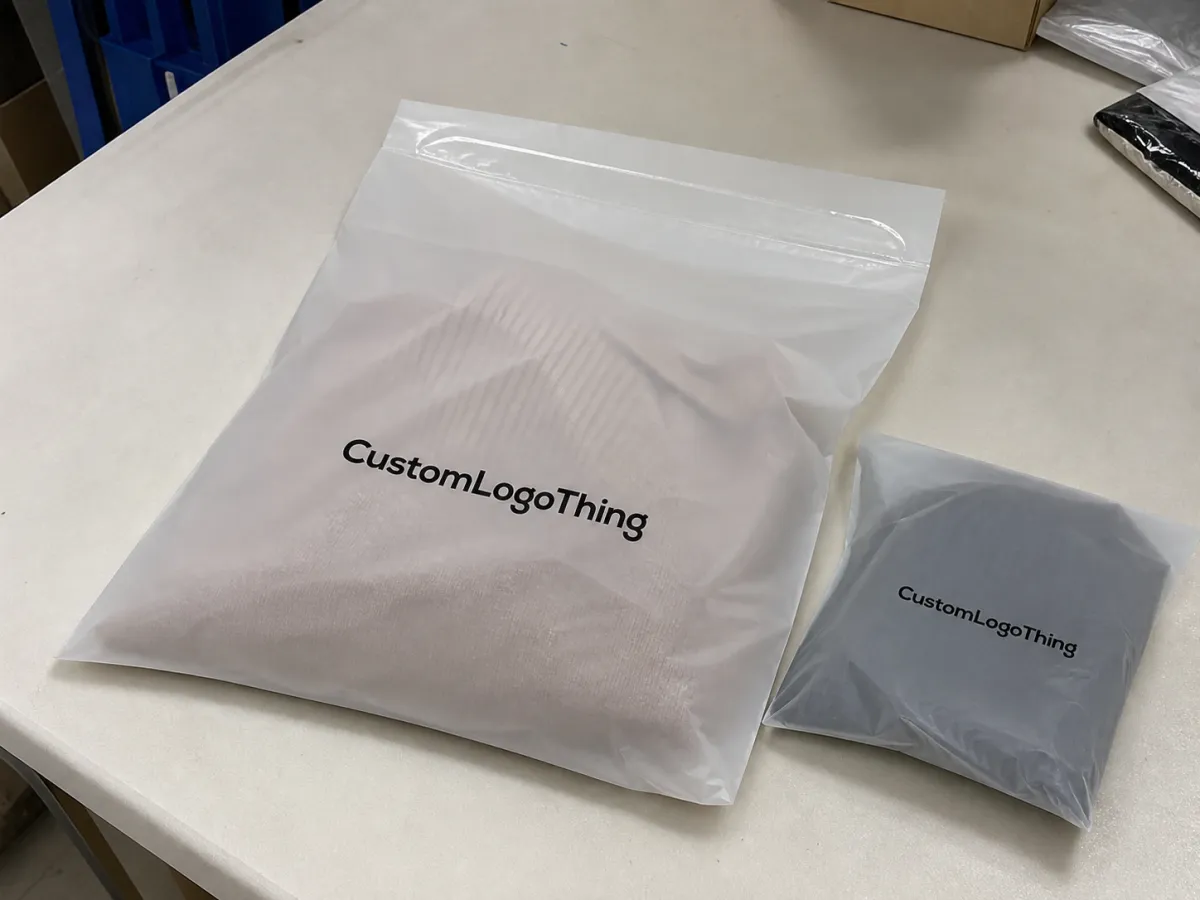
Start with the packed product
Bag size should come from the packed product, including folds, inserts, tags, and any closure overlap. A product that measures 12 inches on its longest side does not automatically need a 12-inch bag. If the item needs room to slide without scuffing or the flap takes up space, the finished dimensions need to account for that.
Buyers also need to define the use case. A mailer for warehouse fulfillment is not always the same spec as a mailer that will be seen by the customer or photographed in a retail setting. Direct-to-consumer shipments, store transfers, and marketplace orders may need different levels of finish and opacity. Price follows those differences.
The first quote should include finished dimensions, product weight, packed depth, print method, finish, quantity, shipping destination, and target date. If those details are missing, the factory is guessing. Guessing leads to pricing revisions, and pricing revisions slow launch schedules.
What usually gets missed
The most common mistake is treating the bag as interchangeable with other packaging. It is not. A bag that looks fine on a spreadsheet can still fit poorly once the product is inserted, especially if the closure area is ignored. Another common issue is underestimating how much a small spec change can move the budget: a half-inch in width, a different seal, or a move from one-color to full-coverage print can change the unit price and the production method.
If the product line is still changing, ask the factory for a range of sizes or thicknesses instead of locking in one number too early. A good supplier can usually bracket options if the buyer provides real product measurements rather than a copied retail box size.
Structure check: if the item is light and flexible, a mailer is usually efficient. If it is heavy, rigid, or display-driven, another format may cost less overall even if the unit price is higher.
Choose the right mailer structure for the product mix
Pick the bag around the product
The most common options are plain poly mailers, printed retail mailers, co-extruded film bags, and peel-and-seal closures. Plain mailers keep costs down for simple launches. Printed mailers add branding. Co-extruded film usually improves opacity and durability. Peel-and-seal closures can improve pack-out speed and make returns easier.
Launch teams often overinvest in finish and underinvest in fit. A premium-looking bag cannot solve an undersized format, and a stronger film does not make cramped artwork more readable. The best choice is the one that balances presentation, handling, and cost.
Multi-SKU programs need extra care. A shirt, a bundled set, and a boxed accessory do not pack the same way, so one catchall size can create either compression or excess slack. Tight bags are hard to close and can stress seams; oversized bags look sloppy and shift in transit.
Finish matters because it changes how the package is perceived. Matte reads quieter and more premium. Gloss makes color and contrast pop. Opaque film hides the product and supports a cleaner reveal. Translucent film can be fine for internal use, but it usually weakens shelf presence.
Useful add-ons include return adhesives, tear strips, double seals, and tamper-evident features. These are not cosmetic extras. For a higher-value item, the cost of a better closure is often lower than the cost of a damaged or returned shipment.
Artwork, finish, and print specs that keep the brand sharp
Give the factory files it can use
Artwork requests should include vector logo files, Pantone references if color matters, bleed, safe area, and a clear print placement. If the mailer needs warning copy, compliance marks, barcodes, or recycling symbols, those should be in the brief as well. Better files make pricing and proofing faster.
One-color print is usually the most economical. Multi-color work, large solid backgrounds, and full-coverage graphics add setup and raise the chance of visible variation. Film is less forgiving than paper, so a logo that looks fine on a screen may shift once it is printed on matte or glossy substrate. If color accuracy matters, budget for that tolerance.
Low-resolution files and vague dielines slow everything down. The factory should not have to interpret several art versions or guess where one element ends and another begins. A clean file package reduces mistakes more effectively than long email explanations.
Proof approval is where many delays can be avoided. Check spelling, logo placement, barcode legibility, seal location, and any art that sits near the edge. If the proof is only “close enough,” it is probably not close enough for production.
A proof should be checked against the packed product, not only against a blank template.
Artwork and durability are connected too. A large dark field may look premium, but it can show scuffs more easily during transport. If the bag will be handled multiple times before delivery, a simpler graphic layout may hold up better than a busy one.
Film thickness, seals, and shipping performance specs
Material affects both damage rate and landed cost
Film thickness is one of the few choices that changes both protection and price. Thin film can split or puncture. Too much thickness makes the bag stiffer, heavier, and more expensive than the product needs. Many retail launches land somewhere in the 1.5 to 3 mil range, but the right number depends on the product shape, edge profile, and shipping path.
Useful specs to ask for are film gauge, seam strength, seal type, puncture resistance, and load range. If the bags will move through a busy fulfillment center, they need to survive compression, abrasion, and occasional moisture exposure. Those are normal conditions, not edge cases, so they should be priced into the quote.
Testing should use the actual packed product. A generic weight is not enough because a sharp corner or uneven load can split a seam even when the bag looks fine in a lab. Adhesive closures should also be checked after handling, dust, and temperature changes, since a return strip that works on a clean bench may behave differently after shipping.
One thing many teams overlook is that a small thickness change can affect feel, durability, and freight weight at the same time. That is why thickness deserves more attention than decoration in many launch programs. Color is what people notice first; film spec decides whether the package arrives intact.
For teams that want a baseline, ISTA test standards are useful for understanding shipping stress, and the EPA’s source reduction guidance is a good reminder that unnecessary material usually adds cost without improving performance. The goal is not the thinnest possible bag. It is the lightest bag that survives the route.
Cost, pricing, MOQ, and quote drivers
Price is driven mostly by bag size, film thickness, print complexity, finish, quantity, and destination. Everything else matters less. A plain 10 x 13 inch mailer will not price like an opaque 15 x 19 inch retail bag with matte finish and a return strip, even though both fall under Custom Poly Mailers.
Here is a practical ballpark for factory-direct orders. Freight is usually separate, and rush work can increase the numbers.
| Option | Typical MOQ | Unit Price Range | Best For | Main Watchout |
|---|---|---|---|---|
| Plain poly mailer, one-color print | 3,000-5,000 pcs | $0.10-$0.18 | Simple launches, soft goods, low-friction fulfillment | Basic look, limited shelf presence |
| Printed retail mailer, 2-3 colors | 5,000-10,000 pcs | $0.16-$0.30 | Visible branding, retail packaging, unboxing content | More proofing, tighter color control |
| Co-extruded matte mailer with return strip | 5,000-10,000 pcs | $0.22-$0.40 | Apparel, repeat-ship programs, return-friendly retail | Higher material cost, more closure detail |
| Opaque premium mailer with full coverage print | 10,000+ pcs | $0.28-$0.55 | Higher-value goods, stronger package branding | Setup cost, freight, and color matching discipline |
MOQ is not a penalty. It is where setup costs stop dominating the unit price. Smaller orders are useful when the launch is uncertain, but they almost always cost more per piece. Larger orders lower the unit price, yet they also raise inventory risk if the product changes. That tradeoff does not disappear; it just moves into a different part of the budget.
Ask for several quantity breaks instead of a single number. That makes it easier to see where the setup cost flattens and where savings slow down. If the factory only gives one price, it is harder to tell whether the quote is efficient or simply padded.
A complete quote should also show whether proofing, cartons, overrun or underrun policy, and freight are included. A quote missing those items is not necessarily wrong, but it is unfinished. Comparing unfinished quotes is one of the most common ways packaging budgets get blown up later.
If freight, proofing, and carton pack are missing from the quote, the landed cost is still unknown.
Process, timeline, and production steps from proof to freight
Build the schedule around approvals
The standard flow is inquiry, quote review, sampling, artwork proof, production, inspection, packing, and freight booking. The sequence usually stays the same; the timing changes. First orders take longer because sampling and color signoff are part of the job.
Reasonable timing ranges are: quote review in 1-2 business days if the brief is complete; sampling in 5-10 business days depending on print method and material; artwork proofing in 1-3 business days if files are clean; production in 10-18 business days after approval; freight booking in another 2-5 business days before transit begins. Complex setups and busy factories can push those windows out.
Clean files, agreed dimensions, one decision maker, and fast proof approvals are the biggest schedule helpers. Late size changes, color edits after approval, and missing compliance text are the biggest schedule killers. That is how a four-week plan becomes six weeks.
If the launch date is fixed, add a buffer of seven to ten days for a first order. More is safer if the shipment moves by ocean freight or has a strict receiving window. A good plan assumes at least one small correction will be needed.
Inspection belongs in the timeline too. Ask who checks the bags, what defect tolerance applies, and how carton counts are verified. Good factories can answer directly. Weak ones often stay vague until the order is already moving.
How to judge a factory partner before you place the order
Look for practical signals
A good factory partner gives clear spec guidance, quick quote revisions, sample support, and honest limits on what they do best. The strongest signal is usually specificity: they ask for files, dimensions, quantity, and destination before sending a number. A vague price with a promise to “fix it later” is a warning, not convenience.
Quality control should come up before the order is placed. Ask how the factory checks seal strength, print alignment, film consistency, and defect tolerance. Ask what happens if a batch misses spec. The answer should be direct and repeatable, not polished and vague.
Direct factory sourcing can be better than buying through a reseller when the order needs tighter pricing, faster revisions, and more control over the production details. Resellers can still be useful for convenience, but they add a layer between the buyer and the line, which often means slower clarification.
Industry references such as Packaging.org can help buyers compare material terms and packaging methods, especially if the team is new to film gauges or closure formats. Still, the quote should be judged on its own details, not on how confident the salesperson sounds.
Next steps: send a cleaner quote request and avoid delays
Before requesting pricing, lock the product size first, then film thickness, then print style, then shipping details. That order keeps the decision tree manageable. If the product is new or fit is uncertain, ask for samples instead of guessing and paying for the mistake later.
- Confirm finished bag dimensions and product weight.
- Send vector artwork or a clean logo file.
- Choose finish, print colors, and closure type.
- State quantity, target ship date, and delivery location.
- Ask whether proofing, cartons, and freight are included.
That list is short because each item removes uncertainty from the quote. If the launch has multiple SKUs, group them by size family so the factory can price them efficiently instead of treating every item like a one-off emergency.
A retail launch works better when the packaging brief behaves like a production document rather than a wish list. That is the real value of a retail launch Custom Poly Mailer Bags factory quote checklist: it cuts guesswork, shows tradeoffs early, and helps the factory price the job honestly.
What should I include in a custom poly mailer bags quote request for a retail launch?
Include finished bag dimensions, product weight, print colors, finish preference, quantity, and the target ship date. Attach vector artwork or a clean logo file so the factory can confirm print feasibility. Destination matters too because freight and lead time both affect the final number.
What affects custom poly mailer pricing the most?
Bag size, film thickness, and print complexity usually move pricing more than small design changes. Quantity matters because setup costs spread out as volume rises. Rush timelines, special finishes, and added closure features can push the number up quickly.
What MOQ is realistic for a first retail order of poly mailer bags?
It depends on print method, size, and factory setup, but first orders often land at a higher unit cost because setup is spread across fewer pieces. Ask for pricing at several quantity breaks so the tradeoff is visible. If the launch is uncertain, a sample run or smaller test order can reduce risk.
How long does production usually take after artwork approval?
Lead time varies by factory workload, print complexity, and whether the order needs custom proofing. Clean artwork and quick approvals shorten the schedule more than almost anything else. First orders need extra time because sampling and corrections often add days.
How do I know if a factory quote is actually complete?
A complete quote should include unit price, MOQ, artwork setup, sample terms, packaging details, and shipping method. Check whether the quote lists thickness, closure type, and finish so you are comparing like for like. If freight, proofing, or carton pack is missing, the real cost is not fully on the table yet.

