Hotel Retail Custom Poly Mailer Bags Production Checklist
For hotel retail buyers, the hotel retail Custom Poly Mailer Bags production quality checklist is the difference between a branded pack that feels deliberate and one that starts to look off the moment it reaches the floor. A weak seal, a cloudy panel, or a print shift of just a few millimeters can make the entire assortment feel less polished than the product inside.
The reason this checklist matters is simple: a poly mailer in hotel retail is not only a shipping item. It is part of the guest-facing presentation, part of inventory handling, and often part of the perceived value of the merchandise. A good checklist keeps those three functions aligned. It also gives procurement, merchandising, and the supplier one shared standard before the run begins.
Strong buyers treat the bag as a finished product. That means reviewing film, dimensions, closure performance, print accuracy, carton pack-out, and handling risk together. A small miss in any one of those areas can undo the rest. If you already order Custom Poly Mailers or other Custom Packaging Products, the same logic applies here, only the tolerance for cosmetic inconsistency is lower because the bag often sits beside guest merchandise rather than disappearing into a back-room shipment.
Hotel retail custom poly mailer bags production quality checklist: what to verify first
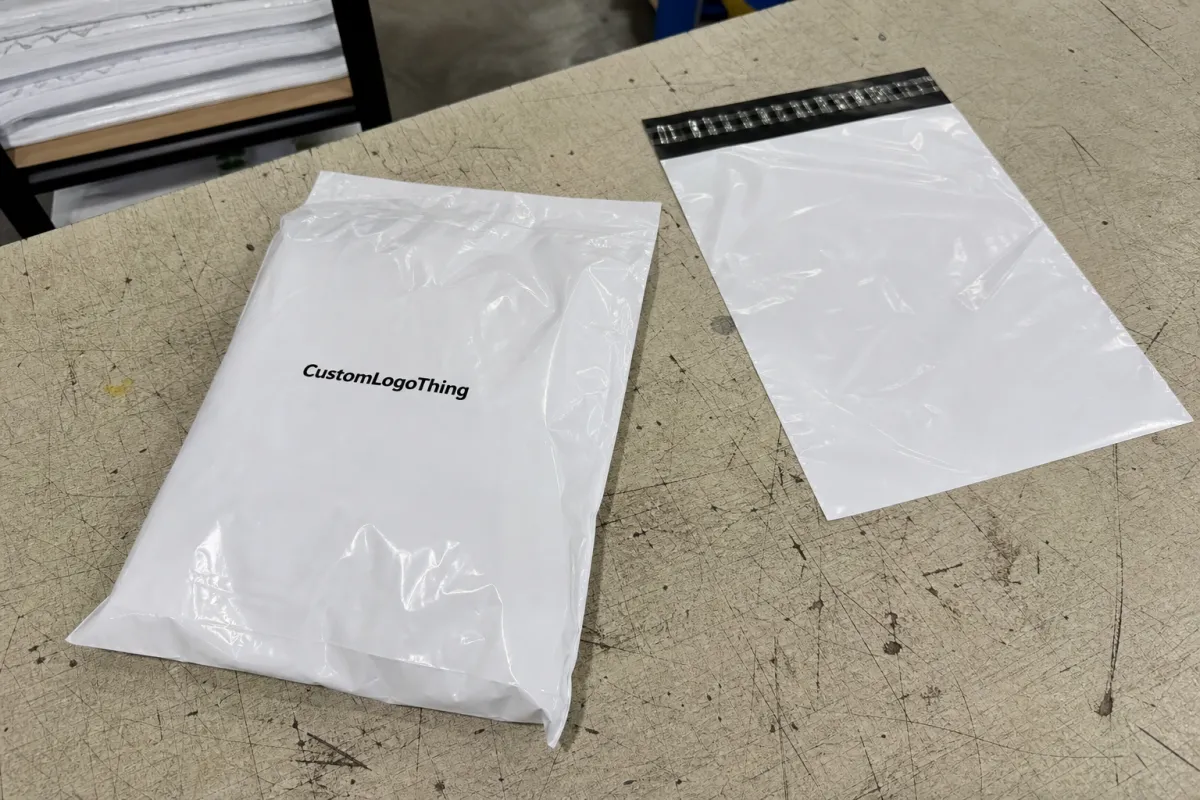
The first pass should answer one question: does the bag work the way the hotel will actually use it? A sample can look fine on a desk and still fail in practice if the seam wanders, the film gauge is uneven, or the closure opens too easily after a few folds. That is why the physical sample matters more than the render or artwork proof.
Keep a small reference set: one approved sample, one pre-production sample, and one retained bag from the first shipment. Side-by-side comparison reveals more than a stack of emails ever will. It is the quickest way to see whether the bag is drifting from the approved standard or whether a shipment is still within normal variation.
- Film appearance: check for haze, scuffs, gels, black specks, or pinholes under bright light.
- Seal quality: look for even seal width, no channel leaks, and no burn-through at the seam.
- Closure reliability: confirm peel-and-seal adhesion or zipper action across multiple samples.
- Dimensional fit: verify that the bag fits the intended folded apparel, amenity kit, or retail insert.
- Brand finish: inspect whether the print still reads cleanly when the bag is stacked or flexed.
"If the sample is approved only because it looks good on a desk, you have approved the image of the product, not the product itself."
That distinction matters in hotel retail because the bag is part of the merchandise experience. A weak seal or foggy film does not just create a packing problem. It changes the way the item feels to the buyer, and once the perceived quality drops, the whole display looks cheaper than it should.
At this stage, it helps to define what failure looks like. Is the bag acceptable if the print is slightly off-center but still legible? Can a minor ripple in the film be tolerated, or does the brand demand a cleaner finish? The answer should be written down before the first production run, not argued over when the cartons arrive.
Film, size, and closure specs that keep resale packs consistent
Film choice should follow the product, not the other way around. Clear PE works well when visibility is part of the sale, while coextruded film usually gives better toughness for heavier folded garments or thicker amenity kits. If the bag will be handled repeatedly in back-of-house and on the retail floor, a little extra puncture resistance is often worth the modest cost increase.
Thickness matters more than many buyers expect. A bag can look identical at first glance and still behave very differently in the hand. Too light, and it wrinkles, stretches, or tears more easily at the seal. Too heavy, and it may feel stiff, cost more than needed, and complicate folding or shelf presentation. For most retail programs, the spec should name the target gauge and the acceptable tolerance range rather than leaving the factory to decide.
Size is just as critical. Lock in width, length, flap allowance, and any gusset dimension before the run starts, because a few millimeters can change how a folded shirt sits inside the bag or whether the graphics remain centered after filling. Good packaging design respects the shape of the packed product. That is especially true in hotel retail, where the bag may need to sit flat in a display tray or merchandiser without bowing at the edges.
Closure choices need their own review. Peel-and-seal requires consistent adhesive width and clean lip placement. Zip closures need a smooth track with no skipping. Tear notches need to be placed where a shopper can find them without damaging the print panel. These are small details, but they are the details that separate acceptable retail packaging from a bag that feels inexpensive after one use.
For most buyers, a practical spec sheet includes these controls:
- Thickness: set an acceptable range, such as +/- 5% on gauge, unless the supplier can hold tighter control.
- Seal overlap: define the minimum acceptable overlap so weak side seals are rejected early.
- Width and length: set dimensional tolerance that still allows proper filling without stretching the artwork.
- Closure placement: require consistent lip position so operators do not fight the bag during pack-out.
That same spec sheet should also note whether the bag is meant for single use or repeat handling. A one-time shipper can tolerate different wear characteristics than a retail bag that may be folded, opened, and restacked several times before it reaches a guest-facing shelf.
If the packaging program includes hang tags, insert cards, or custom printed boxes, the finish on the mailer should feel like part of the same family. Matching every material is not the goal. Consistency is. The better the materials speak the same visual language, the more deliberate the brand looks.
Print quality and brand presentation checks for hotel retail
Print is where hotel retail programs either look finished or start to wobble. Flexographic, gravure, and digital all behave differently, so artwork has to be checked against the production method, not just a PDF on a monitor. Fine type, solid brand blocks, and soft gradients can shift depending on ink laydown and film surface energy, especially on glossy PE.
For brand presentation, confirm Pantone targets, reverse type legibility, and safe margins before approval. When a bag is folded, stacked, or packed into a carton, anything too close to the edge can disappear or distort. A layout that feels balanced on screen may look crowded once the first run comes off the line. That is not a design theory problem; it is a production reality.
Ink rub resistance deserves attention too. Bags are often sorted, moved, and restacked before they ever reach the display. A design can pass a visual check under showroom lighting and still lose sharpness after light abrasion. One simple check is to handle the bag, flex the panel, and inspect the print again under bright light. If the artwork dulls or scuffs too quickly, it will age badly in the field.
Useful print checks include:
- Registration: confirm no color shift between layers or outlines.
- Opacity: make sure reverse print stays readable against the film color.
- Barcode quality: scan the code if the bag will be used in retail systems or inventory control.
- Copy accuracy: compare all text against the final approved file, not a working draft.
If the bag carries a SKU, care instructions, or a retail barcode, test it before the full run. That one step can prevent a reprint that would otherwise waste both time and budget. For buyers who want a reality check on transit and handling, the testing logic used by ISTA packaging test procedures is a useful reference point, even if the internal process is much simpler.
When the packaging program also includes paper inserts or outer cartons, an FSC-certified paper component can support the sustainability story. The point is not to force every item into the same material path. It is to keep the presentation coherent so the printed bag, the insert, and the outer shipper feel like they belong to the same system.
Production steps and timeline from proof to shipment
A clear timeline is one of the most underrated parts of the checklist. Buyers often focus on price and print, then lose days because no one defined where the slowest step sits. In most runs, the delay is not the converting stage itself. It is artwork approval, color matching, plate or cylinder setup, or a revision that arrives after the sample has already been made.
The usual workflow runs from brief, dieline, and proof approval into film sourcing, printing, converting, sealing, packing, and final inspection. If a new setup is needed, plate or cylinder lead time can add meaningful delay before the press even starts. On a straightforward order, many buyers see production in roughly 12 to 15 business days after proof approval, although special finishes, a new structure, or heavy print coverage can stretch that timeline closer to three or four weeks.
Build approval checkpoints into the schedule:
- Artwork approval: confirm size, copy, placement, and barcode accuracy.
- Pre-production sample: review the actual film, closure, and print combination.
- First article sign-off: approve the first production output before the full run continues.
- Pack-out check: confirm cartons, bundle counts, and labels before freight booking.
From a buyer’s point of view, the smartest schedule includes buffer for rework, carton labeling, and shipping coordination. A run can print well and still miss the delivery target if the carton count is wrong or the freight booking slips by a day. That is why the checklist should cover not only the bag but also the way it leaves the factory.
Lead times also depend on the stability of the artwork. A clean, locked file with final copy and fixed dimensions is much easier to move through production than a design that is still being revised while the film is already on order. The best timelines are built around decisions that are already closed.
Cost, pricing, and MOQ variables that move the quote
Pricing for Custom Poly Mailer bags is not mysterious, but it is easy to misread if the quote is not broken into pieces. Film thickness, resin grade, print colors, bag size, and closure type all move the unit cost in practical ways. A larger format uses more resin. More print colors mean more setup and more room for color management issues. Specialty closures add both materials and process steps.
For Hotel Retail Buyers, the cleanest quote separates one-time charges from recurring bag cost. Plates, cylinders, and setup fees belong in one bucket. Per-bag pricing belongs in another. Without that split, a low unit price can hide a high start-up charge, and a larger order can look expensive until the setup cost is spread across the full quantity.
Here is a simple planning frame. These are broad ranges, not promises, because final pricing depends on film structure, decoration coverage, and supplier capacity.
| Bag Spec | Typical MOQ | Approx. Unit Price | Main Cost Drivers |
|---|---|---|---|
| Clear PE mailer, 1-color print, peel-and-seal | 3,000-5,000 pcs | $0.14-$0.24 | Simple structure, light ink coverage, standard closure |
| Coextruded film, 2-color print, reinforced seal | 5,000-10,000 pcs | $0.20-$0.36 | Higher gauge, stronger film, more print setup |
| Specialty retail mailer with heavy branding and custom closure | 8,000-15,000 pcs | $0.30-$0.55 | Complex print, tighter tolerance, extra converting steps |
MOQ matters because a slightly larger run can lower landed cost enough to justify the inventory, but only if storage and reorder timing make sense. Ask for carton counts, inner bundle counts, pallet configuration, and rush handling before you approve the PO. Those pieces affect the real spend more than many buyers expect.
If the same program also includes custom printed boxes for gift sets or retail kits, compare the total branded packaging budget instead of judging the mailer in isolation. Sometimes the smarter move is to simplify one item and invest more in the other, so the shelf presentation stays consistent without overbuilding every component.
It also helps to ask how the supplier handles overages, under-runs, and remnant stock. In smaller retail programs, a few hundred extra bags can be helpful. In tightly controlled assortments, they can become dead inventory. The quote is only useful if you know how the final count will be treated.
For suppliers who follow industry norms closely, it is reasonable to ask how the quote aligns with packaging associations and testing expectations. The FSC certification framework is useful when paper components are part of the mix, while ISTA-style transit references help frame the handling side of the conversation.
Common mistakes that trigger rejects, delays, and reprints
Most production problems trace back to a few repeat mistakes, and they are usually preventable. The first is approving a sample printed on a different film or thickness than the final run. That sample may look fine, but it can hide seal weakness, curl, or a color shift that only appears on the real material.
The second mistake is ignoring dimensional tolerance. Hotel retail bags often need to fit folded apparel, amenity kits, or soft goods with very little extra room. If the width is off by too much, the bag can pucker, the logo can skew, or the closure can land in the wrong place after packing.
Other common issues show up late, which makes them expensive:
- Weak seal testing: bags open during packing or shipping because no one checked seal strength on random samples.
- Final file drift: a typo, wrong shade, or misplaced barcode slips in after artwork approval.
- Poor pack-out control: bundle counts vary, making receiving and replenishment messy.
- No golden sample: everyone remembers the approved look differently after the first order is done.
The final file comparison is the one that still catches people. A PDF can look close enough on a screen, but if the text box moved or the barcode was regenerated, the production team may follow the wrong version unless the approval packet is tight. The cleaner the documentation, the fewer surprises later.
That is why a strong hotel retail Custom Poly Mailer Bags production quality checklist should always include the artwork file name, the approved sample photo, and the tolerance note in the same packet. When those three items travel together, the factory has a much clearer target.
Another easy miss is forgetting how the bag will be stored after production. If cartons are too tightly packed or bundled in a way that stresses the closure, the bag may arrive looking sound and then fail once the retailer opens the case. Production quality is not just what happens on the line; it is what survives the route to receiving.
Expert quality-control tips buyers can use before PO release
If you want fewer problems on the first shipment, make the checklist measurable. A written inspection sheet should list visual defects, measurement limits, sample size, and pass/fail rules so both buyer and supplier judge the same standard. Vague notes like "looks okay" create trouble later.
A few practical habits make a real difference:
- Keep retained samples: save one approved bag from the sample stage and one from the first production carton.
- Test real handling: stack, fold, and move the bags the way the hotel team actually will.
- Scan barcodes early: do not wait until receiving to discover a code does not read cleanly.
- Check lot traceability: make sure carton labels or lot codes let you trace a problem back to the run.
For buyers with a little more time, a simple transit simulation is worth the effort. You do not need a full lab to learn something useful. Fill the bag close to its expected load, move it through a few handling cycles, and observe whether the seal creeps, the closure loosens, or the print rubs off at the fold line. If the pack survives that, you are much closer to a reliable launch.
It also helps to document who signs off on what. Color approval should not be separate from size approval if the artwork is positioned relative to the bag edges. Seal approval should not be separate from pack-out approval if the bag is meant to hold a specific kit. Clear ownership keeps the process moving and avoids the "I thought someone else approved that" problem.
From a packaging buyer’s point of view, a good supplier will not resist this level of detail. The better factories usually welcome it because it reduces rework, shortens email chains, and makes repeat orders cleaner. That is a healthy sign, especially for branded packaging programs that need to look consistent across seasons and properties.
Before release, it is also smart to confirm the failure threshold in writing. If a sample shows minor print variation but passes all structural tests, does it ship or does it get revised? When the answer is already in the file, there is less room for debate once production starts.
Final sign-off before the order goes live
Before the PO goes out, turn the checklist into one approval packet. Include the artwork file, spec sheet, tolerance notes, sample photos, and any special instructions for packing or palletizing. The fewer loose references you leave in emails, the fewer chances there are for the factory to interpret the order differently from you.
Then confirm the decision chain. Who approves color? Who approves size? Who signs off on seal strength? Who checks the first carton? Once those roles are named, the supplier can work against one authority instead of chasing multiple opinions. That saves time, and it usually produces cleaner results.
If you plan to reorder later, ask the supplier to keep the same spec sheet on file and quote future runs against it. Reorders go much better when the approved standard is already documented. You can keep the hotel retail custom poly mailer bags production quality checklist inside your receiving file, so the first carton from each shipment is compared against the same benchmark every time.
For hotel retail teams, that final discipline protects both presentation and margin. A tidy bag that opens cleanly, prints clearly, and ships consistently helps the merchandise feel intentional. That is the real job of packaging in this category: not to disappear, but to support the product without creating noise.
Used well, the checklist becomes less of a form and more of a repeatable production standard. It keeps the bag, the brand, and the shipment moving in the same direction.
What should a hotel retail custom poly mailer bags production quality checklist include?
It should cover film thickness, dimensions, seal strength, print quality, closure performance, and carton pack-out. Add a sample approval standard with tolerances so the buyer and supplier judge defects the same way.
How do you test seal strength on custom poly mailer bags?
Use basic pull and squeeze checks on random samples, then add handling tests that mimic transit and store use. Confirm the seal does not split, creep, or open when the bag is filled close to its intended load.
What drives MOQ and unit cost for hotel retail mailer bags?
MOQ and unit cost move most with bag size, film gauge, print complexity, closure type, and setup charges. Higher quantities often reduce per-bag cost, but you should compare that savings against storage needs and reorder timing.
How long does the production timeline usually take?
The timeline depends on proof approval, tooling or plate setup, print matching, and converting capacity. Add extra time for sampling, freight booking, and any rework, especially if the first sample needs changes.
What should buyers check on the first shipment of custom poly mailer bags?
Check carton counts, bundle counts, barcode accuracy, color match, and seal integrity before releasing the shipment. Keep one approved sample on file so the incoming lot can be compared against the standard immediately.
Use this hotel retail custom poly mailer bags production quality checklist as a working reference, and the small problems are far more likely to get caught before they turn into reprints or a weak guest-facing presentation.

