A retail Logo Patch Beanies material guide matters because the knit, the patch, and the finish decide whether a hat reads as a retail item or a rushed promo piece. The logo is only one part of the equation. Body yarn, patch backing, stitch density, and interior finishing all shape the first impression a shopper gets when the product comes off the shelf.
That gap between mockup and hand sample is where many programs go sideways. A stitched patch can look expensive in a digital render and still feel awkward if the knit is too loose, too shiny, or too soft to support the decoration. If the body sags, pills early, or stretches out after a few wears, the logo becomes the least of the problem.
From a retail buyer's point of view, the best beanie is warm, comfortable, and predictable in bulk. It should hold the patch neatly, survive repeated try-ons, and stay consistent enough that the last carton looks like the first one.
Retail logo patch beanies material guide: what buyers should know
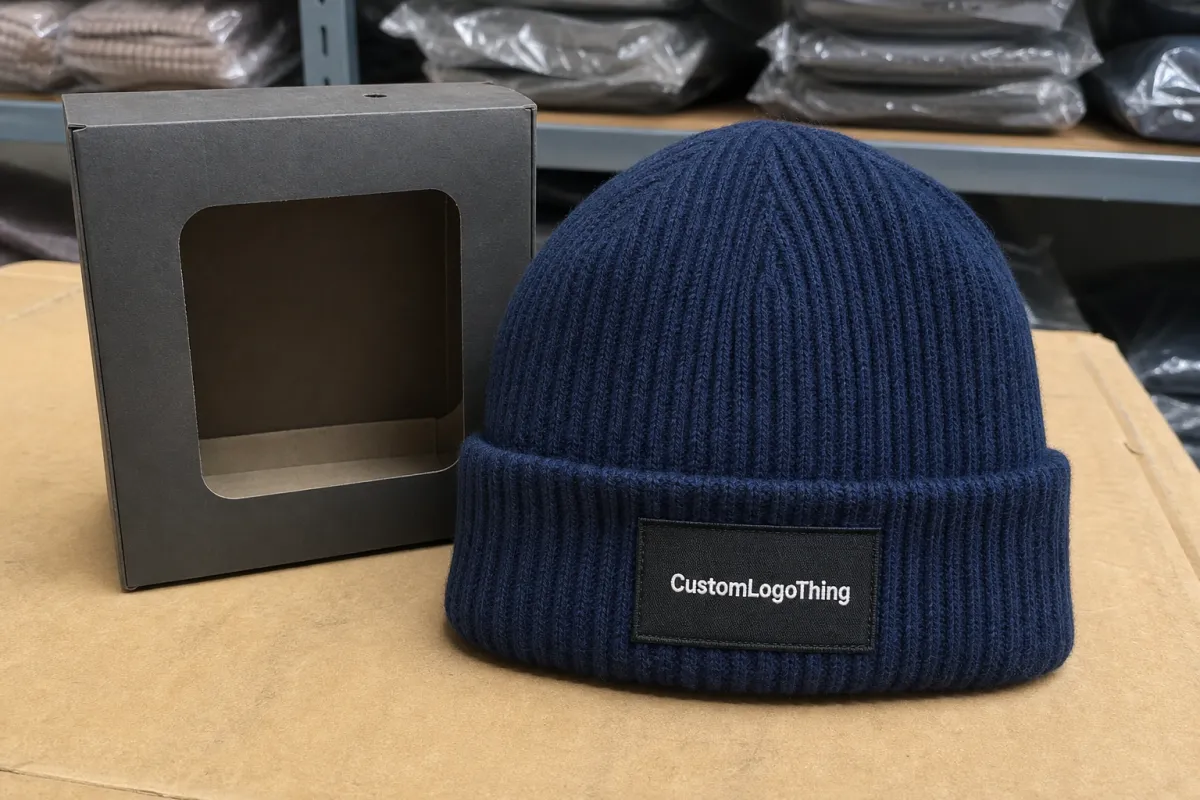
The phrase retail Logo Patch Beanies material guide sounds narrow, but the decision set is broader than most first-time buyers expect. You are not choosing one fabric; you are choosing how the yarn, the knit structure, the patch material, and the backing behave together. When those choices line up, the beanie feels deliberate. When they do not, the result can look flat, bulky, or oddly stiff even if the artwork itself is accurate.
Start with the body knit. Acrylic is still the most common retail choice because it offers stable color, controllable cost, and a soft hand at scale. Most programs use a 1x1 or 2x2 rib in a midweight gauge so the cuff can hold shape without feeling board-like. Wool blends usually read warmer and more premium, but they cost more and can be scratchy for some wearers unless the fiber blend is tuned carefully. Recycled polyester is often selected for sustainability claims, yet the feel depends more on yarn spin, staple length, and finishing than on the recycled content alone.
The patch deserves equal attention. Woven twill usually gives the cleanest, sharpest face and is a safe retail choice when the logo has fine type or tight edges. Embroidered patches add dimension and texture, but tiny letters can disappear if the stitch count is too dense. Silicone and PVC-style patches feel sportier and more molded, which can work well for active or outdoor assortments. Faux leather and felt can both look premium in the right context, but they need a stable base so the edges do not curl after handling.
Attachment method matters more than many buyers expect. Sew-on patches are the most forgiving for long-term wear because they anchor the logo directly to the knit. Heat-applied patches can speed production, but they need careful temperature control and a knit that tolerates pressure without glossing over. Adhesive backing alone is not enough for a retail beanie unless it is paired with stitching or another structural hold. The patch should sit flat, stay centered, and remain readable after stretching.
Buyers often miss this: a patch that looks perfect on a firm cuff can seem oversized or wavy on a looser rib. That is why a sample on the actual silhouette matters more than a flat artwork proof. A good supplier should show the full combination, not just the logo panel on its own.
Packaging should support the same product story. Kraft paper elements can fit a restrained, natural look, while FSC-certified inserts or recycled materials can reinforce a sourcing narrative without crowding the item. Hang tags, belly bands, and carton labels may sound minor, but they affect shelf presentation and warehouse handling. The beanie is the product, but the packout decides how polished it feels when it lands.
How the patch and knit body work together
A beanie body is not a neutral backdrop. Yarn weight, stitch structure, crown shape, and cuff depth all affect how the patch sits and how the logo reads once the hat is on a head. Tighter gauges usually hold patch placement better. Looser knits can feel cozier, but they show more ripple around sewn edges and may distort the logo as the fabric stretches.
A cuffed beanie gives the patch a flatter billboard, which is why it remains the retail standard for many logo programs. A slouchier silhouette looks more relaxed, but it also asks the artwork to work harder. Logos that are too detailed can get lost in the folds, while oversized patches can fight the drape of the knit. In that case, simpler graphics and stronger contrast usually perform better than ornate decoration.
Acrylic with a medium rib is a practical baseline because it balances shape retention with broad patch compatibility. Wool blends can elevate handfeel, especially in cold-weather assortments, but the patch must be chosen carefully so it does not seem like a hard object sitting on top of a soft fabric. Recycled polyester can be a strong option for programs centered on recycled materials, though it should be tested for pilling, shine, and surface smoothness under store lighting rather than in a polished render.
The patch base changes the tone of the hat. Woven twill usually looks tidy and controlled. Embroidered patches bring texture, but too much relief can make small logos unreadable. Silicone and PVC styles give more volume and can handle bold shapes, though they are less suited to heritage or quiet-luxury looks. Felt and leather-like synthetics sit in the middle, but both need good backing if the brand wants a clean edge instead of a heavy, canted patch.
“If the patch is right but the knit is wrong, the product still feels wrong in hand.” That is the part many buyers only learn after the sample arrives.
Seam behavior is another detail that changes the final look. Some beanies use an interior seam that disappears inside the crown, while others have a more visible join. If the patch lands near a seam or a crown decrease, the fabric can sit unevenly and the logo may tilt a few millimeters. That does not always ruin the hat, but it should be checked before bulk approval. Good factories map patch location against the knit repeat so the placement is repeatable from piece to piece.
QC should also include stretch and return. A beanie needs enough elasticity for easy wear, then it needs to recover without creating a dent behind the patch. If the backing is too rigid for the fabric, the area around the logo can pucker after repeated on-and-off use. That kind of flaw often shows up first on try-on racks, where shoppers handle the same unit many times in a day.
Material factors that change handfeel, durability, and fit
Shoppers judge a beanie quickly. They stretch it, rub the cuff, and decide within seconds whether it feels worth the ticket price. Softness, warmth, stretch recovery, pilling resistance, and itchiness are not abstract material terms; they are the difference between a hat that moves and a hat that sits unsold.
Softness comes from more than fiber content. Acrylic can feel pleasant if the yarn is spun well and the finish is matte rather than slick. Some blends feel synthetic or overly polished when the fiber is too fine or the yarn is over-processed. Wool adds warmth and a more natural touch, but it can need a liner or a finer blend ratio if the customer base is sensitive to itch. Recycled polyester varies widely, so the hand should be judged by the yarn construction, not the label alone.
Stretch recovery is equally important. The hat should stretch for fit, then return to shape without bagging at the crown or around the patch. Tighter rib structures tend to recover better, especially when the patch backing is not overly rigid. If a loose knit carries a heavy patch, the fabric can flatten beneath it and create a halo or bubble that is visible even from several feet away.
Pilling resistance is one of the quiet failure points in retail. A beanie may look sharp on day one and still disappoint after a few weeks of try-ons if the yarn pills along the cuff or crown. Acrylic and blended yarns can perform well, but only if the yarn quality and finishing are good. For products that will live in a high-touch retail environment, ask for abrasion testing or at least a realistic wear review on the sample. A pretty sample that pills after light handling is a warning sign, not a minor flaw.
Warmth and weight need to be balanced against logo performance. A thick knit may feel luxurious, but too much bulk can lift the patch away from the surface and make the logo look like a separate object. A lighter gauge can appear cleaner and more modern, yet it still has to block wind and hold its shape. The right answer depends on whether the beanie is meant for outdoor retail, lifestyle merchandising, or a fashion wall where proportion matters as much as insulation.
Interior comfort matters too. A tidy seam, a smooth backing, and a label that does not scratch the forehead can decide whether a hat gets worn repeatedly. Retail buyers tend to see this in sell-through, not in the spec sheet. Products that feel easy to wear are the ones customers keep reaching for.
Color behavior is another practical test. A deep charcoal might look matte in a studio and slightly blue under fluorescent store lights. Red yarn can bleed visual intensity into a woven patch if the contrast is too close. If the brand palette depends on precision, ask for daylight and indoor-light viewing before approval. A yarn that looks great in a sample room can misread completely on the sales floor.
Cost and pricing: what drives the quote on custom retail beanies
Retail beanie pricing is a mix of visible choices and hidden ones. The visible variables are obvious: yarn type, patch style, branding method, and packaging. The hidden ones are where quotes start moving: stitch count, color changes, backing materials, labeling requirements, sampling, and how many handling steps the factory needs to complete the order.
For many buyers, a simple acrylic body with a woven patch is the baseline cost-control option. In volume, that kind of program often lands in the low single digits per unit before freight, duties, and retail packaging are added. Once the body moves to a wool blend, a molded patch, or a specialty knit, pricing can move into the mid single digits or higher. Lower minimums, custom-dyed yarns, and more elaborate packouts can push landed cost up quickly, especially on smaller orders.
Setup charges can appear in more places than expected. Custom patch molds, special embroidery digitizing, lab dips for yarn color, and packaging proofing may all carry separate costs. That does not mean the project is expensive in a bad way; it means the quote should be read carefully. A low unit price with heavy setup fees can look attractive at first and still be the costlier path if the order volume is small.
Order quantity changes the math sharply. A small run absorbs a larger share of sampling and decoration cost per piece, while a larger run spreads those charges across more units. Many factories use break points to show where the unit price drops, but the buyer still needs to weigh storage, sell-through, and seasonality. A cheaper hat is not a win if inventory sits through the season and has to be marked down.
| Option | Typical feel | Price impact | Best use |
|---|---|---|---|
| Acrylic body + woven patch | Clean, retail-friendly, steady shape | Lowest to moderate | Core assortment, large color runs |
| Wool blend + embroidered patch | Warmer, more premium, slightly softer hand | Moderate to higher | Premium shelf placement, colder climates |
| Recycled polyester body + silicone patch | Sporty, modern, more tactile logo presence | Moderate to higher | Eco-led or active lifestyle assortments |
| Mixed yarn + specialty patch + custom packout | Distinctive, more curated retail presentation | Highest | Limited drops, giftable retail sets |
If the goal is to protect margin without making the item look generic, spend on the parts shoppers notice first: knit density, patch crispness, and color contrast. Save on details that do not improve shelf appeal, such as unnecessary color counts or a patch that is large enough to add cost but not enough to improve legibility. In many cases, a smaller patch with sharp edges looks more premium than an oversized logo that stretches the fabric.
Packaging should be included in the cost conversation early. If the order uses hang tags, belly bands, or display-ready cartons, the carton spec matters. Corrugated shippers with clear labels, simple kraft paper wraps, or biodegradable outer packaging can improve warehouse handling and retail readiness, but they also affect the quote. For programs that include shipping and certified paper components, references from ISTA and FSC are useful starting points.
Process and timeline: from yarn approval to packed cartons
A clean retail run usually follows a predictable sequence: material selection, patch art approval, color matching, sample development, bulk knitting, patch application, finishing, and final packing. The order matters because each step creates a chance to catch a problem before it becomes expensive.
Standard yarns and straightforward patch construction are usually the fastest route. If the body color comes from stock yarn and the logo patch uses a simple woven or embroidered build, sample development may take about one to two weeks. Custom-dyed yarns, molded patches, or special backings add time because each variable has to be approved against the actual knit result, not just against a drawing.
Bulk production is usually faster once the pre-production sample is approved, but the schedule still depends on quantity and packout complexity. For a straightforward run, three to six weeks after approval is a common planning window. Add more time for custom packaging, large carton counts, or special retail labeling. A nice beanie can still miss a launch if the sleeves, tags, or master-case labels arrive late.
The biggest timeline risks are usually simple: late artwork changes, slow approvals, and color corrections after sampling. A buyer can reduce delays by giving specific feedback on the first sample, especially on logo scale, patch finish, and fit. If the hat is part of a seasonal rollout, build backward from the in-store date, not from the purchase order date. That gives the factory room to correct small issues before the cartons are sealed.
Quality-control checks should be explicit, not assumed. Ask for stitch consistency across the batch, patch placement tolerance, color comparison against the approved standard, and a check for loose threads or edge lift. If the patch is heat-applied, a peel or adhesion check matters. If the knit is brushed or textured, pilling and abrasion should be reviewed before release. Small problems are much cheaper to catch while the run is still in process.
Some teams forget about retail handling requirements until the end. Carton count, master label format, polybag protection, and country-of-origin marking should be set early if the product is moving through a retailer with strict compliance rules. The production line always performs better when it is not guessing at packout on the last day.
For environmentally minded programs, this is also the point to decide whether the outer packaging should use recyclable corrugated cardboard, lighter kraft paper wraps, or biodegradable packaging for the consumer-facing layer. Those choices do not change the hat itself, but they do change how the complete item lands with retail buyers and partners.
Common mistakes that make logo patch beanies look cheap
The most common mistake is mismatched scale. A patch that is too large can overpower the knit and make the beanie look stiff. A patch that is too small can disappear once the hat stretches on a head. Retail customers notice imbalance before they notice the logo itself, which is why scale should be tested on the actual silhouette, not on a flat artboard.
Another issue is choosing a material only because it saves a few cents. A low-price fiber blend can look acceptable on paper, but if it pills early, bags out at the crown, or feels scratchy, the product can damage repeat wear and brand trust. That is a false economy. Saving a small amount per unit rarely matters if the hat looks tired after one season.
Artwork prep matters more than teams expect. Overcomplicated color counts, thin lines, and tiny text can blur once they are translated into patch construction. Woven and embroidered patches both need legible art. If the design only works at full scale on a screen, it is not ready for a beanie patch. Clean vector artwork with realistic line weights usually produces better results and keeps costs from climbing because of repeated revisions.
Fit is another quiet problem. One silhouette may seem flexible enough to serve every shopper, but if the stretch range is too narrow, the beanie will feel loose on some heads and tight on others. Return rates can rise even when the logo is perfect. That is why buyers should check stretch recovery, crown depth, and cuff height before committing to volume.
Finish quality is the last tell. Loose threads, uneven patch edges, shiny yarn that reflects too much light, and weak contrast between the body and the logo all make the product look less considered. A retail beanie does not need luxury detailing everywhere, but the basics must be controlled. Good knit density, clean stitching, and a patch that sits flat are often enough to make an item look genuinely retail-ready.
One more problem shows up often in samples: the patch is technically accurate, but the face of the knit is too textured for the art. Rib texture can swallow small details, and brushed surfaces can blur sharp edges. If the logo depends on precision, choose a smoother body knit or simplify the artwork before bulk. That tradeoff is easier to make on paper than after production starts.
Expert tips and next steps before you request samples
If you want a cleaner comparison, narrow the field to two or three body materials and one or two patch constructions, then review them under real retail lighting and in hand. Photos flatten texture. A sample wall, a bright store floor, or a warehouse bay can reveal sheen, edge lift, and patch stiffness in a way a render never will.
Ask for the sample with the intended finishing pieces, not just the hat alone. A hang tag, polybag, belly band, or branded insert can change the perception of the product more than people expect. A complete packout makes the item feel ready for the shelf, while a bare sample can understate the value of the final presentation.
It also helps to confirm care instructions, country-of-origin requirements, carton quantities, and labeling format before the order moves forward. If the beanie is going into a retailer with strict compliance language, those details need to be accurate before bulk. Small corrections after production starts can slow everything down and create avoidable rework.
Practical checklist: gather logo art, target price, expected MOQ, preferred handfeel, and launch date. Add the body composition, patch type, placement size, and packout spec so vendors can quote like for like. Then compare the results on the same terms instead of sorting through mismatched assumptions.
Good buying usually happens in the sample stage, not in the polished mockup. The knit, the patch, the packaging, and the price should all support the same retail story. If one of those pieces is off, the product will feel off long before the customer knows why.
What is the best material for retail logo patch beanies?
Acrylic is often the best value choice because it keeps cost controlled and gives broad color flexibility. Wool blends usually feel warmer and more premium, while recycled polyester can support sustainability messaging. The best pick depends on target price, climate, and the softness or structure your customer expects.
How do patch materials change the look of logo beanies?
Woven and twill patches usually look crisp and clean, which works well for retail branding. Silicone or PVC-style patches feel more dimensional and sporty, while leather-like synthetics can read more premium. The backing and edge finish matter too, because a stiff patch on a loose knit can look bulky or sit unevenly.
What MOQ should I expect for custom retail patch beanies?
MOQ varies by factory, patch type, yarn selection, and how many colors or placements are involved. Many factories start in the low hundreds for simple programs and higher for more customized builds. Ask for tiered pricing so you can see exactly where the best cost break begins.
How long does the process usually take for retail logo patch beanies?
Stock yarn and simple patch work are usually faster than custom yarns or complex mixed-material decorations. Sampling may take about one to two weeks, while bulk production often runs three to six weeks after approval. Add time for packaging, labeling, and freight so the retail date has enough buffer.
How can I lower unit cost without making the beanie look cheap?
Use a simpler body yarn, keep the patch construction clean, and limit unnecessary color changes. Choose a patch size that is visible on shelf but not oversized, since large logos can drive cost and stiffness. Protect the premium look with good knit density, sharp artwork, and strong contrast between body and branding.


