Most beanie logo problems are not design problems. They are placement problems. This Retail Merch Beanies logo placement guide is for buyers who want the finished hat to look retail-ready, not like leftover event swag with a logo slapped wherever the mockup software allowed it.
A strong logo can look cheap fast if it sits too low, stretches across a ribbed cuff, disappears into a fold, or competes with a pom. Retail customers may not say, “That logo placement is wrong.” They just decide the beanie feels off. Then it sits in the bin. Cute. Expensive. Avoidable.
Retail Merch Beanies Logo Placement Guide: What Buyers Get Wrong First
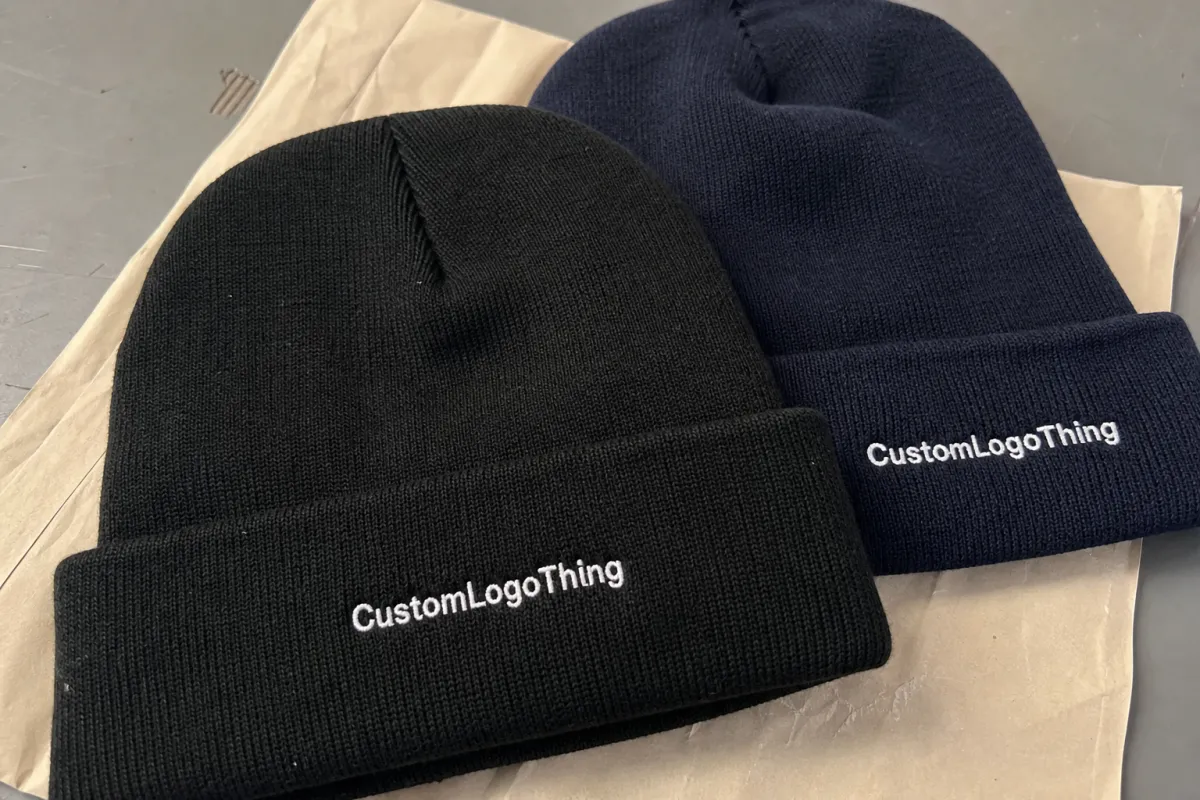
Logo placement for Retail Merch Beanies means choosing where the mark sits: front cuff, side cuff, back cuff, crown, woven patch, leather patch, clip label, inside label, or hangtag. That decision has to work with knit stretch, cuff height, fold depth, decoration method, and how the beanie will be photographed or displayed.
Here is the common buying mess. A brand orders ribbed cuff beanies for a winter drop. The digital mockup looks clean. The logo appears centered. Everyone approves. Then the order arrives, and the logo vanishes when the cuff rolls differently on actual heads. The beanie was not defective. The approval process was too optimistic.
Placement affects perceived value, readability, comfort, decoration cost, photo performance, and brand compliance. It is not a tiny production detail to bury in a 14-message email thread after the quote is approved.
The main zones are straightforward:
- Front cuff: highest visibility and safest for broad retail use.
- Side cuff: better for boutique, streetwear, and quieter branding.
- Back cuff: useful for secondary marks, slogans, or size details.
- Crown embroidery: sporty, outdoor, or athletic, but harder on stretch knits.
- Inside and private labels: premium finishing, especially for retail packaging and reorders.
The goal is not to find one magical placement. There isn’t one. The goal is to match the logo, beanie construction, buyer budget, and sales channel so the finished piece looks intentional. Randomly stamped merch is easy to spot. Nobody needs more of it.
How Logo Placement Works on Cuffed, Slouchy, and Pom Beanies
Beanie structure controls the usable branding area. Buyers usually deal with three core styles: cuffed beanies, slouchy beanies, and pom beanies. Each one stretches, folds, compresses, and sits differently when worn, which means the same 2.5-inch logo can look sharp on one blank and clumsy on another.
Cuffed beanies are the retail workhorse. The cuff creates a stable branding panel, usually 2.5 to 3.5 inches tall after folding, depending on the blank. Front-center cuff placement works well for embroidered logos, woven patches, leather patches, rubber patches, and clip labels. If the product needs to appeal to a broad audience, front cuff is usually the safest call.
That does not mean every front cuff logo should be big. A 3-inch patch can look balanced on a tall ribbed cuff and ridiculous on a shallow fold. Always confirm the finished folded height, not just the flat beanie dimensions. Flat measurements are useful. Worn measurements are better.
Slouchy beanies need more caution. The crown has more movement and less structure, so large direct embroidery can pucker or distort. A small woven patch, side label, or lower-profile embroidered mark often looks cleaner than a wide front logo trying to behave on soft fabric. Spoiler: it usually does not behave.
Pom beanies already have a focal point. The pom adds height, color, and visual weight. If the front logo is tall, busy, or high contrast, the whole hat can look crowded. Smaller cuff patches, woven clip labels, or simple embroidery usually win because they give the pom room to do its job.
Fold height matters more than buyers expect. A logo that looks centered on a flat sample may sit too high or too low after the cuff is folded on a head form. Ask for the finished folded height and the intended logo distance from the cuff edge. For most retail cuff beanies, a front mark between 1 and 2.25 inches tall is easier to place cleanly than a giant logo fighting the fold.
Decoration method has limits too. Direct embroidery needs enough knit stability. Patches need a flat enough sewing area. Woven labels need clean edge alignment. Heat transfers can struggle on chunky or heavily textured knits. Placement and decoration method have to agree, or production gets annoying quickly.
Key Placement Factors: Logo Size, Knit Stretch, and Retail Display
A smart retail merch Beanies Logo Placement guide starts with the selling environment, not the prettiest mockup. A beanie sold on a peg wall, folded in a boutique bin, shot on a model, or packed into an ecommerce mailer may need different logo visibility.
Size is the first practical filter. Small woven labels often work around 1 to 2 inches wide. Front patches commonly land around 2 to 3 inches wide. Large embroidery can work, but only when the logo is simple and the knit can support it. Tiny text on a fuzzy cuff is optimism, not strategy.
Logo shape matters. Horizontal logos fit front cuff placements well because they follow the natural width of the fold. Tall stacked logos may need a square patch or side placement. Circular logos can look strong at center front, especially for outdoor, campus, brewery, or lifestyle brands, but they can also feel like a badge. That may be perfect. Or not.
Knit texture changes everything. Rib knits expand and contract, so dense embroidery can distort when worn. Fine-gauge acrylic, cotton blends, wool blends, or smoother recycled yarns usually hold cleaner detail. Chunky knits are cozy, but they are not friendly to thin lines, gradients, or legal-sized type. Beanies stretch. They fuzz. They fight back.
Comfort is not optional. Large patches placed too low can rub the forehead. Thick embroidery backing inside the cuff can feel scratchy if it is not trimmed or covered properly. A clean outside view does not excuse a rough inside finish. Retail merch has to be worn, not just admired in a PDF.
Contrast also deserves a real decision. Tone-on-tone embroidery can look premium, especially in black-on-charcoal or cream-on-oatmeal combinations, but it may disappear in product photos. High contrast sells faster online because the logo reads in thumbnails. It can also feel louder and less elevated. The right answer depends on price point, brand style, and how hard the logo needs to work from six feet away.
Retail display changes the decision. A front logo works well on a folded stack or head form. A side label looks better on a model than it does buried in a bin. Back cuff details are useful as finishing touches, but they rarely carry the whole product on the shelf. Buyers who skip display planning often blame the beanie later. The beanie was just following instructions.
| Placement Option | Best Use | Typical Logo Size | Buying Tradeoff |
|---|---|---|---|
| Front cuff | Broad retail, ecommerce photos, staff merch | 2 to 3 inches wide | Most visible, but can look basic if oversized |
| Side cuff | Streetwear, boutique drops, subtle branding | 1 to 2.25 inches wide | Stylish when worn, less visible in bins or stacks |
| Back cuff | Secondary logo, slogan, reorder detail | 1 to 2 inches wide | Nice finishing touch, weak as the only brand mark |
| Crown embroidery | Athletic, outdoor, team-inspired styles | 1.5 to 2.5 inches wide | Can pucker on soft or stretchy knits |
| Woven clip label | Minimal retail branding | 0.75 to 1.25 inches visible | Clean and efficient, but low visual impact |
Process and Timeline for Approving Beanie Logo Placement
The approval process should be boring. Boring is good here. Choose the beanie style, confirm the decoration method, place the logo zone, review a digital proof, approve a pre-production sample if needed, then release bulk production. Skipping steps is how people end up with 500 hats that look like an intern guessed.
Start with usable inputs. Send vector artwork, brand color references, target logo size, desired placement, order quantity, and intended retail use. If the beanie will be sold online, request placement that photographs clearly from both the front and three-quarter angle. If the beanie will sit in a retail bin, a side-only logo may be a visibility problem.
A digital mockup shows position and scale. It does not fully show knit behavior, thread texture, patch thickness, cuff roll, or how the beanie sits on a head. For retail programs, sampling is usually worth it before a large order. A $50 to $150 sample fee is annoying. A bad 2,000-piece run is worse.
Typical timing is not magic. Artwork review and mockups often take 1 to 3 business days. Sampling commonly takes 5 to 10 business days after proof approval. Bulk production often runs 2 to 4 weeks, depending on quantity, decoration, material availability, packaging, and seasonal demand.
Beanies are simple until every buyer remembers cold weather at the same time. Holiday drops, ski shop programs, campus stores, employee gifts, and influencer kits should build in extra time for sample revisions, freight, receiving, and inventory checks.
Buyer rule: Do not approve “looks good” if the proof does not list measurements. Approve a specific logo width, height, location, decoration method, and color reference.
Your approval checklist should include finished cuff height, logo centerline, stitch or patch dimensions, thread or patch colors, backing, label orientation, and packaging needs. These details sound dull because they are. They also prevent expensive rework.
For quality control, check the first sample like a buyer, not a fan of the design. Put it on a head form if one is available. Fold and refold the cuff. Look at it from straight on, from a three-quarter angle, and from the shelf position where customers will actually see it. Check whether the logo stays readable after stretch, whether the patch corners lift, and whether the backing feels rough against the forehead. If the sample passes only while lying flat under perfect lighting, it has not passed enough.
Cost and Pricing: How Placement Choices Change Unit Cost
Logo placement changes price because it changes labor, decoration method, stitch count, patch construction, setup, and sometimes reject rate. The cheapest option is not always the best value if it makes the beanie look like promotional filler.
Direct embroidery pricing is usually influenced by stitch count, thread changes, and production time. A simple front logo at 5,000 to 8,000 stitches is usually more efficient than a dense 14,000-stitch mark wrapped around a stretchy cuff. Woven patches depend on patch size, border type, backing, and sewing labor. Leather or faux leather patches may require debossing, laser engraving, or extra attachment steps. Clip labels are usually efficient, but they offer less shelf impact.
For practical budgeting, a stock cuff beanie with standard embroidery often sits in a lower cost band than a custom patch program with private labels and retail packaging. Exact pricing depends on quantity and supplier, but buyers commonly see meaningful breaks around 100, 250, 500, 1,000, and 2,500 units. A basic embroidered stock beanie may price very differently from a custom knit beanie with woven label, hangtag, and individual polybag or paper band.
Larger logos are not automatically better. Bigger embroidery increases stitch count and can distort the cuff. Larger patches add material and sewing time. Sometimes the smarter move is a smaller mark with better contrast and cleaner placement. Annoying, yes. Also true.
Ask quotes to separate the real cost buckets:
- Beanie style and material, such as acrylic, cotton blend, wool blend, or recycled yarn
- Decoration method, logo dimensions, and number of locations
- Setup fees, digitizing, patch tooling, or label setup
- Sample cost and sample lead time
- Bulk production lead time and quantity breaks
- Retail packaging, freight, and overrun or underrun policy
Minimum order quantities can stack quickly. A stock beanie with standard embroidery may have a low minimum. A fully custom knit beanie with woven labels, Pantone-matched yarn, FSC-certified paper hangtags, and retail packaging may require a higher commitment. If sustainability claims matter, ask for documentation. The Forest Stewardship Council is a useful reference for paper-based packaging materials, while the EPA Sustainable Materials Management program gives broader context on material decisions and waste.
Blunt pricing truth: if two quotes look wildly different, one of them is probably missing something. Usually setup, sampling, freight, packaging, or the small detail where the logo actually looks good.
Step-by-Step Placement Guide Before You Approve Production
This retail merch Beanies Logo Placement guide gets most useful when it turns into a checklist. Before approving production, walk through the decisions in order. Do not place the logo first and ask the blank to cooperate later. The blank is in charge.
- Choose the beanie silhouette first. Confirm whether it is cuffed, slouchy, ribbed, fine knit, chunky knit, pom, recycled blend, or custom knit. Each option changes the branding area.
- Simplify the logo for textile use. Remove tiny taglines, delicate outlines, gradients, and micro text unless the decoration method can reproduce them cleanly. Beanies are not business cards.
- Pick the primary viewing angle. For broad retail, front cuff usually wins. For boutique or streetwear merch, side cuff can feel more intentional. For uniforms, front or front-left placement keeps the logo visible in real use.
- Set a real size range. Ask for proof measurements in inches or millimeters. Confirm logo width, height, distance from cuff edge, and center alignment.
- Match decoration to the design. Use embroidery for simple marks and durable everyday wear. Use woven patches for sharper detail. Use leather or faux leather patches for outdoor, heritage, or premium styling. Use woven clip labels for subtle branding.
- Approve contrast. Review thread, patch, and label colors against the actual beanie color. Navy on black may sound stylish until the logo vanishes in product photos.
- Check the inside finish. Review backing, trimming, label seams, and patch stitching. A scratchy cuff can turn a good-looking product into a return risk.
- Request a physical sample for retail launches. If budget or timing blocks sampling, require a detailed production proof with placement measurements and decoration specs.
- Lock the spec sheet. Document the approved placement so reorders match. Future-you will appreciate not playing detective.
ASTM textile testing standards and ISTA transit testing are not always required for a simple beanie order, but the mindset helps: define the spec, test the weak points, then approve production. If products ship in retail cartons or ecommerce kits, ISTA guidance can be useful for packaging performance and transit planning.
For a retail launch, the spec sheet should be plain and specific. “Logo centered on front cuff” is not enough. Use wording like “2.5-inch woven patch centered on front cuff, 0.5 inch above bottom edge of finished fold, black merrowed border, cream ground, PMS-matched logo thread.” Glamorous? No. Useful? Very.
Common Logo Placement Mistakes That Make Beanies Look Cheap
Bad placement usually shows up in predictable ways. The logo is too low. The design is too detailed. The cuff height was ignored. The patch feels heavy. The side logo disappears on the shelf. None of this is mysterious. It is just under-specified.
- Placing the logo too low: It can rub, fold under, or sit awkwardly on the forehead. A logo should look balanced when worn, not only when the beanie lies flat on a table.
- Using too much detail: Fine lines, tiny letters, gradients, and complicated icons lose clarity fast. If the mark cannot be read from a few feet away, it is probably too fussy.
- Ignoring cuff height: A shallow cuff leaves less branding room. A tall cuff can handle a larger patch, but only if the proportions still look right.
- Copying cap placement logic: Beanies are smaller, stretchier, and more curved than structured caps. A logo size that works on a front cap panel may look oversized on knit.
- Choosing side placement without display planning: Side logos can look sharp in worn photos and disappear completely when folded, stacked, or merchandised in bins.
- Over-branding: Front patch, side embroidery, back label, inside label, hangtag, custom bag. Congratulations, you made a billboard with a pom.
- Approving mockups without measurements: Mockups are sales tools. Specs are production tools. You need both.
- Forgetting reorder consistency: If placement is not documented, the second run may drift. Then one SKU has two slightly different versions. Retail teams love that. Kidding. They do not.
A useful placement guide should reduce these mistakes before sampling. The best-looking beanies usually have one strong primary branding decision and maybe one quiet secondary detail. More is not more. More is often just louder.
Choosing and Documenting Your Beanie Placement
Start with one primary logo location and one backup location. For most retail merch beanies, that means front cuff first and side cuff or woven clip label second. Do not ask the product to do six jobs.
Create a simple placement brief before requesting a quote. Include beanie style, knit preference, order quantity, logo file, preferred decoration method, target logo size, placement area, brand colors, retail packaging needs, and deadline. This gives the supplier enough information to quote accurately instead of guessing wildly.
Ask for quantity breaks and reorder details. Pricing can shift between small runs, mid-size retail drops, and larger replenishment orders. If the beanie may reorder, request the reorder MOQ and ask whether digitizing files, patch tooling, label specs, and placement measurements will be stored.
Request proof measurements in writing. The approval should state logo width, height, distance from cuff edge or centerline, decoration method, thread or patch colors, and label orientation. A pretty render without specs is not enough.
Use a sample when the order matters. New retail products, premium merch, influencer kits, museum shops, campus stores, and outdoor brands all benefit from checking scale, feel, stretch, backing, contrast, and photo performance before bulk production.
Plan the buying calendar backwards from the in-hands date. Add time for artwork cleanup, proofing, sampling, production, freight, receiving, and possible revisions. The more custom the placement and finishing, the less you should rely on last-minute miracles.
Good logo placement is not about making the mark bigger. It is about making the beanie easier to wear, easier to sell, and harder to mistake for bargain-bin swag.
FAQ
What is the best logo placement for retail merch beanies?
Front cuff placement is usually the safest choice because it is visible when worn, easy to photograph, and compatible with embroidery, woven patches, leather patches, rubber patches, and labels. Side cuff placement is better for a subtler boutique or streetwear look, but it may be less visible in retail displays. Crown placement can work for athletic or outdoor styles, but it needs the right knit structure and a simple logo.
How big should a logo be on a custom retail beanie?
Small woven labels often work around 1 to 2 inches wide, while front patches commonly land around 2 to 3 inches wide. The right size depends on logo shape, cuff height, knit texture, and decoration method. Avoid tiny text and oversized embroidery; both can make the finished beanie look worse, just in opposite directions.
Does logo placement change the cost of custom beanies?
Yes. Placement can affect stitch count, sewing labor, patch size, setup time, and reject risk. A simple front embroidery is often cost-efficient, while custom patches, multi-location branding, and private labels usually increase unit cost. Buyers should request quotes that separate setup, sample, decoration, packaging, freight, and quantity breaks.
Should I use embroidery, a patch, or a woven label on merch beanies?
Use embroidery for simple logos, durable everyday wear, and efficient production at scale. Use woven patches when the design has more detail or needs a clean retail finish. Use leather or faux leather patches for premium outdoor or heritage styling, and woven labels for subtle brand presentation.
How long does beanie logo placement approval and production take?
Digital mockups often take about 1 to 3 business days after usable artwork is submitted. Physical samples commonly take roughly 5 to 10 business days after proof approval, depending on decoration method. Bulk production often takes 2 to 4 weeks, but seasonal demand, custom materials, packaging, and freight can extend the timeline.


