Plan Your Retail Merch Beanies Production Timeline
Learn the Retail Merch Beanies production timeline, from artwork and samples to bulk knitting, labeling, packing, and delivery planning for smoother launches.
A solid Retail Merch Beanies production timeline starts before anyone books machine time. The quiet decisions matter most: yarn, logo method, cuff depth, label copy, packaging, approval dates, and the day the goods must be received, counted, photographed, uploaded, and ready to sell.
That last part gets skipped too often. A beanie may look simple on a product page, but a retail-ready unit carries more responsibility than a giveaway hat tossed into a swag box. Customers notice cuff height. They notice scratchy yarn. They notice a crooked patch, loose threads, bad stretch recovery, or a color that does not match the hoodie sitting next to it in the drop.
The knitting is not usually the whole problem. The calendar gets messy when specifications are vague, artwork is late, the sample sits with three approvers, or packaging requirements show up after production has already started. Very glamorous stuff. Also very avoidable.
What a Retail Merch Beanies Production Timeline Really Covers
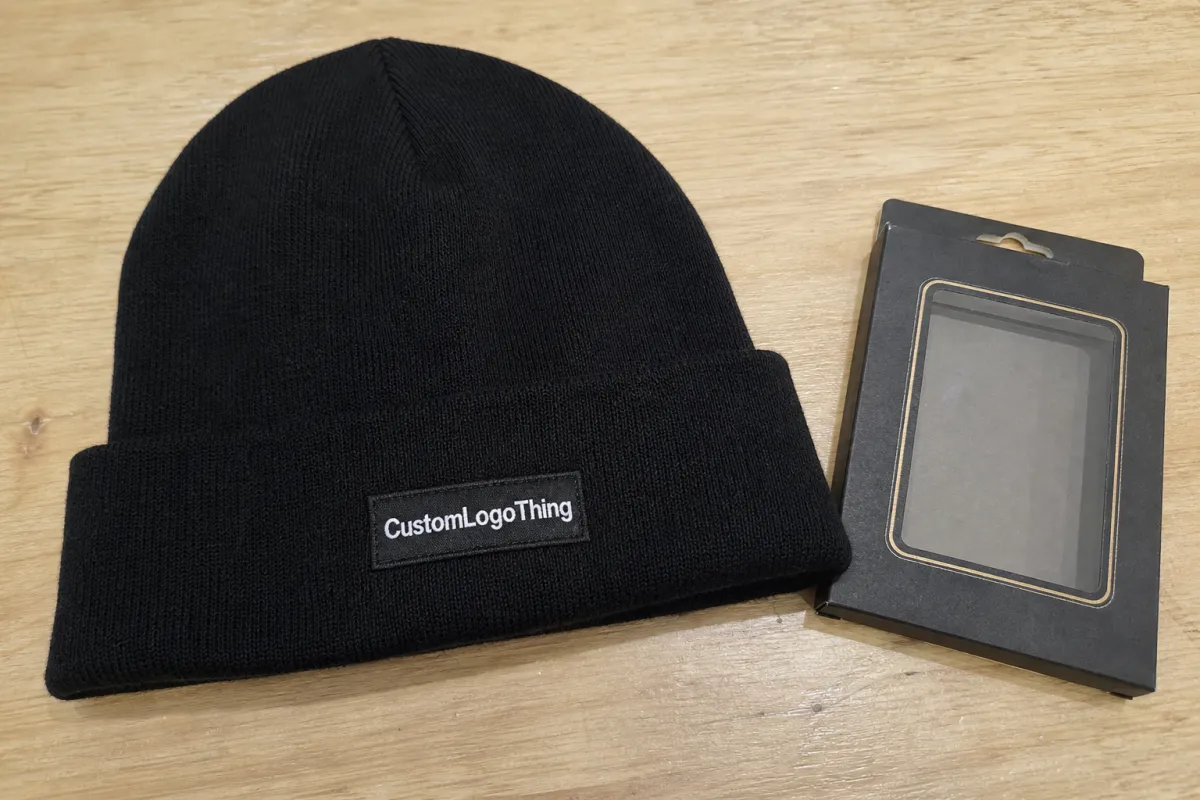
A beanie order is not just a blank hat with a logo added at the end. Yarn choice, knit structure, decoration, trims, labeling, folding, bagging, carton marks, inspection, and freight all have to line up before bulk production can run cleanly.
For a basic decorated program, the timeline may fit inside a few weeks after proof approval. A fully custom knit program with sample review, private labels, hang tags, barcode stickers, and international freight needs more room. Quantity matters. So do materials, seasonality, and approval speed. Treat early dates as planning ranges until the specifications are locked.
A practical calendar usually includes:
- Discovery, quoting, and rough landed-cost planning
- Artwork setup, mockup, and technical proofing
- Yarn, color, knit structure, trim, and packaging confirmation
- Physical sample or pre-production sample, when the risk justifies it
- Bulk knitting, decoration, trimming, sewing, and finishing
- Inspection, folding, labeling, polybagging, carton packing, and shipping
Retail merch adds pressure because the beanie is being sold, not simply handed out. It may need to match ecommerce photography, SKU setup, warehouse receiving rules, UPC placement, color naming, size breaks, and future replenishment orders. A 2 mm patch placement difference may not matter for a one-day event giveaway. Across a product grid or store wall, it can look sloppy.
Factory-floor rule: a rushed beanie can be made. A retail-ready beanie with private labeling, custom patches, hang tags, folded packing, and dependable QC needs enough calendar space to protect the brand as well as the delivery date.
The strongest timelines are built backward from the in-warehouse date, not the public launch date. Cartons still need receiving, counting, photography, inventory upload, possible relabeling, and fulfillment setup. None of that happens by magic because a tracking link says “delivered.”
How Custom Beanie Production Works From Yarn to Packed Carton
Production starts with yarn. Yarn controls handfeel, warmth, stretch, color saturation, recovery, pilling behavior, care instructions, and cost. Acrylic is common for retail merch because it is consistent, warm, easy to source, and cost-effective. Cotton feels drier and more breathable, though it may not have the same loft. Wool blends can feel more premium but often raise unit cost and care-label requirements. Recycled polyester is popular for sustainability-focused assortments, especially when buyers need supporting documentation from the supply chain.
Construction comes next. A cuffed acrylic rib beanie is one of the most predictable paths. A jacquard logo beanie takes more setup because the artwork becomes part of the knit pattern. Pom beanies add component matching and attachment steps. Slouch beanies need different finished-length targets. Patch beanies depend heavily on the logo component: embroidered patch, woven patch, leatherette patch, rubber patch, or direct embroidery.
Each decoration method has its own approval point. Embroidered patches need thread colors, stitch density, border style, backing, and a realistic read on tiny lettering. Woven patches can hold finer detail, but thin strokes still need review at actual size. Leatherette patches need debossing or laser artwork that stays legible after texture and edge finishing. Jacquard knit-in logos require patterning around yarn thickness and knit gauge, not just a flat logo file dropped onto a mockup.
A typical retail order may move through several stations even if one supplier manages the program: knitting, logo component production, trimming, sewing, label attachment, steaming, shaping, inspection, folding, polybagging, carton packing, and carton marking. Hang tags, UPC labels, color stickers, or insert cards are not “small add-ons” in production terms. They are handling steps, and handling steps take time.
The timeline stays smoother when the spec sheet is locked early. Confirm finished length, cuff depth, yarn color, logo size, patch placement, label content, packaging format, carton quantity, and delivery addresses before bulk production starts. Changes after that point can trigger rework, waste, or a full restart depending on what has already been made.
Key Factors That Stretch or Shorten Beanie Lead Time
Complexity is the first timing driver. A single-color cuffed acrylic beanie with a standard woven patch can move faster than a multi-color jacquard knit with a custom pom, private woven label, retail hang tag, individual barcode sticker, and split delivery to two warehouses. Shocking, I know.
Artwork readiness matters just as much. Vector logos, Pantone references, placement notes, label copy, approved dimensions, and print-ready packaging files can save several business days. Low-resolution artwork, undecided logo sizing, or a patch shape that changes after quoting can stall the sample stage before the first production stitch is made.
Approvals are another trap. The fastest orders usually have one decision-maker and one consolidated round of comments. Timelines stretch when merchandising approves the beanie body on Monday, marketing changes the patch on Wednesday, ecommerce asks about barcode placement on Friday, and leadership reviews the full set the next week.
Material availability can add or remove days. In-stock yarn colors and standard trims are easier to schedule. Custom-dyed yarn, specialty wool blends, recycled fibers, uncommon patch materials, or color-matched poms may add time before bulk production begins. If a brand needs certified paper hang tags or responsible fiber claims, documentation matters too. Buyers working with paper components can review sourcing language through groups such as the Forest Stewardship Council for FSC-labeled materials.
Seasonality is real. Beanies tie into fall drops, winter programs, tours, team shops, outdoor retail, holiday kits, and cold-weather fundraising. Capacity tightens when many brands place orders in the same window. A timeline that works in a quiet month may collapse during peak beanie season.
Freight choices finish the equation. Air freight can save an urgent launch, but it raises landed cost sharply, especially on bulky cartons. Ocean, ground, or consolidated freight is more economical when the calendar has breathing room. For larger retail and ecommerce programs, packed-carton testing or distribution planning may reference ISTA procedures, especially if the product will move through parcel networks or automated fulfillment.
| Order Type | Typical MOQ Range | Common Timeline Pressure | Best Use |
|---|---|---|---|
| Stock beanie with patch | 100-250 units | Patch approval and sewing capacity | Small drops, fan merch, event retail |
| Custom cuffed knit beanie | 300-500 units | Yarn color and sample approval | Brand stores and seasonal collections |
| Jacquard logo beanie | 500-1,000 units | Knit pattern setup and logo readability | Bold graphic merchandise and team shops |
| Private-label retail pack | 500-2,500 units | Labels, hang tags, barcodes, carton marks | Retail shelves, ecommerce fulfillment, replenishment |
Production Steps and Approval Checkpoints to Build Into Your Calendar
A useful production calendar works backward from the sell date, then backs up again. Use the in-warehouse date as the real target. Add time for receiving, photography, inventory upload, fulfillment prep, and any internal launch review. The factory completion date is not the launch date. Please tattoo that on the project brief if necessary.
Start with a quote request. The manufacturer needs the beanie style, yarn or material preference, decoration method, quantity, packaging needs, shipping destination, and target delivery date. A useful quote should separate unit cost, setup cost, sample cost, production lead time, and freight assumptions because each one affects the final decision.
Next comes artwork and proofing. Logo files are translated into embroidery stitches, woven patch layouts, jacquard knit patterns, deboss files, printed labels, or hang tag artwork. Check scale carefully. A logo that looks balanced at 3 inches wide on a mockup may feel oversized on a 2.75-inch cuff, especially after the beanie stretches on a head form.
Sampling depends on risk. Physical samples are best for first-time retail launches, high-volume orders, new yarn blends, new logo applications, unusual patch placements, or products that will be photographed for ecommerce. A digital proof may be enough for a repeat order using the same beanie body, same patch, same label, and same packaging.
If a physical sample is required, build in time for sample production, sample shipping, internal review, comments, revision if needed, and final sign-off. A sample sitting on someone’s desk for five days still counts against the launch calendar. The factory cannot approve it on your behalf, and no, a vague “looks good but maybe slightly smaller” is not production approval.
Once approvals are locked, bulk production begins. Changing yarn color, patch size, label placement, or packaging after that point can cause rework, waste, or a full restart. If the patch has already been woven and cut, or if labels have already been sewn, even a small change can become expensive.
Quality control should not be an afterthought. Beanies should be checked against the approved sample or spec for finished length, cuff height, color, logo placement, label attachment, loose threads, holes, stains, odor, stretch recovery, and packing accuracy. Carton quantities, SKU labels, color breakdowns, and shipping marks should also match the purchase order. The boring checks are the ones that keep warehouse teams from sending angry emails later.
Cost, Pricing, MOQ, and Unit Cost Drivers for Retail Beanies
Beanie pricing is built from materials, knitting time, decoration, labor, setup, labeling, packaging, inspection, freight, and quantity. The visible logo on the front cuff is only one piece of the cost. Buyers who compare only factory unit prices can miss the real landed-cost picture.
For simple decorated programs, rough pricing can start around $5-$9 per unit at moderate quantities, depending on blank quality, patch type, and domestic handling. More customized retail beanies with private labels, hang tags, individual bags, and tighter specs may land closer to $8-$16 per unit before retail fulfillment costs. Specialty yarns, wool blends, jacquard logos, custom-dyed yarn, small runs, and expedited freight can push higher. These are planning ranges, not guarantees.
Common cost drivers include yarn type and weight, knit complexity, number of colors, patch material, embroidery density, private labels, hang tags, UPC or SKU stickers, individual polybags, carton labeling, inspection level, and freight method. A dense embroidered patch with a merrowed edge usually costs more than a simpler woven label. A custom-dyed yarn usually needs more commitment than stock black, navy, or heather gray.
MOQ deserves a practical view. Lower MOQs may be possible for simpler decorated beanies, especially if the base beanie is available and the logo is added afterward. Fully custom knitted beanies, jacquard logos, custom-dyed yarn, private woven labels, and retail packaging often need higher quantities because setup, machine scheduling, component production, and packing labor have to be spread across enough pieces.
The cheapest quote is not always the lowest real cost. Weak stretch recovery, inconsistent cuff height, drifting patch placement, poor label sewing, loose threads, and sloppy carton packing can create returns, markdowns, or brand damage. Retail buyers should ask what inspection steps are included, how defects are handled, and whether the approved sample becomes the production reference.
Ask for tiered pricing at 100, 250, 500, 1,000, and 2,500 units if those quantities fit the sales plan. Beanies often show meaningful cost improvement as setup and freight are spread across more units. If the product will be sold at retail, calculate margin using landed cost, not factory unit cost alone. Include packaging, freight, duties where applicable, fulfillment prep, payment fees, and a realistic defect allowance, often 1%-3% depending on the program and inspection plan.
Common Mistakes That Delay Retail Merch Beanie Orders
The biggest mistake is choosing a public launch date before confirming the production path. That risk grows when the buyer wants custom knit structure, private labels, physical samples, split shipments, or warehouse-specific carton marks. A launch calendar built on hope is not a production plan. It is a wish with a spreadsheet.
Vague specifications cause trouble. “Standard beanie” can mean several things: 8-inch flat length, 9-inch flat length, 3-inch cuff, 4-inch cuff, 1x1 rib, 2x2 rib, acrylic, cotton blend, single layer, double layer, loose fit, snug fit. A better request defines finished measurements, yarn composition, knit gauge, cuff height, logo size, label placement, and packing format from the beginning.
Artwork creates another set of delays. Small lettering may not embroider cleanly. Thin lines can disappear in woven patches. Gradients rarely translate well into knit or patch work without simplification. A logo that is beautiful on a screen can become muddy at 2 inches wide in thread, so production art should be judged at actual size.
Late packaging decisions are expensive in time. Adding hang tags, UPC stickers, suffocation-warning bags, size or color stickers, insert cards, or special carton marks after production starts can add handling days and repacking costs. If a retailer or warehouse has routing requirements, those should be shared before the quote is finalized.
Approval bottlenecks are common. One team approves the beanie body, another changes the patch, and a third still needs barcode placement confirmed. The production timeline should name every approval owner and deadline, especially for sample sign-off, label copy, packaging artwork, and final shipping instructions.
Freight assumptions can be just as risky. Buyers sometimes plan around the factory completion date rather than the delivered date, forgetting transit time, customs clearance where relevant, warehouse appointments, receiving delays, and internal fulfillment prep. Every decision that affects the physical product should be documented before bulk production, and every person with veto power should review the proof or sample before approval is given.
Build a Beanie Launch Schedule That Holds Up
Start with the commercial basics: beanie style, target retail price, desired margin, quantity range, decoration method, packaging format, and must-arrive date. Those choices shape the entire retail merch beanies production timeline. If the target retail price is $24, the landed-cost tolerance is different than a premium $42 beanie with a woven label, hang tag, and custom fold.
Prepare a clean spec packet before requesting a quote. Include vector logo files, Pantone or yarn color references, preferred measurements, patch or embroidery dimensions, label copy, packaging notes, delivery addresses, and any retailer compliance requirements. If you need individual bags, UPC stickers, SKU labels, carton labels, or size and color breakdowns, say that early.
Then build a backward calendar. Reserve time for quoting, proofing, internal review, sample production, sample shipping, sample approval, bulk manufacturing, quality control, freight, receiving, photography, inventory upload, and fulfillment setup. For a retail launch, leave a cushion between warehouse receipt and the public sell date. Cartons do not turn into sellable inventory the minute they hit the dock.
Decide what is flexible and what is fixed. If the delivery date cannot move, the team may need to simplify the decoration, use an available yarn color, skip a physical sample on a repeat order, or pay for faster freight. If the product specification cannot move, the launch date may need more room. There is no shame in making that tradeoff early. The expensive version is discovering it after production has started.
Ask direct questions before the order is released: What part of this spec is most likely to affect timing? Which approvals are needed first? What MOQ makes the most sense? What date must final artwork be locked? Can the sample represent bulk production materials? What inspection standard will be used before packing? What happens if defect rates exceed the agreed tolerance?
A good beanie launch is not complicated because the product is mysterious. It is complicated because small physical details have to arrive in the right order. Plan the timeline from the sell date backward, protect the approval checkpoints, and give the product enough room to become something customers would actually pay for.
FAQ
How long does a retail merch beanie production timeline usually take?
A simple decorated beanie can often move faster than a fully custom knit beanie, but buyers should plan for quoting, artwork setup, proofing, sample approval if needed, bulk production, inspection, packing, and freight. The biggest variables are order quantity, yarn availability, decoration method, private labeling, packaging requirements, and approval speed. For retail launches, plan backward from the in-warehouse date, not the public launch date, because photography, receiving, ecommerce setup, and fulfillment prep also take time.
What can make retail merch beanies lead time longer than expected?
Lead time stretches when artwork is not production-ready, yarn colors need custom matching, samples require multiple revisions, or packaging details are added late. Complex logo methods such as jacquard knit-in designs, detailed woven patches, leather patches, or multi-location branding can add approval and setup steps. Seasonal demand also matters because production capacity gets tighter when brands are preparing fall, winter, holiday, tour, or outdoor merch programs.
Do I need a physical sample before bulk beanie production?
A physical sample is strongly recommended for first-time retail beanie orders, high-volume programs, new yarn blends, custom labels, unusual logo placements, or products that will be photographed and sold online. A digital proof may be enough for a repeat order using the same beanie style, same patch, same label, and same packaging. If the launch date is tight, ask which risk is greater: skipping the sample or delaying the order. The answer depends on how custom the beanie is and how much variation the brand can accept.
How does MOQ affect custom retail beanie pricing?
Higher quantities usually reduce unit cost because setup, artwork preparation, machine time, packaging preparation, and freight are spread across more beanies. Lower MOQ orders can work well for testing a design, but they may carry higher unit costs and fewer customization options, especially for custom knit patterns or specialty materials. Ask for tiered pricing so you can compare the true cost difference between a small test run and a larger retail-ready order.
What should I send to get an accurate beanie production quote?
Send the beanie style, quantity, logo files, preferred decoration method, yarn or color requirements, label details, packaging needs, shipping destination, and target delivery date. Include retail-specific requirements such as hang tags, UPC or SKU stickers, individual bags, carton labels, size and color breakdowns, and warehouse routing instructions if they apply. A complete quote request makes it easier to estimate the real timeline, unit cost, MOQ, sample charges, setup fees, and freight options.


