Retail merch beanies Material and Sizing guide sounds narrow until a buyer has to explain why two 12-inch beanies feel nothing alike on a real head. One will spring back after a try-on; the other will sag, twist, or sit so shallow that it never earns a second look on the floor.
That is the retail problem in plain language. A beanie can look right folded on a shelf, yet fail in the one place that matters: on a customer’s head. For merch teams, the real question is not whether the product photographs well. It is whether the fit feels natural after a few try-ons, whether the knit keeps its shape, and whether the next reorder still matches the first approved sample.
This guide focuses on the decisions buyers actually make: acrylic versus wool blend, tight rib knit versus looser construction, cuff depth, stretch range, decoration methods, packaging, and the hidden costs that show up after the quote. If you manage store assortments, team merch, souvenir programs, or seasonal gift lines, consistency matters more than a clever description on the spec sheet. Guesswork gets expensive fast.
Retail merch beanies material and sizing guide: why two 12-inch beanies can fit differently
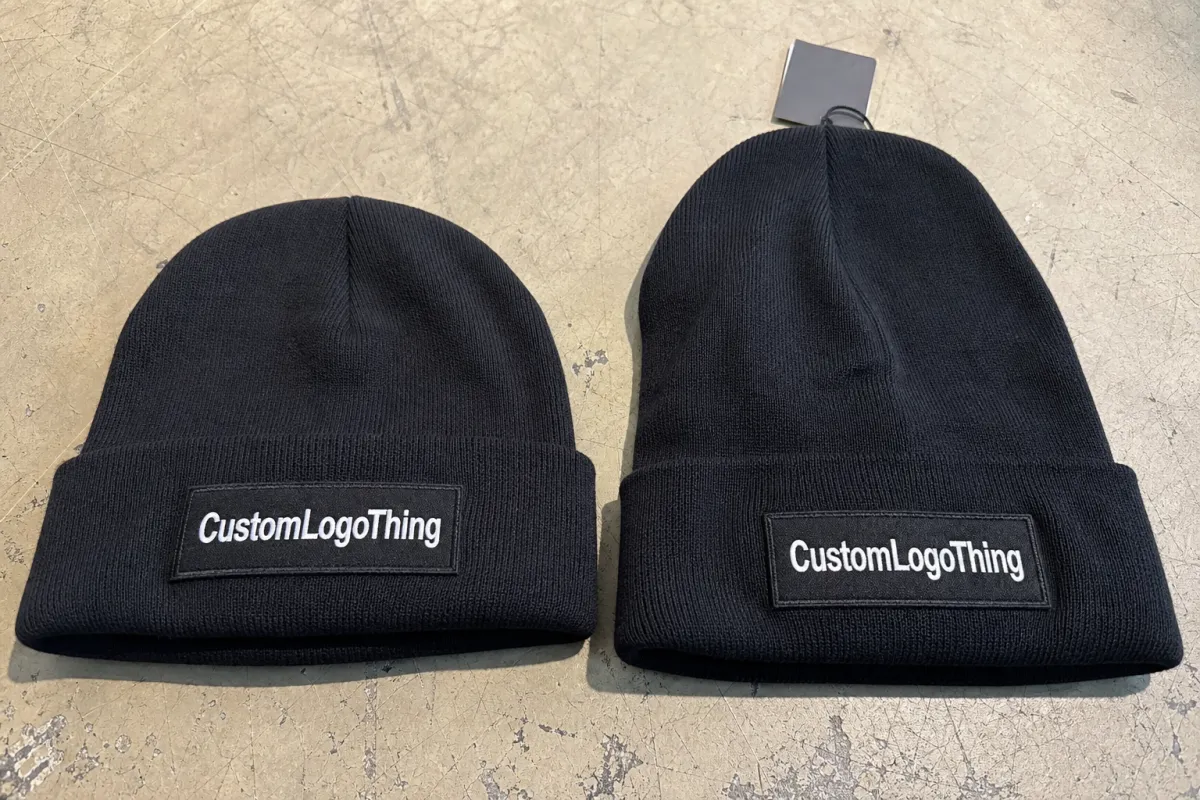
Two beanies can share the same flat measurement and still behave very differently. Knit density changes how much the fabric gives under pressure. Yarn elasticity changes how quickly it bounces back. Cuff depth changes how much visual weight the style carries near the face. Put those together and a 12-inch lay-flat beanie can feel roomy, snug, shallow, or floppy without changing the tape measure much at all.
That is why the sizing discussion matters so much for retail buyers. A style that looks clean in a render can still trigger complaints if the opening bites into the forehead or if the crown collapses after several try-ons. In practice, sizing problems usually show up as returns, dead stock, or slow sell-through because shoppers keep picking the product up and putting it back.
The goal is not a technically perfect textile sample. The goal is a beanie that looks tidy on display, fits a wide range of adult heads, survives handling, and still feels worth its shelf price after repeated wear checks. That means material, stretch, recovery, and spec clarity have to work together. Treating them as separate decisions usually leads to a product that looks fine in isolation and weak in retail.
Channel matters too. A style for a fashion boutique may need better hand-feel and deeper color. A ski shop or campus store usually cares more about warmth and durability. Souvenir programs often need broad appeal and a lower price ceiling. The same silhouette can work in all three places, but not with the same material or finish.
How knit structure and fiber choice change warmth, stretch, and decoration
Material choice drives more than comfort. It affects shape, logo quality, pilling, and how the product looks after weeks of being handled on the sales floor. The most common Options for Custom retail beanies are acrylic, cotton blends, wool blends, and recycled yarns. Each one balances warmth, stretch, care, and price differently.
Acrylic remains the workhorse for a lot of retail programs. It is usually cost-effective, holds color well, and gives a soft enough hand for everyday merch. Dense acrylic knits also take embroidery cleanly because the surface resists distortion better than loose, airy constructions. The downside is familiar: lower-grade acrylic can pill, and a thin knit can feel synthetic if the yarn quality is weak.
Wool blends tend to feel warmer and more premium. They often signal value on the shelf, especially when the knit is tight and the finish is clean. The tradeoff is maintenance. Wool content can push price higher, and some shoppers are sensitive to itch. For colder-weather assortments, though, a wool blend can justify a higher ticket if the fit is dependable and the fabric has enough body to hold its shape.
Cotton blends work better for mild climates, shoulder seasons, and buyers who want a softer drape. They are less insulating than wool and often less springy than acrylic, so they may not recover as sharply after stretch. That makes them a mixed fit for heavy-use retail, but a strong option for lifestyle assortments where comfort and casual hand-feel matter more than deep winter performance.
Recycled yarns are now common enough to be more than a novelty. Recycled acrylic or recycled polyester can perform well, but quality varies a lot by mill and yarn source. If a brand wants a sustainability claim on the hang tag, ask for the actual yarn specification and certification trail, not just a marketing sentence. A vague recycled claim is weak on a retail shelf and weaker still when buyers ask questions later.
Decoration compatibility matters just as much as fiber. Tighter knits usually support embroidery and woven labels better because the fabric surface is more stable. Looser knits can feel softer, but stitching may sink or distort. Patches create a bolder look and add structure, although they also make the front panel feel stiffer. For very clean logo work, many buyers prefer a dense knit with a limited stitch count instead of a bulky, oversized mark.
Knit gauge and visual finish
Gauge is easy to ignore and hard to fix later. A finer gauge usually reads cleaner for logos, shows less gap between stitches, and helps the beanie hold its outline on a shelf. A looser gauge may look cozy, but it can lose definition fast after handling. If the product needs a premium retail appearance, dense knit structure usually wins.
Durability is the last piece. Acrylic and wool blends often hold their shape better through repeated try-ons than soft cotton-rich blends. Colorfastness matters too; a beanie that fades after a few cleanings or several weeks under bright store lights undermines the whole program. If the style ships as gift-ready merch, ask for a packing method that keeps the crown from flattening and the cuff from warping.
"The sample looked fine flat, but the fit changed the moment we put it on heads." That is the line buyers should keep in mind. Flat measurements help, but wearer behavior is the real test.
Fit, circumference, cuff depth, and grade rules that actually move inventory
Beanie sizing gets clearer once you break it into parts. Circumference tells you how much opening the wearer has. Stretch range tells you the usable flexibility. Cuff depth tells you how much coverage the wearer gets around the ears and forehead. Crown height tells you whether the style reads close-fitting or slouchy.
For adult retail, a one-size approach is normal. That does not mean the spec should be vague. A useful spec might target a relaxed opening around 9.0 to 10.0 inches flat, with a comfortable stretch to around 12.0 to 13.0 inches flat, depending on knit structure. Cuff depth often lands around 2.5 to 3.5 inches for standard retail looks, while slouchier silhouettes may need more crown height to keep the proportions from collapsing visually.
The easiest buyer workflow is simple: measure the sample flat, stretch it to a repeatable target, then test it on several head sizes. That gives you more than a number. It tells you whether the beanie sits low enough, whether it rebounds well, and whether the cuff folds evenly. A style that stretches once and stays baggy is a problem, even if the tape measure still looks acceptable.
Grade rules matter too. If you are building a family of styles, do not rely only on width changes. Small shifts in crown height and cuff depth can change the retail feel more than a half-inch of width. A shallow crown on a dense knit can look very different from a taller crown in the same yarn. Buyers often miss that and approve a line that looks inconsistent across colors or sizes.
Channel again shapes the decision. Souvenir shops often tolerate bolder branding and a slightly looser fit. Outdoor retailers usually want warmth, stretch recovery, and a snugger profile. Fashion boutiques may need softer drape with less visual bulk at the cuff. The sizing spec should reflect those differences before production starts, because changing fit after knitting is slow and costly.
A practical measuring routine
Measure three things on every preproduction sample: relaxed width, stretched width, and cuff depth. Then check how the crown sits on a few different heads. If one sample looks good but another comes back lopsided after stretching, the issue is likely knit tension or yarn recovery, not the tape measure itself.
Production process and timeline: sample approval, lead time, and reorder windows
Most custom beanie programs follow the same path, even if the factory language changes. First comes the spec sheet. Then yarn selection. Then a knit sample or lab dip if color matching matters. After that comes decoration approval, bulk production, inspection, packing, and shipment. Skip one step and the schedule usually slips later.
Where do delays happen? Usually in color matching, sample revisions, logo approval, or a last-minute change to fit. If the buyer says the beanie should be "a little deeper" or "slightly tighter" after the sample is approved, the factory may need to restart knitting rather than just adjust the finish. That is one of the fastest ways to miss a seasonal window.
For planning, many buyers should assume 10 to 15 business days for a sample round, then roughly 20 to 35 business days for bulk production after approval, depending on yarn availability and decoration complexity. If the line is for a cold-weather launch, start earlier than feels comfortable. Seasonal merch has a habit of arriving just in time to miss the first sales spike.
Reorders are easier if the spec stays locked. Save the exact yarn blend, stitch pattern, cuff depth, decoration file, label placement, and packaging method. If the first run sells through, a clean reorder can often move faster than the original production because the factory already has a proven recipe. That matters for retail buyers who need consistency across stores and seasons.
Packaging is part of the timeline too. If the beanies ship in corrugated cardboard cartons with folded inserts, the units usually stay in better shape than they do in loose poly bags. If the line has gift-ready presentation, add time for branded wraps, hang tags, or sleeve changes. Many buyers now ask for FSC-certified paper goods, kraft paper wraps, or recycled materials with post-consumer waste content because the shelf story matters. Just make sure the packaging still protects the knit. A greener carton is not a win if it crushes the crown.
For transit testing, ask whether the shipment needs an ISTA-aligned packaging check. The ISTA framework is useful if the product has retail presentation requirements that cannot be damaged in transit. If your brand wants packaging claims, the FSC system is the cleaner reference point for paper-based components than vague sustainability language.
Cost, pricing, and MOQ realities for custom retail beanies
Beanie pricing is shaped by more than fiber. Knit complexity, decoration method, label style, packaging, and order quantity all move the unit cost. A dense jacquard knit with a woven patch and folded retail insert will cost more than a plain stock-style acrylic beanie with a simple stitched label. That sounds obvious, but buyers still get caught comparing quotes that are not built the same way.
MOQ is the first tradeoff. Lower minimums reduce risk, especially for new store programs or seasonal tests. Higher quantities usually cut unit cost and improve margin, but they also raise exposure if the style misses the customer. For many custom retail beanies, MOQ can start around 300 to 500 pieces per color for simpler constructions and move toward 500 to 1,000 pieces or more for fully custom knitting or premium trims. Exact numbers vary by mill and decoration method.
For landed cost, do not stop at the factory price. Add freight, packing inserts, customs-related expenses where relevant, and any retail-ready packaging. A project that looks like $1.40 per unit ex-works can move closer to $1.85 or more once cartonization, labeling, and transport are included. That difference matters a lot in a category where a few dimes can decide whether the product sits at $18 or $24 retail.
| Material option | Retail feel | Typical ex-works at 1,000 pcs | Typical ex-works at 5,000 pcs | Best use case |
|---|---|---|---|---|
| Acrylic | Warm, light, easy to decorate | $1.60-$2.60 | $0.95-$1.60 | Core merch, souvenir lines, broad adult fit |
| Cotton blend | Soft, casual, less insulating | $1.80-$3.10 | $1.10-$1.95 | Lifestyle retail, mild-weather assortments |
| Wool blend | Premium, warmer, higher hand-feel value | $2.40-$4.25 | $1.50-$2.70 | Outdoor shops, premium fashion programs |
| Recycled yarn blend | Modern, story-driven, varies by yarn source | $1.90-$3.20 | $1.20-$2.00 | Sustainability-led retail with proof behind the claim |
Premium materials can support a higher ticket, but only if the fit and finish feel justified the moment a shopper touches the sample. A dense knit, clean logo placement, and tidy packaging often sell better than a flashy but awkward design. Sometimes the simplest beanie is the strongest margin item in the mix.
How packaging changes the shelf story
For retail merch, packaging should protect shape and reinforce value without adding visual clutter. A corrugated cardboard shipper, a folded kraft paper insert, or a slim FSC-certified hang tag can make the product feel intentional. Recycled materials and even post-consumer waste content can support the story if the presentation stays clean. Biodegradable packaging can work too, but only if it survives handling and does not create a flimsy first impression.
Common sizing and spec mistakes that create returns, complaints, and dead stock
The most common mistake is approving a sample because it looks good flat. That misses the real test: stretch recovery and wearer comfort. A beanie can pass a visual check and still fail on the second try-on if the opening is too tight or the knit never bounces back.
Vague language causes trouble too. Terms like "adult size," "soft feel," or "standard fit" are not enough for production. The supplier needs exact measurements, tolerance ranges, decoration placement, and notes on how the cuff should sit. If the buyer only supplies a mood image, the factory will fill in the gaps, and those guesses may not match the shelf plan.
Shrinkage and growth need attention. Acrylic behaves differently from wool, and blended yarns can react to steaming, washing, or repeated wear in ways that are not obvious from the sample alone. If a style is likely to be washed, packed, or steamed for retail presentation, test it before bulk approval. A small fit shift can become a large customer complaint once the product reaches stores.
Branding can also hurt sell-through. Oversized logos, stiff patches, or awkward placement can make the beanie feel bulky or too niche. Buyers sometimes add more branding because they want stronger recognition, but the better move is often cleaner decoration and a tighter silhouette. A product that people actually wear tends to move faster than one that merely advertises the brand.
If the style has to work for broad retail, the spec should serve the wearer first and the logo second. That order is not always glamorous, but it usually sells more units.
There is another quiet risk: inconsistent color and trim across colorways. If one shade uses a different yarn lot or a different label width, the line starts to feel uneven. That is a small issue in a sample room and a large issue on a wall of merchandise. Lock the spec early and keep the same reference sample on file.
Practical spec sheet takeaways for buyers
Start with a one-page spec sheet. It should cover fiber content, knit gauge, relaxed width, stretch range, cuff depth, crown height, decoration method, label type, packaging format, and acceptable tolerance ranges. If a line is meant for multiple retail channels, note which dimension is non-negotiable and which can flex.
Then request one physical sample and one wear test before bulk approval. Measure both against the target head profile and the selling channel. A sample that feels good in a photo booth may behave differently after repeated try-ons, and that difference is often enough to change inventory performance.
Store feedback matters more than a guessing session in the office. Ask simple questions: Did shoppers say it felt warm? Did they try it on and leave it on? Did the price feel fair for the quality? A few comments from store teams can save a reorder from repeating the same flaw across dozens of locations.
For packaging, keep the protection simple and repeatable. Corrugated cardboard for shipper strength, kraft paper for clean presentation, and recycled materials where they make sense. If you are making environmental claims, back them with actual supplier documentation rather than loose language. FSC-certified paper components and clearly stated post-consumer waste content tend to carry more credibility than generic claims about being green.
A good beanie program is not built on one dramatic decision. It comes from a chain of small, disciplined choices: the right yarn, the right gauge, the right depth, the right trim, the right packaging, the right timing. That is what keeps a seasonal accessory from turning into a pile of dead stock.
FAQ
What material works best for retail merch beanies if I want a premium feel?
Wool blends usually feel warmer and more premium, but a dense acrylic knit can also look elevated if the yarn is soft and the finish is clean. The right choice depends on the channel: fashion retail often favors drape and hand-feel, while outdoor or souvenir programs may value warmth, shape retention, and easier care.
How do I size a retail merch beanie for most adult shoppers?
Use a one-size approach, but define the opening, stretch range, and cuff depth clearly. Test the sample on several head sizes, not just one, and confirm that it returns to shape after stretching. That gives you a much better read than flat measurements alone.
Will a beanie shrink or stretch after wear and washing?
Yes, and the result depends on fiber content, knit density, and finishing. Acrylic, wool blends, and recycled yarns can all behave differently. The safest move is to test the exact sample and record expected shrinkage or recovery in the spec sheet before bulk production.
What MOQ and unit cost should I expect for custom retail beanies?
MOQ varies by factory and decoration method, but lower quantities usually carry higher unit costs because setup is spread across fewer pieces. Simple styles may start around a few hundred pieces per color, while more custom constructions often need larger runs to reach better pricing.
How long does the process usually take from sample to shipment?
Lead time depends on sample approval speed, material availability, and how many revisions the design needs. A practical planning window is often 10 to 15 business days for sampling and 20 to 35 business days for bulk, with extra time added for color matching, logo approval, and seasonal congestion.


