Retail merch Beanies Private Label Order programs can be one of the cleanest ways to build a compact branded SKU that earns shelf space without asking for much room. A beanie is small, useful, and easy to face forward. It does not need size runs, and it does not create the same inventory drag as apparel that breaks into multiple fits.
The best programs are rarely the loudest. They usually win on restraint: a fabric that feels right in hand, a logo that reads from a few feet away, and packaging that looks intentional instead of improvised. That mix matters because retail buyers are not only buying warmth; they are buying confidence that the item will move, replenish cleanly, and look the same on reorder six months later.
"If the beanie keeps its shape, feels substantial, and carries the brand clearly from display distance, it is usually doing its job."
Why beanies move fast in retail displays
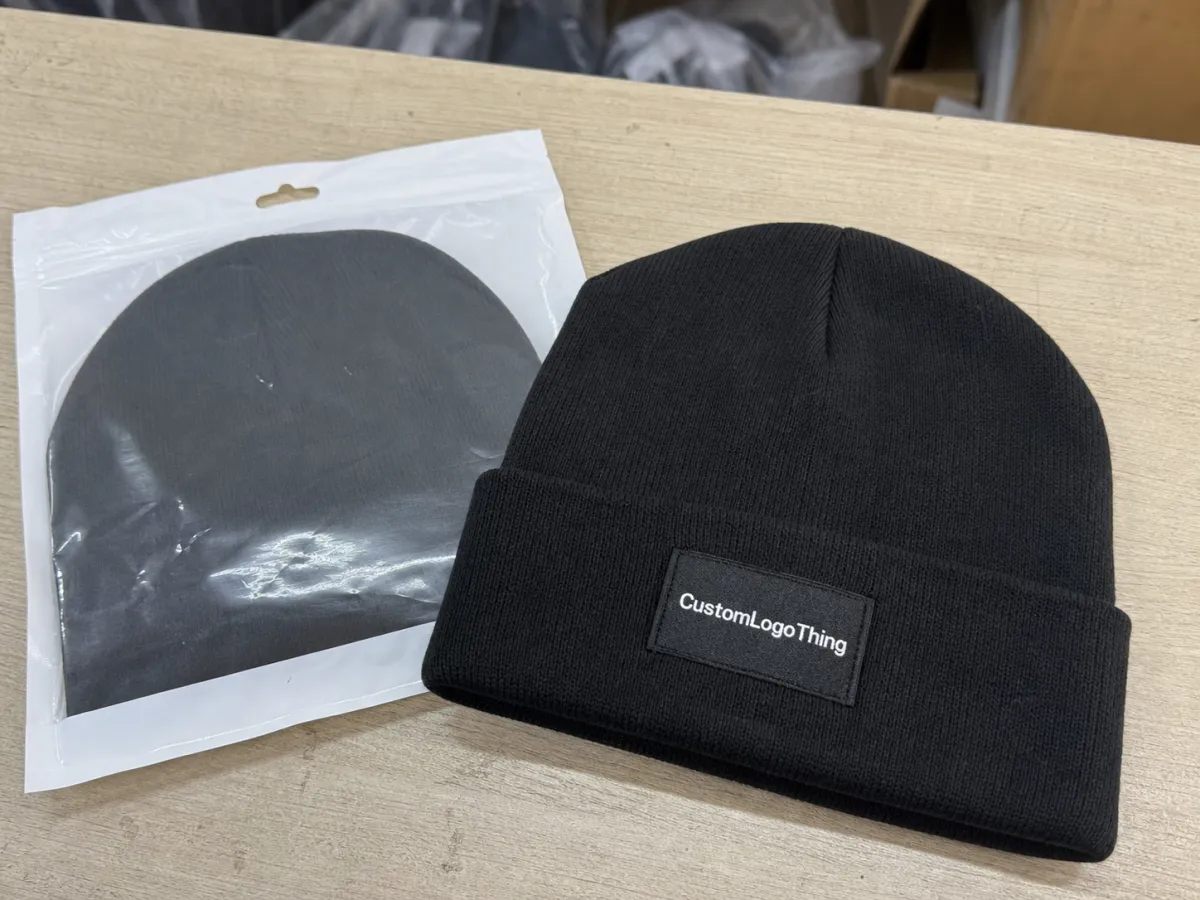
A beanie uses almost no display space, yet it can carry enough branding to justify a hook, a bin, or a folded stack near checkout. That is a practical advantage, not a marketing one. Retail merch beanies private label order buyers often notice that the item has a lower planning burden than apparel, which makes it useful in stores that depend on quick, low-friction purchases.
Seasonality helps, but it is not the whole story. Beanies also sell because they are easy gifts, easy add-ons, and easy impulse buys. A customer does not need to know their size. They usually need to know one thing: does it feel good enough to wear all winter or all weekend?
Brand color matching can change the read instantly. When the yarn shade sits close to a store's palette, the piece looks planned rather than leftover. That matters in campus shops, outdoor retailers, resort stores, Event Merch Tables, and gift shops where the product has to blend into an existing story instead of creating a new one from scratch.
Fast-moving programs also keep the risk profile low. A buyer wants one compact item that can live on a small wall, on a seasonal endcap, or at point of sale without requiring extra fixtures or complicated replenishment logic. Reorderability counts here. If the first shipment sells, the second should feel identical in knit, color, fit, and label placement.
Design and fabric choices that make a private label beanie feel premium
Material choice affects warmth, stretch, price, and the way a product feels the moment someone touches it. Acrylic remains common because it is cost-effective, dyes consistently, and usually holds retail color well. Recycled polyester supports a sustainability story and often feels smoother in hand. Wool blends bring more warmth and a denser look, but they push the price up. Cotton blends sit on the lighter side and can work for lifestyle assortments, though they do not always read as winter-first on the wall.
Construction changes the retail impression just as much. Rib knit creates the familiar stretch most buyers expect. Double-layer styles feel fuller and tend to hang better on a hook. Cuffed beanies give a natural branding zone and make decoration easier. Uncuffed silhouettes can look cleaner and more fashion-driven, but they ask more of the knit quality because there is less structure to hide behind.
Decorative texture should be chosen with restraint. Embroidery gives a classic retail look, woven labels keep branding crisp, and patches add depth. A premium beanie is not the one with the most decoration. It is the one where the knit, the color, the logo, and the finishing speak the same language. If one piece feels off, customers notice it faster than most buyers expect.
There are also quiet material tradeoffs that matter in real stores. Low-cost acrylic can pill if the yarn quality is poor. Recycled polyester can show more sheen than expected under bright retail lighting. Wool can feel elevated, but it may need more careful care labeling and more attention to shrinkage control. Those are not deal-breakers; they are the details that separate a clean private label item from a return-risk item.
| Material / build | Typical retail feel | Common MOQ range | Typical unit cost range | Best use case |
|---|---|---|---|---|
| Acrylic rib knit, cuffed | Classic, warm, easy to merch | 100-300 pcs | $2.40-$4.20 | Gift shops, campus retail, entry price points |
| Recycled polyester, double layer | Smooth hand, modern retail look | 150-500 pcs | $3.10-$5.40 | Outdoor brands, eco-positioned assortments |
| Wool blend, cuffed | More premium, warmer, denser | 250-500 pcs | $4.50-$7.80 | Resorts, specialty retail, higher-margin gift programs |
| Cotton blend, lighter knit | Soft, relaxed, less winter-heavy | 100-250 pcs | $2.90-$5.00 | Lifestyle retail, mild-climate assortments |
Specs that matter: knit gauge, cuff, fit, and decoration area
Buyers should ask for a spec sheet that goes beyond a product photo. The useful details are knit gauge, stitch density, finished width, finished height, cuff height, crown shape, and stretch tolerance. Those numbers tell you whether the sample is likely to repeat well in bulk, and they make supplier comparisons much cleaner than judging by marketing language alone.
Fit is one of the first things customers feel. If the beanie is too shallow, it rides up. If it is too tall, it looks sloppy on a rack. If it is too tight, shoppers try it once and move on. For retail, a good fit is less about fashion theory and more about wearability, folding, and repeat purchase behavior. A style that stacks neatly on a shelf usually merchandises better than one that collapses into a soft pile.
Decoration area is limited on knit goods, so logo size needs to be realistic. An embroidered field on a cuff might sit around 2.5 to 3.5 inches wide, while a woven label or patch can be scaled differently depending on shape and placement. Buyers should ask for measurement tolerances, sample photos, and the exact logo position. That is how you avoid a quote that looks fine on paper but arrives with a smaller branding zone or a looser knit that changes the overall fit.
One practical check that gets skipped too often is stretch recovery. Pull the cuff, release it, and see how quickly it comes back. A beanie that stretches out too easily will look tired on display long before it reaches the register. Another check is seam behavior. If the crown seam twists or the knit ripples after handling, that can signal trouble in bulk even if the first sample looks acceptable.
For buyers who need custom trim work, Custom Labels & Tags can finish the piece with fiber content callouts, size markers, or branding that matches the package.
Pricing, MOQ, and unit cost basics for a retail merch beanies private label order
Price is driven by more than fabric. Fiber content, knit complexity, decoration method, label type, packaging, custom color matching, and finishing all affect the quote. A simple acrylic cuffed beanie with a woven label can land at a very different price point than a wool blend style with embroidery, a custom patch, and retail-ready hangtagging. That gap can be large enough to change the whole assortment strategy.
MOQ usually follows complexity. More colors, more trims, and more decoration steps typically push the minimum up because the production line needs more setup time. Simpler builds often support lower entry quantities, which is useful for a test run or a store cluster that does not justify a large commitment. Many buyers ask for tiered pricing at 100, 250, 500, and 1,000 units because the breakpoints are easier to compare than a single quote.
The hidden costs are where margins quietly change. Sample fees, setup charges, freight, duties, carton labeling, and special pack-outs can move the landed cost enough to matter. A quote that looks cheap at the factory level can become less attractive after shipping and retail packing are added. Compare landed cost on the same spec sheet. Otherwise, one supplier may appear cheaper simply because they left out pieces that another supplier already included.
For a retail buyer, a useful internal rule is to price from the shelf backward. If the beanie needs to hit a target retail price, build the margin around landed cost, then test whether the decoration and packaging still fit. That approach catches problems early, especially on lower volume programs where a two-dollar swing can erase the margin.
| Quote item | What it usually covers | Why buyers should ask |
|---|---|---|
| Sample fee | Prototype or pre-production sample | Confirms the actual hand feel, shape, and decoration |
| Setup charge | Tooling, embroidery file prep, or knit setup | Can shift the real cost on smaller orders |
| Freight and duties | Transit and import costs | Determines landed cost and retail margin |
| Retail packing | Polybags, hangtags, barcodes, inserts | Supports shelf readiness and inventory control |
If your assortment includes more than one style, a Wholesale Programs setup can help compare repeatable SKUs, price tiers, and packaging options without rebuilding the sourcing process every time.
Production steps and lead time from approval to delivery
The production path is simple on paper. Quote review comes first, then artwork proof, then sample approval, then bulk production, then quality control, packing, and shipment. Each step depends on the one before it, so a slow sample review can push the entire calendar back. A buyer who wants delivery before a seasonal event has to manage approvals with the same discipline they expect from the factory.
Lead time changes with material availability and decoration complexity. A clean embroidered beanie usually moves faster than a custom-knit version with multiple yarn colors or special label work. A practical planning range is a few days for proofs, 7 to 14 days for sample work, and 15 to 30 business days for bulk production after approval, plus transit time. Peak seasons can stretch that further. Off-season orders often move with less friction, though yarn or trim availability can still slow things down.
The easiest ways to shorten the schedule are also the least glamorous: send final logo files, provide clear color references, confirm carton details, and make sure one person can approve the sample without waiting for a chain of internal signoffs. The most common delays are mundane. Artwork changes after sampling, missing shipping instructions, and late barcode revisions are the usual culprits.
A good production calendar also accounts for inspection and rework. If the order needs a second review after bulk begins, the schedule should already have a little room in it. A buyer who plans every date to the edge can end up with a technically complete order that misses the retail window by a week, which is usually more expensive than paying for a cleaner process up front.
For buyers who want a better frame for packing and distribution handling, the ISTA testing standards are a useful reference, especially for warehouse movement and e-commerce fulfillment.
Packaging, barcodes, and retail readiness for shelf or e-commerce
Packaging does more than make the item look finished. It affects scan speed, inventory control, shelf presentation, and how cleanly the beanie reaches the customer. A polybag protects the knit during transit. A hangtag carries price and brand details. A barcode makes replenishment much easier for the retail team. Those pieces seem small until one is missing and the receiving dock has to slow down to fix it.
Retail-ready pack-out usually means the buyer has already decided on inner pack counts, carton markings, UPC placement, and whether the item should ship with a hangtag attached or packed separately. Warehouse-ready packing can be more economical, but it may add labor on the receiving side if the store needs to prep each piece before it reaches the floor. That tradeoff is often invisible in the quote and very visible in the warehouse.
For e-commerce, the balance is usually protection versus cost. If the beanie is not going to sit on a shelf, a simpler ship-ready pack may be enough, provided it keeps the item clean and holds the shape. If the product is meant to be displayed, the package should be treated as part of the merchandising system, not an afterthought. The customer does not separate the product from the presentation as neatly as a purchase order does.
When hangtags or paper inserts are part of the program, FSC-certified paper can support a cleaner sourcing message. More information is available from the Forest Stewardship Council, which helps buyers explain the packaging choice without overstating it.
A retail merch beanies private label order usually performs best when the pack is simple, scannable, and consistent. The customer should know what it is, who made it, and how it belongs in the store the moment they pick it up.
What a dependable beanie supplier should prove before you order
A serious supplier should confirm the spec in plain language. Material, gauge, dimensions, decoration method, packaging, and approved artwork all need to match the sample record. If the supplier cannot explain yarn source, logo application, or size tolerance, that is a warning sign. Retail programs do not usually fail because one person forgot a comma. They fail because no one controlled the details early enough.
Quality control should be concrete. Buyers should expect stitch checks, shade consistency checks, logo placement checks, stretch recovery checks, and packing accuracy before shipment. If a supplier says they inspect everything but cannot describe what gets inspected, how many pieces are checked, or what happens when a defect is found, the process is too vague for retail work. A good answer sounds procedural, not promotional.
There are a few signs that usually separate a dependable vendor from a risky one. Clean measurement sheets. Prompt sample photos. Clear packing instructions. Straight answers about limitations. If a supplier warns that a certain knit will run slightly shorter or that wool may show more variance in shade, that is not a weakness. It is usually a sign they understand the product well enough to predict the trouble spots.
Communication matters as much as stitching. A buyer needs milestone updates and fast clarification when artwork, carton marks, or delivery details change. That becomes more important when the item is tied to a season or an event date. The supplier does not need to promise perfection. They do need to be responsive, specific, and willing to put the approved details in writing.
Honestly, the strongest supplier is not the one with the lowest first quote. It is the one that helps the buyer avoid surprises and keeps the order moving with clean documents, clear samples, and realistic timing. The cheapest unit price can disappear quickly if the product arrives late or needs rework before it can be put on display.
If your buying team needs a common reference point, our FAQ page covers basic order questions and spec expectations.
What to send for a fast quote and your next move
Good quotes start with clean inputs. Send target quantity, preferred material, logo file, color reference, packaging needs, and destination ZIP or shipping country. If you already know your target landed cost, include that too. It keeps the quote aligned with the margin plan and prevents a lot of back-and-forth that adds no real value.
Ask for two paths if possible: a value build and a premium build. That makes the cost of a material upgrade, a better label, or retail-ready packaging visible instead of buried inside one blended estimate. It also makes internal buying easier because the tradeoff is easy to compare. A two-dollar upgrade on paper can become a six-dollar landed change after packing and freight are included.
Before issuing a purchase order, ask for a sample or mockup, confirm the measurement sheet, and approve the timeline in writing. That one step keeps the order from drifting. For a retail merch beanies private label order, that discipline matters more than chasing the absolute lowest number, because the product has to arrive right, fit right, and sell cleanly.
Once the specs are settled, the path from concept to sample to production is usually manageable. That is the real advantage of a compact accessory like a beanie: it can feel custom, carry strong branding, and still stay simple enough to source with confidence.
Frequently asked questions
What is the usual MOQ for a retail merch beanies private label order?
MOQ depends on construction, decoration method, and how many colors or trims are involved. Simpler beanie builds often support lower entry quantities than highly customized versions. A useful comparison method is to ask for tiered pricing at 100, 250, and 500 units so the breakpoints are easy to see.
How long does a private label beanie order usually take?
Sample and proof stages can take a few days to a couple of weeks depending on revisions. Bulk production starts after artwork and sample approval, then packing and shipping follow. Keep factory lead time separate from transit time so your store date stays realistic.
Can retail merch beanies use woven labels, patches, or embroidery?
Yes. The best method depends on logo detail, price target, and the retail look you want. Woven labels suit clean branding, patches add texture, and embroidery works well for simpler marks. Each method changes cost and lead time, so compare them on the same spec sheet.
What do you need for a beanie private label quote?
Send vector artwork, target quantity, preferred material, color references, and packaging needs. Include fit expectations, cuff preference, and any barcode or hangtag requirements. If you have a target landed cost, share it so the quote matches your margin plan.
How do I compare quotes without missing hidden costs?
Make sure each quote uses the same fabric, trim, decoration method, and packaging setup. Check for sample fees, setup charges, freight, duties, and carton or barcode costs. Compare landed cost and retail readiness, not just the lowest unit price.


