Retail Merch Caps Unit Cost Breakdown for Bulk Buyers
What Makes Caps a Smart Retail Merch Buy
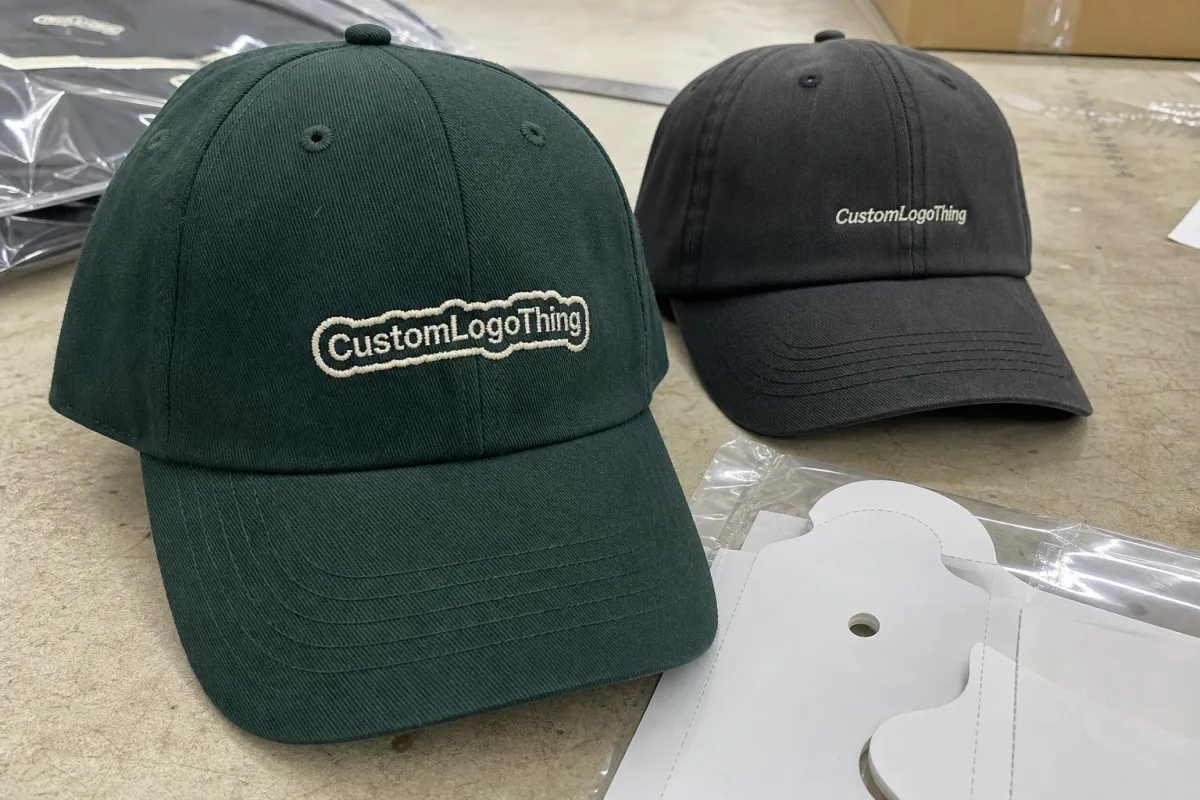
A cap is one of the few merch items a customer may wear in a checkout line, on a flight, at a gym, or walking down the street. That visibility is the reason buyers need a real Retail Merch Caps unit cost breakdown, not a vague “cap with logo” quote. The unit cost affects margin, sell-through risk, retail price, and how much inventory the buyer can afford to hold.
Caps behave like small retail packs, just made from fabric and hardware instead of paperboard. The blank cap is the structure. Embroidery, patches, labels, hangtags, stickers, sleeves, and polybags are the presentation system. Change one piece and the quote can move fast.
On mid-volume orders, a single spec change can add $0.40 to $1.50 per unit. Raised 3D embroidery looks simple on a mockup, but it needs bolder shapes, more thread, foam, slower machine time, and tighter inspection. A metal buckle can lift perceived value, but it usually costs more than a plastic snap and may slow packing if straps need to be adjusted cleanly before bagging.
Retail price is only useful if the finished cap supports it. A basic embroidered dad cap may sit at $18 to $24. A structured snapback with a woven patch, inside label, and branded hangtag may support $28 to $38 if the brand has the audience for it. The danger is obvious: buyers approve premium details, then discover too late that the landed cost leaves no room for wholesale margin, markdowns, or returns.
Buyer rule: Do not compare cap quotes by the lowest headline unit price. Compare the finished, delivered, retail-ready cost per piece.
The controllable cost points are style, material, decoration method, order quantity, packaging, freight, and approval timing. Lock those early and the quote becomes a planning tool. Leave them loose and the cap gets more expensive one “small update” at a time.
Choosing the Right Cap Style for Shelf Appeal
Style drives both perceived value and production cost. Not every silhouette sells to the same customer. Not every shape carries decoration the same way, either.
Dad caps are usually unstructured, low-profile, and easy to wear. They work for lifestyle brands, coffee shops, creator merch, campus stores, and staff retail programs because the fit is forgiving. A 6-panel cotton twill dad cap with flat embroidery often lands in a practical bulk price range at 250 to 1,000 pieces, especially if the artwork is clean.
Snapbacks are more structured and more graphic. The higher crown gives a front logo more room, which helps bold embroidery, woven patches, PVC patches, and appliques. The tradeoff is audience. Some customers like the sharper streetwear shape. Others will reach for a relaxed cap every time.
Trucker caps can be efficient because mesh backs reduce fabric use, but the front panel still has to carry the design. Foam truckers are good candidates for screen print or heat transfer. Cotton-front truckers with premium patches cost more, though they can justify a stronger retail price for outdoor, motorsport, beverage, tourism, or event merch.
Five-panels have a more specific design language. They show up in skate, cycling, running, outdoor, and boutique retail programs. The flatter front panel works well for woven labels, compact embroidery, and printed artwork. They are not as universal as a classic 6-panel cap, but for the right audience they look more intentional.
Construction matters just as much as the category name. Structured caps hold shape on a shelf and photograph cleanly. Unstructured caps pack flatter and feel softer. Crown height, brim curve, panel count, sweatband, eyelets, and closure all change the impression. A brass buckle reads differently from a plastic snap. A flat brim sells a different attitude than a pre-curved visor.
The useful question is not, “Which cap is cheapest?” Cheap is easy. The better question is, “Which cap can defend the retail price with the least unnecessary production complexity?” For broad programs, dad caps and classic structured caps usually win. For tighter drops, five-panels and premium truckers can outperform because the silhouette itself does some of the merchandising work.
Specs That Change Embroidery, Patch, and Print Costs
The spec sheet is where the quote either stays disciplined or starts wandering. Fabric, construction, thread count, patch type, decoration placement, labels, and packaging all affect unit cost. Small choices stack. They always do.
A standard cotton twill cap may use midweight fabric around 180 to 260gsm. Heavier brushed cotton, washed chino twill, corduroy, canvas, nylon, performance polyester, and recycled polyester can raise the blank cap cost. Recycled materials may also require documentation. Ask what certification or chain-of-custody support is available before accepting a sustainability claim printed in cheerful green.
Decoration is usually the bigger swing factor. Flat embroidery is familiar and efficient for many retail caps. Pricing often depends on stitch count, with simple logos under 8,000 stitches costing less than dense front designs over 12,000 stitches. More stitches mean more machine time, more thread, and more chances for puckering or misalignment.
Raised 3D embroidery uses foam under the thread. It needs thick strokes and simple shapes. Tiny letters, thin outlines, distressed textures, and delicate icons usually fail here, or they come out looking like a logo had a bad allergic reaction. If the art depends on fine detail, choose flat embroidery or a patch instead.
Patches vary widely. A woven patch captures small type and fine detail better than direct embroidery, but it requires patch production plus application. PVC patches have a molded, durable look and work well for outdoor-leaning brands, though tooling or mold charges may apply. Leatherette patches can look premium, but adhesion and heat settings matter. A patch that lifts at the corner is not rustic. It is a return.
Printing has a place too. Screen print can work on foam truckers and some flat front panels. Heat transfer can handle gradients and smaller runs, but buyers should ask about wash, heat, and abrasion performance. For performance or outdoor caps, ASTM methods for colorfastness and abrasion may be relevant, especially if the product will be sold through retail rather than handed out at an event. The standards catalog at ASTM International is a useful reference point for comparing testing claims.
Hidden spec choices that affect the quote
- Inside labels: A woven label or printed sweatband logo can add $0.15 to $0.45 per cap depending on quantity and placement.
- Extra decoration locations: Side embroidery, back arch text, visor marks, and underbrim prints each add labor and inspection time.
- Color matching: Matching fabric, thread, patch borders, labels, and packaging across several SKUs can add approval rounds.
- Retail packaging: Hangtags, belly bands, sleeves, barcode labels, size stickers, and individual polybags add material and packing labor.
- Private-label details: Custom taping, branded sweatbands, and custom closures can lift the product, but they also push MOQ and lead time.
Buyers often over-decorate caps because the mockup looks empty on a flat screen. A real cap already has shape, seams, shadow, stitching, panels, and movement. One confident front mark plus a clean inside label can look more retail-ready than four decoration points competing for attention.
Retail Merch Caps Unit Cost Breakdown: MOQ and Price Breaks
The Retail Merch Caps unit cost breakdown changes most visibly at quantity tiers. MOQ matters because setup charges, sampling, decoration calibration, production planning, and freight are spread across more units as the order grows. A buyer ordering 100 caps may pay much more per piece than a buyer ordering 500 caps with the same artwork.
Typical MOQs vary by supplier, style, and customization level. Decorated stock caps may start around 48 to 144 pieces. Fully custom caps with custom fabric colors, private labels, patch tooling, or custom hardware may start around 300 to 500 pieces per design. Dyed-to-match material, specialty trims, or custom molded patches can push that higher.
The quote should be separated into line items. If it is not, ask for the split. A clean quote normally shows blank cap cost, decoration, setup charges, sample cost, packaging, freight, and duties or import-related costs if applicable. Without that separation, buyers cannot tell whether the price is being driven by the cap body, the artwork, the packaging, or the logistics path.
| Order Quantity | Common Use Case | Typical Finished Unit Range | Cost Behavior |
|---|---|---|---|
| 100-144 caps | Small launch, staff merch, event table | $9.50-$16.00 | Higher unit cost because setup, sampling, and proofing are spread thinly. |
| 250-500 caps | Retail test run or creator drop | $6.25-$11.50 | Better bulk pricing, especially for single-location embroidery or one patch. |
| 1,000-2,500 caps | Multi-store retail program or seasonal restock | $4.80-$8.75 | Stronger production efficiency, while freight and carton planning become more relevant. |
| 5,000+ caps | National campaign or recurring retail SKU | $3.90-$7.25 | Best factory efficiency, but inventory exposure increases if sales are unproven. |
These ranges are not universal. A 5,000-piece cap with Custom PVC Patches, branded taping, inside labels, hangtags, and retail sleeves can cost more than a 500-piece cap with simple embroidery. Decoration path matters more than buyers want it to. Annoying, but true.
Single-location embroidery usually benefits quickly from price breaks because the same digitized file runs across many caps. Multi-step decoration behaves differently. A woven patch plus side embroidery plus a custom label has several labor stations, so the unit cost drops with volume, but not as sharply as a single-operation design.
For a serious retail order, request two or three quantity tiers: 250, 500, and 1,000 pieces, for example. Compare the landed cost, not just the factory unit price. If a lower unit price forces too much unsold inventory, the savings are fake. If sales history supports the volume, the higher MOQ may protect margin.
Production Steps and Turnaround from Quote to Delivery
A cap order moves through predictable stages: inquiry, spec confirmation, artwork review, proofing, sample approval, production, quality control, packing, and shipping. Most problems start before production. Not during stitching.
The inquiry should include target quantity, cap style, decoration method, number of colors, delivery zip code, and required in-hands date. If retail packaging is required, say so early. A hangtag and barcode label are not afterthoughts if the product has to move through a warehouse or scan at a register.
Artwork review comes next. Vector files such as AI, EPS, or clean PDF files reduce interpretation risk. Low-resolution PNG files are fine for reference, but they should not be treated as production art for embroidery or patch conversion. Embroidery also has physical limits. Tiny type, thin gaps, gradients, and distressed textures may need to be simplified before they can be stitched cleanly.
Sampling is the point where buyers should slow down. A digital proof can confirm placement, thread colors, and scale. A physical pre-production sample confirms hand feel, cap shape, stitch quality, patch edge, closure function, and how the design behaves on the actual crown. For retail, that sample is often worth the extra time. One wrong approval can become 1,000 wrong units very efficiently.
Standard timing depends on the order. A decorated stock cap order may run 7 to 15 business days after proof approval. More complex custom caps often take 25 to 45 business days after sample approval, with longer timing if fabric dyeing, custom patches, specialty labels, or retail packaging are involved. Ocean freight adds time. Air freight adds cost. Nobody gets to skip that tradeoff.
Delays usually come from three places: artwork revisions, slow sample feedback, and unclear approval authority. If a marketing manager, merch buyer, founder, and retail operations team all want a say, name the final approver before the proof is issued. Otherwise, production pauses while opinions make their little tour.
Rush production can make sense for a pop-up, tour date, or launch with a fixed calendar. It does not make sense if the artwork is still moving. Rush fees can range from 10% to 30%, and expedited freight may cost more than the decoration upgrade the buyer negotiated away.
Quality control should cover decoration alignment, thread trimming, patch adhesion, loose seams, brim shape, closure function, carton counts, and labeling. For distribution programs, carton labels and inner pack counts matter because warehouse errors can cost more than the original setup charge. If caps will move through parcel networks, packaging should survive compression and handling; the test principles published by ISTA are useful for thinking through transit risk.
Why Repeat Buyers Stay with a Stable Cap Supplier
First orders get attention. Reorders reveal the supplier.
Repeat buyers care about color match, cap shape, decoration accuracy, packing consistency, and invoice clarity more than a one-time low quote. A stable supplier documents the approved cap style, fabric, thread colors, patch size, placement, label details, carton pack, and shipping method. That record matters six months later when the buyer wants the same SKU again.
Without documentation, a reorder can come back slightly different: a taller crown, darker navy, changed closure, stiffer brim, or patch placed 5mm higher. Small differences make a retail shelf look messy. They also create awkward customer service conversations if shoppers compare an older cap with a restock.
Consistency protects brand trust. If a customer buys a cap in one store and later sees the same product online with a visibly different logo scale or brim curve, the product feels less controlled. That is a merchandising problem, not just a production problem.
Reliable cap suppliers reduce risk with written approvals, pre-production samples, in-line checks, and final QC photos. They also flag choices that could raise returns. A narrow embroidery stroke may not hold. Pale thread on washed cotton may lose contrast. A custom sleeve may crush the crown if the carton pack is too tight. Good suppliers say these things before the invoice is paid.
Service should sound operational, not fluffy. Fast replies help, sure. Clean quoting helps more. Buyers need to know whether the price includes setup charges, whether patch tooling fees are one-time or repeated, whether freight is estimated or fixed, and whether reorder pricing changes at lower quantities.
The business value is simple: a supplier that can hold the same cap spec across seasons lets the buyer build a continuing retail program instead of re-sourcing every drop from scratch. Less rework. Fewer surprises. Better margin control.
Avoiding Cost Creep in Retail Cap Orders
Cost creep rarely arrives as one dramatic line item. It usually arrives as a string of small decisions that look harmless alone.
Late artwork changes are the classic culprit. If digitizing has started, a revised logo can trigger a new embroidery file, proof, sample, and approval cycle. If patch production has started, the problem gets worse. At that point the buyer may be paying for changes and losing calendar days.
Adding colorways changes the math too. Three cap colors may look smart for merchandising, but if each colorway needs its own thread combination, patch border, inside label, or packaging sticker, the order becomes more complicated to run and inspect. More variety is not free. Retail teams sometimes forget this because the mockup file duplicates so politely.
Mixing too many styles in one order can dilute savings. A 1,000-piece order sounds strong until it becomes 200 dad caps, 200 truckers, 200 snapbacks, 200 five-panels, and 200 performance caps. Each style may need separate setup, sampling, packing, and QC attention. The cost breakdown should show whether the supplier is pricing the order as one efficient run or five smaller ones wearing a trench coat.
Freight deserves scrutiny. Caps are light, but they take volume because crowns should not be crushed. Individual polybags, sleeves, hangtags, and special carton marks increase packing time and carton space. Duties, relabeling, barcode application, and retail compliance work can erase savings if the buyer only compares the decoration line.
Use landed cost as the decision basis. That means finished cap, decoration, setup, sampling, packaging, freight, duties, and retail compliance work. If two quotes differ by $0.70 per cap but one excludes freight and the other includes barcode labeling, the cheaper quote may not be cheaper.
Cost control checklist
- Approve final artwork before sampling starts.
- Limit colorways unless sales data supports the split.
- Use one primary decoration method for the first run.
- Ask whether setup charges and tooling fees repeat on reorders.
- Compare landed cost per piece at two or three quantity tiers.
- Confirm packaging, carton counts, barcodes, and labeling before production.
Good retail presentation does not require excess. It requires deliberate choices. A cap can feel premium with a strong silhouette, clean front decoration, accurate color, tidy packaging, and a carton plan that does not crush the product before it reaches the shelf.
Next Steps to Lock the Specs and Request a Quote
A faster quote starts with better inputs. Send the target quantity, preferred cap style, decoration method, artwork files, delivery zip code, required in-hands date, and any retail packaging or labeling needs. If the cap must match an existing product, include photos, measurements, thread references, fabric notes, and a sample if one is available.
Ask for tiered pricing. A buyer looking at 300 units should usually see 300, 500, and 1,000 units. The difference may reveal a real price break, or it may show that the inventory risk is not worth the extra volume. Both answers are useful. Guessing is not a strategy.
Confirm samples in writing before production. That includes cap body, crown height, logo size, placement, thread or patch colors, closure, inside label, hangtag, polybag, carton pack, and shipping method. For retail programs, confirm reorder options too. A one-time drop has different requirements from a SKU that may need restocking every quarter.
Custom Logo Things can help buyers turn a rough merch idea into a quote that shows the real cost per piece instead of a vague estimate. The more complete the spec sheet, the easier it is to protect margin, hit launch timing, and avoid last-minute invoice changes.
The best retail merch caps Unit Cost Breakdown is tied to a clear spec sheet, a realistic MOQ, and a real delivery target. Lock the product before the PO. Pay for what the cap actually needs, not for avoidable confusion.
FAQs
What drives retail merch cap unit cost up the fastest?
Decoration complexity is usually the biggest swing factor. Raised 3D embroidery, PVC patches, woven patches, multiple logo locations, custom inside labels, and retail packaging all add labor or setup charges. Lower quantities also increase unit cost because setup, sampling, and production planning are spread across fewer caps.
How does MOQ affect merch cap pricing for buyers?
MOQ affects pricing because fixed work has to be recovered somewhere. Digitizing, patch setup, sampling, production planning, and quality checks do not disappear on a small order. At higher volumes, those costs spread across more units, so the cost per piece usually drops. Buyers should compare at least two quantity tiers before approving the order.
Which cap style usually offers the best value for retail programs?
Dad caps and classic structured caps often balance broad appeal with manageable production cost. Snapbacks work well for bolder retail graphics and patches. Trucker caps can be efficient if the design suits mesh construction and a clear front panel. The best value is the style that matches the audience and retail price, not the lowest blank cost.
How long does a custom retail cap order usually take?
A decorated stock cap order may take about 7 to 15 business days after proof approval. More complex custom cap orders can take 25 to 45 business days after sample approval, depending on material, decoration, packaging, and freight method. Artwork revisions and slow sample feedback are the most common delay points.
What should I send for an accurate cap quote?
Send the target quantity, cap style, artwork files, preferred decoration method, delivery location, needed-by date, and packaging requirements. Include notes on labels, hangtags, barcodes, carton marks, or retail compliance needs. A complete spec sheet gives the supplier enough detail to produce an accurate retail merch Caps Unit Cost breakdown without guesswork.


