Retail merch caps Unit Cost Breakdown for Smart Buyers
The Retail Merch Caps unit cost breakdown is where the neat story on a sample turns into the messy truth of an order sheet. Two caps can look almost the same on a shelf and still price out very differently once structure, fabric weight, logo method, closure type, packaging, and freight are all counted. A buyer sees a hat. A factory sees labor steps, material yield, machine time, and the risk of rework.
That gap matters because cap programs live and die on margin. If a style needs to retail at $24, $28, or $32, the purchase price has to leave room for markup, inbound freight, warehousing, shrink, and the occasional return. A cap that looks “close enough” at the sample stage can become a problem once the landed cost lands on the spreadsheet. The math does not care that the mockup looked clean.
For buyers, the useful question is not what the blank hat costs. It is what the finished, delivered unit costs, and whether that number still supports the shelf price. Sometimes the answer is to simplify the decoration. Sometimes it is to raise quantity and spread setup costs. Sometimes it is to accept that a slightly better closure or cleaner embroidery is worth the extra cents. The point is to choose on purpose.
Practical rule: if a quote does not show setup, decoration, packing, and freight assumptions, it is not a real Unit Cost Breakdown. It is a starting point.
Why Two Nearly Identical Caps Can Cost Very Different Amounts
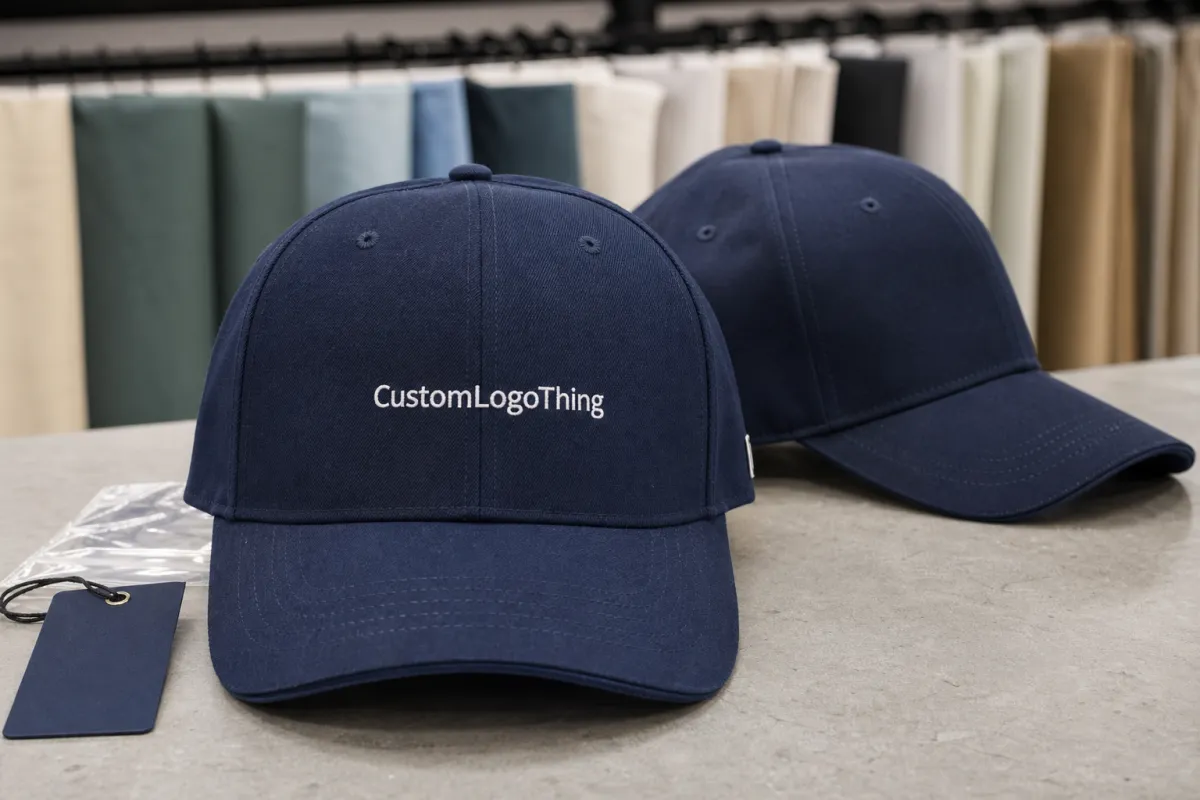
Small spec changes have an outsized effect on cap pricing, especially on lower-volume orders. A soft dad hat with a simple buckle and flat embroidery may sit in one price band. A cap that looks almost identical from a distance, but uses heavier twill, a structured front panel, more stitches, and retail labeling, can land 15% to 40% higher. On paper that sounds dramatic. On the factory floor, it is routine.
Why? Because cap manufacturing is a stack of small decisions. Crown structure affects how much stiffener and handling the cap needs. Fabric choice affects waste, consistency, and sewing behavior. Closures vary in cost and assembly time. Decoration changes machine minutes and error rates. Even the curve of the brim can matter if the style requires additional shaping or pressing.
At 250 to 500 units, fixed charges are still loud. A $60 setup fee adds $0.24 per cap at 250 pieces and only $0.06 at 1,000. A patch mold, digitizing fee, or extra label step can swing the quote without changing the visual impression much at all. That is why low-MOQ orders often feel expensive. They are not being punished; the fixed work is simply spread across fewer pieces.
Buyers sometimes compare a promotional cap against a retail cap and wonder why the price gap is so wide. The answer is usually in presentation. A promo cap can survive with a basic finish. A retail cap has to support a price tag, sit well on a peg, and hold its shape after shipping and handling. A cap that looks cheap in-store damages sell-through faster than a cap that costs a little more up front.
Freight can distort the picture too. A cap that is quoted a few cents lower at the factory may cost more landed if the packing is inefficient or the cartons are oversized. That is especially true when orders move by air because of a tight launch date. Freight is not an accessory cost. It is part of the product.
Cap Styles, Materials, and Decoration Options That Shape the Quote
Cap style sets the floor. Materials and decoration decide how far the quote climbs from there. A dad hat is often the least expensive route because the build is lighter and the silhouette is forgiving. A structured 6-panel generally costs more because it needs better consistency in shaping and finishing. Trucker styles can be economical, but foam fronts, mesh quality, and binding details change the equation quickly. Performance caps usually sit higher because technical fabrics and sweat-management features add cost without offering much room for shortcuts.
Fabric choice has more influence than many buyers expect. Cotton twill usually lands in the middle of the price range and gives the most familiar retail look. Washed cotton feels softer and more premium, but wash effects can introduce shade variation and more reject risk. Polyester works for sport and active programs, though some lifestyle brands avoid its shine. Recycled blends often carry a modest premium and can tighten sourcing options, which matters when lead times are already compressed.
| Cap style | Typical unit cost range at 1,000 pcs | Best use | What pushes it up |
|---|---|---|---|
| Dad hat | $1.60-$3.20 | Entry retail, casual brands | Heavy embroidery, premium wash, custom labels |
| Structured 6-panel | $1.90-$3.80 | Mainline retail, polished shelf presentation | High stitch count, rigid buckram, premium closures |
| Trucker | $1.50-$3.10 | Sports, outdoor, promo retail | Foam front, mesh quality, woven patch |
| Performance cap | $2.10-$4.40 | Activewear, licensed teams, seasonal drops | Technical fabric, sweatband finish, print detail |
Decoration is where quotes often separate into clearly different bands. Flat embroidery is still the most cost-efficient retail decoration in many programs, commonly around $0.45 to $1.10 per unit depending on stitch count and logo size. 3D puff adds foam and handling time, so a range closer to $0.65 to $1.50 is common. Woven patches, appliques, and mixed-media treatments can run from $0.70 to $2.25 because they bring tooling, cutting, and extra application labor.
There is a tradeoff hidden inside every decorative choice. A larger logo is more visible, but it also increases stitch count and thread breaks. A patch gives a more premium feel, but it introduces another production step. A screen print can be inexpensive on the right surface, yet it may not age as well on a cap that will see rough handling. Buyers chasing a cleaner shelf look usually end up paying for that cleanliness in one form or another.
Closure type also moves the number. Metal buckles, fabric straps, snapbacks, and hook-and-loop options each sit on a different cost curve. Structured fronts, curved brims, sweatband finish, taping, and internal labels all add small increments. None of these changes sound dramatic in isolation. Together, they can separate a $2.10 cap from a $3.40 cap without changing the basic silhouette.
Packaging is part of the product for retail programs. If the cap needs hangtags, barcode labels, polybags with warnings, insert cards, or custom carton marking, those details belong in the quote from the start. A retail-ready program that ignores packing often looks underpriced right up until the receiving team opens the boxes.
Retail Merch Caps Unit Cost Breakdown, MOQ, and Quote Drivers
A clean retail merch caps Unit Cost Breakdown should show the work in plain terms. The usual line items are blank cap, decoration, setup or digitizing, packaging, freight, and any duties or special compliance costs. If a supplier gives only one lump number, the buyer has to reverse-engineer the quote. That wastes time and makes comparison nearly useless.
For many custom cap programs, the structure looks roughly like this:
- Blank cap: about $1.10-$3.80 depending on style and fabric.
- Decoration: about $0.18-$2.25 depending on method and coverage.
- Setup or digitizing: often $20-$60 for digitizing, and roughly $35-$120 for broader setup, with higher costs if artwork needs cleanup.
- Tooling fees: around $80-$250 for patches, molds, or specialty applications.
- Packaging: from about $0.10 for bulk packing to $0.45+ for retail-ready labeling, inserts, or polybags.
- Freight: typically $0.25-$1.20 per unit, depending on mode, carton density, and urgency.
MOQ affects pricing more sharply than many first-time buyers expect. A $60 setup fee adds only $0.06 per piece at 1,000 units. At 250 units, that same fee adds $0.24. A quote that seems high on a test run may be perfectly reasonable once the setup is spread over a larger order. The reverse is also true: a small order can look deceptively cheap until the line items are added back in.
Several details quietly push pricing upward. Multi-location logos increase sewing time. A front patch plus a side hit adds labor and inspection risk. Custom inside labels mean more assembly steps. Retail labeling, barcode stickers, and carton marks are not flashy, but they still cost money. Even thread color changes can add complexity if the factory has to stop and reset the machine more often than planned.
Same spec, same quote structure, same delivery terms. That is the only fair way to compare suppliers. If one supplier includes retail bags and another leaves them out, the lower number is not a better deal. It is a smaller disclosure.
| Pricing tier | What changes | Typical effect on cost per piece | What you get |
|---|---|---|---|
| Good | Basic fabric, flat embroidery, bulk pack | Lowest | Sellable, functional, limited presentation |
| Better | Improved fabric, cleaner closure, retail labels | +10% to +25% | Stronger shelf appeal and fewer receiving issues |
| Best | Premium fabric, patch or 3D embroidery, retail-ready pack | +25% to +60% | Better margin support for higher retail pricing |
That good-better-best view is useful because it makes the tradeoffs visible instead of hiding them in a single number. A promo-style cap can be the right choice for low-price retail or event merchandising. A mid-tier version may be the sweet spot for most branded programs. A premium build makes sense when the shelf price is high enough to support it and the packaging has to do real visual work.
Production Process and Lead Time From Artwork to Ship Date
Cap production is orderly once the inputs are clean. The sequence usually runs: artwork handoff, spec confirmation, proof approval, sample or pre-production sign-off, bulk production, packing, and shipment. Delays usually start before the machine does. Missing vector art, undefined colors, or endless revisions to logo placement add more time than most buyers budget for.
For a typical custom retail cap order, a realistic timeline might look like 3-5 business days for proofing, 5-10 business days for sample confirmation if needed, 10-20 business days for bulk production on simpler embroidery runs, and longer for patch-heavy or highly specified orders. Freight comes after that. Air shipping can keep a launch on track, but it can also erase the price advantage of an otherwise efficient cap. Sea freight protects margin better, though it asks for planning discipline.
Several things cause schedules to slip. A buyer approves a proof and then asks for a bigger logo. The closure changes after sampling. The label wording gets revised late. Freight is booked too late to secure a sensible rate or vessel window. Peak season compounds all of that because factories and carriers get crowded at the same time. A quote without a timing note is usually an optimistic estimate rather than a schedule.
The useful question is not “How long does production take?” It is “How long from approved art to shipped cartons?” Those are different dates. If a supplier blurs them together, the buyer usually pays for the confusion later.
Planning rule: keep a buffer of 10-15 business days beyond the supplier’s best-case schedule if the launch date is fixed.
Shipping method also changes the landed number. A lower factory price can disappear once cartons are routed by air because the order was late. The opposite happens too: a slightly higher production cost can still win if the packaging is compact and the shipment moves efficiently by sea. Distribution testing matters on retail programs that will travel through multiple handling points. ISTA methods are a useful reference if the pack needs to survive more than a simple dock-to-dock move; see ISTA.
Specs, Quality Checks, and Retail Packing Details Buyers Should Lock
Good cap orders are built on locked specs, not memory. Size. Color. Closure. Panel count. Crown height. Logo size. Embroidery placement. Stitch count. Carton pack. Retail label format. If those details are vague, the order will drift. The tricky part is that a drifting cap can still be technically acceptable and still be wrong for retail.
Quality control should follow a simple sequence. First, a pre-production sample or approved reference. Second, an inline check during bulk production on larger runs. Third, a final inspection for count, placement, color consistency, and finish. Fourth, carton verification before dispatch. Those checks do not eliminate every issue, but they catch the expensive ones before the shipment leaves.
Retail compliance details matter more than casual buyers sometimes realize. Country of origin labeling, fiber content, care instructions, barcode placement, and carton marking all affect how quickly goods are received. Licensed programs and age-sensitive programs can add further labeling requirements. None of it is exciting. All of it is real.
Small deviations cause outsized problems. A front logo that shifts a few millimeters may look fine in a digital proof and wrong on a shelf wall. A closure that is “equivalent” to the approved one can change the hand feel enough to matter. A crown that sits a little higher can make a full assortment look uneven. In retail, tiny differences are not tiny if they repeat across hundreds of units.
If the order includes hangtags, insert cards, or retail boxes, keep the print specs sensible. Heavy board stock, special finishes, and oversized inserts all raise cost and weight. That may be worth it on a premium program, but many buyers overbuild the packaging and then wonder why freight went up. Good packing protects the product. Excessive packing just protects the ego of the mockup.
What Sets a Reliable Cap Supplier Apart on Retail Programs
Reliable suppliers are clear before the order is placed. They show the spec, the inclusions, the exclusions, and the delivery terms in writing. That sounds basic because it is. A quote that is easy to compare is worth more than a quote that sounds polished.
The best suppliers also expose the real cost drivers. They identify art fees, sampling charges, tooling, packaging assumptions, and freight expectations without being dragged through three rounds of questions. If the quote does not show whether a woven patch has a mold fee or whether retail polybags are included, the missing pieces will show up later. They usually arrive in the invoice.
There are obvious warning signs. Vague decoration terms. No MOQ explanation. Unrealistic lead times. “Same as sample” language with no written spec attached. Missing packing details. A low number can still be valid, but only if the supplier can explain why it is low. If they cannot, the number is probably hiding something.
Repeatability matters more in retail than in one-off promotional runs. Reorders should match the first lot closely. If a supplier cannot hold color, shape, or decoration placement from batch to batch, the shelf will show it. Buyers should expect documentation, proof control, and a basic change-management process. Retail programs do not need drama. They need consistency.
It also helps when the supplier can think in terms of reorder economics. A good partner knows setup charges should fall on repeat runs. They know packaging can often be simplified after the first launch. They know MOQ changes move the cost curve. That kind of pricing logic saves more money than a one-time discount ever will.
Next Steps to Request a Clean Quote and Place the Order
The fastest path to a usable quote is a complete brief. Quantity. Target landed cost. Cap style. Decoration method. Delivery window. Retail packing needs. Vector art. Brand colors. Barcode requirements. Ship-to location. The fewer assumptions a supplier has to make, the less the quote will drift later.
Ask for at least two or three pricing tiers. A 250-unit test order, a 1,000-unit retail order, and a 5,000-unit replenishment run should not price the same way. If they do, the quote may not be reflecting setup charges or bulk savings correctly. Seeing the breakpoints makes tradeoffs obvious. It also helps buyers decide whether to adjust the MOQ or simplify the build.
The cleanest order flow usually looks like this:
- Confirm cap style, decoration, and retail packing requirements.
- Request line-item pricing with setup charges, tooling fees, and freight assumptions included.
- Review proofs and samples against the approved spec, not against memory.
- Lock changes before bulk production starts.
- Approve the purchase order only after the landed cost and delivery date both make sense.
That sequence matters because the cheap-looking cap that misses the launch date is not cheap. The polished cap that blows margin is not smart either. Most of the pain in cap sourcing comes from incomplete specs, not from the cap itself. A disciplined brief usually produces a clearer quote, fewer surprises, and a much cleaner retail merch caps Unit Cost Breakdown the next time the program is reordered.
Once the numbers are visible, the decision is usually straightforward. Simplify the decoration, raise the quantity, or keep the premium build and accept the higher cost. What should not happen is pretending all three paths cost the same. They do not.
FAQ
What does a retail merch cap unit cost breakdown usually include?
It usually includes the blank cap, decoration, setup or digitizing, and any patch or mold fees. For a true landed cost, add packaging, labeling, carton packing, freight, duties, samples, and any special compliance costs that apply to the order.
How can I lower retail merch cap pricing without hurting shelf appeal?
Use a simpler decoration method, fewer stitch zones, or a standard closure. Choose a blank style with lower setup cost and broad factory availability. Keep the presentation clean instead of adding parts that do not improve sell-through.
What MOQ should I expect for custom merch caps?
Most suppliers price better once the order moves past the smallest test run. Lower MOQs usually carry a higher cost per piece because setup fees are spread across fewer caps. Ask for price breaks at 250, 500, 1,000, and 5,000 units so the tradeoff is visible.
How long does a custom cap order take after approval?
Simple orders move faster than embroidered or patch-heavy programs. Lead time depends on proof approval speed, blank stock, and whether the factory is in peak season. Ask for a full timeline from sample approval to ship date, not just the production window.
What should I send to get an accurate cap quote?
Send quantity, target budget, cap style, decoration method, and delivery deadline. Include vector art, brand colors, packaging instructions, and any barcode or retail labeling needs. The more specific the specs, the less the supplier has to guess.

