Retail packaging managers' clear garment bags sample guide
Retail packaging managers clear garment bags sample guide decisions are often more complex than they look on paper. A bag can pass a spec review and still fail once it is hung, handled, and exposed to retail lighting. The sample stage is the lowest-cost point to catch issues with fit, clarity, closure performance, or seam strength before a full production run creates avoidable rework.
Most retail packaging managers review samples with sourcing, quality, merchandising, and store operations, so the approval needs to answer three questions at once: does the bag fit the garment, does it protect the product, and does it support efficient pack-out. In our sample review work, the approvals that move fastest are the ones built on measurable criteria rather than general preference.
Because the bag sits between presentation and operations, the sample has to support the apparel without adding labor. Too much slack can make the package look careless; too much cling can compress the garment. The right retail packaging managers clear garment bags sample guide keeps the bag clear, properly sized, and easy to use.
A clear garment bag only earns approval if it protects the apparel, stays visually clean, and does not slow packing or rehanging.
Retail packaging managers clear garment bags sample approval guide
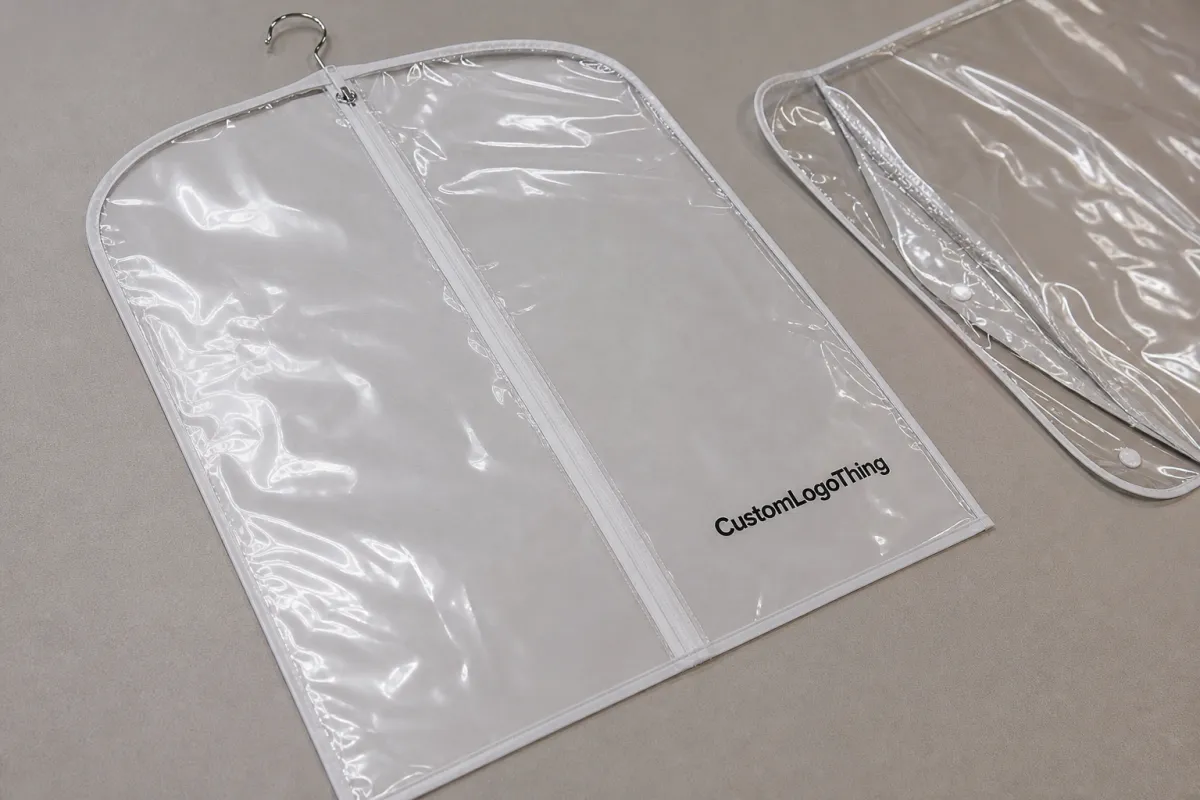
Start with fit. A bag that works for a shirt may be too short for a coat, and a style that suits a slim dress may pinch bulk at the hem or shoulders. Check length, width, hanger opening, and how the bag sits once the garment is actually hanging. For a retail packaging managers clear garment bags sample guide, the real hanger test matters more than the flat pattern.
Review the sample under store-like conditions, not just on a desk. Overhead lighting, repeated handling, and store hooks can reveal haze, static, or snagging that is easy to miss in a flat photo. If the film is supposed to be clear, it should stay clear after opening, filling, and rehanging.
The bag should also support the garment visually. Excess slack can make the piece look careless; a tight wrap can make it look compressed. The goal is enough structure to hold the silhouette and enough room to avoid distortion.
If the garment bag is part of a larger packaging system, check it alongside labels, inserts, hangtags, and carton fit. Approval is easier when the whole package is aligned from the start instead of being corrected piece by piece later.
Useful physical checks during review include:
- Fit on the actual hanger: the opening should allow fast insertion without tearing or forcing.
- Clarity under real lighting: look for haze, gloss loss, or clouding in store-like conditions.
- Closure behavior: zipper, flap, or adhesive should keep working after repeated use.
- Surface behavior: the film should not cling hard to fabric or scuff easily during handling.
- Edge and seam strength: weak seals usually show up once the bag is lifted and rehung.
For handling and transit checks, ISTA test methods can help frame the review even if visual standards still drive the final decision. If your packaging program includes multiple components, our retail packaging QA checklist can help keep sample comments consistent across SKUs.
How Clear Garment Bags Perform On-Hanger
Performance changes with garment type. A blouse puts little stress on the film. A blazer adds shoulder structure. A coat or padded dress can stretch seams and change how the bag hangs. One sample should not be treated as proof for every SKU, and that distinction is central to any retail packaging managers clear garment bags sample guide.
Material and gauge are the first technical choices to confirm. Many clear garment bags use LDPE or a similar polyethylene film, often around 1.5 to 3 mil depending on handling needs and budget. Lower gauges can reduce cost but wrinkle and tear more easily. Higher gauges hold shape better but add cost and can feel less flexible around bulky garments.
Clarity matters as much as thickness. Buyers are usually looking for low haze, consistent gloss, and a surface that does not dull the apparel under lighting. Some films look fine in a carton and turn milky once the store lights hit them, especially on dark colors or premium outerwear.
Small handling issues also matter. Check whether the hanger opening is too tight, whether the closure catches on trim, and whether the film crackles in a way that makes the package feel less premium. A few seconds saved per piece can matter more than a marginal visual improvement.
Retail packaging managers should also test the sample after a few passes through the stockroom. If the seams distort when lifted by the hanger or the surface scuffs quickly, the construction is probably too light for the use case. Durability is often a presentation issue in disguise.
Process and Timeline: From Spec Request to Sign-Off
The cleanest approval cycles start with a complete brief. If the supplier has to guess the garment type, hanger size, target dimensions, closure style, or print needs, the first sample is already at risk. Include bag width, length, gusset depth, film thickness, closure preference, label placement, warning language, and expected order volume.
A typical workflow is straightforward:
- Share the garment reference, hanger dimensions, and written spec.
- Review a stock sample or first prototype.
- Test it on the actual apparel under retail lighting.
- Collect one consolidated round of comments.
- Revise size, film, or closure details if needed.
- Approve the final sample and freeze the production spec.
Lead time depends on how much must be built from scratch. If the material is available and the size already exists, a stock sample may arrive in 3 to 7 business days. A custom unprinted sample usually takes 7 to 15 business days. Printing, special seals, or nonstandard hanger openings can stretch that to 10 to 20 business days or more.
Delays usually come from unclear specs or slow internal feedback. One decision owner helps more than a long review chain. Merchandising, sourcing, and operations can all comment, but someone has to convert those comments into one final response.
If the garment bag is part of a broader launch package, review related pieces at the same time. Hangtags, inserts, and shippers can affect how the bag is packed and presented, so a coordinated package is easier to defend than isolated approvals.
Cost, Pricing, MOQ, and Quote Drivers for Sample Runs
Sample pricing depends on more than the plastic itself. Resin choice, film gauge, dimensions, gusset depth, seal type, print coverage, and compliance language all affect the quote. A sample that needs a custom hanger opening or reinforcement at a stress point takes more setup than a standard sleeve, so the price rises.
Keep sample cost separate from production cost. Sample pricing often includes setup, hand conversion, expedited handling, and shipping that do not scale the same way in a larger run. In production, clear garment bags may land roughly in the $0.18 to $0.65 per unit range, depending on size, gauge, closure style, and print coverage. For tighter specs, better clarity film, or added recycled content, pricing can trend higher in 2026 planning cycles. That is a broad planning range, not a fixed price.
| Option | Typical Sample Price | Typical Lead Time | Best Use |
|---|---|---|---|
| Stock sample | $25-$75 | 3-7 business days | Quick fit check and early visual review |
| Custom unprinted sample | $75-$180 | 7-15 business days | Final sizing, hanger fit, and seam review |
| Custom printed sample | $120-$250+ | 10-20 business days | Branding, logo placement, and compliance sign-off |
MOQ matters because the approved design has to scale into production efficiently. A sample that works at one piece can become expensive at 5,000, 10,000, or 25,000 units if the construction is too manual or the film is too specialized. Compare quotes using the same spec, freight assumptions, revision count, and sample quantity.
If paper components are part of the program, FSC-certified paperboard or inserts may also be in scope. In that case, the standard at FSC helps keep the sustainability story aligned across materials.
2026 Material and Sustainability Options for Clear Garment Bags
In 2026, more retail packaging managers are asking for clearer sustainability documentation alongside sample approval. Recycled-content PE, downgauged film, and mono-material constructions are increasingly common options for the retail packaging managers clear garment bags sample guide process because they can reduce material use without changing the package format completely.
Two options are showing up more often in sourcing conversations. First, post-consumer recycled content blends are being used where clarity and film performance still meet brand standards. Second, downgauged films are being tested to cut resin usage while keeping enough strength for store handling. Both choices need realistic sample testing, because recycled content can change gloss, haze, and seal behavior.
Packaging teams are also asking for better end-of-life guidance. Clear garment bags may not always be curbside recyclable, but a mono-material build can make recycling instructions easier to communicate where local systems accept the material. When you are comparing options, ask suppliers for recycled content claims, thickness tolerances, and any relevant testing data rather than relying on broad sustainability language.
For brands that need premium presentation, anti-static additives, soft-touch clear films, and improved clarity grades are also available. These options can support a cleaner shelf appearance, but they may raise unit cost. The best choice depends on whether the priority is visual appeal, cost control, or a better environmental profile. For multi-season programs, build a sample matrix that compares standard film, recycled-content film, and downgauged film side by side before final sign-off.
Common Approval Mistakes With Clear Garment Bags
The biggest mistake is approving from a flat image or quick tabletop look. A bag can appear fine in a photo and still fail once it is hung, lifted, and handled. The next common mistake is skipping the real fit test, since a shirt and a coat stress the bag differently.
Late review of retailer requirements also causes trouble. Warning language, barcode placement, carton fit, pack-out method, and storage instructions can all trigger revisions if they were not checked during sample review. These details often decide whether the package works cleanly in the supply chain.
Watch for weak seams, split seals, rough edges, cloudiness, and closures that do not open and close smoothly. These are not cosmetic issues only; they affect labor, presentation, and consistency across the line. A bag that slows associates down is already adding cost.
Scattered feedback is another avoidable problem. If one reviewer wants more visibility, another wants more structure, and a third wants a different closure, the sample can drift for weeks unless someone consolidates the notes into one decision path.
- Do not approve on appearance alone: test the sample on the real garment and hanger.
- Do not leave compliance to the end: confirm retailer notes and labeling early.
- Do not ignore construction quality: seams and closures should hold up under handling.
- Do not collect scattered opinions: turn comments into one pass-fail decision path.
Expert Tips for Cleaner, Faster Sample Decisions
Use a short scorecard for every sample: fit, clarity, finish, closure, pack-out, and compliance. That keeps feedback tied to performance instead of taste and makes the pass/fail decision easier to explain. A simple scorecard also makes the retail packaging managers clear garment bags sample guide repeatable across seasons and categories.
Give the supplier concrete inputs. Include garment dimensions, hanger type, reference photos, and any shelf or stockroom constraints. If the bag must work across multiple sizes, say so early. A clear garment bag for a blouse line should not be engineered like one for outerwear.
Keep the approval group tight enough to move. One person should gather comments and issue the final response. That does not exclude stakeholders; it prevents overlapping emails from delaying the decision.
Separate structural approval from artwork approval. Lock the size, material, gauge, and closure first, then finalize logo, label text, or warning copy. That sequence protects the schedule and avoids a late artwork change forcing a physical redesign.
The fastest sample decisions usually come from the best input, not the fastest supplier.
For programs that extend beyond garment bags, the same process helps across Custom Packaging Products such as shipper cartons, retail cartons, and inserts. A disciplined approval process keeps the full packaging system cleaner. You can also compare specifications against our retail packaging QA checklist before you lock production.
Next Steps After Sample Approval
Once the sample is approved, lock the production spec. Record the final dimensions, material, film gauge, closure style, print details, packing method, and retailer-specific requirements. That becomes the reference point for reorders, audits, and future revisions.
Align the production schedule with the buying calendar. If the bag supports a seasonal apparel launch, the packaging run should move with inbound goods. A late bag can hold up presentation even when the merchandise is ready.
Keep a physical golden sample on file. A reference piece gives QA a concrete standard for future lots, especially if a supplier changes film lot, seal behavior, or closure hardware. Packaging drift is easier to spot when the approved sample is available for comparison.
Define what counts as a minor update versus a new approval. A small label placement change may not need full review again. A change in film, closure, dimensions, or print structure usually should.
Handled well, the retail packaging managers clear garment bags sample guide becomes a repeatable method for protecting presentation, controlling cost, and keeping the packaging spec aligned with the apparel it supports.
How do retail packaging managers approve clear garment bag samples?
They test the sample on the actual garment and hanger, then check clarity, fit, seam strength, closure function, and how it looks under store lighting. Final sign-off usually comes after one consolidated round of comments.
What should be included in a clear garment bag sample request?
Include dimensions, film thickness, closure style, garment type, hanger details, print or label needs, compliance language, expected volume, and target lead time. Reference photos and a spec sheet reduce guesswork.
How long does the sample approval process usually take for clear garment bags?
Stock-based samples can move in 3 to 7 business days if the brief is complete and the supplier has material on hand. Custom samples usually take 7 to 15 business days or longer if printing or special construction is involved.
What affects clear garment bag sample pricing and MOQ?
Pricing changes with film gauge, size, closure type, printing, and any special reinforcement or compliance requirements. MOQ matters because the approved design has to scale efficiently in production, and setup and freight can make the first quote look lower than the true cost.
What are the most common reasons a garment bag sample gets rejected?
Poor fit, cloudy film, weak seams, or a closure that does not work smoothly are common rejection points. Samples also get rejected when retailer-specific requirements are missed or when the team has not tested the bag on the real garment before deciding.


