For cosmetics brands, the sample stage is where a Clear Garment Bag proves whether it can actually do the job. It may look good in a render and still fail in hand because the zipper drags, the film hazes, or the hanger opening distorts under load. A Clear Garment Bags Sample Approval guide for cosmetics brands should focus on the physical sample, not the presentation file.
The sample is a test of fit, finish, protection, and durability. If the bag will hold a robe, beauty kit, promotional garment, or mixed retail pack, the review needs to reflect the real contents and use case. Empty samples hide too much.
For buyers comparing suppliers or trying to see how approval choices affect cost and rework risk, the project notes on our Case Studies page show where small sample decisions change the final order.
Clear Garment Bags Sample Approval Basics
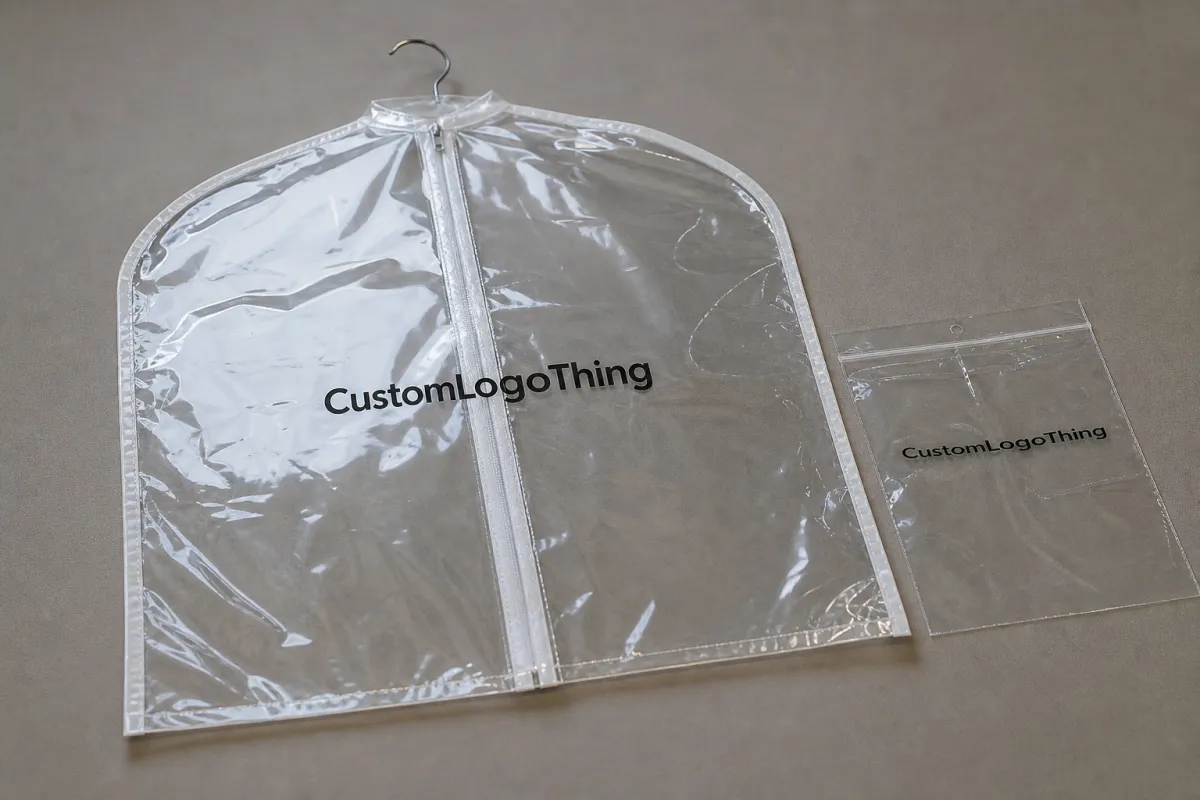
Most sample failures are small, not dramatic. A seam wanders a few millimeters. A zipper pull feels stiff. The film looks clear until bright light reveals waviness or haze. Those details matter because they show up immediately in retail packaging.
Cosmetics brands usually need the bag to do three things at once: protect contents, present cleanly on shelf or in photos, and survive handling without looking cheap. If any one of those fails, the sample is not really approved.
Before asking for a sample, define what it is supposed to prove. A display sample, shipping sample, and production master are not the same thing. If those roles get mixed together, the approval process becomes slower and less reliable.
Always review the sample with the real product inside. An empty bag can hide weak points in the closure, gusset, and hanger opening. Once contents are added, the bag reveals whether the construction was designed properly or merely looked that way.
Sample Approval Process and Timeline
Good approvals start with a brief that leaves little to guesswork. The request should include dimensions, film type, closure style, print placement, hardware if any, and the exact use case. Vague direction creates extra rounds.
A typical flow is straightforward: spec confirmation, prototype, one revision if needed, and final sign-off. If artwork is locked and the size is final, a first sample often takes about 7-15 business days before freight. Custom tooling, special printing, or unusual reinforcement adds time, which is normal manufacturing lead time rather than a problem.
Build in time for a real review, not just inbox approval. Merchandising may care about visual clarity, QA may focus on seam strength, and the brand owner may be looking at presentation. If those reviews happen in separate threads, the process drifts.
Approve one sample that reflects the final use case. Approving several near-duplicates usually means nobody approved anything cleanly.
It also helps to name the final decision-maker before the sample leaves the factory. Without one owner, the sample gets revised by committee, and each small change resets the schedule.
Cost, MOQ, and Unit Price Drivers
Sample cost and production cost are related, but they are not the same number. A simple clear bag may be inexpensive to prototype, yet the unit price can rise once thickness, size, print coverage, reinforcement, and zipper quality change.
For cosmetics brands, lighter kits often work in thinner film, while heavier garment-style pieces usually need more structure. If the bag needs a premium hand feel, low odor material, or a cleaner finish, the quote will reflect that. Better materials and tighter construction usually cost more.
| Option | Typical sample cost | MOQ pressure | Best use case |
|---|---|---|---|
| Stock clear film, no print | $25-$60 per sample | Lower MOQ | Basic fit, size, and structure review |
| Custom logo print, standard zipper | $40-$90 per sample | Moderate MOQ | Retail presentation and brand approval |
| Reinforced hanger opening and upgraded closure | $60-$120 per sample | Higher MOQ | Heavier contents and durability testing |
Ask for the quote to be broken out clearly. Sample fee, revision fee, tooling, freight, and whether the sample cost is credited after order placement should each be visible. If everything is bundled into one number, comparing suppliers gets difficult.
MOQ moves for practical reasons: print method, hardware, packaging style, and material choice all matter. A lower unit price can hide a higher minimum order than expected, so confirm both before moving forward.
Material and Construction Specs That Decide Approval
Material choice is usually the first fork in the road. Clear film is not one thing. PVC can offer strong clarity and structure, while EVA or PEVA may be preferred when the brand wants less odor and a softer hand feel. Some buyers also need PVC-free positioning for brand or regulatory reasons.
Thickness matters too. A lighter premium bag may sit around 0.18-0.30 mm. Heavier contents or more demanding handling may call for 0.30-0.40 mm. Thicker film often improves confidence, but it adds weight and can reduce flexibility. That tradeoff should be decided with the real contents inside the bag.
Construction is where many samples quietly fail. Check zipper glide, side seam straightness, hanger opening fit, gusset corners, and any heat-sealed areas for whitening or distortion. If the bag is sewn, look for puckering and loose thread ends. If it is welded, inspect seal consistency and corner strength. Small flaws become visible once the bag is packed and handled.
Clarity needs a real test. “Looks clear” is not enough. Some teams use visual inspection only; others compare against haze or clarity references, sometimes using ASTM D1003 as a benchmark. That is not always required, but it gives the discussion a standard. For transit behavior, the sample should also survive handling tests aligned with ISTA guidance from ISTA.
Odor deserves attention too. A bag can pass visually and still feel wrong if it smells strongly of plastic. Cosmetics brands notice that quickly, especially when packaging sits near fragrance, skincare, or luxury apparel.
Branding and Compliance Checks Before Sign-Off
Once the construction looks right, move to branding. Logos, labels, care text, barcodes, and SKU marks need to remain readable through the film. If a viewer has to tilt the bag under bright light just to read the print, the design has lost some usefulness.
Placement matters more than people expect. A logo too close to a seam can distort when the bag is filled. Text can disappear behind the zipper fold. A barcode can become partly hidden by a gusset. These are easy sample-stage fixes and frustrating production-stage problems.
For cosmetics brands, compliance often stretches beyond the bag itself. If the pack includes inserts, hang tags, or outer cartons, review all of them together. A correct bag paired with the wrong insert is still a reject.
If paper components are part of the pack, FSC-certified stock may be worth specifying where relevant. Certification details can be checked through FSC. That does not solve the bag approval problem, but it can support broader brand documentation.
Any claim language, warning text, or market-specific labeling should be reviewed before the sample is frozen. Fixing compliance after approval often means a new proof and sometimes a new sample.
Step-by-Step Sample Review Checklist
Use the same checklist every time so reviews stay comparable across suppliers and rounds.
- Verify the dimensions against the actual product list, not just the drawing.
- Test with the real contents and confirm fit, bulge, and closure pressure.
- Open and close the bag repeatedly to check zipper drag and alignment.
- Inspect seams, seals, and corners for whitening, loose thread, or uneven bonding.
- Review clarity and finish under bright light after handling and folding.
- Check print placement and readability through the film in the packed state.
- Log defects in one consolidated note with photos and a clear revision request.
The last item saves more time than it sounds like it should. Fragmented feedback creates contradictory revisions, and contradictory revisions create delays.
Also test the sample in conditions that resemble the actual environment. A bag can look perfect in a clean photo booth and still scratch, fingerprint, or haze once handled a few times. That matters for cosmetics brands, where visual cleanliness is part of the product experience.
If the sample is meant for retail presentation, look at it from shelf distance. If it is meant for pack-out or shipping, test how it behaves when stacked, folded, and opened repeatedly. One sample can serve several purposes, but only if the review matches the use case.
Common Mistakes That Inflate Lead Time
Approving from renders alone is the first trap. A mockup can show size, artwork, and general shape. It cannot show odor, zipper resistance, seam consistency, or how the film reacts after folding.
Changing dimensions after artwork approval is another common delay. Once the size changes, the print layout usually changes too, which can mean a fresh proof and a new sample. It is far easier to freeze structure first, then finalize decoration.
Ignoring fill weight also causes trouble. A bag that holds a lightweight garment may not hold a heavier cosmetic kit with the same ease. Extra weight shifts stress to the hanger opening, zipper, and side seams.
Another quiet problem is scattered feedback. One email from merchandising, one from QA, and one from the founder can leave nobody sure which revision is official. One owner, one checklist, one deadline works better.
If the finished bags will travel through distribution, ask for transport testing that resembles the real route. A simple drop or vibration check can expose weak closures, cracked seals, or abrasion issues before the full run is produced.
Next Steps After the Sample Passes
Once the sample passes, document it properly. Final dimensions, approved artwork, closure details, pack-out instructions, and test notes should live together. If the approved version is not written down, the team will end up arguing with memory later.
Use the approved sample as the production reference, not the concept sketch. The sketch started the discussion. The sample survived the discussion.
It also helps to keep a retained golden sample for QC. That reference should include the final insert, label, closure type, and any accessories that ship with the bag.
At that point, the approval process becomes repeatable. The brand knows what passed, the supplier knows what to build, and QC knows what to compare against. That is the value of a disciplined Clear Garment Bags Sample approval guide for cosmetics brands: fewer surprises, fewer reworks, and fewer disputes over what “close enough” meant.
How long does sample approval usually take?
Simple samples can move quickly if dimensions and artwork are already locked. For most projects, a first prototype takes about 7-15 business days before shipping, then time is needed for review and any revision round. If several people need to sign off, add a little margin.
What should cosmetics brands check on a clear bag sample?
Check clarity, closure performance, seam strength, odor, and stress points around the hanger opening or gusset. Then verify logo readability, label placement, and any required warning or care text. The best check is simple: test the bag with the real product inside.
How many revisions are normal before approval?
One revision is common if the brief is specific. Two rounds can happen when fit, print, or closure details still need refinement. More than that usually means the spec was not locked early enough, and the team should reset the process.
What drives sample pricing?
Film thickness, size, zipper quality, reinforcement, and printing are the main cost levers. Sample fees are often separate from production pricing, and they may or may not be credited back after order placement. Freight and MOQ can also change the real cost.
Can structure be approved before final artwork is ready?
Yes, but only for the structural side. Fit, closure, and build can be approved while artwork is still being finalized. Final decoration should wait until the design is locked, because artwork changes often require a fresh proof or a new sample before sign-off.


