Buyer Fit Snapshot
| Best fit | Retail Packaging Wholesale projects where brand print, material claims, artwork control, MOQ, and repeat-order consistency need to be specified before quoting. |
|---|---|
| Quote inputs | Share finished size, material target, print colors, finish, packing count, annual reorder estimate, ship-to region, and any compliance wording. |
| Proofing check | Approve dieline scale, logo placement, barcode or warning zones, color tolerance, closure strength, and carton packing before bulk production. |
| Main risk | Vague material claims, crowded artwork, missing packing details, or unclear freight terms can make a low unit price expensive after revisions. |
Fast answer: Retail Packaging Wholesale: Artwork Proof, Packing Count, and Landed Cost should be specified like a repeatable production item. The safest quote records material, print method, finish, artwork proof, packing count, and reorder notes in one written spec.
Production checks before approval
Compare the actual filled-product size with the drawing, then confirm tolerance on folds, seals, hang holes, label areas, and retail display edges. Reserve space for logos, QR codes, warning copy, and material claims before decorative graphics fill the panel.
Quote comparison points
Review material grade, print process, finish, sampling route, tooling charges, carton quantity, and freight assumptions side by side. A quote is only useful when the supplier can repeat the same color, closure quality, and packing count on the next order.
A shopper may decide in seconds, but retail packaging wholesale has to do a lot more than look polished for that split second. It must protect the product in transit, stack cleanly in a back room, hold up under hard handling, and still communicate value from three feet away. That is why the strongest programs treat packaging like a sales tool and an operations tool, not just visual dressing.
From a buyer's point of view, the real question stays simple: will the box, sleeve, or display unit move the product faster and cost less to run over time? In practice, retail packaging wholesale wins when it reduces damage, cuts reprint risk, and gives every store, distributor, or franchise location the same shelf-ready presentation. That consistency affects more than aesthetics; it affects forecasting, replenishment, and the weird little delays that pile up when every location gets something slightly different.
I have seen a brand lose more money to a 3 mm measurement mistake than to a whole round of design revisions. The carton looked fine on screen. On press, though, the insert fought the bottle, corners crushed, and the team ended up paying for a second production run. That is the part most people miss: packaging is not abstract. It is physical, unforgiving, and kinda expensive when the spec is loose.
Custom Logo Things works with brands that need branded packaging at scale, especially when several SKUs, channels, and seasonal launches compete for the same production window. The goal is not decorative excess. The goal is a packaging system that protects margin, keeps production simple, and makes the product easier for a buyer to choose.
Why Retail Packaging Wholesale Wins at Shelf
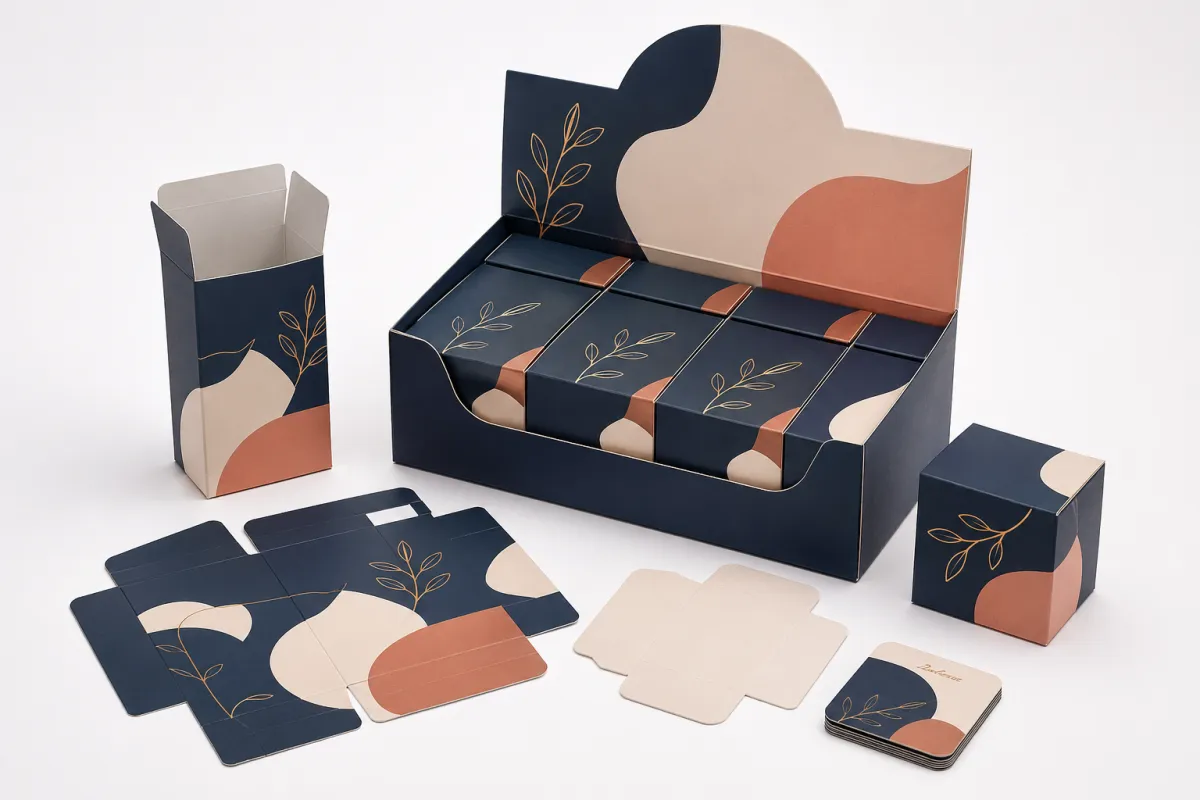
Retail shelf space is unforgiving. A label can look pretty and still fail if the package buckles, scuffs, or reads poorly from a distance. Retail packaging wholesale wins because it lets a brand standardize the face, the fit, and the finish across an entire rollout, instead of gambling on one-off packaging that behaves differently batch to batch. Repeatability is what buyers, merchandisers, and store managers notice instantly, even when they do not name it.
There is also a practical supply-chain argument. One package spec ordered in volume tends to lower unit cost, reduce approval steps, and make replenishment less chaotic. A private-label candle line, for example, may need a folding carton that protects glass, a shelf-facing panel with fragrance and safety copy, and print layout stability across six scents. Without retail packaging wholesale, every restock becomes a small project with hidden time costs. With it, the line behaves like a production system.
The difference shows up in the numbers. If a retailer ships 100,000 units a season, a 1% reduction in damage means 1,000 fewer write-offs. That is not a rounding error. Better structural design also means less void fill, fewer returns caused by crushed corners, and fewer emergency shipments because the first run held together the way it was supposed to. Clean and consistent product packaging shortens the approval loop too, because teams are not rebuilding direction every time an order repeats.
From a sales standpoint, packaging often becomes the first proof of quality before labels and claims are even read. A supplement bottle in a weak carton feels generic; the same bottle in a tight, cleanly printed box feels like a premium choice from the first glance. Cosmetics, apparel accessories, and gourmet food show the same pattern. In these categories, retail packaging wholesale is not only a buying method. It is a sell-through tool that affects who picks up and who puts down.
A clean spec sheet saves more money than a last-minute discount can ever do. The brands that understand that usually spend less on rework and more on margin growth.
One less obvious advantage appears at scale: operational consistency across multiple locations. A franchised retailer, distributor, or marketplace brand needs the same box to feel familiar on every shipment, every pallet, every shelf. That is where package branding turns into a measurable asset instead of a design concept. Uniformity reduces confusion. Uniformity also sharpens recognition, which is the whole point if a shopper is scanning ten similar products and making a choice in under ten seconds.
Retail Packaging Wholesale Product Options
Buyers often start with one box in mind, then discover that format strategy is where performance starts. Retail packaging wholesale programs usually combine several structures, because no single structure fits every retail use case. A lightweight skincare tube does not require the same structure as a gift set, and a counter display does not follow the same rules as a mail-ready kit.
In sample rooms, I have watched brands fall in love with a rigid box before they had the unit economics to support it. It happens. The box feels luxurious in hand, and nobody in the meeting wants to be the one to say the price is not gonna work at scale. That is exactly why format planning comes first.
Formats that usually drive outcomes in retail packaging wholesale orders include:
- Folding cartons for lightweight products, supplements, cosmetics, confectionery, and small electronics.
- Rigid boxes for premium kits, gift sets, presentation packaging, and products where unboxing experience matters.
- Paperboard sleeves for fast branding over a primary container or tray without redesigning everything.
- Display boxes for shelf stacking, counter placement, and retail-ready merchandising.
- Inserts and dividers for fit, protection, and SKU separation in crowded cartons.
- Hang tags and retail cards for apparel accessories, beauty tools, and impulse purchase items.
- Retail-ready mailers for brands shipping direct to consumer while still needing a shelf-worthy presence.
| Format | Typical Use | Common Material / Build | Wholesale Cost Range | Best Value Driver |
|---|---|---|---|---|
| Folding carton | Supplements, cosmetics, candles, small consumables | 18pt SBS, 24pt board, or 350gsm C1S with printed finish | $0.18-$0.65 per unit, depending on volume and coverage | Low cost per unit with strong brand face |
| Rigid box | Gift sets, premium retail, special editions | 2mm-3mm chipboard wrapped in printed paper | $1.20-$4.50 per unit, depending on size and finishing | Perceived value and unboxing impact |
| Display box | Counter units, shelf-ready bundles, multipacks | Paperboard or corrugated with a retail-facing front panel | $0.40-$1.25 per unit | Merchandising efficiency |
| Sleeve or belly band | Branding over jars, cartons, kits, or trays | Lightweight board or kraft stock with custom print | $0.08-$0.30 per unit | Fast brand lift without a full box rebuild |
| Inserts / dividers | Protection, separation, positioning | Paperboard, molded pulp, or corrugated insert | $0.05-$0.75 per unit | Fit accuracy and damage reduction |
Those numbers are directional, not absolute. Print coverage, coating choices, die complexity, and order size can move a quote quickly. Even so, the table still shows the shape of retail packaging wholesale: the structure you choose sets the base cost, while finish choices decide how far above that base you go.
For a private-label cosmetics line, the outer carton may stay stable while the insert changes by shade or count. For a fragrance family, the base box can stay constant while artwork shifts by scent profile. That is where Custom Printed Boxes become more efficient than one-off packaging: one structure, fewer surprises, and clearer procurement logic.
Retail packaging wholesale also helps brands build a tiered architecture. A standard line may use folding cartons, a premium line may use rigid boxes, and a seasonal kit may use a display-style carton with foil accents. The point is not making every SKU look identical. The point is keeping the system coherent enough that shoppers can spot the family instantly and stores can handle replenishment without decoding every order.
That flexibility matters when sales run across multiple channels. A brand selling in boutiques, through distributors, and on its own site may need package branding that looks shelf-ready and ship-ready at the same time. In those cases, format selection becomes a business decision, not just a design choice. Retail packaging wholesale gives teams enough scale to standardize the stable parts and vary only what matters by SKU or channel.
Retail Packaging Wholesale Specifications That Matter
Specifications drive everything. Loose dimensions weaken insert fit. A board that is too light allows corners to compress, especially after a rough transit day. Unclear print files delay proofing and stretch the calendar. That is why strong retail packaging wholesale projects begin with specific inputs, not broad adjectives.
The core spec points stay practical, and each one changes both cost and performance:
- Exact product dimensions with allowance for closure, headspace, and insert clearance.
- Board grade such as 18pt SBS, 24pt C1S, kraft board, or 2mm chipboard.
- Print method and coverage, including full-color CMYK, PMS spot color, or limited ink use.
- Finish such as matte, gloss, soft-touch lamination, aqueous coating, foil, embossing, or spot UV.
- Structural style such as tuck-end, auto-lock bottom, sleeve, lift-off lid, or mailer.
- Functional copy such as barcode placement, lot code area, warning text, and recycling marks.
Exact measurements deserve more attention than they often receive. A difference of 2-3 mm changes whether a bottle rattles, whether an insert sits flat, or whether the lid closes without strain. In a retail setting, that margin is measurable. A tight fit reads premium. A sloppy fit reads as rushed cost-cutting. Retail packaging wholesale is where those small differences get multiplied across thousands of units, so the error does not stay small for long.
Material choice is the next major decision. Standard paperboard remains efficient for lightweight products and high-volume programs. Kraft stock supports a natural look and can reinforce an eco-focused retail packaging position. Rigid chipboard performs better for premium presentation. Corrugated board handles heavier loads and stronger crush resistance, especially for mailers or shipping-focused retail packaging. Recycled substrates can help sustainability goals, but buyers should test print compatibility and stiffness before assuming they are interchangeable with virgin board.
For transport testing and package durability, established methods help remove guesswork. Teams can benchmark against ISTA test protocols to confirm performance under drop, vibration, and compression. For sourcing, chain-of-custody standards such as FSC certification become useful when brands want traceable fiber claims. These references do not replace the spec, but they raise the quality of decisions before production begins.
Compliance details surface more often than buyers expect. A supplement carton may need lot code space and warning copy. A cosmetics box may need ingredient and barcode placement that reads correctly on shelf. A food package may require clear net weight and product identification. A fragile item may require a tear strip or tamper-evident closure. These details are not decoration. They are flow-control elements that keep retail packaging wholesale moving through production, distribution, and retail with fewer interruptions.
If the information on the dieline is incomplete, the quote will be incomplete too. Good packaging specs save time because they remove the questions that usually trigger delays.
Before requesting pricing, a useful checklist usually looks like this:
- Final product dimensions, including closures and inserts.
- Required quantity by SKU and by shipment.
- Artwork files in print-ready format.
- Preferred finish and any premium effects.
- Shipping destination and receiving constraints.
- Regulatory or shelf-copy requirements.
That checklist might look tedious, and it is. It also delivers the fastest route to a clear retail packaging wholesale quote. Vague requests usually get vague answers. Exact specs usually get stronger pricing, fewer revisions, and fewer surprises at production lock.
How much does retail packaging wholesale cost?
Price in retail packaging wholesale is never one number. It is a stack of decisions: material, size, print coverage, finish steps, quantity, tooling, and freight. Teams who compare only per-unit price often miss setup charges, die costs, or sampling fees that shift total project cost. The smarter comparison starts with total landed cost and asks what the packaging earns over the full cycle.
MOQ creates the most visible tension. Smaller runs usually carry a higher unit cost because setup work spreads over fewer pieces. Larger runs often lower unit price because fixed costs are diluted. That does not mean Every Brand Should buy the largest possible quantity. It means the order should fit real sales velocity, storage capacity, and launch timing. Retail packaging wholesale creates savings only when inventory can move out, not just sit on a shelf collecting dust.
Common cost drivers include these:
- Box size and board usage.
- Print coverage, especially full-bleed artwork.
- Finishing such as foil, embossing, or soft-touch lamination.
- Structural complexity and custom die requirements.
- Insert design and whether it needs molded or cut components.
- Volume, which spreads setup costs across more units.
Use this test for premium finishes: does the finish support higher shelf price, stronger sell-through, or fewer returns? If the answer is yes, the spend can justify itself quickly. A soft-touch lamination on a premium skin-care carton may add a fraction of a dollar, but if it protects a higher retail tier or lowers discounting, the economics can improve. That is retail packaging wholesale math, not marketing theater.
There are also savings moves that do not weaken the package. Standardizing carton sizes across a family can reduce tooling variation. Limiting finish types can keep quoting cleaner. Planning replenishment around demand forecasts avoids emergency reprints, which are often the most expensive decision point. If multiple SKUs share a structure, teams can usually build one retail packaging wholesale program instead of several disconnected buys.
For brands comparing options, the most useful quote review has three columns: setup, unit price, and freight. Setup covers die or plate work and structural prep. Unit price covers the actual production run. Freight captures delivery to the final location. A quote that looks cheap on unit price can become expensive once the rest of the package lands. That is why experienced buyers treat retail packaging wholesale as procurement and execution, not only design approval.
A clean budget test is this: if a new finish does not improve conversion, reduce damage, or strengthen perceived value, it does not belong in the first production round. Start with the package that works, then add complexity only when customer behavior proves it earns its place. That discipline keeps retail packaging wholesale tied to margin instead of draining it.
Retail Packaging Wholesale Process and Timeline
A reliable timeline starts with realistic workflow design. The path from inquiry to delivery usually moves through quote, spec review, dieline creation, artwork prep, proofing, sampling, production, quality check, and shipping. Each stage can move fast, but only when inputs are complete. Most delays in retail packaging wholesale are approvals waiting on clarity, not machine limitations.
The fastest projects arrive with final dimensions, print-ready artwork, and finish decisions already set. That preparation can shave days from the front end. Ongoing debates over three box styles or missing logo files create schedule drift. A clean order is easier to build because design, structural, and production teams are not filling in blanks. Retail packaging wholesale rewards complete thinking.
Typical timing depends on complexity, but a practical range often looks like this:
- Quote and spec review: 1-3 business days when the request is complete.
- Dieline and artwork prep: 2-5 business days depending on revisions.
- Sampling: a few days to about two weeks, depending on structure and finish.
- Production: often 12-15 business days after proof approval for standard runs, longer for complex builds.
- Freight: separate from production and tied to destination and carrier method.
The sample stage often saves projects from larger pain. A sample reveals whether the insert is too tight, whether closure behavior matches expectation, and whether shelf copy reads clearly in real lighting. It also shows finish behavior under typical store light conditions. In retail packaging wholesale, sample approval is not a delay if it prevents a full run of expensive rework.
Reorders usually move faster than first runs because the structure has already been approved and the communication loop is shorter. Once the spec is locked, repeat production usually means less back-and-forth. One hidden advantage of disciplined package branding is a repeatable workflow. Repeatability reduces friction, and reduced friction usually reduces cost.
Planning backward from launch date remains the safest method. If the in-store deadline is fixed, buyers should reserve proofing, sample review, production, and freight in advance. Many retail packaging wholesale problems are calendar errors wearing production clothes. The product may be ready, while packaging readiness lags. A reverse schedule catches that mismatch early.
One operational detail deserves close attention: quality control. A solid process checks dimensions, print registration, fold quality, and packaging integrity before shipment. This matters most for Custom Printed Boxes that require consistent branding across multiple SKUs and channels. If the first sample establishes the standard and production follows it closely, the brand launches with confidence and fewer surprises.
Why Choose Custom Logo Things
Custom Logo Things is built for buyers who want a practical packaging partner, not a guessing game. The value sits in clear specs, straightforward pricing, and an order flow that removes surprises before production starts. Brands using retail packaging wholesale feel this quickly, because even a small error in dimensions or finish can ripple into inventory, freight, and shelf presentation.
The company brings category-specific judgment. Cosmetics, supplements, food products, gift items, and apparel accessories do not behave the same in retail. A box that works for one category can fail in another because product weight, handling pattern, and brand promise rarely match. A disciplined partner reads those differences early and helps match structure to use case. That difference separates attractive packaging from effective product packaging.
If you are comparing options, the product catalog at Custom Packaging Products provides a practical format scan before you request a quote. For a broader rollout, Wholesale Programs explains how multi-SKU structure is usually organized and where standardization creates speed. These pages are useful because retail packaging wholesale performs best when concept moves into specification without translation layers.
Communication quality is another reason teams stay with a supplier. Wholesale buyers often manage launch calendars, store rollouts, replenishment forecasts, and internal approvals at once. A partner that tracks packaging details keeps pace with all of that. The result is fewer calls for missing files, fewer dieline corrections, and fewer back-and-forth loops on finish choices. In short, retail packaging wholesale should feel organized, not reactive.
There is real value in comparing materials without forcing unnecessary complexity. A brand may not need foil, embossing, and custom inserts on the first run. It may need a stable carton, a clean shelf face, and a dependable turnaround. The strongest answer is often the simplest design that still supports the market position. That approach keeps quotes tighter and production cleaner.
Packaging can become overdesigned very quickly, which is why a fact-first approach matters. The right decision is the one that supports the selling environment and the order rhythm. Sometimes that means stronger board. Sometimes that means a better finish. Sometimes that means a more efficient structure. Whatever it is, retail packaging wholesale should deliver consistency, not confusion.
For brands that need one partner to manage branded packaging, structural detail, and order scale, the advantage is simple: fewer handoffs and fewer gaps. Most mistakes are born in handoff churn. Reducing handoff friction keeps the process cleaner. Cleaner processes keep packaging ready to perform.
Next Steps for a Retail Packaging Wholesale Order
The best next step is not a broad estimate request. It is a complete order brief that turns retail packaging wholesale into an accurate quote. Start with product dimensions, intended format, estimated quantity, and the shelf or shipping environment. If the package has to survive warehouse handling, write that down. If the package is meant for premium shelf placement, write that down too. Precision in the brief usually means precision in the response.
Gather the following before requesting pricing:
- Product dimensions and weight.
- Required packaging style and any structural preferences.
- Artwork files, logos, and brand guidelines.
- Finish preferences, including matte, gloss, foil, or soft-touch.
- Compliance copy, barcode needs, and lot code requirements.
- Ship-to address and any receiving restrictions.
Ask for a dieline and review a sample before full production. That step verifies fit, barcode placement, fold quality, and shelf presentation. It also confirms whether the package feels sturdy enough in hand. In retail packaging wholesale, a sample is not an extra cost center. It is a risk-control step. Skipping it usually costs more later.
The approval path should stay straightforward: quote review, sample sign-off, production lock, and delivery scheduling. Once those stages align, the order can move. Once the order moves, the buyer can focus on merchandising instead of packaging fire drills. That is the real payoff of retail packaging wholesale: better presentation with fewer operational surprises.
If the line includes multiple products, consider building one system instead of several disconnected orders. Shared carton sizes, shared structure, and SKU-specific artwork often create the strongest balance between flexibility and efficiency. This is especially useful for flavor sets, scent families, shade ranges, and seasonal bundles. A well-planned retail packaging wholesale program can handle those variants without starting from zero each time.
The most useful takeaway is practical: lock the measurements, choose the structure based on handling and shelf behavior, and compare quotes on total landed cost rather than unit price alone. Do that, and the packaging stops being a variable that keeps shifting under your feet. It starts doing what good retail packaging wholesale should do from day one, which is support the sale, protect the product, and make the next reorder easier than the first.
FAQ
What is the usual MOQ for retail packaging wholesale orders?
MOQ depends on structure, print method, and material, but many custom retail packaging wholesale runs begin around 500 to 1,000 units. Larger quantities usually improve unit pricing because setup and tooling costs spread across more pieces. If you have multiple SKUs, one shared structure with varied artwork can keep the order cleaner and easier to run.
How long does retail packaging wholesale production usually take?
A standard project often moves through quote, proofing, sampling, and production in a few weeks, depending on complexity. Artwork approval and sample revisions are the most common bottlenecks, so final files help teams avoid preventable delays. Freight should be planned separately from production, especially if the launch date is fixed.
Which packaging formats work best for retail packaging wholesale?
Folding cartons are efficient for lightweight products, while rigid boxes fit premium sets and higher-end positioning. Display boxes and shelf-ready packaging work well when front-facing visibility matters. The right format depends on product weight, shipping needs, and the retail price point the packaging is expected to support.
How can I keep retail packaging wholesale costs under control?
Standardize carton sizes where possible so teams do not pay for unnecessary tooling or multiple custom specs. Limit expensive finishes unless they improve sell-through or support a higher retail price point. Ordering in planned quantities instead of rushing emergency reprints usually keeps the budget much tighter.
Can I order multiple SKUs in one retail packaging wholesale run?
Yes, if structure stays consistent and only artwork or inserts change by SKU. Combining products into one program can simplify procurement and reduce the cost per item. This approach is especially effective for product families such as scents, flavors, sizes, or shades.


